



Home
|

Consult about
Horoscope
Wallpapers
Ringtones
Services
Company
Help
Payments


Refund if not satisfied

Support Available

Privacy Confidentiality
© 2024 GuruCool.life. All rights reserved
Mahima | Current affairs
2023-12-16
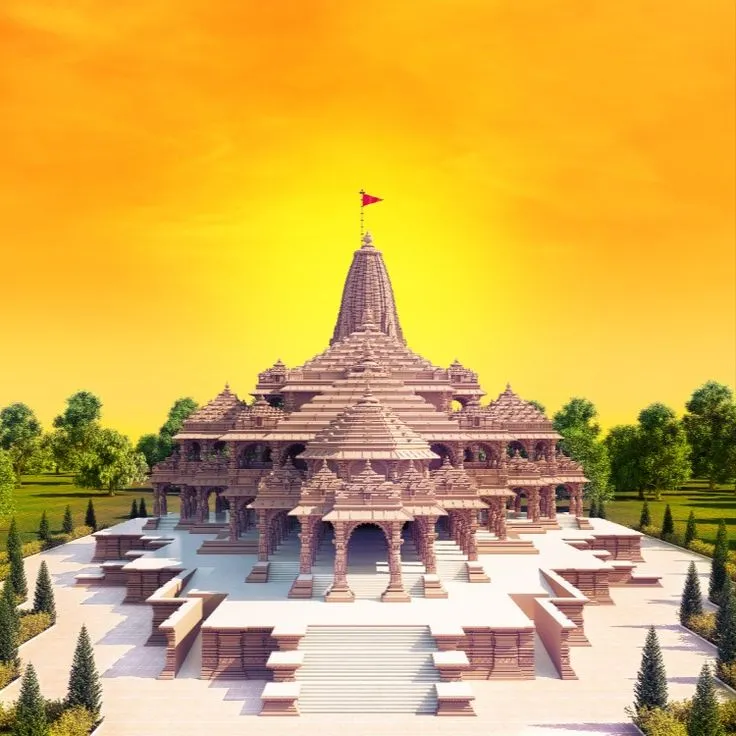
Ayodhya is an ancient city, considered one of the holiest cities of the Hindus, revered for its association with the seven births of Rama and the reign of his father Dasharatha, the great Indian epic poem Ramayana. According to this source, the city is prosperous and well-populated. The construction of Ayodhya Ram Mandir took place at the birthplace of Prabhu Sri Ram. Many people still want to know more about the temple and what to expect during its construction. Let us know some important and historical facts about Ram Mandir in Ayodhya, which are still unknown to many people there. Facts that glorify the church!
Hindu scriptures claim that Ram was born in the Treta yuga, which lasted for about a million years, and that Lord Krishna replaced the Dwapar yuga, the current Kali yuga, which together lasted for a million years. Since Homo sapiens evolved later, this period should be seen as a metaphorical period for the dominance of a certain culture or group. Some enthusiastic astrologers read the scriptures to calculate the exact date of Rama's birth. The internal agreement is that on Rama's birthday, the sign of Cancer rises in the horizon and five planets are seen. Based on this information from mythology and Puranas, they calculated Rama's date of birth as 10 January 5114 BC by looking at the positions of various stars and planets. You will need to read a primer on astrology to understand this better, but for now let's take their main argument at face value (despite conflicting evidence) and believe that Rama was born about 7,000 years ago. However, he could not have been born in Ayodhya.
Ram is also seen as a person who ushered in a time of great prosperity - the myth of Ram Rajya - by accepting his authority over animals, thieves and humans and ensuring unity, prosperity and peace. This may be another metaphor for the period of Vaishnava dominance - after Ram's incarnation as Lord Vishnu, the Vedic people settled in the Ganges plains and co-opted animal worshipping animals (Hanuman was originally the leader of a monkey-worshipping tribe) and others. local gods. Animism is a concept that predates cities like Ayodhya.
None of this version fully suggests that Rama, if a flesh-and-blood man, was born in Ayodhya today. The idea that God was born in Awadh (the area around today's Ayodhya) was first popularised by Tulsidas, a poet who wrote Ramcharitmans in the 16th century. Since he wrote epics in Ayodhya, Chitrakot and Varanasi, it is not surprising that he chose the birthplace of Rama (incidentally, it is already considered the home of Lord Shiva). People from many other countries claim that Rama was born among them. Thais believe that Ayutthaya (near Bangkok) is associated with the birth of Rama, mentioned in the epic Ramayana. Now in ruins, Ayutthaya was founded in the 14th century by the descendants of the Lava Kingdom, named after Ramon's son Lava.
The history of Ram Mandir in Ayodhya is deeply rooted in the religious and cultural fabric of India. The disputed site has been at the centre of Hindu-Muslim tension for centuries. According to Indian mythology, Ayodhya is taken into consideration as the birthplace of Lord Rama, a respected disciple in the epic Ramayana. The Babri Masjid, a mosque built inside the 16th century in the course of the Mughal generation, stands on the equal website, sparking an extended-walking dispute over the spiritual and historic claims of the two groups. Built in 1528 during the reign of the Mughal emperor Babur, the Babri Mosque has stood in Ayodhya for centuries. However, the controversial nature of his construction in the so-called birthplace of Lord Rama has created a long-standing religious and cultural conflict.
Tensions escalated within the twentieth century, leading to a turning factor on December 6, 1992, when a big variety of Indian activists demolished the Babri Mosque. The incident led to mass violence and tension between religious communities. The delay marks an important chapter in Indian history, focusing on the Ayodhya dispute settlement. The demolition of the Babri Mosque led to several civil wars over the ownership of the disputed site. Various parties, including Hindu and Muslim groups, raised their demands and caused the trial to drag on. With complex legal challenges, the Ayodhya case has passed through several courts, reflecting the deep-rooted religious sentiments and political implications of the case.
Prime Minister Narendra Modi laid the foundation stone for the construction of the Ram Temple in August 2020 and since then the construction work of the temple has been underway. Champat Rai, secretary general of Sri Ram Janmabhoomi Trust, told PTI, "More than 40 percent of the temple construction work has been completed. More than 80 percent of the plinth work has been completed. Darshan at the temple is likely to begin by December 2023." According to reports, the first floor of Ram Mandir will be ready by December 2023. . Trust officials announced that the idol of Lord Ram will be installed in the temple by 2024.
India has long been divided over the issue of the Ram Janmabhoomi / Babri Masjid site in Ayodhya. This place, which once had a temple of Lord Rama, is believed to be his birthplace. The Babri Masjid was built on the site in the 16th century and was destroyed by a group of Hindu nationalists in 1992. There is ample evidence that the site where the Babri Masjid stands was a temple of Lord Rama. Historical data, archaeological findings and the use of Indian design elements in mosque architecture are all used as evidence. Even with this evidence, this issue is still controversial and Hindus and Muslims in India still struggle to build temples there. Academics and historians say that Ayodhya and Ram Janmabhoomi / Babri Masjid need more study and understanding to understand how important the site is historically and religiously. By understanding the complexity of these issues, we can work towards a more peaceful future in India and around the world.
Get Insights from Our Expert Astrologer
Get Insights from Our Expert Astrologer
आज़ादी के वीरों से संवाद: भारत माँ की सच्चाई और आज के भारत की कहानी। जानिए कैसे समय के साथ हमारे आदर्श बदल गए हैं, और क्या हम सच में स्वतंत्र हैं?
Shiva Rudra Mantra
316 Downloads
Jai Ambe Gauri
356 Downloads
Khatu Wala Shyam
341 Downloads
Gayatri Mantra Of Hanuman
354 Downloads

Jai Bhole Jai Bhole Ringtone | Mahadev Devotional Ringtone
391 Downloads
Barsane Wali Radha
381 Downloads
Shiva Nirguna Stotra
325 Downloads
Hanuman Lalla Ki Aarti
355 Downloads
Maa Durga Devotional Ringtone
358 Downloads
Kui Bhekawe
360 Downloads
Hanuman Chalisa
334 Downloads
Har Har Mahadev Ringtone | Powerful Shiv Devotional Ringtone 🔱
372 Downloads
Narayanaya Namo Namah
384 Downloads
Haare Ka Sahara
334 Downloads
Shiva Kirtan Ringtone | Powerful Shiv Devotional Ringtone
336 Downloads
-with-a-sorrowful-expression,-holding-the-Indian-flag-close-to-her-heart.-She-stands.webp)