

























What are the best scientific explanations for astrology?
For many years, astrology has captivated humanity, revealing details about our personality, romance, and other life facets according to planetary and stellar arrangements. Nevertheless, are astrological practices more than mere folk medicine or superstitious belief? This is an essay on explanations for astrological science and facts from fiction.
Humanity is still interested in astrology and using it as a guide to see some things happening through the arrangement of planets and stars. On the other hand, it is important to distinguish facts from beliefs. However, this essay seeks to examine how scientific the facts of astrology are in separating fantasy from reality.
Astrology has had a long history and avid supporters, but the scientific society in large majority considers it as pseudoscience. However, many people believe astrology fails to qualify as true science because it doesn’t involve any empirical data but instead depends largely on mere perception. Additionally, most studies aimed at phasing astrology have provided inconclusive or conflicting outcomes thus denting the reliability of astrology even further. Nevertheless, a lot of people think that this is a place where they get solace, direction, and satisfaction.
What is astrology?
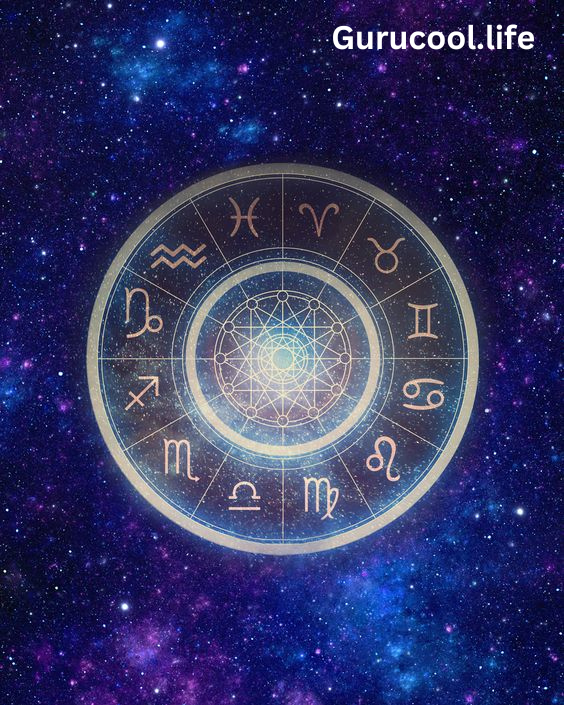
However, let’s first understand what astrology entails before discussing the scientific details. Astrology is a belief that suggests that there exist connections between the movements and positions of heavenly bodies and human actions. Horoscopes are generated by astrologers based on the location of cosmic bodies at the moment when a person is born. Such horoscopes are belipersonality and behaviors character, and attitude, as well as predict future events.
https://s3.ap-south-1.amazonaws.com/gurucool.life/blogsImage/Untitled design.png
Many scientists contend that astrology relies solely on hearsay and not scientific evidence for astrology. Although some researchers argue that there is a linkage between stars’ position and personal preferences, some scientists claim that they don’t hold water since they suffer from methodological deficiency and unreliability. In summary, there are many questions about the validity of science about astrology since there is not enough supporting evidence as well as many shortcomings in studies designed to link birth charts with personalities or behaviors.
Astrology is a technique that has existed for millennia that reveals oneself and guides in critical matters or decision-making. This can also be beneficial in dealing with issues of communication, making work-related decisions, and personal development. However, one also has to keep in mind that astrology is not a real science and therefore should be taken as a joke when predicting such things. On the other hand, others derive comfort, peace, and enjoyment as they delve into the complexities of astrology and interpretations.
Astrology: A pseudoscience
Science and astrology are incompatible concepts. It is considered a pseudoscientific method as it neither has evidence nor a scientific base. The scientific community generally opposes astrology for various reasons:
- Lack of Empirical Evidence: Unlike empirical data obtained through controlled experiments, astrology works with anecdotal evidence, which is unsubstantiated and subjective. Although astrology has sometimes been said to have offered revealing glimpses into the lives of many people, such revelations cannot be tested scientifically.
- No Mechanism of Action: The mechanisms for linking the positions of heavenly bodies to influence behavior and happenings are not clear in astrology. On the other hand, valid sciences have strong foundations, such as chemical physics, while questionable pseudoscience does not have a basis in anything.
- Inconsistent Predictions: Many times, astrological predictions lack consistency and have a vague nature. However, two people under the same zodiac might get divergent horoscope predictions and interpretations.
- Not Falsifiable: Science has to be falseable or falsificationist. This means that it is possible to test scientific hypotheses and thereby disprove them. Astrological predictions are usually so vaguely described as to be impossible to test for accuracy in any rigorous fashion.
- Historical Inaccuracy: Precession, an apparent slow wobbling of the earth’s axis over time has made the positions of celestial bodies shift about their former positions. It implies that the current zodiac signs cannot be equated to the arrangement of the constellations then in existence. This, therefore, brings about question marks on the historical correctness of astrological practices.
The Best Scientific Explanations for Astrology
While astrology itself is not considered a science, some scientific principles and concepts can help us understand why people might find it compelling. These explanations do not prove the scientific validity of astrology as a predictive or accurate tool but shed light on why some individuals may perceive it as meaningful.
- Barnum Effect: For example, people often tend to agree with ambiguous and vague sentences that are attributed to them as being their highly accurate descriptions, which is sometimes referred to commonly known as "The Barnum Effect" or even "the Forer effect."
https://s3.ap-south-1.amazonaws.com/gurucool.life/blogsImage/Gurucool.life (9).png
.png)
Astrological readings are typically couched in broad terms, allowing many readers to easily identify with a specific message.
- Confirmation bias: People tend to retain and trust any data that supports what they already think or feel.
https://s3.ap-south-1.amazonaws.com/gurucool.life/blogsImage/Gurucool.life (8).png
.png)
People read the horoscope and say that it is true because any experience can be predicted by a certain aspect of the horoscope.
- Placebo Effect: Astrology is a powerful placebook. Having positive remarks on your horoscope can boost someone’s confidence enough for a self-fulfilling prophecy to happen.
https://s3.ap-south-1.amazonaws.com/gurucool.life/blogsImage/Gurucool.life (7).png
.png)
However, pessimistic predictions may generate anxiety which in turn may act negatively on a person’s behavior.
- Psychological Comfort: Astrology is turned to by people in need of emotional support or confirmation.
https://s3.ap-south-1.amazonaws.com/gurucool.life/blogsImage/Gurucool.life (10).png
.png)
It helps them give meaning to the chaos they live in by creating something like the idea that even the movement of the sky is tied to what they do.
- Cultural and Social Factors: Astrology is entrenched in many societies, with social interactions having a huge influence on its prevalence. Astrological signs and horoscopes are what people usually talk about, making them feel like they belong.
Conclusion
Astrology might not be a proven field but it’s fascinating enough to keep so many in its thrall. While astrologers have made no convincing arguments, many scientists provide only psychological or social explanations for their position. They do not rely on rigorous science with astronomical observations and laws of motion. Astrologers need to be taken seriously since astrology is effective only in terms of a powerful appeal for relief; amusement; and friendliness, rather than concerning science.
Astrology has long guided people’s choices in life, helped them understand themselves better, and find purpose within the bigger picture of the universe. It remains popular because it taps into universal human urges which are the urge for meaningfulness, belongingness, and perceived orderliness in the world which is their lives. Although not scientifically grounded, astrology can serve as a powerful instrument for self-discovery and reflection provided one takes a healthy amount of skepticism and an open heart into consideration. At last, the effectiveness of astrology is only based on one’s perceptions, but not upon a fact it claims to hold.
In summary, despite a lack of scientific backing, astrology remains an enchanting and enduring cultural phenomenon that sheds light on the intricate connection between belief, psychology, and social factors.