









Home
|



Refund if not satisfied

Support Available

Privacy Confidentiality
© 2024 GuruCool.life. All rights reserved
Raushan | Hindu God and Goddess
2023-12-16
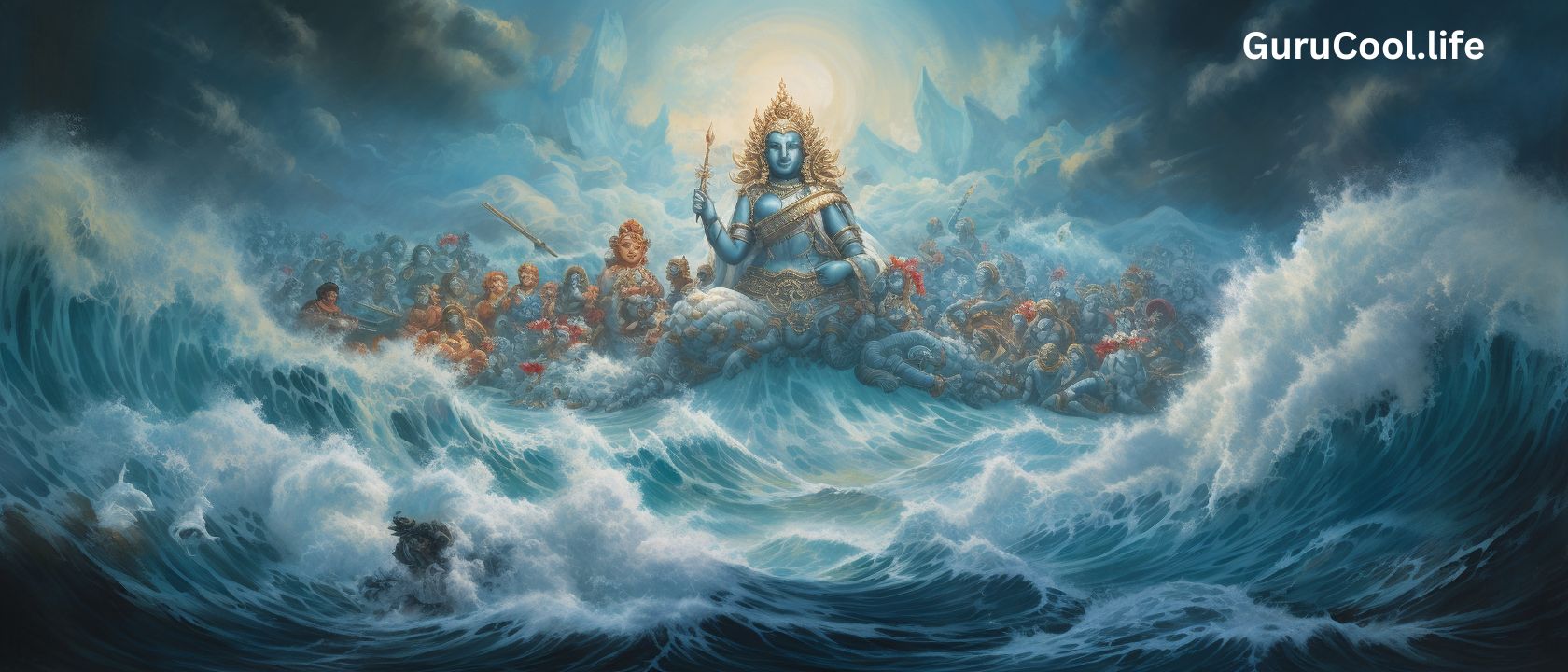
In Hinduism the churning of the ocean is an epic tale of gods and demons coming together to gain the elixir of immortality, referred to as Amrita. This mythological occasion symbolizes the everlasting struggle between good and evil. But what few know is that this celestial mixture additionally gave rise to a lethal poison, Halahala.

Amrita, the nectar of immortality, holds sizable significance in Hindu mythology. It is believed to supply the drinker's everlasting existence and divine powers. In the mythological story of the churning of the ocean, Amrita will become the last prize that each god and demon is desperately searching for. The sea is churned using the serpent Vasuki as a rope and Mount Mandara as the churning rod. This divine blend of forces and elements sets the degree for the cosmic tug-of-conflict between right and evil.
Amrita represents the desire for immortality that resides inside all beings. It symbolizes the everlasting quest for spiritual enlightenment and the longing for a lifestyle free from suffering and mortality. The churning of the ocean serves as a metaphor for the inner warfare each individual faces in their pursuit of higher recognition. It teaches us that the route to enlightenment isn't always without demanding situations and that the pursuit of immortality calls for exquisite sacrifice and perseverance.
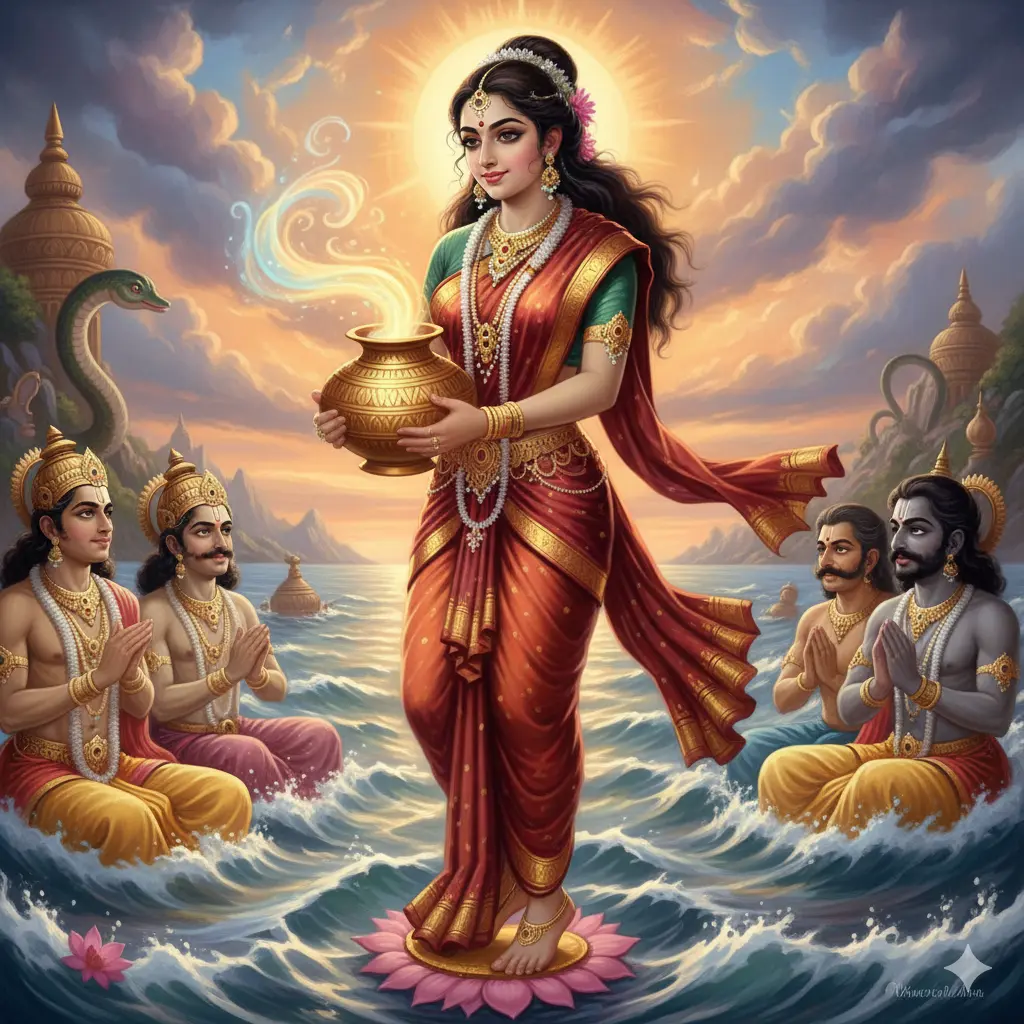
Amrita holds a good-sized place in Hinduism as an image of divine grace and liberation. It's miles are often associated with the gods and goddesses, who are said to have consumed this elixir to achieve immortality. In Hindu spiritual texts, Amrita is defined as the source of divine bliss and the ultimate purpose of non-secular seekers. It represents the best level of enlightenment and union with the divine.
Within the churning of the ocean, the pursuit of Amrita by using both gods and demons represents the ordinary craving for everlasting happiness and liberation from the cycle of delivery and loss of life. This pursuit reflects the inherent human preference for transcendence and the look for what that means in lifestyles. The parable teaches us that the attainment of Amrita requires overcoming limitations and working collectively in the direction of a not unusual aim, transcending the boundaries of good and evil.
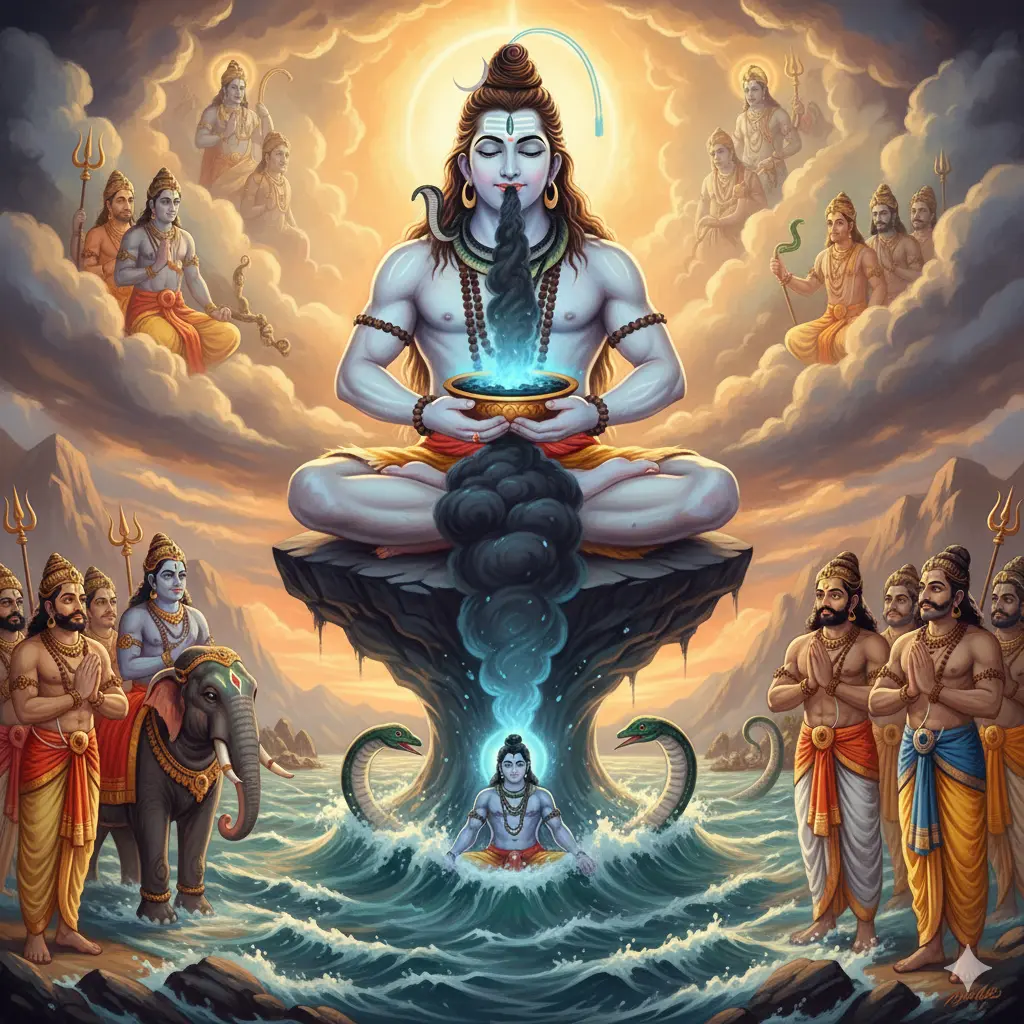
At the same time as Amrita represents the pursuit of immortality and liberation, Halahala, the deadly poison, is the dark aspect of this celestial combination. As the ocean churns, Halahala emerges along with the treasures and divine beings, threatening to spoil the universe. The presence of Halahala serves as a reminder of the inherent duality of life and the capacity for destruction that accompanies creation and transformation.
Halahala symbolizes the poor factors of existence, the challenges, and the trials that one has to face in the direction of enlightenment. It represents the unfavorable forces that could stand up while the pursuit of power and immortality turns tainted by greed and ego. The emergence of Halahala forces the gods and demons to return together and find a method to counteract its devastating results, highlighting the significance of unity and cooperation in overcoming adversity.
The poison Halahala, with its robust and unfavorable homes, poses an outstanding hazard to the gods and demons. Its poisonous fumes spread throughout the cosmos, inflicting colossal suffering and endangering all varieties of lifestyles. Recognising the grave threat, Lord Shiva steps in to store the universe with the aid of consuming the poison. He holds it in his throat, turning it blue, and earning him the name "Neelkanth," or "the one with the blue throat."
The act of Lord Shiva consuming Halahala demonstrates his strength and capability to convert even the most negative forces into something beneficial. It teaches us that, in the face of adversity, we've got the ability to convert our struggles into knowledge and growth. Lord Shiva's selfless act additionally highlights the significance of sacrifice and the desire to upward thrust above private desires for the greater good.
The mythological event of the churning of the sea holds profound symbolism and imparts massive instructions about the nature of right and wrong, the pursuit of enlightenment, and the significance of team spirit and sacrifice. It serves as a reminder of the eternal war between these opposing forces and the sensitive stability required to keep harmony inside the universe.
The churning of the ocean represents the inner conflict every man or woman faces on their non-secular journey. It symbolizes the need to overcome our inner demons and purify our cognizance on the way to reap better states of recognition. The emergence of Amrita and Halahala reminds us that the pursuit of immortality and enlightenment isn't always without challenges and that the path to proper liberation calls for determination, perseverance, and renunciation of worldly attachments.
The collaboration among gods and demons in the churning of the ocean emphasizes the importance of setting apart variations and operating collectively in the direction of a commonplace intention. It teaches us that proper power lies in team spirit and cooperation, transcending the bounds of good and evil. The act of Lord Shiva eating the poison demonstrates the transformative power of selflessness and sacrifice, inspiring us to upward thrust above our private dreams for the benefit of all.
Amrita and Halahala constitute the opposing forces of advent and destruction, immortality and mortality, appropriate and evil. Amrita symbolizes the divine nectar of immortality and the last purpose of religious seekers, at the same time as Halahala represents the destructive poison that threatens to annihilate the whole thing in its path. These materials embody the eternal war between nice and poor forces and the delicate stability required to preserve cosmic harmony.
At the same time as Amrita represents the craving for liberation from the cycle of start and demise, Halahala serves as a reminder of the challenges and limitations one ought to overcome on the path to enlightenment. The pursuit of Amrita indicates the choice for eternal happiness, while the emergence of Halahala highlights the ability for destruction, while this pursuit is tainted through greed and ego. The contrasting nature of Amrita and Halahala reminds us of the complex and interdependent courtship between light and darkness, right and wrong.
In the churning of the ocean, Lord Shiva performs a pivotal role by means of eating the poison Halahala to save the universe from destruction. His selfless act embodies the precept of sacrifice and highlights his potential to convert even the most negative forces into something beneficial. Lord Shiva's role in this myth emphasizes his role because he is an excellent deity and the embodiment of the last focus.
Lord Shiva's selection to devour the poison displays his compassion for all beings and his willingness to take on their struggles. It additionally symbolizes the electricity of divine intervention and the capacity for transformation and transcendence. Lord Shiva's blue throat, an end result of the poison, serves as a consistent reminder of his selfless act and the potential for boom and enlightenment that lies within each individual.
The parable of the churning of the sea continues to captivate and inspire humans throughout cultures and generations. In modern times, the tale has been tailored and interpreted in diverse varieties of literature, art, and famous culture. It serves as a metaphor for the human situation and explores timeless subject matters consisting of the conflict between good and evil, the pursuit of immortality, and the transformative energy of sacrifice.
In literature, the churning of the ocean has been reimagined in novels and poetry, exploring the psychological and non-secular dimensions of the myth. Artists have depicted the parable in artwork and sculptures, showing the epic struggle among gods and demons and the emergence of divine beings and treasures. The parable has additionally discovered its way into films, television shows, and video games, bringing its undying expertise to a much wider target audience.
The churning of the ocean, with its story of Amrita and Halahala, serves as an effective reminder of the eternal conflict between precise and evil and the sensitive balance required to preserve cosmic harmony. It represents the inner struggle each person faces in their pursuit of enlightenment and the challenges and limitations that need to be conquered on the path to liberation.
The parable teaches us approximately the transformative strength of sacrifice, the importance of team spirit and cooperation, and the capacity for boom and transcendence in the face of adversity. It reminds us of the inherent duality of existence and the interdependent courtship between mild and darkness, proper and evil.
the churning of the sea remains retold and reinterpreted in various paperwork, its enduring legacy lives on, inspiring generations to look for higher states of consciousness and try for concord and balance in their lives. It serves as an undying reminder of the everlasting warfare between good and evil and the capability inside each character to triumph over barriers and reap enlightenment.
Get Insights from Our Expert Astrologer
Get Insights from Our Expert Astrologer
Download Barsane Wali Radha ringtone for mobile and enjoy a beautiful Radha Krishna bhakti ringtone filled with devotion, love, and spiritual positivity.

Shiva Rudra Mantra
316 Downloads

Jai Ambe Gauri
356 Downloads
Khatu Wala Shyam
341 Downloads
Gayatri Mantra Of Hanuman
354 Downloads

Jai Bhole Jai Bhole Ringtone | Mahadev Devotional Ringtone
391 Downloads
Barsane Wali Radha
381 Downloads

Shiva Nirguna Stotra
325 Downloads
Hanuman Lalla Ki Aarti
355 Downloads
Maa Durga Devotional Ringtone
358 Downloads
Kui Bhekawe
360 Downloads
Hanuman Chalisa
334 Downloads

Har Har Mahadev Ringtone | Powerful Shiv Devotional Ringtone 🔱
372 Downloads

Narayanaya Namo Namah
384 Downloads
Haare Ka Sahara
334 Downloads

Shiva Kirtan Ringtone | Powerful Shiv Devotional Ringtone
336 Downloads