





Support

Consult about
Horoscope
Wallpapers
Ringtones
Services
Company
Help
Payments


Refund if not satisfied

Support Available

Privacy Confidentiality
© 2024 GuruCool.life. All rights reserved
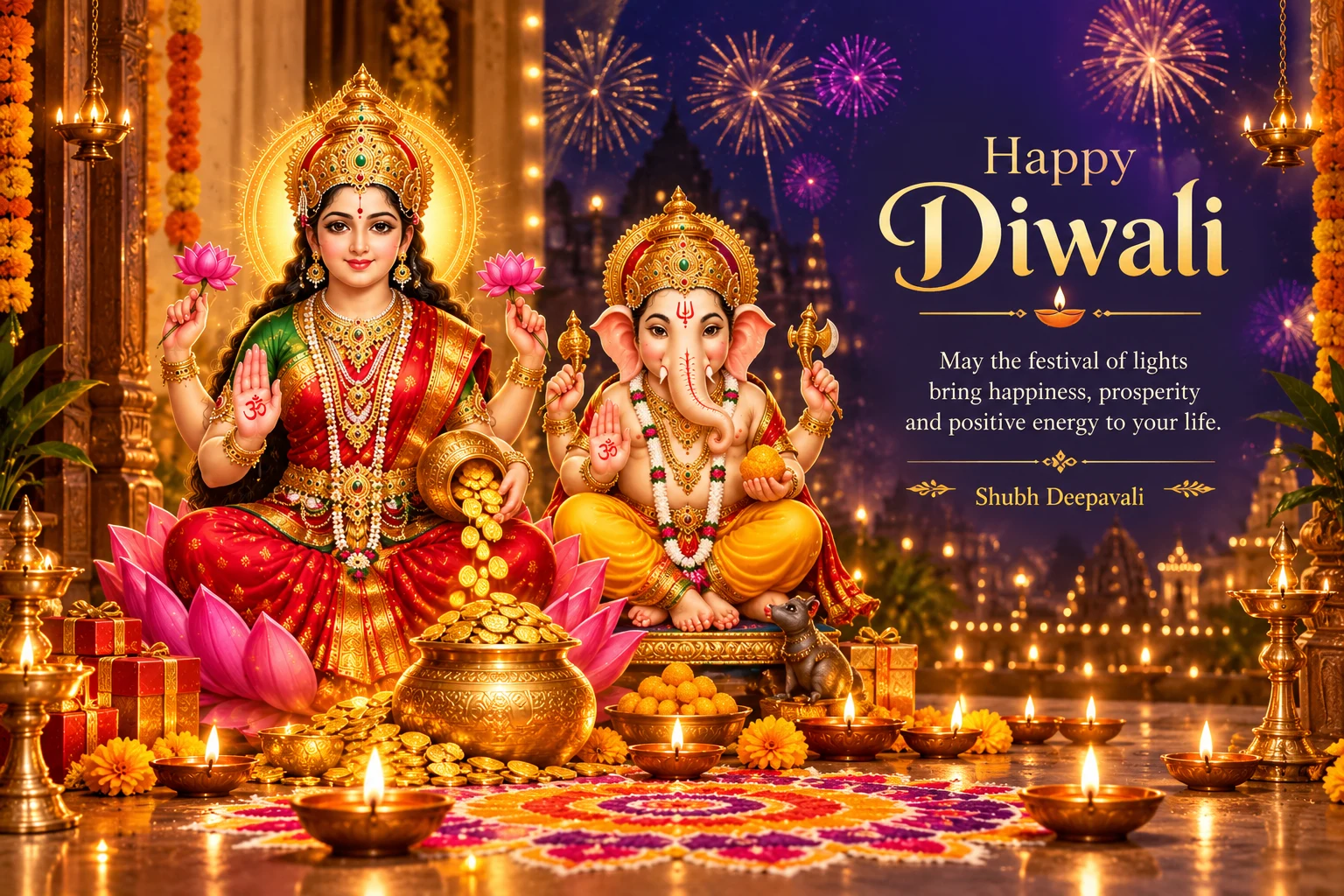
Diwali is also known as Deepavali, meaning a row or series of lamps.
Lakshmi Puja is one of the central Diwali observances.
The festival is associated with several traditions, including Rama's return to Ayodhya.
Diyas symbolize light, hope, prosperity, and the victory of good over darkness.
Diwali is on November 8 and Lakshmi Puja is approximately 6:03 PM–7:59 PM.
Diwali, also called Deepavali, is one of the most important and widely celebrated Hindu festivals. The name Deepavali means a row or series of lamps, and the festival is commonly associated with light overcoming darkness, knowledge overcoming ignorance, and good overcoming evil. Diwali is celebrated throughout India and by Hindu communities around the world, although its stories and customs vary significantly by region. \n\nThe most important Diwali observance in North India is associated with the return of Lord Rama, Goddess Sita, and Lakshmana to Ayodhya after Rama's fourteen-year exile and victory over Ravana.
According to the Ramayana tradition, the people of Ayodhya welcomed Rama by lighting rows of lamps. The lamps therefore became symbols of joy, hope, victory, and the restoration of dharma. \n\nAnother major tradition connects Diwali with Goddess Lakshmi, the goddess of prosperity and abundance. Lakshmi Puja is performed on Diwali night, especially during the Pradosh period.
Families clean and decorate their homes, light diyas, create rangoli designs, and prepare offerings for Goddess Lakshmi and Lord Ganesha. \n\nIn business communities, Diwali is also associated with financial renewal and the beginning of a new accounting year in some traditions. Shopkeepers and business owners may worship account books, cash registers, business tools, and workplaces. \n\nDiwali preparations often begin several days earlier with Dhanteras.
Naraka Chaturdashi and other regional observances occur around the same period. After Diwali, Govardhan Puja and Bhai Dooj complete the major sequence. \n\nThe central ritual on Diwali night is Lakshmi Puja. A clean and decorated area is prepared, and images or idols of Lakshmi and Ganesha are placed for worship.
Offerings may include flowers, sweets, fruits, rice, lamps, incense, and other traditional items. Devotees recite prayers and perform aarti. \n\nLighting diyas is perhaps the most recognizable Diwali tradition. Lamps are placed near entrances, windows, balconies, temples, and other parts of the home.
Traditionally, the light symbolizes spiritual illumination and the victory of righteousness. \n\nFireworks are also popular, although responsible celebration is increasingly emphasized because of air pollution, noise, fire hazards, and animal welfare concerns. Many families now prefer diyas, decorative lighting, cultural programs, and environmentally responsible celebrations. \n\nDiwali also has a strong social dimension.
Families visit relatives, exchange sweets and gifts, wear new clothes, prepare festive meals, and spend time together. The festival encourages reconciliation and strengthens relationships. \n\nCharity is another important aspect. Sharing food, helping people in need, donating to charitable causes, and supporting workers and communities can express the broader spirit of the festival.
\n\nIn 2026, Diwali falls on Sunday. The Amavasya tithi begins at approximately 11:27 AM on November 8 and ends at approximately 12:31 PM on November 9. The Lakshmi Puja Muhurat is approximately 6:03 PM to 7:59 PM. \n\nThe deeper meaning of Diwali is therefore not limited to wealth or entertainment.
It represents renewal, hope, dharma, family unity, gratitude, and the illumination of consciousness. \n\nThe festival encourages people to remove darkness from their homes and also from their minds. Anger, jealousy, greed, ignorance, and hatred can be understood as inner darkness, while compassion, knowledge, generosity, truth, and devotion represent inner light. \n\nDiwali ultimately combines mythology, worship, family traditions, social celebration, economic activity, and spiritual reflection.
It is a festival of light in both its literal and symbolic meanings.
What is Diwali?
Diwali is a sacred Hindu festival observed with devotion and religious rituals. It holds deep spiritual significance in the Hindu lunar calendar.
When is Diwali observed?
The exact date changes every year based on the Hindu lunar calendar. Check the Daily Panchang on GuruCool for accurate tithi and muhurat timings.
What are the main rituals of Diwali?
Devotees observe fasts, perform puja, chant mantras, and engage in charitable activities during Diwali. Specific rituals vary by region and family tradition.
What is the spiritual significance of Diwali?
Diwali holds great religious importance in Hinduism. Observing it with full devotion is believed to bring blessings, ancestral merit, and spiritual liberation.
How can I get guidance for Diwali rituals?
You can consult expert Vedic astrologers on GuruCool for personalized guidance on performing rituals correctly as per your birth chart and family tradition.