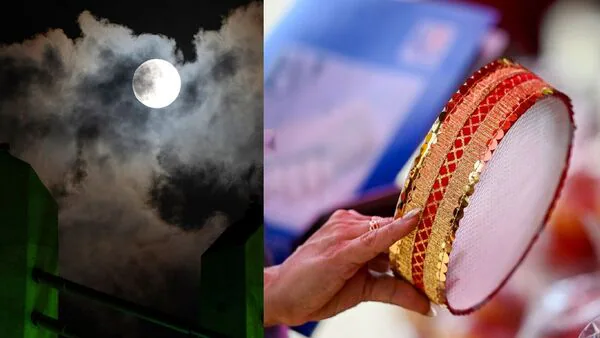
Karwa Chauth is observed on Kartika Krishna Chaturthi.
The traditional fast continues from after the pre-dawn meal until moonrise.
The moon is traditionally viewed through a sieve before the fast is broken.
Goddess Parvati, Lord Shiva, and Lord Ganesha are commonly included in the worship.
Karwa Chauth falls on October 29 with moonrise around 8:28 PM.
Details
Karwa Chauth is a widely observed Hindu fasting festival, particularly among married women in North and Western India. It is observed on Krishna Paksha Chaturthi in the Hindu month of Kartika and is traditionally associated with prayers for the long life, health, and well-being of one's husband. In modern practice, the festival is also understood by many families as an expression of marital affection, companionship, commitment, and family bonding. The name Karwa Chauth is connected with the ritual use of a karwa or earthen pot and the Chaturthi lunar day. The central practice is a fast that traditionally begins after the pre-dawn meal and continues until the moon is sighted in the evening. In the traditional form, the fast is strict and may involve abstaining from both food and water. Women often wake before sunrise to participate in Sargi, a pre-dawn meal traditionally provided by the mother-in-law in many North Indian families. During the day, women may dress in festive clothing, apply mehndi, wear traditional jewelry, and gather with family or friends for the evening puja. The Karwa Chauth Puja centers around prayers to Goddess Parvati, Lord Shiva, Lord Ganesha, and other divine figures depending on regional tradition. The story of Karwa Chauth may be narrated during the ceremony. Different regions have different versions of the associated legends. The moon plays a central role in the festival. After completing the day's fast, the woman waits for the moonrise. The moon is viewed through a sieve or similar traditional object, followed by prayers and offerings. The husband may then offer water or food to his wife, symbolically helping her conclude the fast. Many modern couples participate together, reflecting the festival's increasingly mutual interpretation. Karwa Chauth also has a strong social and cultural dimension. Women may exchange gifts, decorate their hands with mehndi, gather in groups, and share traditional foods. Markets and communities often organize special events before the festival. Although traditionally centered on wives praying for their husbands, contemporary families interpret the festival in diverse ways. Some couples observe the fast together, while others focus more on mutual health, companionship, and family well-being. The festival also demonstrates how Hindu traditions combine religious devotion with family customs. Clothing, food, mehndi, jewelry, storytelling, fasting, and moon worship all form part of the cultural experience. In 2026, Karwa Chauth falls on October 29. The listed Puja Muhurat is 5: 46 PM to 7: 03 PM, the fasting period is approximately 6: 34 AM to 8: 28 PM, and moonrise is around 8: 28 PM. The Chaturthi tithi begins at 1: 06 AM on October 29 and ends at 10: 09 PM. The exact moonrise and puja timings are location-dependent, so a production application should calculate them based on the user's city rather than using a single India-wide time. The deeper meaning of Karwa Chauth is devotion, commitment, family connection, and prayer for the well-being of loved ones. The festival has evolved over time while retaining its traditional emphasis on fasting, prayer, moon worship, and marital bonds.