




Pithori Amavasya, also reverently celebrated across India as Kushagrahani Amavasya, Pola Amavasya, or Pithori Vrat, is the sacred New Moon day concluding the holy monsoon month of Shravana (or Bhadrapada in the Purnimanta calendar scheme). Dedicated to Goddess Durga, Goddess Parvati, and the Sixty-Four Yoginis (Chausath Yogini), this ancient festival is celebrated with profound devotion by mothers for the longevity, health, moral strength, and spiritual protection of their children, as well as the pacification of ancestral souls (Pitrus).
Pithori Amavasya 2027: Date, Puja Timings, Rituals & Stories
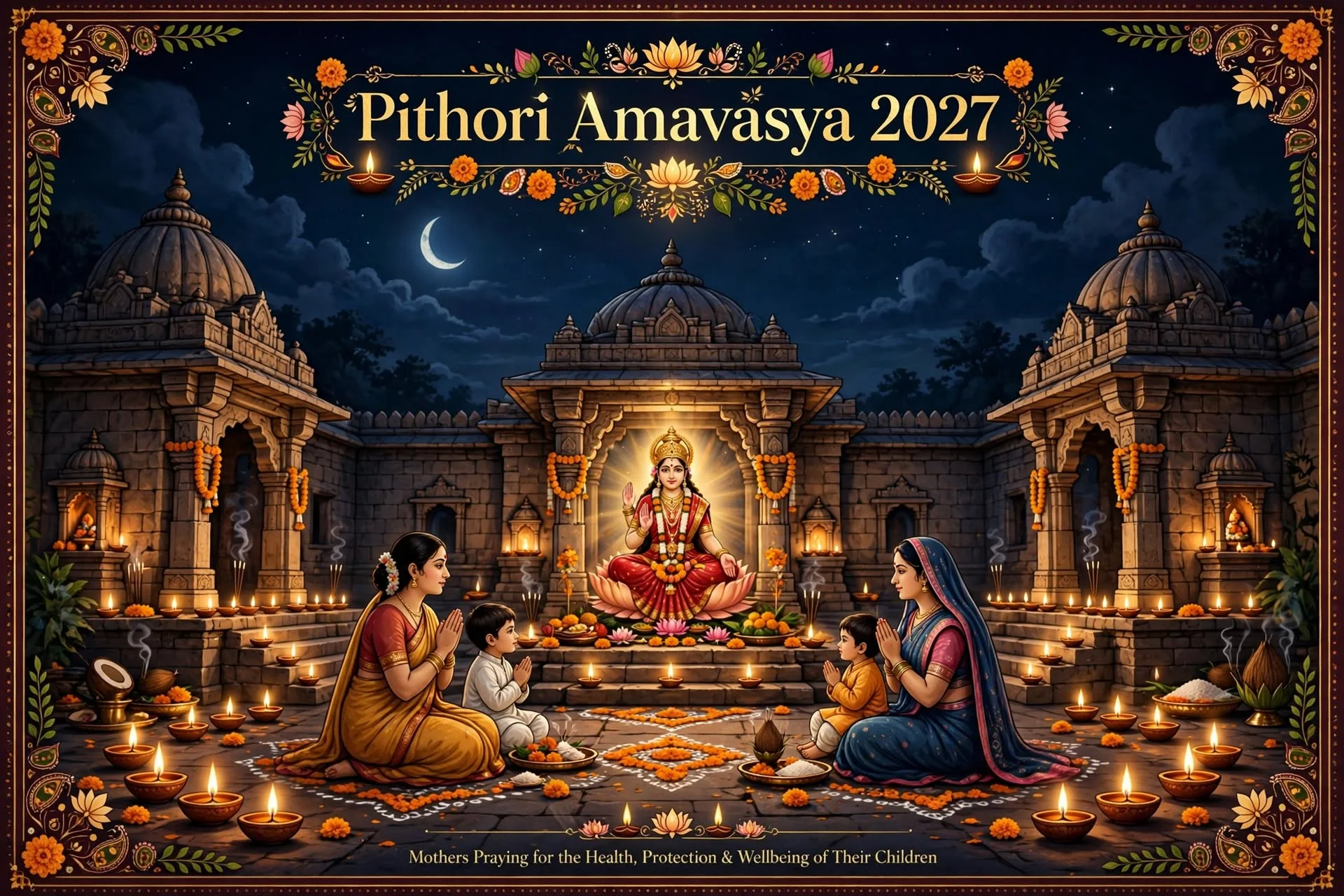
Pithori Amavasya Timings & Panchang
Important festival dates and auspicious timings
Usha Arghya (Sunrise)
05:59 am
Sandhya Arghya (Sunset)
06:44 pm
Start Date
Tuesday, 31 Aug 2027
Puja Muhurat
06:12 am – 11:11 pm
Pithori Amavasya
The name 'Pithori' is derived from the Sanskrit word 'Pitha' or 'Pithora', referring to flour ground from roasted wheat, rice, or gram. Central to the day's sacred rites is the modeling of sixty-four miniature divine figurines or sacred dough balls (Pindas) crafted from sanctified flour paste, representing the Sixty-Four Yoginis—the fierce yet protective aspects of the Supreme Mother Goddess who govern cosmic forces, protect against malevolent spirits, and ward off premature infant mortality.
Concurrently, across Maharashtra, Chhattisgarh, and Madhya Pradesh, this sanctified day is celebrated with colossal agrarian jubilation as 'Pola' or 'Bail Pola'—an extraordinary thanksgiving festival honoring working bullocks, oxen, and cattle. Farmers wash their bulls in rivers, decorate their horns with bright paint and golden tinsel, drape their backs in colorful embroidered velvet shawls (Jhuls), and parade them through villages without yoking them to plows, expressing gratitude for their tireless agricultural labor sustaining human life.
Why is Pithori Amavasya Celebrated?
Pithori Amavasya is celebrated to invoke the ferocious maternal protection of the Sixty-Four Yoginis and Goddess Parvati, shielding children from diseases, negative energies, and untimely death.
According to the Bhavishyottara Purana, Lord Shiva Himself revealed this sacred vrata to Goddess Parvati as an infallible remedy for mothers who have suffered child loss, miscarriages, or whose children face chronic illnesses.
The festival simultaneously honors the agrarian backbone of rural India through the Bail Pola festival, celebrating bullocks and working animals as sacred partners in human civilization.
- Worshiping the 64 Yoginis through handcrafted sacred flour figurines (Pithori) for children's longevity.
- Harvesting sacred Kusha grass (Kushagrahani Amavasya) for Vedic rituals throughout the upcoming year.
- Performing Pitru Tarpana and holy river bathing to grant peace to departed ancestors.
- Celebrating Bail Pola by washing, painting, and honoring working bullocks and oxen.
- Preparing and sharing traditional festive delicacies like Puran Poli and sweet wheat kheer.
Scriptural Foundations in the Bhavishyottara Purana and Folk Traditions
The Dialogue Between Lord Shiva and Goddess Parvati
In the sacred verses of the Bhavishyottara Purana, Goddess Parvati approaches Lord Shiva on Mount Kailash and inquires: 'O Lord of lords, in the mortal world, mothers suffer unbearable sorrow when their young children fall prey to sudden ailments or untimely death. Please reveal an accessible, supremely efficacious vrata that can grant children robust health, long life, and divine protection.'
Lord Shiva replies: 'O Devi, on the Amavasya of the Shravana month, let mothers observe a strict fast and worship the Sixty-Four Yoginis by sculpting their sacred forms using roasted flour (Pitha). This sacred observance is known as Pithori Vrata, possessing the boundless capacity to grant long life to progeny and bring joy to childless mothers.'
The Legend of the Pious Mother and the 64 Yoginis
Ancient folklore narrates the story of a virtuous Brahmin woman whose sons tragically died in infancy one after another. Deeply grieved and humiliated by her relatives, she wandered into a dense forest on Shravana Amavasya, seeking death. In a secluded cave, she encountered the Sixty-Four Yoginis engaged in divine meditation.
Moved by the mother's pure devotion and sorrow, the Yoginis took pity on her and instructed her in the sacred Pithori ritual. The mother sculpted sixty-four flour representations, worshiped them with turmeric, vermilion, and flowers, and received the divine boon of the Yoginis. Miraculously, all her deceased sons were restored to life, flourishing into healthy, wise, and prosperous leaders.
The Historical Origin of Bail Pola
The tradition of Bail Pola dates back to agrarian antiquity in the Deccan plateau. Farmers recognized that throughout the arduous summer plowing and monsoon planting seasons, bullocks and oxen toiled tirelessly under heavy yokes.
On Shravana Amavasya, when the initial sowing is complete, farmers declare an absolute holiday for all working cattle, pampering them like royalty with massages, foot washing, turmeric horn-painting, and sweet puran polis.
Yogini Protection, Kusha Consecration, and Ancestral Peace
The Sixty-Four Yoginis: Guardians of Pranic Channels
In Tantric and Shakta metaphysics, the Sixty-Four Yoginis represent the dynamic energetic frequencies governing the sixty-four vital Nadis (subtle energy channels) in the human astral body.
When mothers worship these deities using consecrated dough (Pitha), the subtle vibrational field surrounding their children is shielded against psychic discord, evil eye (Drishti Dosha), and emotional turbulence.
Kushagrahani Amavasya: The Sanctity of Sacred Grass
On this specific Amavasya, priests and householders harvest fresh Kusha grass (Desmostachya bipinnata) chanting Vedic mantras. Scripture dictates that Kusha grass plucked on this day retains its spiritual potency (Virya) for a full year.
Kusha grass acts as an energetic insulator during Vedic yajnas, ancestral Tarpanas, and meditation, shielding the practitioner from grounding electrical loss.
Pithori Figurine Crafting, Bull Adornment, and Vrata Rituals
Crafting the Sixty-Four Pithori Dough Figurines
On the morning of Amavasya, mothers mix roasted wheat or rice flour with pure water and turmeric, rolling out sixty-four small dough cones or balls representing the Yoginis. These are placed respectfully on a clean brass plate or wooden chauki draped in red silk.
Each figurine is anointed with sacred vermilion (kumkum), turmeric, unbroken rice, and fresh flowers while chanting the names of the Mother Goddess.
The Anointing of Children and Bail Pola Parade
In the evening, after completing the puja, mothers gently place the sanctified dough plate or individual figurines upon the crowns of their children's heads, asking: 'Who are you?' The child replies: 'I am your son/daughter, blessed by the Yoginis!'
In rural streets, decorated bullocks are led through a ceremonial torana (mango-leaf arch), accompanied by beating dhol drums and community feasts.
Pithori Amavasya Puja Vidhi (Step by Step)
- 1
Brahma Muhurta Snana & Sankalpa
Wake early before sunrise, take a purificatory bath chanting sacred river mantras, wear fresh traditional clothing, and take a solemn vow to observe the Pithori fast for your children's welfare.
- 2
Kusha Grass Harvesting (Kushagrahani)
Visit clean riverbanks or meadows, chant the sacred Kusha mantra ('Om Phat'), and respectfully pluck fresh green blades of Kusha grass with roots intact for the year's Vedic rites.
- 3
Pitru Tarpana (Ancestral Water Libation)
Stand facing South holding Kusha grass and black sesame seeds in water, offering libations to departed ancestors (Pitrus) for their eternal peace.
- 4
Preparation of the 64 Pithori Dough Figurines
Knead roasted wheat or rice flour with water, roll out 64 small conical figurines representing the Sixty-Four Yoginis, and seat them upon a clean wooden chauki.
- 5
Altar Setup & Kalash Sthapana
Establish a sacred Kalash adorned with mango leaves and a coconut beside the Yogini figurines, draped in a red silk cloth.
Pithori Amavasya Puja Samagri List
Pithori Dough and Figurine Articles
- Fresh roasted wheat flour or rice flour (Pitha) for making 64 figurines
- Wooden chowki covered with fresh bright red silk fabric
- Pure golden turmeric powder, red kumkum, and sandalwood paste
- Unbroken white raw rice grains (Akshata) and red sacred thread (Moli)
- Brass or bronze plate for arranging the sixty-four Yoginis
Kushagrahani and Ancestral Rites
- Freshly plucked sacred Kusha grass blades (Pavitram)
- Black sesame seeds (Krishna Tila) for Pitru Tarpana
- Copper or brass Panchapatra and Achamani spoon
- Clean river or spring water infused with Gangajal
- Brass bell (Ghanti) and shankha (conch shell)
Naivedyam and Bull Worship (Pola) Items
- Traditional Puran Poli (sweet flatbreads stuffed with sweetened chana dal)
- Sweet wheat flour halwa, kheer, and jaggery blocks
- Bright paints, tinsel, and bells for decorating bullock horns (for Pola)
- Fresh green fodder grass, bananas, and soaked gram for cattle
Mantras and Prayers for Pithori Amavasya
Pithori Amavasya Vrat Rules and Fasting Guidelines
Fasting Discipline and Conduct
Mothers observe fasting throughout the day until the evening Pithori puja and head-anointing ceremony are completed. The fast is broken with pure vegetarian prasad, traditionally Puran Poli.
- Fasting is observed until the sixty-four Yoginis are worshiped in the evening.
- Total abstinence from non-vegetarian food, alcohol, onions, and garlic.
- Harvest Kusha grass only from clean natural soil outside contaminated areas.
- Give complete rest to working cattle on this day; no tilling or plowing is permitted.
Reverence for Working Cattle
Farmers and householders must treat bullocks and cows with supreme tenderness on Bail Pola, washing them, decorating them, and feeding them sweet puran polis.
Dos and Don'ts of Pithori Amavasya
Good Practices (Do's)
- Wake up early, bathe, and take the solemn fast vow for your children's welfare.
- Harvest sacred Kusha grass respectfully with roots intact for the coming year's rituals.
- Perform Pitru Tarpana to offer peaceful libations to departed ancestors.
- Craft the 64 flour dough figurines and worship the Sixty-Four Yoginis with vermilion.
- Pamper, wash, and feed working bullocks and cows with fresh puran polis and fodder.
Pithori Amavasya Across Regions
| Region | Local Name |
|---|---|
| Maharashtra | Pithori Amavasya & Bail Pola |
| Chhattisgarh & Madhya Pradesh | Pola Mahotsav |
| North India (Uttar Pradesh, Bihar, Rajasthan) | Kushagrahani Amavasya |
Pithori Amavasya FAQs
Why is this festival called Pithori Amavasya?
It is called Pithori Amavasya because sixty-four miniature divine representations of the Yoginis are crafted using roasted wheat or rice flour dough ('Pitha') to invoke protection for children.
What is Kushagrahani Amavasya?
Kushagrahani Amavasya is the same new moon day on which sacred Kusha grass is ritually harvested from nature; grass plucked on this day remains spiritually potent for Vedic rituals for a full year.
What is Bail Pola celebrated on this day?
Bail Pola is an agrarian thanksgiving festival celebrated across Maharashtra, Chhattisgarh, and Madhya Pradesh where working bullocks are decorated, pampered, and honored with sweet puran polis.
Upcoming Festivals
View All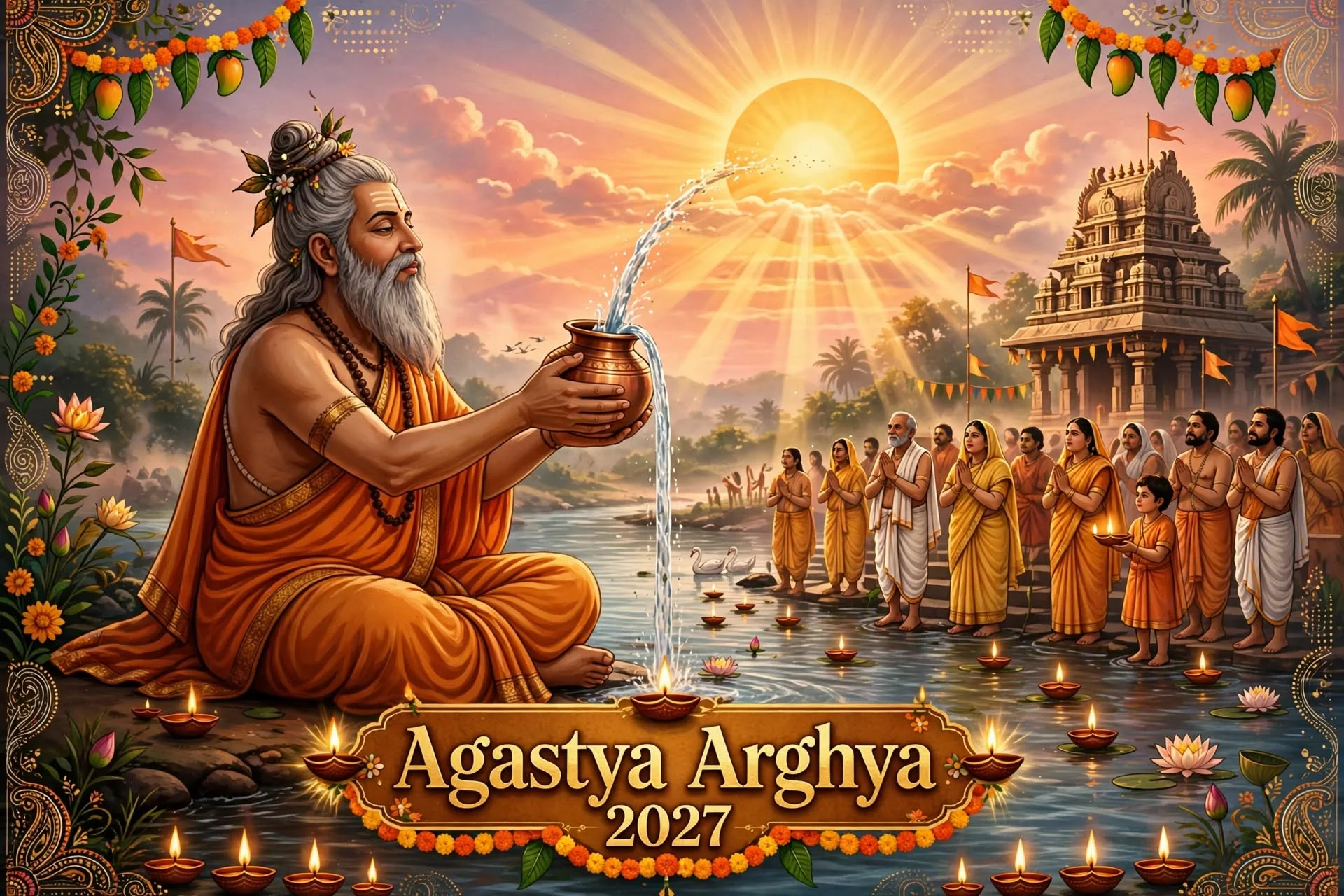
Tuesday, Aug 31, 2027
Agastya Arghya
Agastya Arghya, also known as Agastya Udaya Arghya, is a profound astronomical and Vedic ritual observed during the transition of late monsoon into early autumn (Sharad Ritu), when the celestial star Canopus (known in Sanskrit as the Agastya Nakshatra) first rises above the southern horizon at dawn. In ancient Indian astronomy (Surya Siddhanta) and Puranic literature, the dawn rising of Agastya is celebrated as an extraordinary cosmic event marking the physical and energetic purification of all terrestrial waters, the calming of turbulent monsoon rivers, and the pacification of atmospheric toxins.
View Festival Guide

Tuesday, Aug 31, 2027
Anvadhan
Anvadhan (अन्वाधान) is an ancient, highly revered Vedic ritual and spiritual observance in Sanatana Dharma performed on the day immediately preceding the New Moon (Amavasya) or Full Moon (Purnima). Rooted in the pristine traditions of the Shrauta and Grihya Sutras, Anvadhan literally translates to 'the solemn placing and replenishment of sacred fuel wood into the consecrated Vedic fires'. In traditional Vedic ritualism, householders (Grihasthas) and priests who maintain the sacred Agnihotra fires perform Anvadhan to prepare the sacrificial altars for the grand Darsha Yajna (New Moon sacrifice) or Paurnamasa Yajna (Full Moon sacrifice) scheduled for the following day.
View Festival Guide

Tuesday, Aug 31, 2027
Shravana Amavasya
Shravana Amavasya, also known as Darsha Amavasya, Hariyali Amavasya, or Pola Amavasya, is the dark New Moon night marking the grand conclusion of the sacred, rejuvenating monsoon month of Shravana. Positioned at the pivotal threshold between the height of the rainy season and the onset of early autumn, this sanctified tithi holds monumental spiritual, ancestral, and ecological significance across the Indian subcontinent.
View Festival Guide

Tuesday, Aug 31, 2027
Darsha Amavasya
Darsha Amavasya is a significant new moon observance in the Hindu calendar designating the specific night when the Moon is completely invisible to the human eye, having fully merged into the conjunction of the Sun.
View Festival Guide