





Support

Consult about
Horoscope
Wallpapers
Ringtones
Services
Company
Help
Payments


Refund if not satisfied

Support Available

Privacy Confidentiality
© 2024 GuruCool.life. All rights reserved
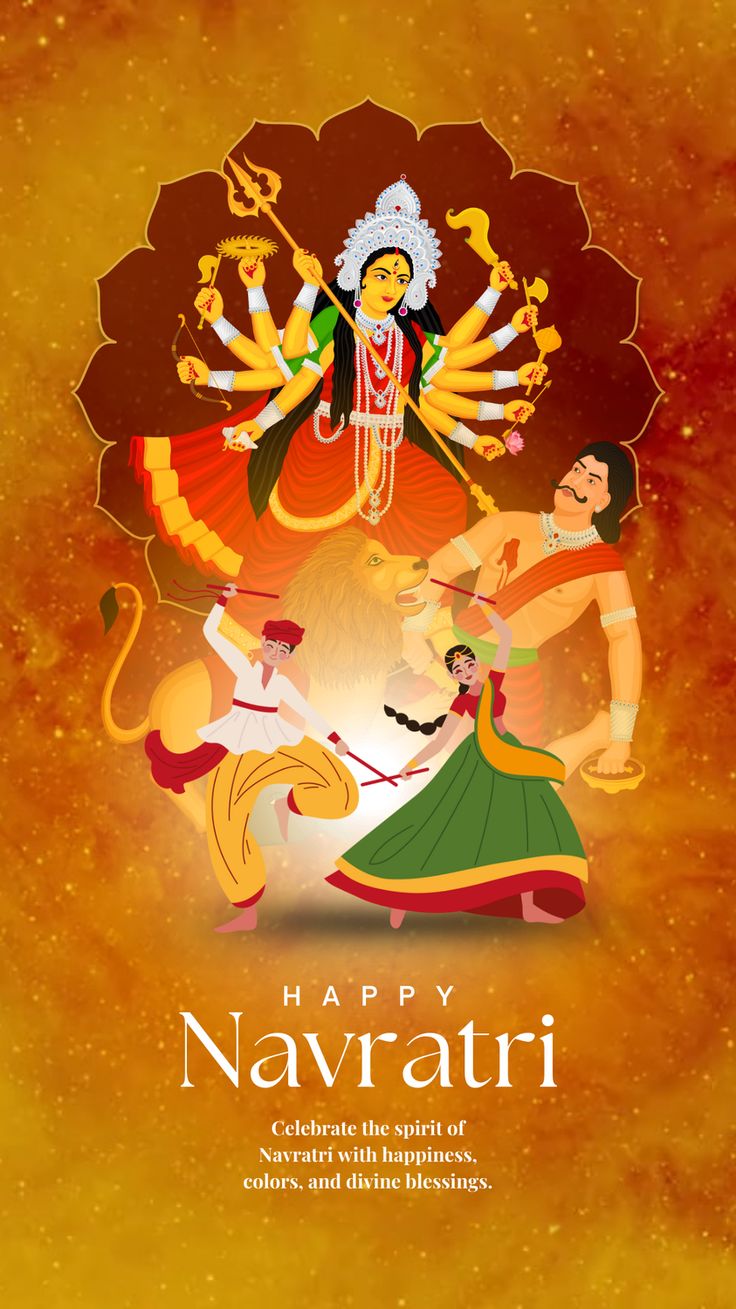
Sharad Navratri begins on Ashwin Shukla Pratipada.
The festival traditionally lasts nine nights and culminates around Vijayadashami.
Ghatasthapana marks the formal beginning of Navratri worship.
Different regions celebrate Navratri through Durga Puja, Garba, Dandiya, Ramleela, Golu, and other traditions.
Sharad Navratri is one of the most important Hindu festivals dedicated to Goddess Durga and the divine feminine power known as Shakti. The festival begins on the Pratipada tithi of the bright fortnight of Ashwin and traditionally continues for nine nights and ten days. The word Navratri literally means 'nine nights,' referring to the period during which devotees worship different manifestations of Goddess Shakti. The Sharad Navratri celebrated in autumn is particularly prominent throughout India.
It is associated with spiritual purification, devotion, courage, protection, and the triumph of divine forces over destructive forces. In North India, the festival is strongly connected with Durga worship, fasting, devotional gatherings, Ramleela, and the eventual celebration of Vijayadashami or Dussehra. The first day of Navratri is marked by Ghatasthapana, also called Kalash Sthapana. This ritual formally invokes divine energy and marks the beginning of the Navratri observance.
A sacred pot or kalash is established, often with water, grains, leaves, and other ritual elements. Barley or other grains may be sown near the kalash, and their growth is observed during the nine-day period. These grains symbolize growth, prosperity, fertility, and the renewal of life. In 2026, Sharad Navratri begins on October 11.
The Ghatasthapana Muhurat is listed from 06: 24 AM to 10: 17 AM, with an additional Abhijit Muhurat from 11: 50 AM to 12: 37 PM. The Pratipada tithi begins at 09: 19 PM on October 10 and ends at 09: 30 PM on October 11. Each day of Navratri is traditionally associated with a particular form of Goddess Durga. Different regional traditions may use slightly different names and sequences, but the underlying theme is the worship of Shakti in her many manifestations.
Devotees pray for strength, wisdom, prosperity, protection, health, and spiritual progress. Fasting is another major feature of Navratri. Many devotees avoid grains, meat, alcohol, and certain other foods during the period. Some follow a single meal each day, while others consume fruits, milk, nuts, or foods prepared specifically for vrat.
Fasting practices vary significantly between families and regions, so there is no single dietary pattern that applies to everyone. Daily worship may include lighting a diya, offering flowers, chanting mantras, reading Durga-related scriptures, and performing aarti. Devotees may recite the Durga Saptashati or Devi Mahatmya and participate in community worship. Navratri is also a major cultural festival.
In Gujarat, Garba and Dandiya celebrations are particularly famous. In North India, devotional programs and Ramleela performances are common. In West Bengal, the later days of the festival become associated with Durga Puja. In South India, traditions such as Bommai Golu are observed in many communities.
The spiritual meaning of Navratri goes beyond celebration. The nine nights are often interpreted as a period of overcoming negative tendencies and cultivating positive qualities. Devotion to the Goddess represents the recognition of Shakti as the power behind creation, preservation, transformation, courage, and wisdom. Navratri concludes with Vijayadashami, symbolizing victory over evil and the restoration of dharma.
Thus, the festival creates a spiritual journey from invocation and purification toward strength, victory, and renewal.
What is Sharad Navratri Begins?
Sharad Navratri Begins is a sacred Hindu festival observed with devotion and religious rituals. It holds deep spiritual significance in the Hindu lunar calendar.
When is Sharad Navratri Begins observed?
The exact date changes every year based on the Hindu lunar calendar. Check the Daily Panchang on GuruCool for accurate tithi and muhurat timings.
What are the main rituals of Sharad Navratri Begins?
Devotees observe fasts, perform puja, chant mantras, and engage in charitable activities during Sharad Navratri Begins. Specific rituals vary by region and family tradition.
What is the spiritual significance of Sharad Navratri Begins?
Sharad Navratri Begins holds great religious importance in Hinduism. Observing it with full devotion is believed to bring blessings, ancestral merit, and spiritual liberation.
How can I get guidance for Sharad Navratri Begins rituals?
You can consult expert Vedic astrologers on GuruCool for personalized guidance on performing rituals correctly as per your birth chart and family tradition.