




Ishti is a foundational Vedic ritual observance appearing prominently in Hindu Panchangs on the Pratipada tithi (the first lunar day) following either Amavasya (new moon) or Purnima (full moon), marking the prescribed performance day for the fortnightly Vedic Darsha-Purnamasa sacrifices.
Ishti 2027: Date, Puja Timings, Rituals & Stories

Ishti Timings & Panchang
Important festival dates and auspicious timings
Usha Arghya (Sunrise)
05:50 am
Sandhya Arghya (Sunset)
06:50 pm
Start Date
Wednesday, 21 Apr 2027
Puja Muhurat
03:57 am – 03:30 am
Ishti
Derived from the Sanskrit verbal root 'Ish' (meaning to desire, seek, or invoke with reverence), an 'Ishti' represents a formal Vedic oblation ritual (Haviryajna) wherein consecrated offerings of grain cakes (Purodasha), clarified butter (Ghee), and milk are offered into sacred sacrificial fires to invoke specific divine blessings and cosmic order (Rta).
In classical Shrauta tradition, an Ahitagni—a householder who has consecrated and maintains the three perpetual Vedic fires (Garhapatya, Ahavaniya, and Dakshinagni)—undertakes fasting and solemn vows on the preceding day (Upavasatha), performing the full Ishti on Pratipada to satisfy the presiding deities Agni, Indra, Soma, Savita, and Vishnu.
For contemporary Hindu householders and spiritual seekers who follow Smarta and Vedic traditions, Ishti days serve as premier occasions for performing domestic Homa (Havan), Agnihotra, sacred fire contemplation, and chanting of the Purusha Sukta and Sri Sukta for personal purification and cosmic harmony.
Why is Ishti Celebrated?
Ishti is observed to sustain the eternal cycle of reciprocal sustenance between humanity and the divine cosmos as articulated in the Bhagavad Gita: 'By this sacrifice nourish the gods, and may those gods nourish you; thus nourishing each other, you shall attain the supreme good.'
It acts as a primary vehicle for discharging Deva Rin (the sacred debt owed to cosmic energies and deities), purifying the atmospheric environment through sacred herbal combustion, and aligning individual consciousness with cosmic law.
- To perform the fortnightly Vedic Darsha or Purnamasa Ishti mandated in the Shrauta Sutras.
- To discharge Deva Rin (karmic debt to cosmic forces) through consecrated offerings of Ghee and grains into sacred fire.
- To purify household atmosphere, neutralizing negative subtle vibrations through Agnihotra and medicinal herbal fumigation.
- To invoke divine blessings of health, agricultural abundance, intellectual clarity, and spiritual peace.
- To contemplate the metaphysical symbolism of Agni (fire) as the divine messenger connecting humanity with the Supreme Absolute.
Vedic Antiquity and Sastric Evolution of the Ishti Tradition
The Darsha-Purnamasa Prototype in the Samhitas and Brahmanas
The ritual paradigm of Ishti constitutes the foundational archetype (Prakriti) of all Vedic Haviryajnas described in the Taittiriya Samhita of the Krishna Yajurveda and the Shatapatha Brahmana of the Shukla Yajurveda. All subsequent Vedic sacrifices borrow their operational blueprint from the Darsha-Purnamasa Ishti.
Vedic tradition records that Prajapati (the cosmic creator) instituted the performance of Ishti at the dawn of creation to re-energize the cosmic deities and restore equilibrium between solar warmth, lunar moisture, and atmospheric vitality.
The Legend of King Harishchandra and the Varuna Ishti
A celebrated historical narrative illustrating the power of an Ishti is recorded in the Aitareya Brahmana concerning the childless King Harishchandra of the Ikshvaku Dynasty. Longing for an heir to continue his righteous lineage, Harishchandra sought the counsel of Sage Narada, who advised him to perform a dedicated Putrakameshti (an Ishti invoking Lord Varuna).
King Harishchandra performed the solemn Ishti with pure devotion and rigorous austerities, offering consecrated oblations into the sacred Ahavaniya fire under the guidance of venerable Vedic priests.
Pleased by the flawless adherence to Vedic injunctions and the king's selfless surrender, Lord Varuna granted him a noble son, Prince Rohita. The narrative cemented the scriptural realization that a properly executed Ishti acts as a bridge between human aspiration and divine grace, capable of resolving deep-seated karmic obstacles.
Source: Taittiriya Samhita (Kanda 1 & 2), Shatapatha Brahmana (Kanda 1), and Aitareya Brahmana (Panchika 7)
Metaphysical, Esoteric, and Ecological Dimensions
Agni as the Cosmic Mouth and Divine Messenger (Havyavahana)
In Vedic metaphysics, Agni is praised as 'Havyavahana'—the celestial bearer of sacrificial oblations who transmits physical offerings into subtle energetic frequencies received by the Devas. Agni is simultaneously the physical flame and the inner light of consciousness (Vaishvanara Agni) dwelling within all beings.
Participating in or conducting an Ishti re-ignites the inner spiritual fire of discrimination (Viveka), consuming the accumulated impurities of desire, ego, and ignorance in the flames of divine surrender.
Cosmic Reciprocity and Environmental Sanctification
Vedic ecology asserts that oblations of pure cow ghee, medicinal herbs, and grains cast into fire vaporize into the upper atmosphere, purifying the air, nourishing rain clouds (Parjanya), and fertilizing the soil. The performance of Ishti is an act of ecological gratitude, ensuring the harmonious circulation of seasonal cycles.
Psychologically, offering grains with the mantra 'Idam Na Mama' ('This belongs to the Divine, not to me') dissolves the possessive ego, instilling absolute detachment and humility in the practitioner.
Triadic Balance: Garhapatya, Ahavaniya, and Dakshinagni
- Garhapatya Agni represents domestic harmony, ancestral continuity, and earthly sustenance.
- Ahavaniya Agni represents the eastern realm of the Devas, spiritual transcendence, and divine wisdom.
- Dakshinagni represents the southern realm of the Pitrus, protection against negative psychic forces, and moral rectitude.
Practical Protocol, Ritual Sequencing, and Domestic Observance
Preparatory Vow (Upavasatha) on the Preceding Day
Observance begins on the day preceding the Ishti (on Amavasya or Purnima), designated in Shrauta terminology as Upavasatha. Devotees fast, trim fingernails and beard, maintain strict silence and celibacy, and tend the sacred fires.
Householders clean the domestic sanctuary thoroughly, prepare clean dried firewood from sacred trees (mango, palash, or peepal), and clarify pure cow ghee in preparation for the morning rites.
Morning Rituals and Havan Kund Consecration
On the morning of Pratipada, devotees wake during Brahma Muhurta, bathe with sacred water, and don clean white unstitched cotton garments. In a sanctified homa pavilion or domestic puja room, a clean square copper Havan Kund is installed facing East.
The fire is kindled either through traditional arani (churning wooden sticks) or using pure camphor and dried wood while chanting the Agni Avahana mantras. Kusha grass (Darbha) is spread around the altar (Paristarana) to protect the sacrificial space.
Offering of Havirbhaga and Concluding Shanti Prayers
Consecrated oblations of pure cow ghee (Ajya), unpolished barley, and freshly baked wheat or rice cakes (Purodasha) are offered into the flame with the exclamation 'Svaha', sequentially invoking Agni, Soma, Indra, and Prajapati.
Upon completion of the principal oblations, the Maha Purnahuti is offered with a dried coconut shell filled with ghee and camphor. Devotees perform circumambulation (Pradakshina) around the fire, inhale the sanctified medicinal smoke, apply the holy protective ash (Homa Bhasma) to their foreheads, and chant the universal Shanti Sukta for global peace.
Ishti Puja Vidhi (Step by Step)
- 1
Brahma Muhurta Snana and Shuddhikaran (Purificatory Bath)
Wake before dawn during Brahma Muhurta. Take a purificatory bath using clean water infused with drops of sacred Gangajal. Wear clean, unstitched white cotton traditional clothing. Clean the homa area and sprinkle Gangajal to sanctify the space.
- 2
Achamana, Pranayama, and Pavithra Dharana
Sit facing East on a clean mat of Kusha grass or pure wool. Perform Achamana by sipping water thrice from your right palm while chanting 'Om Keshavaya Namah, Om Narayanaya Namah, Om Madhavaya Namah'. Regulate breathing through gentle Pranayama, and wear a ring of sacred Kusha grass (Pavitri) on your right ring finger.
- 3
Ishti Maha Sankalpa (Solemn Ritual Vow)
Take water, unbroken rice (Akshata), a flower, and a Kusha blade in your right palm. Recite the Vedic date, tithi (Pratipada), nakshatra, your gotra, and make a formal vow (Sankalpa) to perform the Ishti Homa for the pleasure of the Supreme Lord, the nourishment of the Devas, and the purification of body, speech, and mind.
- 4
Havan Kund Sthapana and Paristarana (Altar Preparation)
Place a square copper Havan Kund on a bed of clean sand or earthen platform. Spread blades of sacred Kusha grass (Darbha) around the four perimeter edges of the Kund pointing East and North (Paristarana) to guard the sacrificial enclosure from distracting psychic energies.
Ishti Puja Samagri List
Fire Altar and Kindling Essentials
Specific sacrificial implements and botanical wood required for installing and consecrating the Vedic Havan Kund.
- Square copper Havan Kund (or traditionally prepared earthen altar)
- Clean dried sacrificial wood (Samidha) of mango (Amra) or palash tree
- Clean river sand to spread under the Havan Kund
- Long blades of fresh, uncut Kusha grass (Darbha) for Paristarana
- Pure camphor tablets (Bhimseni Karpoor) for initial kindling
Sacrificial Ladles and Clarified Butter
Sacred wooden vessels and pure dairy elements mandated for offering liquid oblations (Ajya).
- Sacrificial wooden ladles (Sruva and Sruk) carved from sacred wood
- Pure clarified butter from Indian desi cow milk (Desi Gau Ghee)
- Bronze, silver, or copper small vessel (Ajyastali) for holding melted ghee
- Clean copper spoon (Pali) for scooping water and offerings
Havir-Dravya and Botanical Offerings
- Purodasha ingredients: coarse whole wheat flour or unpolished rice flour kneaded with water and ghee (no salt)
- Clean unpolished barley grains (Jau) and unbroken white rice (Akshata)
Mantras and Prayers for Ishti
Ishti Vrat Rules and Fasting Guidelines
Upavasatha and Dietary Regulations
Preparation begins on the preceding day (Upavasatha). Practitioners adhere to classical Vedic behavioral codes:
- Fast from sunset of the preceding day until the completion of the morning Ishti Havan.
- Maintain complete mental serenity, avoiding all forms of deceit, idle gossip, anger, and contentious debate.
- Strictly avoid meat, fish, eggs, alcohol, onions, garlic, mushrooms, and stale leftovers.
- Consume only pure sattvic food prepared without common sea salt (rock salt may be used sparingly) after the Havan concludes.
Ritual Discipline for Sacrificial Fire
- The sacrificial fire must never be blown with the mouth directly; use a clean wooden fan, blowpipe, or let it ignite naturally.
- Do not step across the Havan Kund or discard any sacrificial substance directly onto the ground.
- Always offer oblations with the right hand while wearing a ring of Kusha grass (Pavitri).
- Allow the sacrificial fire to subside naturally into ashes; never extinguish it with water.
Parana and Vrata Completion
The fast is broken after offering the Purnahuti, applying the sacred Homa Bhasma to the forehead, and distributing gifts and food to Brahmins or the poor. The practitioner partakes of the sanctified Purodasha or kheer as the first food.
Dos and Don'ts of Ishti
Good Practices (Do's)
- Wake early during Brahma Muhurta, take a purificatory bath, and wear clean white unstitched traditional attire.
- Wear a ring of sacred Kusha grass (Pavitri) on your right hand during all sacrificial rituals.
- Use only pure cow ghee, clean mango/palash wood, and untreated barley/sesame for offerings.
- Apply the sanctified Homa Bhasma (sacred fire ash) to your forehead after Purnahuti.
- Maintain the attitude of 'Idam Na Mama' ('This belongs to the Divine, not to me') with every offering.
Ishti Across Regions
| Region | Local Name |
|---|---|
| Varanasi and Uttar Pradesh (Vedic Shrauta Sabhas) | Panchang Ishti & Agnihotra |
| South India (Tamil Nadu, Karnataka, Kerala) | Ishti Homa & Shrauta Yajna |
| Maharashtra (Pune, Nashik, and Wai) | Ishti Darsha Yajna |
| Gujarat and Western India | Ishti Havan |
Ishti FAQs
What is the meaning and significance of 'Ishti' in Hindu Panchangs?
In Hindu calendrical and Vedic science, 'Ishti' designates the Pratipada tithi (first day of the lunar fortnight) following Amavasya or Purnima, prescribed by the Shrauta Sutras for performing the fortnightly Vedic fire sacrifice (Darsha-Purnamasa Ishti) to nourish cosmic deities and sustain universal harmony.
Who can perform or participate in an Ishti ritual?
While the traditional elaborate Shrauta Ishti is conducted by initiated Ahitagni priests, any devout householder can observe an Ishti day at home by fasting, maintaining purity, and performing domestic Agnihotra, Gayatri Havan, or Vishnu homa.
What is 'Purodasha' offered during an Ishti?
Purodasha is a sacred sacrificial cake prepared from freshly ground wheat or rice flour, kneaded with water and pure ghee without salt, baked upon broken earthen potsherds (Kapalas) over sacred fire embers, and offered as the prime food oblation to the Devas.
Upcoming Festivals
View All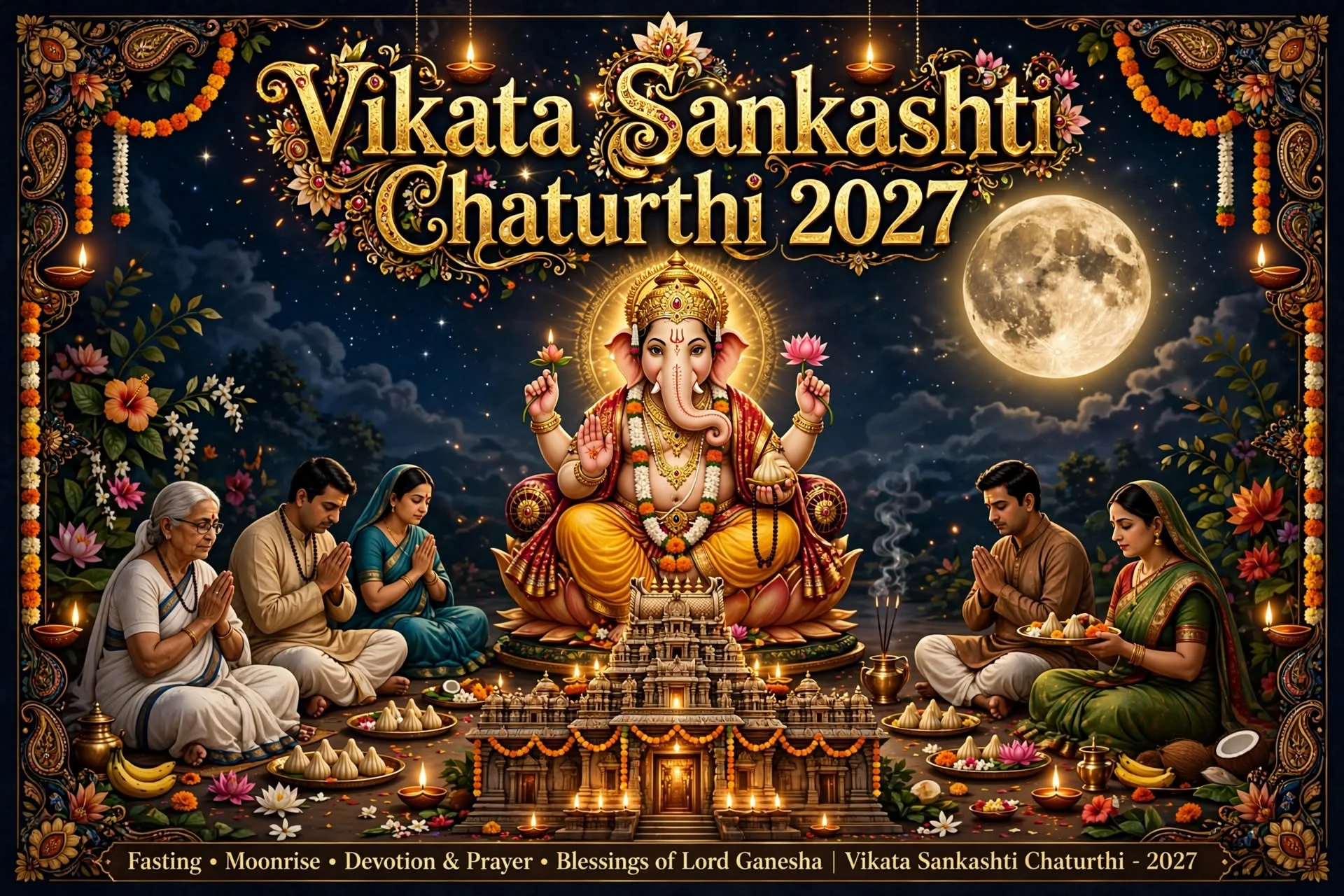
Saturday, Apr 24, 2027
Vikata Sankashti
Vikata Sankashti Chaturthi is an auspicious fasting day dedicated to Lord Ganesha, celebrated on the fourth lunar day of the waning moon (Krishna Paksha Chaturthi) following Chaitra Purnima. In the traditional Purnimanta calendar, this tithi falls in the month of Vaishakha, while in the Amanta calendar followed in Maharashtra, Gujarat, and southern India, it falls in the month of Chaitra. Dedicated to 'Vikata Ganapati'—the fierce, formidable, and obstacle-crushing form of Lord Ganesha—this sacred fast possesses the divine power to demolish the most insurmountable hardships and emotional turmoil.
View Festival Guide
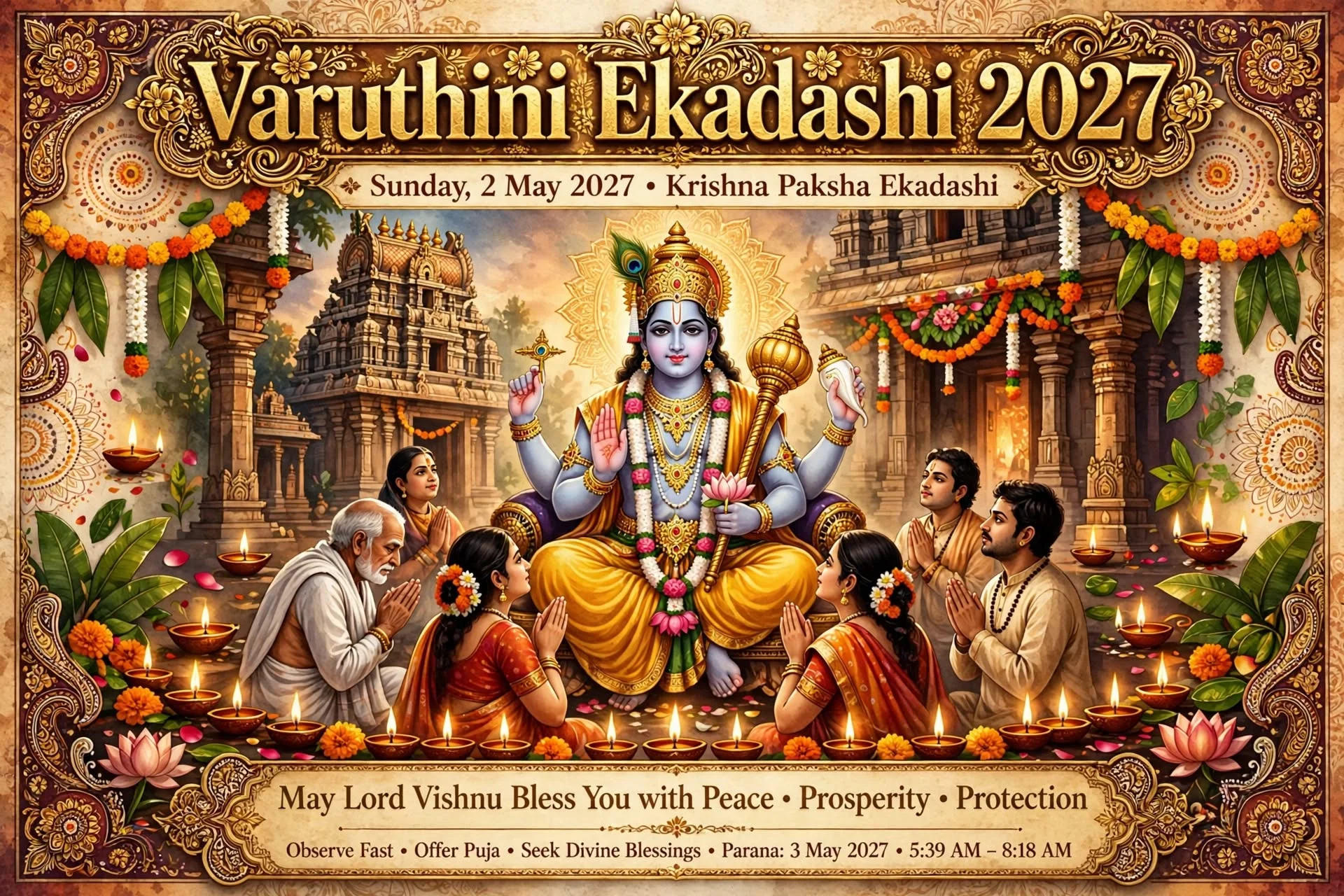
Sunday, May 2, 2027
Varuthini Ekadashi
Varuthini Ekadashi, also known as Baruthani Ekadashi or Varuthini Ekadashi Vrat, is an important Hindu fasting festival dedicated to Lord Vishnu. It is observed on the Krishna Paksha Ekadashi (eleventh lunar day of the waning moon) during the month of Vaishakha according to the North Indian Purnimanta calendar. In regions following the Amanta calendar, the same observance falls during Chaitra Krishna Paksha. The Sanskrit word Varuthini is associated with protection, armour, and divine safeguarding, symbolizing the protective grace of Lord Vishnu for devotees who observe this sacred vrata with faith and discipline.
View Festival Guide
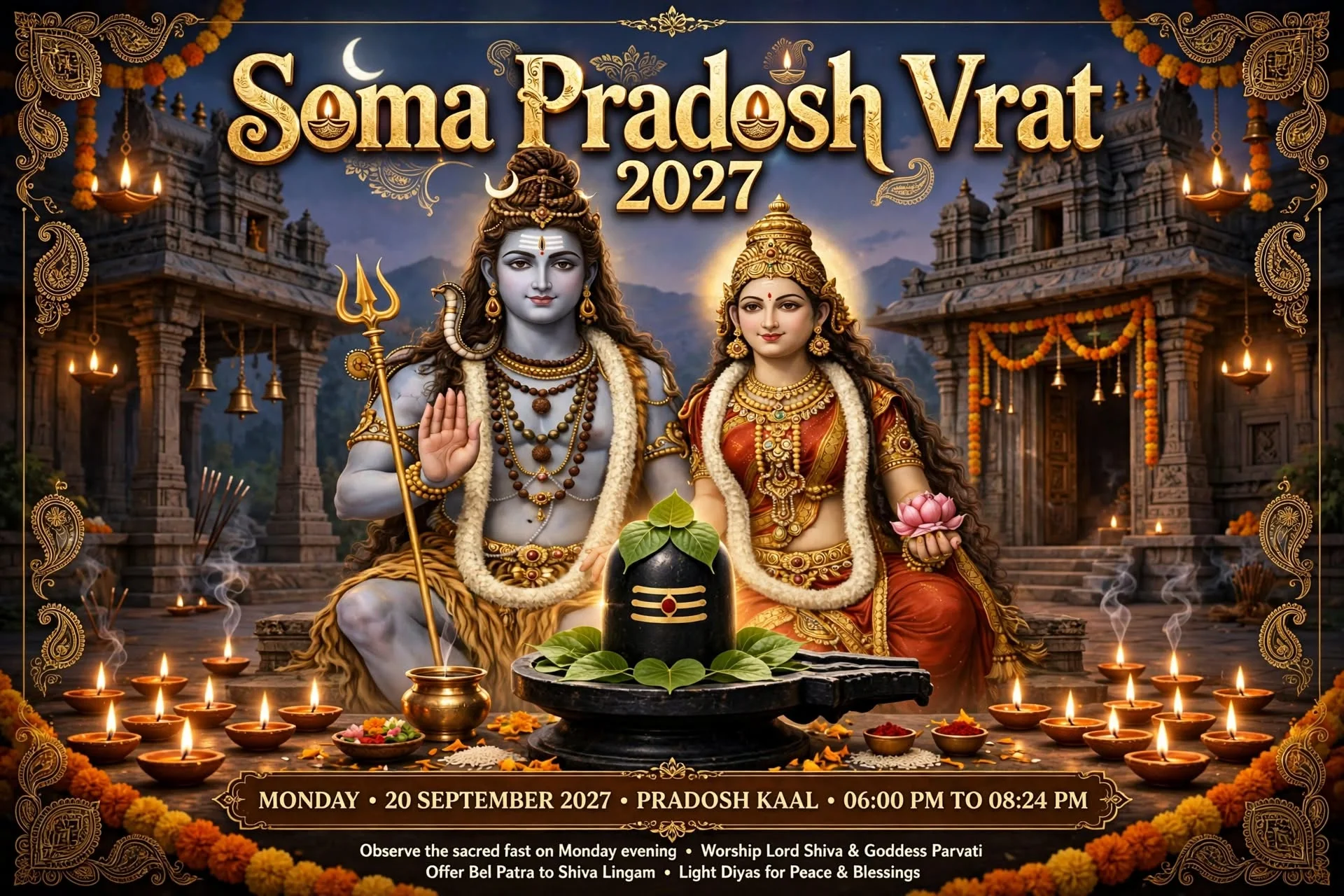
Monday, May 3, 2027
Soma Pradosh Vrat
Soma Pradosh Vrat, also known as Som Pradosh Vrat or Soma Trayodashi, is a Hindu fasting and worship observance dedicated primarily to Lord Shiva. It is observed when Trayodashi, the thirteenth lunar day of either Shukla Paksha or Krishna Paksha, coincides with Monday. Monday is traditionally associated with Lord Shiva, which gives this Pradosh observance its name.
View Festival Guide

Thursday, May 6, 2027
Darsha Amavasya
Darsha Amavasya is a significant new moon observance in the Hindu calendar designating the specific night when the Moon is completely invisible to the human eye, having fully merged into the conjunction of the Sun.
View Festival Guide

Thursday, May 6, 2027
Anvadhan
Anvadhan (अन्वाधान) is an ancient, highly revered Vedic ritual and spiritual observance in Sanatana Dharma performed on the day immediately preceding the New Moon (Amavasya) or Full Moon (Purnima). Rooted in the pristine traditions of the Shrauta and Grihya Sutras, Anvadhan literally translates to 'the solemn placing and replenishment of sacred fuel wood into the consecrated Vedic fires'. In traditional Vedic ritualism, householders (Grihasthas) and priests who maintain the sacred Agnihotra fires perform Anvadhan to prepare the sacrificial altars for the grand Darsha Yajna (New Moon sacrifice) or Paurnamasa Yajna (Full Moon sacrifice) scheduled for the following day.
View Festival Guide
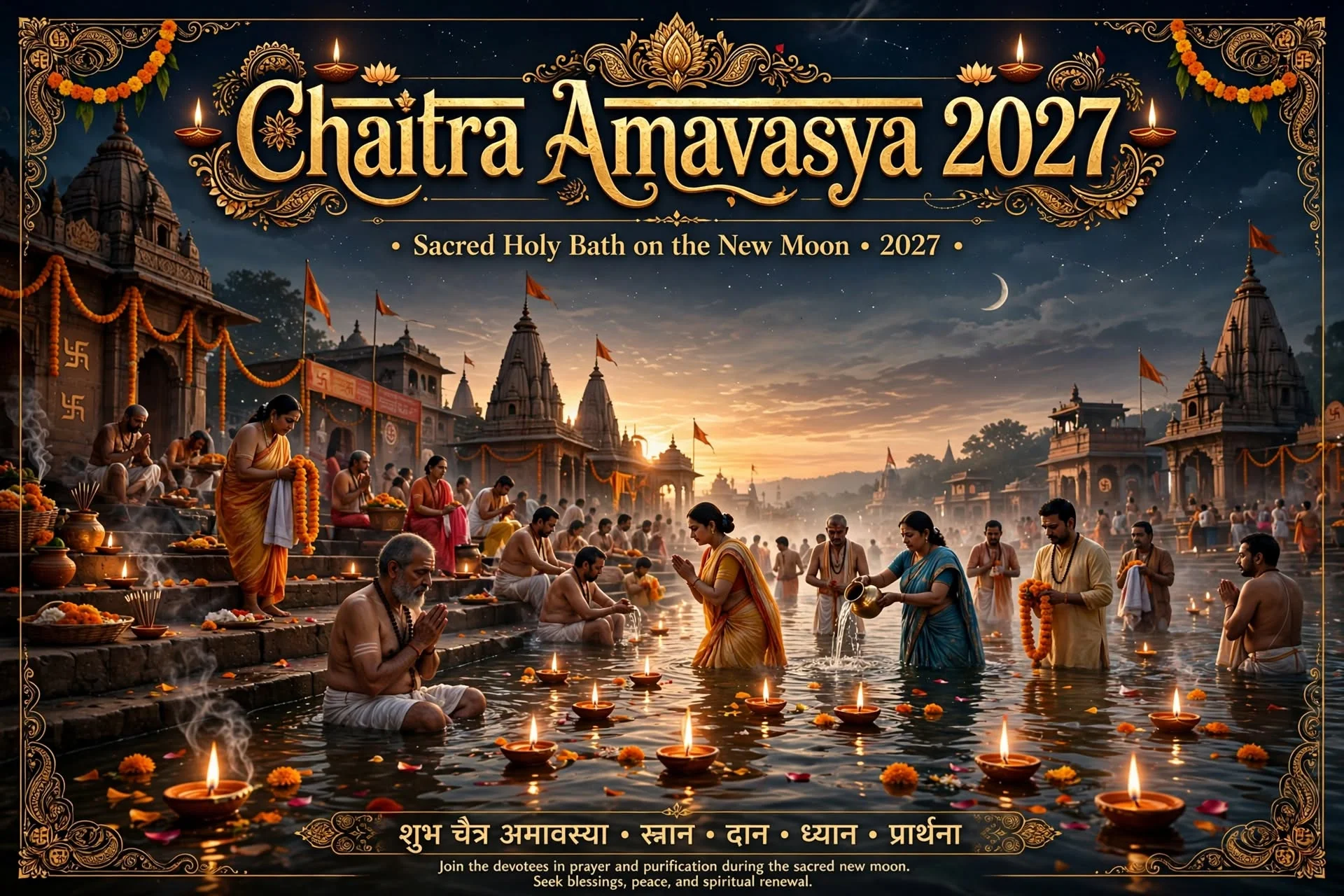
Thursday, May 6, 2027
Chaitra Amavasya
Chaitra Amavasya is the new-moon day observed during the Hindu lunar month of Chaitra. Amavasya marks the final Tithi of Krishna Paksha, when the Moon is not visible in the night sky. This day holds religious significance for ancestral remembrance, Pitru Tarpan, Shraddha, holy bathing and charitable activities.
View Festival Guide

Friday, May 7, 2027
Chandra Darshana
Chandra Darshana is a revered monthly Hindu observance dedicated to sighting, venerating, and offering oblation to the delicate waxing crescent Moon immediately following the new moon (Amavasya), typically occurring during the twilight of Shukla Paksha Pratipada or Dwitiya.
View Festival Guide
Friday, May 7, 2027
Ishti
Ishti is a foundational Vedic ritual observance appearing prominently in Hindu Panchangs on the Pratipada tithi (the first lunar day) following either Amavasya (new moon) or Purnima (full moon), marking the prescribed performance day for the fortnightly Vedic Darsha-Purnamasa sacrifices.
View Festival Guide