




Vikata Sankashti Chaturthi is an auspicious fasting day dedicated to Lord Ganesha, celebrated on the fourth lunar day of the waning moon (Krishna Paksha Chaturthi) following Chaitra Purnima. In the traditional Purnimanta calendar, this tithi falls in the month of Vaishakha, while in the Amanta calendar followed in Maharashtra, Gujarat, and southern India, it falls in the month of Chaitra. Dedicated to 'Vikata Ganapati'—the fierce, formidable, and obstacle-crushing form of Lord Ganesha—this sacred fast possesses the divine power to demolish the most insurmountable hardships and emotional turmoil.
Vikata Sankashti 2027: Date, Puja Timings, Rituals & Stories
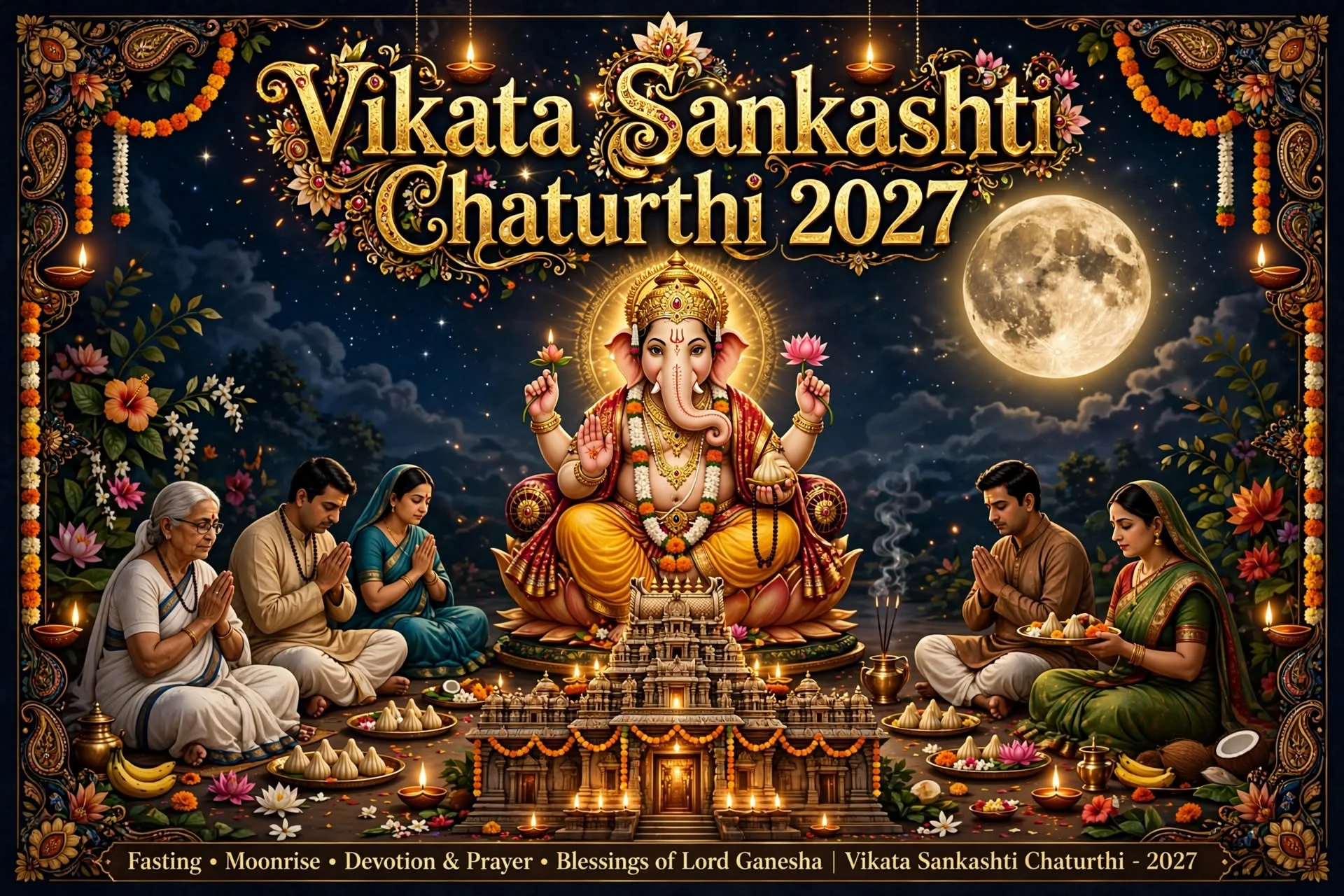
Vikata Sankashti Timings & Panchang
Important festival dates and auspicious timings
Usha Arghya (Sunrise)
06:52 am
Sandhya Arghya (Sunset)
06:17 pm
Start Date
Wednesday, 24 Feb 2027
Puja Muhurat
06:17 pm – 07:33 pm
Vikata Sankashti
The antiquity and spiritual glory of Vikata Sankashti are extolled in the Ganesha Purana, Mudgala Purana, and Bhavishya Purana. According to the Mudgala Purana, Lord Ganesha assumed the gigantic, formidable avatar of Vikata to vanquish the demon Kamasura, the cosmic personification of unrestrained lust and sensory craving who had dethroned the gods and captured the celestial realms. Riding the divine peacock (Mayurasana), Vikata Ganapati conquered the demon and restored righteousness, establishing this Chaturthi as a day of liberation from negative inner tendencies and worldly calamities.
Devotees observe Vikata Sankashti with a strict dawn-to-moonrise fast, abstaining from water or partaking only in light phalahari food. In the evening, as the moon ascends the horizon, worshippers conduct elaborate Ganesha worship, offering twenty-one blades of fresh green Durva grass, fragrant red hibiscus flowers, pure cow-ghee lamps, and freshly steamed Modaks. The fast is concluded only after offering ceremonial Arghya to the Moon God (Chandra Deva), ensuring peace of mind, family prosperity, and unhindered success in all righteous endeavors.
Why is Vikata Sankashti Celebrated?
Vikata Sankashti Chaturthi is celebrated to seek the divine intervention of Lord Ganesha in dissolving insurmountable crises (Sankata), debt, illnesses, and inner psychological obstacles. By honoring the formidable Vikata avatar, devotees conquer sensory lust and ego, welcoming unhindered success and auspiciousness into their lives.
- Demolition of Insurmountable Crises: The word 'Sankashti' literally means 'deliverance from distress', rescuing devotees from acute difficulties.
- Vanquishing Kamasura (Sensory Lust): Celebrates Vikata Ganapati defeating the demon of lust, instilling self-control, moral purity, and focus.
- Removal of Obstacles (Vighna Harana): Clears stumbling blocks in career, education, marriage, and financial stability through Ganesha's grace.
- Pacification of Lunar & Mercury Afflictions: Observing the fast and offering Arghya to the Moon pacifies mental anxiety and emotional instability.
Scriptural Origin & The Defeat of Kamasura
The Rise of Kamasura and the Tyranny of Lust
The Mudgala Purana recounts that in an ancient cosmic cycle, the demon of unrestrained sensual desire, Kamasura, was born from the seed of Lord Shiva when Shiva was infatuated with Lord Vishnu's enchanting Mohini avatar. Kamasura performed severe penance to propitiate Lord Shiva, receiving a boon of invincibility across all realms.
Blinded by arrogance, Kamasura unleashed moral degradation across the three worlds, defeating the Devas and imprisoning King Mahishmati. The celestial deities wandered destitute, their spiritual powers drained by the overwhelming force of cosmic lust and sensory craving.
The Advent of Vikata Ganapati
Guided by the divine sage Mudgala, the afflicted gods gathered to perform penance dedicated to Lord Ganesha. Responding to their earnest prayers, the Supreme Lord manifested as 'Vikata Ganapati'—a formidable, gigantic cosmic manifestation with a ferocious elephant countenance, mounted upon a divine peacock (Mayura).
Vikata Ganapati confronted Kamasura on the cosmic battlefield. Striking the demon with divine weapons and radiating the supreme light of spiritual discrimination (Viveka), Ganesha shattered the demon's illusions. Overcome with awe and remorse, Kamasura surrendered at Ganesha's lotus feet, taking a vow never to harass devotees who seek refuge in the Lord, establishing Vikata Sankashti as an eternal shield against moral and material downfall.
Source: Mudgala Purana & Ganesha Purana
Metaphysical & Yogic Depth of Vikata Sankashti
The Symbolism of the 'Vikata' Form
The Sanskrit term 'Vikata' signifies that which is formidable, gigantic, unconventional, and beyond the comprehension of ordinary human intellect. When human efforts fail and obstacles appear insurmountable, Ganesha assumes his Vikata form to dismantle karmic barriers that ordinary methods cannot resolve.
His mount, the peacock, symbolizes the mastery over sensory ego, pride, and restlessness. Worshipping Vikata Ganapati transforms the seeker's chaotic mental impulses into focused spiritual discernment, awakening the dormant spiritual intelligence seated at the Muladhara chakra.
The Esoteric Mystery of Moonrise Worship
In Vedic tradition, the Moon represents the mind, and the fourth tithi (Chaturthi) represents the state of Turiya (transcendental awareness) beyond waking, dreaming, and deep sleep. However, the waning moon on Krishna Chaturthi represents declining mental power and susceptibility to negative emotions.
Fasting throughout the day and offering Arghya to the Moon only after worshipping Ganesha balances the mind's emotional fluctuations, transmuting mental weaknesses into spiritual strength and tranquility.
Rituals & Fasting Observance for Vikata Sankashti
Daytime Discipline and Ganesha Worship
Devotees wake before sunrise during Brahma Muhurta, take a purifying bath, and take a solemn vow (Sankalpa) of fasting until moonrise. The altar is spread with yellow or red cloth, where an idol of Lord Ganesha is consecrated.
Throughout the day, devotees observe strict fasting (Nirjala without water or Phalahari taking milk and fruits). Prayers are offered with the continuous chanting of the Ganesha Atharvashirsha, the Sankata Nashana Ganesha Stotra, and 108 repetitions of Om Gam Ganapataye Namah.
Evening Moonrise Arghya and Fast Breaking
In the evening, after sunset, the final puja is conducted. The deity is offered twenty-one fresh blades of Durva grass, red flowers, and freshly made steamed Modaks or Til Laddus. Devotees eagerly wait for the precise moonrise timing.
Upon sighting the moon, worshippers offer Arghya using water mixed with raw milk, chandan, and white flowers in a brass or silver vessel, prostrating before the Moon God. Devotees then consume the Modak prasad, successfully breaking their fast in the company of family members.
Vikata Sankashti Puja Vidhi (Step by Step)
- 1
Brahma Muhurta Snana & Sankalpa
Wake before sunrise, take a holy bath with Gangajal-infused water, wear clean red or yellow clothes, and recite the solemn vow of Vikata Sankashti fast.
- 2
Altar & Peetha Sthapana
Cleanse the family shrine, spread a clean red or yellow silk cloth over a wooden chauki, draw an ashtadal lotus with rice flour, and place Ganesha's idol.
- 3
Kalash Sthapana
Establish a sacred copper Kalash filled with holy water, betel nut, silver coin, and mango leaves, placing a coconut wrapped in red thread on top.
- 4
Dhyan & Avahana
Meditate upon the formidable form of Vikata Ganapati mounted upon a peacock, holding the noose, goad, and modak, invoking his divine presence.
- 5
Panchamrit Abhishekam
Bathe the idol of Lord Ganesha with raw milk, curd, honey, cow ghee, and sugar, followed by a thorough ceremonial cleansing with rose-scented Gangajal.
Vikata Sankashti Puja Samagri List
Altar & Deity Consecration Materials
Sacred articles required to establish the sanctum and perform Ganesha abhishekam.
- Idol of Lord Ganesha (brass, silver, or clay)
- Yellow or red silk altar cloth and clean wooden chauki
- Copper or brass Kalash, raw coconut, and fresh mango leaves
- Gangajal, raw cow milk, curd, honey, cow ghee, and sugar for Panchamrit
Botanical Offerings & Fragrances
Sacred grass, red blossoms, and traditional adornments beloved by Ganapati.
- Twenty-one clean green Durva grass blades tied in small bunches
- Fresh red hibiscus (Gudhal) flowers and red rose petals
- Pure orange-red Sindoor, red sandalwood paste (Rakta Chandan), and Akshata
- Yajnopavita (sacred thread), red moli thread, and Guggul dhoop sticks
- Pure cow-ghee brass lamps, cotton wicks, and pure camphor
Naivedya & Moon Arghya Ingredients
Traditional sweets and liquid oblations for the Moon God.
- Authentic steamed Ukadiche Modaks (rice flour, jaggery, coconut, cardamom) or Motichoor Laddus
- Fresh seasonal fruits (bananas, pomegranates, apples), and dry fruits
Mantras and Prayers for Vikata Sankashti
Vikata Sankashti Vrat Rules and Fasting Guidelines
Observance Guidelines for Vikata Sankashti
Specific spiritual rules and dietary disciplines to observe during Sankashti Chaturthi.
- Fasting Window: Observe strict fasting from sunrise until the moon is sighted at night; taking water or light milk and fruits if medically needed.
- Mandatory Moonrise Arghya: The fast must only be broken after performing the ritual Arghya to the rising Moon God.
- 21 Durva blades: Offering 21 blades of fresh Durva grass to Ganesha is essential to quench the Lord's internal fire and invoke his grace.
- Peaceful Mind: Maintain complete control over anger, lustful thoughts, and irritability throughout the day.
Dos and Don'ts of Vikata Sankashti
Good Practices (Do's)
- Wake early during Brahma Muhurta, bathe, and wear clean red or yellow clothes.
- Offer twenty-one fresh blades of Durva grass and red hibiscus flowers to Lord Ganesha.
- Chant the Ganapati Atharvashirsha and the Sankata Nashana Stotra.
- Offer Arghya to the rising moon with raw milk and water before breaking the fast.
Things to Avoid (Don'ts)
Vikata Sankashti Across Regions
| Region | Local Name |
|---|---|
| Maharashtra | Sankashti Chaturthi |
| Karnataka & Southern India | Sankashta Hara Chathurthi |
| Northern India | Sankashti Ganesh Chauth |
Vikata Sankashti FAQs
What is Vikata Sankashti Chaturthi?
Vikata Sankashti Chaturthi is a sacred fasting day dedicated to the 'Vikata' form of Lord Ganesha, observed on Krishna Paksha Chaturthi after Chaitra Purnima to remove insurmountable obstacles.
Why is this form of Lord Ganesha named Vikata?
'Vikata' means formidable and gigantic; Ganesha assumed this form mounted on a peacock to vanquish Kamasura, the demon of uncontrolled sensory desire.
Why is the fast broken only after sighting the Moon?
The Moon governs the mind; offering Arghya to the Moon on Chaturthi calms emotional turbulence, dispels anxiety, and brings spiritual peace.
Upcoming Festivals
View All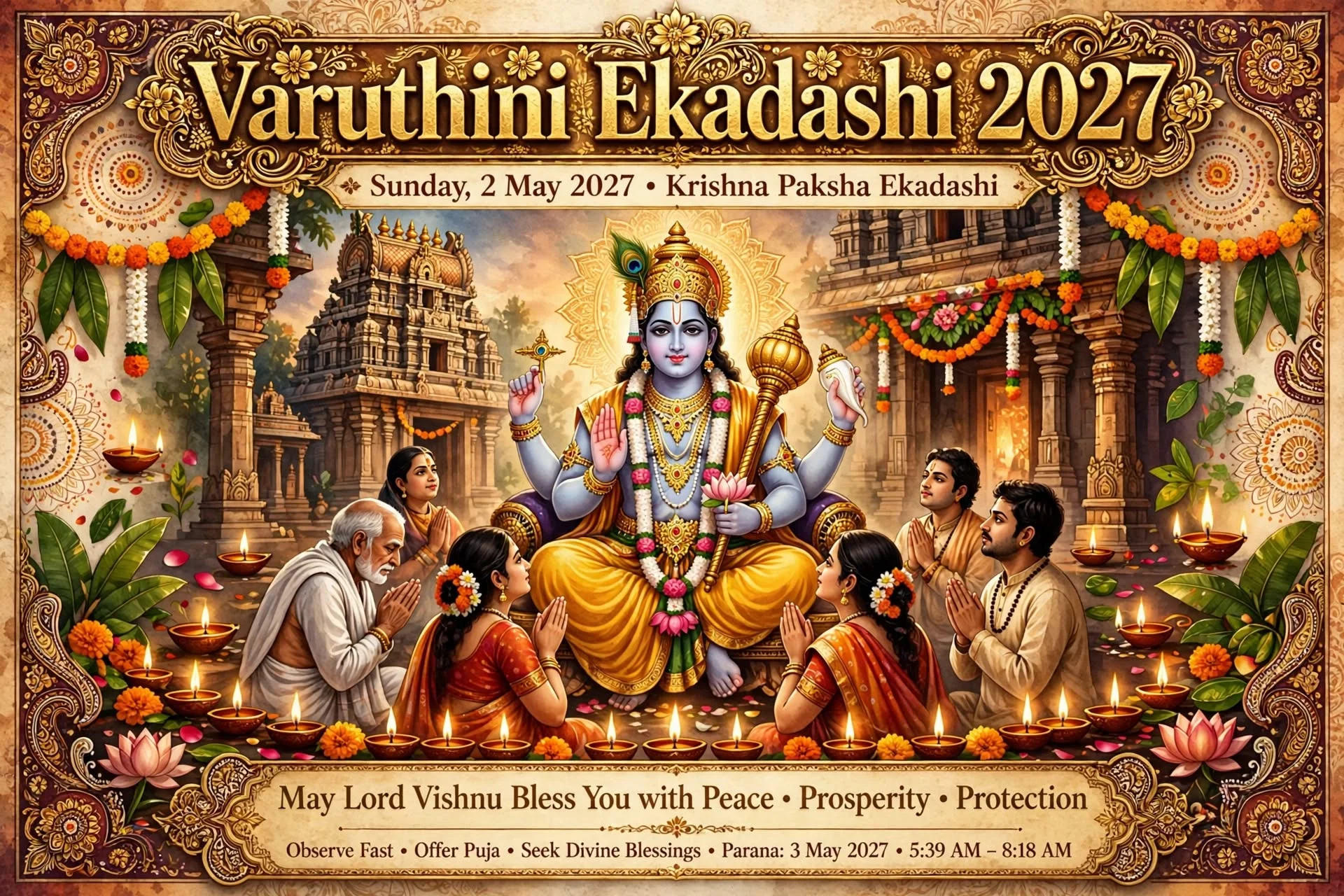
Sunday, May 2, 2027
Varuthini Ekadashi
Varuthini Ekadashi, also known as Baruthani Ekadashi or Varuthini Ekadashi Vrat, is an important Hindu fasting festival dedicated to Lord Vishnu. It is observed on the Krishna Paksha Ekadashi (eleventh lunar day of the waning moon) during the month of Vaishakha according to the North Indian Purnimanta calendar. In regions following the Amanta calendar, the same observance falls during Chaitra Krishna Paksha. The Sanskrit word Varuthini is associated with protection, armour, and divine safeguarding, symbolizing the protective grace of Lord Vishnu for devotees who observe this sacred vrata with faith and discipline.
View Festival Guide
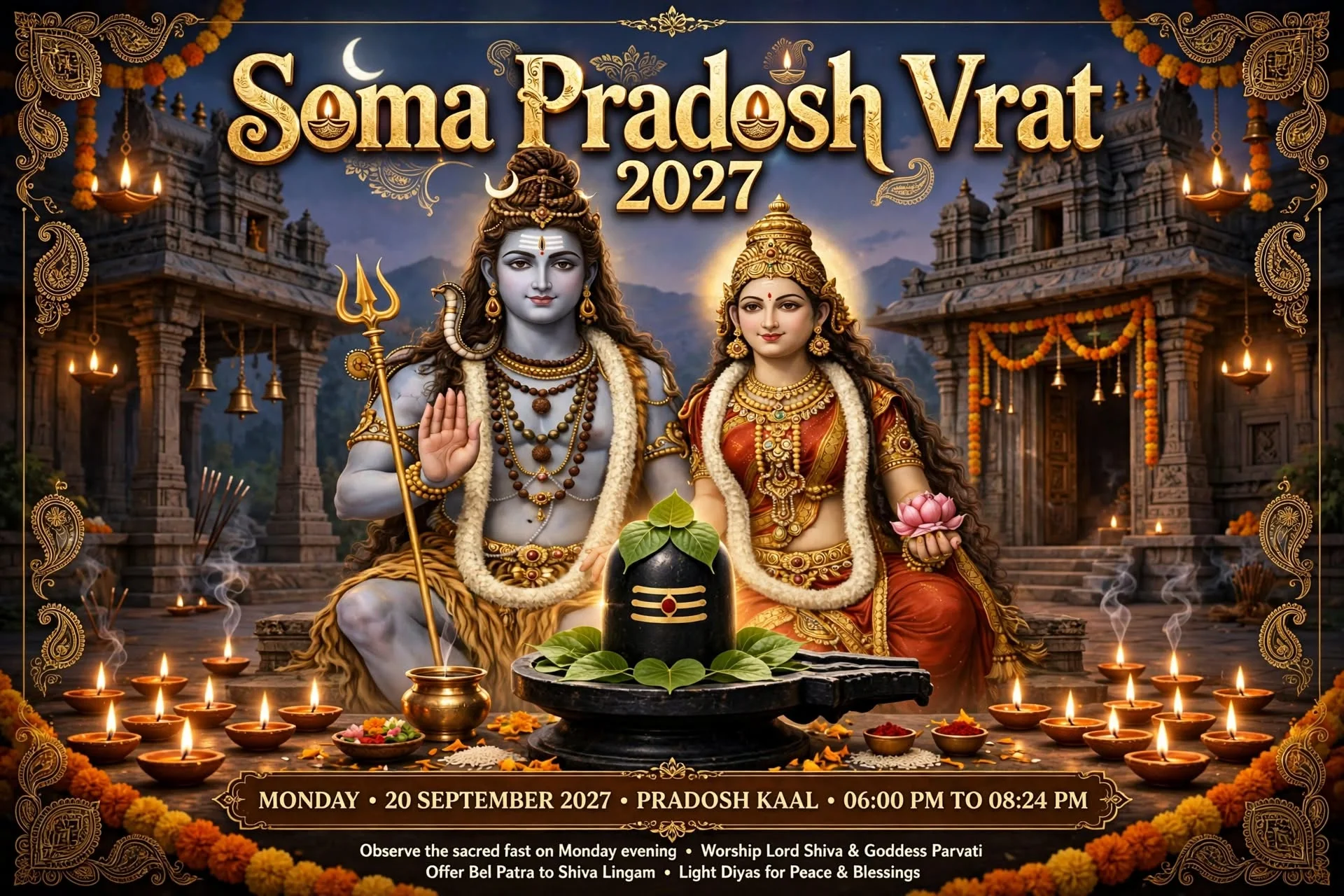
Monday, May 3, 2027
Soma Pradosh Vrat
Soma Pradosh Vrat, also known as Som Pradosh Vrat or Soma Trayodashi, is a Hindu fasting and worship observance dedicated primarily to Lord Shiva. It is observed when Trayodashi, the thirteenth lunar day of either Shukla Paksha or Krishna Paksha, coincides with Monday. Monday is traditionally associated with Lord Shiva, which gives this Pradosh observance its name.
View Festival Guide

Thursday, May 6, 2027
Anvadhan
Anvadhan (अन्वाधान) is an ancient, highly revered Vedic ritual and spiritual observance in Sanatana Dharma performed on the day immediately preceding the New Moon (Amavasya) or Full Moon (Purnima). Rooted in the pristine traditions of the Shrauta and Grihya Sutras, Anvadhan literally translates to 'the solemn placing and replenishment of sacred fuel wood into the consecrated Vedic fires'. In traditional Vedic ritualism, householders (Grihasthas) and priests who maintain the sacred Agnihotra fires perform Anvadhan to prepare the sacrificial altars for the grand Darsha Yajna (New Moon sacrifice) or Paurnamasa Yajna (Full Moon sacrifice) scheduled for the following day.
View Festival Guide
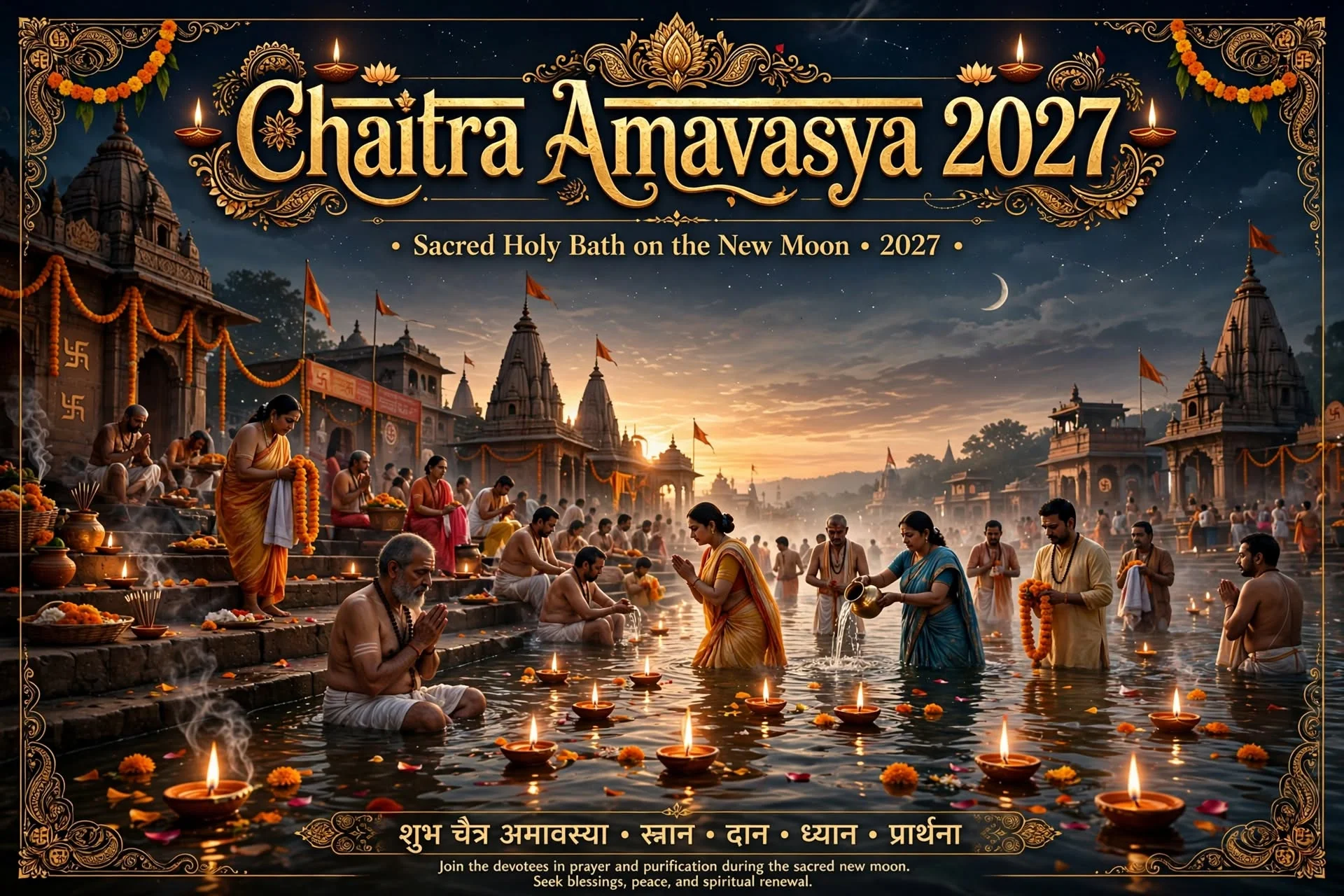
Thursday, May 6, 2027
Chaitra Amavasya
Chaitra Amavasya is the new-moon day observed during the Hindu lunar month of Chaitra. Amavasya marks the final Tithi of Krishna Paksha, when the Moon is not visible in the night sky. This day holds religious significance for ancestral remembrance, Pitru Tarpan, Shraddha, holy bathing and charitable activities.
View Festival Guide

Thursday, May 6, 2027
Darsha Amavasya
Darsha Amavasya is a significant new moon observance in the Hindu calendar designating the specific night when the Moon is completely invisible to the human eye, having fully merged into the conjunction of the Sun.
View Festival Guide

Friday, May 7, 2027
Ishti
Ishti is a foundational Vedic ritual observance appearing prominently in Hindu Panchangs on the Pratipada tithi (the first lunar day) following either Amavasya (new moon) or Purnima (full moon), marking the prescribed performance day for the fortnightly Vedic Darsha-Purnamasa sacrifices.
View Festival Guide
Friday, May 7, 2027
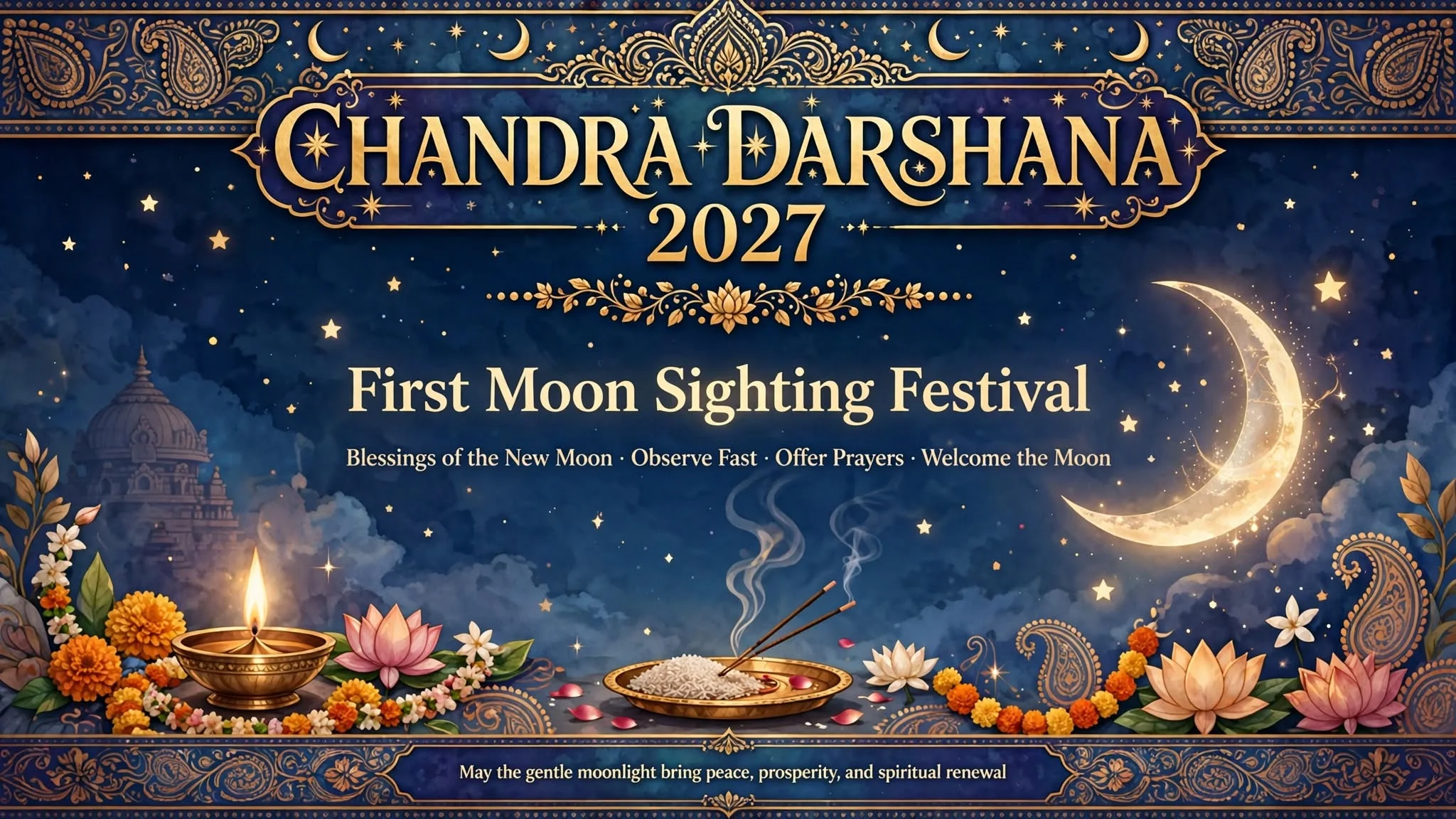
Chandra Darshana
Chandra Darshana is a revered monthly Hindu observance dedicated to sighting, venerating, and offering oblation to the delicate waxing crescent Moon immediately following the new moon (Amavasya), typically occurring during the twilight of Shukla Paksha Pratipada or Dwitiya.
View Festival Guide
Saturday, May 8, 2027
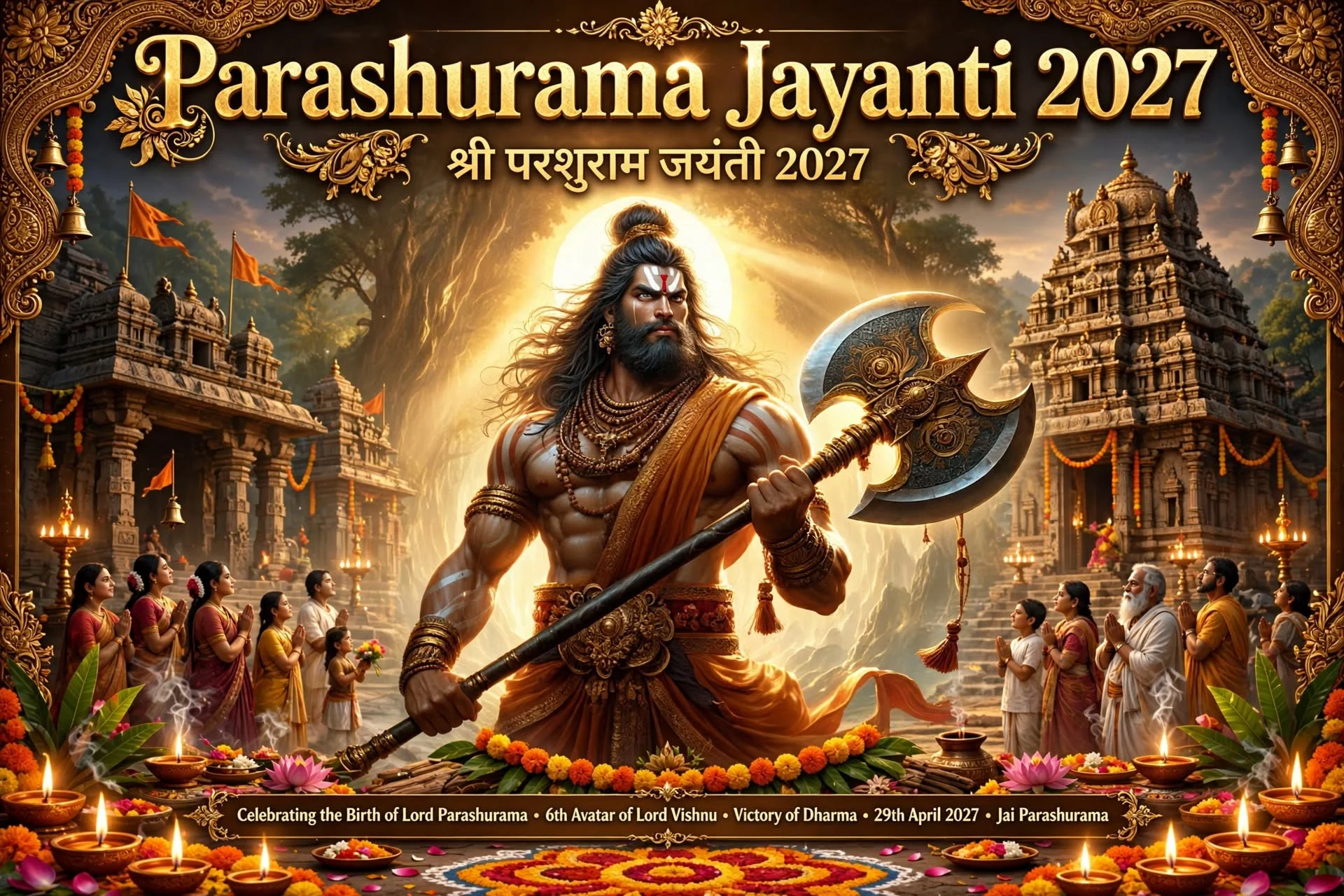
Parashurama Jayanti
Parashurama Jayanti marks the auspicious appearance anniversary of Bhagavan Parashurama, the sixth divine incarnation (Avatar) of Lord Vishnu, manifesting during the Treta Yuga on the sacred tithi of Vaishakha Shukla Tritiya. Unlike other temporary avatars who dissolved into cosmic consciousness after fulfilling their earthly mission, Parashurama is revered as one of the eight immortal beings (Ashta Chiranjivi) who eternally dwell on earth, residing in penance upon Mount Mahendra until the arrival of Kalki Avatar.
View Festival Guide