




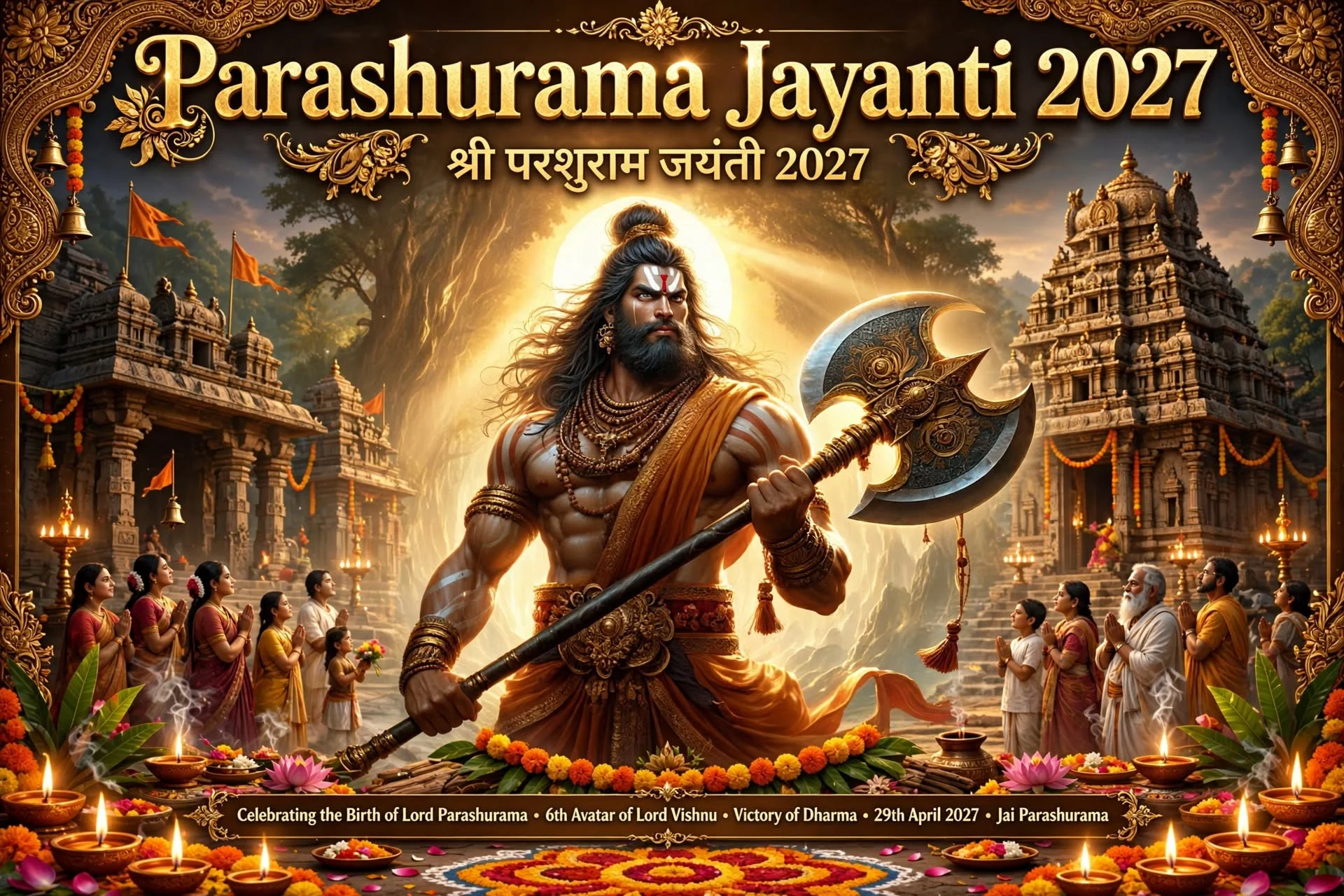
Parashurama Jayanti marks the auspicious appearance anniversary of Bhagavan Parashurama, the sixth divine incarnation (Avatar) of Lord Vishnu, manifesting during the Treta Yuga on the sacred tithi of Vaishakha Shukla Tritiya. Unlike other temporary avatars who dissolved into cosmic consciousness after fulfilling their earthly mission, Parashurama is revered as one of the eight immortal beings (Ashta Chiranjivi) who eternally dwell on earth, residing in penance upon Mount Mahendra until the arrival of Kalki Avatar.
Parashurama Jayanti 2027: Date, Puja Timings, Rituals & Stories
Parashurama Jayanti Timings & Panchang
Important festival dates and auspicious timings
Usha Arghya (Sunrise)
05:35 am
Sandhya Arghya (Sunset)
07:01 pm
Start Date
Sunday, 9 May 2027
Puja Muhurat
11:43 am – 09:03 am
Parashurama Jayanti
Born as the youngest son of the venerable sage Jamadagni (one of the Saptarishis) and Mata Renuka in the illustrious Bhrigu lineage (Bhriguvamsha), Parashurama embodied an unprecedented synthesis of Brahminical spiritual wisdom (Brahma Tejas) and warrior valor (Kshatra Tejas). He wielded the celestial battle-axe (Parashu) gifted by Lord Shiva to vanquish tyrannical rulers who had corrupted royal power and terrorized righteous society.
Observed with immense reverence across India, particularly in Konkan, Kerala, Goa, and Maharashtra, this festival is celebrated through dawn worship, recitation of the Parashurama Stotra, discussions on righteous warfare (Dharma-Yuddha), and distribution of cooling foods and water in honor of the great warrior-sage.
Why is Parashurama Jayanti Celebrated?
Parashurama Jayanti is celebrated to honor the restoration of cosmic righteousness (Dharma) against autocratic tyranny. When the powerful thousand-armed king Kartavirya Arjuna (Sahasrabahu) and corrupt monarchs abused their martial strength to oppress sages, plunder sacred cows, and destroy peaceful ashrams, Lord Vishnu incarnated as Parashurama to re-establish the balance of power.
It is also celebrated to venerate the supreme filial obedience, ascetic discipline, and unyielding protection of the vulnerable demonstrated by Parashurama, reminding humanity that power without spiritual wisdom leads to self-destruction.
- Commemorates the descent of the sixth Vishnu Avatar, the eternal Chiranjivi warrior-sage.
- Celebrates the triumph of righteous duty and ethical balance over authoritarian arrogance.
- Honors the reclamation and protection of coastal lands including Konkan, Goa, and Kerala (Parashurama Kshetra).
- Inspires courage, mastery over the senses, and the protection of truth and righteousness.
The Descent of the Warrior-Sage and the Vanquishing of Tyranny
Birth in the Bhrigu Clan and the Boon of Lord Shiva
As narrated in the Mahabharata (Vana Parva) and the Srimad Bhagavatam (Ninth Canto), sage Jamadagni and Renuka performed severe penance, resulting in the divine birth of their son, initially named Ramabhadra. Young Rama traveled to the Himalayas and engaged in arduous tapasya to propitiate Lord Shiva.
Pleased by his unmatched devotion and prowess, Shiva bestowed upon him divine weaponry, foremost among them the invincible Parashu (battle-axe), and initiated him into the supreme arts of warfare and spiritual enlightenment, earning him the celebrated name Parashurama.
The Conflict with Sahasrarjuna and Reclamation of Dharma
The pivotal turning point occurred when King Kartavirya Arjuna visited Jamadagni's hermitage. The sage hospitably fed the king's massive army with the help of Kamadhenu (the wish-fulfilling divine cow). Blighted by greed, the king forcibly abducted the divine cow. In retribution, Parashurama marched to the capital Mahishmati and severed the king's thousand arms, slaying him and rescuing the cow.
Later, the vengeful sons of Arjuna attacked the hermitage in Parashurama's absence and martyred the meditating sage Jamadagni. Overcome with righteous fury against unchecked feudal barbarism, Parashurama vowed to rid the earth of tyrannical, unrighteous kshatriya rulers, fulfilling his campaign across twenty-one cycles and ultimately donating the conquered world to Sage Kashyapa before retiring to Mount Mahendra.
Source: Mahabharata, Vana Parva & Srimad Bhagavata Purana, Skandha 9
Synthesis of Wisdom and Action (Jnana and Karma)
Brahma-Tejas and Kshatra-Tejas in Harmony
Parashurama represents the vital truth that spiritual wisdom (Brahma Tejas) without the strength to defend it (Kshatra Tejas) becomes helpless, while martial strength without spiritual wisdom turns destructive. By uniting both, Parashurama teaches that society flourishes only when righteousness is backed by strength and power is governed by spiritual ethics.
Renunciation Following Victory
Unlike conquerors who establish personal dynasties, Parashurama gave away the entirety of conquered territories to Sage Kashyapa and the community, retreating to coastal rocks to perform lifelong meditation. This absolute detachment after performing colossal deeds epitomizes the highest Nishkama Karma.
Ritual Traditions and Temple Observances
Dawn Worship and Shodashopachara Puja
Devotees awaken early, bathe, and install an image or yantra of Lord Parashurama alongside Lord Vishnu. The altar is decorated with sandalwood, yellow flowers, and miniature symbolic representations of the bow and battle-axe, followed by recitation of the Parashurama Gayatri.
Community Processions and Coastal Festivities
In coastal areas of Maharashtra, Karnataka, and Kerala, grand processions carrying the idol of Parashurama are taken through towns with traditional drums (chenda), martial arts demonstrations (Kalaripayattu), and distribution of sweet panakam and cooling buttermilk.
Parashurama Jayanti Puja Vidhi (Step by Step)
- 1
Pratah Snana and Shuddhi
Take a dawn bath wearing clean yellow or white traditional clothing, cleansing the mind through deep breathing.
- 2
Sankalpa
Take sacred water, flowers, and akshata in hand, pledging to observe Parashurama Jayanti with devotion, truthfulness, and courage.
- 3
Deepa and Dhoopa Sthapana
Light a pure cow ghee lamp and fragrant sandalwood incense on a clean wooden altar draped in yellow cloth.
- 4
Lord Parashurama Avahana
Invoke Bhagavan Parashurama with palms joined, visualizing Him holding the glowing battle-axe and bow upon Mount Mahendra.
- 5
Panchamrita Snana
Offer ceremonial bath to the murti or Shaligram with milk, curd, honey, ghee, sugar, followed by pure fragrant Gangajal.
- 6
Parashurama Jayanti Puja Samagri List
Deity Worship and Consecration Materials
Sacred articles required for bathing, clothing, and worshipping Lord Parashurama.
- Idol or portrait of Bhagavan Parashurama / Shaligram
- Yellow cloth for altar and deity
- Pure sandalwood paste and kumkum
- Panchamrita ingredients
- Unbroken akshata and Gangajal
- Sacred thread (Yajnopavita)
Symbolic and Floral Offerings
Botanicals and symbolic representations of righteousness.
- Fresh yellow marigolds and white flowers
- Sacred Tulasi leaves and manjaris
- Small symbolic metal or wood Parashu (axe)
- Fragrant dhoop cones and cow ghee
- Bhimseni camphor for aarti
Traditional Naivedya Offerings
Cooling beverages and foods customary for Vaishakha celebrations.
- Panakam (jaggery, water, black pepper, cardamom)
- Spiced cooling buttermilk (Chhachh)
Mantras and Prayers for Parashurama Jayanti
Parashurama Jayanti Vrat Rules and Fasting Guidelines
Observance Rules and Sattvic Conduct
Fasting on Parashurama Jayanti emphasizes mental fortitude, control over anger, and physical purification.
- Observe a daytime fast partaking only of milk, fruits, or water
- Cultivate complete control over temper, irritability, and aggressive impulses
- Devote time to physical fitness, martial study, or reading classical epics
Charity and Parana Guidelines
Concluding the observance requires honoring spiritual scholars and sharing cooling drinks.
- Distribute panakam, water pots, and food to travelers and hardworking laborers
- Break the fast in the evening after sunset following aarti and distribution of prasadam
- Support educational institutions, traditional gurukuls, or cultural schools
Dos and Don'ts of Parashurama Jayanti
Good Practices (Do's)
- Wake up early, offer Arghya to the morning Sun, and pray for righteous strength.
- Worship Bhagavan Parashurama with sandalwood paste, yellow flowers, and panakam.
- Honor teachers, mentors, military personnel, and spiritual gurus.
- Practice self-discipline, mental calmness, and moral integrity.
- Donate cooling drinks, umbrellas, or books to students and seekers.
Parashurama Jayanti Across Regions
| Region | Local Name |
|---|---|
| Konkan Coast (Goa, Coastal Maharashtra & Karnataka) | Parashurama Jayanti / Parashurama Srishti |
| Kerala | Parashurama Kshetrotsavam |
| Northern & Central India (Madhya Pradesh, Rajasthan, Uttar Pradesh) | Bhagavan Parashurama Prakatotsav |
Parashurama Jayanti FAQs
Why is Parashurama considered a Chiranjivi (immortal)?
Scriptures declare that Parashurama was granted physical immortality to preserve Vedic knowledge, train future champions of dharma (including Bhishma, Drona, and Karna), and assist Kalki Avatar at the conclusion of Kali Yuga.
Why does Parashurama Jayanti coincide with Akshaya Tritiya?
Both sacred occasions occur on Vaishakha Shukla Tritiya. While Akshaya Tritiya celebrates cosmic abundance and eternal merit, Parashurama Jayanti specifically marks the divine birth of the sixth Vishnu avatar on that same auspicious day.
What weapon did Lord Parashurama use and where did he receive it?
He wielded the divine battle-axe known as the Parashu, which was gifted to him by Lord Shiva in the Himalayas as a reward for his supreme penance and devotion.
Upcoming Festivals
View All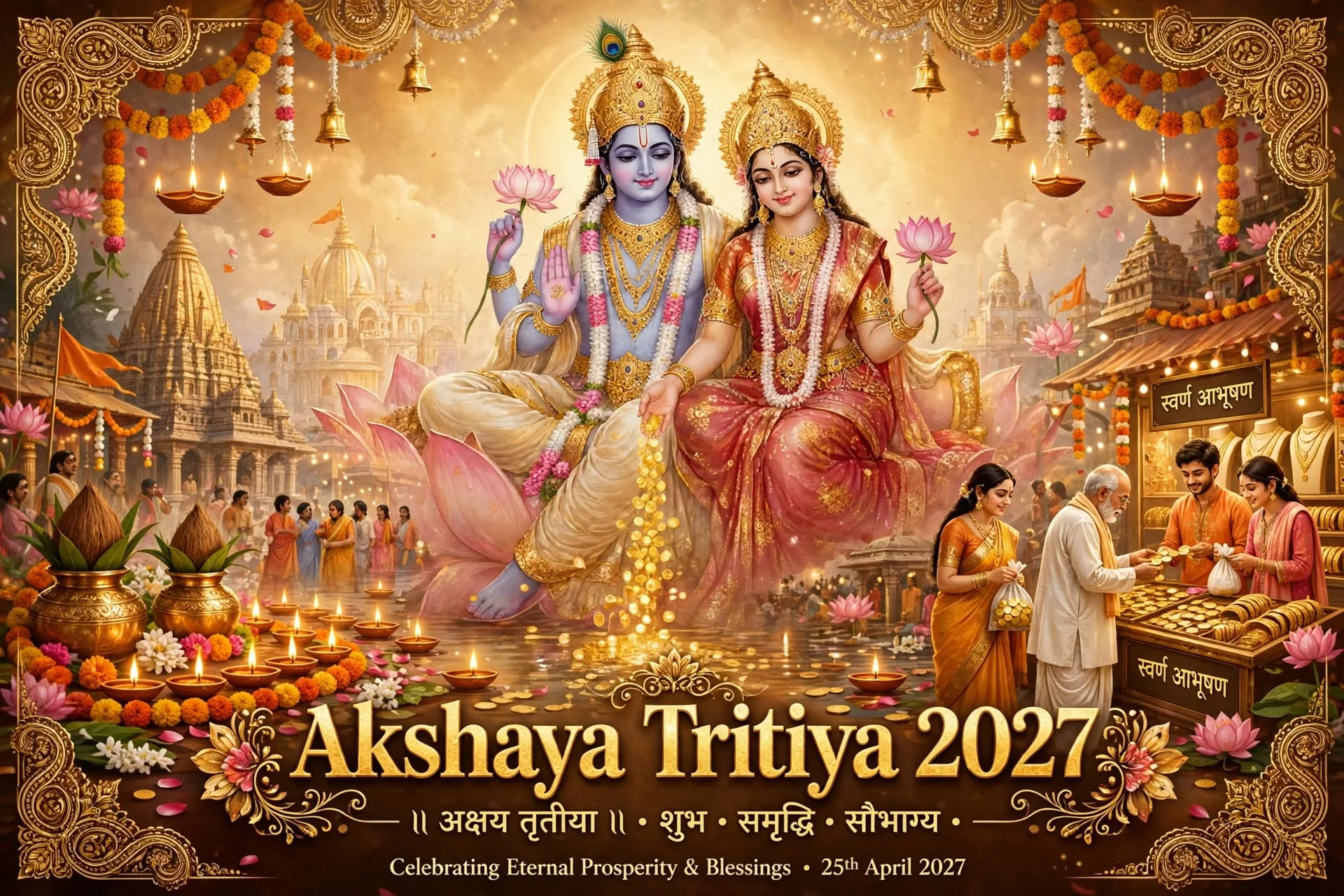
Sunday, May 9, 2027
Akshaya Tritiya
Akshaya Tritiya, also celebrated as Akha Teej, is universally celebrated as one of the four most naturally auspicious and unblemished astrological periods (Sade Teen Muhurat) in the Hindu calendar, occurring on the Shukla Paksha Tritiya (third lunar day) of the holy month of Vaishakha. The Sanskrit word "Akshaya" literally translates to "imperishable", "inexhaustible", or "that which never diminishes", signifying that any sacred action, charity, spiritual penance, or virtuous endeavor undertaken on this sacred tithi multiplies exponentially and bears eternal divine merit.
View Festival Guide
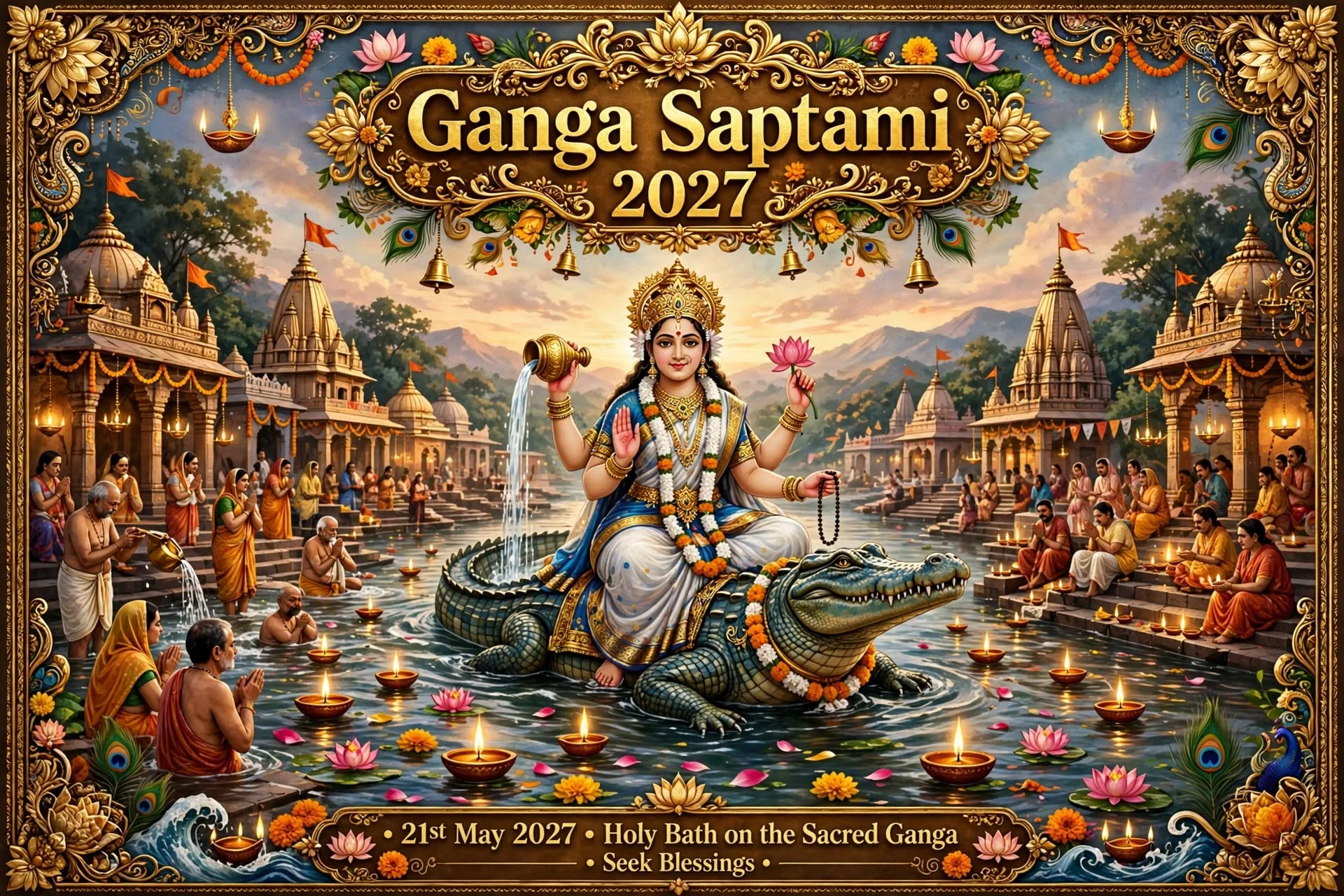
Wednesday, May 12, 2027
Ganga Saptami
Ganga Saptami, also revered as Ganga Pujan or Ganga Jayanti, is a sacred festival celebrated on the Shukla Paksha Saptami (seventh lunar day) of the holy month of Vaishakha. While Ganga Dussehra (in the subsequent month of Jyeshtha) commemorates the original descent of the heavenly river from the celestial realm onto Lord Shiva's matted locks and subsequently to the earth, Ganga Saptami specifically celebrates the rebirth or re-emergence of Mother Ganga from the ear of the revered Sage Jahnu, earning her the illustrious title "Jahnavi".
View Festival Guide
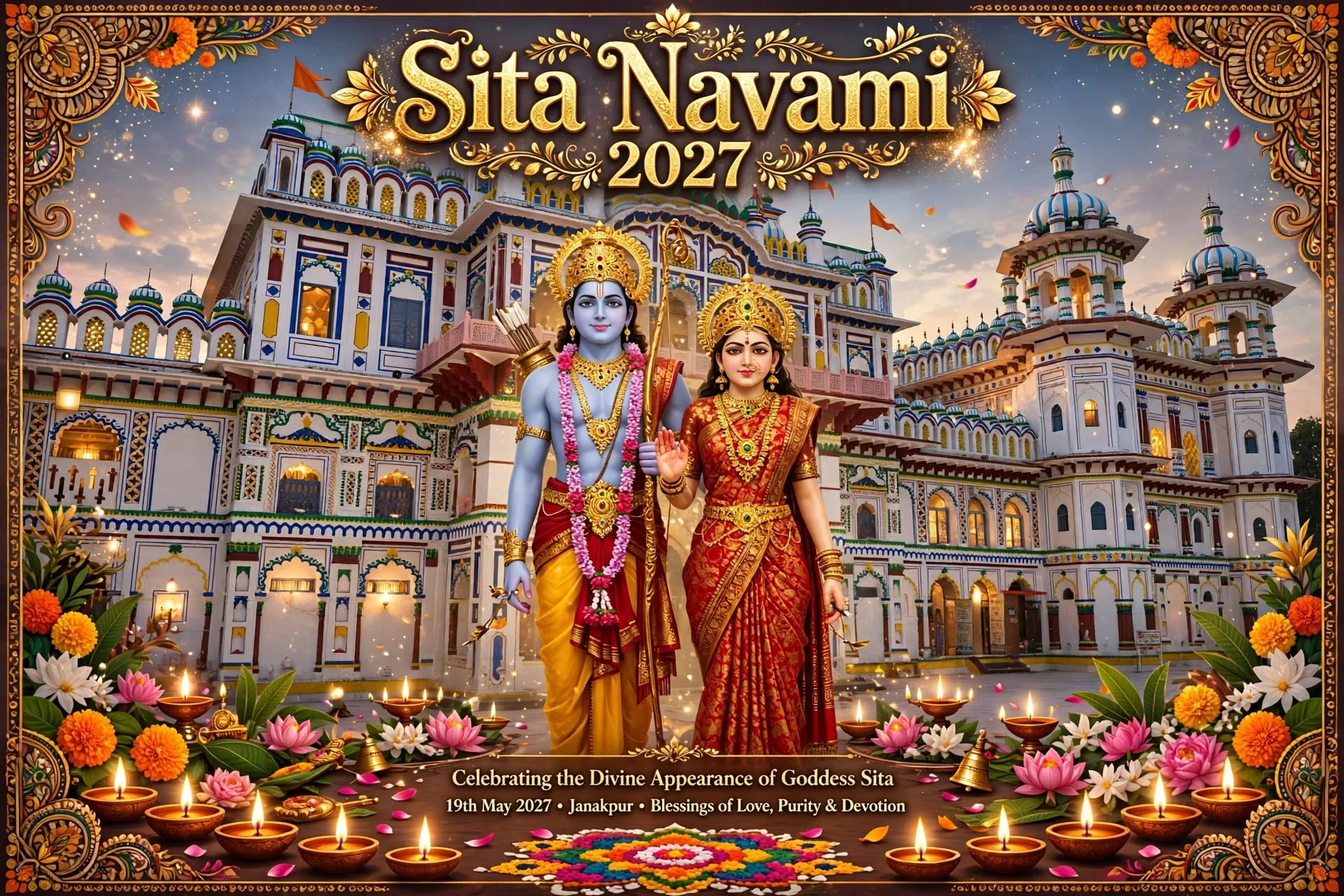
Friday, May 14, 2027
Sita Navami
Sita Navami, widely celebrated as Janaki Jayanti, marks the sacred appearance anniversary of Goddess Sita, the divine consort of Lord Rama and the supreme embodiment of devotion, sacrifice, moral fortitude, and dharmic grace. Falling on the Shukla Paksha Navami (ninth lunar day) of the holy month of Vaishakha, this auspicious tithi occurs exactly one month after Rama Navami (Chaitra Shukla Navami), symbolizing the cosmic unity and balance of Sri Rama and Mata Sita.
View Festival Guide
Saturday, May 15, 2027
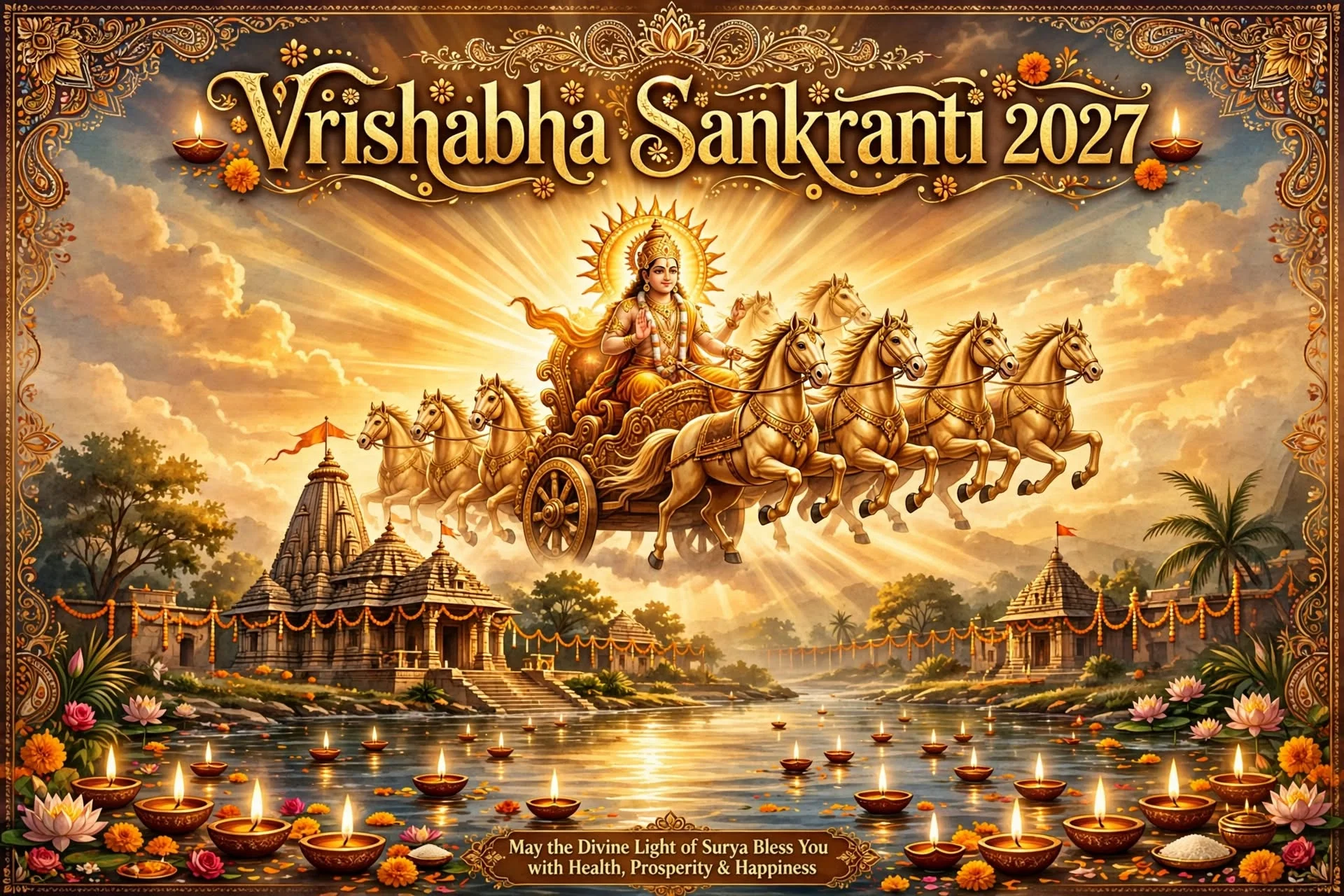
Vrishabha Sankranti
Vrishabha Sankranti, also known as Vrishabha Sankramanam, marks the astronomical transition of the Sun (Surya) from Mesha Rashi (Aries) into Vrishabha Rashi (Taurus) in the sidereal zodiac. This solar ingress marks the beginning of the Vrishabha solar month and is traditionally observed around the middle of May. The Sanskrit word 'Vrishabha' means bull and represents the second sign of the zodiac, associated in Hindu astrological tradition with stability, nourishment, fertility, patience, and material sustenance.
View Festival Guide
Sunday, May 16, 2027
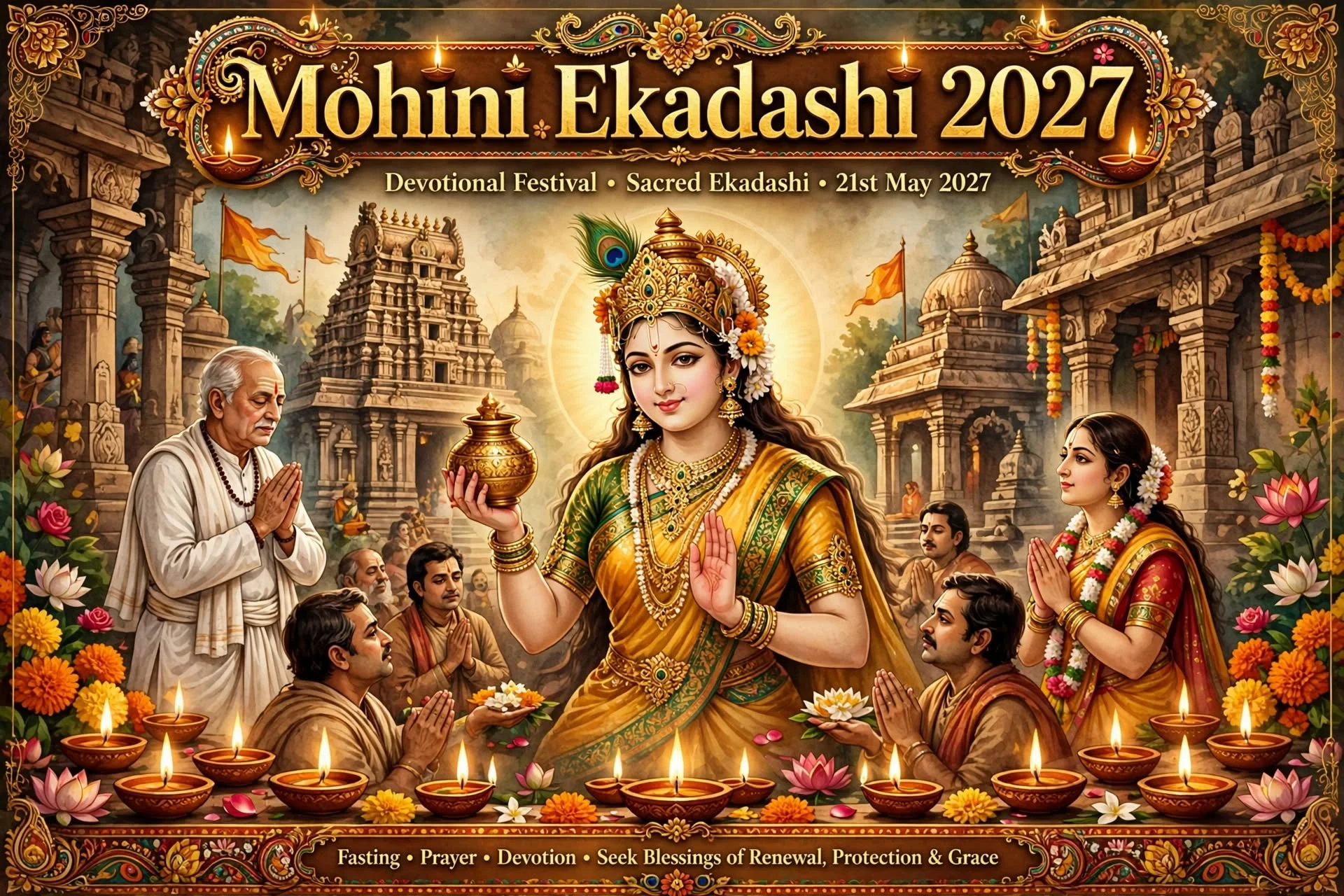
Mohini Ekadashi
Mohini Ekadashi is an extraordinarily celebrated and sacred fasting observance occurring during the Shukla Paksha (waxing lunar phase) of the auspicious Hindu month of Vaishakha. This holy tithi commemorates the divine manifestation of Lord Vishnu's only female incarnation—the mesmerizing, enchantingly beautiful enchantress Mohini. Manifesting during the cosmic churning of the celestial ocean (Samudra Manthan), Mohini Avatar protected cosmic balance by distributing the nectar of immortality (Amrita) to the benevolent devas while outwitting the aggressive asuras.
View Festival Guide
Monday, May 17, 2027
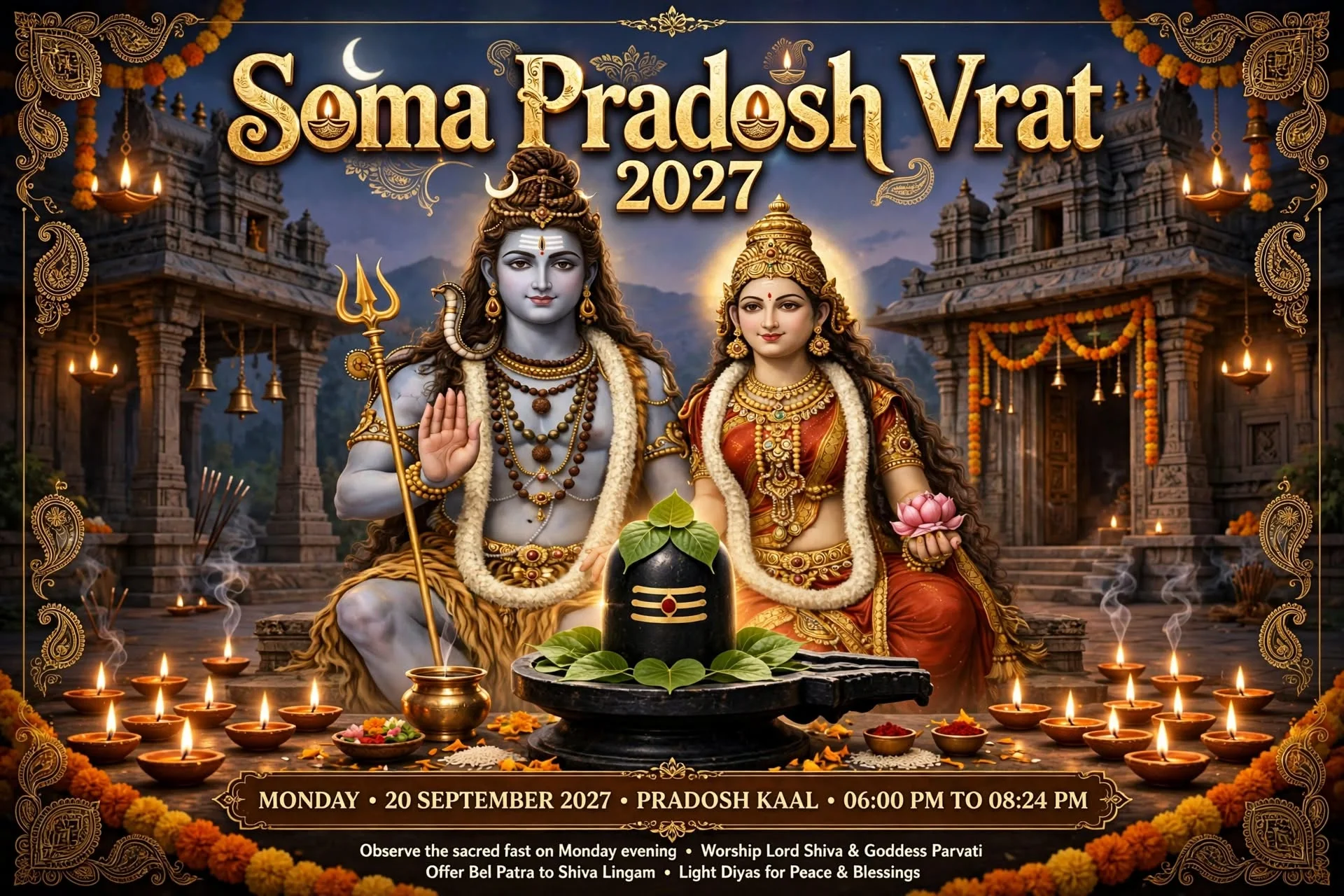
Soma Pradosh Vrat
Soma Pradosh Vrat, also known as Som Pradosh Vrat or Soma Trayodashi, is a Hindu fasting and worship observance dedicated primarily to Lord Shiva. It is observed when Trayodashi, the thirteenth lunar day of either Shukla Paksha or Krishna Paksha, coincides with Monday. Monday is traditionally associated with Lord Shiva, which gives this Pradosh observance its name.
View Festival Guide
Tuesday, May 18, 2027
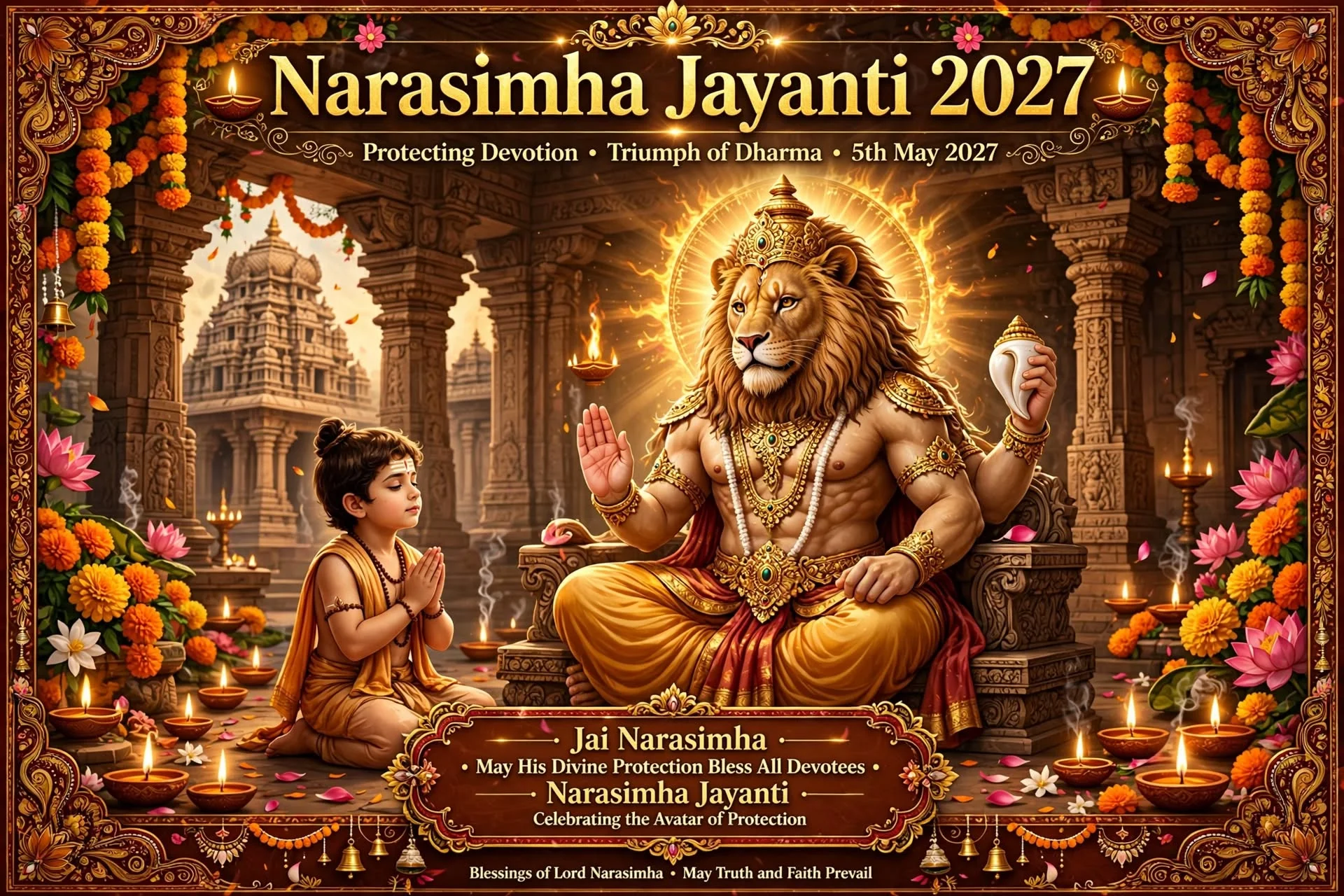
Narasimha Jayanti
Narasimha Jayanti marks the ferocious yet intensely protective divine manifestation of Lord Narasimha—the fourth incarnation (Avatar) of Lord Vishnu—who descended in an extraordinary half-man, half-lion form to vanquish the despotic demon king Hiranyakashipu and protect His unswerving young devotee Bhakta Prahlada. Celebrated on the Shukla Paksha Chaturdashi (fourteenth lunar day) of the holy month of Vaishakha, this festival represents the triumph of innocent devotion over tyrannical power and the omnipresence of God across creation.
View Festival Guide
Wednesday, May 19, 2027
Kurma Jayanti
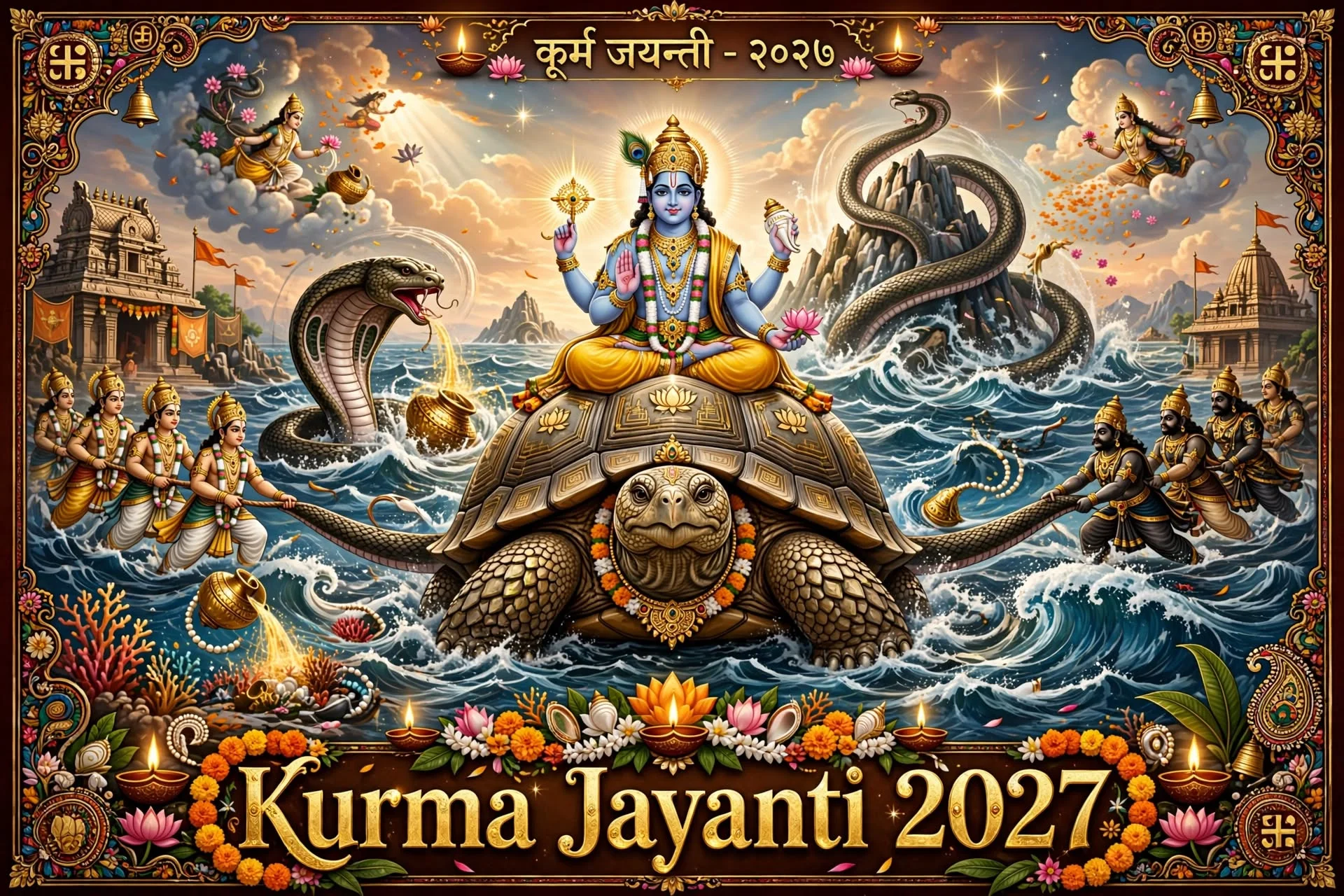
Kurma Jayanti marks the divine appearance anniversary of Bhagavan Kurma, the second divine incarnation (Avatar) of Lord Vishnu, manifesting in the form of a gigantic tortoise during the Satya Yuga on the auspicious tithi of Vaishakha Shukla Purnima (the full moon day of Vaishakha). Manifesting during the monumental cosmic churning of the celestial ocean (Samudra Manthan), Lord Kurma provided His massive, unyielding shell as the bedrock pivot to support the sinking Mount Mandara, saving the cosmic endeavor and enabling the extraction of the nectar of immortality (Amrita) and Goddess Mahalakshmi.
View Festival Guide