




Bachha Baras Dwadashi, also reverently celebrated as Govatsa Dwadashi, Vasu Baras, or Vatsa Dwadashi, is observed on the twelfth lunar day (Dwadashi tithi) of Krishna Paksha in the sacred monsoon month of Bhadrapada (or Shravana in the Amanta calendar scheme). Falling four days after Krishna Janmashtami, this heartwarming festival is dedicated exclusively to the adoration of Kamadhenu's celestial daughter, the divine cow Nandini, and her young suckling calf (Bachha / Vatsa), celebrating maternal devotion, rural cattle welfare, and the sacred spiritual bond between humanity and the animal kingdom.
Bachha Baras Dwadashi 2027: Date, Puja Timings, Rituals & Stories
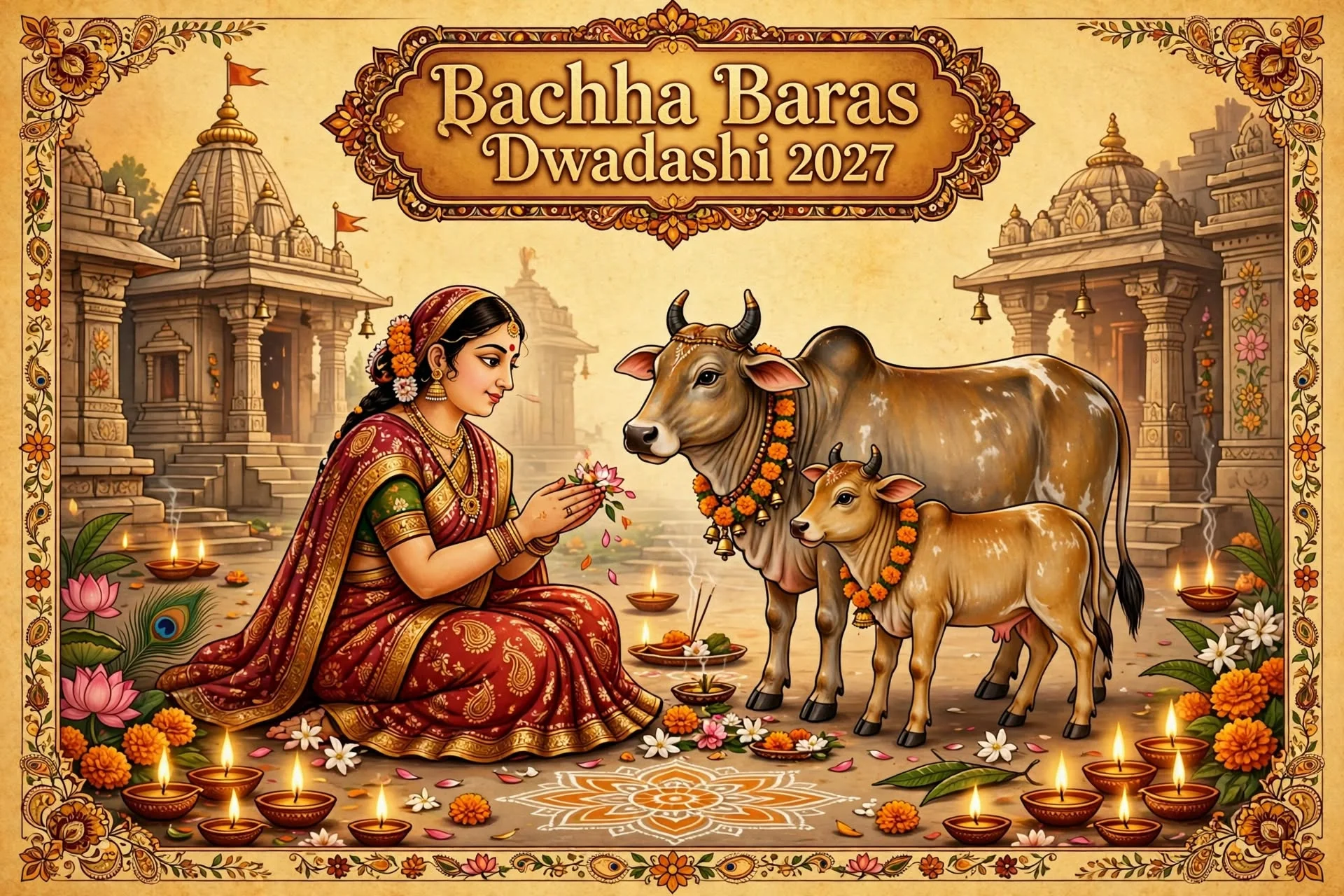
Bachha Baras Dwadashi Timings & Panchang
Important festival dates and auspicious timings
Usha Arghya (Sunrise)
05:57 am
Sandhya Arghya (Sunset)
06:48 pm
Start Date
Saturday, 28 Aug 2027
Puja Muhurat
03:25 pm – 12:42 pm
Bachha Baras Dwadashi
Rooted in ancient Puranic narratives from the Bhavishya Purana and Skanda Purana, Bachha Baras is observed by mothers across Rajasthan, Gujarat, Maharashtra, and Madhya Pradesh, who fast and pray for the longevity, moral uprightness, and physical protection of their children. The festival honors cows as 'Sarva Deva Mayi'—the divine mothers in whose physical form all thirty-three million celestial deities reside—and reminds humanity of its eternal debt to cattle for providing agricultural labor and life-sustaining nourishment.
The observance of Bachha Baras is characterized by unique dietary and ritual vows. In profound reverence to the mother cow, no family member consumes cow's milk, cow curd, cow butter, or cow ghee throughout the day, reserving all milk solely for the nourishment of the calf. Furthermore, households abstain from eating food sliced with sharp knives or cleavers, consuming instead coarse uncultivated grains (like sprouted moong, moth beans, and bajra rotis) cooked with sesame oil, while offering generous fodder, sweets, and worship to living cows and calves.
Why is Bachha Baras Dwadashi Celebrated?
Bachha Baras Dwadashi is celebrated to express profound gratitude to Mother Cow (Gau Mata) and her young calf, honoring their selfless role in sustaining human life, agriculture, and spiritual rites.
According to the Bhavishya Purana, worshiping a mother cow and her calf on this holy Dwadashi day is equivalent to performing the sacred Pradakshina (circumambulation) of the entire earth, erasing severe sins and shielding one's children from premature mortality and negative planetary afflictions.
The festival fosters deep compassionate awareness, teaching children to revere domestic animals, practice non-violence (Ahimsa), and respect nature's maternal nurturing energy.
- Honoring the celestial cow Nandini and her calf for their divine maternal nourishment.
- Praying for the health, long life, and righteous character of sons and children.
- Worshiping living cows and calves with vermilion tilak, flower garlands, and fresh fodder.
- Observing strict abstinence from cow dairy products to honor the calf's right to its mother's milk.
- Refraining from using sharp knives or blades to cut food, practicing symbolic non-violence.
Scriptural Origins in the Bhavishya Purana and the Legend of King Uttanapada
The Dialogue of King Yudhishthira and Sri Krishna
In the Uttara Parva of the Bhavishya Purana, King Yudhishthira asks Lord Sri Krishna: 'O Janardana, please narrate to me the glory of the Dwadashi that occurs during the dark waning fortnight of Bhadrapada. Which deity is propitiated, and what boons are obtained through its observance?'
Lord Krishna responds: 'O King, this sacred day is known as Govatsa Dwadashi. In ancient times, the celestial wish-fulfilling cow Kamadhenu emerged from the churning of the cosmic Ocean of Milk (Samudra Manthan). Her beloved daughter Nandini descended to the hermitage of Sage Vashistha. On this sacred day, King Uttanapada's pious queen Suniti performed the worship of Nandini and her young calf, whereby she received the blessing of an illustrious, immortal son—Prince Dhruva.'
The Folk Narrative of the King and the Lost Calf
A popular folk narrative preserved in Rajasthan and Gujarat tells of an ancient righteous king named Devachandra. His queen, through a tragic misunderstanding of domestic instructions, inadvertently harmed the royal cow's beloved calf. Distraught by grief and the sin of hurting an innocent calf, the queen prayed desperately to the Goddess.
Instructed by the royal preceptor, the royal couple observed a strict fast on Bhadrapada Krishna Dwadashi, abstaining from cow milk and knife-cut food, and worshiped Mother Cow with tearful repentance. Pleased by their heartfelt devotion, the divine mother miraculously restored the calf to life, blessing the kingdom with peace and fertility.
Lord Krishna's Go-Pujana in Gokul
The Srimad Bhagavatam and Harivamsa recount that on this auspicious day, Nanda Maharaja and Mother Yashoda formally entrusted young Krishna and Balarama with the care of the tender calves (Vatsa-pala), presenting them with jeweled ropes and bamboo flutes to guide the herds through the flowering groves of Vrindavan.
Source: Bhavishya Purana, Skanda Purana, and Rajasthan Lok Sahitya
Universal Motherhood, Ahimsa, and Karmic Cleansing
The Cow as Sarva Deva Mayi (Embodiment of All Deities)
Vedic texts declare: 'Gavo Vishwasya Matarah' (The cow is the mother of the entire universe). In her horns dwell Brahma and Vishnu; in her forehead resides Lord Shiva; in her ears reside the Ashvini Kumaras; and in her eyes reside the Sun and the Moon.
Worshiping the mother cow and her calf simultaneously satisfies all celestial beings, infusing the home with divine peace, auspicious vibrations, and protective grace.
The Discipline of Dietary Restraint and Knife Abstinence
Abstaining from cow milk teaches humanity the ethical limits of consumption: human beings must not hoard all of nature's bounty for themselves, leaving nothing for the rightful offspring.
Refraining from using sharp knives or blades is an external practice of Ahimsa (non-injury), training the human mind to abandon aggressive tendencies and cherish the tender sanctity of all living creatures.
Cow Worship Protocol, Millet Preparation, and Fasting Regimen
Morning Gau-Vatsa Puja at the Cowshed
Early in the morning, women visit cowsheds (Gaushalas) or welcome a mother cow and her calf to their courtyard. They wash the hooves of the cattle with pure water, drape their backs in colorful embroidered cloths, and apply golden turmeric paste and vermilion (rolli) to their foreheads and horns.
Floral garlands of marigolds are placed around their necks, and they are fed freshly made bajra rotlas (pearl millet flatbreads), soaked sprouted moong beans, and raw jaggery blocks.
The Hand-Broken Meal and Buffalo Dairy
The family meal on Bachha Baras is prepared entirely without the use of metal knives or cutting blades; vegetables like leafy greens or soaked pulses are broken solely by hand. All food is cooked using sesame or peanut oil.
If dairy is needed, only buffalo milk or curd is utilized, strictly preserving every drop of cow's milk for the calves.
Bachha Baras Dwadashi Puja Vidhi (Step by Step)
- 1
Brahma Muhurta Snana & Sankalpa
Wake early before sunrise, take a purificatory bath in clean water, wear fresh red or yellow traditional attire, and take a solemn vow to observe Bachha Baras for the protection of children.
- 2
Welcoming Mother Cow and Calf
Welcome a gentle cow and her nursing calf into the courtyard or visit a local Gaushala, bowing with hands folded in deep reverence.
- 3
Padya and Pada-Prakshalana
Wash the hooves (feet) of the cow and calf with clean water infused with sandalwood and rosewater, drying them with respect.
- 4
Haridra and Kumkum Tilak
Apply auspicious golden turmeric paste and sacred vermilion (rolli) onto the foreheads and horns of both the mother cow and her calf.
- 5
Akshata and Moli Samarpan
Sprinkle unbroken rice grains (akshata) over their heads and tie protective red sacred threads (Moli) gently around their horns and necks.
Bachha Baras Dwadashi Puja Samagri List
Cattle Adornment and Worship Articles
- Pure golden turmeric powder, rolli (kumkum), and yellow sandalwood paste
- Unbroken white raw rice grains (Akshata) and red sacred cotton thread (Moli)
- Fresh yellow marigold garlands and red rose flowers
- Clean water in a brass lota for washing hooves
- Earthen diya with sesame oil and cotton wicks, natural camphor, and incense
Fodder and Naivedyam Offerings
- Soaked sprouted green moong beans and moth beans (sprouts)
- Pearl millet flatbreads (Bajra ke Rotle) prepared fresh
- Unrefined organic jaggery (gur) blocks
- Fresh green fodder grass (Dub / Chara) for cattle
- Fresh clean drinking water for the cow and calf
Domestic Altar and Meal Items
- Clay figurines of mother cow and calf (for urban domestic worship)
- Coarse pearl millet flour (Bajra) and whole sprouted lentils
- Pure sesame oil or peanut oil for cooking (no cow ghee)
- Fresh whole vegetables that can be broken by hand (no knives)
Mantras and Prayers for Bachha Baras Dwadashi
Bachha Baras Dwadashi Vrat Rules and Fasting Guidelines
Dietary Strictures and Knife Prohibition
Mothers observe fasting throughout the day until the cow puja is finished. The most rigid injunctions of Bachha Baras are the total avoidance of cow dairy and the strict prohibition against using knives or sharp cutting blades to prepare food.
- Strictly avoid all cow milk, cow curd, cow butter, and cow ghee.
- Do not use metal knives or cleavers; break vegetables exclusively by hand.
- Consume only uncultivated grains, sprouted moong, and bajra rotlas.
- Use exclusively sesame oil or vegetable oils for cooking family meals.
Compassion and Cattle Reverence
Treat all cows, calves, and domestic animals with deep kindness. Ensure living cows are fed and satisfied with fresh fodder and water before eating your own meal.
Dos and Don'ts of Bachha Baras Dwadashi
Good Practices (Do's)
- Wake up early, bathe, and resolve to observe the Bachha Baras fast for children.
- Worship a living cow and her calf with turmeric, vermilion, flower garlands, and lamps.
- Feed cows and calves with sprouted moong, fresh bajra rotlas, and jaggery.
- Recite the sacred Govatsa Dwadashi Katha from the Bhavishya Purana with family.
- Anoint your children with the sanctified tilak from the mother cow's forehead.
Bachha Baras Dwadashi Across Regions
| Region | Local Name |
|---|---|
| Rajasthan (Marwar, Mewar, Shekhawati) | Bachha Baras |
| Maharashtra & Goa | Vasu Baras |
| Gujarat | Vagh Baras / Govatsa Dwadashi |
Bachha Baras Dwadashi FAQs
Why is cow milk strictly avoided on Bachha Baras?
Devotees abstain from cow milk, curd, and ghee out of loving reverence for the mother cow, symbolizing that on this day, all milk belongs exclusively to her suckling calf.
Why are knives and cutting blades forbidden in the kitchen on this day?
Avoiding knives represents symbolic non-violence (Ahimsa), expressing a mother's prayer that no sharp instrument or injury shall ever touch her children.
What traditional foods are eaten on Bachha Baras?
Families consume hand-broken pearl millet rotlas (Bajra Rotla), soaked sprouted moong and moth beans, and wild greens cooked with sesame oil.
Upcoming Festivals
View All
Saturday, Aug 28, 2027
Aja Ekadashi
Aja Ekadashi, also celebrated with immense spiritual reverence as Ananda Ekadashi, is observed on the eleventh lunar day (Ekadashi tithi) of the Krishna Paksha (dark waning fortnight) in the sacred monsoon month of Bhadrapada (or Shravana in the Amanta calendar). Dedicated to Bhagwan Vishnu in His divine form as Hrishikesha (the supreme master of the senses), this sanctified vrata is extolled in the Brahmavaivarta Purana and Padma Purana as an extraordinary spiritual penance capable of destroying all accumulated sins, reversing catastrophic worldly misfortunes, and bestowing liberation (Moksha).
View Festival Guide
Sunday, Aug 29, 2027
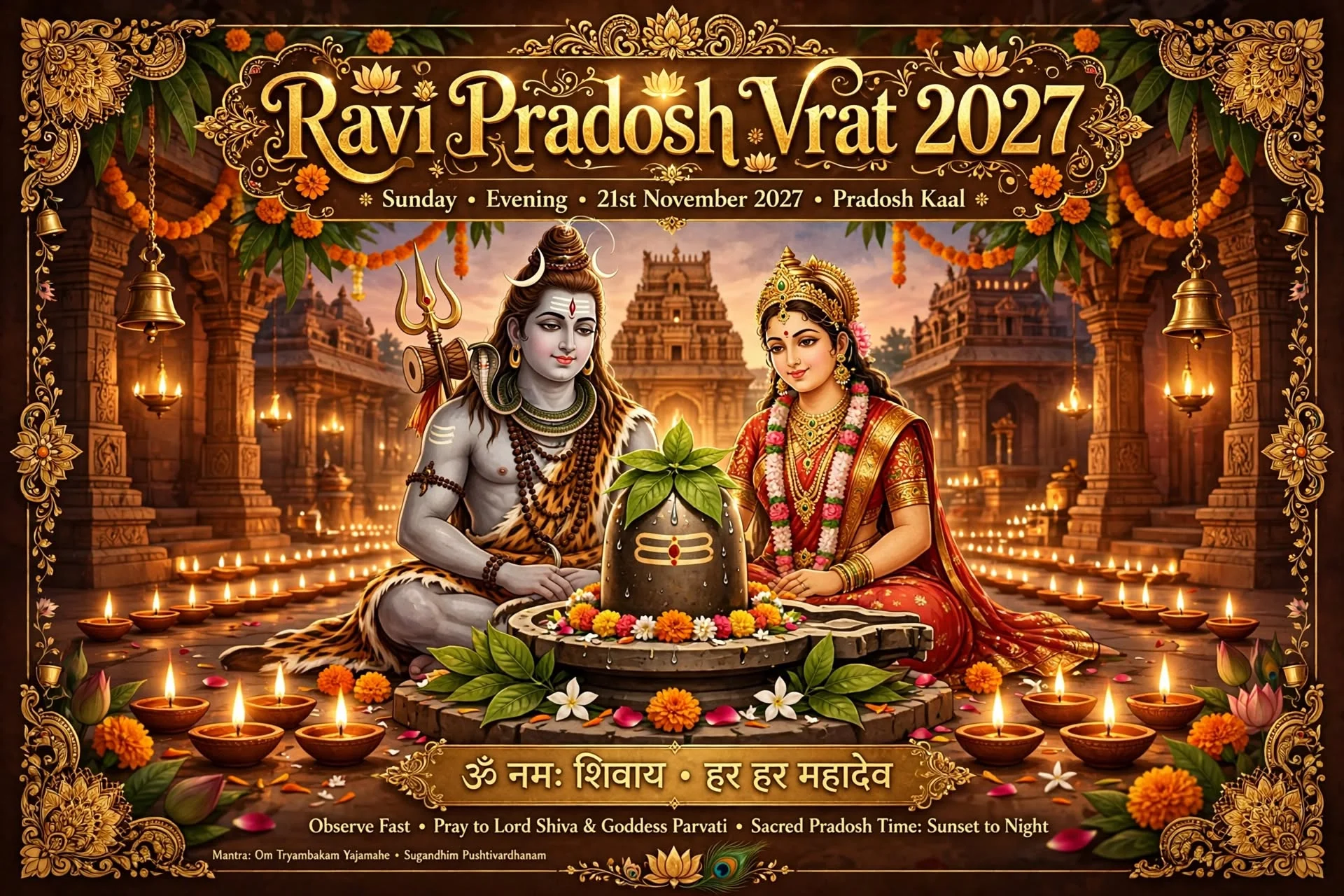
Ravi Pradosh Vrat
Ravi Pradosh Vrat is an exceptionally sacred fasting day observed on the thirteenth lunar day (Trayodashi) that coincides with a Sunday (Ravivara). Dedicated to Lord Shiva, the cosmic dissolver of sorrow, this bimonthly vow unites the healing radiance of Surya Bhagavan with the boundless compassion of Mahadeva. Observed during the twilight Sandhya period, it is believed to banish physical ailments, clear karmic obstructions, and bestow vitality and longevity.
View Festival Guide
Tuesday, Aug 31, 2027
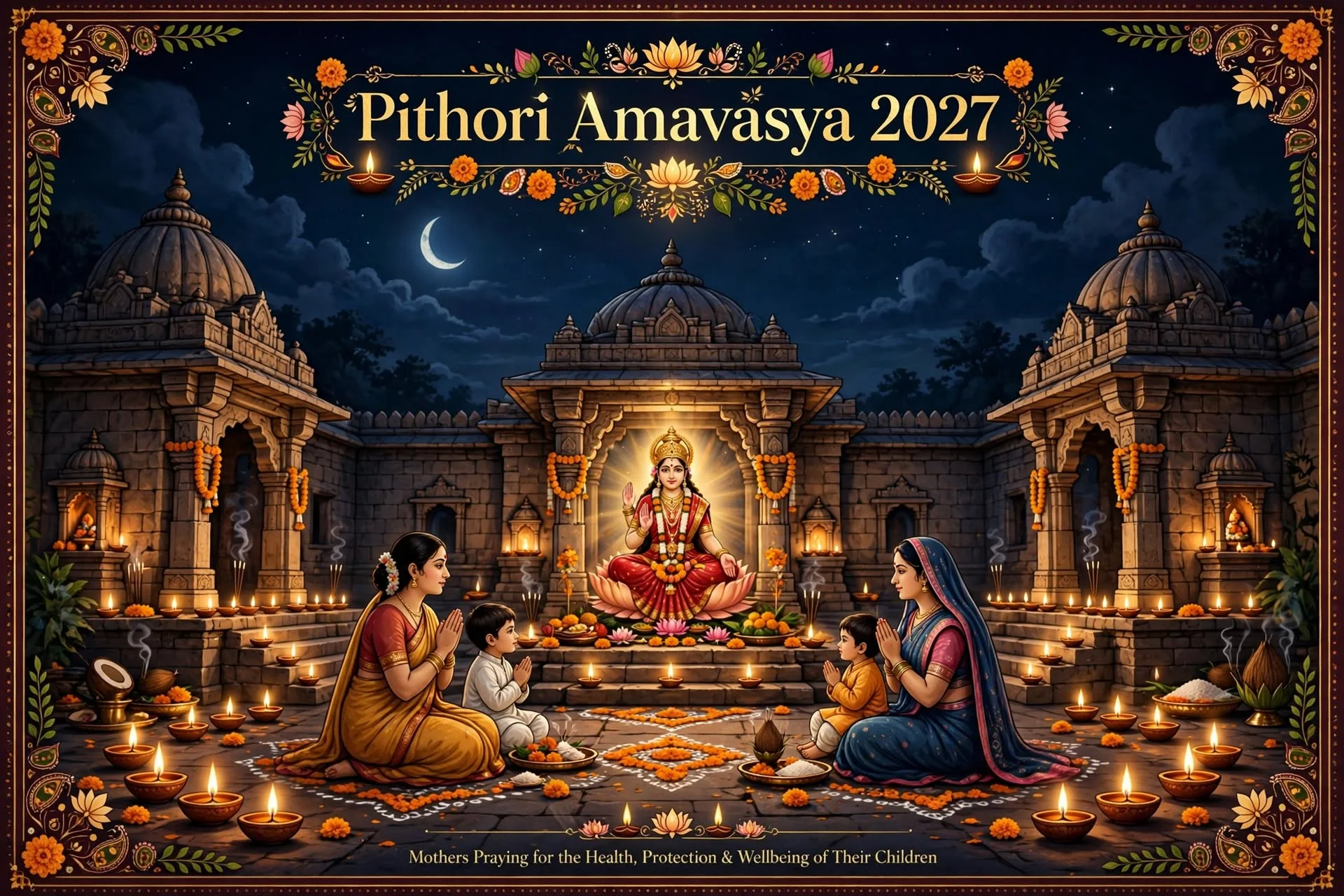
Pithori Amavasya
Pithori Amavasya, also reverently celebrated across India as Kushagrahani Amavasya, Pola Amavasya, or Pithori Vrat, is the sacred New Moon day concluding the holy monsoon month of Shravana (or Bhadrapada in the Purnimanta calendar scheme). Dedicated to Goddess Durga, Goddess Parvati, and the Sixty-Four Yoginis (Chausath Yogini), this ancient festival is celebrated with profound devotion by mothers for the longevity, health, moral strength, and spiritual protection of their children, as well as the pacification of ancestral souls (Pitrus).
View Festival Guide
Tuesday, Aug 31, 2027
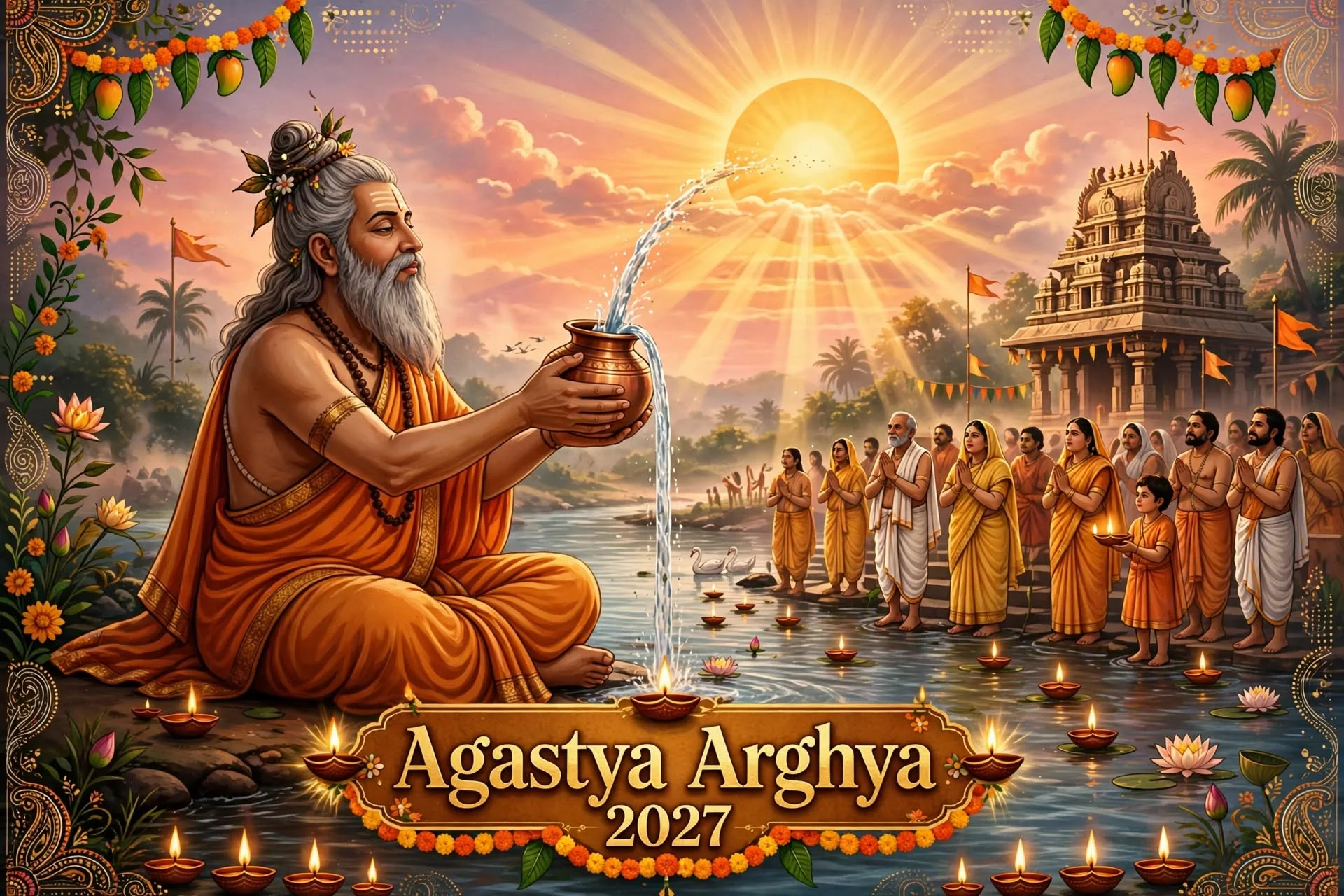
Agastya Arghya
Agastya Arghya, also known as Agastya Udaya Arghya, is a profound astronomical and Vedic ritual observed during the transition of late monsoon into early autumn (Sharad Ritu), when the celestial star Canopus (known in Sanskrit as the Agastya Nakshatra) first rises above the southern horizon at dawn. In ancient Indian astronomy (Surya Siddhanta) and Puranic literature, the dawn rising of Agastya is celebrated as an extraordinary cosmic event marking the physical and energetic purification of all terrestrial waters, the calming of turbulent monsoon rivers, and the pacification of atmospheric toxins.
View Festival Guide

Tuesday, Aug 31, 2027
Anvadhan
Anvadhan (अन्वाधान) is an ancient, highly revered Vedic ritual and spiritual observance in Sanatana Dharma performed on the day immediately preceding the New Moon (Amavasya) or Full Moon (Purnima). Rooted in the pristine traditions of the Shrauta and Grihya Sutras, Anvadhan literally translates to 'the solemn placing and replenishment of sacred fuel wood into the consecrated Vedic fires'. In traditional Vedic ritualism, householders (Grihasthas) and priests who maintain the sacred Agnihotra fires perform Anvadhan to prepare the sacrificial altars for the grand Darsha Yajna (New Moon sacrifice) or Paurnamasa Yajna (Full Moon sacrifice) scheduled for the following day.
View Festival Guide

Tuesday, Aug 31, 2027
Shravana Amavasya
Shravana Amavasya, also known as Darsha Amavasya, Hariyali Amavasya, or Pola Amavasya, is the dark New Moon night marking the grand conclusion of the sacred, rejuvenating monsoon month of Shravana. Positioned at the pivotal threshold between the height of the rainy season and the onset of early autumn, this sanctified tithi holds monumental spiritual, ancestral, and ecological significance across the Indian subcontinent.
View Festival Guide

Tuesday, Aug 31, 2027
Darsha Amavasya
Darsha Amavasya is a significant new moon observance in the Hindu calendar designating the specific night when the Moon is completely invisible to the human eye, having fully merged into the conjunction of the Sun.
View Festival Guide