




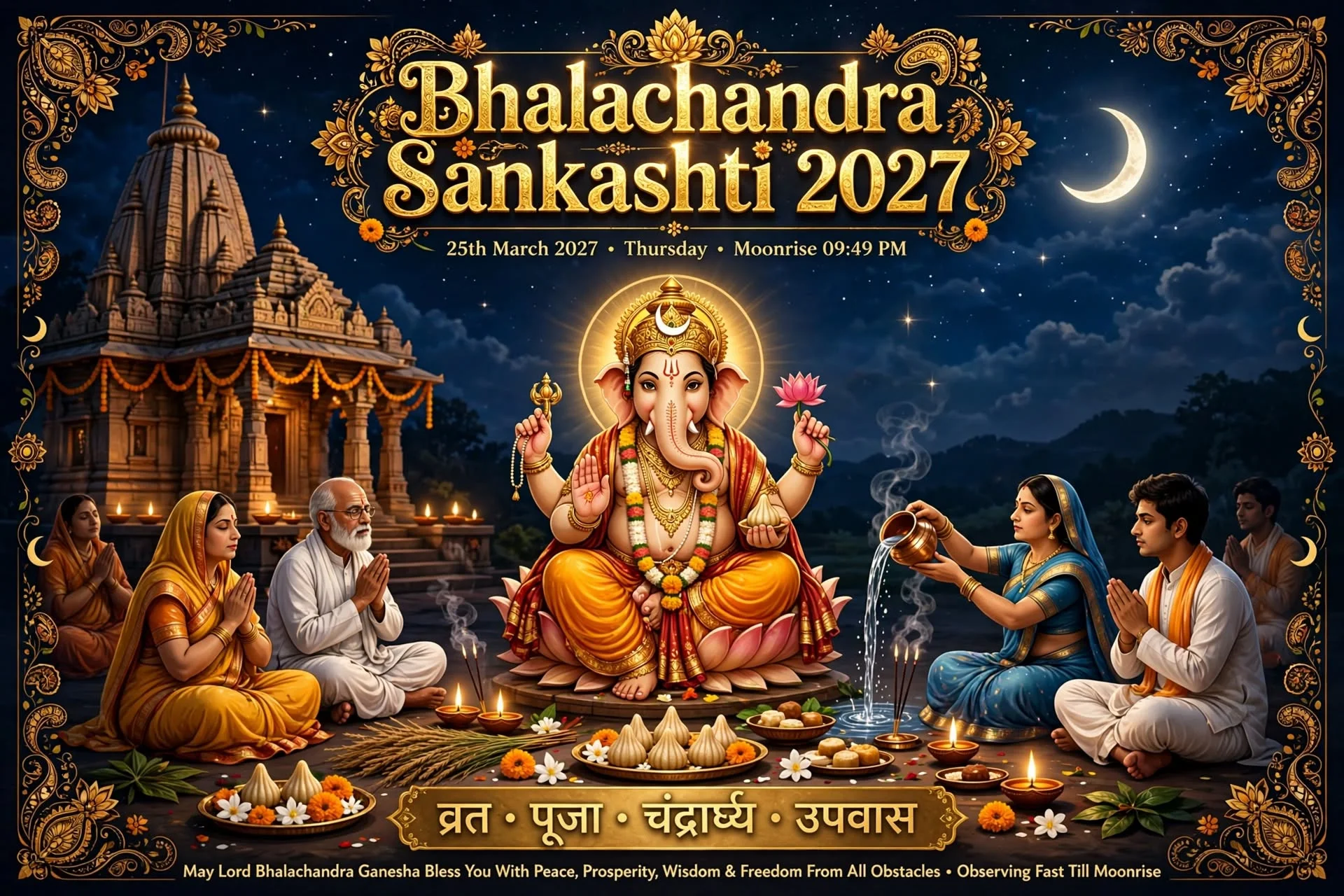
Bhalachandra Sankashti Chaturthi is an intensely sacred, spiritually liberating, and astrologically protective monthly Hindu fasting observance dedicated to Lord Ganesha, celebrated on the fourth day (Chaturthi tithi) of the Krishna Paksha (waning moon fortnight) during the lunar month of Chaitra according to the North Indian Purnimanta calendar (corresponding to Phalguna Krishna Chaturthi in the Amanta calendar followed in Maharashtra, Gujarat, Karnataka, Andhra Pradesh, and Tamil Nadu). The presiding divine manifestation venerated on this holy day is Bhalachandra Maha Ganapati—the 7th of the celebrated thirty-two classical iconographic forms of Lord Ganesha described in the sacred Mudgala Purana, and the 2nd of the legendary Ashta Vinayaka pilgrimage shrines situated at Pali in Maharashtra (Ballaleshwar / Bhalachandra).
Bhalachandra Sankashti 2027: Date, Puja Timings, Rituals & Stories
Bhalachandra Sankashti Timings & Panchang
Important festival dates and auspicious timings
06:52 am
06:17 pm
Wednesday, 24 Feb 2027
06:17 pm – 07:33 pm
Bhalachandra Sankashti
The Sanskrit title 'Bhalachandra' (भालचन्द्र) is composed of 'Bhala' (forehead / brow) and 'Chandra' (the radiant crescent Moon), translating to 'The Supreme Lord who adorns the cooling crescent Moon upon His brow'. The iconographic and theological origin of this divine form is enshrined in the Ganesha Purana (Upasana Khanda) and the Mudgala Purana. Scriptural tradition recounts that when Chandra Deva (the Moon God) was afflicted by the debilitating curse of King Daksha Prajapati and mocked by arrogant demons, he surrendered at the lotus feet of Lord Ganesha in deep repentance. Moved by the Moon's sincere devotion, Lord Ganesha absorbed Chandra upon His own forehead as an eternal ornament, restoring the Moon's lost luster and granting him freedom from decay.
Bhalachandra Ganesha is envisioned with a radiant golden-red complexion, seated upon a celestial lotus, holding a battle axe (Parashu), a noose (Pasha), a sweet modak, and gesturing the abhaya mudra of fearlessness, with the serene crescent moon glowing upon His brow. Because the Moon presides over the human mind (Manas), emotions, and water elements, worshipping Bhalachandra Ganesha on this specific Chaturthi directly pacifies afflicted lunar placements (Chandra Dosha), resolves psychological anxiety, depression, and mental exhaustion, and bestows profound intellectual clarity.
Devotees observe Bhalachandra Sankashti by undertaking an austere day-long fast from sunrise until the sighting of the Moon (Chandrodaya) at night. The observance features Shodashopachara worship of Lord Ganesha using twenty-one fresh blades of cooling Durva grass (Bermuda grass) and sweet modaks, recitation of the Ganesha Atharvashirsha and Sankashta Nashana Stotra, and concludes only after offering consecrated water and raw milk (Arghya) to the rising Moon, dissolving existential crises (Sankata) and bestowing peace and prosperity.
Why is Bhalachandra Sankashti Celebrated?
Bhalachandra Sankashti Chaturthi is celebrated to invoke the blessings of Lord Ganesha in His venerable Bhalachandra form—the adorner of the crescent Moon—to eradicate all acute existential crises, debts, and obstacles (Sankata).
The festival commemorates the divine redemption of Chandra Deva (the Moon God), who was cured of his debilitating curse and sheltered upon Ganesha's brow, demonstrating that sincere surrender to Ganesha cures even insurmountable afflictions.
It provides an infallible astrological remedy for pacifying afflicted natal Moon placements (Chandra Dosha), curing emotional instability, mental depression, and nervous anxiety.
Devotees observe this sacred fast to attain intellectual brilliance, memory power (Medha Shakti), domestic harmony, and spiritual liberation.
Scriptural Chronicles and Sacred Lore of Bhalachandra Sankashti
Chandra Deva's Redemption and the Origin of 'Bhalachandra'
The foundational theological chronicle of Bhalachandra Ganapati is detailed in the Ganesha Purana (Upasana Khanda) and the Mudgala Purana. In ancient times, King Daksha Prajapati cursed Chandra Deva (the Moon God) to suffer from continuous consumption (Kshaya Roga) because Chandra favored Rohini while neglecting his other twenty-six wives. Deprived of his brilliance, the darkened Moon became the laughingstock of the Asuras and plunged creation into medicinal and tidal chaos.
Terrified and humiliated, Chandra sought the guidance of Sage Brihaspati, who advised him to perform intense tapasya dedicated to Lord Ganesha on Krishna Paksha Chaturthi. Chandra sat in deep meditation, constantly chanting the Ganesha Mool Mantra. Pleased with his genuine remorse and devotion, Lord Ganesha manifested before him in a radiant form.
When Chandra prayed for eternal shelter from curses, Lord Ganesha compassionately lifted the crescent Moon and placed him upon His own divine brow (Bhala). Ganesha declared: 'O Chandra! Because you have taken refuge upon My forehead, you shall be known as an ornament of Ganesha, and I shall be celebrated across all three worlds as Bhalachandra. Anyone who worships Me on Krishna Paksha Chaturthi and concludes their fast by offering Arghya to you shall be free from all sorrows and sins.'
The Legend of King Kritavirya and Sage Lomasha
In the Bhavishyottara Purana and Ganesha Purana, King Kritavirya was stripped of his royal treasury, kingdom, and honor due to formidable planetary curses and hostile enemies. Wandering in despair in the forest, he encountered the revered Sage Lomasha.
Sage Lomasha instructed the fallen monarch in the precise observance of Bhalachandra Sankashti Chaturthi, explaining that this vow carries the power to reverse adverse destiny. Faithfully adhering to the sage's injunctions, King Kritavirya observed the waterless fast, worshipped Ganesha with 21 Durva blades, and offered Arghya to the Moon at night.
By the divine grace of Bhalachandra Ganesha, all his insurmountable impediments dissolved like mist before the sun. The king's enemies surrendered, his treasury was miraculously replenished, and he reclaimed an invincible, prosperous empire, establishing the miraculous potency of this vow.
Esoteric, Astrological, and Psychological Dimensions of Bhalachandra Sankashti
Harmonizing the Mind and Intellect (Manas & Buddhi Yoga)
In Vedic philosophy, the Moon rules the emotional, receptive mind (Manas), while Lord Ganesha rules the discriminating intellect (Buddhi) and the Muladhara chakra.
The Bhalachandra manifestation—where the Moon rests upon Ganesha's brow—represents the supreme integration of sharp intellect and emotional serenity. Fasting on this day cures emotional instability, mood swings, depression, and decision-making paralysis.
Annihilation of Chronic Debts and Misfortunes (Rina Mukti)
The prefix 'Sankashti' denotes deliverance from chronic crisis (Sankata Nashana). Worshipping Bhalachandra Ganesha generates powerful sattvic momentum that burns away deep-seated karmic debts (Sanchita Karma).
Devotees facing financial bankruptcy, legal litigation, or persistent obstacles in career and business find unexpected pathways of relief and prosperity.
The Cooling Botanical Energy of 21 Durva Blades
The ritual offering of 21 blades of Durva (Bermuda grass) commemorates the legend where Lord Ganesha swallowed the fire-demon Analasura to protect creation, causing extreme burning agony in His stomach. Sages cooled the divine body by placing 21 blades of Durva on His head.
Offering Durva on Bhalachandra Sankashti extinguishes the threefold fires of material existence (Adhyatmika, Adhibhautika, Adhidaivika) and bestows profound inner tranquility.
The Esoteric Mystery of Moonrise Arghya
While sighting the Moon is prohibited on Bhadrapada Shukla Chaturthi due to the curse of pride, sighting the Moon on Krishna Paksha Sankashti Chaturthi is mandatory.
Offering Arghya to the Moon after worshipping Ganesha unites the fiery solar energy of the fast with the cooling lunar nectar, bathing the devotee's physical cells in rejuvenative prana.
Practical Worship Manual and Guide for Bhalachandra Sankashti
Dawn Purificatory Snana and Sankalpa
Rise early during Brahma Muhurta (approximately 90 minutes before dawn), take a purificatory bath with clean water mixed with Gangajal, and don clean traditional yellow or red attire.
Sit facing East before the altar upon a clean asana, hold water, unbroken rice (akshata), flowers, and a coin in your right hand, and recite the solemn Sankalpa vow to observe Bhalachandra Sankashti fast until moonrise.
Morning Shodashopachara Ganesha Puja
Establish an idol or portrait of Lord Ganesha on a wooden chowki draped in yellow silk. Bathe metallic murtis with Panchamrita and pure Gangajal.
Apply red Sindoor and yellow sandalwood paste upon Ganesha's brow and tusk. Offer 21 knotted pairs of fresh green Durva grass blades, vibrant red hibiscus flowers, and light an earthen lamp filled with pure cow ghee.
Daytime Japa and Katha Recitation
Maintain strict fasting throughout the day. Devotees may observe a complete waterless fast (Nirjala) or take milk, water, and fresh fruits (Phalahari) if physically required.
Recite the Ganesha Atharvashirsha 21 times, chant the Sankashta Nashana Stotra, and read or listen attentively to the sacred Bhalachandra Sankashti Vrat Katha detailing King Kritavirya's redemption.
Night Moonrise Worship, Arghya, and Parana
Ascertain the exact local moonrise (Chandrodaya) time from your regional panchang. At moonrise, step onto the open terrace, balcony, or courtyard with a silver or brass lota filled with clean water, raw cow milk, white sandalwood, and white flowers.
Offer Arghya thrice towards the rising Moon reciting the Chandra Arghya Mantra. Return to the altar, prostrate before Lord Ganesha, consume consecrated Modak prasad, and break your fast with light sattvic food.
Bhalachandra Sankashti Puja Vidhi (Step by Step)
- 1
Brahma Muhurta Jagaran and Morning Snana
Wake before dawn during Brahma Muhurta. Meditate upon Lord Bhalachandra Ganesha and take a purifying bath with clean water mixed with holy Gangajal, donning fresh clean traditional yellow or red attire.
- 2
Pratah Sankalpa (Solemn Vow)
Sit comfortably facing East upon a clean woolen or Kusha asana. Take clean water, unbroken rice (akshata), a betel leaf, and a coin in your right palm and recite the formal Sankalpa vow to observe Bhalachandra Sankashti for crisis eradication.
- 3
Altar Preparation and Murti Sthapana
Clean the puja altar and drape a wooden chowki with fresh yellow or red silk cloth. Draw an Ashtadala Padma (eight-petaled lotus) using rice grains or turmeric powder and reverently install the idol of Lord Ganesha in the center.
- 4
Deepa Prajvalan and Achamana
Light an oil or pure cow-ghee lamp on the right side of the altar and an incense stick on the left. Perform Achamana by ceremonially sipping consecrated water thrice with the holy names of God and wash your hands.
- 5
Bhalachandra Sankashti Puja Samagri List
Deity Consecration and Fragrance Items
Essentials for early morning murti sthapana and Shodashopachara worship.
- Idol or framed portrait of Lord Ganesha (preferably depicting the crescent moon)
- Panchamrita ingredients (cow milk, curd, ghee, honey, raw sugar)
- Pure holy Gangajal bottle in a copper lota
- Pure red Sindoor (vermilion) and Ashtagandha yellow Chandan paste
- Yellow and red unstitched silk cloth for chowki and vastra
Sacred Flora and Naivedya Items
Botanical herbs and traditional sweets cherished by Lord Ganesha.
- Fresh Durva grass (21 knotted pairs of green blades) free from roots and impurities
- Fresh red hibiscus blossoms and yellow marigold flower garland
- 21 sweet Modaks (steamed Ukadiche Modak or Besan/Motichoor Laddus)
- Seasonal fresh fruits (bananas, pomegranates, apples, and unbroken coconut)
- Betel leaves (Paan), areca nuts (Supari), cloves, and cardamoms
Moon Arghya and Aarti Essentials
Vessels and liquids for concluding the fast upon moon sighting.
- Silver or brass lota for offering Chandra Arghya
Mantras and Prayers for Bhalachandra Sankashti
Bhalachandra Sankashti Vrat Rules and Fasting Guidelines
Fasting Regulations and Timing
Mandatory fasting regulations observed on Bhalachandra Sankashti:
- The fast begins at dawn and continues unbroken until the sighting of the Moon (Chandrodaya) at night.
- Devotees observing a fruit fast (Phalahar) may consume milk, fruits, water chestnut (Singhara) flour, and rock salt (Sendha Namak).
- Cereals, grains, wheat, rice, pulses, onions, garlic, and non-vegetarian foods are strictly forbidden.
- Practitioners must practice celibacy (Brahmacharya) and shun anger, falsehood, and frivolous arguments.
Devotional Observances During the Day
Spiritual activities recommended during the fasting hours:
- Recite the Ganesha Atharvashirsha Upanishad 21 times in the afternoon or evening.
- Chant the 108 names of Lord Ganesha (Ashtottara Shatanamavali) and the Sankashta Nashana Stotra.
- Offer 21 pairs of Durva blades to Lord Ganesha while chanting the Ganesha Mool Mantra.
- Listen to or read the sacred Bhalachandra Sankashti Vrat Katha before the evening puja.
Parana and Moonrise Rites
Concluding the fast at night following local moonrise:
- Verify the exact moonrise time from your local Panchang and prepare the Arghya Kalash.
- Offer Arghya to Chandra Deva thrice using raw cow milk, clean water, akshata, and white flowers.
Dos and Don'ts of Bhalachandra Sankashti
Good Practices (Do's)
- Wake up before sunrise during Brahma Muhurta and take a purificatory bath with holy water.
- Keep a clean yellow or red cloth on the altar and venerate Lord Bhalachandra Ganesha.
- Offer 21 pairs of freshly washed, clean Durva grass blades to Lord Ganesha's feet and belly.
- Prepare and offer 21 sweet Modaks or Besan Laddus as the primary divine offering (Naivedya).
- Recite the Ganesha Atharvashirsha, Sankashta Nashana Stotra, and Ganesha Mool Mantra with devotion.
Bhalachandra Sankashti Across Regions
| Region | Local Name |
|---|---|
| Maharashtra (Ballaleshwar Pali & Ashta Vinayaka) | Sankashti Chaturthi & Ballaleshwar Darshan |
| Karnataka and Andhra Pradesh | Sankatahara Ganapati Vrata |
| Tamil Nadu | Sankatahara Chaturthi Pillayar Puja |
| North India (Uttar Pradesh, Rajasthan, Madhya Pradesh) | Sankat Chauth & Tilkut Katha |
Bhalachandra Sankashti FAQs
What is Bhalachandra Sankashti Chaturthi?
Bhalachandra Sankashti Chaturthi is the monthly Sankashti fast observed on the Krishna Paksha Chaturthi of Chaitra (Purnimanta) or Phalguna (Amanta), dedicated to Bhalachandra Maha Ganapati, the form of Ganesha who adorns the crescent moon on His brow.
What does the name 'Bhalachandra' mean?
'Bhalachandra' is composed of 'Bhala' (forehead) and 'Chandra' (the crescent moon). It signifies Lord Ganesha as the compassionate protector who gave shelter to the cursed Moon upon His own brow.
Why is it mandatory to sight the Moon and offer Arghya on Sankashti Chaturthi?
According to the Ganesha Purana, Lord Ganesha ordained that the Sankashti fast is only completed when the devotee sights the Moon and offers sacred Arghya, harmonizing the devotee's mind and intellect.
Upcoming Festivals
View All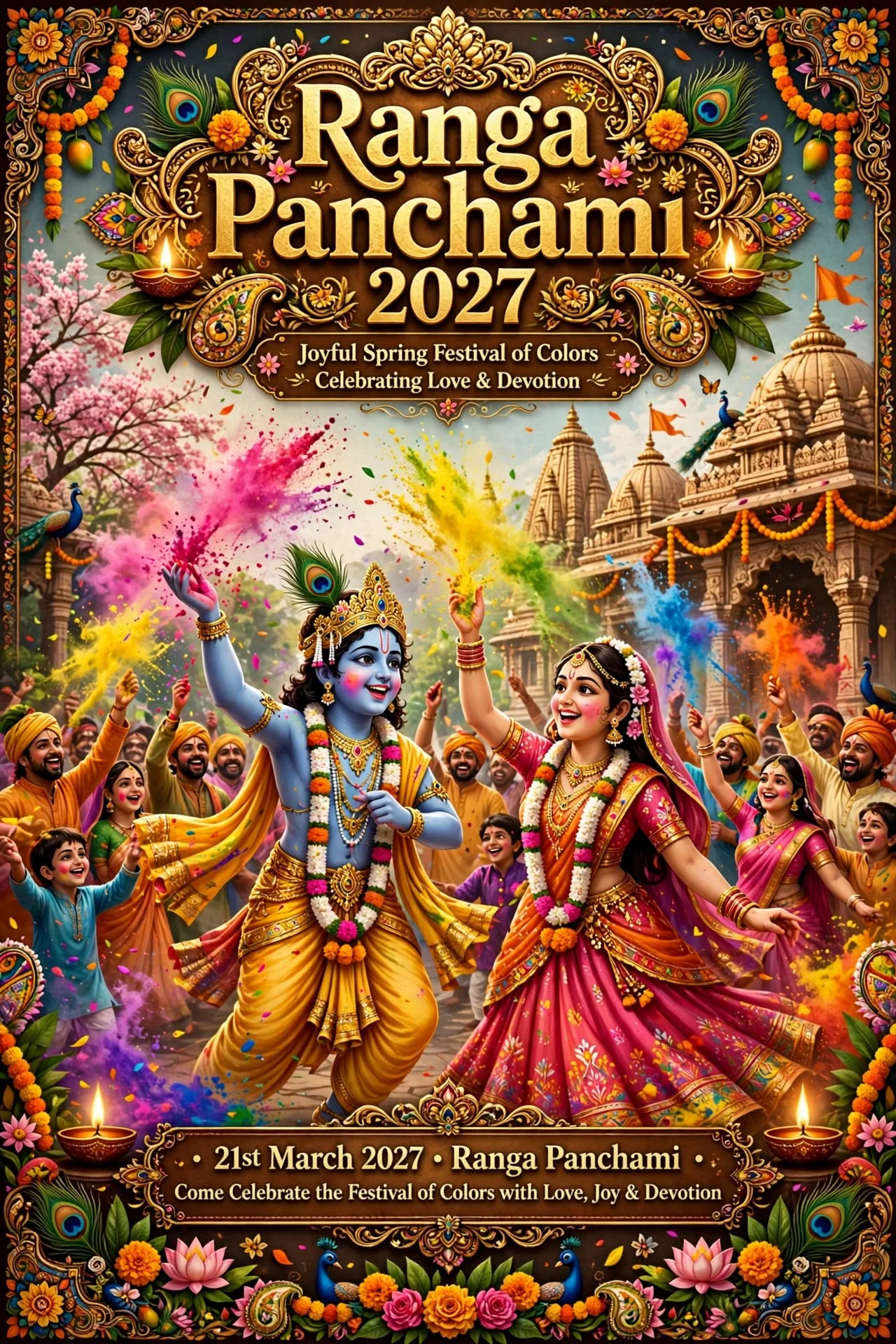
Bhalachandra Sankashti
Bhalachandra Sankashti Chaturthi is an intensely sacred, spiritually liberating, and astrologically protective monthly Hindu fasting observance dedicated to Lord Ganesha, celebrated on the fourth day (Chaturthi tithi) of the Krishna Paksha (waning moon fortnight) during the lunar month of Chaitra according to the North Indian Purnimanta calendar (corresponding to Phalguna Krishna Chaturthi in the Amanta calendar followed in Maharashtra, Gujarat, Karnataka, Andhra Pradesh, and Tamil Nadu). The presiding divine manifestation venerated on this holy day is Bhalachandra Maha Ganapati—the 7th of the celebrated thirty-two classical iconographic forms of Lord Ganesha described in the sacred Mudgala Purana, and the 2nd of the legendary Ashta Vinayaka pilgrimage shrines situated at Pali in Maharashtra (Ballaleshwar / Bhalachandra).
Sheetala Saptami
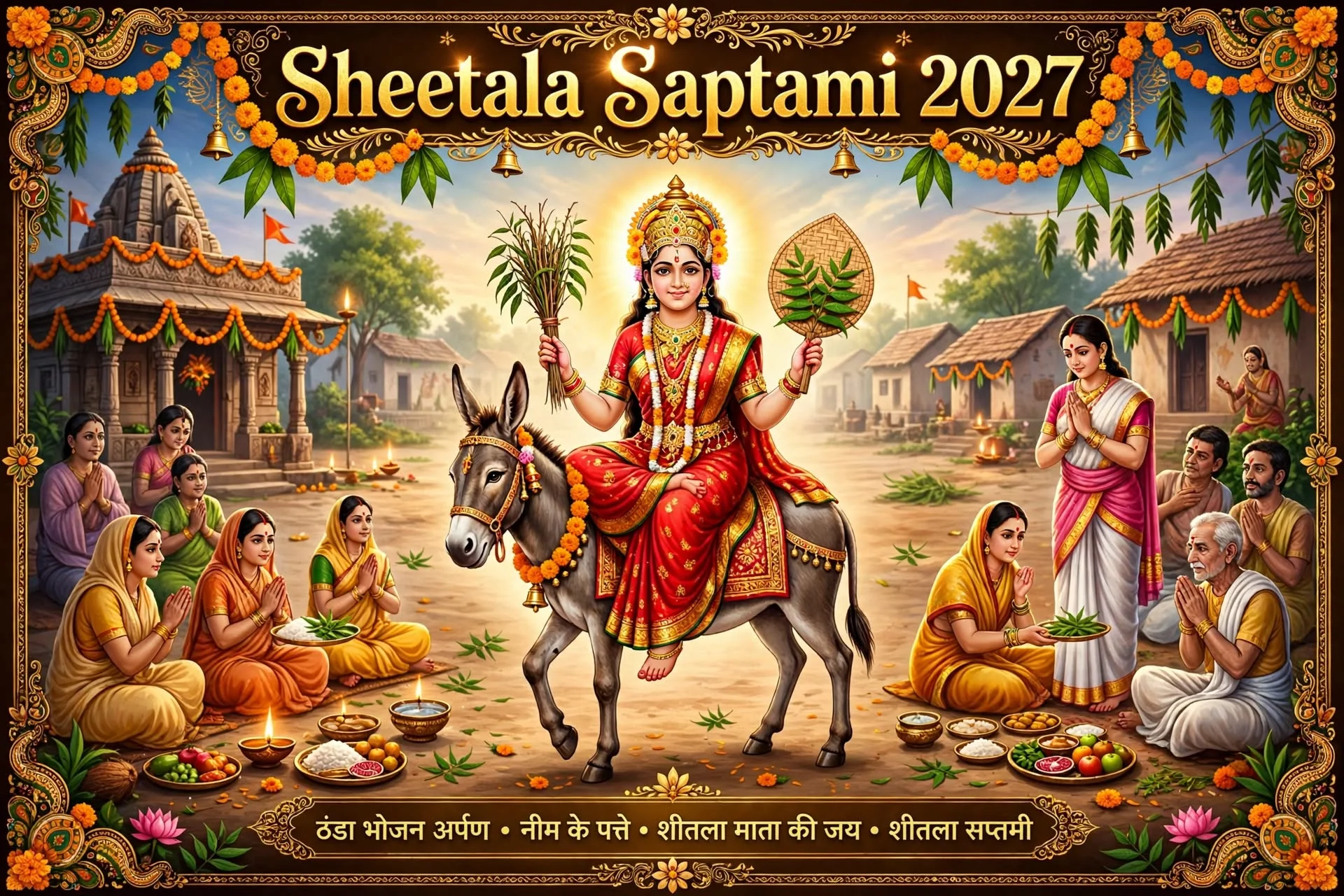
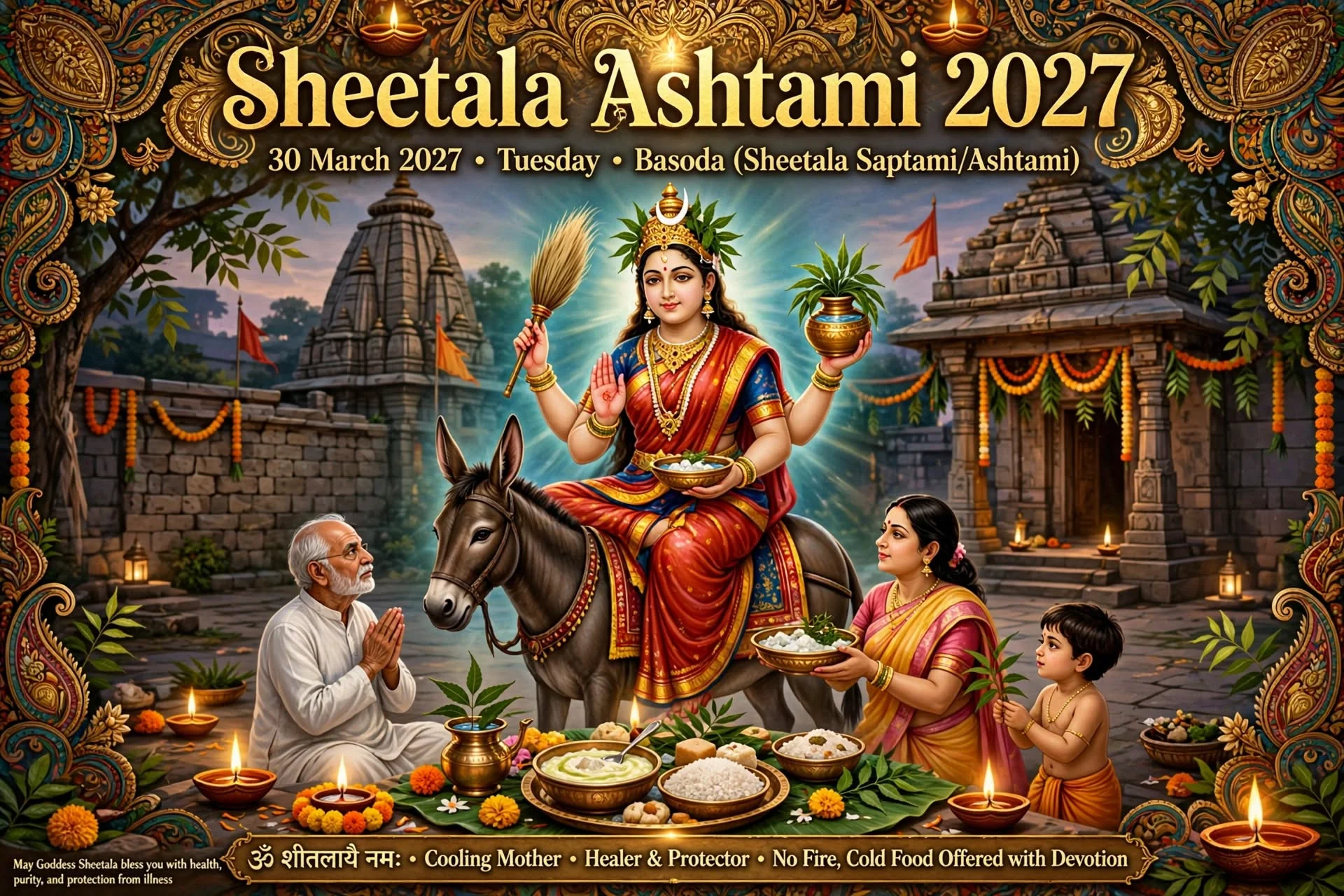
Sheetala Saptami (शीतला सप्तमी) is an ancient, highly revered, and scientifically grounded Hindu fasting and protective festival celebrated on the seventh day (Saptami tithi) of the Krishna Paksha in the holy month of Chaitra according to the traditional Hindu calendar. Dedicated to Goddess Sheetala (the divine mother who presides over cooling energy, physical immunity, and protection against fevers, poxes, and epidemic illnesses), this sacred festival marks the annual observance of 'Basoda'—the unique ritual of consuming strictly cold, stale food (Baasi Bhojan) and refraining from lighting the domestic cooking fire.
Basoda
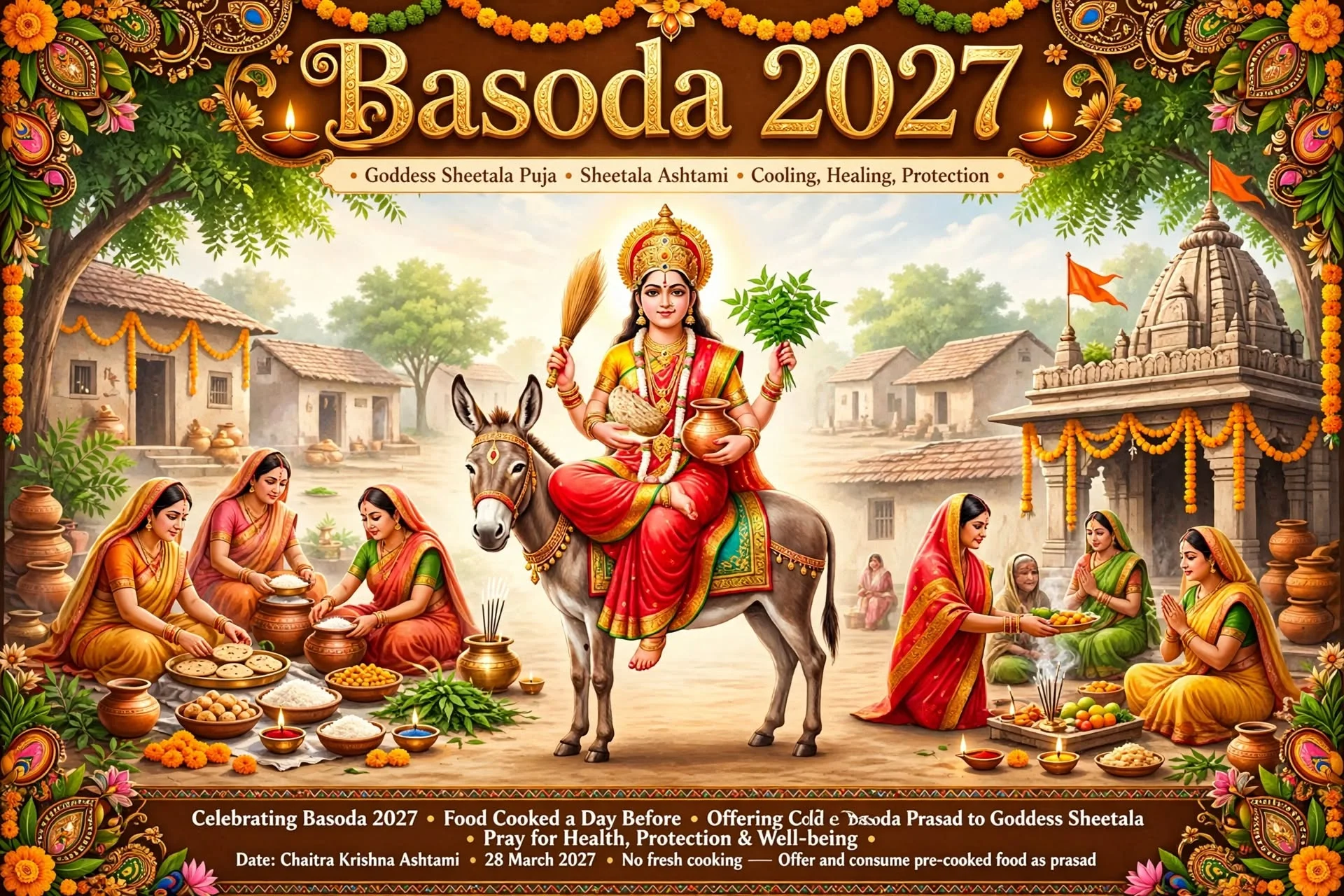
Basoda (बासोड़ा), also revered across northern and western India as Sheetala Basoda or Baasi Kora, is an ancient, culturally unique, and epidemiologically profound Hindu festival observed on the seventh or eighth day (Saptami or Ashtami tithi) of the Krishna Paksha in the month of Chaitra. Dedicated to Goddess Sheetala (the divine mother presiding over cooling energy, hygiene, and protection against burning fevers and epidemic poxes), the term 'Basoda' is derived from the Hindi word 'Baasi', which translates to 'cooked on the previous day / cold'. On this consecrated day, millions of households strictly refrain from lighting the domestic cooking stove, consuming exclusively cold, stale food prepared on the preceding evening.
Sheetala Ashtami (Basoda)
Sheetala Ashtami (शीतला अष्टमी), also revered across northern and western India as the grand culmination of the Basoda festival, is an ancient, highly revered, and epidemiologically profound Hindu festival observed on the eighth day (Ashtami tithi) of the Krishna Paksha in the month of Chaitra. Dedicated to Goddess Sheetala (the divine mother who presides over cooling energy, physical immunity, and protection against fevers, poxes, and epidemic illnesses), this sacred festival marks the annual observance of 'Basoda'—the unique ritual of consuming strictly cold, stale food (Baasi Bhojan) and refraining from lighting the domestic cooking fire.
Papamochani Ekadashi
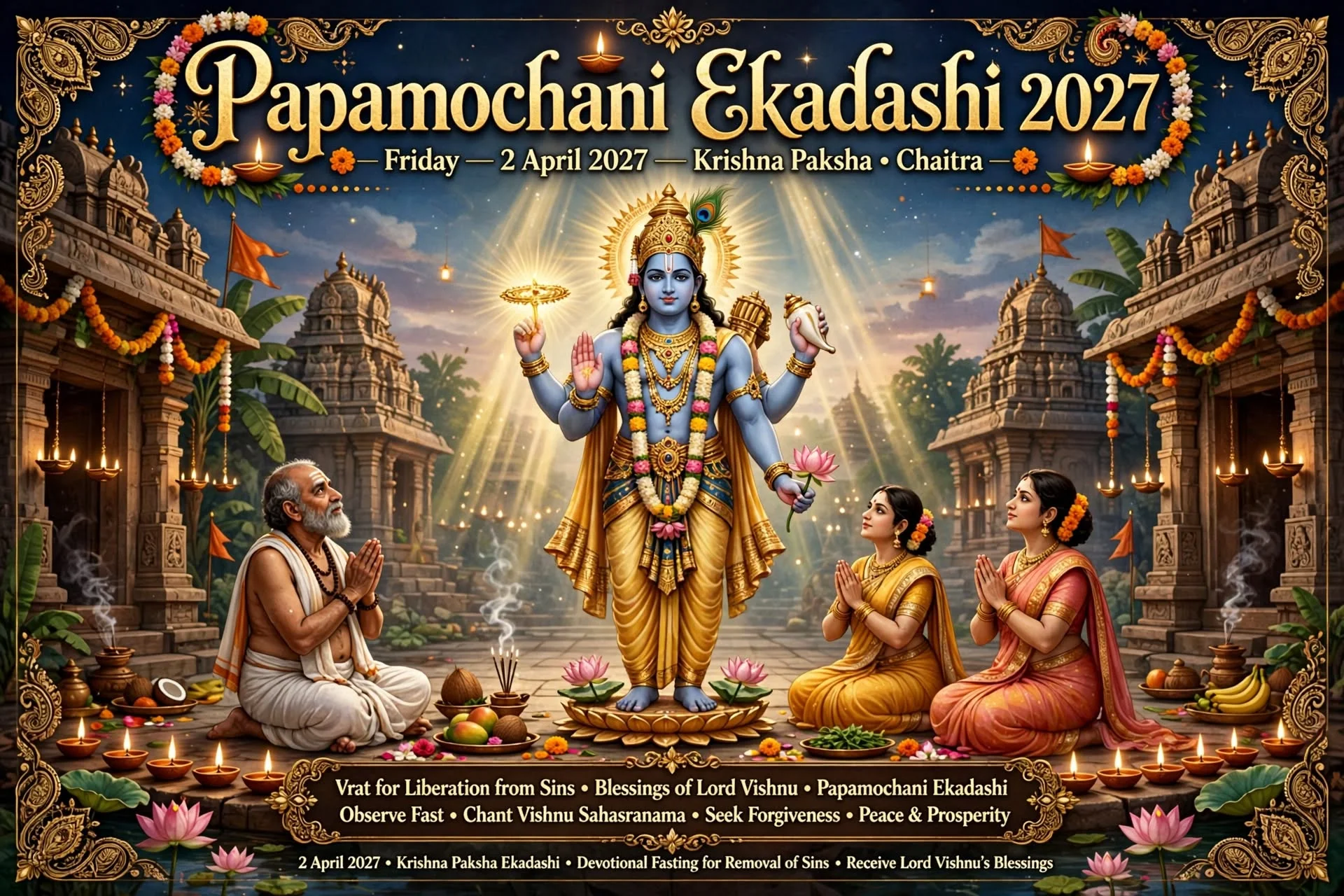
Papamochani Ekadashi holds a revered position in the Hindu calendar as the final Ekadashi of the lunar year. Falling during the Krishna Paksha of the closing lunar month (Phalguna in Purnimanta systems and Chaitra in Amanta systems), its name literally translates to 'the dissolver of sins' (Papa meaning sins, and Mochani meaning liberator). The sacred observance serves as an auspicious spiritual purge, offering devotees a divine opportunity to cleanse conscious and unconscious transgressions before entering the new spiritual cycle of Chaitra.
Ravi Pradosh Vrat
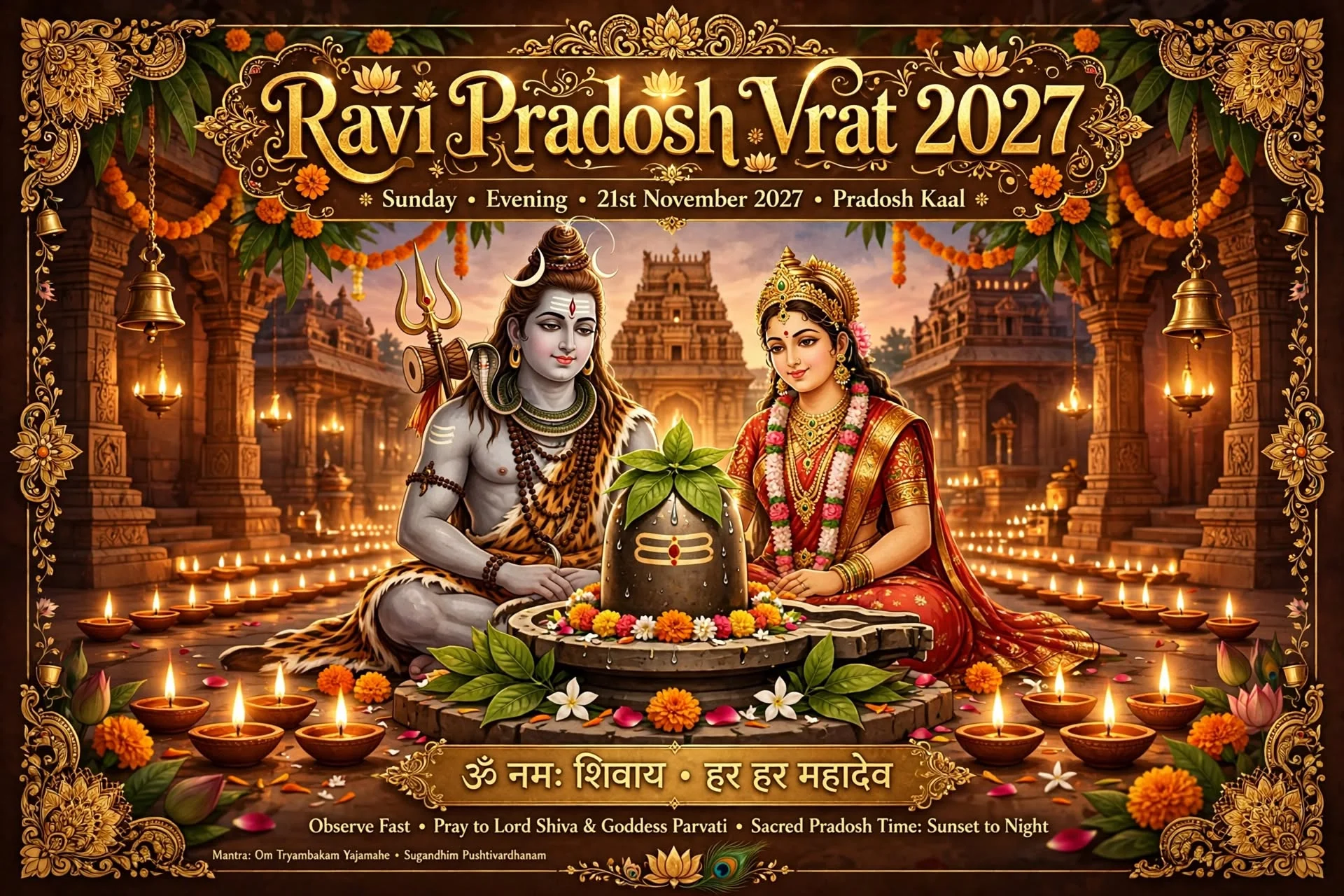
Ravi Pradosh Vrat is an exceptionally sacred fasting day observed on the thirteenth lunar day (Trayodashi) that coincides with a Sunday (Ravivara). Dedicated to Lord Shiva, the cosmic dissolver of sorrow, this bimonthly vow unites the healing radiance of Surya Bhagavan with the boundless compassion of Mahadeva. Observed during the twilight Sandhya period, it is believed to banish physical ailments, clear karmic obstructions, and bestow vitality and longevity.

Anvadhan
Anvadhan (अन्वाधान) is an ancient, highly revered Vedic ritual and spiritual observance in Sanatana Dharma performed on the day immediately preceding the New Moon (Amavasya) or Full Moon (Purnima). Rooted in the pristine traditions of the Shrauta and Grihya Sutras, Anvadhan literally translates to 'the solemn placing and replenishment of sacred fuel wood into the consecrated Vedic fires'. In traditional Vedic ritualism, householders (Grihasthas) and priests who maintain the sacred Agnihotra fires perform Anvadhan to prepare the sacrificial altars for the grand Darsha Yajna (New Moon sacrifice) or Paurnamasa Yajna (Full Moon sacrifice) scheduled for the following day.

Darsha Amavasya
Darsha Amavasya is a significant new moon observance in the Hindu calendar designating the specific night when the Moon is completely invisible to the human eye, having fully merged into the conjunction of the Sun.