




Darsha Amavasya is a significant new moon observance in the Hindu calendar designating the specific night when the Moon is completely invisible to the human eye, having fully merged into the conjunction of the Sun.
Darsha Amavasya 2027: Date, Puja Timings, Rituals & Stories

Darsha Amavasya Timings & Panchang
Important festival dates and auspicious timings
Usha Arghya (Sunrise)
06:06 am
Sandhya Arghya (Sunset)
06:42 pm
Start Date
Tuesday, 6 Apr 2027
Puja Muhurat
05:40 am – 05:21 am
Darsha Amavasya
The Sanskrit term 'Darsha' literally translates to 'sight' or 'beholding', signifying in Vedic astronomical metaphysics the sacred juncture when the Moon (Chandra) is beheld only by the Sun (Surya) and the departed ancestral spirits (Pitrus) residing in the subtle Pitruloka.
Rooted in ancient Vedic ritualism, Darsha Amavasya is inextricably linked with the classical 'Darsha-Purnamasa Ishti' sacrifices, and holds profound sanctity as one of the most meritorious occasions for performing ancestral rites (Shraddha, Pinda Dana, and Tila Tarpana).
Devotees observe a day-long fast and engage in contemplative worship dedicated to Lord Shiva (in His aspect as Chandrashekhara, the wearer of the crescent moon), Lord Vishnu, and Chandra Dev (the Moon God), seeking mental peace, emotional stability, relief from ancestral afflictions (Pitru Dosha), and spiritual liberation.
Why is Darsha Amavasya Celebrated?
Darsha Amavasya is observed to fulfill the sacred filial duty of Pitru Rin (debt to ancestors) and to restore emotional equilibrium by pacifying lunar and ancestral influences in human consciousness.
According to the Matsya Purana and Dharma Shastras, the new moon day represents the daytime of the Pitrus; oblations of water and sesame offered on Darsha Amavasya sustain and satisfy ancestral souls for an entire month.
- To honor and satisfy departed forefathers (Pitrus) through Tila Tarpana and Shraddha, mitigating Pitru Dosha.
- To pacify Chandra Dosha (afflictions of the Moon in one's Vedic birth chart) and overcome chronic anxiety, depression, and mental turbulence.
- To worship Lord Shiva as Chandrashekhara, who crowns the Moon on His matted locks, invoking His grace for mental tranquility.
- To perform sacred Ashwattha (Peepal tree) circumambulation and Panchabali offerings (feeding cows, crows, dogs, ants, and Brahmins).
- To accumulate spiritual merit and purify personal karmic imprints through self-restraint and charitable donation.
Vedic Antiquity and Puranic Lore of Darsha Amavasya
The Vedic Roots of Darsha-Purnamasa Ishti
The observance of Darsha dates back to the earliest strata of Vedic literature, prominent in the Rigveda, the Taittiriya Samhita of the Krishna Yajurveda, and the Shatapatha Brahmana. In the Shrauta ritual tradition, every householder was ordained to perform the Darsha-Purnamasa Ishti—the fortnightly new moon and full moon sacrifices.
The Darsha sacrifice was offered specifically on the day when the Moon had disappeared from the sky and was understood to have entered the waters and vegetation of the Earth, sanctifying all plant life with lunar nectar (Soma). Over centuries, this Vedic sacrificial paradigm evolved into household Shraddha rites and ascetic contemplation.
The Puranic Narrative of Sage Jaratkaru and the Pitrus
A celebrated narrative illustrating the indispensability of Darsha Shraddha is recounted in the Mahabharata (Adi Parva) and the Matsya Purana concerning the wandering ascetic sage Jaratkaru. Devoted entirely to extreme tapas, Jaratkaru renounced family life and refused to marry.
During his travels through deep spiritual realms, Jaratkaru was astonished to witness a group of venerable ancestral spirits suspended upside down inside a subterranean abyss, holding onto a single slender blade of grass that was being slowly gnawed away by a black rat. Terrified by their plight, he inquired about their identity and predicament.
The weeping spirits revealed that they were Jaratkaru's own direct ancestors. Because their sole living descendant had renounced the world and neglected to marry, perform Darsha Tarpana, and offer pinda oblations, their ancestral line was facing total annihilation, condemning them to fall into dark hellish regions.
Overwhelmed with remorse and understanding the inviolable sacredness of ancestral obligations, Jaratkaru agreed to take a wife, perform proper Darsha Amavasya Shraddha, and produce a virtuous son (Sage Astika). His offerings immediately rescued his forefathers, elevating them to the luminous realm of Pitruloka.
Source: Shatapatha Brahmana, Mahabharata (Adi Parva), and Matsya Purana (Pitru Vamsha Chapters)
Metaphysical, Psychological, and Ancestral Foundations
The Moon as the Cosmic Archetype of Mind (Manas)
In the Purusha Sukta of the Rigveda, it is proclaimed: 'Chandrama Manaso Jatah'—the Moon was born from the cosmic mind of the Supreme Being. In human physiology and psychology, the Moon presides over emotional rhythms, subconscious thoughts, and psychological stability.
On Darsha Amavasya, when the Moon withdraws entirely from external sight, human emotions and psychic energies are deeply vulnerable to instability and lethargy. By dedicating this day to meditative contemplation and fasting, the practitioner harnesses the void to quiet mental fluctuations and attain inner stillness.
Pitruloka and the Law of Ancestral Resonance
Vedic cosmology explains that departed souls retain subtle links with their biological lineage until they take new embodiment or attain Moksha. On Amavasya, the subtle doorway between the Earth plane and Pitruloka is receptive.
Water imbued with black sesame seeds and Kusha grass acts as a subtle vibrational conductor. When offered with sincere gratitude and mantra vibrations, these oblations nourish the ancestors in whatever realm or form they exist, bringing reciprocal blessings of longevity, health, and progeny to the living lineage.
Panchabali: Cosmic Interconnectedness and Harmony
- Feeding cows (Go-bali) honors Mother Earth and divine nurture.
- Feeding crows (Kaka-bali) satisfies messengers connecting the earthly realm with the ancestral spheres.
- Feeding dogs (Shwana-bali) invokes the guardians of the threshold of death (Yama's hounds, Sarameya).
- Feeding ants and small creatures (Kitadi-bali) acknowledges universal life in the smallest beings.
- Feeding Brahmins and seekers (Brahmana-bhojana) supports spiritual wisdom and ethical preservation.
Ritual Protocol, Temple Observances, and Ancestral Rites
Morning Ablution and The Sacred Vow of Darsha
Devotees rise early during Brahma Muhurta, cleanse their homes, and take a ritual bath in a sacred river or at home using water infused with Gangajal. Devotees take a solemn Sankalpa dedicating the day to ancestral pacification, mental quietude, and charity.
Men eligible to perform Shraddha wear unstitched clean white dhotis and observe strict celibacy and fasting throughout the morning.
Conducting Tila Tarpana and Pinda Dana
Around midday (the Aparahna period, between 11:30 AM and 2:00 PM, considered the most auspicious window for ancestral rites), devotees sit facing South on a mat made of Kusha grass.
Using a copper or bronze tray, water mixed with black sesame seeds, barley, and sacred blades of Kusha grass is poured through the Pitru Tirtha (the valley between the thumb and index finger) while reciting ancestral gotras and names. Cooked rice balls (Pindas) kneaded with ghee and sesame seeds are presented with deep reverential love.
Peepal Tree Veneration and Evening Illumination
In the afternoon, devotees visit a sacred Peepal tree (Ashwattha Vriksha), watering its roots with milk and water and performing circumambulations (Pradakshina), reflecting that Brahma resides in its roots, Vishnu in its trunk, and Shiva in its leaves, while ancestral spirits rest upon its branches.
In the evening, lamps fueled with mustard oil or cow ghee are placed at the household doorway, under the Peepal tree, and on the banks of a river to illuminate the path of ancestral souls returning to their realms.
Darsha Amavasya Puja Vidhi (Step by Step)
- 1
Pratah Snana and Shuddhikaran (Morning Bath and Sanctification)
Wake before sunrise during Brahma Muhurta. Take a purificatory bath in clean water infused with drops of Gangajal. Don clean white or unstitched traditional attire. Clean the worship space and sprinkle Gangajal on yourself and the altar.
- 2
Surya Arghya and Gayatri Upasana
Fill a copper lota with pure water, add red sandalwood paste, unbroken rice (Akshata), and red flowers. Face the rising Sun, raise the vessel above your forehead, and offer water in a continuous stream while mentally chanting the Surya Gayatri or 'Om Suryaya Namah'.
- 3
Sankalpa for Darsha Amavasya (Sacred Vow)
Sit facing East on an asana. Take water, white flowers, and black sesame seeds in your right palm. Invoke the day's tithi, nakshatra, your gotra, and ancestors' lineage, and take a solemn vow (Sankalpa) to observe the fast and perform Shraddha-Tarpana for ancestral liberation and personal purification.
- 4
Kusha Pavitri Dharana and Southward Alignment
Wear a ring made of sacred Kusha grass (Pavitri) on your right ring finger. Shift your seating position to face South, the cosmic quarter presided over by Lord Yama and the Pitrus. Spread fresh Darbha (Kusha) grass pointing southwards before you.
Darsha Amavasya Puja Samagri List
Ancestral Tarpana and Shraddha Essentials
Specific botanical and sacred materials mandated by the Smriti texts for performing the rites of Tila Tarpana and Pinda Dana.
- Pure Gangajal or water from a sacred pilgrimage river
- Kusha grass ring (Pavitri) and long fresh Kusha blades (Darbha)
- Whole unpolished black sesame seeds (Kala Til)
- Barley grains (Jau) and unbroken white rice grains (Akshata)
- Cooked white rice kneaded with cow ghee and honey for Pindas
- Wide bronze or copper tray (Tarpana Patra) and copper lota
Altar, Shiva, and Chandra Worship Articles
Materials required for the worship of Lord Shiva, Lord Vishnu, and the Moon God.
- Shiva Linga or Shaligram Shila
- White sandalwood paste (Shweta Chandan) and sacred ash (Bhasma)
- Fresh Bilva leaves (three leaflets intact) and white blossoms
- Unboiled fresh cow milk, pure curd, honey, and desi ghee
- White cloth for the altar and sacred thread (Janeu)
- Rudraksha Japa Mala (108 beads)
Lighting, Incense, and Naivedya Items
Mantras and Prayers for Darsha Amavasya
Darsha Amavasya Vrat Rules and Fasting Guidelines
Fasting Discipline and Conduct
On Darsha Amavasya, householders observe fasting from sunrise until the conclusion of ancestral tarpana and evening prayers.
- Fast from dawn until midday or after completion of Shraddha and feeding the Brahmins.
- Maintain strict celibacy (Brahmacharya) and mental serenity, avoiding all forms of conflict, deceit, and anger.
- Strictly avoid meat, fish, eggs, alcohol, onions, garlic, and heavy oily foods.
- Do not consume food in other people's homes on this day; observe domestic cooking with pure sattvic ingredients.
Specific Shraddha and Tarpana Injunctions
- Perform Tarpana during the Aparahna window (afternoon), never at night or before dawn.
- Always use a ring of Kusha grass (Darbha Pavitri) on the right hand during ancestral libations.
- Ensure black sesame seeds are used for ancestors (white sesame is reserved for gods).
- Offerings must be made facing South, the direction governed by Yama and ancestral deities.
Parana and Fast Completion
The fast is concluded after completing the Panchabali offerings, feeding Brahmins, and providing food to cows and birds. The devotee partakes of a sattvic meal composed of rice kheer, fruits, and simple grain dishes prepared without sea salt (rock salt may be used).
Dos and Don'ts of Darsha Amavasya
Good Practices (Do's)
- Wake early during Brahma Muhurta, take a purificatory bath, and make a sincere Sankalpa.
- Perform Tila Tarpana using black sesame seeds and Kusha grass facing the South direction.
- Offer the five sacred food portions (Panchabali) to cows, crows, dogs, ants, and Brahmins.
- Worship the Peepal tree (Ashwattha) with water, milk, and circumambulations.
- Chant the Chandra Bija Mantra and Chandrashekhara Stotra for mental peace and to alleviate Chandra Dosha.
Darsha Amavasya Across Regions
| Region | Local Name |
|---|---|
| Gaya (Bihar) and Varanasi (Uttar Pradesh) | Darsha Shraddha & Pinda Dana |
| Tamil Nadu and Southern India | Darsha Amavasai Tarpana |
| Maharashtra and Gujarat | Darsha Amavasya Ashwattha Vrata |
| Odisha (Puri) | Amavasya Tila Tarpana |
Darsha Amavasya FAQs
What is the meaning and significance of Darsha Amavasya?
Darsha Amavasya refers to the new moon night when the Moon is totally invisible from Earth, entering the conjunction of the Sun. It is considered an exceptionally sacred day for performing ancestral rites (Tarpana and Shraddha) and worshipping Lord Shiva and the Moon God for mental peace.
Why is Darsha Amavasya considered the best day for ancestor worship (Pitru Tarpana)?
According to the Matsya Purana, the Amavasya tithi constitutes the daytime for departed ancestors residing in Pitruloka. Oblations of water and black sesame offered on this day are directly received by ancestral souls, providing them deep satisfaction and peace.
How can one alleviate Chandra Dosha on Darsha Amavasya?
Chandra Dosha can be pacified by worshipping Lord Shiva (Chandrashekhara), offering raw cow milk and white sandalwood to a Shiva Linga, chanting the Chandra Bija Mantra 108 times, and donating white clothes, rice, or silver.
Upcoming Festivals
View All
Tuesday, Apr 6, 2027
Phalguna Amavasya
Phalguna Amavasya marks a profound and sacred transition in the Hindu calendar. As the final Amavasya of the lunar year according to the Purnimanta system, it represents the conclusion of the winter season and the cosmic completion of the annual lunar journey. Occurring on the dark new moon night in the month of Phalguna, it provides devotees with a supreme spiritual opportunity to express gratitude to ancestors, perform charitable acts, and cleanse lingering karmic impurities before the dawn of the New Year.
View Festival Guide

Tuesday, Apr 6, 2027
Anvadhan
Anvadhan (अन्वाधान) is an ancient, highly revered Vedic ritual and spiritual observance in Sanatana Dharma performed on the day immediately preceding the New Moon (Amavasya) or Full Moon (Purnima). Rooted in the pristine traditions of the Shrauta and Grihya Sutras, Anvadhan literally translates to 'the solemn placing and replenishment of sacred fuel wood into the consecrated Vedic fires'. In traditional Vedic ritualism, householders (Grihasthas) and priests who maintain the sacred Agnihotra fires perform Anvadhan to prepare the sacrificial altars for the grand Darsha Yajna (New Moon sacrifice) or Paurnamasa Yajna (Full Moon sacrifice) scheduled for the following day.
View Festival Guide

Wednesday, Apr 7, 2027
Ugadi
Ugadi, derived from the Sanskrit terms 'Yuga' (era) and 'Aadi' (beginning), marks the glorious commencement of the New Year for the people of Andhra Pradesh, Telangana, and Karnataka. Celebrated on the first day of the waxing moon (Shukla Paksha Pratipada) in the sacred month of Chaitra, it heralds the advent of the new astronomical cycle, the arrival of the rejuvenating spring season (Vasanta Ritu), and the eternal rhythm of cosmic creation inaugurated by Lord Brahma.
View Festival Guide
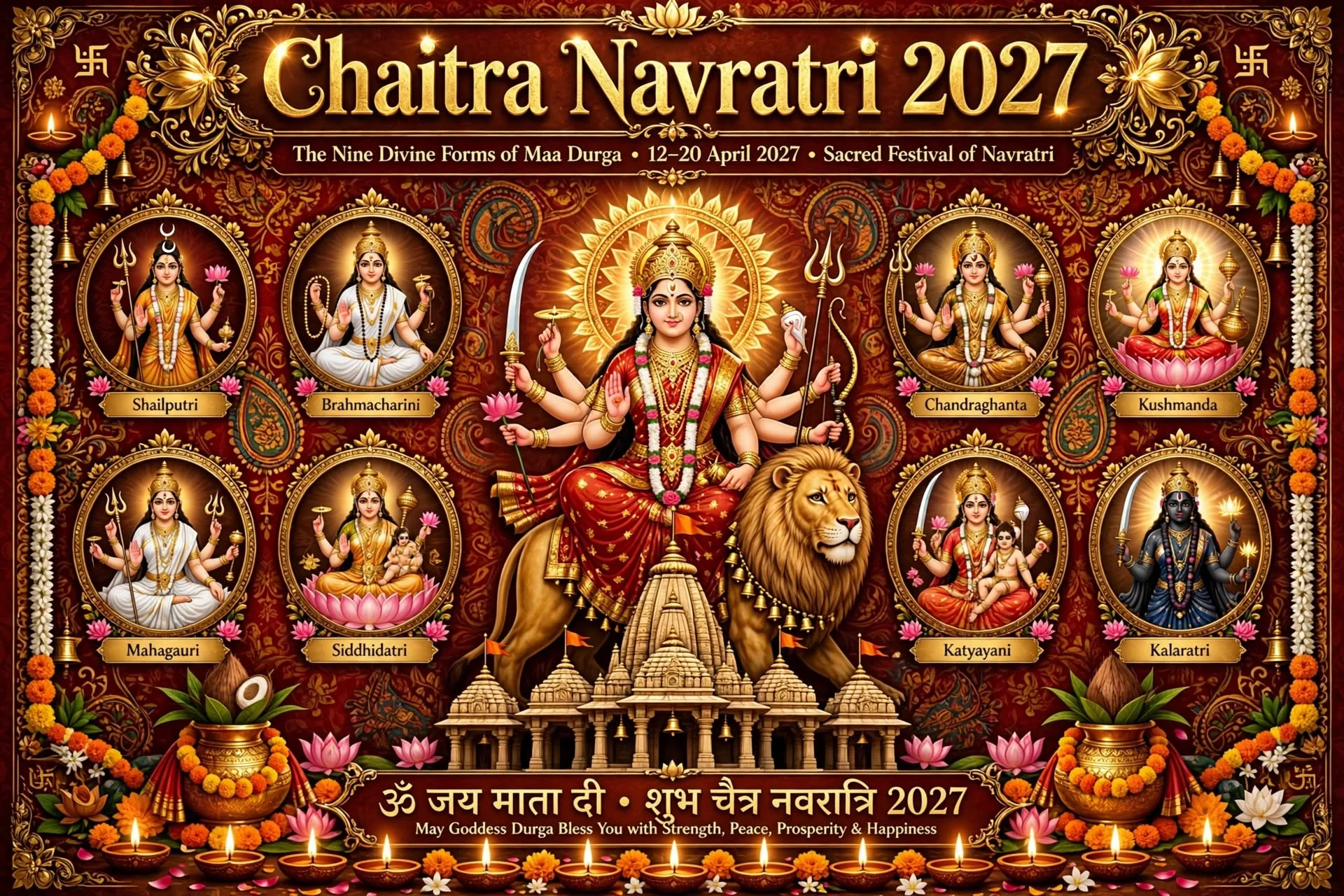
Wednesday, Apr 7, 2027
Chaitra Navratri
Chaitra Navratri, also reverently known as Vasanta Navratri, is a sacred nine-night festival dedicated to the worship of Goddess Durga and her nine supreme manifestations (Navadurga). Commencing on the first day of the bright fortnight (Shukla Paksha Pratipada) in the month of Chaitra, it coincides with the advent of the Hindu New Year and culminates on Rama Navami, the appearance day of Lord Rama. Celebrated during the vibrant transition into spring, it signifies spiritual rejuvenation, maternal cosmic protection, and the triumph of divine righteousness.
View Festival Guide

Wednesday, Apr 7, 2027
Ishti
Ishti is a foundational Vedic ritual observance appearing prominently in Hindu Panchangs on the Pratipada tithi (the first lunar day) following either Amavasya (new moon) or Purnima (full moon), marking the prescribed performance day for the fortnightly Vedic Darsha-Purnamasa sacrifices.
View Festival Guide
Wednesday, Apr 7, 2027
Nutan Varsh Prarambha
Nutan Varsh Prarambha marks the glorious beginning of the Hindu New Year on the first day of the waxing moon (Shukla Paksha Pratipada) in the month of Chaitra. Celebrated across India under diverse regional names such as Ugadi, Gudi Padwa, and Cheti Chand, this sacred dawn signifies not merely a calendar shift, but the cosmic anniversary of creation itself. According to Vedic tradition, it was on this radiant morning that Lord Brahma initiated the cosmic cycle of time, creation, and mortal existence.
View Festival Guide
Wednesday, Apr 7, 2027
Gudi Padwa
Gudi Padwa marks the grand celebration of the Marathi and Konkani New Year, observed on the first day of the bright fortnight (Shukla Paksha Pratipada) in the sacred month of Chaitra. Celebrated with tremendous cultural pride and spiritual fervor across Maharashtra, Goa, and adjoining regions, this vibrant festival heralds the arrival of spring (Vasanta Ritu) and commemorates the cosmic dawn of creation initiated by Lord Brahma.
View Festival Guide

Thursday, Apr 8, 2027
Chandra Darshana
Chandra Darshana is a revered monthly Hindu observance dedicated to sighting, venerating, and offering oblation to the delicate waxing crescent Moon immediately following the new moon (Amavasya), typically occurring during the twilight of Shukla Paksha Pratipada or Dwitiya.
View Festival Guide