




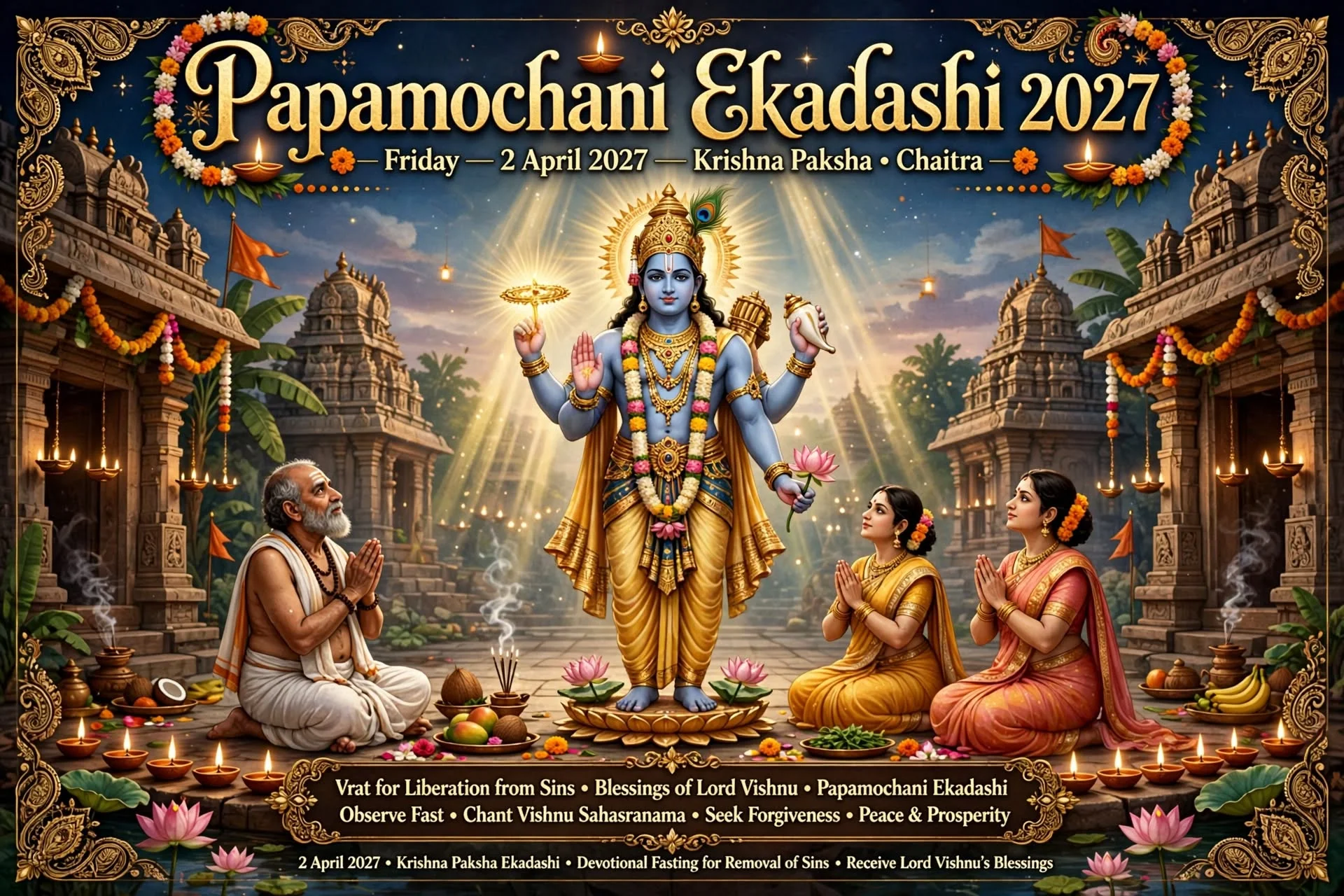
Papamochani Ekadashi holds a revered position in the Hindu calendar as the final Ekadashi of the lunar year. Falling during the Krishna Paksha of the closing lunar month (Phalguna in Purnimanta systems and Chaitra in Amanta systems), its name literally translates to 'the dissolver of sins' (Papa meaning sins, and Mochani meaning liberator). The sacred observance serves as an auspicious spiritual purge, offering devotees a divine opportunity to cleanse conscious and unconscious transgressions before entering the new spiritual cycle of Chaitra.
Papamochani Ekadashi 2027: Date, Puja Timings, Rituals & Stories
Papamochani Ekadashi Timings & Panchang
Important festival dates and auspicious timings
Usha Arghya (Sunrise)
06:11 am
Sandhya Arghya (Sunset)
06:39 pm
Start Date
Friday, 2 Apr 2027
Puja Muhurat
12:45 am – 02:52 am
Papamochani Ekadashi
The profound significance of Papamochani Ekadashi is celebrated in classical Puranic literature, especially within the Bhavishya Uttara Purana and the Padma Purana. Lord Krishna narrates to King Yudhishthira how Sage Lomasha explained this vow to King Mandhata. The narrative recounts the spiritual redemption of Sage Medhavi and the celestial nymph Manjughosha, who, having incurred severe curses, were completely restored to divine purity and spiritual glory through the rigorous practice of this vow dedicated to Lord Vishnu.
Devotees observe this holy day by adhering to strict fasting, meditating upon the four-armed cosmic form of Lord Vishnu, and keeping a devotional vigil (Ratri Jagaran). Chanting the sacred Vishnu Sahasranama and engaging in Hari Kirtan, worshippers seek repentance for past mistakes, relief from psychological burdens, and divine benevolence, culminating in righteous living and ultimate emancipation (Moksha).
Why is Papamochani Ekadashi Celebrated?
Papamochani Ekadashi is observed as the ultimate spiritual cleanser at the close of the Hindu lunar year. According to Vedic tradition, unexpiated negative actions generate psychological and spiritual blockages that impede spiritual growth. By dedicating this day entirely to fasting, penance, and contemplation of Lord Vishnu, devotees dissolve accumulated negative karma and step into the new lunar year with a purified heart and renewed spiritual vitality.
- Eradication of Sins: The observance is divinely empowered to nullify major and minor transgressions accumulated through speech, thought, and deed.
- End-of-Year Cleansing: Serving as the final Ekadashi before Chaitra Navratri and the New Year, it cleanses the spiritual slate of the practitioner.
- Liberation from Curses: Scriptural chronicles illustrate how even grave celestial curses and moral falls were undone by sincere observance of this fast.
- Attainment of Vaikuntha: Devout practitioners earn the eternal grace of Lord Janardana, assuring peaceful worldly life and ascension to Vaikuntha Loka.
Puranic Origin & The Chronicle of Sage Medhavi
Sage Medhavi and Apsara Manjughosha
In the picturesque forest of Chaitraratha, Sage Medhavi, the virtuous son of Sage Chyavana, practiced rigorous ascetic penances. Captivated by his lustrous spiritual aura, the celestial maiden Manjughosha sought to win his heart. Aided by Kamadeva, the god of love, she succeeded in captivating the young sage. Absorbed in celestial pleasure, Sage Medhavi lost track of worldly time, living with Manjughosha for fifty-seven celestial years believing only a single evening had elapsed.
Upon awakening to the truth of his spiritual regression, Sage Medhavi was consumed by remorse and anger. Realizing that his years of austere tapas had been compromised, he cursed Manjughosha to become a dreadful pishachini (demoness). Overcome with remorse, the weeping nymph begged for mercy and redemption from the terrible curse.
Redemption Through the Guidance of Sage Chyavana
Relenting, Sage Medhavi advised Manjughosha to observe the sacred fast of Papamochani Ekadashi during the Krishna Paksha of Phalguna, assuring her that Lord Vishnu would liberate her from the demonic form. The sage then returned to his father, Sage Chyavana, who admonished him for destroying his penance through anger and infatuation. Chyavana instructed Medhavi that he, too, must observe the Papamochani Ekadashi fast to expiate the sin of cursing and spiritual lapses.
Both Medhavi and Manjughosha observed the Papamochani Ekadashi vow with unshakeable devotion and complete fasting. By the supreme grace of Lord Vishnu, Manjughosha was instantly freed from the demoniac curse and restored to her celestial form, while Sage Medhavi regained his pristine spiritual luster and realized the supreme truth.
Source: Bhavishya Uttara Purana & Padma Purana
The Inner Meaning of Papamochani Vrata
Cosmic Expiation and Mental Renewal
The observance of Papamochani Ekadashi emphasizes that no karmic stain is beyond redemption when met with genuine repentance, self-control, and unconditional surrender to God. The human psyche naturally gathers impressions of guilt, remorse, and sensory attachment. Fasting on this day detaches the senses from worldly desires and redirects the mind toward inner contemplation of Lord Vasudeva.
The story of Sage Medhavi illustrates that spiritual pride and uncontrolled anger can fell even great ascetics. True spiritual liberation requires humility, forgiveness, and refuge in divine compassion, which Papamochani Ekadashi abundantly awakens.
Transcendence from the Cycle of Rebirth
Vedic wisdom teaches that sins bind the Jiva to the wheel of samsara. By abstaining from food, sensory indulge, and sleep during this sacred twenty-four-hour cycle, the devotee aligns their consciousness with the transcendent frequency of Lord Vishnu. The merit generated by this single fast is said to surpass thousands of mundane sacrificial gifts and arduous pilgrimages.
Ritual Discipline & Method of Observance
Preparatory Rites and Dietary Restraint
The observance commences on Dashami evening with a single light sattvic meal, maintaining complete celibacy and mental quietude. Devotees avoid grains, onion, garlic, and heavy foods to ensure that the body is pure and receptive for the day-long Ekadashi fast.
On the morning of Ekadashi, after an early ritual bath, the devotee establishes an altar dedicated to Lord Vishnu, decorated with yellow silk, fresh flowers, and holy basil (Tulsi). The holy vow of fasting (Sankalpa) is declared with palmfuls of water, akshata, and flowers.
Nocturnal Vigil and Dwadashi Parana
Devotees observe a strict nocturnal vigil (Ratri Jagaran), spending the night singing devotional hymns, chanting the thousand names of Vishnu (Sahasranama), and meditating on the divine Lilas. Sleeping during the day or night of Ekadashi is avoided.
On Dwadashi morning, the fast is ceremonially concluded (Parana) after sunrise within the prescribed astrological window. Devotees first worship Lord Vishnu, offer food, clothing, and charity to Brahmins and the needy, and then break their fast with pure sattvic food.
Papamochani Ekadashi Puja Vidhi (Step by Step)
- 1
Pratah Smaran & Snan
Awaken during the holy Brahma Muhurta, meditate on Lord Hari, and take a purifying bath using Gangajal and holy Tulsi leaves.
- 2
Sankalpa
Wear clean yellow garments, face east before the altar, hold water, flowers, and Akshata in your right palm, and state the solemn vow of fasting.
- 3
Altar Preparation
Cover a sanctified wooden chauki with clean yellow silk cloth, draw an ashtadal lotus with rice flour, and place the idol or picture of Lord Vishnu.
- 4
Kalash Sthapana
Establish a sacred copper Kalash filled with holy water, betel nut, silver coin, and mango leaves, placing an unbroken coconut wrapped in sacred thread on top.
- 5
Avahana & Dhyan
Invoke the divine presence of Lord Vishnu (Chaturbhuja roopa holding Shankha, Chakra, Gada, and Padma) into the sacred idol with heartfelt Vedic prayers.
Papamochani Ekadashi Puja Samagri List
Altar & Sanctum Setup Materials
Essential auspicious items needed to prepare the sanctified altar for Lord Vishnu.
- Idol or sacred picture of Lord Vishnu and Goddess Lakshmi
- Wooden altar stool (Chauki) and fresh yellow cloth
- Copper or brass Kalash, coconut, and fresh mango leaves
- Unbroken rice (Akshata), Kumkum, and turmeric powder
Abhisheka & Worship Offerings
Purifying liquids, fragrances, and sacred plant offerings for the Shodashopachara rituals.
- Pure Gangajal, raw cow milk, curd, honey, cow ghee, and raw sugar
- Fragrant yellow sandalwood paste (Chandan) and saffron (Kesar)
- Fresh yellow marigold flowers, yellow lotus, and sacred Tulsi leaves
- Cow-ghee lamp, cotton wicks, and aromatic Guggul incense
Naivedya & Charitable Offerings
Sattvic food offerings and daan items to be distributed to Brahmins and seekers.
- Fresh seasonal fruits (bananas, apples, oranges) and dry fruits
- Pure milk kheer or mawa sweets prepared without grains
- Betel leaves (Paan), supari, cloves, and cardamom
Mantras and Prayers for Papamochani Ekadashi
Papamochani Ekadashi Vrat Rules and Fasting Guidelines
Observance Guidelines & Vrat Rules
Observing Papamochani Ekadashi demands high purity of mind, speech, and physical conduct.
- Dashami Preparation: Consume a single light sattvic vegetarian meal on Dashami evening and maintain strict celibacy.
- Complete Fasting: Refrain from grains, pulses, onion, and garlic. Complete Nirjala or Phalahari fast is recommended.
- Nocturnal Vigil (Jagaran): Spend the night singing devotional hymns and reading sacred scriptures.
- Parana Timings: Break the fast on Dwadashi during the prescribed Muhurta after sunrise and before the expiry of Dwadashi tithi.
Dos and Don'ts of Papamochani Ekadashi
Good Practices (Do's)
- Wake early during Brahma Muhurta and take a holy bath.
- Chant the sacred names and mantras of Lord Vishnu continuously.
- Offer yellow flowers, chandan, and sacred Tulsi leaves to the deity.
- Break the fast strictly within the prescribed Dwadashi Parana window.
Things to Avoid (Don'ts)
Papamochani Ekadashi Across Regions
| Region | Local Name |
|---|---|
| Northern India | Papamochani Gyaras |
| Southern India | Papamochani Ekadashi |
| Western India | Papamochani Agiyaras |
Papamochani Ekadashi FAQs
What is the meaning and significance of Papamochani Ekadashi?
Papamochani is formed from 'Papa' (sin) and 'Mochani' (one who frees). It is celebrated to eradicate accumulated negative karmas and spiritual afflictions before the arrival of the new lunar year.
Which deity is worshipped on Papamochani Ekadashi?
Lord Vishnu in his four-armed Chaturbhuja form is worshipped with utmost devotion, alongside his divine consort Goddess Lakshmi.
Can grains and rice be eaten during Papamochani Ekadashi?
No, consuming all grains, cereals, beans, and particularly rice is strictly forbidden on all Ekadashis according to sacred Hindu scriptures.
Upcoming Festivals
View All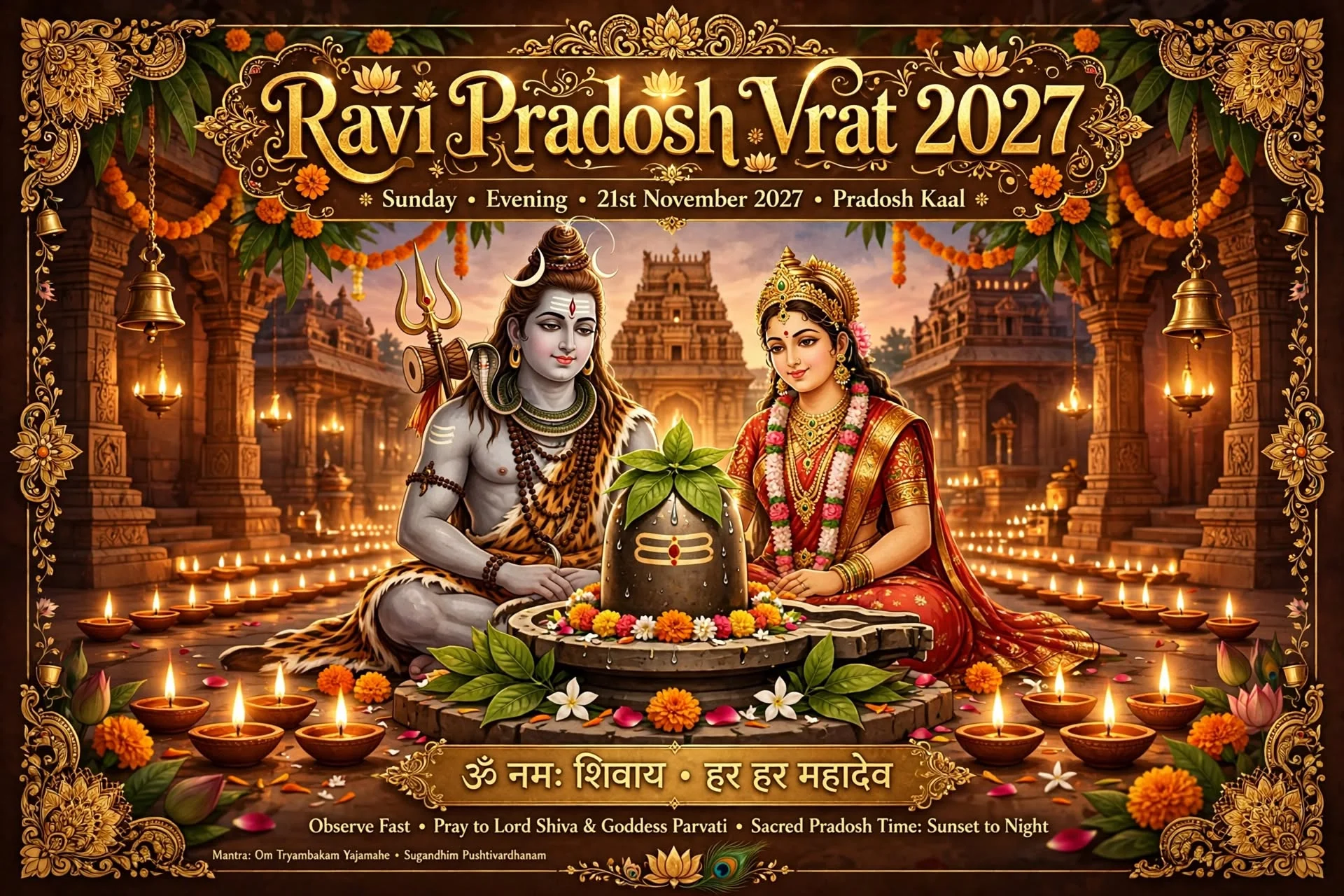
Sunday, Apr 4, 2027
Ravi Pradosh Vrat
Ravi Pradosh Vrat is an exceptionally sacred fasting day observed on the thirteenth lunar day (Trayodashi) that coincides with a Sunday (Ravivara). Dedicated to Lord Shiva, the cosmic dissolver of sorrow, this bimonthly vow unites the healing radiance of Surya Bhagavan with the boundless compassion of Mahadeva. Observed during the twilight Sandhya period, it is believed to banish physical ailments, clear karmic obstructions, and bestow vitality and longevity.
View Festival Guide

Tuesday, Apr 6, 2027
Anvadhan
Anvadhan (अन्वाधान) is an ancient, highly revered Vedic ritual and spiritual observance in Sanatana Dharma performed on the day immediately preceding the New Moon (Amavasya) or Full Moon (Purnima). Rooted in the pristine traditions of the Shrauta and Grihya Sutras, Anvadhan literally translates to 'the solemn placing and replenishment of sacred fuel wood into the consecrated Vedic fires'. In traditional Vedic ritualism, householders (Grihasthas) and priests who maintain the sacred Agnihotra fires perform Anvadhan to prepare the sacrificial altars for the grand Darsha Yajna (New Moon sacrifice) or Paurnamasa Yajna (Full Moon sacrifice) scheduled for the following day.
View Festival Guide

Tuesday, Apr 6, 2027
Phalguna Amavasya
Phalguna Amavasya marks a profound and sacred transition in the Hindu calendar. As the final Amavasya of the lunar year according to the Purnimanta system, it represents the conclusion of the winter season and the cosmic completion of the annual lunar journey. Occurring on the dark new moon night in the month of Phalguna, it provides devotees with a supreme spiritual opportunity to express gratitude to ancestors, perform charitable acts, and cleanse lingering karmic impurities before the dawn of the New Year.
View Festival Guide

Tuesday, Apr 6, 2027
Darsha Amavasya
Darsha Amavasya is a significant new moon observance in the Hindu calendar designating the specific night when the Moon is completely invisible to the human eye, having fully merged into the conjunction of the Sun.
View Festival Guide
Wednesday, Apr 7, 2027
Chaitra Navratri
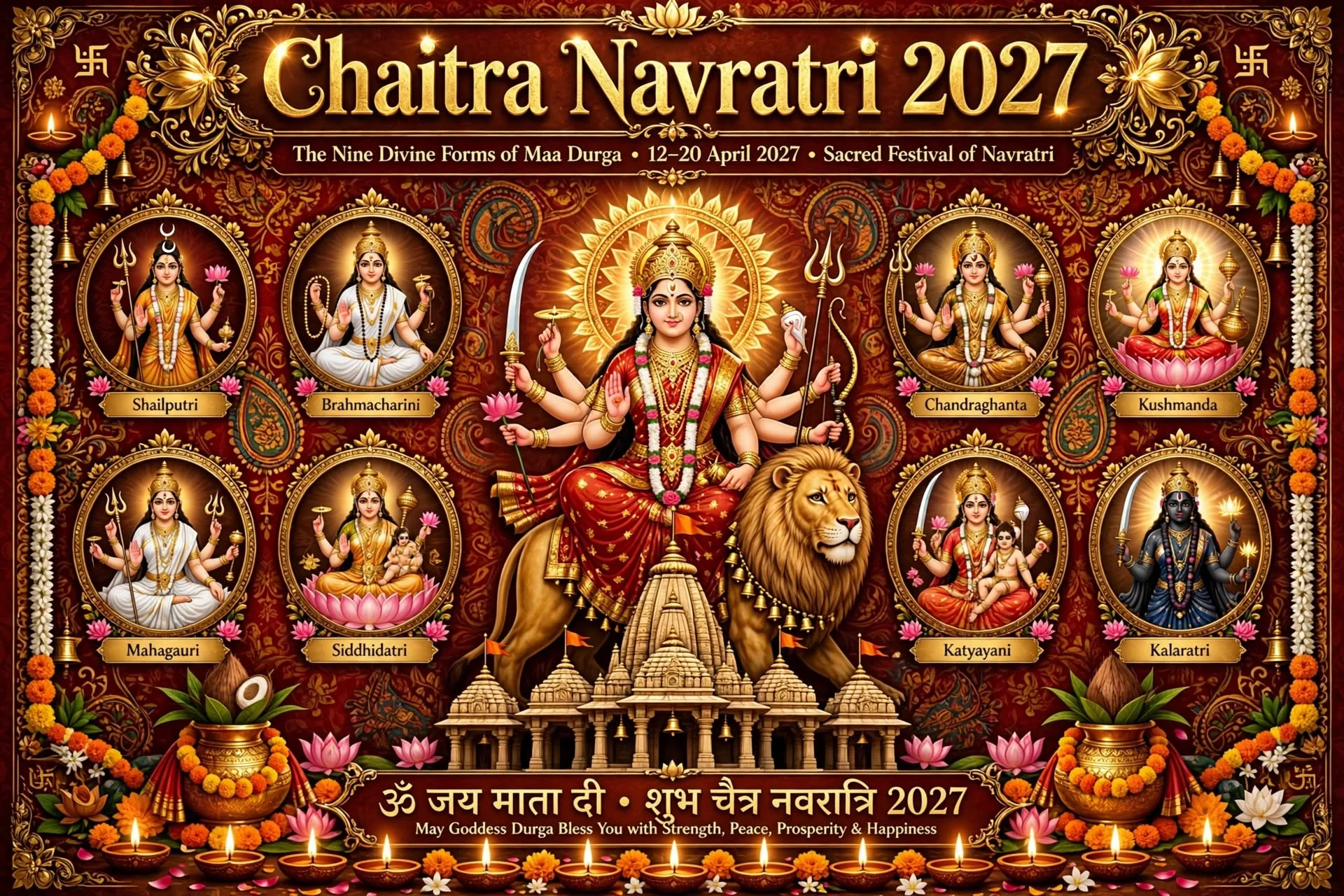
Chaitra Navratri, also reverently known as Vasanta Navratri, is a sacred nine-night festival dedicated to the worship of Goddess Durga and her nine supreme manifestations (Navadurga). Commencing on the first day of the bright fortnight (Shukla Paksha Pratipada) in the month of Chaitra, it coincides with the advent of the Hindu New Year and culminates on Rama Navami, the appearance day of Lord Rama. Celebrated during the vibrant transition into spring, it signifies spiritual rejuvenation, maternal cosmic protection, and the triumph of divine righteousness.
View Festival Guide
Wednesday, Apr 7, 2027
Gudi Padwa
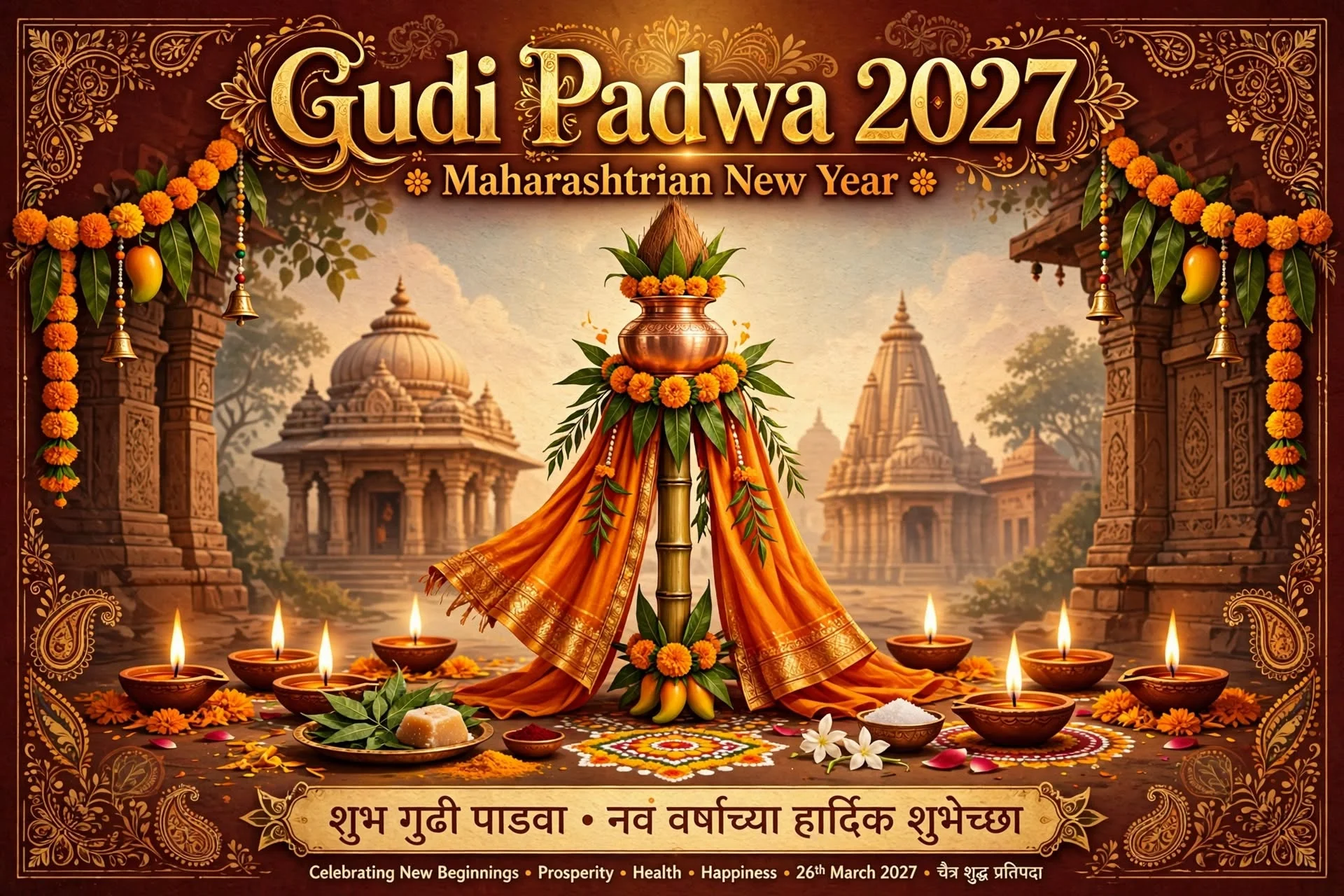
Gudi Padwa marks the grand celebration of the Marathi and Konkani New Year, observed on the first day of the bright fortnight (Shukla Paksha Pratipada) in the sacred month of Chaitra. Celebrated with tremendous cultural pride and spiritual fervor across Maharashtra, Goa, and adjoining regions, this vibrant festival heralds the arrival of spring (Vasanta Ritu) and commemorates the cosmic dawn of creation initiated by Lord Brahma.
View Festival Guide
Wednesday, Apr 7, 2027
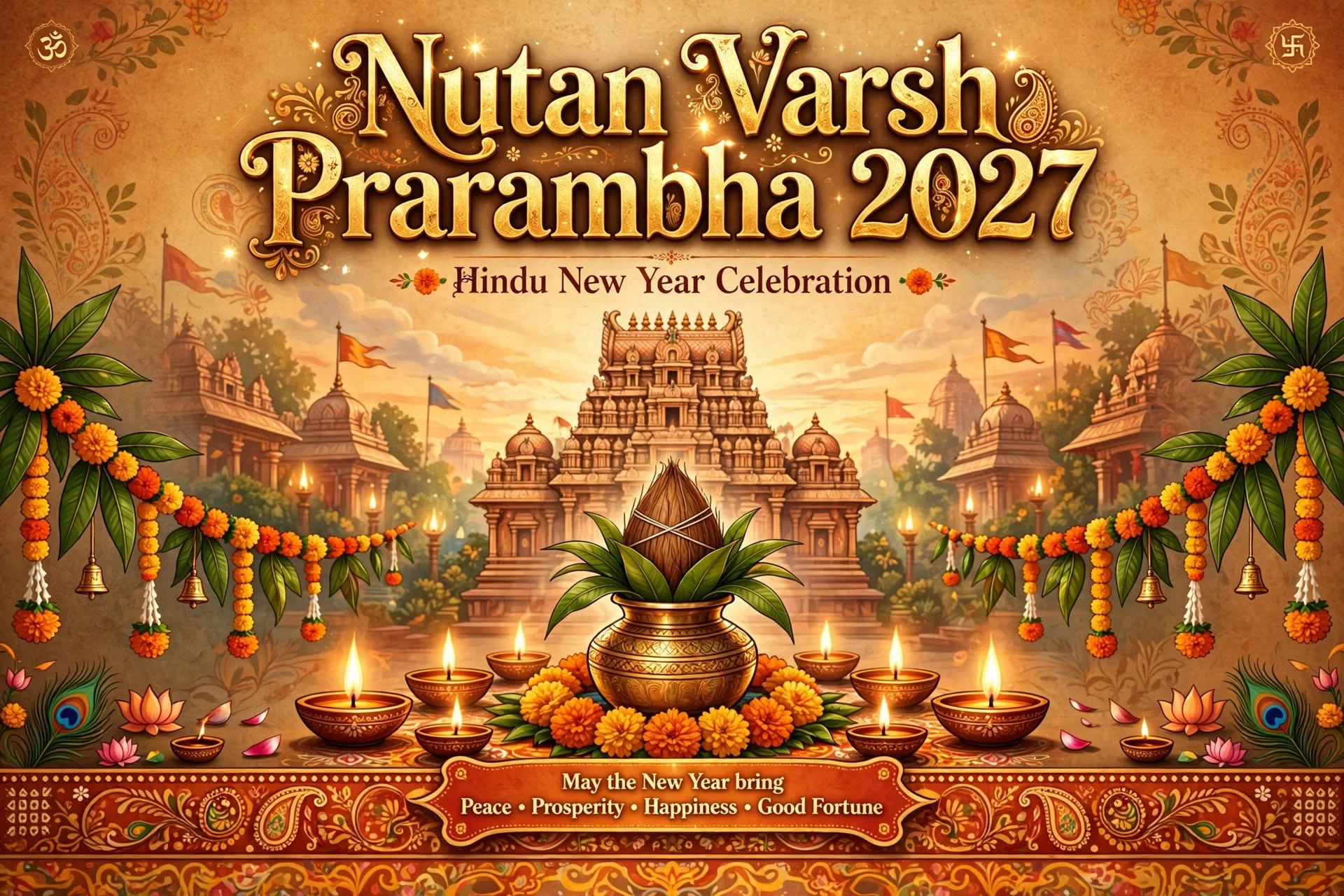
Nutan Varsh Prarambha
Nutan Varsh Prarambha marks the glorious beginning of the Hindu New Year on the first day of the waxing moon (Shukla Paksha Pratipada) in the month of Chaitra. Celebrated across India under diverse regional names such as Ugadi, Gudi Padwa, and Cheti Chand, this sacred dawn signifies not merely a calendar shift, but the cosmic anniversary of creation itself. According to Vedic tradition, it was on this radiant morning that Lord Brahma initiated the cosmic cycle of time, creation, and mortal existence.
View Festival Guide
Wednesday, Apr 7, 2027
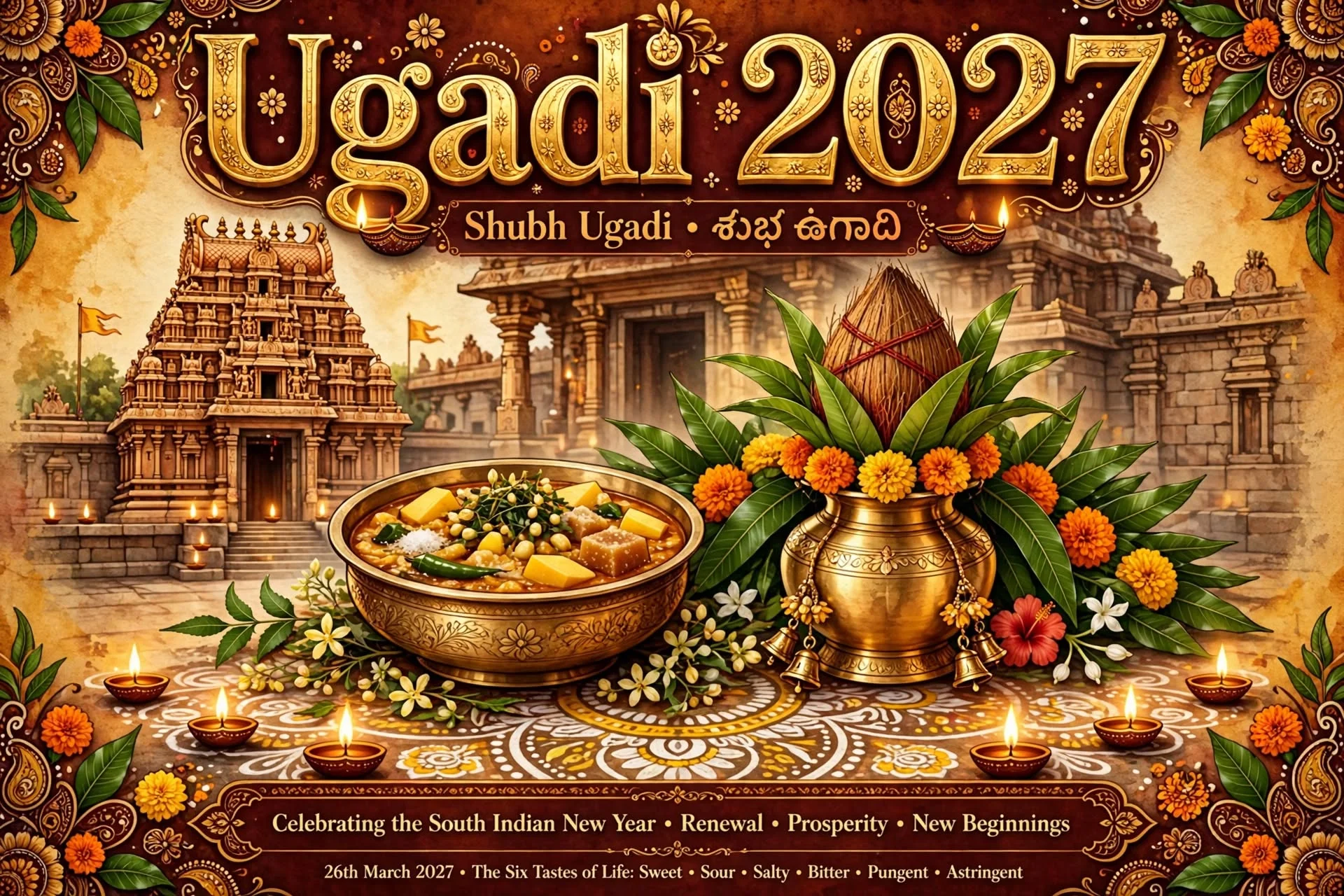
Ugadi
Ugadi, derived from the Sanskrit terms 'Yuga' (era) and 'Aadi' (beginning), marks the glorious commencement of the New Year for the people of Andhra Pradesh, Telangana, and Karnataka. Celebrated on the first day of the waxing moon (Shukla Paksha Pratipada) in the sacred month of Chaitra, it heralds the advent of the new astronomical cycle, the arrival of the rejuvenating spring season (Vasanta Ritu), and the eternal rhythm of cosmic creation inaugurated by Lord Brahma.
View Festival Guide