




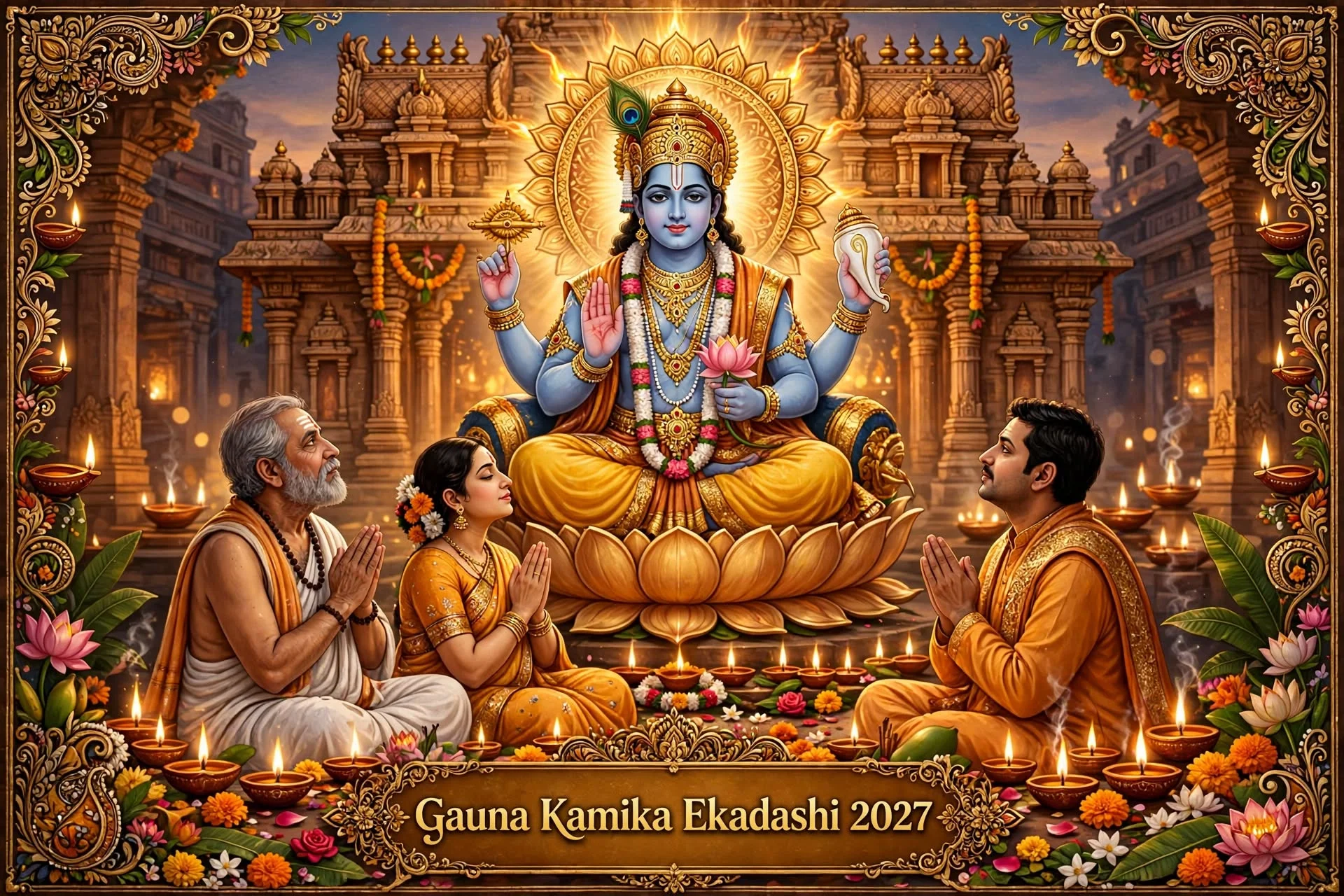
Gauna Kamika Ekadashi is the specialized, highly disciplined secondary observance of Kamika Ekadashi falling on the Dwadashi tithi (twelfth lunar day) or the subsequent sunrise of the Krishna Paksha in the holy Hindu month of Shravana (Ashadha Krishna in Purnimanta reckoning, occurring in late July). While Smarta householders observe Ekadashi on the primary day when the eleventh tithi is devoid of Dashami overlap, ascetic renunciates (Sannyasis), widows, and disciples belonging to specific orthodox monastic lineages observe the fast on the 'Gauna' (secondary or subsequent) day, strictly adhering to the rigorous mathematical and scriptural injunctions of the Hari Bhakti Vilasa, Dharma Sindhu, and Nirnaya Sindhu.
Gauna Kamika Ekadashi 2027: Date, Puja Timings, Rituals & Stories
Gauna Kamika Ekadashi Timings & Panchang
Important festival dates and auspicious timings
Usha Arghya (Sunrise)
05:26 am
Sandhya Arghya (Sunset)
07:23 pm
Start Date
Wednesday, 30 Jun 2027
Puja Muhurat
10:04 pm – 08:31 pm
Gauna Kamika Ekadashi
The observance of Gauna Ekadashi arises from the ancient Vedic principle of 'Viddha' (overlap) versus 'Shuddha' (uncontaminated) lunar days. Hindu scriptures declare that if an Ekadashi tithi is touched or contaminated by even a fraction of a second (a single Muhurta or two Nadikas) of the preceding tenth tithi (Dashami) prior to sunrise, it is designated as 'Dashami-Viddha'. While Smarta householders may observe such a mixed day under specific astrological conditions, strict ascetics and Gauna adherents reject the contaminated day completely, observing their rigorous fast on the subsequent morning when Ekadashi extends into Dwadashi (known as Shuddha Ekadashi or Gauna Ekadashi).
Dedicated to Lord Vishnu in His supreme manifestation as Sridhara (the eternal bearer of Goddess Lakshmi), Gauna Kamika Ekadashi is observed with heightened yogic austerity, complete mental silence (Mauna), continuous recitation of the Vishnu Sahasranama, and extensive offering of sacred Tulsi leaves. Because it falls during the sacred ascetic season of Chaturmas, observing Gauna Kamika Ekadashi is revered as an impenetrable spiritual shield that cleanses accumulated karmic transgressions, dispels the fear of untimely death, and grants unshakeable peace and liberation (Moksha).
Why is Gauna Kamika Ekadashi Celebrated?
The observance of Gauna Kamika Ekadashi is grounded in the deep cosmological insights articulated in the Brahmavaivarta Purana, Skanda Purana, and the monumental Vaishnava ritual treatise Hari Bhakti Vilasa compiled by Srila Sanatana Goswami.
According to sacred tradition, Lord Brahma explained to Sage Narada that observing an Ekadashi contaminated by Dashami brings spiritual impurity, while observing a pure, uncontaminated Gauna Ekadashi multiplies the spiritual merit of the fast a thousandfold. The primary scriptural history mirrors that of Kamika Ekadashi, recounting how an ancient landowner who committed the grievous sin of killing a pious Brahmin (Brahma-hatya) was completely absolved of his karmic burden through the devotional worship of Lord Sridhara.
Furthermore, Gauna Kamika Ekadashi is celebrated to preserve the uncompromising purity of the monastic lineage. For monks and serious spiritual aspirants who have renounced family life, observing the Gauna day ensures that their vows remain unblemished by the energetic disturbances of mixed lunar tithis, attuning their subtle bodies to the highest spiritual frequency of Vaikuntha.
- Preserving strict scriptural purity by observing Shuddha Ekadashi free from Dashami overlap.
- Propitiating Lord Vishnu in His eternal form of Sridhara during the sacred season of Chaturmas.
- Eradicating deep-seated karmic sins (including severe transgressions) and freeing departed ancestors from distress.
- Offering thousands of sacred Tulsi leaves to the lotus feet of the Supreme Lord for supreme spiritual merit.
- Fulfilling the rigorous monastic fasting codes prescribed for Sannyasis, widows, and orthodox seekers.
Scriptural Injunctions on Tithi Purity and the Dialogue of Brahma and Narada
The Science of Viddha and Shuddha Ekadashi in the Puranas
In the Brahmavaivarta Purana, Sage Narada asks Lord Brahma about the subtle dangers of observing an Ekadashi that overlaps with Dashami. Lord Brahma sternly warns: 'If Ekadashi is touched by Dashami even for a fraction of a Muhurta before sunrise, the demons and negative cosmic forces claim the merit of that fast. Householders may sometimes be excused due to domestic duties, but ascetics and those who desire liberation must observe the pure, subsequent Gauna Ekadashi.'
This scriptural principle established the division between the two days of Ekadashi observance: the Smarta day (observed by general householders) and the Gauna / Vaishnava day (observed by renunciates and Vaishnava lineages).
The Legend of Sridhara and the Absolution of Severe Sins
Lord Krishna narrated to King Yudhishthira that during the holy month of Shravana, Lord Vishnu manifests as Sridhara. In an ancient province, a wealthy village chieftain accidentally killed a righteous Brahmin during a boundary quarrel. Ostracized by society and burdened by crushing guilt, the chieftain sought guidance from a forest hermit.
The hermit instructed him: 'Observe the uncontaminated Gauna Kamika Ekadashi. Fast without water, worship Lord Sridhara with fragrant Tulsi leaves, and sit before the Lord throughout the night.' The chieftain followed this instruction to the letter. Pleased by his sincere repentance on the Gauna tithi, Lord Vishnu manifested and washed away his karmic guilt, elevating him to celestial peace.
The Historical Codification by Sanatana Goswami and Rupa Goswami
In the 16th century CE, the great Vedic scholars of Vrindavan, Srila Sanatana Goswami and Gopala Bhatta Goswami, systematically codified these astronomical and scriptural rules in the monumental treatise Hari Bhakti Vilasa. They cited dozens of Puranic verses proving that observing the subsequent Gauna day when the tithi extends into Dwadashi constitutes a Mahadvadashi, producing infinite spiritual fruits for the devotee.
Ascetic Discipline, The Science of Arunodaya, and Radical Surrender
The Metaphysics of Arunodaya (Pre-Dawn Solar Alignment)
In Vedic astronomy, Arunodaya is the auspicious period of ninety-six minutes (four Ghatikas) preceding sunrise. The subtle energetic quality of the day is determined by which lunar tithi is active during this Arunodaya window.
If Dashami lingers into Arunodaya, the day retains the energetic residue of the tenth tithi. Gauna Kamika Ekadashi honors the metaphysical law that spiritual consciousness must be anchored in pure, unmixed divine energy, demonstrating that precision in sadhana reflects deep love and respect for cosmic laws.
Monastic Tapasya during Chaturmas
Falling within the early weeks of Chaturmas, Gauna Kamika Ekadashi represents a period of intensified tapasya for monastics. By extending the fast into Dwadashi and observing unbroken japa, the renunciate detaches the senses from worldly desires, fortifying the mind for four months of intensive contemplation.
The Supreme Spiritual Currency: Tulsi Devotion
The Skanda Purana declares that on Gauna Kamika Ekadashi, Lord Sridhara accepts not gold, silver, or opulent jewels, but the simple, fragrant green leaf of Tulsi offered with pure love. Tulsi embodies unconditional surrender; by offering Tulsi, the seeker surrenders their ego, becoming dear to the heart of the Lord.
Observance Guidelines, Astrological Verification, and Parana
Astrological Determination and Initial Vows
Devotees consult the traditional Panchang to verify whether Dashami-viddha occurred on the previous day. If verified, the devotee abstains from celebrating on the mixed day and formally initiates the Gauna Kamika Ekadashi fast on the pure morning.
Rising during Brahma Muhurta, the observer bathes in water infused with Gangajal and Tulsi leaves, wears unstitched yellow or white garments, and takes the formal Sankalpa to observe a waterless (Nirjala) or fruit-based (Phalahari) fast.
Continuous Japa and Night Vigil (Akhanda Jagaran)
The day is sanctified through continuous chanting of the twelve-syllable mantra 'Om Namo Bhagavate Vasudevaya' and the Hare Krishna Maha Mantra. The domestic shrine or ashram temple resonates with the recitation of the Vishnu Sahasranama and the Srimad Bhagavad Gita.
An all-night vigil (Jagaran) is maintained without sleep, lighting pure cow-ghee lamps and singing devotional bhajans.
Parana Protocol on Trayodashi Morning
Because the fast is observed on the Gauna day (Dwadashi), the breaking of the fast (Parana) occurs on the subsequent morning of Trayodashi tithi. After morning bath and deity worship, food and dakshina are offered to Brahmins, ascetics, and the poor, after which the devotee breaks the fast with clean water and light sattvic food before the Trayodashi Parana window expires.
Gauna Kamika Ekadashi Puja Vidhi (Step by Step)
- 1
Brahma Muhurta Snana and Shuddhi (Morning Purification)
Wake early before sunrise during Brahma Muhurta, take a holy bath with clean water mixed with Gangajal and Tulsi leaves, and wear fresh traditional yellow or white clothing.
- 2
Gauna Ekadashi Sankalpa (Solemn Ascetic Vow)
Face North or East before the altar, hold clean water, akshata, and a flower in your right hand, and recite the formal Sanskrit Sankalpa pledging to observe the Shuddha Gauna Kamika Ekadashi fast.
- 3
Sridhara Avahana and Dhyana (Invocation of Lord Sridhara)
Meditate upon Bhagwan Sridhara holding the conch, discus, mace, and lotus, bearing Goddess Lakshmi eternally upon His divine chest, welcoming His presence with flowers.
- 4
Asana and Padya (Offering Seat and Foot-Washing Water)
Offer a consecrated seat draped in yellow silk to Lord Sridhara, followed by offering fresh water in an achamani spoon to wash His divine lotus feet.
- 5
Panchamrita Abhishekam (Holy Nectar Bath)
Gauna Kamika Ekadashi Puja Samagri List
Deity Representations and Altar Vessels
- Consecrated Shaligram Shila or brass/silver idol of Lord Sridhara (Vishnu)
- Wooden chowki covered in fresh yellow silk fabric
- Copper or brass Panchapatra, Achamani spoon, and Abhisheka tray
- Pure brass oil/ghee lamps with cotton wicks and unadulterated cow ghee
- Bhimseni natural camphor and fragrant natural incense sticks (Dhoop)
Sacred Tulsi and Botanical Items
- Abundant fresh Tulsi leaves and Tulsi Manjari (plucked respectfully on the day prior)
- Fresh yellow marigold flowers, yellow lotus blossoms, and white jasmine garlands
- Malayagiri yellow sandalwood paste, Kumkum, and sacred Ashtagandha
- Fresh betel leaves (Paan), whole betel nuts (Supari), and green cardamom
Naivedya and Panchamrita Ingredients
- Pure raw cow milk, curd, wild honey, cow ghee, and raw cane sugar for Panchamrita
- Fresh seasonal fruits: bananas, apples, pomegranate, and sweet pears
- Assorted dry fruits: soaked almonds, cashews, raisins, and lotus seeds (Makhana)
- Pure Gangajal in a consecrated copper Kalash
Mantras and Prayers for Gauna Kamika Ekadashi
Gauna Kamika Ekadashi Vrat Rules and Fasting Guidelines
Fasting Injunctions and Ascetic Dietary Code
Gauna Kamika Ekadashi is observed with heightened ascetic discipline. Renunciates and strict observers undertake a waterless (Nirjala) fast for thirty-six hours, or consume only pure water and fresh milk. All forms of grains, rice, wheat, pulses, beans, flours, onions, and garlic are completely prohibited. Foods taken during Parana must be strictly sattvic, prepared with rock salt (Sendha Namak).
- Total prohibition of all cereals, rice, lentils, legumes, flours, onions, garlic, and mushrooms.
- Strict avoidance of daytime sleeping, sexual activity, and worldly gossip throughout the fast.
- Breaking the fast must occur strictly within the designated Parana window on the following morning.
Conduct and Mental Equanimity
Devotees observe complete silence (Mauna) during prayer hours, speak only words of truth and spiritual instruction, and maintain continuous meditation on the holy names of Lord Narayana.
Dos and Don'ts of Gauna Kamika Ekadashi
Good Practices (Do's)
- Consult the Panchang to verify whether Dashami-viddha occurred before observing Gauna Ekadashi.
- Worship Lord Vishnu as Sridhara with abundant fresh, unblemished Tulsi leaves.
- Maintain an unbroken night vigil (Jagaran) chanting the Vishnu Sahasranama.
- Practice silence (Mauna) and deep contemplation throughout the fasting day.
- Offer food, dakshina, and respect to ascetics and the poor on the morning of Parana.
Gauna Kamika Ekadashi Across Regions
| Region | Local Name |
|---|---|
| All India / Monastic Mathas (Sringeri, Kanchi, Udupi) | Gauna Ekadashi / Sannyasi Ekadashi |
| Vrindavan, Mayapur, and Gaudiya Vaishnava Centers | Shuddha Ekadashi Vrata |
| South India (Tirupati and Srirangam) | Gauna Kamika Ekadasi |
Gauna Kamika Ekadashi FAQs
What is the difference between Smarta Kamika Ekadashi and Gauna Kamika Ekadashi?
Smarta Kamika Ekadashi is observed by general householders on the primary day when the tithi begins. Gauna Kamika Ekadashi is observed on the subsequent day by ascetics, Sannyasis, widows, and orthodox Vaishnavas to avoid any subtle overlap with Dashami (Dashami-viddha).
What does 'Dashami-viddha' mean?
'Dashami-viddha' refers to an Ekadashi tithi that overlaps with the tenth lunar day (Dashami) during the pre-dawn Arunodaya period. Orthodox scriptures advise ascetics to reject such days and observe the subsequent pure day.
Why is Tulsi worship so central to Gauna Kamika Ekadashi?
Scriptures state that offering a single Tulsi leaf to Lord Sridhara on Kamika Ekadashi yields greater spiritual merit than offering mountains of gold or diamonds, absolving the soul from severe sins.
Upcoming Festivals
View All
Friday, Jul 30, 2027
Vaishnava Kamika Ekadashi
Vaishnava Kamika Ekadashi is the exclusive, deeply devotional Ekadashi fast observed by initiates and followers of the four orthodox Vaishnava Sampradayas—Sri Sampradaya (Ramanujacharya), Brahma Sampradaya (Madhvacharya / Gaudiya Vaishnavism), Rudra Sampradaya (Vallabhacharya / Vishnuswami), and Sanaka Sampradaya (Nimbarkacharya)—falling on the Krishna Paksha of the Hindu month of Shravana (Ashadha Krishna in North Indian reckoning, occurring in late July). While Smarta householders determine Ekadashi based on the presence of the eleventh tithi at sunrise, orthodox Vaishnavas strictly adhere to the rigorous astronomical rule of 'Shuddha Ekadashi' codified in the Padma Purana, Varaha Purana, and Hari Bhakti Vilasa, completely rejecting any day that has the slightest overlap with Dashami (the tenth tithi) during the pre-dawn Arunodaya period.
View Festival Guide
Saturday, Jul 31, 2027
Shani Pradosh Vrat
Shani Pradosh Vrat is an exceptionally potent, revered, and astrologically transformative bi-monthly Hindu fasting observance dedicated to Lord Shiva, Goddess Parvati, and Lord Shani Deva (the planetary deity of Saturn). Occurring on the thirteenth day (Trayodashi tithi) of either the waxing (Shukla) or waning (Krishna) lunar fortnight when it coincides with a Saturday (Shanivara), this sacred vow is lauded across Vedic and Puranic literature as the supreme, infallible spiritual remedy for dissolving chronic karmic impediments, neutralizing severe planetary afflictions, and securing profound peace and prosperity.
View Festival Guide

Monday, Aug 2, 2027
Surya Grahan
Surya Grahan (Solar Eclipse) is a momentous astronomical and spiritual phenomenon in the Hindu calendar occurring on an Amavasya (new moon day) when the Moon passes between the Sun and the Earth, momentarily obscuring the solar disc from terrestrial view.
View Festival Guide

Monday, Aug 2, 2027
Darsha Amavasya
Darsha Amavasya is a significant new moon observance in the Hindu calendar designating the specific night when the Moon is completely invisible to the human eye, having fully merged into the conjunction of the Sun.
View Festival Guide

Monday, Aug 2, 2027
Anvadhan
Anvadhan (अन्वाधान) is an ancient, highly revered Vedic ritual and spiritual observance in Sanatana Dharma performed on the day immediately preceding the New Moon (Amavasya) or Full Moon (Purnima). Rooted in the pristine traditions of the Shrauta and Grihya Sutras, Anvadhan literally translates to 'the solemn placing and replenishment of sacred fuel wood into the consecrated Vedic fires'. In traditional Vedic ritualism, householders (Grihasthas) and priests who maintain the sacred Agnihotra fires perform Anvadhan to prepare the sacrificial altars for the grand Darsha Yajna (New Moon sacrifice) or Paurnamasa Yajna (Full Moon sacrifice) scheduled for the following day.
View Festival Guide
Monday, Aug 2, 2027
Somavati Amavasya
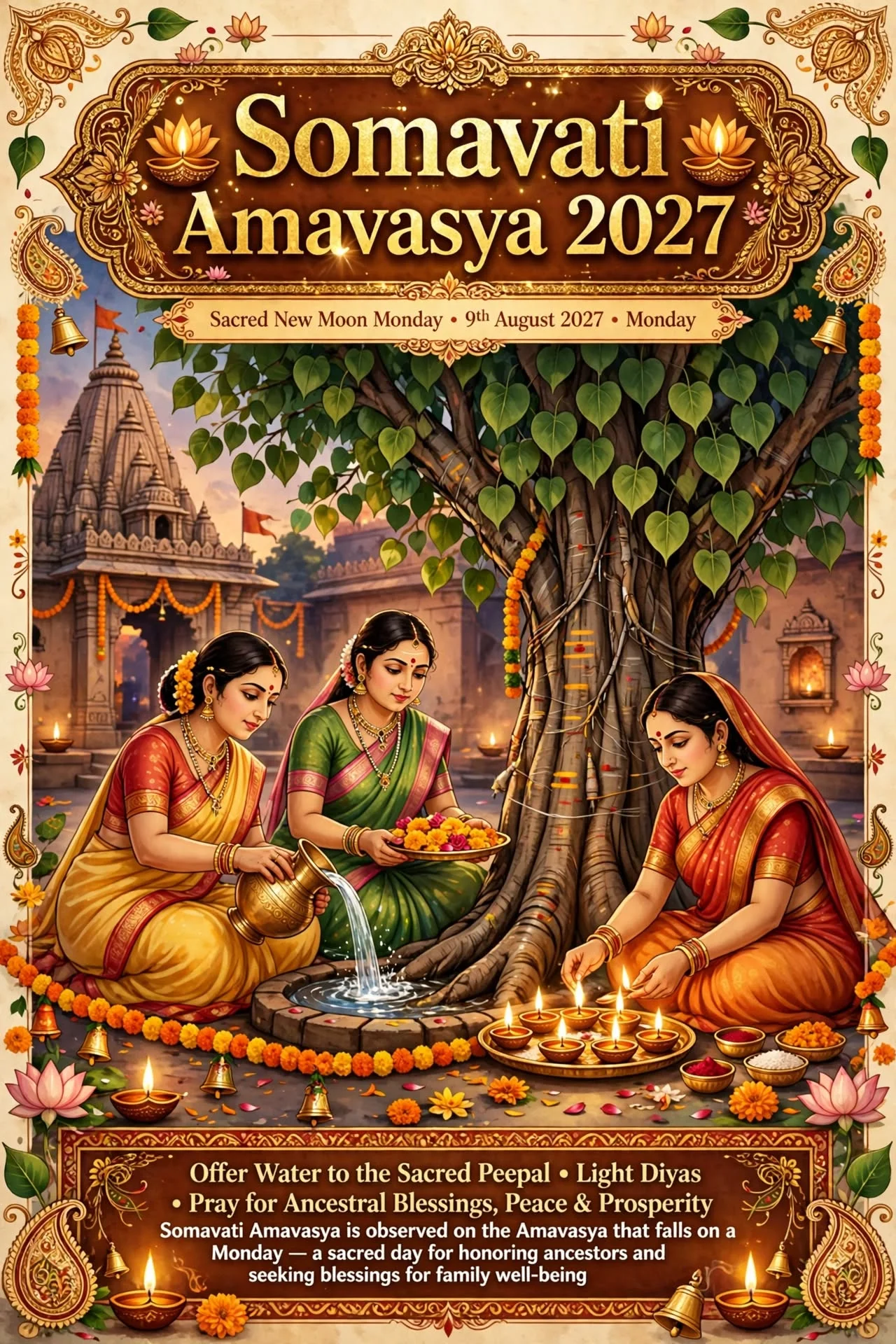
Somavati Amavasya is an exceedingly rare, sacred, and astrologically exalted Hindu fasting and pilgrimage observance that occurs when the New Moon day (Amavasya tithi) coincides with a Monday (Somavara). In Vedic tradition, Monday is governed by Soma (the Moon God / Chandra Deva) and is supremely sacred to Lord Shiva, who adorns the crescent moon upon His crown as Chandrashekhara. When the quiet, contemplative energy of Amavasya merges with the gentle, nectarine cooling rays of Monday, it creates an extraordinary cosmic alignment that is lauded across Sanatana Dharma as the 'King of all Amavasyas'.
View Festival Guide
Monday, Aug 2, 2027
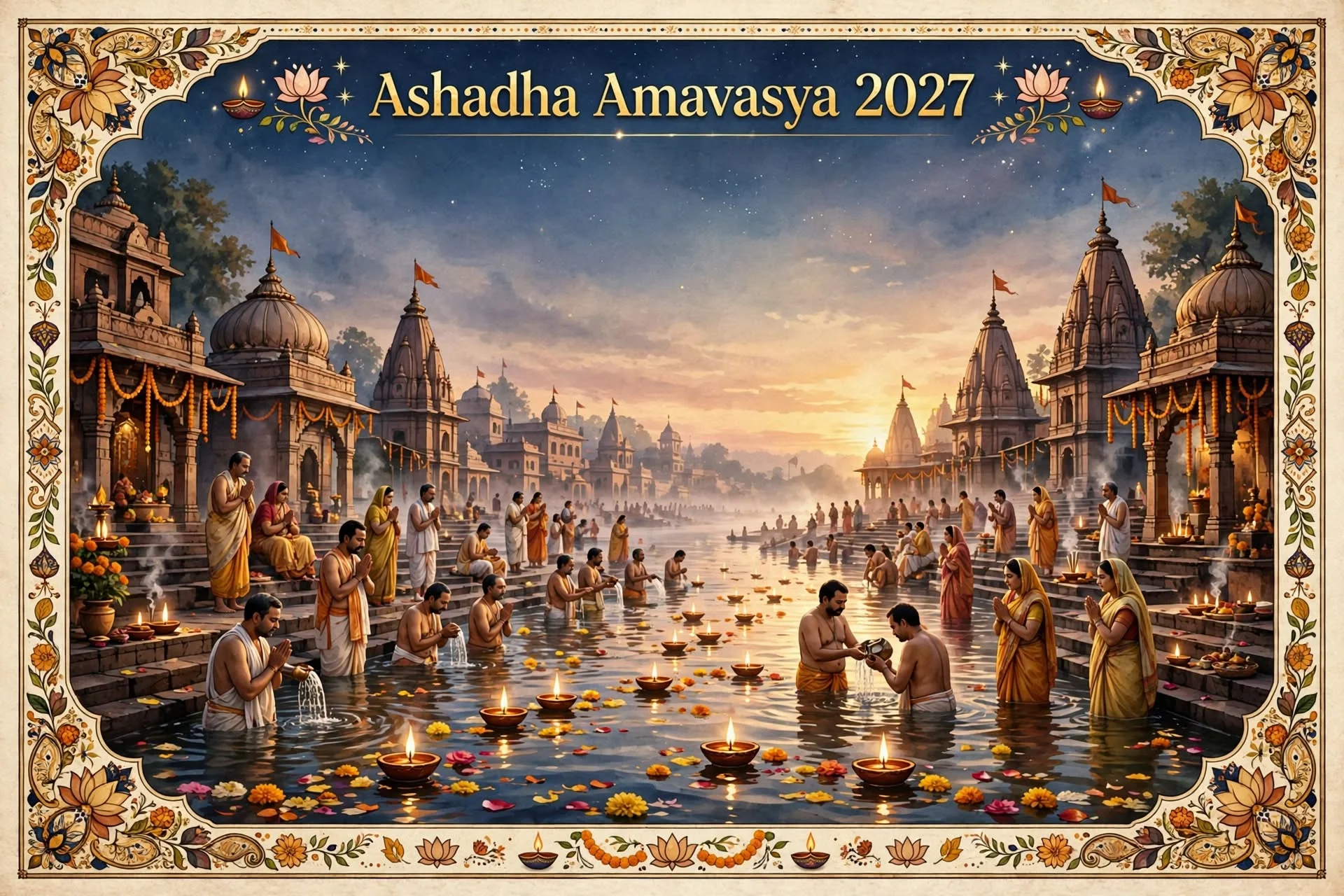
Ashadha Amavasya
Ashadha Amavasya, traditionally revered as Chhad Dahi Amavasya, Deepa Amavasya, or Hariyali Amavasya in several regional calendars, is the solemn new moon tithi concluding the Krishna Paksha of the sacred Hindu month of Ashadha. Falling at the zenith of the monsoon season, this sacred tithi marks an astrological and energetic threshold when the sun and moon align in complete celestial conjunction. In Vedic cosmology, Amavasya is presided over by Aryaman and the ancestral spirits (Pitrus), rendering this day uniquely potent for ancestral libations (Pitru Tarpana), holy river bathing, environmental reverence, and the lighting of auspicious lamps.
View Festival Guide

Tuesday, Aug 3, 2027
Ishti
Ishti is a foundational Vedic ritual observance appearing prominently in Hindu Panchangs on the Pratipada tithi (the first lunar day) following either Amavasya (new moon) or Purnima (full moon), marking the prescribed performance day for the fortnightly Vedic Darsha-Purnamasa sacrifices.
View Festival Guide