




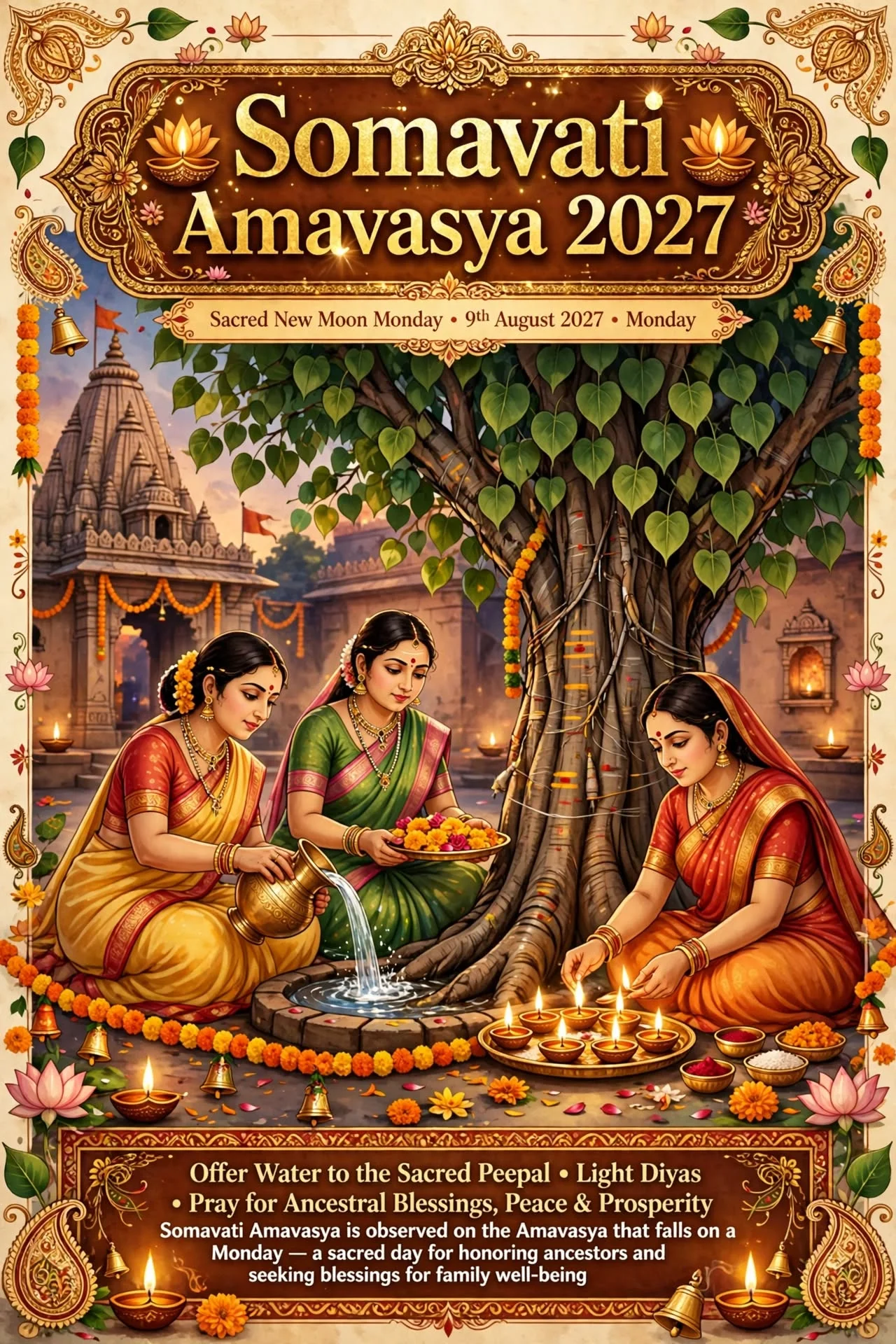
Somavati Amavasya is an exceedingly rare, sacred, and astrologically exalted Hindu fasting and pilgrimage observance that occurs when the New Moon day (Amavasya tithi) coincides with a Monday (Somavara). In Vedic tradition, Monday is governed by Soma (the Moon God / Chandra Deva) and is supremely sacred to Lord Shiva, who adorns the crescent moon upon His crown as Chandrashekhara. When the quiet, contemplative energy of Amavasya merges with the gentle, nectarine cooling rays of Monday, it creates an extraordinary cosmic alignment that is lauded across Sanatana Dharma as the 'King of all Amavasyas'.
Somavati Amavasya 2027: Date, Puja Timings, Rituals & Stories
Somavati Amavasya Timings & Panchang
Important festival dates and auspicious timings
Usha Arghya (Sunrise)
06:39 am
Sandhya Arghya (Sunset)
06:25 pm
Start Date
Monday, 8 Mar 2027
Puja Muhurat
01:46 pm – 02:59 pm
Somavati Amavasya
The antiquity and profound merit of Somavati Amavasya are celebrated in the Mahabharata (Anushasana Parva) and the Skanda Purana (Sanatkumar Samhita). In the epic Mahabharata, while lying upon the bed of arrows (Shara-Shayya), Grandfather Bhishma Pitamaha enlightened King Yudhishthira about the boundless potency of Somavati Amavasya. Bhishma declared that a purificatory bath taken in sacred rivers on this day cleanses one of all sins, relieves the soul from planetary afflictions, grants the spiritual merit of donating thousands of cows (Godana), and guarantees that ancestors trapped in lower realms attain instant peace and elevation to Pitru Loka.
A legendary cornerstone of Somavati Amavasya is the dedicated veneration of the sacred Peepal tree (Ashwattha Vriksha - Ficus religiosa). According to the Padma Purana and the Bhagavad Gita ('Ashvatthah Sarva-Vrikshanam'), the sacred Peepal tree is the living manifestation of the Holy Trinity: Lord Brahma resides in its roots, Lord Vishnu resides in its mighty trunk, and Lord Shiva presides over its branches and leaves. Married women observe a strict day-long fast and perform 108 ceremonial circumambulations (Pradakshina) around the Peepal tree, winding unbroken sacred white cotton thread (Kacha Sutra) while offering fruits, flowers, and sindoor to pray for marital longevity, conjugal bliss, and the health of their lineage.
Devotees observe Somavati Amavasya by bathing before dawn in holy rivers like the Ganga, Narmada, and Godavari, maintaining mental silence and equanimity, performing solemn Pitru Tarpan for departed ancestors using black sesame seeds and Kusha grass, worshipping Lord Shiva with Bilva leaves and raw milk, and offering extensive charity (Dana) of food grains, clothes, and cows to impoverished seekers.
Why is Somavati Amavasya Celebrated?
Somavati Amavasya is celebrated to harness the rare cosmic union of Monday (Somavara, ruled by Shiva and Chandra) and the New Moon (Amavasya), channeling sublime cooling energies for spiritual cleansing and peace.
The festival commemorates the venerable teachings of Bhishma Pitamaha to King Yudhishthira in the Mahabharata, establishing that an ablution taken on this day purges heavy accumulated sins and bestows the merit of thousands of cow donations.
Married women observe this sacred day to secure the longevity, health, and prosperity of their husbands (Akhanda Saubhāgya) through the 108 circumambulations of the sacred Ashwattha (Peepal) tree.
It provides a paramount opportunity for satisfying departed ancestors (Pitrus) through solemn Tarpan, eradicating Pitru Dosha, and clearing psychological distress caused by afflicted Moon placements.
Scriptural Chronicles and Sacred Lore of Somavati Amavasya
Bhishma Pitamaha Expounds Somavati Amavasya in the Mahabharata
The supreme scriptural authority of Somavati Amavasya is enshrined in the Mahabharata (Anushasana Parva). Following the devastating Kurukshetra war, Grandfather Bhishma lay upon the bed of arrows awaiting the auspicious northward journey of the Sun (Uttarayana) to leave his mortal body. King Yudhishthira, burdened by the grief of millions of fallen warriors, approached Bhishma and inquired about a vow capable of delivering peace to restless souls.
Bhishma Pitamaha replied with deep compassion: 'O Yudhishthira! When an Amavasya falls on a Monday, it is known as Somavati Amavasya. On this day, all waters on earth become equal to the sacred Ganga, and all mountains become as holy as Mount Meru. A person who fasts, takes a holy river bath, and offers water with sesame seeds to ancestors on this day liberates twenty-one generations of their family from the cycle of suffering. Neither performing grand horse sacrifices nor giving mountains of gold can equal the spiritual fruit of Somavati Amavasya.'
The Legend of Pious Washerwoman Somi and the Brahmin Maiden
The classical Katha associated with Somavati Amavasya narrates the plight of an impoverished and pious Brahmin named Devaswami, whose virtuous young daughter bore a planetary curse guaranteeing that her husband would die on the day of their wedding (Vaidhavya Yoga). Desperate to save his daughter, Devaswami consulted an enlightened ascetic.
The sage advised that only the sacred merit of a humble washerwoman named Somi, residing on Singhaladvipa, could dissolve this fate. Somi had strictly observed the Somavati Amavasya Vrat, bathing in sacred waters and circumambulating the Ashwattha tree for decades with unmatched purity. Devaswami's youngest son traveled across the ocean and selflessly served Somi without revealing his identity.
Moved by his humility, Somi accompanied him to their village. On the wedding day, when the bridegroom suddenly collapsed lifeless, Somi touched the youth and transferred the accumulated merits of her Somavati Amavasya observances to the maiden. Immediately, life returned to the youth. Somi then returned to the riverbank, bathed on Somavati Amavasya, circumambulated the Peepal tree 108 times, and replenished her divine spiritual merits, demonstrating that this vow holds the power to conquer untimely death.
Esoteric, Astrological, and Familial Dimensions of Somavati Amavasya
Harmonization of the Moon and Psychological Peace (Soma Tattva)
In Vedic astrology (Jyotisha), the Moon governs the human mind (Manas), emotions, maternal bonds, and mental equanimity. When the Moon's tithi (Amavasya) aligns with its day (Monday), it creates an exceptional window to cure afflicted lunar placements (Chandra Dosha).
Observing fasting and meditating upon Lord Shiva on this day eradicates deep-rooted anxiety, emotional instability, depression, and mental exhaustion, replacing agitation with serene tranquility.
The Mystical 108 Pradakshina of the Peepal Tree
Circumambulating the Peepal tree 108 times while winding pure white unspun cotton thread (Kacha Sutra) is a sacred yogic and energetic alignment. The number 108 represents the 108 Upanishads, the 12 zodiac signs multiplied by the 9 planets, and the 108 energy channels (Nadis) meeting at the heart chakra.
The oxygen-rich, pranic aura emitted by the Peepal tree revitalizes the physical body, balances hormones in women, and weaves an energetic shield of protection (Kavacha) around the devotee's marriage and family.
Ancestral Liberation and Eradication of Pitru Dosha
According to the Garuda Purana, Monday Amavasya is the most effective day in the entire lunar calendar for satisfying departed souls who may be trapped in lower astral realms due to unfulfilled desires.
Offering black sesame seeds, barley, and Gangajal under the shade of the sacred Peepal tree releases ancestral spirits from bondage, transforming ancestral dissatisfaction into protective blessings for the lineage.
Akhanda Saubhāgya (Conjugal Longevity and Marital Bliss)
For married women, Somavati Amavasya is revered as an invincible shield against untimely widowhood. The vow strengthens the bonds of love, mutual respect, and fidelity between spouses, ensuring that the household remains anchored in peace, health, and prosperity.
Comprehensive Ritual Observance and Guide for Somavati Amavasya
Dawn Holy River Bath and Sankalpa
Rise early during Brahma Muhurta, proceed to a flowing sacred river like the Ganga, Yamuna, or Godavari, or add drops of Gangajal and black sesame seeds to your bathing water at home.
Bathe with profound reverence while reciting sacred river shlokas. Don clean traditional attire (women typically wear yellow or red; men wear white) and make a solemn Sankalpa vow before Lord Shiva and Lord Vishnu.
Shiva Linga Abhisheka with Raw Cow Milk and Bilva Patra
Visit a neighborhood Shiva temple or worship the home Shiva Linga. Offer ceremonial Abhishekam with pure raw cow milk, holy Gangajal, and honey, chanting the Mahamrityunjaya Mantra or 'Om Namah Shivaya'.
Apply cooling white sandalwood paste, offer fresh unbroken three-leaflet Bilva leaves (Belpatra), white flowers, and light a pure cow-ghee lamp to pacify lunar afflictions.
The 108 Ashwattha Pradakshina (Peepal Tree Worship)
Locate a mature, sacred Peepal (Ashwattha) tree. Pour water mixed with milk, raw sugar, and black sesame seeds at its base. Apply red vermilion (Sindoor) and turmeric paste to its trunk.
Holding a spool of raw unbroken white cotton thread (Kacha Sutra), circumambulate the tree clockwise (Pradakshina) 108 times. With each circumambulation, wind the thread around the trunk and offer a piece of fruit, sweet (batasha/peda), dry fruit, or coin into a collection basket.
Pitru Tarpan, Dana, and Parana
Around noon, sit facing South and offer water with black sesame seeds (Tarpan) for your ancestors. Distribute generous Dana consisting of food grains, umbrellas, footwear, blankets, and cows/dakshina to impoverished seekers.
Break your fast in the late afternoon or evening after completing all rituals, partaking of a light sattvic vegetarian meal cooked without common sea salt or grains.
Somavati Amavasya Puja Vidhi (Step by Step)
- 1
Brahma Muhurta Snana and Pratah Sankalpa
Wake before dawn during Brahma Muhurta. Recite morning prayers and bathe in clean water mixed with holy Gangajal and black sesame seeds. Make a formal Sankalpa vow holding water, akshata, and a flower to observe Somavati Amavasya for marital bliss and ancestral peace.
- 2
Surya Deva Arghya Samarpanam
Don clean traditional attire (yellow/red for married women; white for men). Fill a clean copper lota with water, black sesame seeds, and red chandan. Face East towards the rising Sun and offer Arghya thrice, reciting the Surya Gayatri Mantra.
- 3
Lord Shiva Panchamrita Abhisheka
Bathe the Shiva Linga with pure cow milk, curd, honey, and holy Gangajal. Apply sacred Vibhuti (Bhasma) and cooling white sandalwood paste, and offer fresh Bilva leaves (Belpatra) while chanting 'Om Namah Shivaya'.
- 4
Proceeding to the Sacred Ashwattha (Peepal) Tree
Assemble the worship plate containing raw cow milk, fresh water, raw sugar, sindoor, turmeric, flowers, 108 small fruits or sweets, and a spool of unspun white cotton thread (Kacha Sutra), proceeding respectfully to a sacred Peepal tree.
- 5
Somavati Amavasya Puja Samagri List
Peepal Tree Puja and Pradakshina Items
Specific botanical and sacred threads required for the 108 Peepal tree circumambulations.
- Raw unspun white cotton thread (Kacha Sutra) - 1 or 2 spools
- 108 identical small offering items (e.g., 108 batashas, dried dates/chhuhara, or coins)
- Pure red Sindoor (vermilion) and turmeric powder (Haldi)
- Fresh unboiled cow milk (500 ml) mixed with water and sugar
- Brass lota or Kalash for pouring water at the roots
Lord Shiva Abhisheka and Altar Items
Essentials for early morning Shiva Linga worship.
- Fresh three-leaflet Bilva leaves (Belpatra) - 21 unbroken leaves
- White sandalwood paste (Shweta Chandan) and sacred Vibhuti (Bhasma)
- Pure desi cow ghee, mustard oil, and earthen/brass deepaks
- Sandalwood incense sticks (Dhoop) and Bhimseni camphor for aarti
- White fragrant flowers (Jasmine, Kaner, or lotus)
Pitru Tarpan and Dana (Charity) Items
Ancestral libation ingredients and gifts distributed after worship.
- Black sesame seeds (Kala Til) - 250 grams and Kusha grass bundle
Mantras and Prayers for Somavati Amavasya
Somavati Amavasya Vrat Rules and Fasting Guidelines
Pradakshina and Worship Discipline
Rules governing the 108 circumambulations of the Peepal tree:
- Circumambulation must always be performed in a clockwise (Pradakshina) direction, never in reverse.
- The unbroken white cotton thread must be wound carefully without letting it snap or knot messily.
- Maintain an unbroken mental count of 108 circumambulations, offering one small item per round.
- Do not touch the sacred Peepal tree on any day other than Saturday and Somavati Amavasya.
Dietary and Fasting Injunctions
Fasting regulations for Somavati Amavasya:
- Married women observe an austere fast from dawn until the completion of the 108 Pradakshinas and Tarpan.
- Consumption of all grains, rice, wheat, pulses, onions, garlic, non-vegetarian food, and alcohol is totally prohibited.
- Do not consume food prepared with common sea salt; use rock salt (Sendha Namak) if partaking of light phalahar.
- Break the fast after sunset with simple, non-grain sattvic food.
Conduct and Ancestral Honor
Behavioral guidelines for the day:
- Maintain complete harmony, avoiding anger, marital arguments, criticism, and abusive language.
- Perform Pitru Tarpan around midday facing South using pure black sesame seeds and copper vessels.
Dos and Don'ts of Somavati Amavasya
Good Practices (Do's)
- Wake during Brahma Muhurta and take a purificatory bath with holy Gangajal and black sesame seeds.
- Perform ceremonial Abhishekam to Lord Shiva with raw cow milk and fresh Bilva leaves.
- Perform 108 clockwise circumambulations (Pradakshina) around the sacred Peepal tree with cotton thread.
- Offer 108 small fruits, sweets, or coins at the base of the Peepal tree during circumambulations.
- Offer mid-day Pitru Tarpan with black sesame seeds and Kusha grass for ancestral peace.
Somavati Amavasya Across Regions
| Region | Local Name |
|---|---|
| Haridwar and Uttarakhand (North India) | Somavati Maha Ganga Snana |
| Maharashtra and Western India | Pimpal Pradakshina & Somavati Upavas |
| Rajasthan and Gujarat | Peepal Puja & Suhaag Vrat |
| Madhya Pradesh (Narmada Ghats) | Narmada Snana & Tarpan |
Somavati Amavasya FAQs
What is Somavati Amavasya?
Somavati Amavasya is the highly auspicious New Moon day that falls on a Monday (Somavara). Dedicated to Lord Shiva, the Moon God, and the Holy Trinity residing in the Peepal tree, it is considered the king of all Amavasyas.
Why is the Peepal (Ashwattha) tree worshiped on Somavati Amavasya?
In scriptures, the Peepal tree embodies the Holy Trinity: Brahma at the roots, Vishnu in the trunk, and Shiva in the branches. Worshipping and circumambulating it 108 times bestows divine protection, longevity, and removes planetary afflictions.
Why do married women perform 108 circumambulations (Pradakshina)?
The number 108 is a sacred cosmic number representing the 108 energy nadis and astral coordinates. Winding cotton thread 108 times around the Peepal tree invokes divine blessings for the long life and prosperity of the husband (Akhanda Saubhāgya).
Upcoming Festivals
View All
Monday, Aug 2, 2027
Ashadha Amavasya
Ashadha Amavasya, traditionally revered as Chhad Dahi Amavasya, Deepa Amavasya, or Hariyali Amavasya in several regional calendars, is the solemn new moon tithi concluding the Krishna Paksha of the sacred Hindu month of Ashadha. Falling at the zenith of the monsoon season, this sacred tithi marks an astrological and energetic threshold when the sun and moon align in complete celestial conjunction. In Vedic cosmology, Amavasya is presided over by Aryaman and the ancestral spirits (Pitrus), rendering this day uniquely potent for ancestral libations (Pitru Tarpana), holy river bathing, environmental reverence, and the lighting of auspicious lamps.
View Festival Guide

Monday, Aug 2, 2027
Surya Grahan
Surya Grahan (Solar Eclipse) is a momentous astronomical and spiritual phenomenon in the Hindu calendar occurring on an Amavasya (new moon day) when the Moon passes between the Sun and the Earth, momentarily obscuring the solar disc from terrestrial view.
View Festival Guide

Monday, Aug 2, 2027
Anvadhan
Anvadhan (अन्वाधान) is an ancient, highly revered Vedic ritual and spiritual observance in Sanatana Dharma performed on the day immediately preceding the New Moon (Amavasya) or Full Moon (Purnima). Rooted in the pristine traditions of the Shrauta and Grihya Sutras, Anvadhan literally translates to 'the solemn placing and replenishment of sacred fuel wood into the consecrated Vedic fires'. In traditional Vedic ritualism, householders (Grihasthas) and priests who maintain the sacred Agnihotra fires perform Anvadhan to prepare the sacrificial altars for the grand Darsha Yajna (New Moon sacrifice) or Paurnamasa Yajna (Full Moon sacrifice) scheduled for the following day.
View Festival Guide

Monday, Aug 2, 2027
Darsha Amavasya
Darsha Amavasya is a significant new moon observance in the Hindu calendar designating the specific night when the Moon is completely invisible to the human eye, having fully merged into the conjunction of the Sun.
View Festival Guide

Tuesday, Aug 3, 2027
Ishti
Ishti is a foundational Vedic ritual observance appearing prominently in Hindu Panchangs on the Pratipada tithi (the first lunar day) following either Amavasya (new moon) or Purnima (full moon), marking the prescribed performance day for the fortnightly Vedic Darsha-Purnamasa sacrifices.
View Festival Guide

Tuesday, Aug 3, 2027
Chandra Darshana
Chandra Darshana is a revered monthly Hindu observance dedicated to sighting, venerating, and offering oblation to the delicate waxing crescent Moon immediately following the new moon (Amavasya), typically occurring during the twilight of Shukla Paksha Pratipada or Dwitiya.
View Festival Guide
Wednesday, Aug 4, 2027
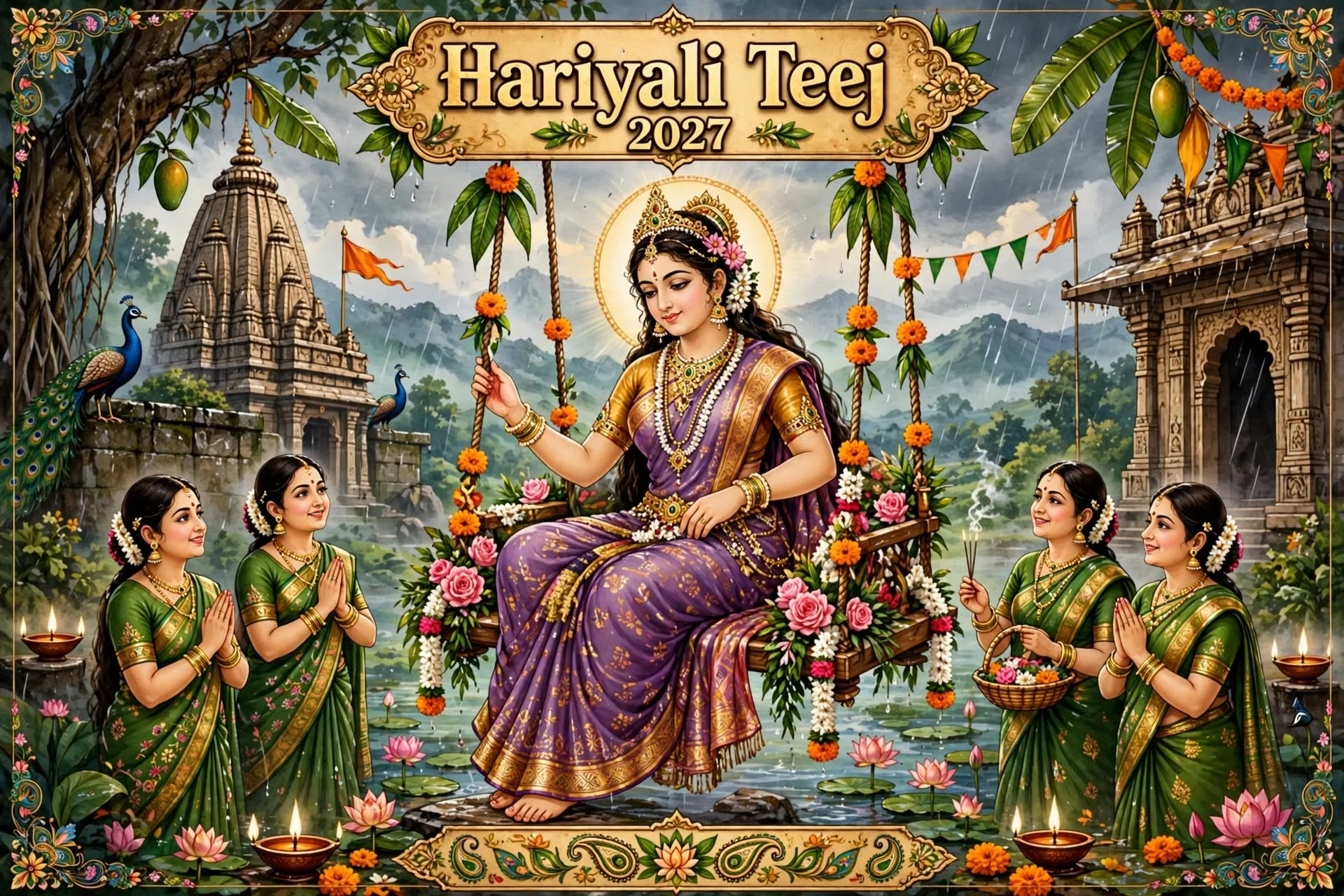
Hariyali Teej
Hariyali Teej, also renowned as Chhoti Teej or Shravana Teej, is a radiant and joyful Hindu festival celebrated on the third lunar day (Tritiya) of the Shukla Paksha (waxing phase of the moon) in the monsoon month of Shravana (falling in late July). The festival heralds the arrival of the life-giving Indian monsoon, when parched landscapes are transformed into lush green tapestries ('Hariyali'), symbolizing ecological rejuvenation, fertility, and marital harmony.
View Festival Guide
Friday, Aug 6, 2027
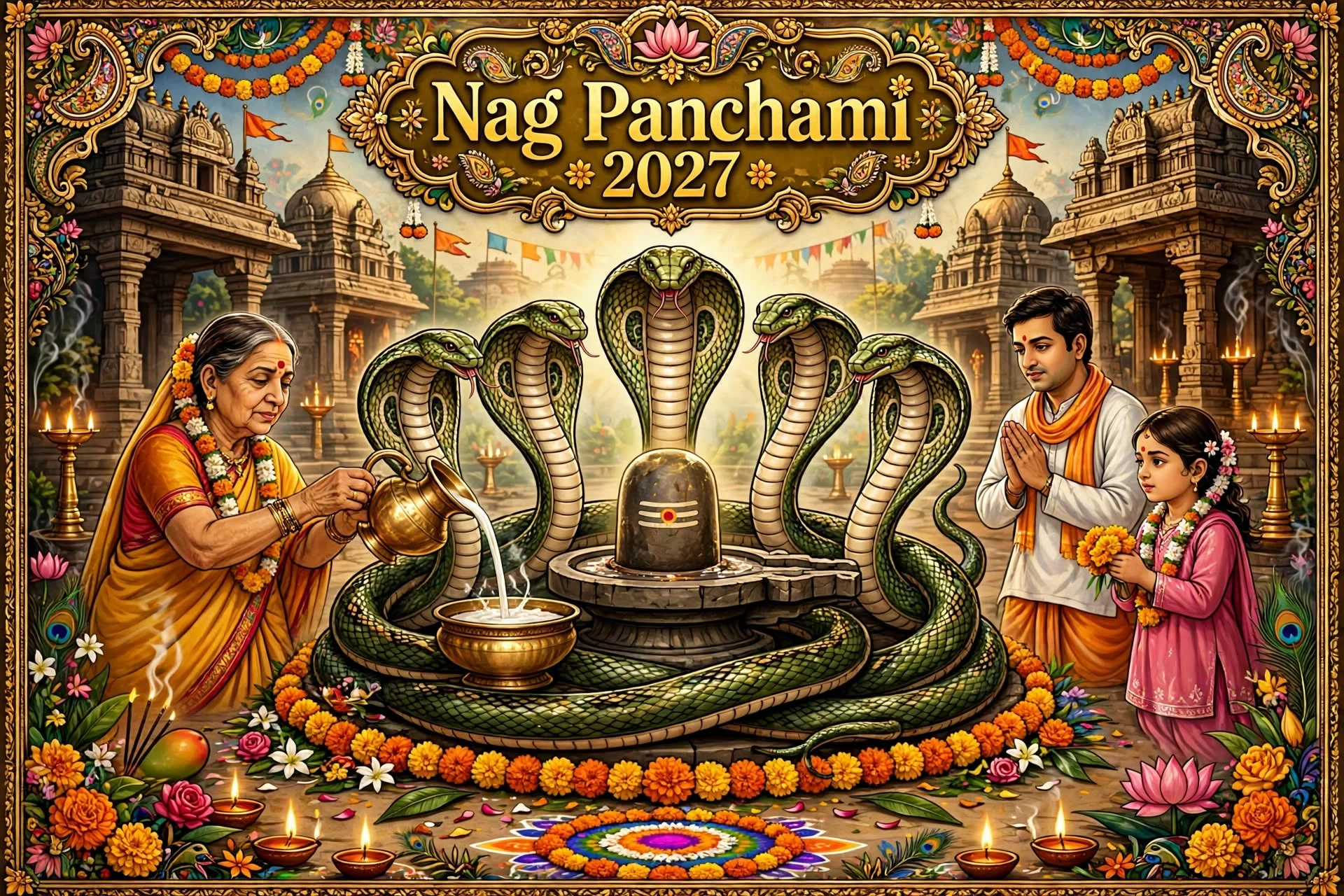
Nag Panchami
Nag Panchami is an ancient and profound Hindu festival dedicated to the worship of serpent deities (Nagas), observed on the fifth lunar day (Panchami) of the Shukla Paksha (waxing phase of the moon) in the holy monsoon month of Shravana (falling in late July). Revered across the Indian subcontinent since Vedic times, this sacred day acknowledges the spiritual, ecological, and cosmological significance of serpents within Sanatana Dharma.
View Festival Guide