




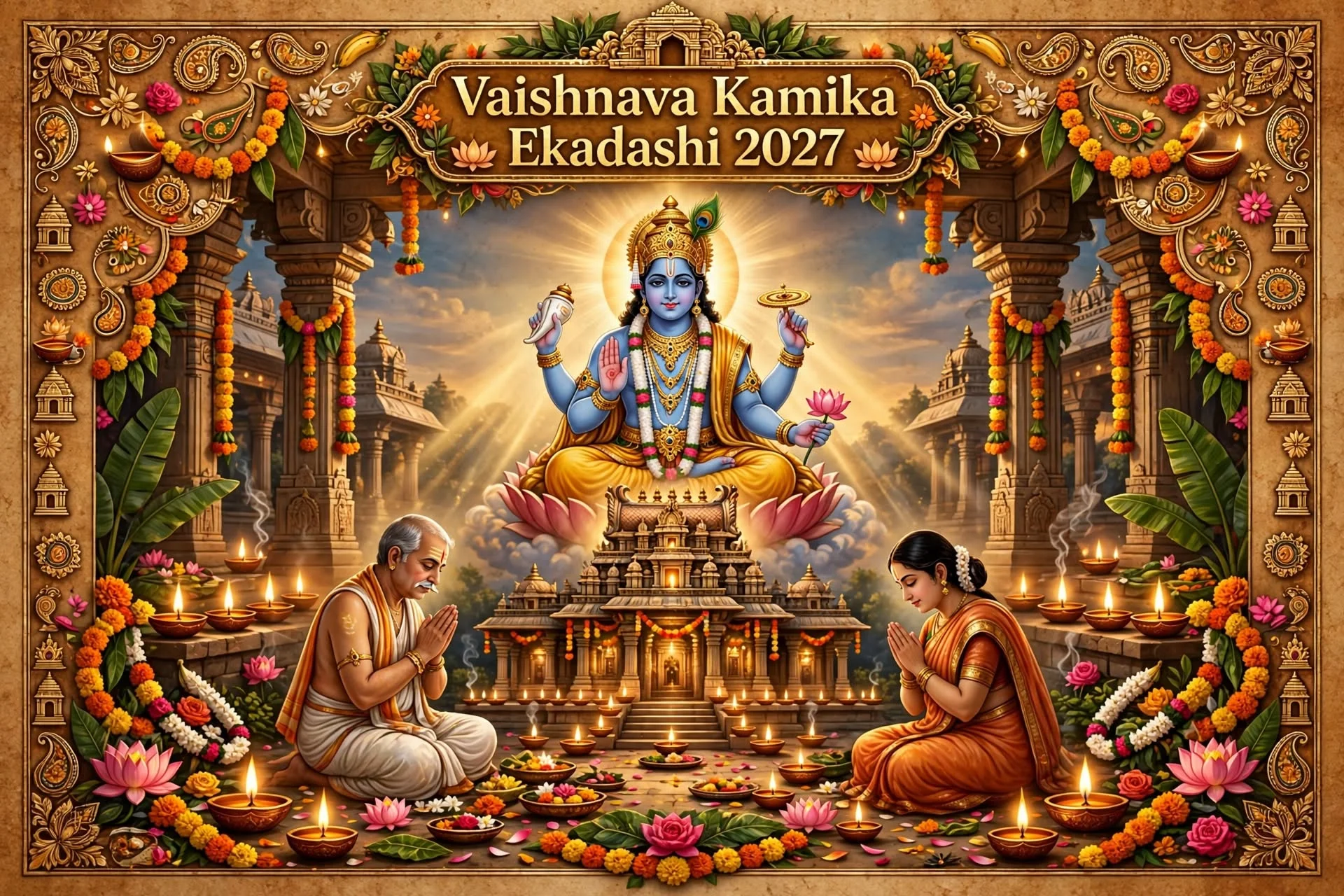
Vaishnava Kamika Ekadashi is the exclusive, deeply devotional Ekadashi fast observed by initiates and followers of the four orthodox Vaishnava Sampradayas—Sri Sampradaya (Ramanujacharya), Brahma Sampradaya (Madhvacharya / Gaudiya Vaishnavism), Rudra Sampradaya (Vallabhacharya / Vishnuswami), and Sanaka Sampradaya (Nimbarkacharya)—falling on the Krishna Paksha of the Hindu month of Shravana (Ashadha Krishna in North Indian reckoning, occurring in late July). While Smarta householders determine Ekadashi based on the presence of the eleventh tithi at sunrise, orthodox Vaishnavas strictly adhere to the rigorous astronomical rule of 'Shuddha Ekadashi' codified in the Padma Purana, Varaha Purana, and Hari Bhakti Vilasa, completely rejecting any day that has the slightest overlap with Dashami (the tenth tithi) during the pre-dawn Arunodaya period.
Vaishnava Kamika Ekadashi 2027: Date, Puja Timings, Rituals & Stories
Vaishnava Kamika Ekadashi Timings & Panchang
Important festival dates and auspicious timings
05:26 am
07:23 pm
Wednesday, 30 Jun 2027
10:04 pm – 08:31 pm
Vaishnava Kamika Ekadashi
The theological foundation of Vaishnava Kamika Ekadashi is rooted in unalloyed, unconditional devotion (Kevala Bhakti). For Vaishnavas, fasting on Ekadashi is not an austerity performed for worldly boons, heavenly pleasures, or material wealth; rather, it is celebrated as the 'Mother of Devotion' (Bhakti Janani) and the favorite day of Lord Sri Krishna (Hari Vasara). By completely abstaining from grains, pulses, and worldly distractions, the devotee dedicates every breath, thought, and sensory organ exclusively to the loving service (Seva) of Bhagwan Sridhara, the supreme master of Goddess Lakshmi.
A defining sacramental hallmark of Vaishnava Kamika Ekadashi is the monumental glorification and offering of Tulsi leaves (sacred basil). The Skanda Purana declares that offering a single fresh sprig of Tulsi to Lord Vishnu on this sanctified day pleases the Lord far more than donating thousands of cows or offering heaps of gold and rubies. Temples and homes resonate with continuous congregational chanting (Sankirtan) of the Hare Krishna Maha Mantra and the Narayana Ashtakshari, reading of the Srimad Bhagavatam, and an all-night vigil (Jagaran), culminating in the joyous honoring of Maha Prasadam on the following morning.
Why is Vaishnava Kamika Ekadashi Celebrated?
The observance of Vaishnava Kamika Ekadashi is expounded in the sacred dialogues of the Brahmavaivarta Purana, Padma Purana, and the teachings of the great Acharyas of the Vaishnava traditions.
According to the Padma Purana, King Ambarisha asked the celestial sage Narada about the supreme means to develop unbroken attachment to Lord Hari. Narada revealed that observing the unadulterated Vaishnava Ekadashi without a trace of Dashami overlap is the fastest path to eradicate all material karma and awaken dormant love of God (Prema Bhakti). When an Ekadashi is touched by Dashami during Arunodaya, it is designated as demonic (Asuri); hence, Vaishnavas celebrate on the subsequent pure day to offer only unblemished devotion to the Lord.
Furthermore, it commemorates the divine deliverance of an ancient landowner who committed the accidental sin of killing a Brahmin. When he surrendered to Lord Sridhara with tears of repentance and offered Tulsi leaves on Kamika Ekadashi, the Lord absolved his sins and granted him Vaikuntha. Devotees celebrate this day to seek divine shelter, purify their consciousness, and express eternal gratitude to Lord Sridhara.
- Observing Shuddha Ekadashi free from Dashami overlap according to strict Vaishnava Agamic rules.
- Serving Bhagwan Sridhara (Lord Vishnu) through unalloyed, loving devotional service (Kevala Bhakti).
- Offering fragrant Tulsi leaves and Manjari to the lotus feet of Lord Krishna for supreme spiritual grace.
- Participating in continuous congregational Harinama Sankirtan and reading the Srimad Bhagavatam.
- Eradicating all past sinful reactions and cultivating pure transcendental love for the Supreme Lord.
Scriptural Origins in the Padma Purana and the Teachings of the Vaishnava Acharyas
The Rule of Arunodaya Viddha in the Padma Purana
In the Uttara Khanda of the Padma Purana, Lord Shiva explains to Goddess Parvati the precise science of calculating Vaishnava Ekadashi. Lord Shiva explains that Arunodaya comprises the four Ghatikas (approximately 96 minutes) preceding sunrise. If the tenth tithi (Dashami) lingers into even a fraction of this pre-dawn period, the day is classified as 'Viddha' (pierced or contaminated).
Lord Shiva declares: 'Even if the eleventh tithi is active at sunrise, if it was touched by Dashami during Arunodaya, the wise Vaishnava must reject it and observe the fast on the subsequent Dwadashi day. Fasting on a pure Dwadashi day pleases Lord Janardana far more than fasting on a contaminated Ekadashi.' This ancient injunction forms the unshakable foundation of all four orthodox Vaishnava Sampradayas.
The Dialogue between Lord Krishna and King Yudhishthira
In the Brahmavaivarta Purana, King Yudhishthira inquires about the glory of Kamika Ekadashi. Lord Sri Krishna replies: 'O King of kings, listen to the supreme glory of this sacred day. Simply hearing the name of Kamika Ekadashi grants the spiritual merit of performing an Ashvamedha sacrifice. The deity of this day is Lord Sridhara, who holds the conch, discus, mace, and lotus.'
Lord Krishna narrates how an ancient wealthy landowner accidentally killed a Brahmin during a land dispute. Refused entry into society, the repentant man sought guidance from a forest sage, who instructed him to observe the Kamika fast with intense devotion and offer Tulsi leaves. As dawn broke on Dwadashi, Lord Sridhara manifested before him, touching his forehead with His divine conch, purifying all his sins, and elevating him to the spiritual realm of Vaikuntha.
Sri Ramanujacharya, Madhvacharya, and Chaitanya Mahaprabhu
Historically, the great preceptors of Vaishnavism—Sri Ramanujacharya in Srirangam, Sri Madhvacharya in Udupi, and Sri Chaitanya Mahaprabhu in Navadvipa—strictly reinforced the observance of pure Vaishnava Ekadashi. Chaitanya Mahaprabhu pleaded with His own mother, Sachi Devi, as His first spiritual request: 'Mother, please never eat grains on Ekadashi.'
Kevala Bhakti, The Transcendence of Grains, and The Glory of Tulsi
The Concept of Hari Vasara (The Day of Lord Hari)
In Vaishnava theology, Ekadashi is celebrated as 'Hari Vasara'—the day belonging exclusively to the Lord. While other days involve worldly obligations, on Ekadashi the soul steps out of the illusion of being an independent material enjoyer (Bhokta) and remembers its constitutional position as an eternal servant (Dasa) of the Supreme Lord.
Fasting from grains is an act of spiritual alignment. Puranas explain that on Ekadashi, the personification of sinful reactions (Papa-Purusha) takes shelter inside all grains, wheat, rice, and pulses. By avoiding grains, the devotee avoids spiritual lethargy and dedicates all energy to loving service.
Tulsi Devi: The Gateway to Pure Devotion
Tulsi (Vrinda Devi) is revered as the eternal expansions of pure devotional service. The Skanda Purana affirms that Lord Sridhara is completely satisfied when offered a fresh Tulsi leaf on Kamika Ekadashi. Tulsi carries the transcendental fragrance of Vaikuntha.
Worshiping Tulsi on this day softens the hard human heart, awakening genuine humility, compassion, and divine love (Bhakti).
The Power of Nama Sankirtan
For Vaishnavas, fasting is merely the external negative discipline; the positive essence is continuous Harinama Sankirtan. Chanting the holy names of the Lord cleanses the mirror of the heart (Ceto-Darpana-Marjanam), extinguishing the blazing forest fire of material suffering and drowning the soul in an ocean of divine bliss.
Temple Protocols, Continuous Sankirtan, and Vaishnava Parana
Mangala Aarti and Sacred Morning Vows
Vaishnava devotees awake at 4:00 AM during Brahma Muhurta, bathe in clean water, apply sacred Vaishnava Tilaka (Urdhva Pundra) on twelve parts of the body with holy earth or gopichandana, and attend the joyful Mangala Aarti at the temple or home shrine.
Standing before the deities of Sri Sri Radha-Krishna or Lord Jagannath, devotees offer prostrations and resolve to chant extra rounds of the holy names on their Japa beads throughout the day.
Extensive Tulsi Puja and Scriptural Study
In the forenoon, devotees perform elaborate worship of Srimati Tulsi Devi, singing the Tulsi Aarti, circumambulating the sacred plant four times, and offering pure water. Thousands of fresh Tulsi leaves are offered upon the lotus feet of the deity of Lord Sridhara.
The day is sanctified by reciting chapters from the tenth canto of the Srimad Bhagavatam and the Bhagavad Gita, avoiding all worldly talk, political debates, and commercial distractions.
Night Vigil (Jagaran) and Mahadvadashi Parana
Devotees sustain an all-night vigil (Ratri Jagaran) in temples and homes, singing sweet kirtans and reciting prayers until dawn. On the subsequent Dwadashi morning, following morning prayers and offering food to the deities and Vaishnavas, the fast is broken strictly during the designated Parana window by drinking charanamrita and partaking of a grain-based Maha Prasadam.
Vaishnava Kamika Ekadashi Puja Vidhi (Step by Step)
- 1
Mangala Snana and Urdhva Pundra Tilaka (Purification and Tilaka)
Wake up at Brahma Muhurta (before 4:30 AM), bathe with pure water mixed with Gangajal, and apply sacred Vaishnava Tilaka (Urdhva Pundra) using sacred Gopichandana on the forehead and twelve parts of the body.
- 2
Mangala Aarti and Deity Darshana (Morning Aarti)
Light an unadulterated cow-ghee lamp, blow the sacred conch shell, and perform the joyful Mangala Aarti singing the glories of Lord Sri Krishna, Lord Chaitanya, and Lord Sridhara.
- 3
Tulsi Puja and Pradakshina (Worship of Tulsi Devi)
Sing the sacred Tulsi Aarti ('Namo Namah Tulasi Krishna-Preyasi...'), offer pure water at the roots of Tulsi Devi, circumambulate four times, and bow in prostration.
- 4
Vaishnava Sankalpa (Solemn Devotional Vow)
Stand before the deities with folded hands, reciting the formal prayer to observe the Vaishnava Kamika Ekadashi fast purely for the pleasure of Lord Sri Krishna, free from material desire.
- 5
Vaishnava Kamika Ekadashi Puja Samagri List
Deity Adornments and Tilaka Materials
- Consecrated Shaligram Shila or deities of Sri Sri Radha-Krishna / Lord Sridhara
- Pure sacred Gopichandana clay or Vrindavan sacred earth for applying Tilaka
- Consecrated wooden chowki draped in fresh yellow or red silk fabric
- Panchapatra, Achamani spoon, brass conch shell (Shankha), and brass bell
- Pure brass five-wick cow-ghee lamp, cotton wicks, and natural camphor
Sacred Tulsi and Botanical Items
- Abundant fresh Tulsi leaves and Tulsi Manjari (plucked on Dashami day with prayers)
- Tulsi Japa beads (108 beads) and bead bag for japa meditation
- Fresh yellow marigolds, fragrant white jasmine, and fresh lotus blossoms
- Malayagiri white sandalwood paste, natural saffron, and fragrant attar
Non-Grain Bhoga and Parana Ingredients
- Panchamrita ingredients: pure raw cow milk, curd, wild honey, cow ghee, and raw sugar
- Fresh seasonal fruits: bananas, mangoes, apples, pomegranate, and sweet grapes
- Assorted dry fruits: soaked almonds, cashews, raisins, and lotus seeds (Makhana)
- Grain ingredients for Dwadashi morning feast: basmati rice, moong dal, and vegetables
Mantras and Prayers for Vaishnava Kamika Ekadashi
Vaishnava Kamika Ekadashi Vrat Rules and Fasting Guidelines
Strict Vaishnava Dietary Protocol
Vaishnavas observe an uncompromising fast from all grains and legumes on Ekadashi. This includes total avoidance of rice, wheat, barley, corn, oats, chickpeas, lentils, beans, mustard seeds, and flours made from these grains. Permissible foods include fresh fruits, cow milk, curd, potatoes, sweet potatoes, tapioca pearls (Sabudana), and buckwheat (Kuttu), cooked strictly with rock salt (Sendha Namak) and pure ghee. Many serious practitioners observe Nirjala (without water) for the entire 24 hours.
- Absolute prohibition of all grains, rice, wheat, corn, pulses, beans, onions, garlic, and mushrooms.
- Strict avoidance of commercial packaged foods, common sea salt, and spices like hing (asafoetida) or mustard.
- Waterless (Nirjala) fasting is recommended for healthy adults; elderly and sick individuals may consume fruits and milk.
Spiritual Code and Parana Rules
Devotees abstain from daytime sleeping, cutting hair or nails, shaving, and engaging in worldly business or gossip. The fast must be broken on Dwadashi morning strictly within the prescribed Parana window by honoring grain Maha Prasadam; breaking the fast too early or after the window expires diminishes the spiritual merit.
Dos and Don'ts of Vaishnava Kamika Ekadashi
Good Practices (Do's)
- Chant the Hare Krishna Maha Mantra and the holy names of Lord Narayana continuously throughout the day.
- Worship Srimati Tulsi Devi and offer abundant fresh Tulsi leaves to Lord Sridhara.
- Apply sacred Gopichandana Urdhva Pundra Tilaka on twelve parts of your body.
- Read and recite the tenth canto of the Srimad Bhagavatam and the Bhagavad Gita.
- Maintain an all-night vigil (Jagaran) in the temple or home with devotional singing.
Vaishnava Kamika Ekadashi Across Regions
| Region | Local Name |
|---|---|
| Vrindavan and Mathura (Braj) | Vaishnava Kamika Ekadashi Vrata |
| Mayapur and West Bengal | Gaudiya Vaishnava Ekadashi |
| South India (Srirangam and Tirupati) | Sri Vaishnava Kamika Ekadasi |
Vaishnava Kamika Ekadashi FAQs
Why do Vaishnavas observe Ekadashi on a different day than Smartas?
Vaishnavas strictly follow the rule of 'Shuddha Ekadashi' codified in the Padma Purana and Hari Bhakti Vilasa, rejecting any day that has even a fraction of Dashami overlap during pre-dawn Arunodaya. Smartas often calculate based on sunrise alone, leading to different calendar dates.
Why are grains strictly prohibited on Ekadashi?
Puranic scriptures explain that on Ekadashi, the personification of sinful karmic reactions (Papa-Purusha) takes shelter inside all grains, wheat, rice, and pulses. Abstaining from grains frees the mind from lethargy and karmic pollution.
What is the primary spiritual purpose of Ekadashi for Vaishnavas?
For Vaishnavas, Ekadashi is celebrated as 'Hari Vasara'—the day belonging exclusively to Lord Hari. Its primary purpose is not material gain, but the awakening of pure, unalloyed love of God (Prema Bhakti) through chanting and hearing the Lord's glories.
Upcoming Festivals
View All
Gauna Kamika Ekadashi
Gauna Kamika Ekadashi is the specialized, highly disciplined secondary observance of Kamika Ekadashi falling on the Dwadashi tithi (twelfth lunar day) or the subsequent sunrise of the Krishna Paksha in the holy Hindu month of Shravana (Ashadha Krishna in Purnimanta reckoning, occurring in late July). While Smarta householders observe Ekadashi on the primary day when the eleventh tithi is devoid of Dashami overlap, ascetic renunciates (Sannyasis), widows, and disciples belonging to specific orthodox monastic lineages observe the fast on the 'Gauna' (secondary or subsequent) day, strictly adhering to the rigorous mathematical and scriptural injunctions of the Hari Bhakti Vilasa, Dharma Sindhu, and Nirnaya Sindhu.
Shani Pradosh Vrat
Shani Pradosh Vrat is an exceptionally potent, revered, and astrologically transformative bi-monthly Hindu fasting observance dedicated to Lord Shiva, Goddess Parvati, and Lord Shani Deva (the planetary deity of Saturn). Occurring on the thirteenth day (Trayodashi tithi) of either the waxing (Shukla) or waning (Krishna) lunar fortnight when it coincides with a Saturday (Shanivara), this sacred vow is lauded across Vedic and Puranic literature as the supreme, infallible spiritual remedy for dissolving chronic karmic impediments, neutralizing severe planetary afflictions, and securing profound peace and prosperity.

Surya Grahan
Surya Grahan (Solar Eclipse) is a momentous astronomical and spiritual phenomenon in the Hindu calendar occurring on an Amavasya (new moon day) when the Moon passes between the Sun and the Earth, momentarily obscuring the solar disc from terrestrial view.

Darsha Amavasya
Darsha Amavasya is a significant new moon observance in the Hindu calendar designating the specific night when the Moon is completely invisible to the human eye, having fully merged into the conjunction of the Sun.

Anvadhan
Anvadhan (अन्वाधान) is an ancient, highly revered Vedic ritual and spiritual observance in Sanatana Dharma performed on the day immediately preceding the New Moon (Amavasya) or Full Moon (Purnima). Rooted in the pristine traditions of the Shrauta and Grihya Sutras, Anvadhan literally translates to 'the solemn placing and replenishment of sacred fuel wood into the consecrated Vedic fires'. In traditional Vedic ritualism, householders (Grihasthas) and priests who maintain the sacred Agnihotra fires perform Anvadhan to prepare the sacrificial altars for the grand Darsha Yajna (New Moon sacrifice) or Paurnamasa Yajna (Full Moon sacrifice) scheduled for the following day.
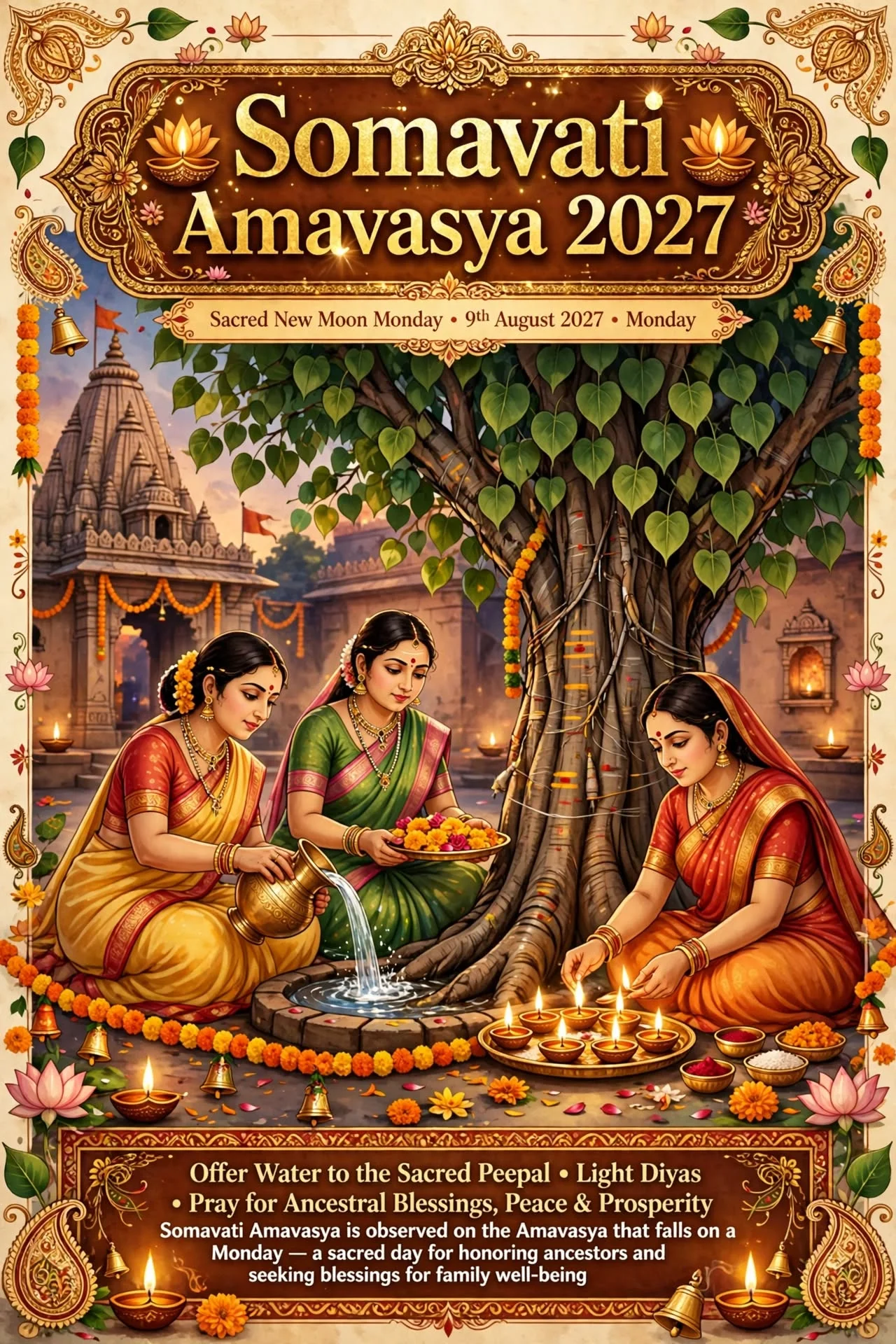
Somavati Amavasya
Somavati Amavasya is an exceedingly rare, sacred, and astrologically exalted Hindu fasting and pilgrimage observance that occurs when the New Moon day (Amavasya tithi) coincides with a Monday (Somavara). In Vedic tradition, Monday is governed by Soma (the Moon God / Chandra Deva) and is supremely sacred to Lord Shiva, who adorns the crescent moon upon His crown as Chandrashekhara. When the quiet, contemplative energy of Amavasya merges with the gentle, nectarine cooling rays of Monday, it creates an extraordinary cosmic alignment that is lauded across Sanatana Dharma as the 'King of all Amavasyas'.
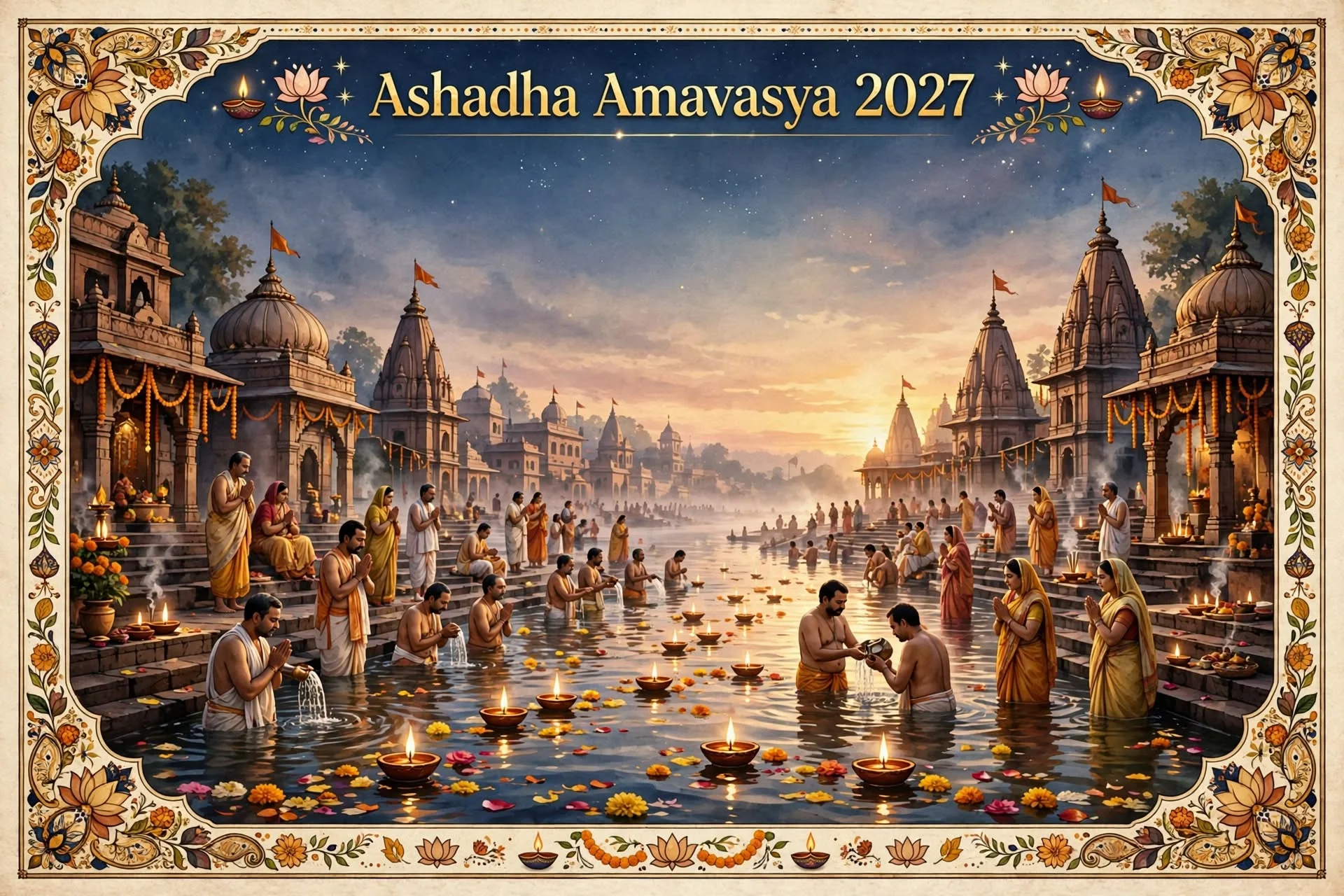
Ashadha Amavasya
Ashadha Amavasya, traditionally revered as Chhad Dahi Amavasya, Deepa Amavasya, or Hariyali Amavasya in several regional calendars, is the solemn new moon tithi concluding the Krishna Paksha of the sacred Hindu month of Ashadha. Falling at the zenith of the monsoon season, this sacred tithi marks an astrological and energetic threshold when the sun and moon align in complete celestial conjunction. In Vedic cosmology, Amavasya is presided over by Aryaman and the ancestral spirits (Pitrus), rendering this day uniquely potent for ancestral libations (Pitru Tarpana), holy river bathing, environmental reverence, and the lighting of auspicious lamps.

Ishti
Ishti is a foundational Vedic ritual observance appearing prominently in Hindu Panchangs on the Pratipada tithi (the first lunar day) following either Amavasya (new moon) or Purnima (full moon), marking the prescribed performance day for the fortnightly Vedic Darsha-Purnamasa sacrifices.