




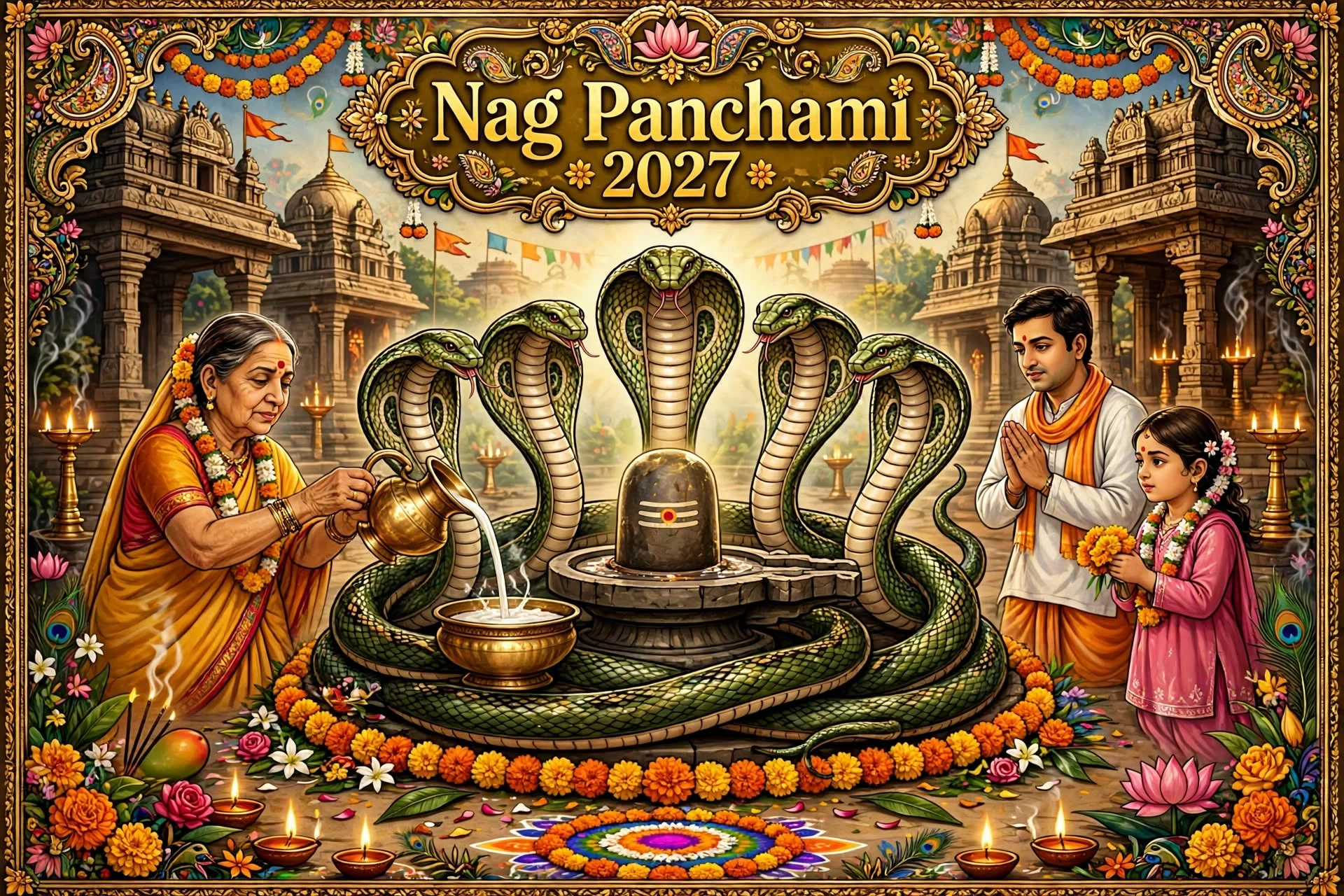
Nag Panchami is an ancient and profound Hindu festival dedicated to the worship of serpent deities (Nagas), observed on the fifth lunar day (Panchami) of the Shukla Paksha (waxing phase of the moon) in the holy monsoon month of Shravana (falling in late July). Revered across the Indian subcontinent since Vedic times, this sacred day acknowledges the spiritual, ecological, and cosmological significance of serpents within Sanatana Dharma.
Nag Panchami 2027: Date, Puja Timings, Rituals & Stories
Nag Panchami Timings & Panchang
Important festival dates and auspicious timings
Usha Arghya (Sunrise)
05:45 am
Sandhya Arghya (Sunset)
07:09 pm
Start Date
Friday, 6 Aug 2027
Puja Muhurat
02:27 am – 12:23 am
Nag Panchami
In Hindu mythology, serpents are not malevolent creatures but divine guardians and vehicles of the highest cosmic principles. Bhagwan Vishnu rests eternally upon the thousand-headed cosmic serpent Adishesha (Ananta), while Lord Shiva wears the venomous serpent king Vasuki around His neck as a divine ornament, demonstrating transcendental mastery over fear, death, and toxicity. Divine Nagas are honored as custodians of subterranean wealth, water reservoirs, fertility, and earth's ecological balance.
The observance of Nag Panchami coincides with the peak of the monsoon season, when torrential rains flood underground burrows and drive snakes into human habitations. By offering prayers, milk, durva grass, and fragrant flowers to serpent idols or live snakes without harm, devotees seek divine protection from snakebites, propitiate Rahu and Ketu to alleviate Kaal Sarp Dosha, and celebrate the sacred harmony between humanity and nature.
Why is Nag Panchami Celebrated?
The observance of Nag Panchami is deeply grounded in epic and Puranic narratives found in the Mahabharata, Bhavishya Purana, and Skanda Purana.
The most prominent epic event celebrated on this day is the historic intervention of the young sage Astika Muni, who brought an end to the terrifying Sarpa Satra (serpent sacrifice) conducted by King Janamejaya. Janamejaya had resolved to annihilate the entire serpent race to avenge the death of his father, King Parikshit, who had been bitten by the serpent king Takshaka. Moved by the righteous wisdom and scriptural eloquence of Astika, King Janamejaya halted the sacrificial fire on Shravana Shukla Panchami, saving the serpent race from total extinction.
Furthermore, it commemorates Lord Krishna's victory over the venomous serpent Kaliya in the Yamuna River (Kaliya Mardan), wherein Krishna subdued the serpent's pride without killing him and ordered him to retreat to the ocean, purifying the river waters.
- Commemorating Sage Astika's intervention that stopped the Sarpa Satra and saved the serpent race.
- Celebrating Lord Krishna's subjugation of the serpent Kaliya, purifying the waters of the Yamuna.
- Propitiating the twelve principal serpent kings (Ashta Nagas and Dvadasa Nagas) for protection and prosperity.
- Remediating astrological planetary afflictions, particularly Kaal Sarp Dosha and Rahu-Ketu doshas.
- Preserving ecological harmony by acknowledging serpents as natural protectors of agricultural crops from rodents.
The Epic Sarpa Satra, Sage Astika, and the Kaliya Mardan Episode
The Curse of King Parikshit and the Vow of Janamejaya
In the Adi Parva of the Mahabharata, King Parikshit (grandson of Arjuna) inadvertently insulted Sage Shamika while hunting in the forest. Shamika's son, Shringi, placed a terrible curse on Parikshit: that within seven days, the mighty serpent king Takshaka would bite and kill him. Despite elaborate royal fortifications, on the seventh day Takshaka assumed the guise of a worm inside a fruit, bit the king, and reduced him to ashes.
Consumed by grief and rage upon ascending the throne, Parikshit's son, King Janamejaya, vowed to exterminate the entire serpent species from the universe. He summoned learned priests and initiated the formidable Sarpa Satra yajna. Chanted by potent mantras, millions of serpents from across the realms were inexorably drawn into the blazing sacrificial flames.
The Intervention of Sage Astika and the Cessation of the Yajna
Terrified, Takshaka fled to the court of Indra and coiled himself tightly around Indra's celestial throne. The priests intensified their incantations, causing both Indra's throne and Takshaka to be dragged toward the fire pit. At that critical juncture, Sage Astika—the son of Sage Jaratkaru and the serpent maiden Manasa Devi—entered the sacrificial arena.
Astika praised Janamejaya's virtue, royal lineage, and justice with such profound Vedic eloquence that the king offered him any boon. Astika immediately requested: 'O King, halt this sacrifice and let the remaining serpents live in peace.' True to his royal word, Janamejaya extinguished the fire on Shravana Shukla Panchami. The relieved serpents blessed Astika and proclaimed that anyone who remembers his name and worships Nagas on this day will never suffer from snake venom.
Kaliya Mardan in the Srimad Bhagavatam
In the tenth canto of the Srimad Bhagavatam, the multi-hooded serpent Kaliya poisoned the Yamuna River, killing cows, birds, and cowherds of Vrindavan. The young Lord Krishna leaped into the toxic waters, engaged the thrashing serpent, and danced gracefully upon Kaliya's raised hoods, playing His flute.
Cosmological Guardianship, Kundalini Energy, and Ecological Balance
Serpents as Emblems of Kundalini Shakti
In yogic metaphysics, the serpent represents Kundalini Shakti—the primordial dormant spiritual power coiled three-and-a-half times at the base of the spine in the Muladhara chakra. When awakened through devotion, breathwork, and meditation, this serpent power ascends through the Sushumna nadi, piercing the six chakras to unite with pure consciousness in the Sahasrara.
Nag Panchami serves as an esoteric reminder of the sacred serpent within, encouraging seekers to transmute primal instincts into elevated spiritual awareness.
Adishesha and Vasuki: Cosmic Equilibrium
The cosmic serpent Adishesha ('the remainder') upholds the planetary spheres upon His hoods while serving as the peaceful bed for Lord Vishnu, symbolizing the indestructible foundation of truth that survives cosmic dissolution (Pralaya).
King Vasuki served as the churning rope during the Churning of the Ocean of Milk (Samudra Manthan), willingly bearing the friction between gods and demons so that the nectar of immortality (Amrita) could emerge. Honoring Nagas is an act of deep reverence for selfless cosmic service.
Agricultural Ecology and Ahimsa
From an ecological standpoint, snakes are farmers' vital natural allies, consuming rodents and insects that would otherwise destroy grain silos and standing monsoon crops. By prohibiting plowing, digging, or cutting vegetation on Nag Panchami, ancient Hindu culture enshrined ecological protection and compassion (Ahimsa) toward wild creatures.
Ritual Guidelines, Home Puja, and Community Customs
Morning Cleansing and Snake Imagery Preparation
Devotees wake early, bathe, and draw auspicious representations of serpents using cow dung, turmeric paste, sandalwood, or rice powder on both sides of the main doorway of their houses. In modern homes, framed pictures, silver murtis, or clay idols of the twelve serpent deities are placed on the puja altar.
A strict prohibition is maintained against plowing fields, digging the earth, or cutting vegetables with sharp knives on this day, honoring the earth and living serpents.
Offerings of Milk, Kheer, and Botanical Items
At temples or domestic shrines, devotees offer fresh raw cow milk, kheer (sweet rice pudding), puffed lotus seeds (makhana), parched paddy (khil/lawa), fresh Durva grass, and fragrant ketaki/marigold flowers to the serpent deities.
Devotees perform Abhisheka with milk and Gangajal over Shiva Lingams and silver Naga idols, praying for family health and freedom from fear.
Astrological Remediation and Evening Prayers
Individuals with Kaal Sarp Dosha or malefic Rahu-Ketu transit in their birth horoscopes perform special Rahu-Ketu Shanti, Sarpa Samskara, or Maha Mrityunjaya japa under the guidance of priests in sacred serpent temples like Kalahasti, Trimbakeshwar, or Kukke Subramanya.
Nag Panchami Puja Vidhi (Step by Step)
- 1
Dvara Rekhana and Shuddhi (Doorway Drawing and Purification)
Clean the entrance of the house and the puja altar. Draw protective serpent motifs on the main entrance doors using cow dung, sandalwood paste, or geru (red ochre), chanting purifying mantras.
- 2
Snana and Sankalpa (Purifying Bath and Solemn Vow)
Take a sacred bath early in the morning. Facing East before the altar, take water, akshata, and a flower in your right hand, reciting the Nag Panchami Sankalpa for the protection, peace, and longevity of the family.
- 3
Naga Avahana and Dhyana (Invocation of the 12 Divine Serpents)
Invoke the twelve primary celestial serpent kings: Ananta, Vasuki, Shesha, Padmanabha, Kambala, Shankhapala, Dhritarashtra, Takshaka, Karkotaka, Kaliya, Ashvatara, and Pingala, welcoming their divine presence onto the consecrated pedestal.
- 4
Asana and Padya (Offering Seat and Foot-Washing Water)
Offer a clean yellow or red silk asana to the serpent idols, followed by offering fresh water in an achamani spoon to wash their sacred form.
- 5
Nag Panchami Puja Samagri List
Deity Representations and Utensils
- Silver, brass, stone, or clay idol of Naga devata (or five-hooded Shiva Lingam)
- Wooden chowki draped in clean red, yellow, or white cloth
- Copper or silver Panchapatra, Achamani spoon, and Abhisheka tray
- Pure brass oil/ghee lamps with cotton wicks and pure cow ghee
- Natural camphor, aromatic dhoop sticks, and dhoop burner
Pastes and Botanical Offerings
- Fresh green Durva grass (essential for serpent worship)
- Aromatic yellow turmeric powder, red Kumkum, and white sandalwood paste
- Fresh white flowers, yellow marigolds, and lotus blossoms
- Cow dung or rice flour paste for drawing serpent motifs at the threshold
- Fresh betel leaves (Paan), whole betel nuts (Supari), and green cardamom
Naivedya and Food Items
- Fresh unboiled raw cow milk in a clean brass or earthen bowl
- Freshly cooked sweet rice pudding (Kheer) prepared with cow milk and raw sugar
- Parched paddy (Khil / Lawa) and roasted puffed lotus seeds (Makhana)
- Fresh yellow bananas, sweet apples, and seasonal fruits
Mantras and Prayers for Nag Panchami
Nag Panchami Vrat Rules and Fasting Guidelines
Fasting Guidelines and Dietary Prohibitions
Devotees observe a fast on Nag Panchami, typically eating a single meal in the evening after completing puja and offering milk to the deities. In many North Indian traditions, the food consumed on this day is prepared on the previous evening (known as Basi Bhojan), and fires are not lit in domestic hearths on Panchami day.
- Strict prohibition against frying food or using iron griddles (tava) in several regional customs.
- Total avoidance of non-vegetarian food, onions, garlic, and alcohol.
- Salt is often omitted or replaced with a small amount of rock salt in evening dishes.
Physical and Ecological Prohibitions
Scriptures strictly forbid plowing agricultural fields, tilling the earth, or digging holes on Nag Panchami, to ensure that snakes residing in underground burrows are not harmed or killed. Similarly, cutting grass, pruning trees, or sewing with needles is traditionally suspended.
Dos and Don'ts of Nag Panchami
Good Practices (Do's)
- Draw auspicious serpent images on doorways with cow dung, turmeric, or sandalwood paste.
- Perform milk and water Abhisheka on Shiva Lingams or metal/clay idols of Nagas.
- Offer fresh Durva grass, parched paddy (khil), and sweet milk kheer to the serpent deities.
- Chant the Nava Naga Stotram and the peaceful Astika Mantra for family protection.
- Recite prayers seeking forgiveness for any intentional or unintentional harm caused to serpents.
Nag Panchami Across Regions
| Region | Local Name |
|---|---|
| Maharashtra (Battis Shirala and Pune) | Nag Panchami and Shirala Mahotsav |
| Karnataka and Kerala | Sarpa Samskara and Sarpa Kavu Worship |
| West Bengal, Assam, and Odisha | Manasa Puja |
Nag Panchami FAQs
Why do people offer milk on Nag Panchami?
Milk is offered as an ancient symbol of nourishment, purity, and cooling propitiation. While milk was traditionally poured over stone and metal serpent idols or placed near burrows, modern environmental ethics emphasize pouring milk on idols rather than forcibly feeding live snakes.
Why is plowing or digging prohibited on Nag Panchami?
Plowing, digging, and tilling the soil are strictly prohibited on Nag Panchami to prevent the inadvertent crushing or injury of snakes residing in underground nests during the heavy monsoon season.
How does Nag Panchami help with Kaal Sarp Dosha?
In Vedic astrology, Kaal Sarp Dosha occurs when all seven major planets are hemmed between the lunar nodes Rahu and Ketu (represented as the serpent's head and tail). Worshiping the twelve serpent kings on Nag Panchami is believed to mitigate the negative karmic effects of this astrological combination.
Upcoming Festivals
View All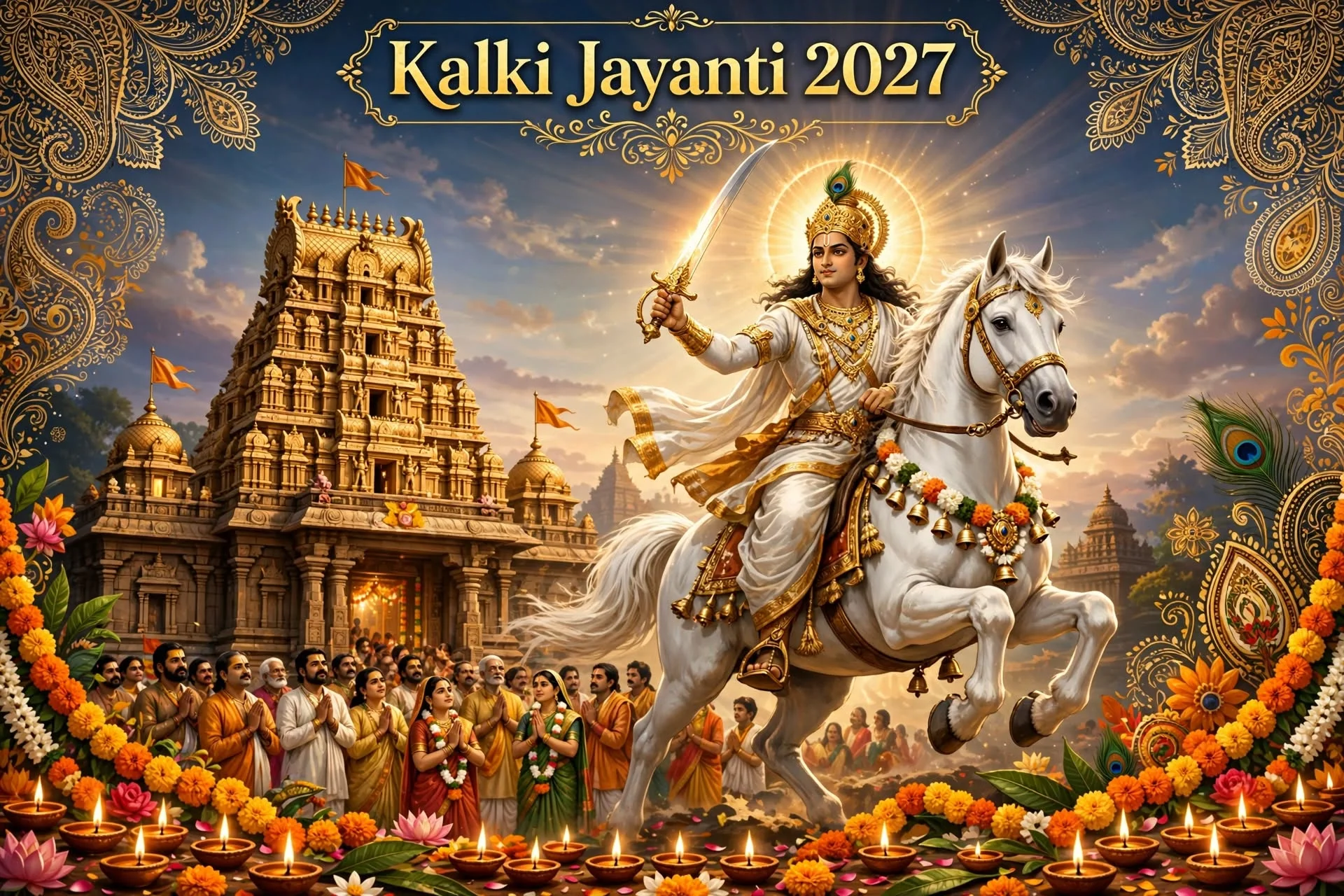
Saturday, Aug 7, 2027
Kalki Jayanti
Kalki Jayanti is a profound and unique Hindu festival celebrated on the Shashthi tithi (sixth lunar day) of Shukla Paksha in the holy monsoon month of Shravana. Unlike other avatar appearance anniversaries—which commemorate incarnations that have already taken place in past historical yugas—Kalki Jayanti marks the anticipated future advent (Avatara Jayanti) of Bhagwan Kalki, the tenth and final Maha-Avatara of Lord Vishnu, as prophesied in the Srimad Bhagavatam, Kalki Purana, Agni Purana, Vishnu Purana, and the Mahabharata.
View Festival Guide

Sunday, Aug 8, 2027
Bhanu Saptami
Bhanu Saptami, also renowned as Surya Saptami, Ravi Saptami, or Achala Saptami, is an astronomically and spiritually celebrated solar festival occurring when the sacred Saptami tithi (seventh lunar day) of Shukla Paksha coincides with a Sunday (Ravivar / Bhanuvar). In the Vedic astrological calendar, this magnificent alignment—occurring in the sacred monsoon month of Shravana—is considered extraordinarily auspicious, as both the seventh tithi and Sunday are directly governed by the Sun God, Bhagwan Surya (Bhanu), the visible manifestation of the Divine and the cosmic soul of the universe (Surya Atma Jagatas Tasthushashcha).
View Festival Guide
Thursday, Aug 12, 2027
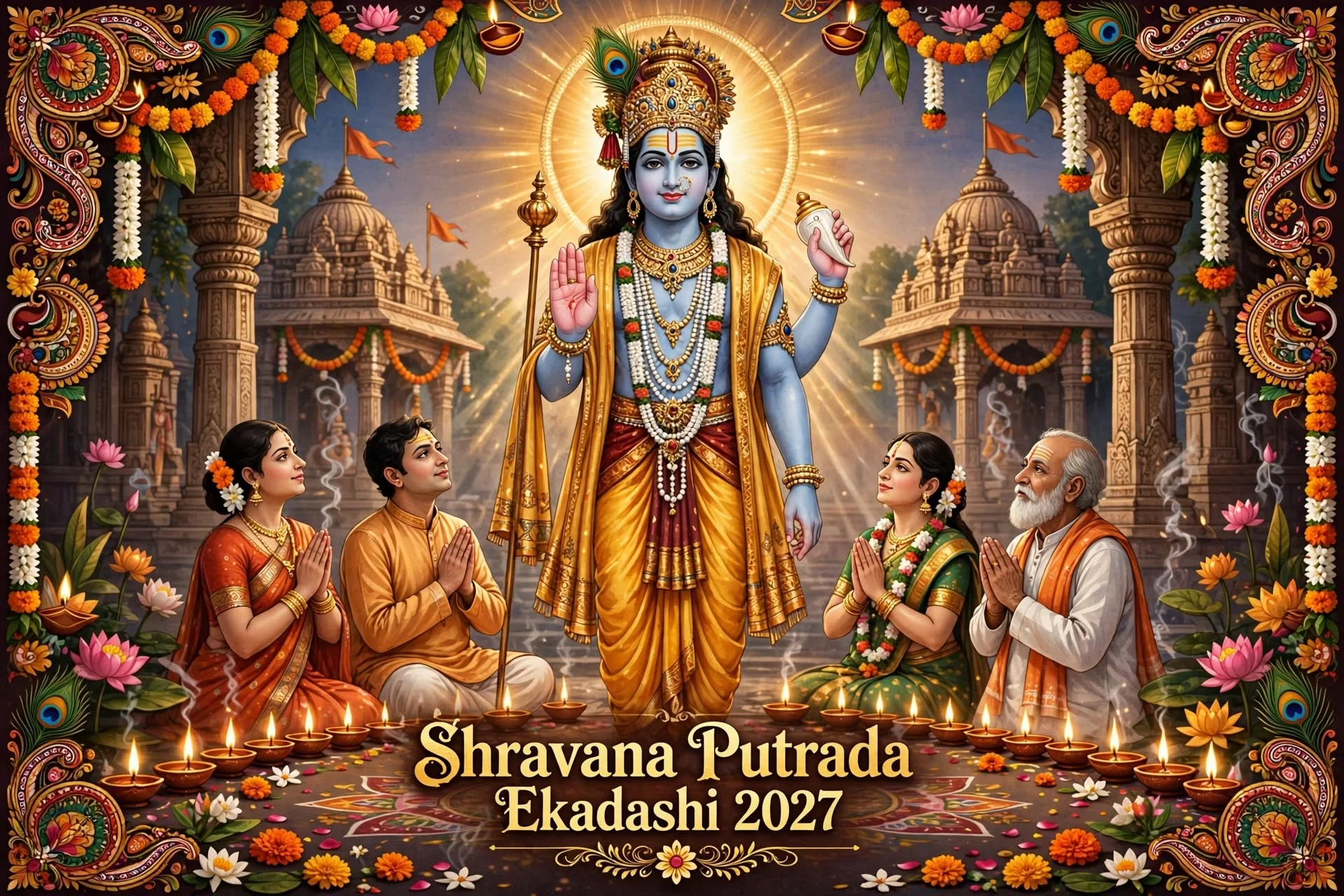
Shravana Putrada Ekadashi
Shravana Putrada Ekadashi, also reverently designated as Pavitra Ekadashi or Pavitropana Ekadashi, is observed on the auspicious eleventh lunar day (Ekadashi) of the Shukla Paksha (waxing moon) in the sacred monsoon month of Shravana. Dedicated exclusively to Bhagwan Vishnu in His divine forms as Sri Krishna, Madhusudana, and Damodara, this sanctified vrata is revered in Puranic literature as a supreme spiritual remedy for childless couples seeking virtuous progeny, as well as an extraordinary fast for the eradication of past-life karmic impediments and the attainment of spiritual liberation.
View Festival Guide
Friday, Aug 13, 2027
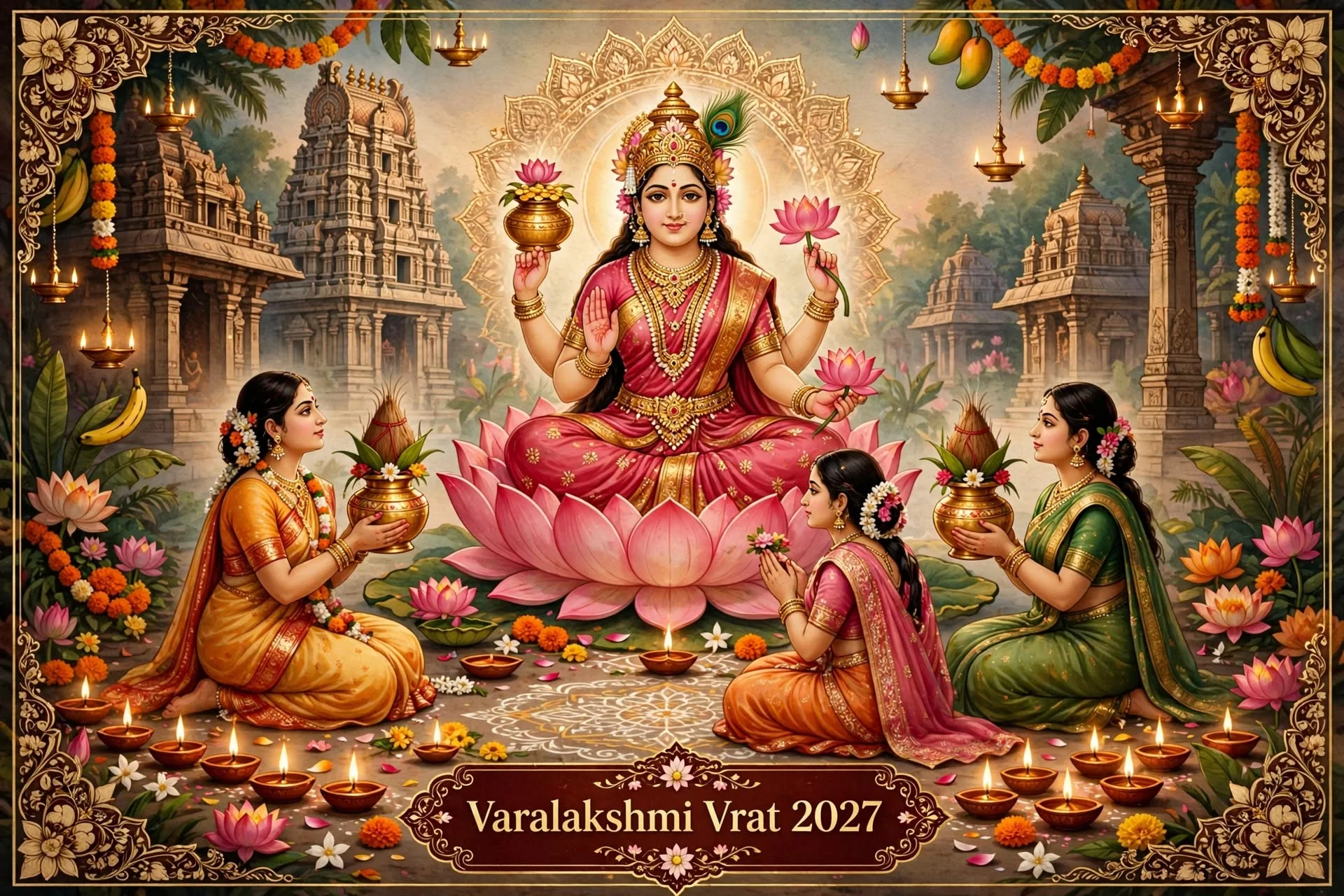
Varalakshmi Vrat
Varalakshmi Vrat, also known as Varalakshmi Nombu, is a revered Hindu festival dedicated to Goddess Varalakshmi—an auspicious manifestation of Sri Mahalakshmi who bestows boons ('Varam') upon Her sincere devotees. Celebrated predominantly by married women (Sumangalis) and young maidens across South India (Andhra Pradesh, Telangana, Karnataka, and Tamil Nadu) as well as Maharashtra and surrounding regions, this sacred vrata falls on the Friday immediately preceding the Full Moon day (Shravana Purnima) in the holy monsoon month of Shravana.
View Festival Guide

Saturday, Aug 14, 2027
Shani Pradosh Vrat
Shani Pradosh Vrat is an exceptionally potent, revered, and astrologically transformative bi-monthly Hindu fasting observance dedicated to Lord Shiva, Goddess Parvati, and Lord Shani Deva (the planetary deity of Saturn). Occurring on the thirteenth day (Trayodashi tithi) of either the waxing (Shukla) or waning (Krishna) lunar fortnight when it coincides with a Saturday (Shanivara), this sacred vow is lauded across Vedic and Puranic literature as the supreme, infallible spiritual remedy for dissolving chronic karmic impediments, neutralizing severe planetary afflictions, and securing profound peace and prosperity.
View Festival Guide
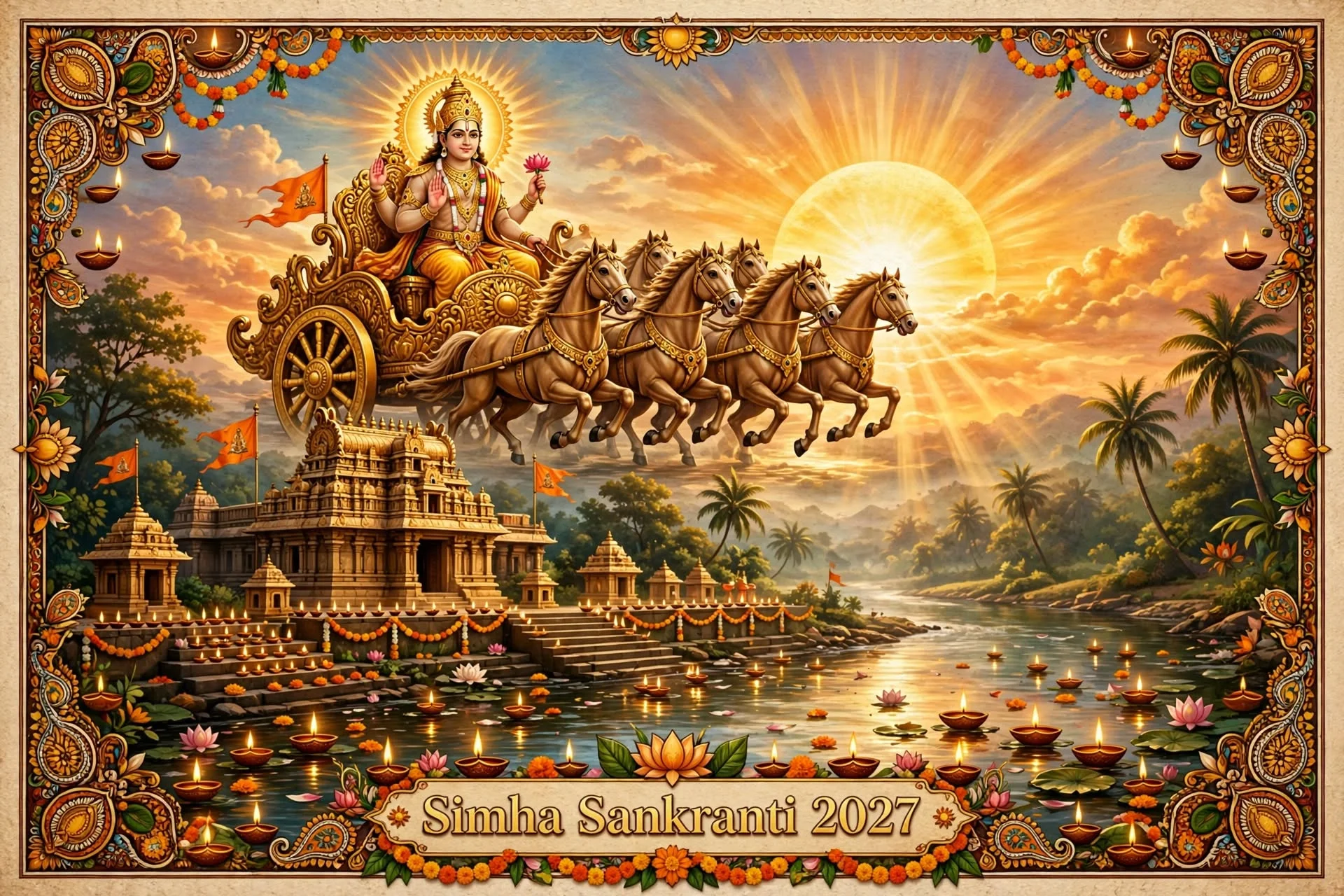
Tuesday, Aug 17, 2027
Simha Sankranti
Simha Sankranti marks the momentous astronomical and astrological transit (Sankramana) when Surya Deva, the radiant Sun God, enters the regal zodiac sign of Simha (Leo). In Vedic astrology, Simha is the Sun's own moolatrikona and swakshetra (domicile sign), making this celestial ingress exceptionally powerful, revitalizing, and spiritually auspicious. Occurring in mid-August in the traditional solar calendar, Simha Sankranti inaugurates the solar month of Simha (known as Chingam in Kerala and Bhadra / Avani in other solar calendars).
View Festival Guide
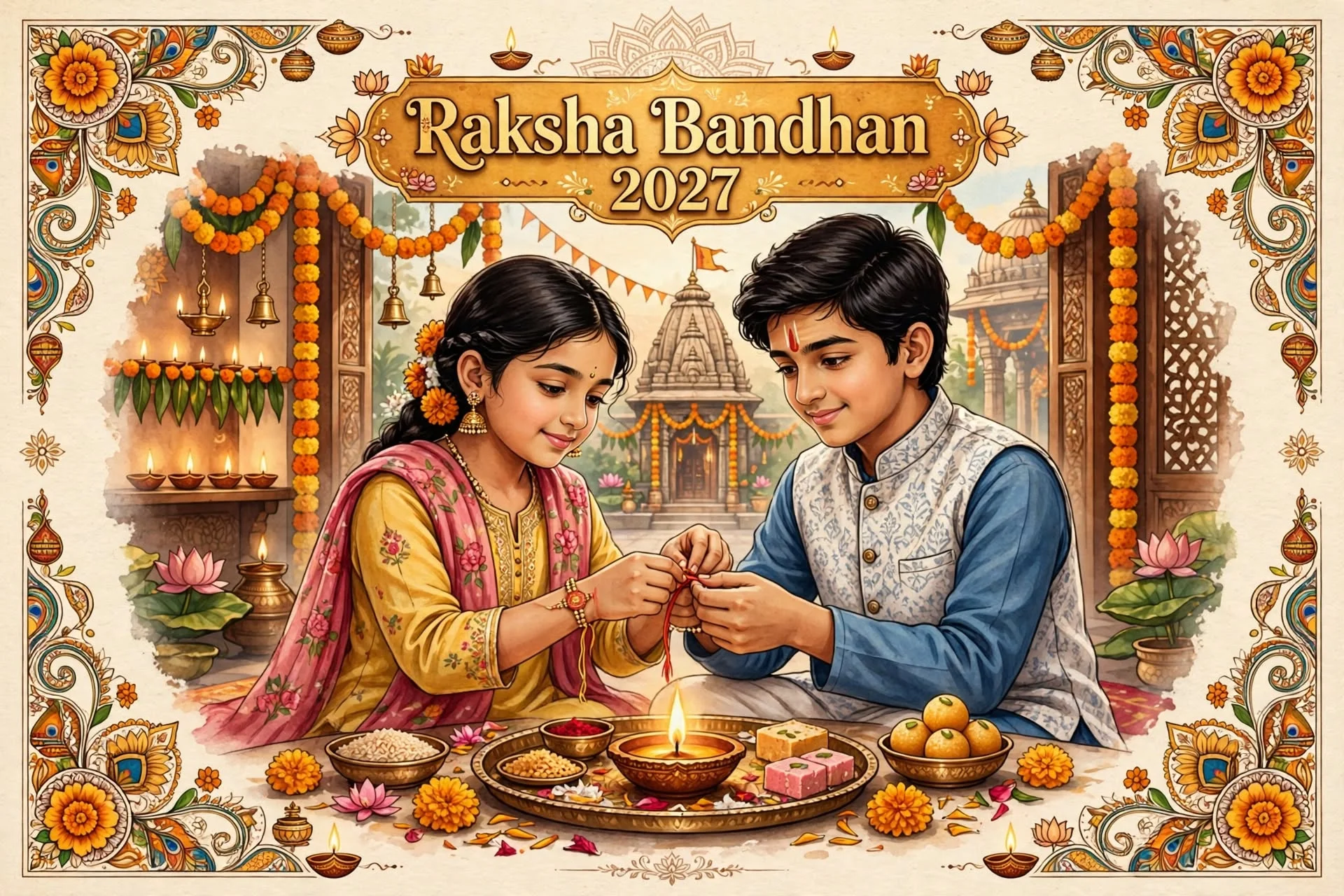
Tuesday, Aug 17, 2027
Raksha Bandhan
Raksha Bandhan, celebrated on the sacred Full Moon day (Purnima) of the holy Hindu month of Shravana, is one of the most cherished, ancient, and emotionally resonant festivals of India. Translated literally as 'the bond of protection', Raksha Bandhan honors the sacred relationship between brothers and sisters while simultaneously encapsulating broader cosmic and moral principles of mutual duty, chivalric honor, spiritual righteousness, and universal solidarity.
View Festival Guide
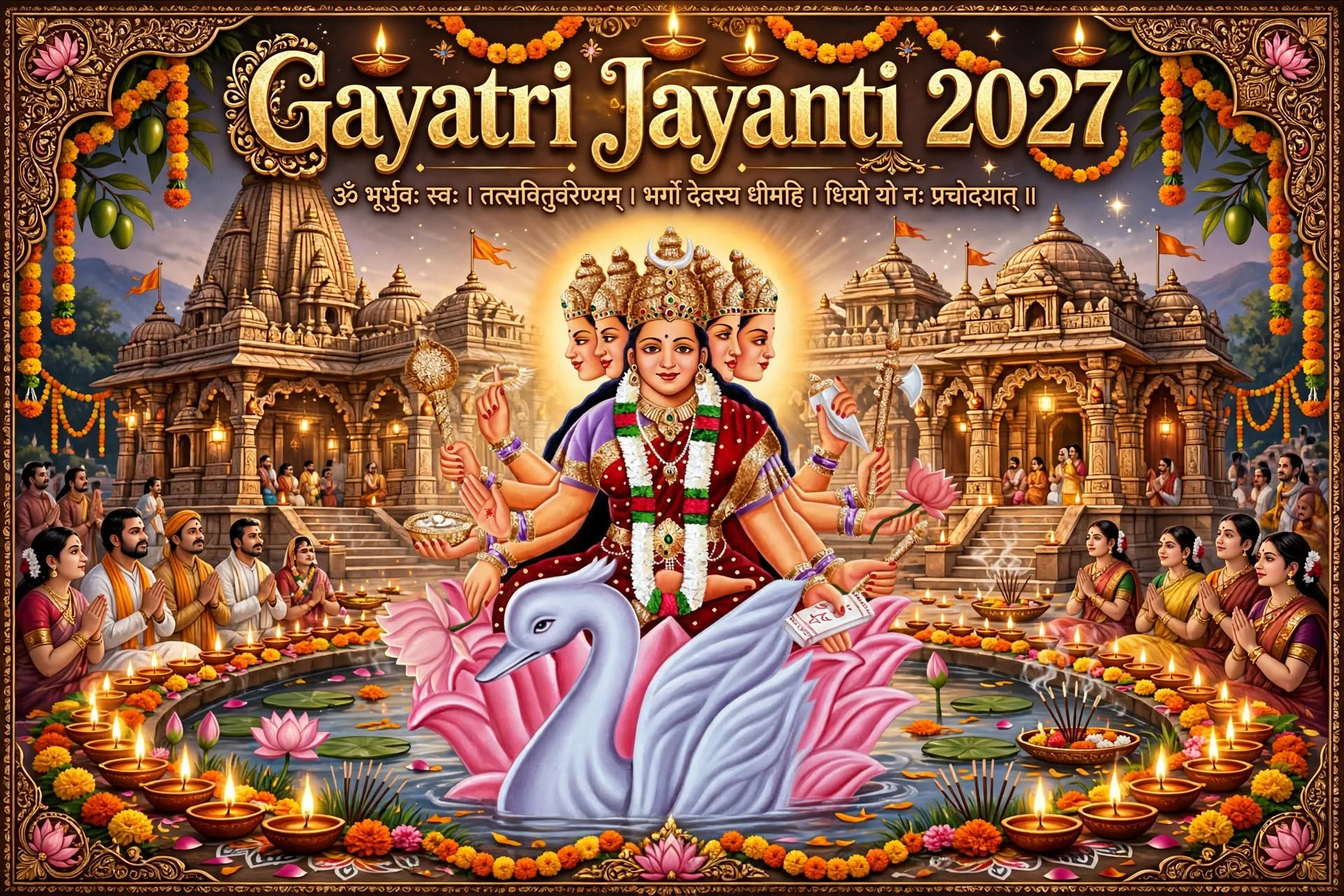
Tuesday, Aug 17, 2027
Gayatri Jayanti
Gayatri Jayanti is a sacred Hindu festival dedicated to Goddess Gayatri, revered as Ved Mata, the Mother of the Vedas. She represents divine wisdom, spiritual illumination, purity and the power of sacred knowledge. Devotees worship her as the personification of the Gayatri Mantra, one of the most revered prayers in the Vedic tradition.
View Festival Guide