




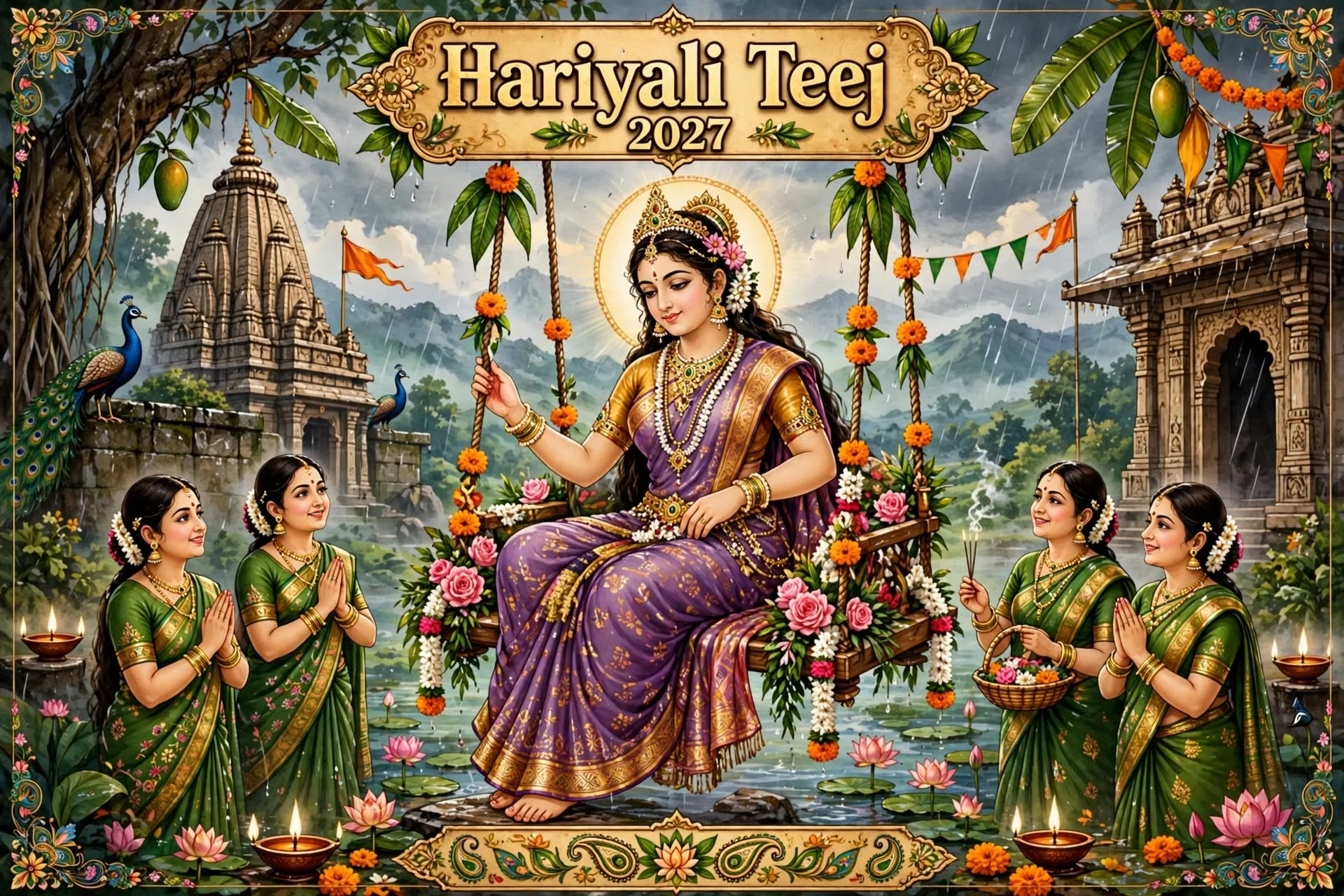
Hariyali Teej, also renowned as Chhoti Teej or Shravana Teej, is a radiant and joyful Hindu festival celebrated on the third lunar day (Tritiya) of the Shukla Paksha (waxing phase of the moon) in the monsoon month of Shravana (falling in late July). The festival heralds the arrival of the life-giving Indian monsoon, when parched landscapes are transformed into lush green tapestries ('Hariyali'), symbolizing ecological rejuvenation, fertility, and marital harmony.
Hariyali Teej 2027: Date, Puja Timings, Rituals & Stories
Hariyali Teej Timings & Panchang
Important festival dates and auspicious timings
Usha Arghya (Sunrise)
05:44 am
Sandhya Arghya (Sunset)
07:10 pm
Start Date
Wednesday, 4 Aug 2027
Puja Muhurat
11:51 am – 08:20 am
Hariyali Teej
Primarily observed by married women and young maidens across Northern, Western, and Central India—particularly in Rajasthan, Uttar Pradesh, Haryana, Bihar, and Punjab—Hariyali Teej celebrates the divine reunion of Mata Parvati and Lord Shiva. According to sacred tradition, Goddess Parvati performed rigorous tapasya over 107 previous births before Lord Shiva finally accepted Her as His eternal consort in Her 108th birth on this auspicious day.
Celebrated with exuberant cultural fervor, women dress in vibrant green sarees and lehengas, adorn their hands with intricate henna (mehndi) designs, wear green glass bangles, swing on decorated flower swings (jhulas) suspended from banyan and neem trees, and sing traditional monsoon folk songs while praying for marital bliss, prosperity, and the long life of their spouses.
Why is Hariyali Teej Celebrated?
Hariyali Teej is celebrated to honor the unwavering devotion and intense penance (Tapas) of Goddess Parvati, who serves as the eternal exemplar of unshakeable love and spiritual dedication.
Scriptural accounts in the Shiva Purana narrate that Parvati, born as the daughter of the mountain king Himavat, resolved from early childhood to attain Lord Shiva as Her husband. Undeterred by the rigorous Himalayan winters, rain, and scorching sun, She performed severe austerities, subsisting on dry leaves, water, and eventually air alone. Moved by Her pure love, Lord Shiva manifested on Shravana Shukla Tritiya and took Her hand in marriage.
Additionally, the festival celebrates the life-affirming arrival of the monsoon, bringing abundant relief to farmers and nature, ensuring a prosperous agricultural cycle and ecological vitality.
- Commemorating the cosmic marriage and divine reunion of Lord Shiva and Goddess Parvati.
- Praying for marital happiness, harmony, fidelity, and the longevity of husbands.
- Welcoming the monsoon season and rejoicing in the earth's green renewal (Hariyali).
- Strengthening maternal and familial bonds through the exchange of gifts (Sindhara).
Scriptural Origins from the Shiva Purana and the Legend of Mata Parvati
The Eternal Vow of Goddess Parvati
Following the self-immolation of Sati at Daksha's sacrifice, Lord Shiva entered deep, unapproachable samadhi in the high Himalayas. Sati took rebirth as Parvati, the daughter of Himavat, King of the Himalayas, and Queen Mena. From childhood, Sage Narada prophesied that She was destined to unite once more with Lord Shiva, but She would have to awaken Him through the sheer power of tapasya.
As She came of age, Her father arranged for Her to marry Lord Vishnu, believing an ascetic like Shiva was unsuitable. Distraught, Parvati sought the assistance of Her close female friends (Sakhis), who helped Her secretly retreat into a dense, secluded forest near the banks of a holy river to practice uninterrupted penance.
The 108 Births of Tapasya and Shiva's Acceptance
In the forest, Parvati fashioned a Shiva Lingam out of wet sand and river clay, worshiping it with Bilva leaves, wildflowers, and continuous chanting of the Panchakshari mantra (Om Namah Shivaya). She endured rain, extreme cold, and hunger, forsaking all worldly comforts. Puranic tradition states that She underwent severe austerities across 107 previous incarnations.
On the third day of the bright half of Shravana in Her 108th birth, impressed by Her peerless devotion, Lord Shiva appeared before Her and granted Her boon, declaring: 'O Devi, your steadfast penance has conquered Me. Whosoever observes this Tritiya fast with devotion shall be blessed with eternal marital harmony and righteous progeny.'
The Tradition of the Sindhara and Family Reunion
Following their reconciliation, King Himavat joyfully welcomed his daughter back and gave Her hand to Lord Shiva in a grand celestial wedding. In commemoration of this event, parents traditionally send a festive hamper known as 'Sindhara'—containing green clothes, bangles, henna, and sweets like Ghewar—to their married daughters on Hariyali Teej.
Source: Shiva Purana and Bhavishya Purana
Cosmic Union, Feminine Power, and Ecological Reverence
The Union of Prakriti and Purusha
In Samkhya and Tantric philosophy, Lord Shiva represents Purusha (pure consciousness), while Goddess Parvati represents Prakriti (dynamic nature and primordial creative energy). Without Prakriti, Purusha remains unmanifest; without Purusha, Prakriti cannot take purposeful form.
Hariyali Teej symbolizes the harmonious blending of these cosmic forces. When the parched earth (matter) is fertilized by monsoon rains (divine grace), vibrant green life blossoms forth, illustrating the interdependence of spirit and nature.
Green as the Emblem of Vitality and Regeneration
The predominant color of Hariyali Teej is green, symbolizing hope, agricultural abundance, renewal, and vitality. By wearing green garments, applying henna, and adorning green bangles, women celebrate their vital role as preservers of life, culture, and familial well-being.
The Swings (Jhulas) as Symbols of Joy and Freedom
The tradition of hanging swings from ancient trees holds deep symbolic meaning. The upward and downward flight of the swing reflects the cyclical ups and downs of domestic life, reminding practitioners to embrace joy, balance, and freedom of spirit even amidst worldly responsibilities.
Celebration Customs, Preparations, and Rituals of Hariyali Teej
Sindhara and Mehndi Preparations
A day before Teej, known as Sinjara, married women receive the Sindhara gift basket from their in-laws or maternal parents, which includes green sarees, glass bangles, cosmetics, sindoor, and traditional monsoon sweets like Ghewar and Malpua.
Women apply intricate mehndi (henna) patterns on their hands and feet, often weaving the names of their husbands into the design, symbolizing love, auspiciousness, and emotional connection.
Morning Fasting and Shiva-Parvati Puja
On the day of Teej, women rise early, take an herbal bath, and dress in resplendent green traditional attire with full bridal adornments (Solah Shringar). Devotees sculpt small clay idols of Lord Shiva, Goddess Parvati, and Lord Ganesha, worshiping them with Bilva leaves, flowers, and sixteen auspicious cosmetic items (Suhag samagri).
The sacred Hariyali Teej Vrata Katha is recited in community gatherings, followed by collective singing of festive folk songs (Teej ke Geet).
Swinging, Community Festivities, and Evening Aarti
In the afternoon, gardens and village squares echo with laughter as women swing on beautifully decorated swings. In cities like Jaipur, magnificent royal processions of Goddess Teej Mata are carried through the historic streets. In the evening, women conclude the fast after performing Aarti and offering prayers to the moon.
Hariyali Teej Puja Vidhi (Step by Step)
- 1
Snana and Solah Shringar (Holy Bath and Bridal Adornment)
Wake up early, take a purifying bath with water scented with rose water or herbs, wear a green traditional dress, and complete the sixteen traditional bridal adornments (Solah Shringar) including mehndi, green bangles, bindi, and sindoor.
- 2
Clay Murti Nirmana (Crafting Sacred Idols)
Traditionally, sculpt small idols of Lord Shiva, Goddess Parvati, and Lord Ganesha using clean river clay or sand, placing them reverently upon a decorative wooden chowki draped with yellow or red silk.
- 3
Ganesha Puja (Invocation of Lord Ganesha)
Begin the worship by invoking Lord Ganesha with flowers, sindoor, and durva grass, offering prayers to remove all obstacles from the household and marital life.
- 4
Avahana and Dhyana (Invocation of Shiva and Parvati)
Invoke Lord Shiva and Mata Parvati onto the chowki with folded hands, meditating on their divine eternal form as the perfect couple on Mount Kailash.
- 5
Panchamrita Snana (Holy Nectar Bath)
Hariyali Teej Puja Samagri List
Idols and Deity Altarpieces
- Natural clay or sand for crafting Shiva, Parvati, and Ganesha idols (or consecrated brass idols)
- Wooden chowki covered with fresh red or yellow silk cloth
- Copper Kalash filled with water, mango leaves, and a coconut (Shriphal)
- Pure brass puja thali, Panchapatra, and Achamani spoon
Suhag Items (Bridal Offerings for Goddess Parvati)
- Traditional Suhag basket containing: Sindoor, Kumkum, Bindi, and Kajal
- Set of green glass bangles, Mehndi cone, and Alta (red foot dye)
- Red or green silk Chunri (veil) and red ribbons
- Toe rings (Bichhiya), small mirror, comb, and fragrant attar (perfume)
Floral, Botanical, and Food Offerings
- Fresh Bilva leaves (Belpatra), Dhatura flowers and fruits, and Durva grass
- Garlands of fresh marigolds, roses, and fragrant jasmine
- Panchamrita ingredients: cow milk, curd, honey, cow ghee, and raw sugar
- Traditional festive sweets: Ghewar, Malpua, sweet Puri, and Halwa
- Seasonal fruits: bananas, pomegranate, mangoes, and pears
- Paan leaves, betel nuts (Supari), cloves, and green cardamom
Mantras and Prayers for Hariyali Teej
Hariyali Teej Vrat Rules and Fasting Guidelines
Fasting Disciplines and Dietary Code
Married women traditionally observe an uncompromising fast on Hariyali Teej. While many adhere to a Nirjala fast (without food or water) from sunrise until the evening puja or moonrise, pregnant women, nursing mothers, and women with medical conditions observe a milder Phalahari fast consuming fresh milk, fruits, and sago.
- Strict avoidance of all grains, rice, wheat, pulses, onions, and garlic.
- Consumption of fresh water and milk is permitted only after completing the evening puja for those not on Nirjala vows.
- Breaking of the fast occurs on the following morning after offering morning prayers to Mata Parvati.
Social and Familial Customs
Devotees maintain a joyous, celebratory atmosphere, spending the day in community song, storytelling, and mutual blessing. Touching the feet of mother-in-law and elder women in the family to seek their Suhag blessings (Baya/Bayana) is an integral moral duty of the day.
Dos and Don'ts of Hariyali Teej
Good Practices (Do's)
- Wear auspicious green clothes, green glass bangles, bindi, and apply mehndi on hands and feet.
- Worship clay idols of Lord Shiva and Goddess Parvati together with devotion.
- Offer sixteen bridal adornments (Suhag samagri) to Goddess Parvati during the puja.
- Listen attentively to the Hariyali Teej Vrata Katha with fellow women.
- Seek the blessings of your mother-in-law and elder women by offering them the traditional Baya gift basket.
Hariyali Teej Across Regions
| Region | Local Name |
|---|---|
| Rajasthan (Jaipur, Jodhpur, Udaipur) | Jaipur Teej Mata Procession |
| Uttar Pradesh and Bihar | Hariyali Teej / Chhoti Teej |
| Punjab and Haryana | Teeyan Festival |
Hariyali Teej FAQs
Why is the color green considered so important on Hariyali Teej?
Green is the universal color of nature's rejuvenation during the monsoon season (Hariyali), symbolizing fertility, freshness, prosperity, growth, and marital joy.
What is 'Sindhara' in Hariyali Teej?
Sindhara is a traditional gift basket sent by parents or in-laws to newly married women, containing green clothing, bangles, henna (mehndi), cosmetics (shringar items), and traditional festive sweets like Ghewar.
Can unmarried maidens observe the Hariyali Teej fast?
Yes, unmarried girls observe Hariyali Teej to pray to Goddess Parvati to be blessed with an ideal, virtuous, and loving life partner similar to Lord Shiva.
Upcoming Festivals
View All
Friday, Aug 6, 2027
Nag Panchami
Nag Panchami is an ancient and profound Hindu festival dedicated to the worship of serpent deities (Nagas), observed on the fifth lunar day (Panchami) of the Shukla Paksha (waxing phase of the moon) in the holy monsoon month of Shravana (falling in late July). Revered across the Indian subcontinent since Vedic times, this sacred day acknowledges the spiritual, ecological, and cosmological significance of serpents within Sanatana Dharma.
View Festival Guide
Saturday, Aug 7, 2027
Kalki Jayanti
Kalki Jayanti is a profound and unique Hindu festival celebrated on the Shashthi tithi (sixth lunar day) of Shukla Paksha in the holy monsoon month of Shravana. Unlike other avatar appearance anniversaries—which commemorate incarnations that have already taken place in past historical yugas—Kalki Jayanti marks the anticipated future advent (Avatara Jayanti) of Bhagwan Kalki, the tenth and final Maha-Avatara of Lord Vishnu, as prophesied in the Srimad Bhagavatam, Kalki Purana, Agni Purana, Vishnu Purana, and the Mahabharata.
View Festival Guide
Sunday, Aug 8, 2027
Bhanu Saptami
Bhanu Saptami, also renowned as Surya Saptami, Ravi Saptami, or Achala Saptami, is an astronomically and spiritually celebrated solar festival occurring when the sacred Saptami tithi (seventh lunar day) of Shukla Paksha coincides with a Sunday (Ravivar / Bhanuvar). In the Vedic astrological calendar, this magnificent alignment—occurring in the sacred monsoon month of Shravana—is considered extraordinarily auspicious, as both the seventh tithi and Sunday are directly governed by the Sun God, Bhagwan Surya (Bhanu), the visible manifestation of the Divine and the cosmic soul of the universe (Surya Atma Jagatas Tasthushashcha).
View Festival Guide
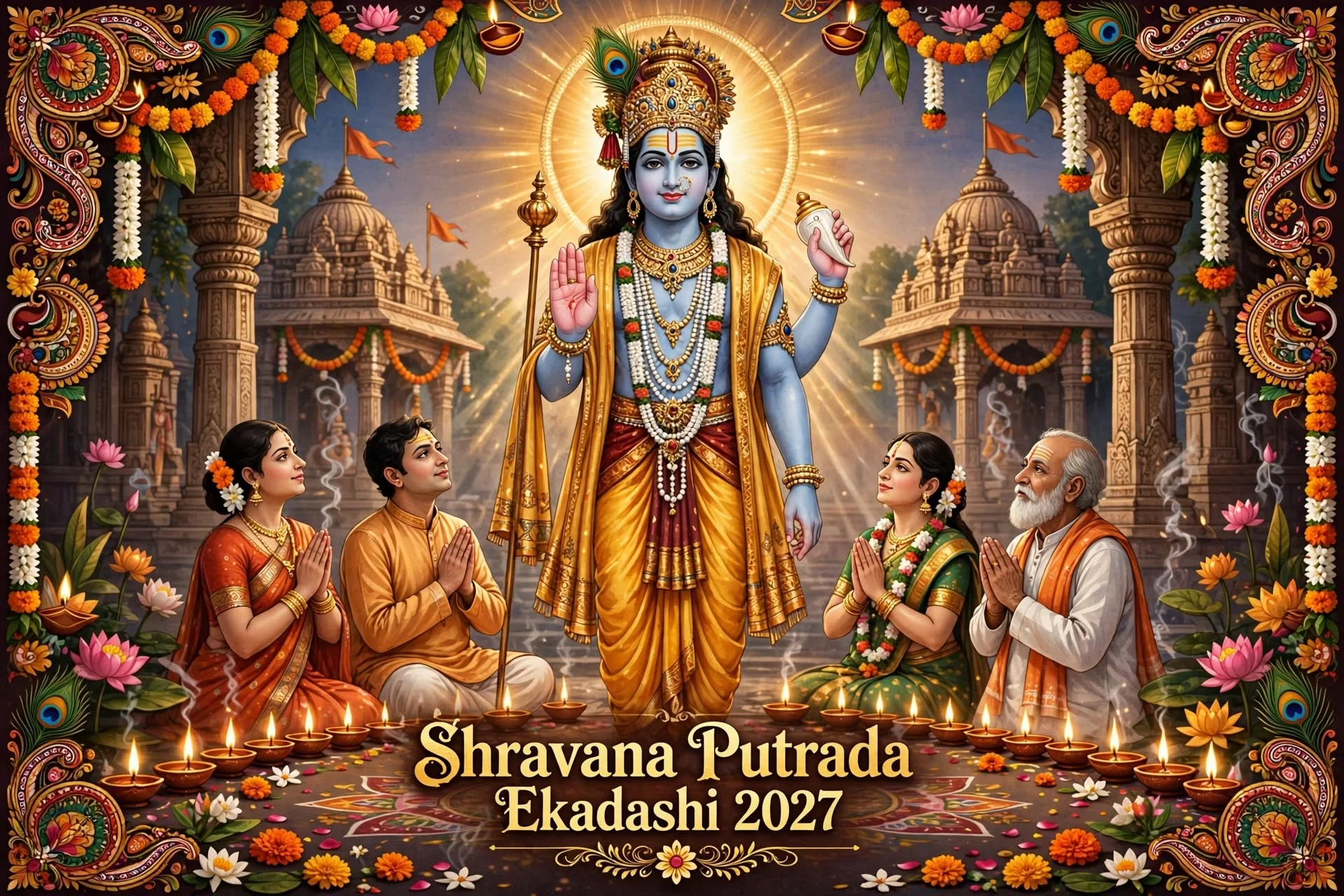
Thursday, Aug 12, 2027
Shravana Putrada Ekadashi
Shravana Putrada Ekadashi, also reverently designated as Pavitra Ekadashi or Pavitropana Ekadashi, is observed on the auspicious eleventh lunar day (Ekadashi) of the Shukla Paksha (waxing moon) in the sacred monsoon month of Shravana. Dedicated exclusively to Bhagwan Vishnu in His divine forms as Sri Krishna, Madhusudana, and Damodara, this sanctified vrata is revered in Puranic literature as a supreme spiritual remedy for childless couples seeking virtuous progeny, as well as an extraordinary fast for the eradication of past-life karmic impediments and the attainment of spiritual liberation.
View Festival Guide
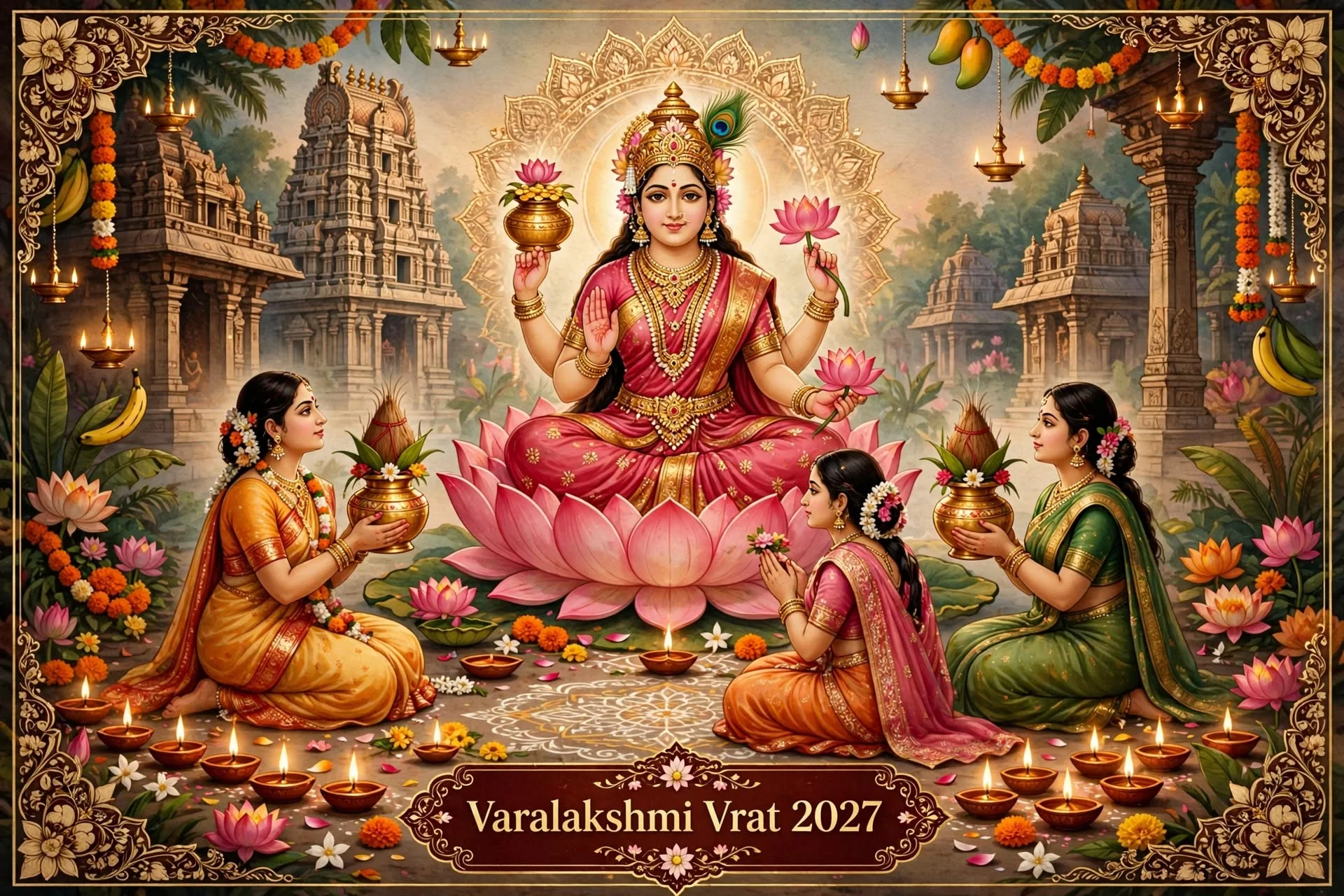
Friday, Aug 13, 2027
Varalakshmi Vrat
Varalakshmi Vrat, also known as Varalakshmi Nombu, is a revered Hindu festival dedicated to Goddess Varalakshmi—an auspicious manifestation of Sri Mahalakshmi who bestows boons ('Varam') upon Her sincere devotees. Celebrated predominantly by married women (Sumangalis) and young maidens across South India (Andhra Pradesh, Telangana, Karnataka, and Tamil Nadu) as well as Maharashtra and surrounding regions, this sacred vrata falls on the Friday immediately preceding the Full Moon day (Shravana Purnima) in the holy monsoon month of Shravana.
View Festival Guide
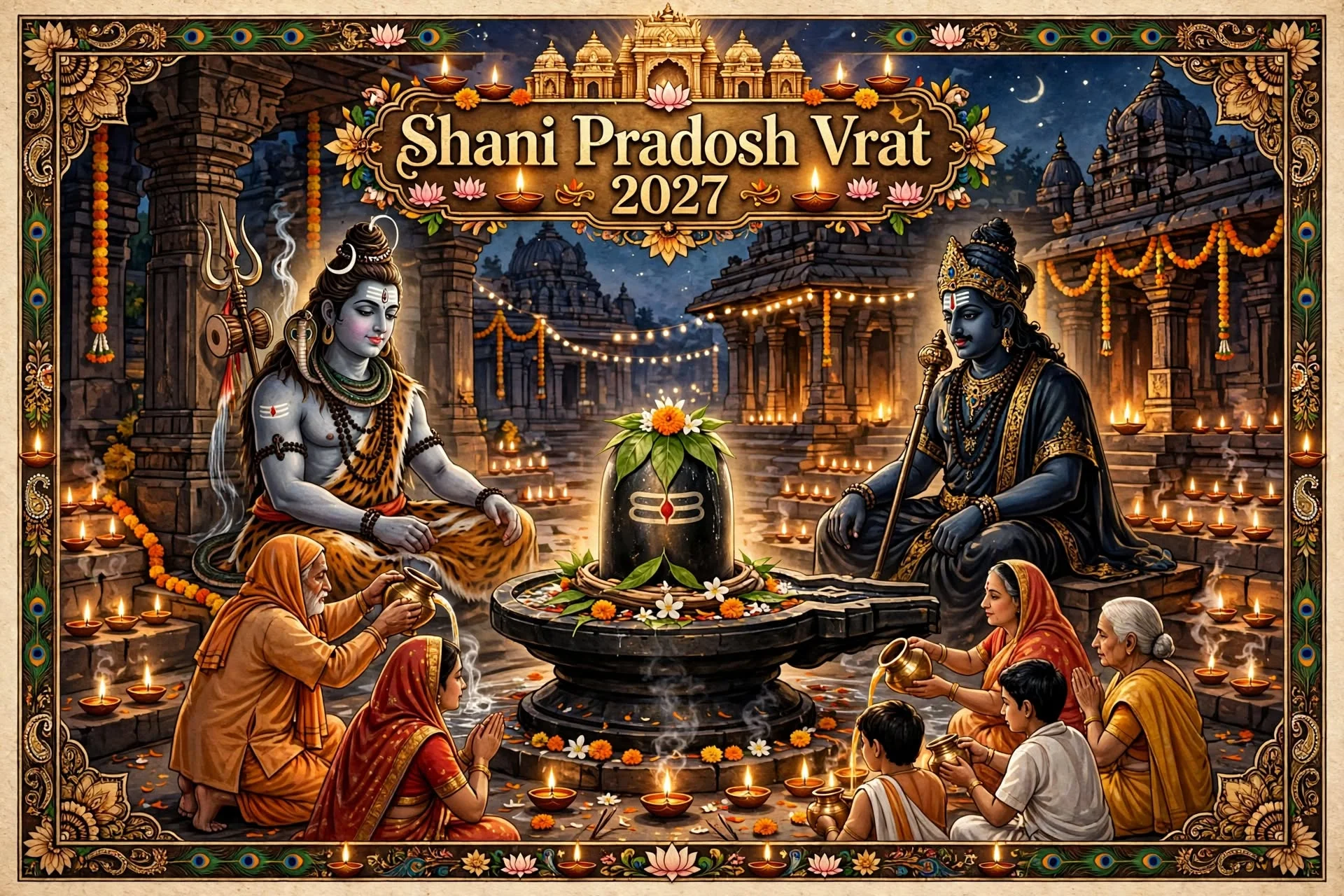
Saturday, Aug 14, 2027
Shani Pradosh Vrat
Shani Pradosh Vrat is an exceptionally potent, revered, and astrologically transformative bi-monthly Hindu fasting observance dedicated to Lord Shiva, Goddess Parvati, and Lord Shani Deva (the planetary deity of Saturn). Occurring on the thirteenth day (Trayodashi tithi) of either the waxing (Shukla) or waning (Krishna) lunar fortnight when it coincides with a Saturday (Shanivara), this sacred vow is lauded across Vedic and Puranic literature as the supreme, infallible spiritual remedy for dissolving chronic karmic impediments, neutralizing severe planetary afflictions, and securing profound peace and prosperity.
View Festival Guide
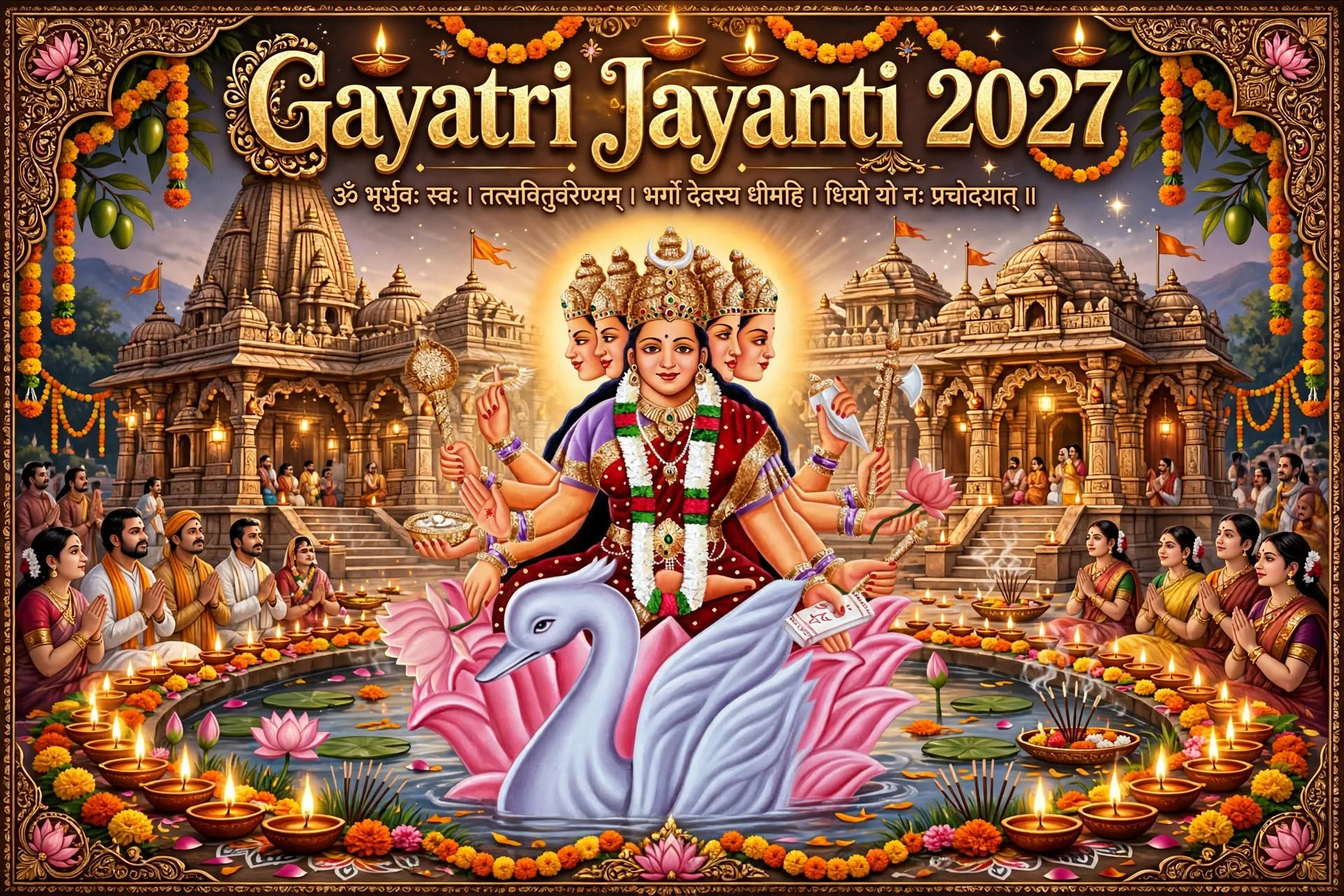
Tuesday, Aug 17, 2027
Gayatri Jayanti
Gayatri Jayanti is a sacred Hindu festival dedicated to Goddess Gayatri, revered as Ved Mata, the Mother of the Vedas. She represents divine wisdom, spiritual illumination, purity and the power of sacred knowledge. Devotees worship her as the personification of the Gayatri Mantra, one of the most revered prayers in the Vedic tradition.
View Festival Guide
Tuesday, Aug 17, 2027
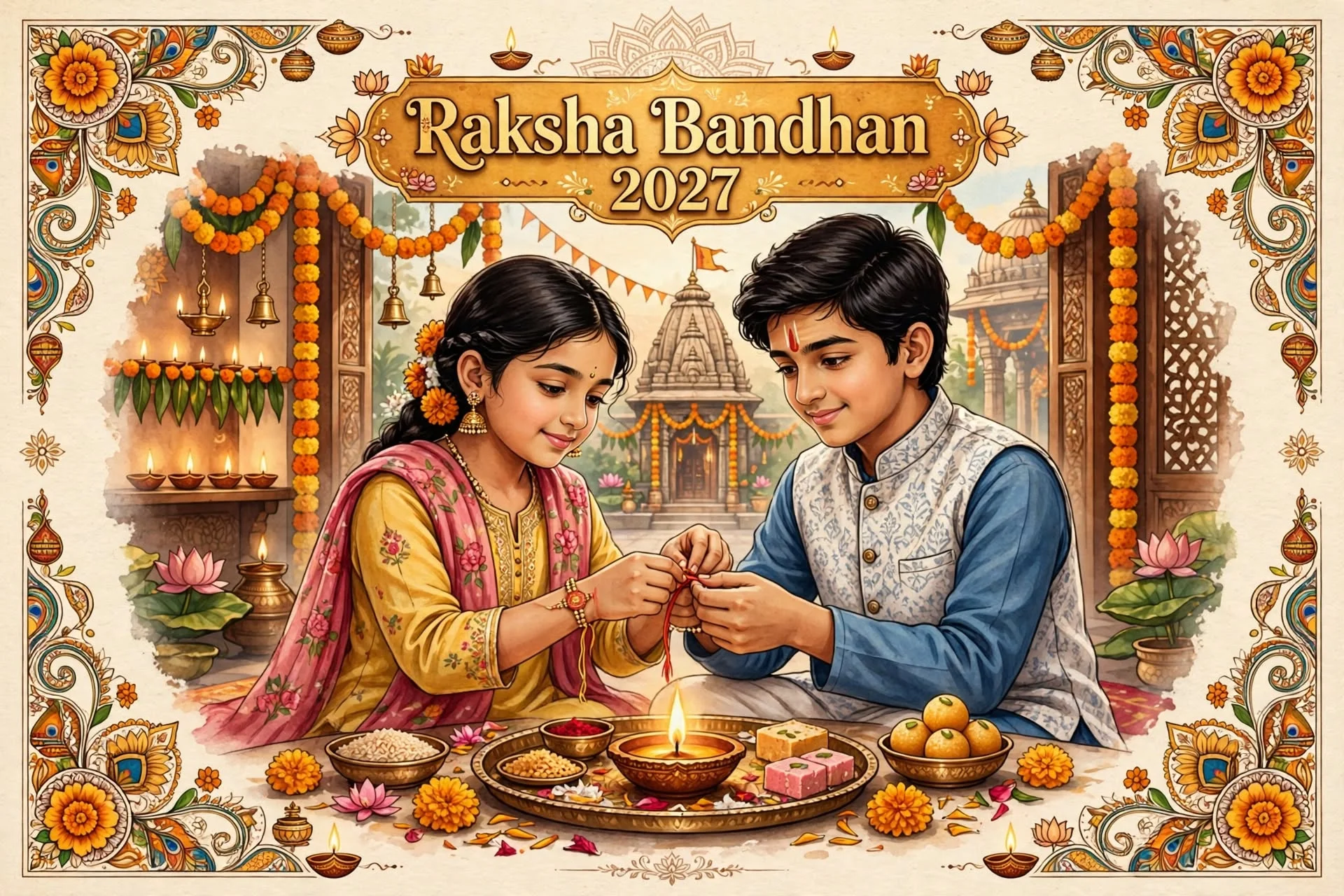
Raksha Bandhan
Raksha Bandhan, celebrated on the sacred Full Moon day (Purnima) of the holy Hindu month of Shravana, is one of the most cherished, ancient, and emotionally resonant festivals of India. Translated literally as 'the bond of protection', Raksha Bandhan honors the sacred relationship between brothers and sisters while simultaneously encapsulating broader cosmic and moral principles of mutual duty, chivalric honor, spiritual righteousness, and universal solidarity.
View Festival Guide