




Surya Grahan (Solar Eclipse) is a momentous astronomical and spiritual phenomenon in the Hindu calendar occurring on an Amavasya (new moon day) when the Moon passes between the Sun and the Earth, momentarily obscuring the solar disc from terrestrial view.
Surya Grahan 2027: Date, Puja Timings, Rituals & Stories

Surya Grahan Timings & Panchang
Important festival dates and auspicious timings
Usha Arghya (Sunrise)
07:07 am
Sandhya Arghya (Sunset)
06:04 pm
Start Date
Saturday, 6 Feb 2027
Puja Muhurat
07:05 pm – 09:26 pm
Surya Grahan
Rather than a festive celebration, Surya Grahan is observed across Hinduism as a profound period of spiritual austerity, contemplation, and purification, governed by rigorous Vedic scriptural injunctions found in the Dharma Shastras and Jyotisha treatises.
Hindu tradition views the eclipse through the lens of subtle cosmic energy shifts: the temporary occlusion of solar light creates a vulnerable energetic interval known as Sutak Kaal—a period spanning four prahars (approximately twelve hours) prior to and during the eclipse—during which temples remain closed, routine activities pause, and divine contemplation takes precedence.
Crucially, Hindu scriptures regard the eclipse hours as an extraordinary window of 'Siddhi Kala'—a time when spiritual practices, meditation, sacred river bathing (Grahan Snana), mantra chanting, and charitable donations (Dana) yield millions of times more merit than at ordinary times.
Why is Surya Grahan Celebrated?
Surya Grahan is observed not with festivities, but with solemn religious discipline to safeguard one's mind, body, and subtle prana from negative cosmic turbulence, and to transform an astronomical crisis into an opportunity for spiritual advancement.
The observance venerates the vital cosmic role of Lord Surya (the Sun God) as the soul of the universe (Surya Atma Jagatas Tasthushashcha), seeking His divine protection and restoration as He emerges triumphant from the shadow of Rahu or Ketu.
- To harness the exceptionally potent Siddhi Kala for internal meditation, mantra japa, and spiritual awakening.
- To observe Sutak rules that protect food, water, and physical health from subtle atmospheric and electromagnetic radiation.
- To perform purificatory Grahan Snana (ablution) at sacred confluences and rivers immediately following the release (Moksha) of the eclipse.
- To alleviate planetary afflictions (Surya Dosha, Rahu-Ketu Dosha) through prescribed acts of charity and sacred offerings.
- To extend protection and prayers for expectant mothers, vulnerable family members, and universal harmony.
Puranic Cosmology and Scriptural Lore of Surya Grahan
The Amrita Manthan and the Legend of Svarbhanu
The classic theological explanation for eclipses is rooted in the Amrita Manthan (churning of the milk ocean) described in the Srimad Bhagavatam (Eighth Canto), the Vishnu Purana, and the Mahabharata. When the nectar of immortality (Amrita) was retrieved, Lord Vishnu assumed the mesmerizing form of Mohini to distribute it exclusively among the Devas.
An Asura named Svarbhanu disguised himself as a celestial god and sat among the solar and lunar deities to partake of the nectar. Just as Svarbhanu swallowed a drop of Amrita, Surya Dev (the Sun) and Chandra Dev (the Moon) recognized the deception and alerted Mohini. Instantly, Lord Vishnu released the divine Sudarshana Chakra, severing Svarbhanu's neck.
Because the nectar had already passed down his throat, both severed portions remained immortal. Lord Brahma later elevated the head to become Rahu and the serpent-like torso to become Ketu, granting them the status of shadow planets (Chhaya Grahas). Bearing an eternal grievance against the Sun and Moon for revealing his disguise, Rahu pursues them periodically, causing solar and lunar eclipses when their celestial orbits intersect.
The Kurukshetra Gathering During the Solar Eclipse
The Mahabharata and the Bhagavata Purana recount a celebrated historical and sacred assembly that took place at Kurukshetra during a total solar eclipse. A celestial announcement led sages, kings, and householders from across Bharatavarsha to gather at the sacred Brahma Sarovar and Sannihit Sarovar to observe the eclipse austerities.
Lord Krishna and Balarama journeyed from Dwaraka along with the Yadava royal family, while the Pandavas arrived from Indraprastha, and Nanda Maharaja, Yashoda, Radharani, and the Gopis arrived from Vraja. The gathering served as a poignant reunion where monumental spiritual discourses occurred.
Scriptures document that Lord Krishna led the assembly in performing rigorous Grahan Snana, offering oblations to departed ancestors, and distributing hundreds of thousands of decorated milch cows, gold, and food grains to scholarly Brahmins and the poor, establishing Kurukshetra as the preeminent pilgrimage site for solar eclipse observances.
Philosophical, Astrological, and Energetic Dimensions of the Eclipse
The Darkening of the External Sun and the Awakening of the Inner Light
In Vedic metaphysics, the Sun represents the cosmic Atman (the ultimate soul) and the eye of the cosmos, sustaining all terrestrial life through heat, illumination, and prana. When the physical Sun is momentarily concealed, it reminds the spiritual aspirant of the impermanence of sensory perceptions.
The outer obscurity compels the seeker to withdraw attention from external phenomena and ignite the eternal, unblemished inner light (Antaratman). Chanting mantras during the eclipse is traditionally regarded as having a multiplier effect, turning moments of cosmic shadow into profound inner illumination.
Astrological Dynamics and Karmic Purging
In Vedic astrology (Jyotisha), a solar eclipse occurs when the Sun and Moon align precisely with Rahu or Ketu on an Amavasya. Rahu signifies unfulfilled worldly desire, obsession, and illusion (Maya), while Ketu signifies detachment, renunciation, and Moksha.
The eclipse forces subconscious impressions (Samskaras) to the surface. Engaging in disciplined austerities, charity, and prayer during this interval neutralizes planetary imbalances, dispels spiritual lethargy, and cleanses accumulated negative karma.
Universal Charity and Ancestral Redemption
- Offering Tarpana during the eclipse hours provides immediate solace and liberation to ancestral spirits wandering in subtle realms.
- Distributing copper, wheat, and jaggery directly pacifies afflictions of afflicted Surya and Rahu in personal horoscopes.
- Cultivating stillness of mind counters the heightened emotional and psychic sensitivity brought about by the gravitational alignment of the Earth, Moon, and Sun.
Practical Protocol, Ritual Preparations, and Post-Eclipse Cleansing
Preparations Before the Eclipse and Inception of Sutak
Preparation begins twelve hours (four prahars) before the exact moment of eclipse contact (Sparsha Kaal), marking the start of Sutak Kaal. Temple doors and household altars are respectfully closed or draped with curtains to protect consecrated idols from touch.
Householders place fresh blades of Kusha grass (Darbha) or sacred Tulsi leaves into drinking water pots, milk, cooked grains, and pickles, which scripturally and traditionally protects them from subtle electromagnetic contamination.
Conduct and Austerities During the Eclipse Period
During the active eclipse window (from Sparsha to Moksha), cooking, eating, sleeping, sensual indulgence, and unnecessary travel are traditionally prohibited. Only elderly individuals, small children, pregnant women, and the sick are exempted from strict fasting.
Devotees sit quietly facing East or North on a woolen mat or kusha asana, engaging in steady, concentrated japa of sacred mantras such as the Gayatri Mantra, the Maha Mrityunjaya Mantra, or the Aditya Hridaya Stotra.
Post-Eclipse Cleansing and Charitable Giving (Moksha Rites)
The moment the eclipse concludes (Moksha Kaal), every member of the household takes a complete head-to-toe purificatory bath wearing the clothes worn during the eclipse. The entire dwelling and worship room are thoroughly washed and sprinkled with consecrated Gangajal.
Men wearing the sacred thread (Yajnopavita) discard their old thread and invest in a new one. Fresh food is prepared, and generous donations of wheat, copper utensils, jaggery, red clothing, and monetary gifts (Dakshina) are distributed to Brahmins and the needy before the family breaks their fast.
Surya Grahan Puja Vidhi (Step by Step)
- 1
Sutak Inception and Kusha Grass Preservation (Darbha Sparsha)
Twelve hours prior to the onset of the solar eclipse, initiate the Sutak period. Take clean blades of sacred Kusha grass (Darbha) or unblemished Tulsi leaves and place them inside all stored drinking water containers, milk, curd, ghee, and pantry items to protect them from subtle eclipse radiation.
- 2
Altar Closure and Kapat Bandhan (Sanctuary Sealing)
Clean the puja area and respectfully draw clean yellow or white curtains across the home altar or close the temple doors. Deities and sacred idols must not be touched, bathed, or physically offered food throughout the duration of the Sutak and Grahan.
- 3
Sparsha Kaal Snana and Sankalpa (Onset Ablution and Sacred Vow)
As the eclipse begins (Sparsha Kaal), take a preliminary purificatory bath with cold water. Sit quietly facing East or North, take water and akshata in your right palm, and take a solemn mental vow (Manasik Sankalpa) to dedicate the eclipse hours to uninterrupted prayer, japa, and divine contemplation.
- 4
Surya Dhyana and Manasik Upachara (Mental Invocation of the Sun God)
Close your eyes, adopt a stable yogic posture (Padmasana or Sukhasana), and visualize Lord Surya seated upon His golden celestial chariot drawn by seven radiant horses. Offer mental prostrations, mentally offering sandalwood paste, red flowers, and fragrant incense at His divine lotus feet.
Surya Grahan Puja Samagri List
Preservation and Purification Essentials
Special sacred botanicals and purifying agents required to shield food and domestic spaces during the Sutak and eclipse periods.
- Fresh blades of Kusha grass (Darbha) to place in stored liquids and dry goods
- Unblemished Tulsi leaves (harvested prior to the start of Sutak)
- Consecrated Gangajal or holy river water for purification
- Rock salt or sea salt for purifying domestic floors post-eclipse
- Fresh replacement Yajnopavita (sacred threads) for initiated individuals
Meditation and Japa Materials
Sacred rosaries and texts to support prolonged, undistracted contemplative chanting during the eclipse window.
- Rudraksha Japa Mala (108 beads) for Shiva and Mrityunjaya Japa
- Tulsi Japa Mala for Vishnu and Gayatri Japa
- Asana (sitting mat) made of pure wool, kusha grass, or unstitched cotton
- Scripture texts: Aditya Hridaya Stotra, Vishnu Sahasranama, and Bhagavad Gita
Post-Eclipse Altar Re-establishment Items
- Pure desi cow ghee and cotton wicks for fresh lighting
- Pure brass or clay diyas (lamps)
Mantras and Prayers for Surya Grahan
Surya Grahan Vrat Rules and Fasting Guidelines
Sutak Kaal Timing and Strict Injunctions
For a solar eclipse, Sutak Kaal begins precisely twelve hours (four prahars) before the first contact (Sparsha Kaal) and persists until the final release (Moksha Kaal) of the eclipse.
- Refrain completely from cooking, eating, or drinking water during the active eclipse period.
- Exceptions are explicitly granted in Dharma Shastras for pregnant women, infants, the elderly, and those requiring vital medical treatment.
- Do not consume pre-cooked food left uncovered or unpreserved without Kusha grass; discard such foods post-eclipse.
- Avoid sleeping, urinating, or engaging in sensual indulgences during the active eclipse hours.
Protection Guidelines for Expectant Mothers
- Pregnant women must remain strictly indoors within a calm, well-shaded room away from direct solar rays.
- Avoid using scissors, knives, needles, or sharp cutting implements during the eclipse.
- Do not stitch clothes, chop vegetables, or exert physical strain.
- Maintain a relaxed posture and meditate upon divine narratives such as the Balakanda of Ramayana or the Krishna Leela.
Post-Eclipse Parana Protocol
The fast is broken only after completing the mandatory Moksha Snana, purifying the cooking hearth and utensils with fresh water, and presenting charity (Dana) to worthy recipients. The first meal consumed must be freshly cooked, warm, sattvic, and free of leftover ingredients from before the eclipse.
Dos and Don'ts of Surya Grahan
Good Practices (Do's)
- Place fresh blades of Kusha grass or Tulsi leaves in all water and food supplies before Sutak begins.
- Take a purificatory cold water bath at the beginning (Sparsha) and the end (Moksha) of the eclipse.
- Dedicate the eclipse hours to continuous silent mental chanting of the Gayatri Mantra or Maha Mrityunjaya Mantra.
- Thoroughly clean and wash the home and kitchen with Gangajal immediately after the eclipse concludes.
- Donate whole wheat, copper vessels, red cloth, and jaggery to the needy following the eclipse.
Surya Grahan Across Regions
| Region | Local Name |
|---|---|
| Kurukshetra (Haryana) | Kurukshetra Surya Grahan Mela |
| Varanasi and Haridwar (Ganga Ghats) | Ganga Grahan Snana |
| South India (Tamil Nadu, Karnataka, Andhra Pradesh) | Surya Grahana Tharpana & Temple Closures |
| Odisha (Puri Jagannath Temple) | Grahan Maha Snana Rites |
Surya Grahan FAQs
What is the spiritual significance of observing Surya Grahan in Hinduism?
Surya Grahan is considered an auspicious period for spiritual discipline (Sadhana). The hours of the eclipse are regarded as Siddhi Kala, where the spiritual merit of meditation, mantra recitation, and charitable donations is multiplied millions of times.
What is Sutak Kaal, and when does it begin for a solar eclipse?
Sutak Kaal is a period of temporary cosmic inauspiciousness preceding an eclipse. For a solar eclipse (Surya Grahan), Sutak begins exactly 12 hours (four prahars) before the first moment of contact (Sparsha) and ends with the eclipse's conclusion (Moksha).
Why do Hindu temples close during a solar eclipse?
Temples close to shield the consecrated energy of deities from the subtle cosmic disturbances and negative atmospheric radiation caused by the obstruction of solar light. Temples re-open only after purificatory washing (Shuddhikaran) and Maha Snana.
Upcoming Festivals
View All
Saturday, Feb 6, 2027
Darsha Amavasya
Darsha Amavasya is a significant new moon observance in the Hindu calendar designating the specific night when the Moon is completely invisible to the human eye, having fully merged into the conjunction of the Sun.
View Festival Guide
Saturday, Feb 6, 2027
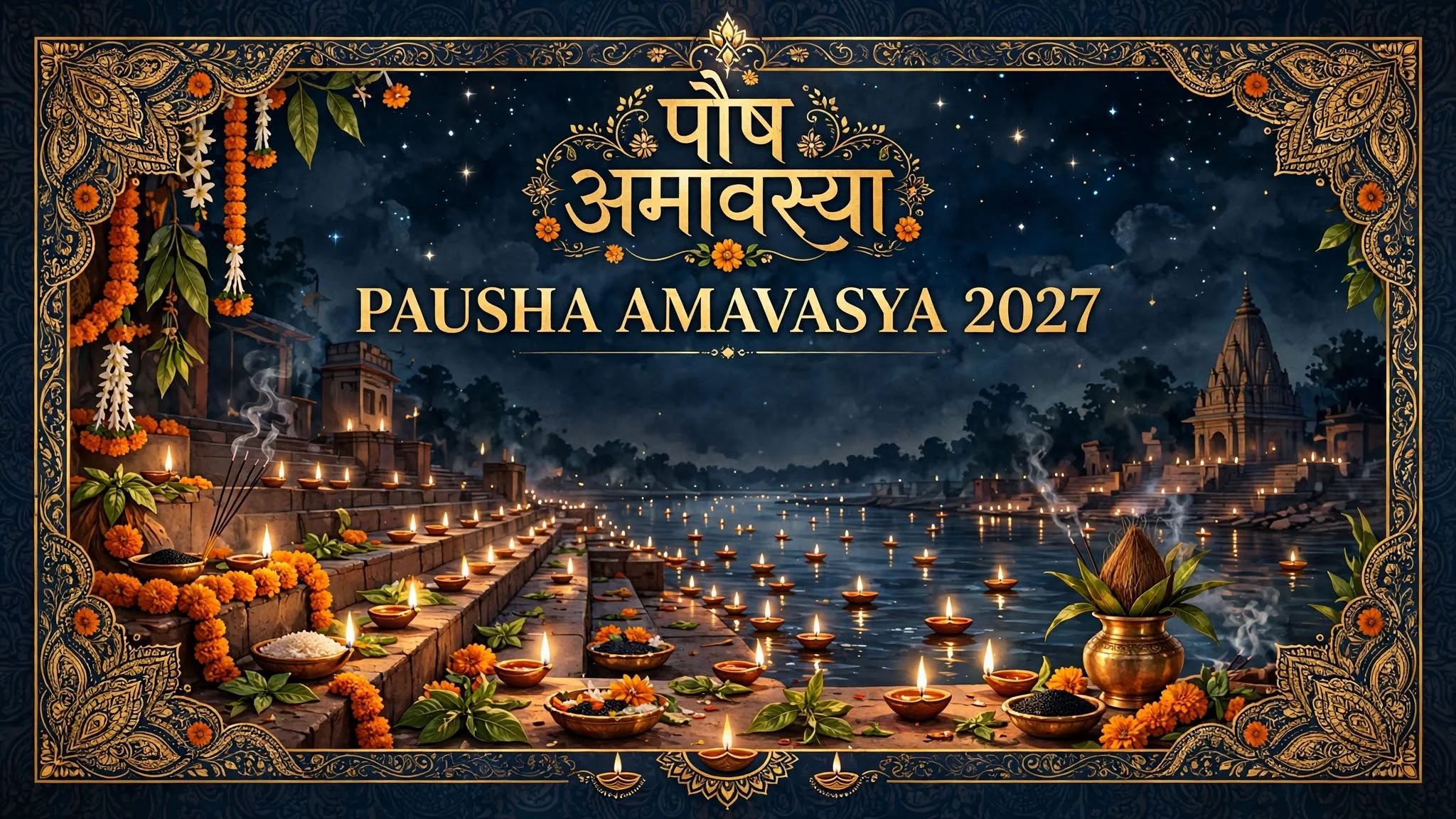
Pausha Amavasya
Pausha Amavasya is an important Hindu observance dedicated to remembering and honouring departed ancestors, known as Pitru. It falls on the Amavasya Tithi, or new-moon day, of the Hindu lunar month of Pausha. Devotees observe this day through sacred bathing, Pitru Tarpan, Shraddha, prayers, charity and acts of service. It is regarded as an appropriate occasion to express gratitude towards ancestors and seek their blessings for the wellbeing of the family.
View Festival Guide

Saturday, Feb 6, 2027
Mauni Amavas
Mauni Amavas, also known as Mauni Amavasya or Magha Amavasya, is one of the most sacred and spiritually charged new moon observances in the Hindu liturgical calendar, falling during the auspicious month of Magha (January–February).
View Festival Guide

Sunday, Feb 7, 2027
Ishti
Ishti is a foundational Vedic ritual observance appearing prominently in Hindu Panchangs on the Pratipada tithi (the first lunar day) following either Amavasya (new moon) or Purnima (full moon), marking the prescribed performance day for the fortnightly Vedic Darsha-Purnamasa sacrifices.
View Festival Guide
Sunday, Feb 7, 2027
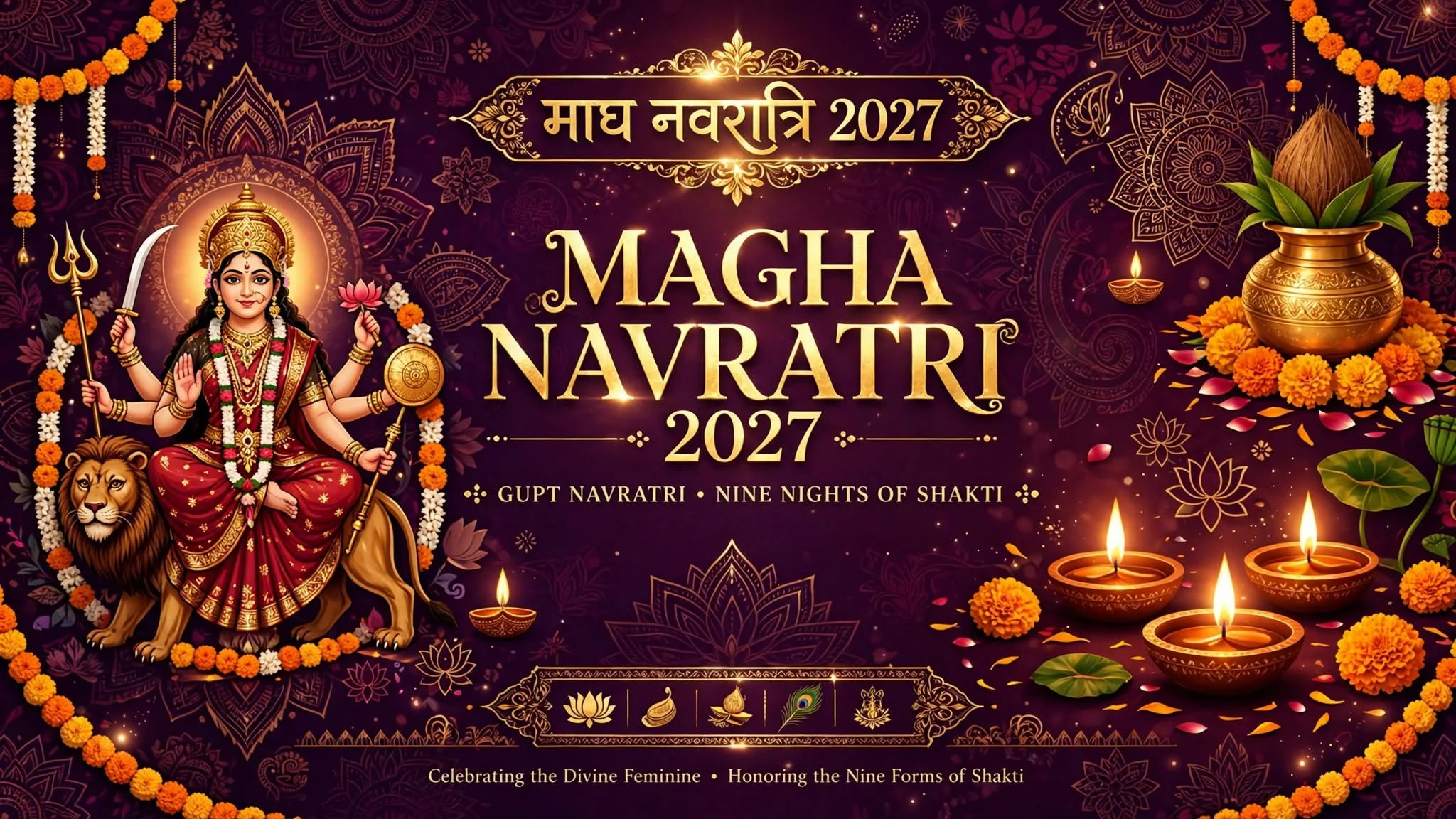
Magha Navratri
Magha Navratri, widely revered as Magha Gupt Navratri, is a sacred nine-night Shakta festival observed during the Shukla Paksha (waxing fortnight) of the Hindu lunar month of Magha (January–February), spanning from Pratipada to Navami tithi.
View Festival Guide

Monday, Feb 8, 2027
Chandra Darshana
Chandra Darshana is a revered monthly Hindu observance dedicated to sighting, venerating, and offering oblation to the delicate waxing crescent Moon immediately following the new moon (Amavasya), typically occurring during the twilight of Shukla Paksha Pratipada or Dwitiya.
View Festival Guide
Thursday, Feb 11, 2027
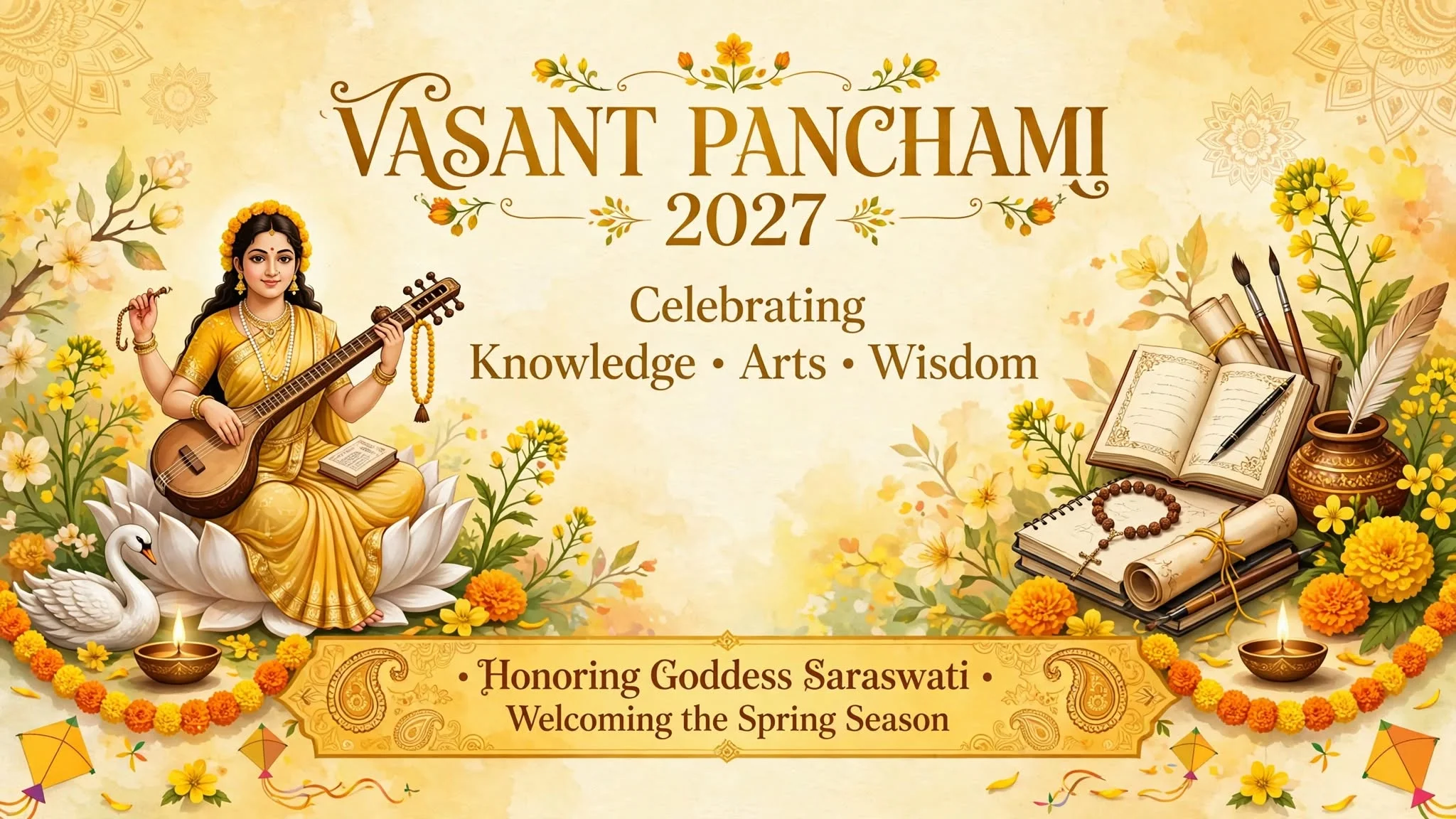
Vasant Panchami
Vasant Panchami, also celebrated as Basant Panchami or Sri Panchami, is one of the most radiant and culturally cherished festivals in Hinduism, observed on the Panchami tithi (fifth lunar day) of Shukla Paksha in the month of Magha (January–February).
View Festival Guide
Saturday, Feb 13, 2027
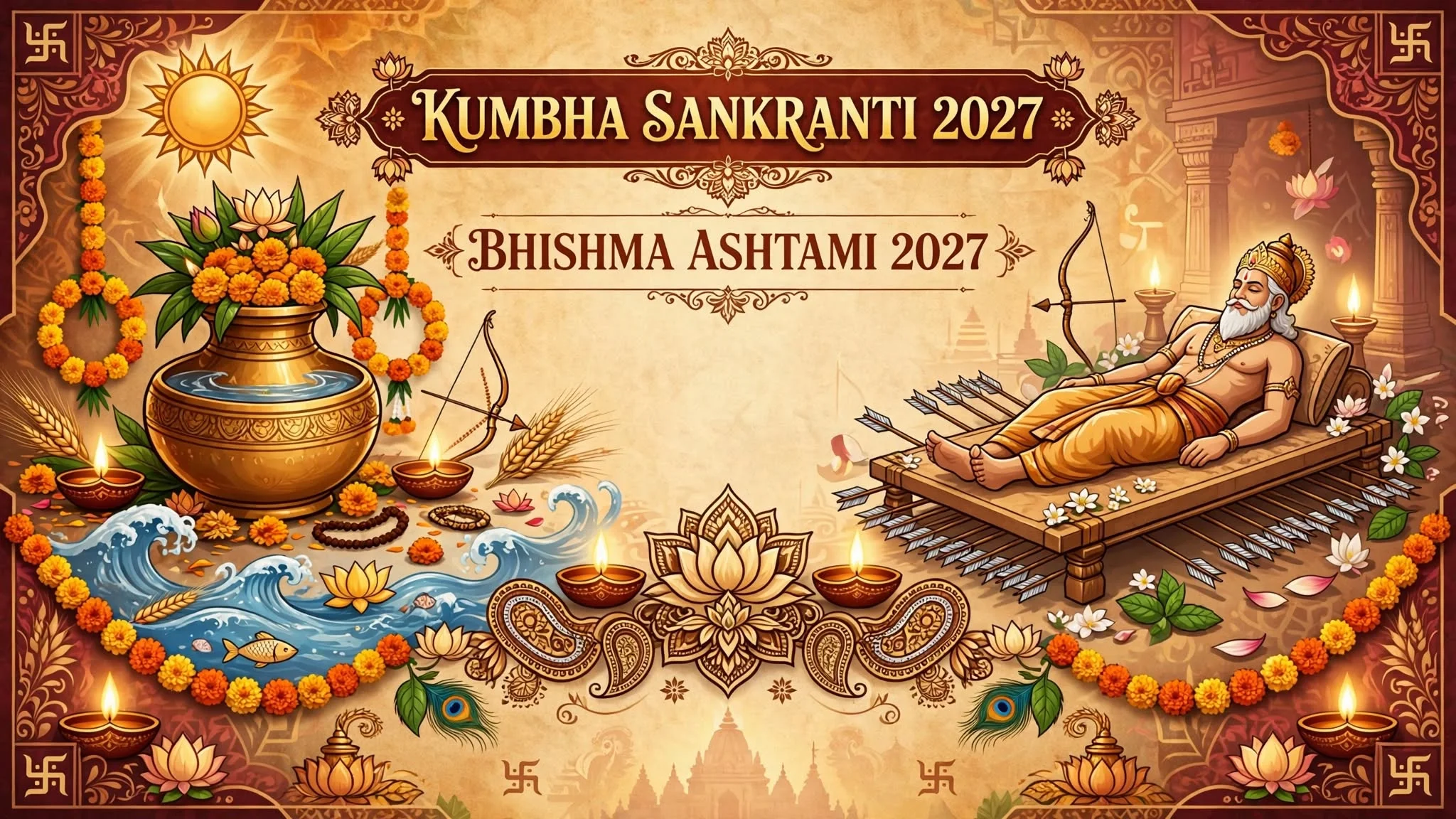
Kumbha Sankranti
Kumbha Sankranti is a major astronomical and religious transit festival in the Vedic solar calendar, marking the precise moment when Lord Surya (the Sun God) transits from the sign of Makara (Capricorn) into Kumbha Rashi (Aquarius), the eleventh sign of the zodiac ruled by Shani Dev (Saturn).
View Festival Guide