Vasant Panchami, also celebrated as Basant Panchami or Sri Panchami, is one of the most radiant and culturally cherished festivals in Hinduism, observed on the Panchami tithi (fifth lunar day) of Shukla Paksha in the month of Magha (January–February).
Vasant Panchami 2027: Date, Puja Timings, Rituals & Stories
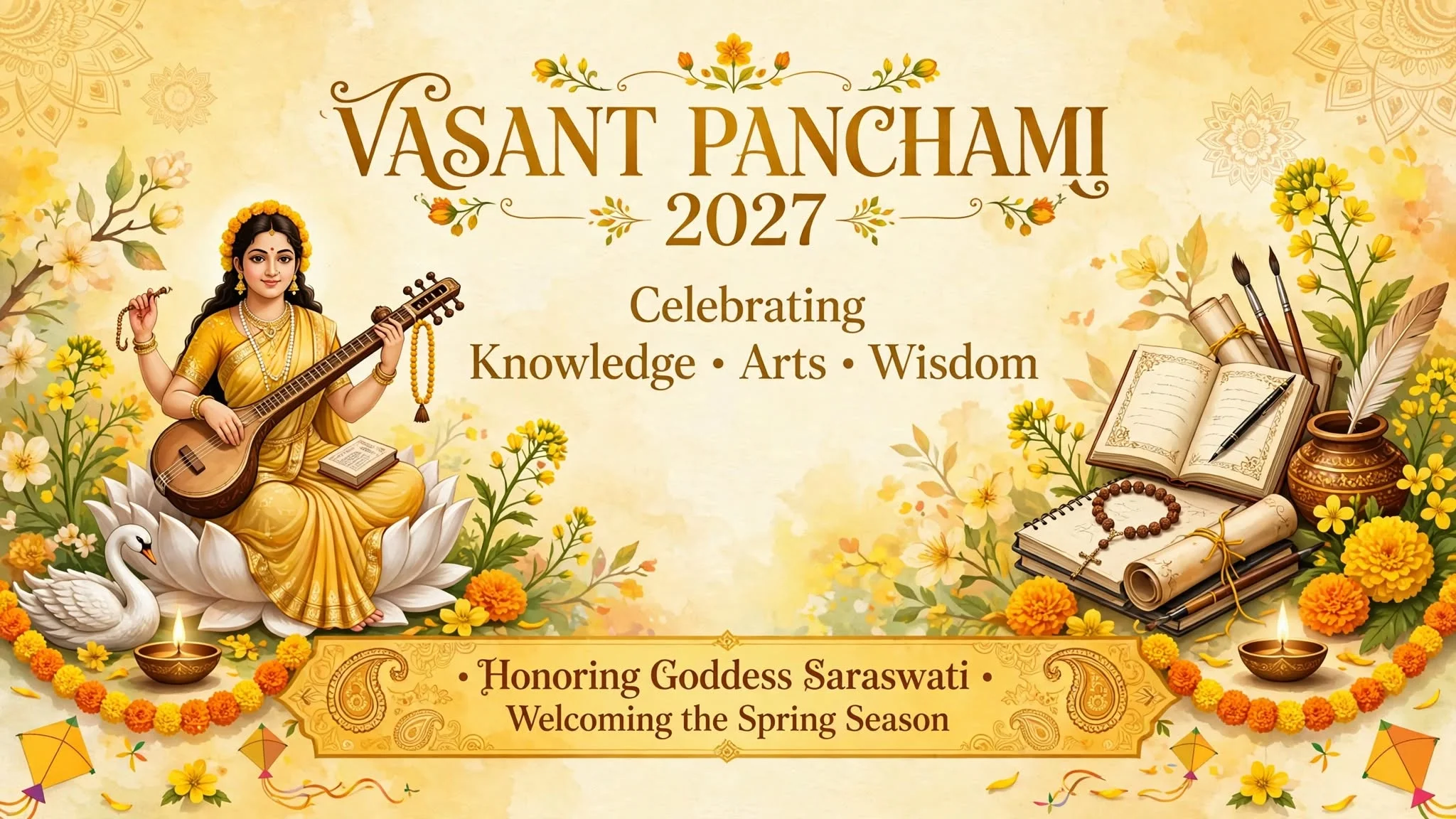
Vasant Panchami Timings & Panchang
Important festival dates and auspicious timings
Usha Arghya (Sunrise)
07:03 am
Sandhya Arghya (Sunset)
06:08 pm
Start Date
Thursday, 11 Feb 2027
Puja Muhurat
03:04 am – 03:18 am
Vasant Panchami
The festival marks the preliminary arrival of spring (Vasant Ritu)—celebrated as 'Ritu Raja' (the King of Seasons)—heralded by blossoming yellow mustard fields, fresh agricultural sprouts, and the renewal of life and joy following the harsh cold of winter.
Supreme among the religious observances of the day is the worship of Goddess Saraswati, the divine embodiment of learning, wisdom, speech (Vaak), music, arts, and creative intellect, whose divine appearance (Saraswati Avataran Divas) is commemorated on this tithi according to the Brahma Vaivarta Purana.
Characterized by the auspicious color yellow (Basanti)—symbolizing the warmth of the Sun, ripe mustard blooms, intellectual radiance, and creative awakening—Vasant Panchami is celebrated with Vidyarambham (initiating young children into writing their first alphabet), musical concerts, decorating books and musical instruments, and offering yellow saffron sweets.
Why is Vasant Panchami Celebrated?
Vasant Panchami is celebrated to commemorate the cosmic descent of Goddess Saraswati, who manifested from the tongue of Lord Brahma to endow a silent, inanimate universe with the divine gifts of speech, music, artistic expression, and intellectual consciousness.
It also marks the spiritual awakening of nature in spring, venerating the celestial deities Kamadeva (god of love) and Rati, invoking fertility, harmony, and creative beauty across all spheres of existence.
- To venerate Goddess Saraswati as the fountainhead of all knowledge, wisdom, literature, fine arts, and speech.
- To conduct Vidyarambham (Akshar Abhyasam), introducing young children to reading and writing their very first letters.
- To celebrate the onset of Vasant Ritu (spring), the king of seasons, bringing agricultural renewal and pleasant weather.
- To bless books, sacred scriptures, pens, and musical instruments by placing them reverently at the feet of the Divine Mother.
- To celebrate the color yellow (Basanti) through clothing, festive foods (kesariya bhat, saffron halwa), and yellow floral offerings.
Scriptural Foundations and Sacred Lore of Vasant Panchami
The Cosmic Manifestation of Goddess Saraswati
According to the Brahma Vaivarta Purana and the Matsya Purana, when Lord Brahma completed creating the physical universe—the earth, oceans, flora, and fauna—He felt a deep sense of incompleteness. The universe was cloaked in heavy, lifeless silence; humans walked like phantoms, devoid of speech, melody, and expressive consciousness.
Troubled by the desolate silence, Lord Brahma took pure water from His kamandalu, sprinkled it into the cosmos, and meditated intensely upon Lord Vishnu. Suddenly, the atmospheric sky trembled, and from the celestial ether emerged a glorious goddess possessing divine radiance.
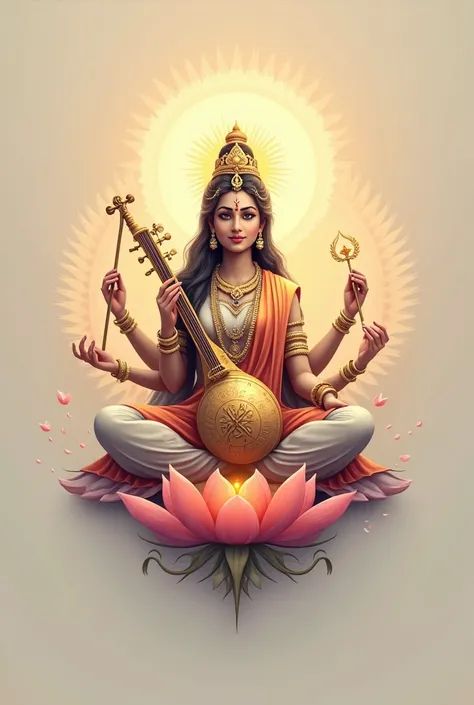
She had four hands: in two she held the sacred veena, playing enchanting celestial melodies; in her third hand she held the sacred Vedas symbolizing transcendental knowledge; and in her fourth she held a white crystal rosary (Sphatika Mala) symbolizing meditation. She was seated upon a pristine white swan (Hamsa). As soon as She struck the strings of Her veena, speech blossomed in human throats, winds began to whistle melodies, rivers sang, and creation was crowned with expressive consciousness. Overjoyed, Lord Brahma proclaimed Her Saraswati, declaring Magha Shukla Panchami as Her eternal feast of worship.
The Awakening of Lord Shiva by Kamadeva
Another famous narrative in the Shiva Purana connects Vasant Panchami to the legend of Kamadeva. When the demon Tarakasura terrorized the three realms, a prophecy declared that only a son born of Lord Shiva and Goddess Parvati could defeat him. However, Lord Shiva was absorbed in deep, unshakeable yogic samadhi following the demise of Sati.
On the fifth day of the waxing moon of Magha, the Devas dispatched Kamadeva (the god of desire) and his consort Rati to Mount Kailash. Kamadeva ushered in premature, intoxicating spring blossoms and discharged an arrow of floral desire at Mahadeva.
Although Lord Shiva opened His fiery third eye in initial anger, incinerating Kamadeva to ashes, the dormant divine impulse of love was awakened. Shiva recognized the boundless devotion of Devi Parvati and consented to marry Her, leading to the birth of Lord Kartikeya and the salvation of the cosmos. Since that day, Vasant Panchami has commemorated the triumph of spiritual love and seasonal beauty.
Philosophical, Aesthetic, and Intellectual Foundations
The Symbolism of Goddess Saraswati's Iconography
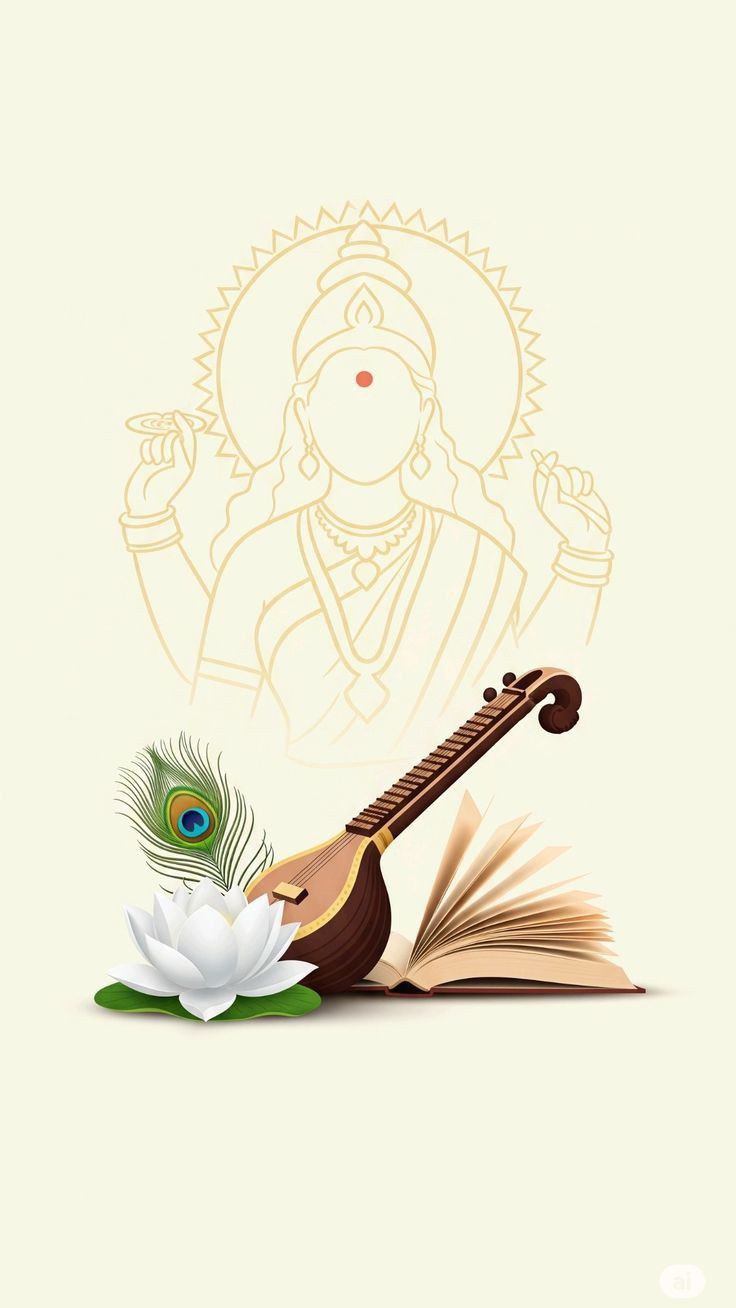
Every feature of Goddess Saraswati's traditional icon conveys profound philosophical meaning: Her pure white attire (Shvetambara) signifies pure, unblemished knowledge free from sensory bias and ego; the Veena represents tuning the complex chords of the human mind and emotions into cosmic harmony.
The sacred palm-leaf scriptures represent timeless intellectual inquiry; the Sphatika Mala signifies spiritual contemplation; and Her mount, the Swan (Hamsa), possesses the legendary ability (Neera-Ksheera Viveka) to separate milk from water, symbolizing intellectual discrimination—the capacity to extract spiritual truth from mundane illusion.
The Mystical Vibrations of the Color Yellow (Basanti)
Yellow represents the golden radiance of the morning Sun (Surya), ripe mustard blooms in fertile soil, and the activation of the solar plexus (Manipura Chakra), which governs intellect, vitality, and willpower. Yellow evokes optimism, wisdom, mental agility, and the dissolution of spiritual darkness.
Vidyarambham: The Sanctity of Literacy and Speech
- Honoring books, manuscripts, and artistic tools affirms that knowledge (Vidya) is the highest wealth (Sarva Dhanat Pradhanat).
- Conducting Akshar Abhyasam initiates the young mind into culture, dharma, and the creative potential of speech.
- Cultivating artistic, musical, and literary refinement elevates human life from animal existence to spiritual elegance.
Practical Observance, Educational Rituals, and Community Festivities
Morning Preparations and The Basanti Attire
The morning of Vasant Panchami begins early during Brahma Muhurta. Devotees take a purificatory bath, traditionally applying a paste of raw turmeric and neem to the skin to celebrate seasonal renewal. Family members dress in vibrant shades of yellow, saffron, or white.
Homes, schools, and temples are decorated with yellow marigold flower garlands, and beautiful rangolis depicting swans, veenas, and lotus flowers are drawn at domestic entrances.
Altar Installation and Blessing of Learning Tools
An idol or consecrated image of Goddess Saraswati is installed on a wooden platform draped with yellow fabric. Students, scholars, and musicians gather their textbooks, notebooks, pens, paintbrushes, and musical instruments (sitars, harmoniums, violins, veenas), placing them reverently at the feet of the Mother.
No reading, writing, or playing of instruments takes place until the ceremonial puja is fully completed, demonstrating supreme surrender to the goddess of wisdom.
Vidyarambham, Festive Cooking, and Community Joy
Parents initiate toddlers into the sacred alphabet by guiding the child's index finger to write the sacred syllable 'Om' or 'Sri' into a silver tray filled with raw grains of rice or sand.
In kitchens across India, traditional yellow delicacies are prepared: sweet saffron-infused rice (Kesariya Bhat), sooji halwa colored with real saffron, yellow khichdi, and boondi laddus. The prasad is offered to Goddess Saraswati, distributed generously to neighbors and students, and eaten with festive enthusiasm.
Vasant Panchami Puja Vidhi (Step by Step)
- 1
Pratah Snana and Shuddhikaran (Morning Bath and Purification)
Wake before dawn during Brahma Muhurta. Apply an auspicious paste of turmeric and sesame oil to your skin, take a refreshing purificatory bath infused with Gangajal, and dress in clean traditional yellow or white garments. Sprinkle Gangajal across the altar space.
- 2
Altar Preparation and Yellow Draping
Place a clean wooden chauki (platform) in the East or Northeast direction. Drape it with a fresh unstitched yellow cloth. Install a murti or consecrated portrait of Goddess Saraswati alongside Lord Ganesha. Light a pure cow ghee lamp on the right side and fragrant incense on the left.
- 3
Sankalpa (Solemn Vow of Learning and Wisdom)
Sit comfortably facing East on a clean asana. Take water, unbroken rice (Akshata), and a yellow marigold flower in your right hand. Recite your name, gotra, the day's tithi (Magha Shukla Panchami), and take a solemn vow (Sankalpa) to worship Goddess Saraswati for intellectual clarity, speech eloquence, and academic success.
- 4
Lord Ganesha Puja (Prathama Pujya)
Invoke Lord Ganesha first to eliminate all impediments. Offer yellow sandalwood paste, red flowers, durva grass, and a modak or laddu while chanting 'Om Gam Ganapataye Namah'.
Vasant Panchami Puja Samagri List
Altar and Deity Installation Essentials
Specific materials required to establish and beautify the sacred platform for Goddess Saraswati on Vasant Panchami.
- Consecrated idol or artistic portrait of Goddess Saraswati
- Idol or image of Lord Ganesha
- Fresh unstitched bright yellow cloth for the wooden chauki
- Yellow ceremonial chunri or saree for the Goddess
- Pure Gangajal and copper lota with fresh water
- Raw unboiled cow milk, fresh curd, pure desi ghee, honey, and jaggery (Panchamrit)
Sacred Embellishments and Fragrances
Aesthetic items, sandalwood, and fresh flowers dear to the goddess of arts and wisdom.
- Yellow sandalwood paste (Hari Chandan) and white sandalwood (Shweta Chandan)
- Kumkum and unbroken white rice grains (Akshata) mixed with turmeric
- Fresh yellow marigold garlands (Genda phool) and loose blossoms
- White lotus blossoms, white jasmine (Mogra), and blooming mustard flowers (Sarson ke phool)
- Pure natural sandalwood or rose attar (perfume)
Instruments of Learning and Vidyarambham Items
- Textbooks, sacred scriptures (Gita, Ramayana), and study notebooks
Mantras and Prayers for Vasant Panchami
Vasant Panchami Vrat Rules and Fasting Guidelines
Dietary Regulations and Basanti Observance
On Vasant Panchami, practitioners adhere to a joyful, sattvic lifestyle celebrating purity, seasonal warmth, and knowledge:
- Devotees fast until the conclusion of the midday Saraswati Puja, partaking of prasad thereafter.
- Strictly avoid all non-vegetarian foods, eggs, alcohol, tobacco, onions, garlic, and stale foods.
- Incorporate yellow and saffron ingredients into festive meals (such as saffron rice, turmeric khichdi, and besan laddus).
- Refrain from consuming common table salt before the midday puja concludes; rock salt (sendha namak) may be used.
Rules Regarding Books, Instruments, and Study
- Do not touch books with your feet; if a book is accidentally touched by foot, immediately touch it with your hand and bring it to your forehead seeking forgiveness.
- Refrain from reading, writing, or playing instruments while they are consecrated at the altar until the final aarti is performed.
- Avoid speaking lies, using foul language, screaming, or engaging in deceitful speech, which disrespects Goddess Saraswati (the deity of speech).
- Maintain an atmosphere of gentleness, study, classical music, and spiritual reading throughout the day.
Parana and Vrata Completion
The fast is completed following the Pushpanjali floral offering and Karpura Aarti. Devotees partake of the sacred saffron kheer, jujube fruit (Ber), and sweet rice prasad alongside family members, after which students gently pick up their consecrated pens and books to write auspicious invocations.
Dos and Don'ts of Vasant Panchami
Good Practices (Do's)
- Wake early during Brahma Muhurta, bathe, and dress in auspicious yellow or white clothes.
- Place your textbooks, writing pens, and musical instruments at the feet of Goddess Saraswati for blessings.
- Conduct Vidyarambham (Akshar Abhyasam) for young children by guiding them to write sacred letters.
- Chant the Saraswati Vandana ('Ya Kundendu...') and the Saraswati Bija Mantra ('Om Aim Saraswatyai Namah').
- Prepare and share yellow prasad such as Kesariya Bhat, sweet halwa, or boondi laddus.
Vasant Panchami Across Regions
| Region | Local Name |
|---|---|
| West Bengal, Odisha, and Assam | Saraswati Puja & Sri Panchami |
| Punjab and Haryana | Basant Panchami Kite Festival |
| Bihar and Uttar Pradesh | Basant Panchami & Saraswati Pujan |
| South India (Tamil Nadu, Karnataka, Andhra Pradesh) | Sri Panchami & Vidya Puja |
Vasant Panchami FAQs
Why is Goddess Saraswati worshiped on Vasant Panchami?
According to the Brahma Vaivarta Purana, Goddess Saraswati appeared from Lord Brahma's speech on Magha Shukla Panchami to endow creation with sound, language, music, and wisdom, making this day Her sacred advent day (Avataran Divas).
What is the spiritual significance of the color yellow on Vasant Panchami?
Yellow (Basanti) symbolizes the radiant warmth of the Sun, the blooming of spring mustard fields, intellectual energy, and optimism. It activates the solar plexus chakra and represents the flowering of knowledge and life.
What is Vidyarambham or Akshar Abhyasam?
Vidyarambham is the sacred rite of initiating a young child into the world of letters. The child's finger is guided to trace sacred syllables like 'Om' or 'Sri' into a plate of raw rice, invoking Goddess Saraswati's blessings for lifelong learning.
Upcoming Festivals
View All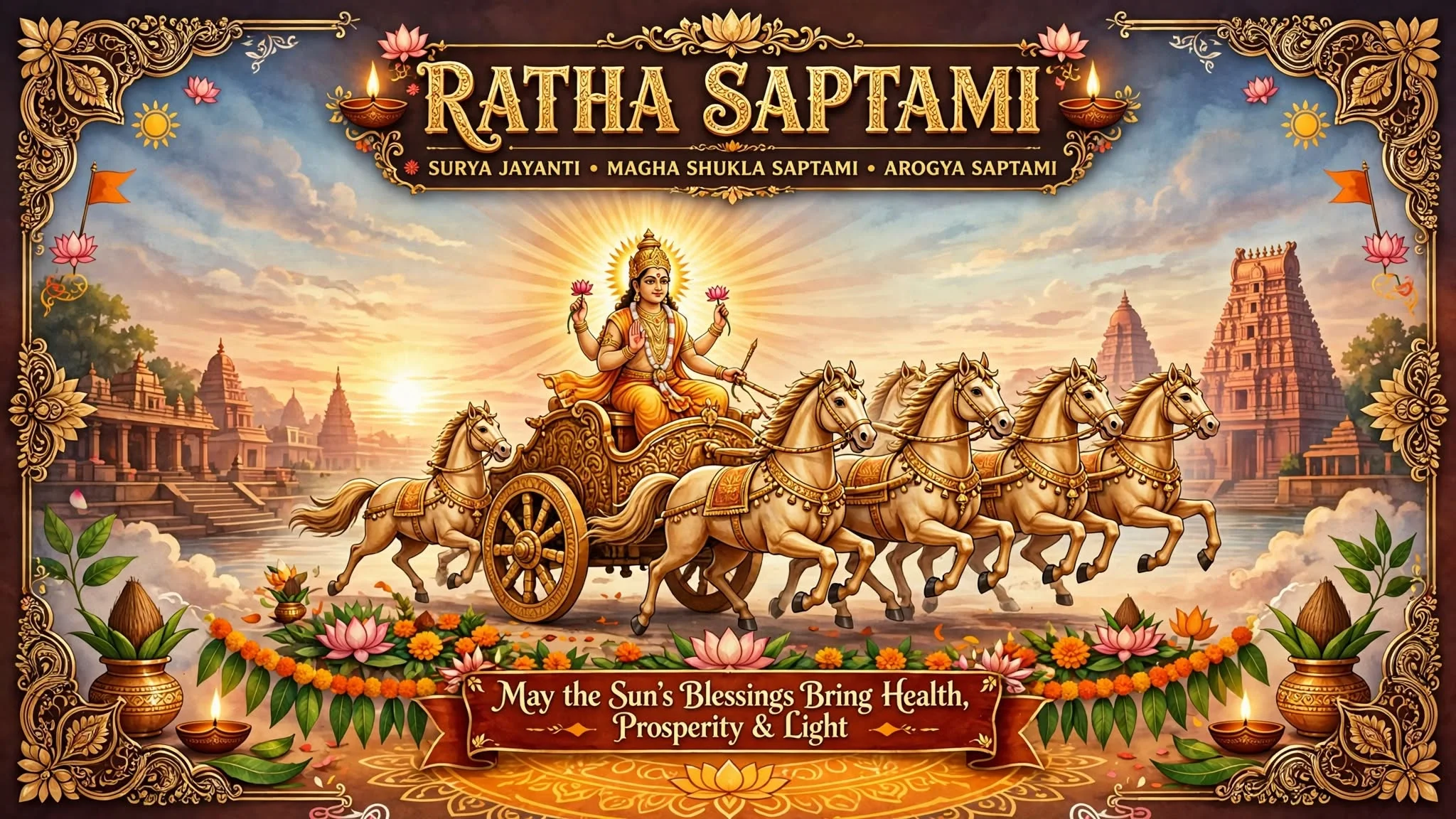
Saturday, Feb 13, 2027
Ratha Saptami (Arogya Saptami / Surya Jayanti)
Ratha Saptami, also celebrated as Surya Jayanti, Magha Saptami, or Achala Saptami, is an exalted Hindu solar festival observed on the Saptami tithi (seventh lunar day) of Shukla Paksha in the month of Magha (January–February).
View Festival Guide
Saturday, Feb 13, 2027
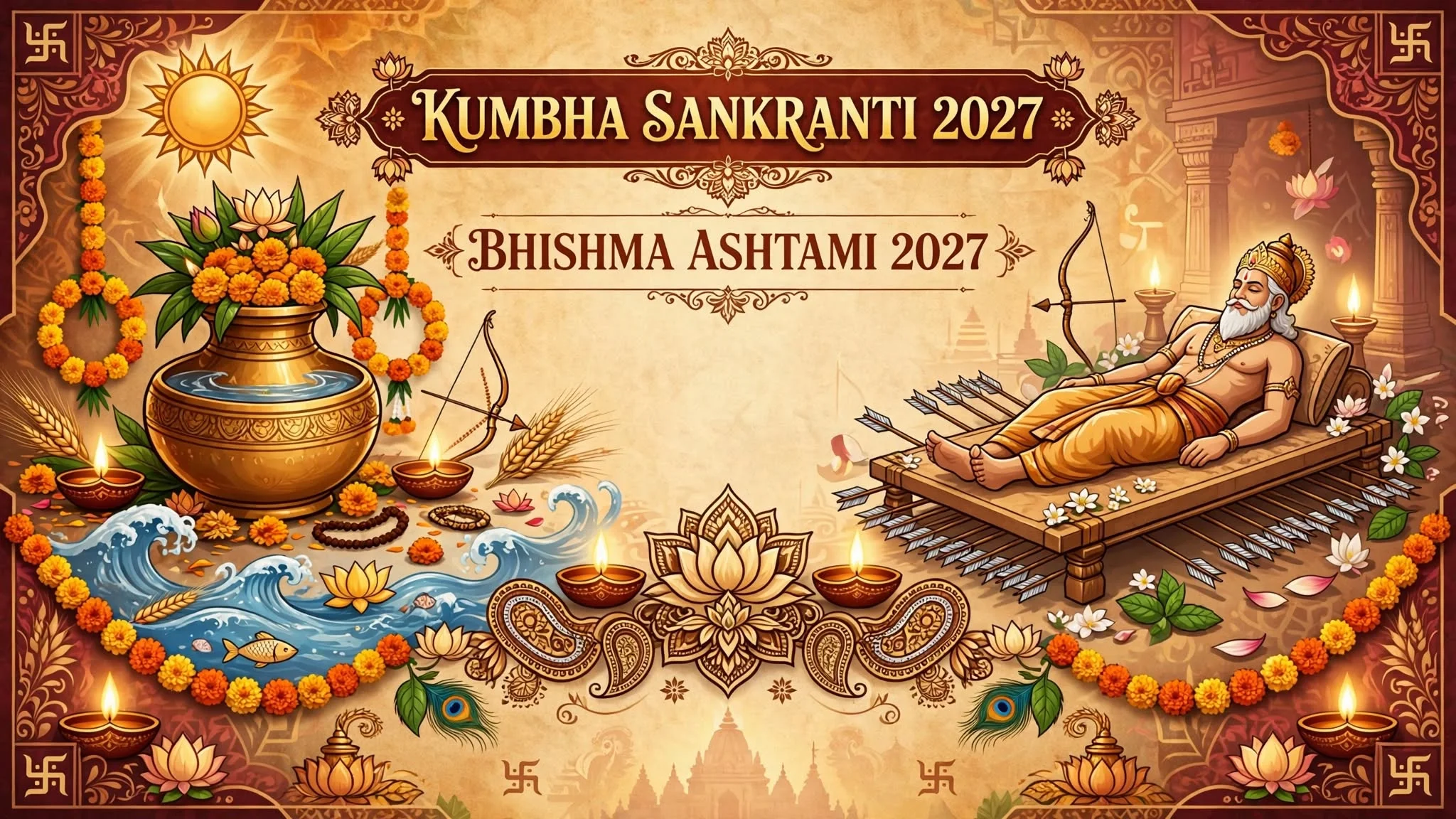
Kumbha Sankranti
Kumbha Sankranti is a major astronomical and religious transit festival in the Vedic solar calendar, marking the precise moment when Lord Surya (the Sun God) transits from the sign of Makara (Capricorn) into Kumbha Rashi (Aquarius), the eleventh sign of the zodiac ruled by Shani Dev (Saturn).
View Festival Guide
Sunday, Feb 14, 2027
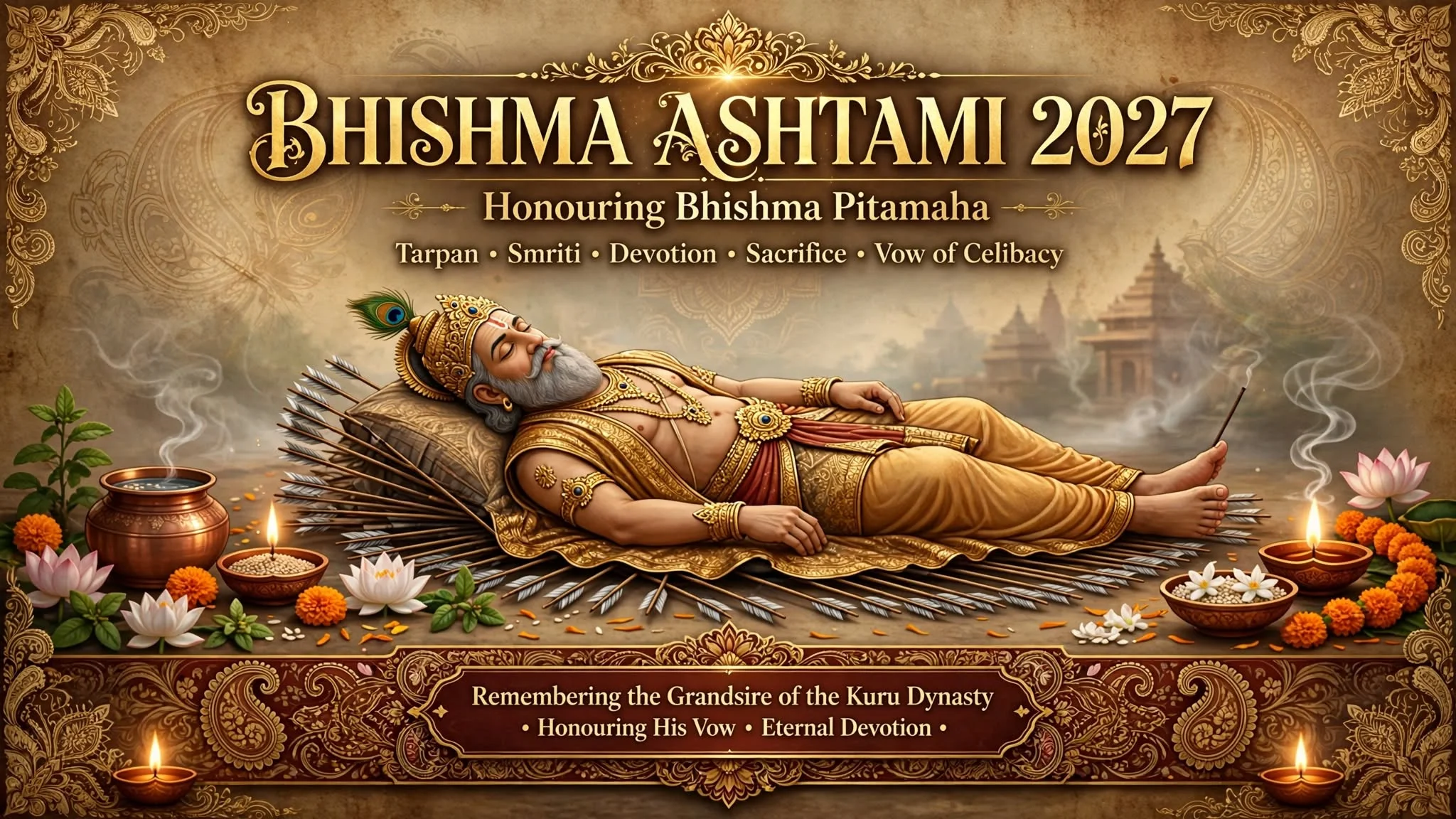
Bhishma Ashtami
Bhishma Ashtami is a deeply solemn and historically revered Hindu observance occurring on the Ashtami tithi (eighth lunar day) of Shukla Paksha in the month of Magha (January–February), commemorating the voluntary departure (Maha-Samadhi / Ichha-Mrityu) of Pitamaha Bhishma, the venerable patriarch of the Mahabharata.
View Festival Guide
Wednesday, Feb 17, 2027
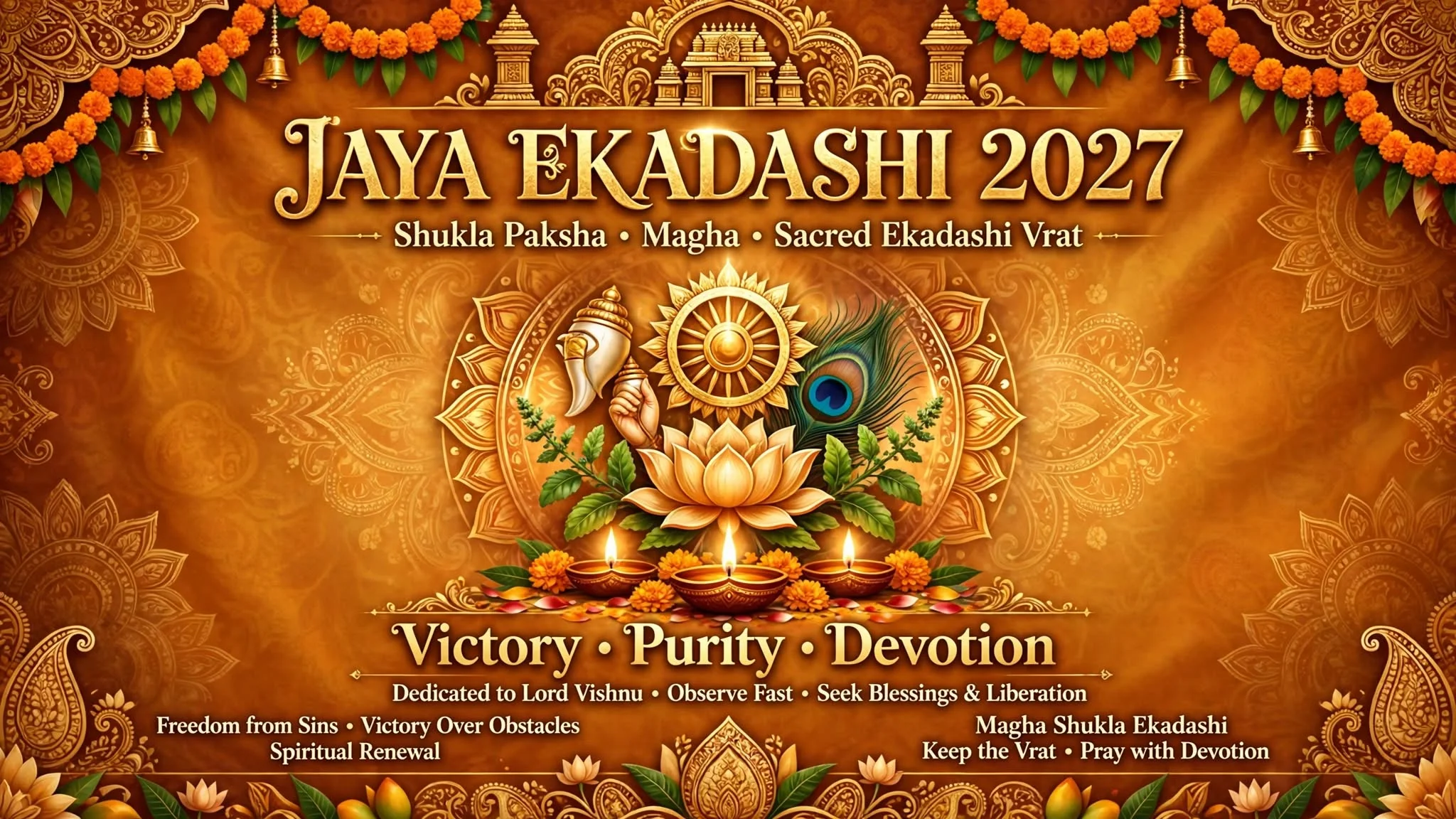
Jaya Ekadashi
Jaya Ekadashi, also revered as Bhaimi Ekadashi, is a celebrated Vaishnava fasting festival observed on the Ekadashi tithi (eleventh lunar day) of Shukla Paksha in the month of Magha (January–February).
View Festival Guide
Thursday, Feb 18, 2027
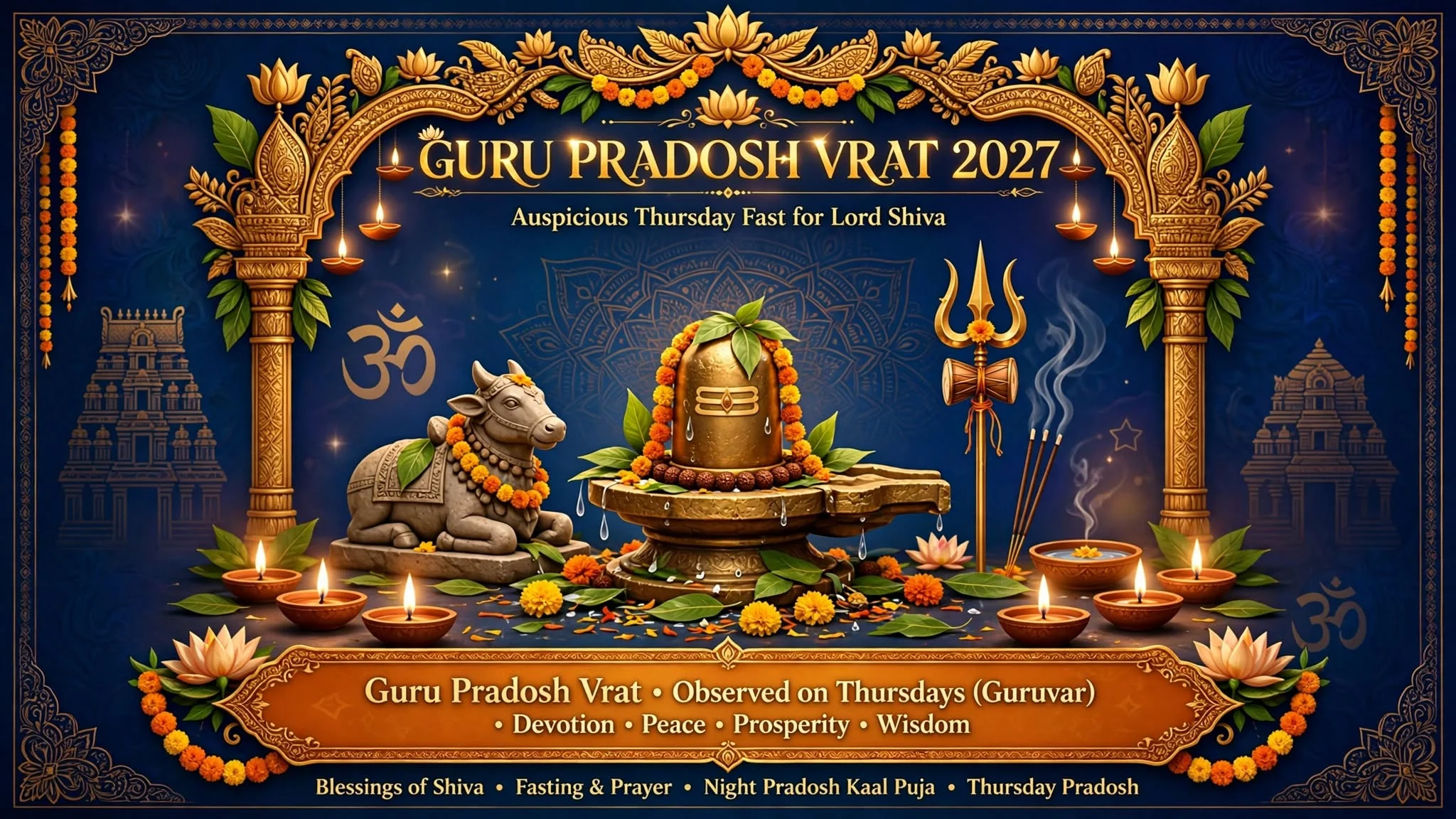
Guru Pradosh Vrat
Guru Pradosh Vrat, also known as Guruvara Pradosham or Brihaspati Pradosham, is a sacred bimonthly Hindu fasting observance occurring when the Trayodashi tithi (thirteenth lunar day) coincides with a Thursday (Guruvara) during the twilight Pradosha Kaal period.
View Festival Guide

Saturday, Feb 20, 2027
Magha Purnima
Magha Purnima, widely celebrated as Maghi Purnima or Maha Maghi, is the culminating and most spiritually radiant full moon festival in the Hindu liturgical calendar, falling in the holy month of Magha (January–February).
View Festival Guide

Sunday, Feb 21, 2027
Ishti
Ishti is a foundational Vedic ritual observance appearing prominently in Hindu Panchangs on the Pratipada tithi (the first lunar day) following either Amavasya (new moon) or Purnima (full moon), marking the prescribed performance day for the fortnightly Vedic Darsha-Purnamasa sacrifices.
View Festival Guide
Sunday, Feb 21, 2027
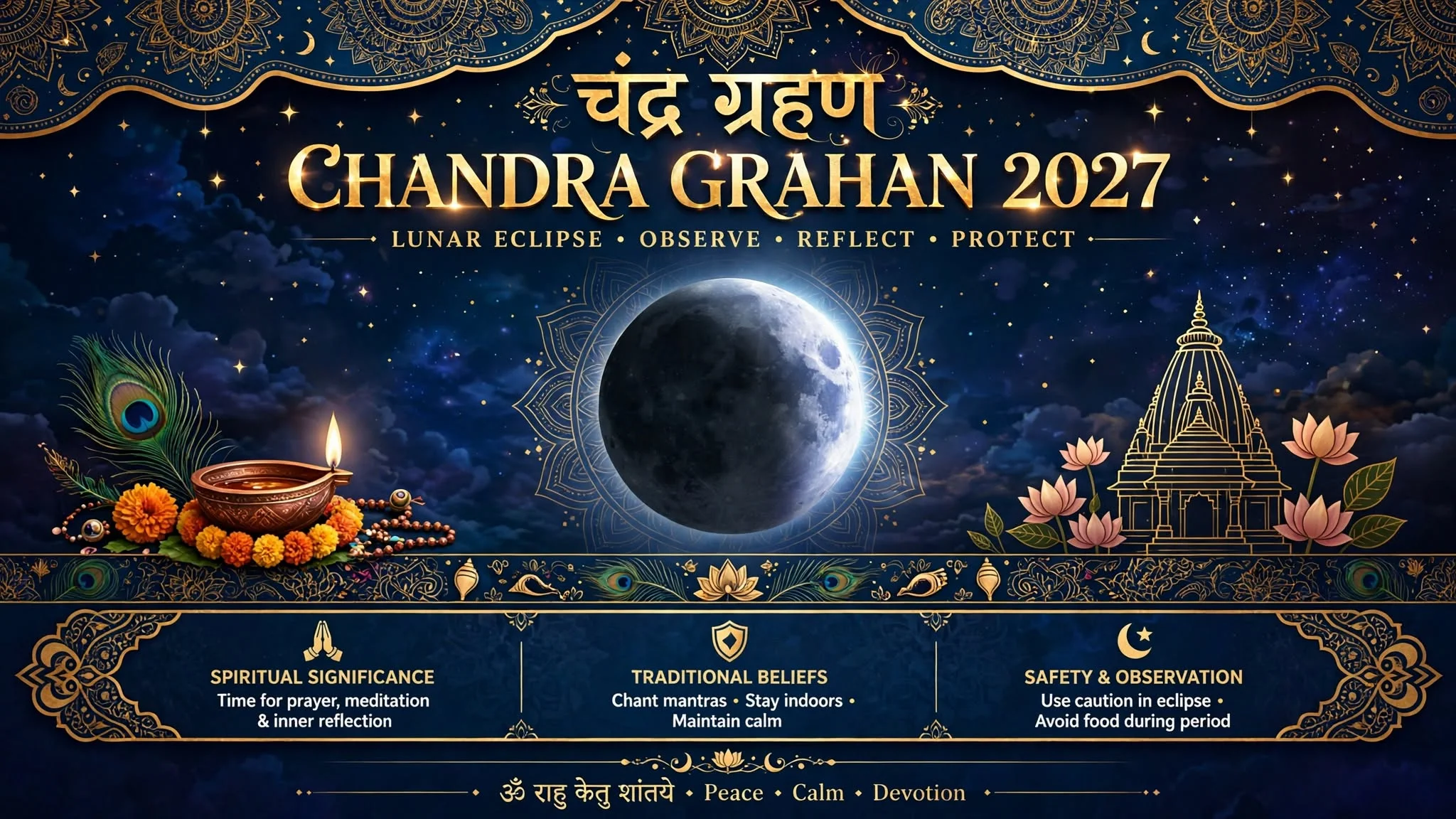
Chandra Grahan
Chandra Grahan (Lunar Eclipse) is a sacred cosmic and spiritual juncture (Parva Kaal) in Sanatana Dharma occurring exclusively on Purnima (the full moon day) when the Earth moves directly between the Sun and the Moon, casting its conical shadow across the lunar orb. In Vedic philosophy and Jyotisha, the Moon presides over the mind, subconscious emotions, and water elements (Chandrama Manaso Jatah - Rigveda Purusha Sukta). The temporary obscuration of the Moon by the shadowy nodes Rahu or Ketu induces profound subtle energetic shifts across terrestrial nature and human consciousness.
View Festival Guide
Wallpapers
442

405
463
404
396

383
344

360
454

323