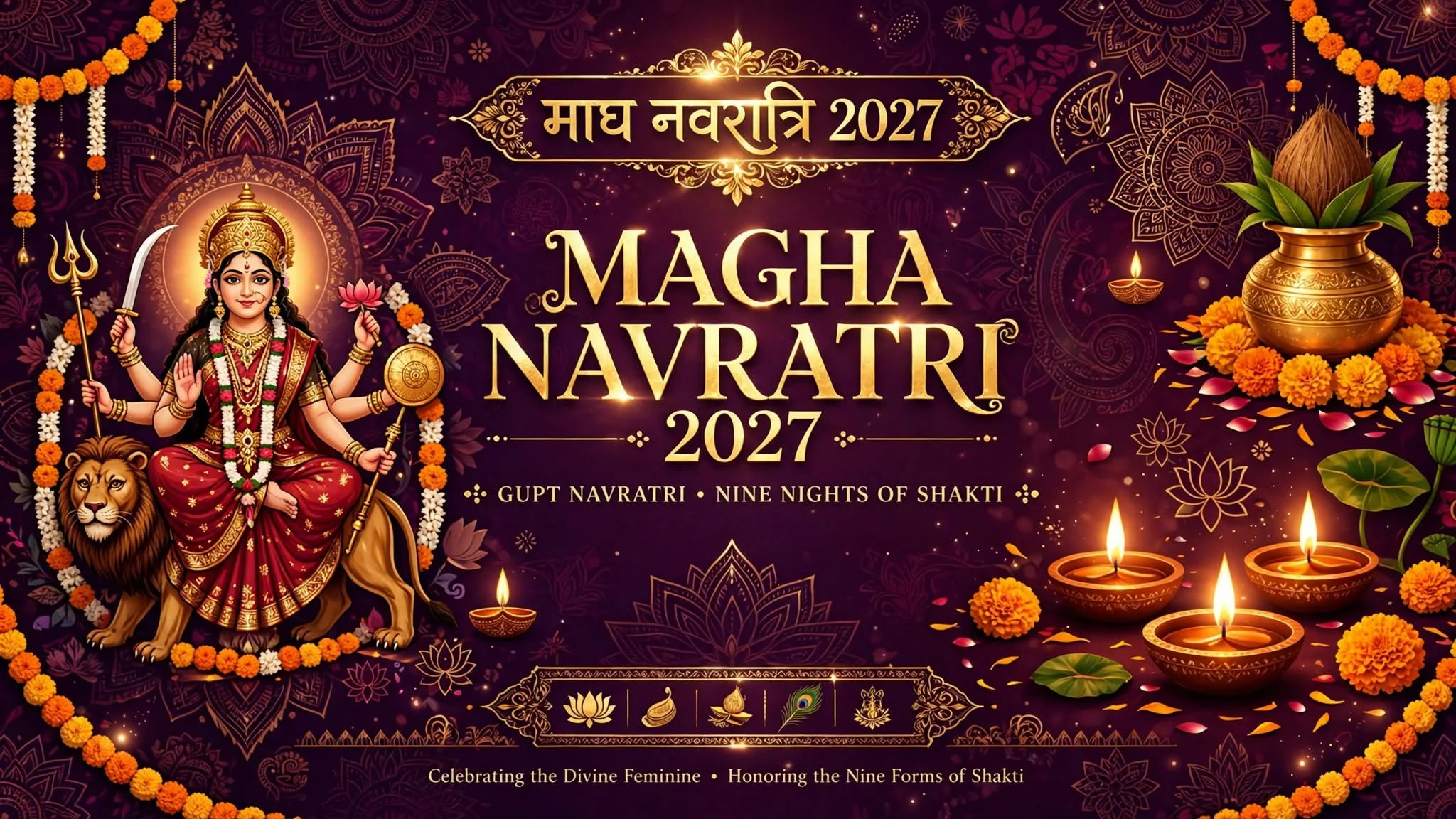
Magha Navratri, widely revered as Magha Gupt Navratri, is a sacred nine-night Shakta festival observed during the Shukla Paksha (waxing fortnight) of the Hindu lunar month of Magha (January–February), spanning from Pratipada to Navami tithi.
Magha Navratri 2027: Date, Puja Timings, Rituals & Stories
Magha Navratri Timings & Panchang
Important festival dates and auspicious timings
Usha Arghya (Sunrise)
07:06 am
Sandhya Arghya (Sunset)
06:05 pm
Start Date
Sunday, 7 Feb 2027
Puja Muhurat
09:26 pm – 11:27 pm
Magha Navratri
Unlike the prominent, publicly celebrated Sharad and Chaitra Navratris, Magha Navratri is classified in the Tantric and Puranic traditions as a 'Gupta' (hidden, esoteric, or secretive) Navratri, intended primarily for intense spiritual seekers, Tantric practitioners, sadhakas, and devout householders seeking inner transformation.
The nine sacred nights are dedicated to the worship of Goddess Adishakti in Her manifold manifestations, with particular esoteric emphasis upon the Dasha Mahavidyas—the Ten Great Wisdom Goddesses: Kali, Tara, Tripura Sundari (Shodashi), Bhuvaneshwari, Bhairavi, Chhinnamasta, Dhumavati, Bagalamukhi, Matangi, and Kamala.
Observance centers upon the installation of the sacred Kalash (Ghatasthapana) on Pratipada, the continuous burning of the Akhand Deepa, recitation of the Sri Durga Saptashati (Devi Mahatmya), rigorous fasting, and concludes with Kanya Puja (veneration of young girls) on Ashtami or Navami.
Why is Magha Navratri Celebrated?
Magha Navratri is celebrated to invoke the unmanifest, subtle grace of Goddess Adishakti to eliminate deep-seated karmic obstacles, chronic ailments, negative planetary afflictions, and internal psychological afflictions.
Because it falls during the auspicious northern solar course (Uttarayana) in the sacred month of Magha, spiritual energy channeled through secretive penance, mantra japa, and Havans during this period yields swift and enduring spiritual Siddhis.
- To awaken latent spiritual consciousness and obtain the protective grace of the Dasha Mahavidyas.
- To perform sacred Ghatasthapana and invoke divine maternal presence within the household.
- To recite the 700 verses of the sacred Durga Saptashati (Chandi Path) for family prosperity and protection.
- To overcome intractable legal disputes, enemy malice, debt, and chronic fears through Goddess Bagalamukhi and Kali sadhanas.
- To conclude with Kanya Puja, venerating young girls as the living embodiments of the Divine Mother.
Scriptural Roots and Esoteric Legends of Gupt Navratri
The Four Navratris of the Year in Devi Bhagavata Purana
The Devi Bhagavata Purana and classical Shakta scriptures recognize four distinct Navratris in a calendar year: two Prakat (manifest or public) Navratris in the months of Chaitra (spring) and Ashwina (autumn), and two Gupt (secret or interior) Navratris occurring in Magha (winter) and Ashadha (monsoon).
Scriptures record that Lord Shiva imparted the science of Gupt Navratri to Sage Narada, explaining that while Prakat Navratris emphasize social celebration and external rituals, Gupt Navratris represent the highest mystical sadhana where the devotee's spiritual practice remains private, shielded from external distraction and egoistic display.
The Puranic Narrative of Sage Shringi and the Devotee
A celebrated traditional story recounted in the Shakta Pramoda tells of a distressed woman named Sukarma whose husband was trapped in vices, debts, and severe misfortunes. Desperate for redemption, she approached the revered ascetic Sage Shringi at his ashram.
Recognizing her genuine devotion, Sage Shringi revealed the secret of Magha Gupt Navratri, explaining: 'While the world knows only of the public Navratris, the Gupt Navratri of Magha holds extraordinary potency. Worship the Supreme Mother secretly from Pratipada to Navami with a pure heart, install the sacred Kalash, and maintain single-minded silence regarding your sadhana.'
Sukarma diligently followed the sage's instructions, secretly fasting, lighting the Akhand Jyoti, and offering prayers to Goddess Durga. Pleased by her unshakeable faith and silent penance, the Divine Mother granted her vision, transformed her husband's temperament, cleared their debts, and blessed her home with noble progeny and lasting harmony.
Source: Devi Bhagavata Purana (Skandha 3), Shakta Pramoda, and Mantra Mahodadhi
Philosophical, Tantric, and Mystical Foundations
The Philosophy of Secrecy (Gopaniya Sadhana)
In Shakta philosophy, spiritual energy behaves like a seed: when planted secretly underground in darkness, it germinates into a mighty tree; if unearthed and exposed to public display, it withers. Gupt Navratri emphasizes internalizing spiritual efforts without public exhibition or vanity.
The nine nights correspond to the nine stages of spiritual ascent through the subtle chakras, purifying the practitioner from Muladhara to Sahasrara through intense mantra vibration and sensory restraint.
The Cosmic Matrix of the Dasha Mahavidyas
The Ten Mahavidyas personify the totality of cosmic existence: Kali represents the power of time and cosmic dissolution; Tara represents divine guidance across oceans of suffering; Tripura Sundari represents absolute beauty and transcendental wisdom; Bhuvaneshwari represents cosmic space; Bhairavi represents radiant spiritual fire; Chhinnamasta represents self-transcendence; Dhumavati represents primal stillness; Bagalamukhi represents the paralysis of negative forces; Matangi represents creative arts and speech; and Kamala represents wealth and spiritual liberation.
Worshipping these manifestations during Magha Navratri aligns the devotee's consciousness with universal harmony and divine feminine power.
Spiritual Cleansing and Discipline
- Destruction of the inner enemies of ego (Ahamkara), greed (Lobha), and anger (Krodha).
- Cultivation of mental serenity through the continuous presence of the Akhand Jyoti.
- Attainment of spiritual fortitude, physical detoxification, and divine surrender.
Practical Protocol, Domestic Preparations, and Ritual Timing
Ghatasthapana and Inception on Pratipada
Observance commences on Magha Shukla Pratipada. Devotees rise during Brahma Muhurta, cleanse the entire household, and prepare a sacred wooden altar (Chauki) draped in red cloth in the northeast (Ishanya) corner of the home.
Between sunrise and midday, Ghatasthapana is conducted: a copper or clay pot filled with holy water, mango leaves, and a coconut wrapped in red cloth is installed upon an earthen bed sown with barley seeds (Jau). An Akhand Deepa (uninterrupted lamp of pure cow ghee or sesame oil) is consecrated to burn throughout the nine days.
Daily Scriptural Recitation and Fasting Discipline
Daily rituals encompass morning and evening aartis, offerings of fresh red flowers and sweets, and the systematic recitation of the Sri Durga Saptashati (divided into thirteen chapters over the nine days) or the Navarna Mantra ('Om Aim Hreem Kleem Chamundayai Vicche').
Devotees maintain strict dietary discipline, consuming only single-meal phalahari food (fruits, milk, buckwheat, and rock salt), avoiding non-vegetarian foods, onion, garlic, alcohol, and external distractions.
Kanya Puja and Havan Conclusion (Ashtami / Navami)
On the eighth day (Maha Ashtami) or ninth day (Maha Navami), a ceremonial Havan (fire oblation) is performed with wood of the palash or mango tree, pure ghee, and havan samagri while reciting the 700 verses of Chandi.
Nine young girls (between ages two and ten) representing the nine forms of Durga, alongside one young boy representing Batuk Bhairava, are invited. Devotees wash their feet with warm water, apply red tilak, worship them with flowers, and serve them traditional prasad of puri, chana, and semolina halwa, presenting gifts and seeking their divine blessings.
Magha Navratri Puja Vidhi (Step by Step)
- 1
Brahma Muhurta Jagaran and Shuddhikaran (Dawn Awakening and Cleansing)
Wake before sunrise during Brahma Muhurta. Clean the entire household thoroughly, take a purificatory bath infused with Gangajal, and don clean red or yellow clothes. Clean the worship sanctuary and sprinkle Gangajal on yourself, the altar, and the puja vessels.
- 2
Altar Preparation and Earthen Barley Bed Setup
Place a clean wooden chauki (platform) facing East or North. Drape it with a fresh unstitched red cloth. In a wide earthen bowl, spread clean, unfertilized soil mixed with sand, and sow cleaned barley seeds (Jau) evenly across the soil, lightly sprinkling pure water.
- 3
Ghatasthapana (Kalash Sthapana / Sacred Pot Installation)
Place a copper, brass, or clay Kalash in the center of the barley bed. Fill the Kalash with pure water infused with Gangajal, a betel nut (supari), a silver or copper coin, and a pinch of akshata. Place five or seven fresh mango leaves (Amra Pallava) around the mouth of the vessel. Smear a clean coconut with vermilion (Sindoor), wrap it in red sacred cloth (Moly), and place it firmly over the leaves.
- 4
Akhand Jyoti Prajvalan (Lighting the Eternal Lamp)
Fill a large brass lamp with pure desi cow ghee or sesame oil and insert a sturdy, long cotton wick. Recite the Deepa Mantra ('Deepajyoti Parabrahma...') and light the lamp, resolving in your mind (Sankalpa) to keep the lamp burning continuously and undisturbed throughout all nine nights.
Magha Navratri Puja Samagri List
Kalash Sthapana and Barley Essentials
Specific botanical and sacred materials required for establishing the Ghat (sacred pot) and sowing the symbolic barley bed on Pratipada.
- Copper, brass, or earthen Kalash (urn) with lid
- Clean broad earthen plate or bowl for sowing barley
- Clean soil mixed with sand and untreated barley seeds (Jau)
- Whole unhusked coconut with its tail intact (Jata-yukt Nariyal)
- Five or seven fresh mango leaves (Amra Pallava) or Ashoka leaves
- Red ceremonial cloth (Chunri) and red sacred cotton thread (Kalava / Moly)
- Gangajal, whole betel nut (Supari), and silver or copper coin
Altar Adornment and Shodashopachara Materials
Sacred embellishments, fragrances, and shringar items for worshiping Goddess Durga and the Dasha Mahavidyas.
- Idol or consecrated image of Goddess Durga / Sri Yantra
- Red sandalwood paste (Rakta Chandan), Sindoor, and Kumkum
- Unbroken, cleaned white rice grains (Akshata)
- Fresh red hibiscus flowers (Mandara / Gudhal), red roses, and marigold garlands
- Fresh Bilva leaves and Durva grass
- Complete Solah Shringar set (bangles, bindi, toe rings, kajal, alta, mirror, comb) for the Devi
Mantras and Prayers for Magha Navratri
Magha Navratri Vrat Rules and Fasting Guidelines
Gupt Navratri Fasting Modes and Dietary Guidelines
Practitioners adopt disciplined fasting for the entire nine days according to their physical capacity, choosing one of the following recognized modes:
- Phalahara Vrata: Consuming only fresh fruits, milk, curd, nuts, and dishes made from buckwheat flour (kuttu), water chestnut flour (singhara), or amaranth (rajgira) seasoned with rock salt (sendha namak) once a day.
- Jal Vrata or Dugdha Vrata: Consuming only water or milk during the daytime, reserved for seasoned sadhakas.
- Strict avoidance of all grains (wheat, rice, lentils, oats), common sea salt, turmeric, and sour spices throughout the nine days.
- Absolute prohibition of non-vegetarian food, eggs, alcohol, tobacco, onion, garlic, and packaged processed foods.
Sadhana and Code of Secrecy (Niyama)
- Maintain complete secrecy regarding personal mantra japa, spiritual intentions, and mystical experiences, avoiding boasting on social media or in public conversations.
- Observe strict celibacy (Brahmacharya) in thought, word, and deed throughout the nine nights.
- Do not cut your hair, shave, or clip nails during the nine days of Navratri.
- Sleep on a clean mat spread upon the floor (Bhoomi Shayana) rather than on an elevated bed.
- Ensure the Akhand Jyoti lamp is never extinguished; keep it shielded from drafts with a glass chimney and replenish oil/ghee periodically.
Parana and Vrata Completion
The nine-day vrata is completed only after conducting the ceremonial fire oblation (Havan) on Ashtami or Navami, followed by the complete feeding and veneration of nine young girls (Kanya Puja). After bidding farewell to the girls with gifts and touching their feet, the devotee partakes of the sanctified halwa-chana prasad to break the fast.
Dos and Don'ts of Magha Navratri
Good Practices (Do's)
- Wake early during Brahma Muhurta, take a purificatory bath, and establish the Kalash on Pratipada.
- Light an uninterrupted Akhand Jyoti lamp and ensure it remains sheltered and nourished with pure cow ghee.
- Recite the Sri Durga Saptashati, Siddha Kunjika Stotra, or Navarna Mantra daily.
- Offer fresh red hibiscus flowers, red chunri, and vermilion to the Goddess.
- Perform Kanya Puja by washing the feet of nine young girls and serving them halwa-puri prasad.
Magha Navratri Across Regions
| Region | Local Name |
|---|---|
| Varanasi and Uttar Pradesh | Magha Gupt Navratri Sadhana |
| West Bengal and Assam (Kamakhya Temple) | Gupta Navaratri Mahavidya Puja |
| Himachal Pradesh (Jwalamukhi and Kangra) | Maghi Gupt Navratre |
| Madhya Pradesh (Datia Peeth & Ujjain) | Bagalamukhi Gupt Navratri Anushthana |
Magha Navratri FAQs
What is the difference between Gupt Navratri and Prakat Navratri?
Prakat Navratris (Chaitra and Sharad) are celebrated with public processions, garba, and communal festivities, whereas Gupt Navratris (Magha and Ashadha) are meant for secretive, intense, introspective spiritual sadhana, mantra japa, and Tantric penance without public display.
Who are the Dasha Mahavidyas worshiped during Magha Navratri?
The Dasha Mahavidyas are the Ten Great Wisdom Goddesses: Kali, Tara, Tripura Sundari (Shodashi), Bhuvaneshwari, Bhairavi, Chhinnamasta, Dhumavati, Bagalamukhi, Matangi, and Kamala, each representing a unique cosmic truth and path of spiritual liberation.
Can regular householders observe Magha Gupt Navratri?
Yes, householders can observe Magha Gupt Navratri by installing a Kalash, lighting an Akhand Jyoti, maintaining sattvic dietary discipline, reciting the Durga Saptashati or Navarna Mantra, and performing Kanya Puja on Ashtami or Navami.
Upcoming Festivals
View All
Sunday, Feb 7, 2027
Ishti
Ishti is a foundational Vedic ritual observance appearing prominently in Hindu Panchangs on the Pratipada tithi (the first lunar day) following either Amavasya (new moon) or Purnima (full moon), marking the prescribed performance day for the fortnightly Vedic Darsha-Purnamasa sacrifices.
View Festival Guide

Monday, Feb 8, 2027
Chandra Darshana
Chandra Darshana is a revered monthly Hindu observance dedicated to sighting, venerating, and offering oblation to the delicate waxing crescent Moon immediately following the new moon (Amavasya), typically occurring during the twilight of Shukla Paksha Pratipada or Dwitiya.
View Festival Guide
Thursday, Feb 11, 2027
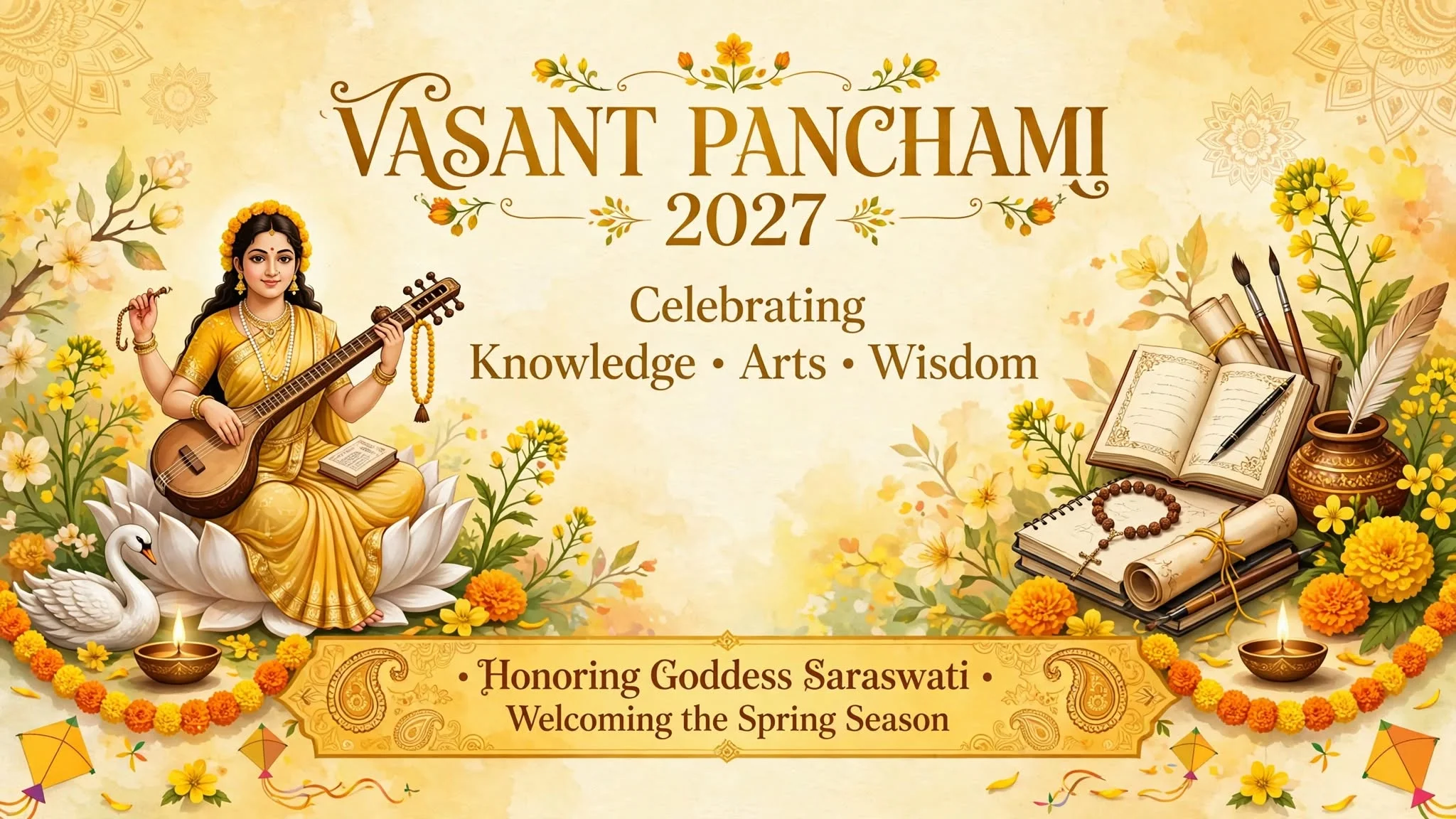
Vasant Panchami
Vasant Panchami, also celebrated as Basant Panchami or Sri Panchami, is one of the most radiant and culturally cherished festivals in Hinduism, observed on the Panchami tithi (fifth lunar day) of Shukla Paksha in the month of Magha (January–February).
View Festival Guide
Saturday, Feb 13, 2027
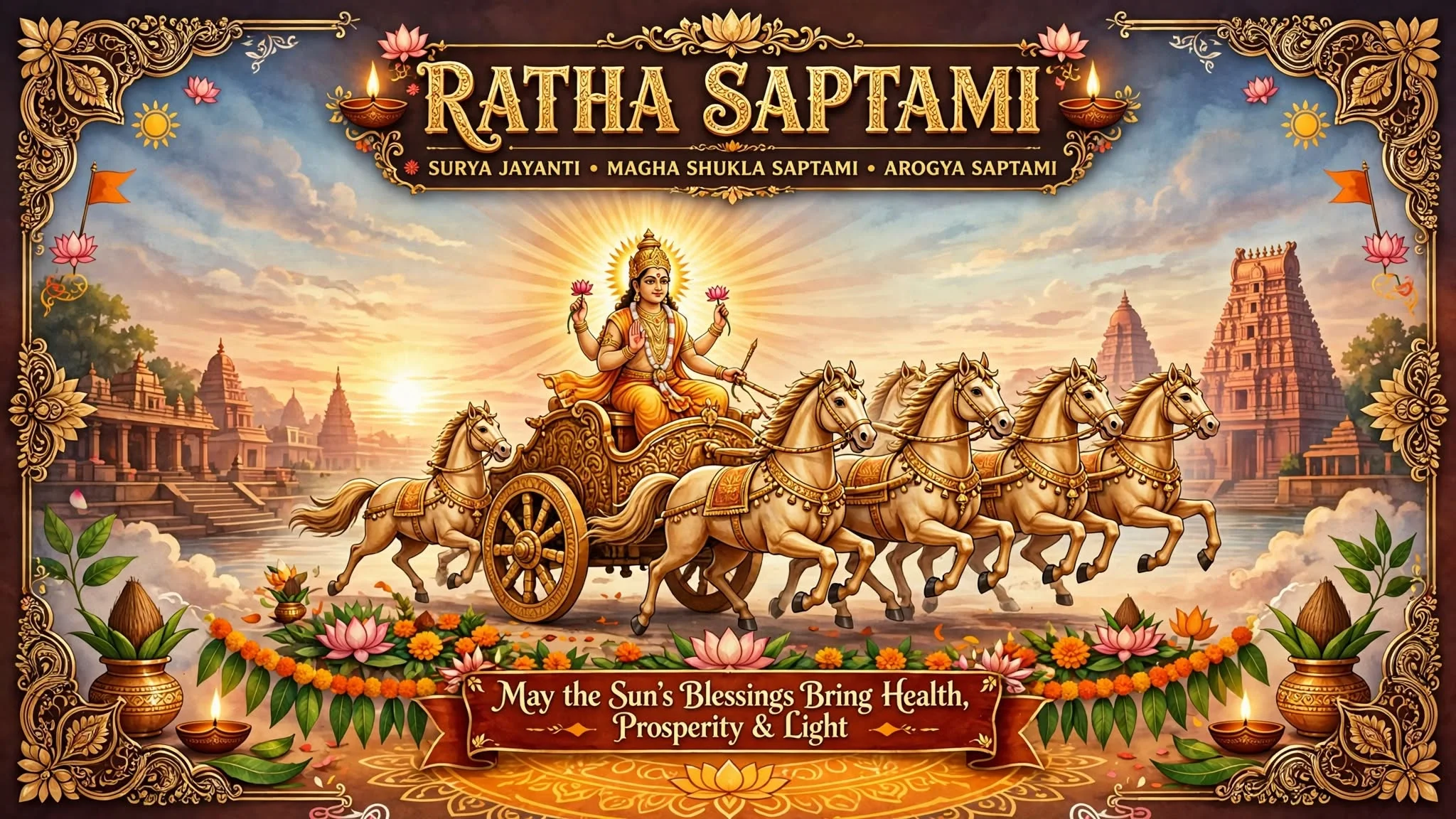
Ratha Saptami (Arogya Saptami / Surya Jayanti)
Ratha Saptami, also celebrated as Surya Jayanti, Magha Saptami, or Achala Saptami, is an exalted Hindu solar festival observed on the Saptami tithi (seventh lunar day) of Shukla Paksha in the month of Magha (January–February).
View Festival Guide
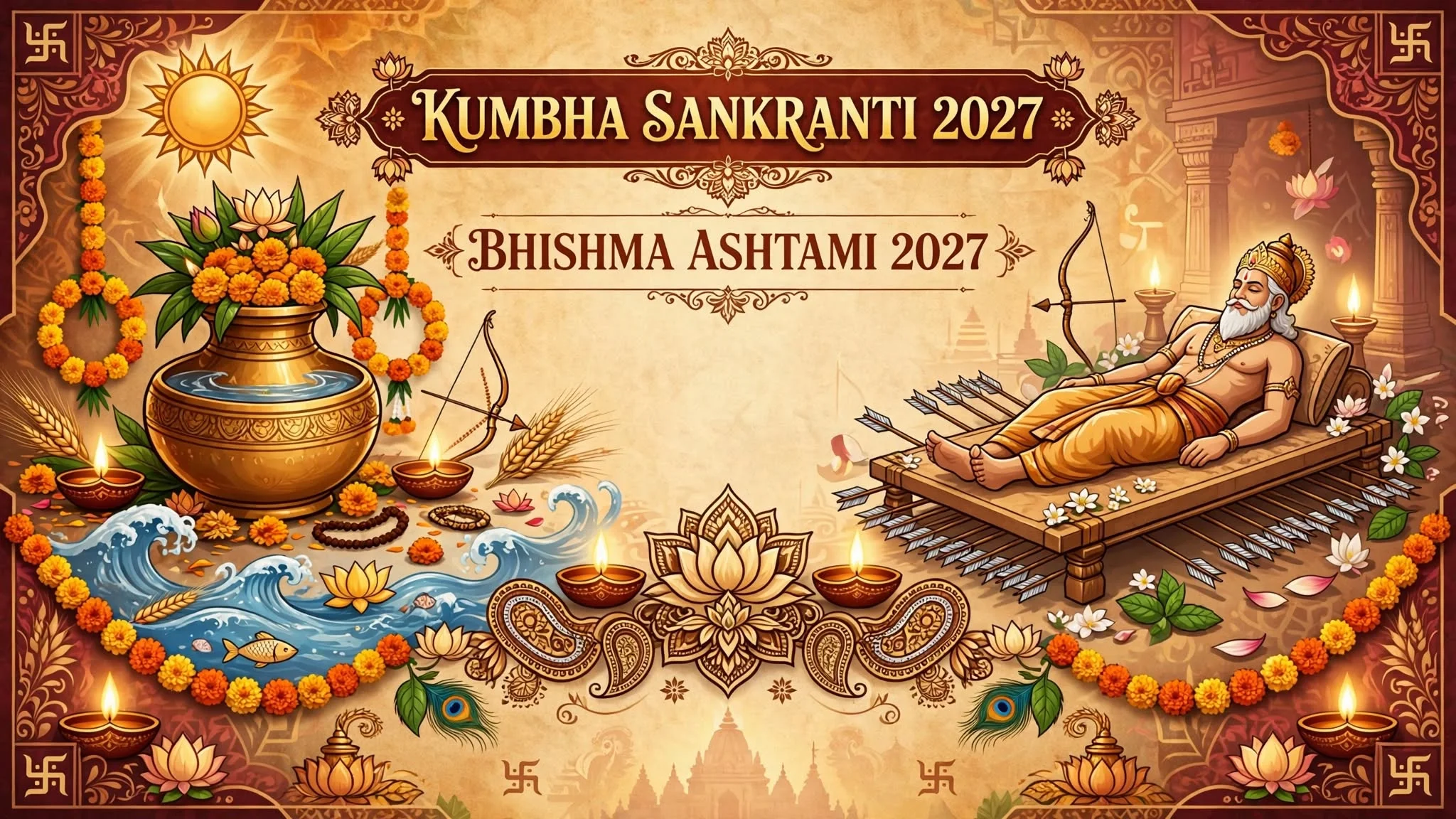
Saturday, Feb 13, 2027
Kumbha Sankranti
Kumbha Sankranti is a major astronomical and religious transit festival in the Vedic solar calendar, marking the precise moment when Lord Surya (the Sun God) transits from the sign of Makara (Capricorn) into Kumbha Rashi (Aquarius), the eleventh sign of the zodiac ruled by Shani Dev (Saturn).
View Festival Guide
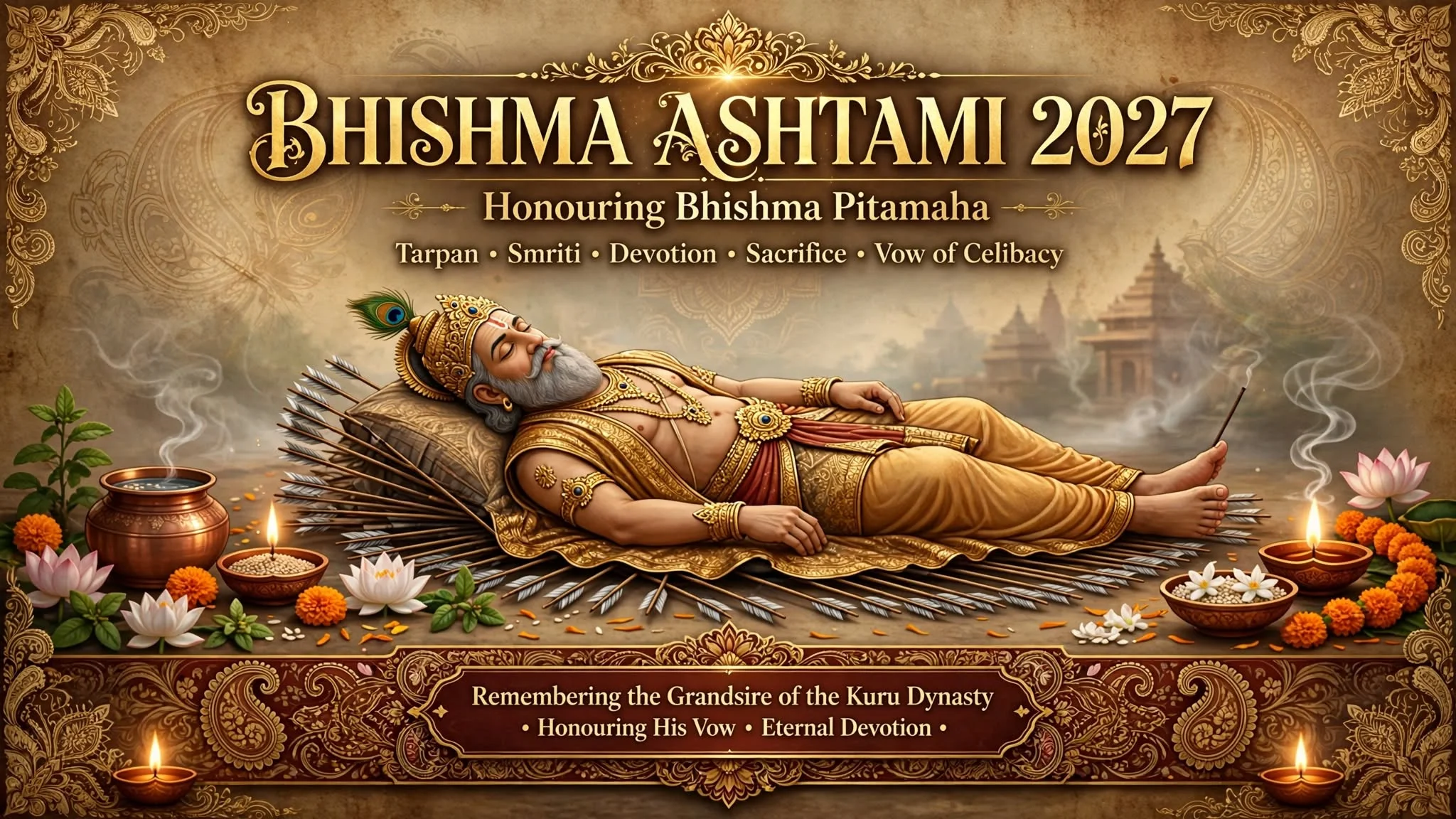
Sunday, Feb 14, 2027
Bhishma Ashtami
Bhishma Ashtami is a deeply solemn and historically revered Hindu observance occurring on the Ashtami tithi (eighth lunar day) of Shukla Paksha in the month of Magha (January–February), commemorating the voluntary departure (Maha-Samadhi / Ichha-Mrityu) of Pitamaha Bhishma, the venerable patriarch of the Mahabharata.
View Festival Guide
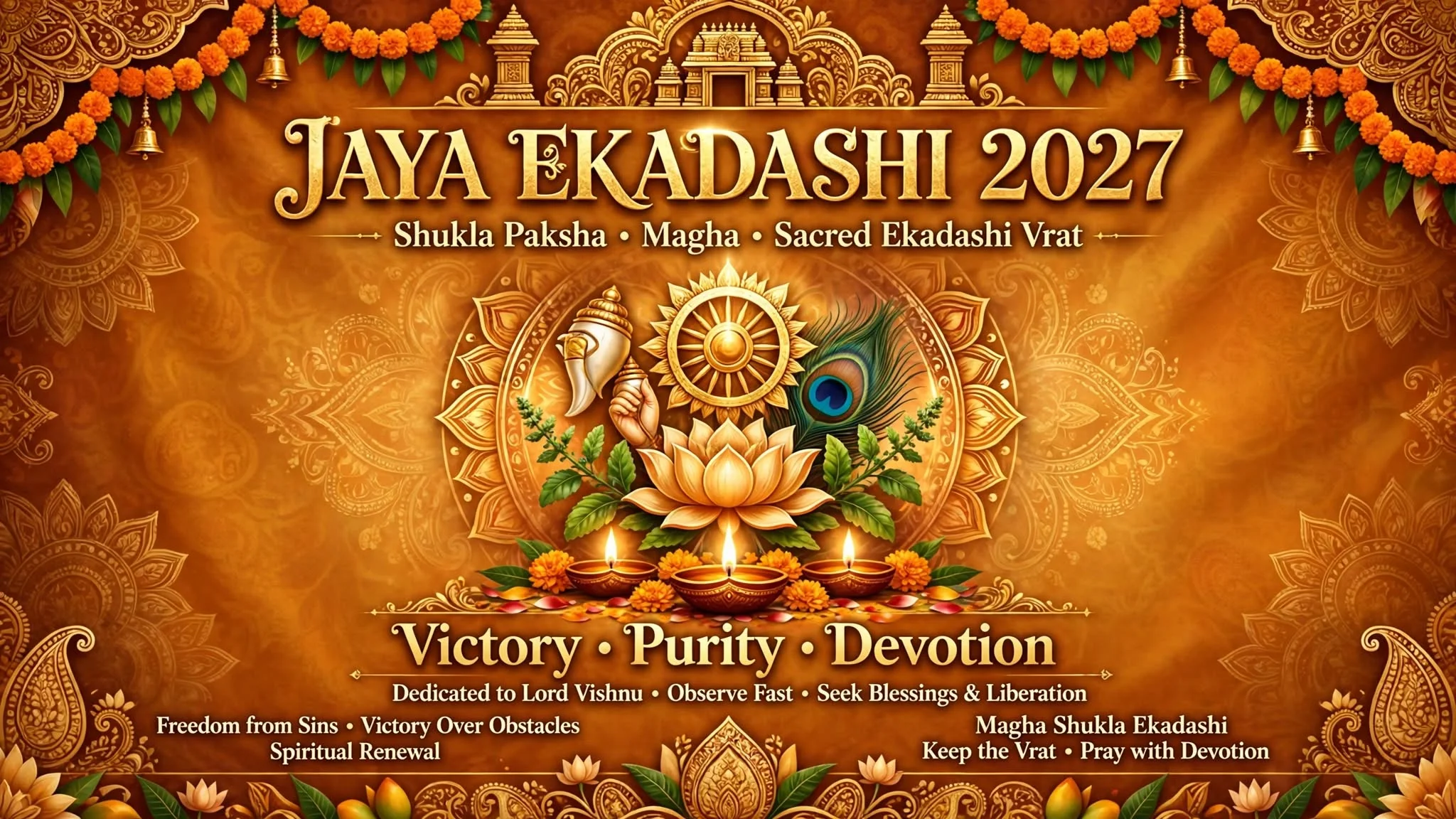
Wednesday, Feb 17, 2027
Jaya Ekadashi
Jaya Ekadashi, also revered as Bhaimi Ekadashi, is a celebrated Vaishnava fasting festival observed on the Ekadashi tithi (eleventh lunar day) of Shukla Paksha in the month of Magha (January–February).
View Festival Guide
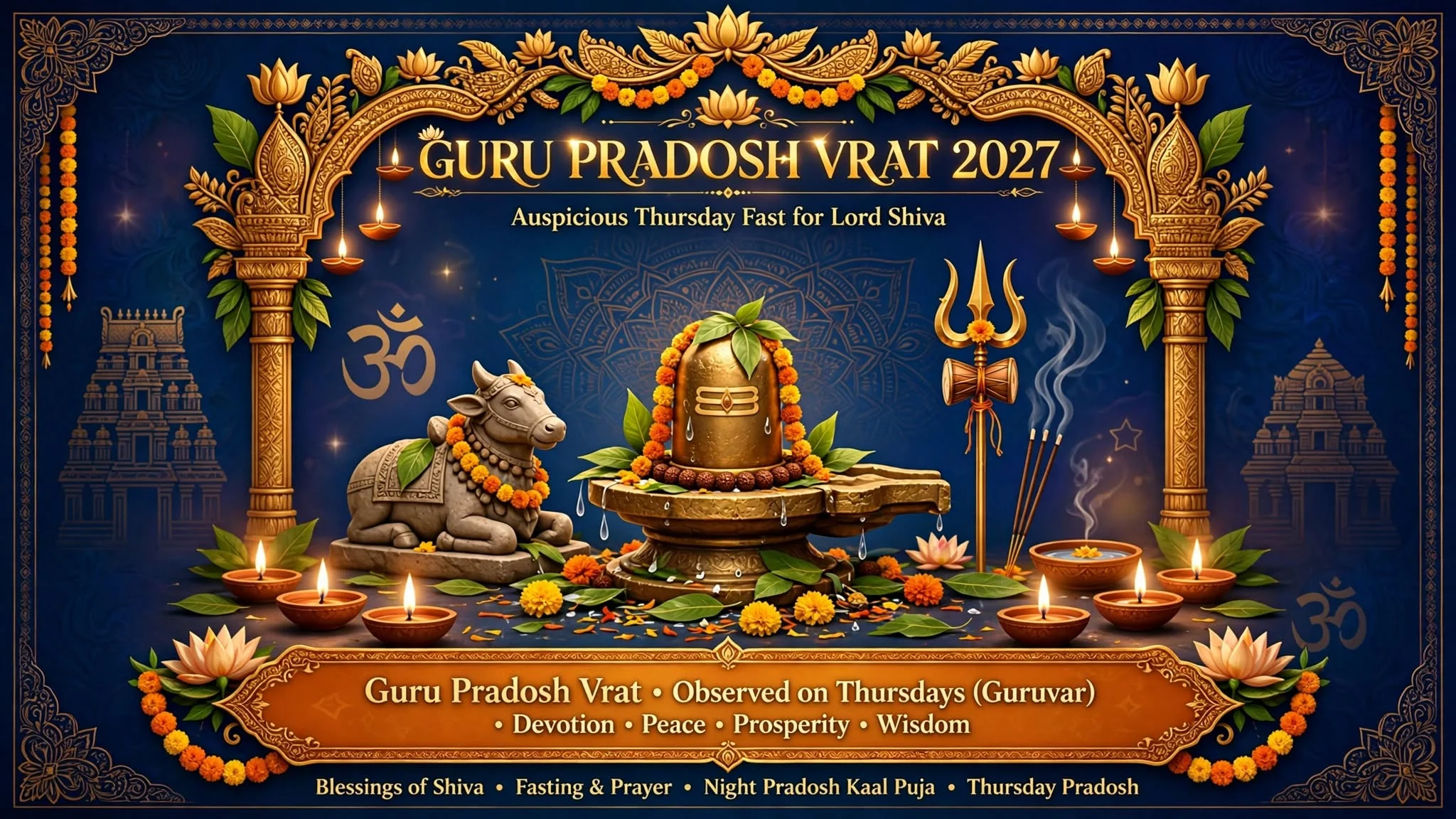
Thursday, Feb 18, 2027
Guru Pradosh Vrat
Guru Pradosh Vrat, also known as Guruvara Pradosham or Brihaspati Pradosham, is a sacred bimonthly Hindu fasting observance occurring when the Trayodashi tithi (thirteenth lunar day) coincides with a Thursday (Guruvara) during the twilight Pradosha Kaal period.
View Festival Guide
Wallpapers
497
500
392

450
387
395
567
417
364
303
427

358
437
402
391

436

397
384
369
354