




Kumbha Sankranti is a major astronomical and religious transit festival in the Vedic solar calendar, marking the precise moment when Lord Surya (the Sun God) transits from the sign of Makara (Capricorn) into Kumbha Rashi (Aquarius), the eleventh sign of the zodiac ruled by Shani Dev (Saturn).
Kumbha Sankranti 2027: Date, Puja Timings, Rituals & Stories
Kumbha Sankranti Timings & Panchang
Important festival dates and auspicious timings
Usha Arghya (Sunrise)
07:02 am
Sandhya Arghya (Sunset)
06:10 pm
Start Date
Saturday, 13 Feb 2027
Puja Muhurat
02:59 am – 02:07 am
Kumbha Sankranti
Occurring annually in mid-February, Kumbha Sankranti heralds the transition of the solar year deeper into its northern celestial course (Uttarayana), accompanied by an auspicious transitional window known as the 'Punya Kaal' (spanning roughly sixteen ghatis or approximately 6.4 hours across the transit moment) designated for intensive spiritual cleansing.
The word 'Kumbha' literally translates to a sacred water pitcher or urn, symbolizing the celestial pot of nectar (Amrita Kalasha) that emerged during the cosmic Samudra Manthan. Worshipping the Sun God and taking a purificatory holy dip in sacred rivers during Kumbha Sankranti is scripturally believed to transmute ordinary river waters into celestial nectar.
Devotees observe a day-long fast, perform holy Snana at river ghats or with consecrated Gangajal at home, and distribute unique charitable gifts—most prominently earthen or brass water pots (Kumbha) filled with pure water, grains, sesame seeds, and jaggery—to alleviate planetary afflictions and invoke cosmic grace.
Why is Kumbha Sankranti Celebrated?
Kumbha Sankranti is celebrated to honor the Sun God's cosmic journey as He enters the sign of Aquarius, symbolizing the containment and circulation of divine life-energy across creation.
According to the Matsya Purana and Dharma Sindhu, charity and holy river bathing performed during the Punya Kaal of Kumbha Sankranti erase accumulated karmic impurities and pacify the astrological friction between the Sun and Saturn, fostering long-term health, peace, and spiritual illumination.
- To take advantage of the spiritually charged Punya Kaal window for sacred river ablutions (Snana).
- To offer Arghya and Vedic prayers to Lord Surya as He enters the zodiac sign of Kumbha (Aquarius).
- To perform the meritorious ritual of 'Kumbha Dana'—donating consecrated water pots filled with water or grains to the needy.
- To pacify the mutual astrological afflictions of Surya (the father) and Shani (the son, ruler of Aquarius).
- To perform Pitru Tarpana to satisfy departed ancestors and cleanse generational karmic debts.
Astronomical Wisdom and Scriptural Lore of Kumbha Sankranti
The Celestial Mechanics of Solar Transits in the Puranas
The Surya Siddhanta and the Matsya Purana detail the twelve solar transits (Sankrantis) of the year. Of these, Kumbha Sankranti holds special metaphysical weight because Aquarius represents the pot of universal prana poured back onto the Earth.
Scriptures declare that the sixteen ghatis preceding and following the exact transit time constitute a liminal portal where cosmic radiation harmonizes with terrestrial water bodies. Sages and spiritual practitioners have historically utilized this window to renew their spiritual vows and perform homas for universal peace.
The Legend of the Amrita Kalasha and the Cosmic Nectar
A celebrated cosmological tradition connects Kumbha Sankranti with the climax of the Samudra Manthan (churning of the milk ocean) recorded in the Padma Purana and Bhagavata Purana. When Dhanvantari emerged carrying the golden pot of immortal nectar (Kumbha), a fierce struggle erupted between the gods and demons.
To preserve the nectar, the celestial bird-deity Garuda flew across the heavens with the pot for twelve days and twelve nights (equivalent to twelve human years). As he rested at sacred terrestrial junctures—Prayag, Haridwar, Ujjain, and Nashik—drops of nectar fell upon the Earth.
On Kumbha Sankranti, the celestial pot is visualized directly in the heavens as Aquarius, and the cosmic waters on Earth are believed to be revitalized with divine nectar. Devotees commemorate this divine preservation by donating water vessels (Kumbha) to ensure that no living being suffers from spiritual or physical thirst.
Source: Matsya Purana, Surya Siddhanta, and Padma Purana (Uttara Khanda)
Metaphysical, Astrological, and Humanitarian Foundations
The Symbolism of the Kumbha (The Sacred Pot)
In Vedic philosophy, the Kumbha represents the human body as a sacred vessel (Pinda) containing the nectar of the indwelling soul (Atman). Just as an earthen pot is fashioned from clay, baked by fire, and filled with life-giving water, human consciousness must be refined through austerity and filled with divine wisdom.
On Kumbha Sankranti, donating a pot filled with clean water or food grains signifies emptying the vessel of personal ego and sharing life's blessings with the universal collective.
Harmonizing the Solar Spirit with Saturnine Discipline
In Vedic astrology, the Sun represents the soul, royalty, and ego, while Saturn represents humility, service, labor, and karma. When the Sun enters Saturn's sign of Kumbha, an esoteric dialogue unfolds between spiritual light and material discipline.
Worshipping Surya on Kumbha Sankranti teaches the aspirant that true spiritual power must be expressed through selfless service (Seva), charity to the underprivileged, and humble alignment with universal law.
Purification of the Inner Waters (Apas Tattva)
- Human physiology is composed predominantly of water; holy bathing during the transit purifies the subtle water element within the body.
- Mitigates the malefic effects of Shani-Surya conjunctions or mutual aspects in personal birth charts.
- Generates profound spiritual merit through Annadana (food distribution) and Jala-dana (providing clean drinking water).
Practical Protocol, Sighting Guidelines, and Charitable Giving
Identifying the Punya Kaal and Morning Ablutions
Observance begins with consulting the local Panchang to determine the exact transit time (Sankranti Muhurta) and the accompanying Punya Kaal. Devotees rise early during Brahma Muhurta, cleanse their homes, and proceed to a sacred river, pond, or home bathing area.
Bathing is conducted silently using water infused with sacred Gangajal, black sesame seeds, and raw milk. The devotee offers prayers facing the rising Sun, pouring water three times as an offering of gratitude.
Performing Surya Puja and Ancestral Tarpana
After the purificatory bath, devotees wear fresh red, yellow, or white cotton clothing. A copper vessel filled with water, red sandalwood, red flowers, and unbroken rice is offered as Arghya to the Sun God.
Because Sankranti days are designated as sacred ancestral occasions (Parva Dina), male householders perform Tila Tarpana facing South, offering water with black sesame seeds to nourish departed ancestors and dissolve Pitru Dosha.
The Ritual of Kumbha Dana and Charitable Distribution
The crowning rite of the day is Kumbha Dana. A clean new earthen or brass pot is washed, decorated with swastika markings in vermilion, and filled with clean drinking water or food grains (such as wheat or rice), dry fruits, and a coin. The pot is ritually presented to a worthy Brahmin, temple priest, or impoverished seeker.
The fast is broken after completing all charitable donations, with the family partaking in a fresh, warm sattvic meal such as sweet rice kheer, khichdi, and seasonal vegetables.
Kumbha Sankranti Puja Vidhi (Step by Step)
- 1
Brahma Muhurta Jagaran and Punya Kaal Snana
Wake before dawn during Brahma Muhurta. Determine the precise Punya Kaal window from the Panchang. Take a purificatory bath in a flowing sacred river or prepare bathwater at home by adding holy Gangajal and black sesame seeds. Recite the sacred river invocation: 'Gange Cha Yamune Chaiva Godavari Saraswati, Narmade Sindhu Kaveri Jalesmin Sannidhim Kuru'.
- 2
Surya Arghya Samarpan (Offering Water to Lord Surya)
Don clean traditional yellow or red attire. Fill a pure copper lota with fresh water, red sandalwood paste (Rakta Chandan), red flowers, and unbroken rice (Akshata). Stand facing the rising Sun, raise the vessel with both hands above your forehead, and offer water in a continuous stream while reciting the Surya Gayatri or 'Om Suryaya Namah'.
- 3
Kumbha Sankranti Maha Sankalpa (Solemn Vow)
Sit on a clean asana facing East. Take water, unbroken rice, black sesame seeds, and a red flower in your right palm. Recite the solar month, your gotra, and make a formal vow (Sankalpa) to observe Kumbha Sankranti with fasting, solar worship, ancestral tarpana, and Kumbha Dana for the grace of Lord Surya and cosmic harmony.
- 4
Pitru Tarpana (Ancestral Libation)
Wear a ring of sacred Kusha grass (Pavitri) on your right ring finger. Face South, the direction governed by Yama and ancestors. In a bronze or copper tray, pour water mixed with black sesame seeds and barley through the Pitru Tirtha of your hand, offering three libations each to your departed forefathers, praying for their eternal peace.
Kumbha Sankranti Puja Samagri List
Kumbha Dana Essentials
Specific vessels and decorative materials required for preparing the consecrated pot for charitable donation.
- New, unblemished earthen pot (Matka) or clean brass/copper Kalash
- Pure clean drinking water or staple food grains (raw wheat or rice) to fill the pot
- Red vermilion (Sindoor) and turmeric to draw sacred Swastikas
- Five fresh mango leaves (Amra Pallava) or betel leaves
- Whole betel nut (Supari) and silver or copper coin
- Red sacred cotton thread (Kalava / Moly)
Surya Arghya and Altar Articles
Vessels, powders, and flowers required for solar worship and deity adoration.
- Pure copper lota dedicated to Surya Arghya
- Brass idol, copper plate, or consecrated image of Lord Surya
- Red sandalwood paste (Rakta Chandan) and yellow chandan
- Unbroken white rice (Akshata) and Kumkum
- Fresh red hibiscus flowers (Mandara / Gudhal), red roses, and yellow marigolds
- Pure Gangajal or holy river water
Lighting, Incense, and Japa Materials
Mantras and Prayers for Kumbha Sankranti
Kumbha Sankranti Vrat Rules and Fasting Guidelines
Punya Kaal Fasting and Conduct
On Kumbha Sankranti, fasting is observed from sunrise until the transit Punya Kaal concludes and charity is distributed:
- Bathe strictly during the designated Punya Kaal window for maximum spiritual purification.
- Maintain complete or partial fasting (Phalahari) until the completion of Surya puja and Kumbha Dana.
- Strictly avoid all non-vegetarian items, alcohol, tobacco, onions, garlic, and stale leftovers.
- Maintain an attitude of humility, generosity, and peace, avoiding all arguments and anger.
Kumbha Dana Regulations
- The pot donated should be new, clean, uncracked, and properly anointed with vermilion.
- Never donate an empty vessel; always fill it with clean drinking water, food grains, or sesame seeds.
- Present the donation respectfully with both hands accompanied by voluntary dakshina.
- Give priority to needy seekers, ascetics, or learned Brahmins for accepting the donation.
Parana and Vrata Completion
The fast is completed after presenting the Kumbha Dana, completing 108 Surya mantras, and offering food to cows and birds. The devotee partakes of a fresh, warm sattvic meal composed of rice kheer, khichdi, and vegetables seasoned with rock salt (sendha namak).
Dos and Don'ts of Kumbha Sankranti
Good Practices (Do's)
- Wake early during Brahma Muhurta, check the Punya Kaal timings, and take a purificatory bath.
- Offer Arghya to the rising Sun God using a copper vessel with red sandalwood and red flowers.
- Donate an earthen or brass pot filled with drinking water or food grains (Kumbha Dana).
- Chant the Surya Gayatri Mantra, Aditya Hridaya Stotra, or Surya Beeja Mantra 108 times.
- Light a mustard oil lamp for Shani Dev to harmonize the planetary transit of Sun in Aquarius.
Kumbha Sankranti Across Regions
| Region | Local Name |
|---|---|
| Prayagraj and Uttar Pradesh (Triveni Sangam) | Kumbha Sankranti Magh Mela Snana |
| Haridwar and Uttarakhand | Ganga Snana & Kumbha Dana |
| South India (Tamil Nadu, Karnataka, Andhra Pradesh) | Kumbha Masa Pirappu & Sankranti |
| West Bengal and Assam | Kumbha Sankranti Snan |
Kumbha Sankranti FAQs
What is Kumbha Sankranti?
Kumbha Sankranti is the astronomical transit of Lord Surya (the Sun God) from the sign of Makara (Capricorn) into Kumbha Rashi (Aquarius), observed with sacred river bathing, fasting, solar worship, and charitable giving.
What is the 'Punya Kaal' on Kumbha Sankranti?
Punya Kaal is the auspicious transitional window surrounding the exact solar transit time, spanning roughly 16 ghatis (approximately 6.4 hours). Spiritual practices, river bathing, and charity performed during this window yield boundless merit.
What is 'Kumbha Dana', and why is it performed?
Kumbha Dana is the sacred ritual of donating a new earthen or brass pot filled with clean water, food grains, or sesame seeds. It symbolizes the celestial pot of nectar and helps alleviate planetary afflictions and ancestral debts.
Upcoming Festivals
View All
Saturday, Feb 13, 2027
Ratha Saptami (Arogya Saptami / Surya Jayanti)
Ratha Saptami, also celebrated as Surya Jayanti, Magha Saptami, or Achala Saptami, is an exalted Hindu solar festival observed on the Saptami tithi (seventh lunar day) of Shukla Paksha in the month of Magha (January–February).
View Festival Guide

Sunday, Feb 14, 2027
Bhishma Ashtami
Bhishma Ashtami is a deeply solemn and historically revered Hindu observance occurring on the Ashtami tithi (eighth lunar day) of Shukla Paksha in the month of Magha (January–February), commemorating the voluntary departure (Maha-Samadhi / Ichha-Mrityu) of Pitamaha Bhishma, the venerable patriarch of the Mahabharata.
View Festival Guide
Wednesday, Feb 17, 2027
Jaya Ekadashi
Jaya Ekadashi, also revered as Bhaimi Ekadashi, is a celebrated Vaishnava fasting festival observed on the Ekadashi tithi (eleventh lunar day) of Shukla Paksha in the month of Magha (January–February).
View Festival Guide
Thursday, Feb 18, 2027
Guru Pradosh Vrat
Guru Pradosh Vrat, also known as Guruvara Pradosham or Brihaspati Pradosham, is a sacred bimonthly Hindu fasting observance occurring when the Trayodashi tithi (thirteenth lunar day) coincides with a Thursday (Guruvara) during the twilight Pradosha Kaal period.
View Festival Guide

Saturday, Feb 20, 2027
Magha Purnima
Magha Purnima, widely celebrated as Maghi Purnima or Maha Maghi, is the culminating and most spiritually radiant full moon festival in the Hindu liturgical calendar, falling in the holy month of Magha (January–February).
View Festival Guide

Sunday, Feb 21, 2027
Ishti
Ishti is a foundational Vedic ritual observance appearing prominently in Hindu Panchangs on the Pratipada tithi (the first lunar day) following either Amavasya (new moon) or Purnima (full moon), marking the prescribed performance day for the fortnightly Vedic Darsha-Purnamasa sacrifices.
View Festival Guide
Sunday, Feb 21, 2027
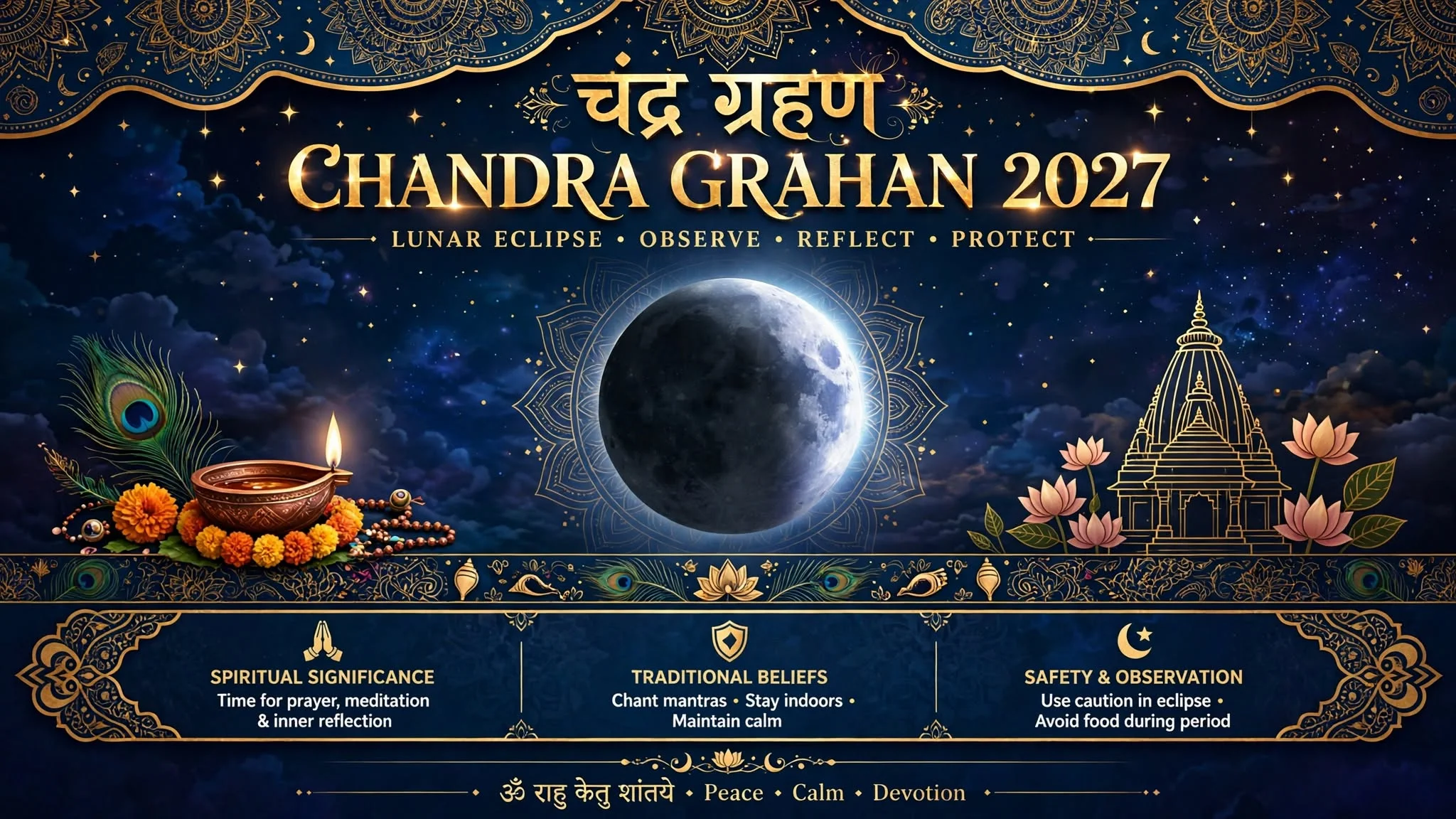
Chandra Grahan
Chandra Grahan (Lunar Eclipse) is a sacred cosmic and spiritual juncture (Parva Kaal) in Sanatana Dharma occurring exclusively on Purnima (the full moon day) when the Earth moves directly between the Sun and the Moon, casting its conical shadow across the lunar orb. In Vedic philosophy and Jyotisha, the Moon presides over the mind, subconscious emotions, and water elements (Chandrama Manaso Jatah - Rigveda Purusha Sukta). The temporary obscuration of the Moon by the shadowy nodes Rahu or Ketu induces profound subtle energetic shifts across terrestrial nature and human consciousness.
View Festival Guide
Wednesday, Feb 24, 2027
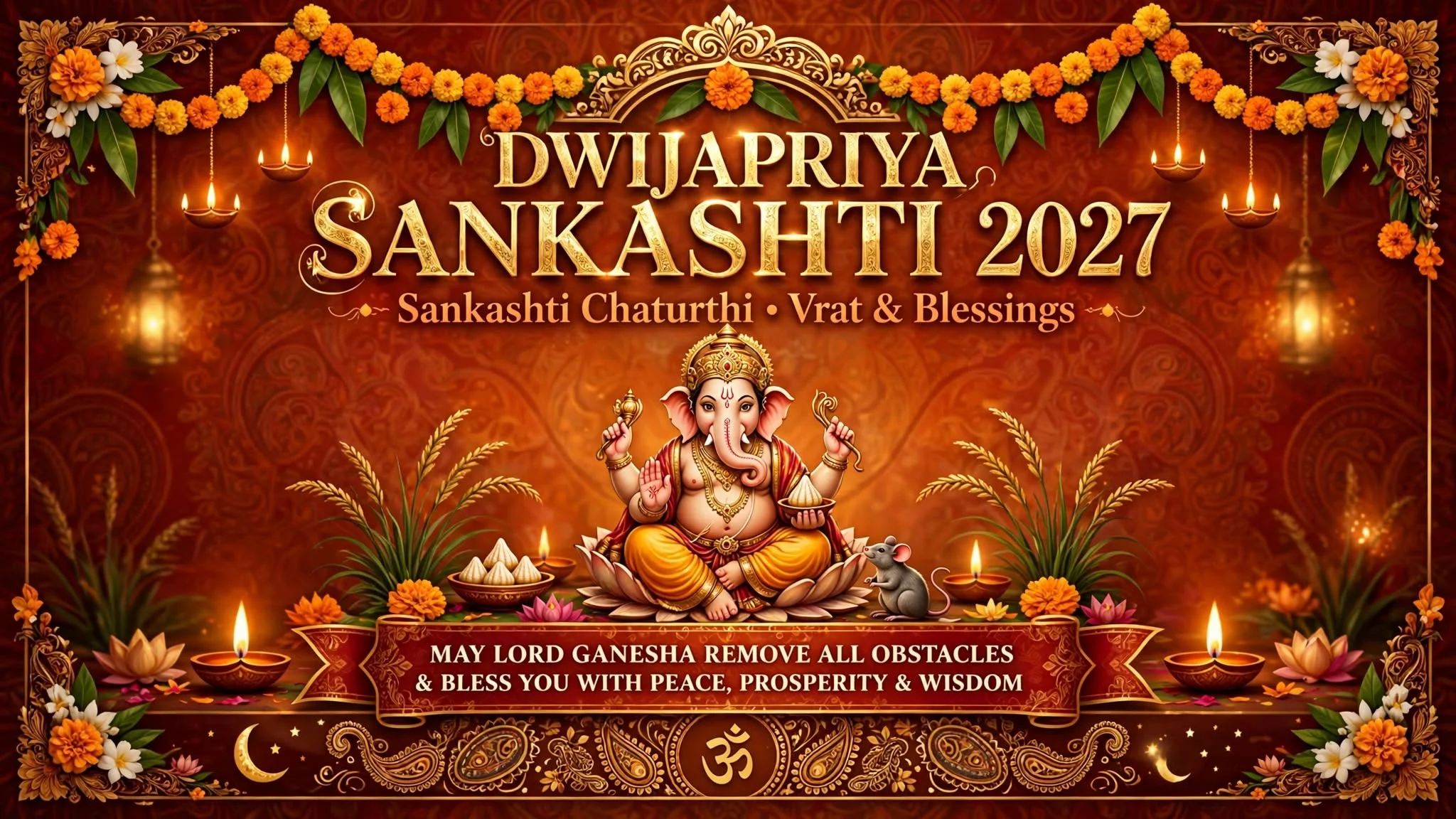
Dwijapriya Sankashti
Dwijapriya Sankashti Chaturthi is an auspicious monthly Hindu fasting observance dedicated to Lord Ganesha, celebrated on the fourth day (Chaturthi tithi) of the Krishna Paksha (waning moon phase) during the month of Phalguna according to the North Indian Purnimanta calendar (corresponding to Magha Krishna Paksha in the Amanta calendar followed in Maharashtra, Gujarat, Karnataka, Andhra Pradesh, and Tamil Nadu).
View Festival Guide