




Bhai Dooj (also lovingly known as Holi Bhai Dooj or Chaitra Bhai Dooj) is an intensely affectionate, culturally sacred, and spiritually protective Hindu festival observed on the second day (Dwitiya tithi) of the Krishna Paksha in the month of Chaitra according to the traditional Hindu calendar. Occurring on the second day immediately following the vibrant festival of colors (Holi), this sacred observance mirrors the post-Diwali Bhai Dooj, serving to reaffirm, sanctify, and celebrate the pure, unconditional bond of love and protection between brothers and sisters across Sanatana Dharma.
Bhai Dooj (Yama Dwitiya / Bhai Tika) 2027: Date, Puja Timings, Rituals & Stories

Bhai Dooj (Yama Dwitiya / Bhai Tika) Timings & Panchang
Important festival dates and auspicious timings
Usha Arghya (Sunrise)
06:32 am
Sandhya Arghya (Sunset)
05:37 pm
Start Date
Sunday, 31 Oct 2027
Puja Muhurat
05:52 pm – 05:13 pm
Bhai Dooj (Yama Dwitiya / Bhai Tika)
The antiquity and religious sanction of Bhai Dooj are deeply anchored in Puranic lore, notably recorded in the Skanda Purana (Kashi Khanda), the Padma Purana, and the Brahma Purana. The festival commemorates the sublime legend of Lord Yamaraj (the God of Justice and Death) and His beloved sister, the sacred river goddess Yamuna (Yami). Legend recounts that on this Dwitiya tithi, Yamuna welcomed Yamaraj to Her home with profound affection, applied a protective tilak upon His brow, and fed Him sumptuously. Deeply moved, Yamaraj granted the eternal boon that any brother who visits his sister, receives her loving tilak, and partakes of food prepared by her hand on this day shall be granted longevity and immunity from untimely death (Apamrityu).
In the emotional rhythm of the festival, after the joyous revelry and community socializing of Holi, Bhai Dooj provides a tender, intimate family setting where married sisters invite their brothers to their households. The sister prepares a consecrated wooden seat (Chowki) decorated with rice flour patterns (Chowk poorna), lights a pure cow-ghee lamp, and applies a sacred tilak composed of vermilion (Roli), unbroken white rice (Akshata), and cooling sandalwood paste upon the brother's forehead, praying for his prosperity, courage, and triumph over all adversaries.
Devotees observe Bhai Dooj by maintaining an atmosphere of deep harmony, exchanging heartfelt blessings and gifts. The brother joyfully presents gifts of clothing, jewelry, or cash tokens as a symbol of his lifelong protective guardianship, while sisters serve traditional homemade delicacies: fresh Gujiya, sweet Laddus, Kheer, and savory snacks. The festival reinforces family cohesion, mutual forgiveness, and spiritual well-being across generations.
Why is Bhai Dooj (Yama Dwitiya / Bhai Tika) Celebrated?
Bhai Dooj is celebrated to honor, sanctify, and strengthen the sacred bond of unconditional love, mutual respect, and lifelong protection between brothers and sisters.
The festival commemorates the divine visit of Lord Yamaraj to His sister Yamuna on Dwitiya tithi, demonstrating that loving familial bonds soften even the sternest cosmic forces.
Sisters perform the sacred tilak ritual and aarti to invoke divine protection, longevity, health, and career success for their brothers, shielding them from untimely death (Apamrityu).
Brothers present gifts and reaffirm their sacred moral duty to support, protect, and stand by their sisters through all worldly trials.
Scriptural Chronicles and Sacred Lore of Bhai Dooj
The Celestial Reunion of Yamaraj and Yamuna
The foundational theological chronicle of Bhai Dooj is expounded in the Skanda Purana (Kashi Khanda) and the Padma Purana. Lord Yamaraj and the river goddess Yamuna were children of Surya Deva (the Sun God) and His consort Sangya (Chhaya). Because Yamaraj was perpetually absorbed in administering cosmic justice and guiding departed souls, He was unable to visit His sister for centuries, despite Yamuna's constant, affectionate invitations.
Finally, on the Dwitiya tithi, Yamaraj set aside His solemn duties and made an unexpected visit to Yamuna's abode on the riverbank. Overjoyed by Her brother's arrival, Yamuna prepared a lavish feast of delectable dishes, washed Yamaraj's lotus feet with fragrant water, applied a protective tilak upon His forehead, and placed a garland of fresh blossoms around His neck.
Overwhelmed with emotional joy by His sister's unconditional hospitality, Yamaraj asked Her to name any boon. Yamuna smiled tenderly and asked: 'O brother, may you visit my home on this Dwitiya day every year, and may any brother who visits his sister, receives her loving tilak, and eats food prepared by her hand be blessed with longevity, health, and never face premature death or the terrors of Yamaloka.' Pleased by Her selfless compassion for all humanity, Yamaraj granted the boon, establishing the enduring festival of Bhai Dooj.
Lord Sri Krishna and Goddess Subhadra After Vanquishing Narakasura
Another celebrated chronicle associated with the Bhai Dooj tradition involves Lord Sri Krishna and His beloved sister Subhadra. After slaying the tyrannical demon king Narakasura and liberating sixteen thousand captive princesses, Lord Krishna visited Subhadra's royal palace.
Subhadra welcomed Her divine brother with ecstatic joy, washed His lotus feet, waved a pure golden aarti lamp to ward off evil energies, and applied a fragrant tilak of saffron, sandalwood, and unbroken rice upon His brow. Subhadra fed Krishna sweet delicacies with Her own hands. In return, Lord Krishna showered His sister with boundless celestial gifts and eternal protection, cementing the ritual format of Bhai Dooj.
Esoteric, Social, and Psychological Dimensions of Bhai Dooj
Protection from Untimely Death (Apamrityu Harana)
In Vedic metaphysics, Yamaraj is 'Dharmaraja'—the supreme arbiter of cosmic righteousness. When a sister performs aarti and applies tilak while praying sincerely for her brother's longevity, she weaves an energetic shield of protective spiritual energy (Raksha Kavacha).
Scriptures declare that the pure, selfless prayers of a sister possess the mystical power to alter planetary destiny and avert fatal accidents, sudden illnesses, and premature death.
The Sacred Alchemy of the Tilak and Akshata
The tilak applied on the brother's forehead is placed directly over the Ajna chakra (the third eye / seat of spiritual wisdom and intuition). The red roli represents vital dynamic shakti, cooling sandalwood paste balances mental agitations, and unbroken rice (Akshata) symbolizes wholeness and spiritual immortality.
This consecration calms the brother's nervous system, enhances intellectual discernment, and awakens courage for noble undertakings.
Strengthening Societal Cohesion and Family Resilience
In traditional culture, after marriage, sisters leave their ancestral home to live with their in-laws, which can sometimes lead to gradual estrangement. Bhai Dooj ensures that regardless of geographical distances, brothers visit their sisters' homes annually.
This deliberate custom reaffirms family ties, assures the sister that she continues to hold an honored place of dignity and love in her maternal family, and builds a resilient societal support network.
The Spiritual Grace of Nectarine Food (Annadana)
In the Skanda Purana, Yamaraj explicitly declared that eating food in one's own home on this day brings no special merit, but partaking of meals lovingly cooked and served by one's sister confers longevity and spiritual purification.
Comprehensive Ritual Observance and Guide for Bhai Dooj
Morning Sanctification and Preparation
Brothers and sisters rise early during Brahma Muhurta, take a purificatory bath with clean water mixed with Gangajal, and don clean traditional festive attire.
The sister cleanses the household worship altar, lights an oil or pure cow-ghee lamp before Lord Vishnu, Ganesha, and Yamuna-Yamaraj, and prepares the traditional festive sweets: Gujiya, Kheer, and Laddus.
Setting the Chowki and Traditional Seating
The sister decorates a clean wooden stool (Chowki) with auspicious rice-flour patterns (Chowk poorna) or a red cloth, facing North or East. The brother sits comfortably upon the consecrated chowki.
The sister prepares the sacred puja thali containing red roli (Kumkum), unbroken white rice (akshata), sandalwood paste, sweet batashas or dry coconut (Gola), flower petals, a pure cow-ghee lamp, and a Kalava (sacred red thread).
The Sacred Tilak, Aarti, and Coconut Samarpan
The sister applies a vertical tilak of roli and sandalwood paste upon the brother's forehead, pressing unbroken rice grains into the center. She ties the sacred Kalava thread around his right wrist.
She waves a lighted ghee lamp (Aarti) clockwise around his face, chanting protective prayers. She presents a whole dried coconut (Gola) wrapped in sacred thread into his hands, symbolizing unbroken protection and abundance.
Sweet Feeding, Gift Exchange, and Festive Feast
The sister feeds the brother a piece of sweet Gujiya, laddu, or batasha with her own hands. In return, the brother touches her feet in respect (if she is elder) or hugs her affectionately (if younger), presenting thoughtful gifts, clothes, or cash dakshina.
The celebration concludes with a joyful family feast featuring savory delicacies, Poha, Puri, and Kheer, spent in warm conversation and mutual affection.
Bhai Dooj (Yama Dwitiya / Bhai Tika) Puja Vidhi (Step by Step)
- 1
Brahma Muhurta Jagaran and Morning Snana
Wake before dawn during Brahma Muhurta. Meditate upon Lord Ganesha, Lord Yamaraj, and Goddess Yamuna. Take a purificatory bath with clean water mixed with holy Gangajal, wearing fresh clean traditional festive attire.
- 2
Altar Cleansing and Mandir Deepa Prajvalan
Clean the household altar thoroughly. Light a pure cow-ghee lamp and burn sweet sandalwood incense before the idols of Lord Vishnu, Goddess Lakshmi, and Ganesha, offering initial prayers for family welfare.
- 3
Chowk Poorna and Consecrating the Wooden Chowki
Draw auspicious swastika and floral motifs on the floor using rice flour or chalk. Cover a clean wooden chowki with a fresh red or yellow silk cloth, placing it facing towards the North or East.
- 4
Assembling the Sacred Bhai Dooj Puja Thali
Arrange a clean brass or silver thali containing red roli (Kumkum), unbroken white rice (akshata), white sandalwood paste, flower petals, a whole dry coconut (Gola), sweet batashas or Gujiya, and a lighted ghee lamp.
- 5
Bhai Dooj (Yama Dwitiya / Bhai Tika) Puja Samagri List
Tilak and Consecration Essentials
Sacred powders, rice grains, and threads used for the forehead tilak and wrist binding.
- Sacred red roli (Kumkum) and cooling white sandalwood paste (Shweta Chandan)
- Unbroken, clean white rice grains (Akshata) - 50 grams
- Red-and-yellow sacred cotton thread (Kalava / Mauli) - 1 roll
- Pure holy Gangajal bottle and clean water in a small lota
- Clean wooden chowki (peetha) draped in red or yellow silk
Aarti and Traditional Offerings
Lamps, coconuts, and fragrant items for the aarti ritual.
- Silver or brass puja thali
- Whole unbroken dry coconut (Gola / Shreephal) - 1 or 2 pieces
- Pure cow-ghee lamp with cotton wicks and Bhimseni camphor
- Fresh marigold and rose petals for showering blessings
- Betel leaves (Paan), areca nuts (Supari), and green cardamom
Festive Sweets and Gift Items
Traditional delicacies and presents exchanged between siblings.
- Freshly prepared crisp Gujiya, Besan Laddus, or Mawa sweets
Mantras and Prayers for Bhai Dooj (Yama Dwitiya / Bhai Tika)
Bhai Dooj (Yama Dwitiya / Bhai Tika) Vrat Rules and Fasting Guidelines
Tilak and Dining Injunctions
Core scriptural rules governing the Bhai Dooj dining ritual:
- Brothers must strictly avoid dining in their own home on Bhai Dooj; they must travel to their sister's home to receive tilak and food.
- If a man has no real sister, he should visit a cousin, aunt's daughter, or regard a pious woman as his sister, or mentally offer tilak near a sacred river.
- Both brother and sister should fast until the completion of the tilak, aarti, and sweet-feeding ritual.
- The food prepared must be strictly vegetarian, sattvic, fresh, and cooked with love and cleanliness.
Ethical and Behavioral Decorum
Conduct and decorum during the festival:
- Maintain pure familial harmony, refraining from past grievances, property arguments, or bitter words.
- Avoid alcohol, non-vegetarian food, tobacco, onions, and garlic on this sacred day.
- Brothers must present gifts with genuine affection according to their financial capacity, without boasting.
- Sisters must pray selflessly for their brother's moral uprightness, courage, and health.
Coconut (Gola) Preservation Rules
Rules regarding the whole dry coconut gifted by the sister:
- The whole dry coconut (Gola) presented to the brother is an energized emblem of life-force and protection.
Dos and Don'ts of Bhai Dooj (Yama Dwitiya / Bhai Tika)
Good Practices (Do's)
- Wake early during Brahma Muhurta, take a purificatory bath with Gangajal, and don clean traditional clothes.
- Seat the brother reverently on a decorated wooden chowki facing East or North.
- Apply a vertical tilak of sacred red roli, sandalwood paste, and unbroken white rice (akshata) upon the brother's forehead.
- Tie the sacred protective thread (Kalava) on the brother's right wrist and wave the aarti lamp.
- Present a whole dry coconut (Gola) into the brother's hands as an emblem of longevity.
Bhai Dooj (Yama Dwitiya / Bhai Tika) Across Regions
| Region | Local Name |
|---|---|
| Uttar Pradesh and Delhi NCR | Holi Bhai Dooj & Gola Bhent |
| Bihar and Jharkhand | Bhai Dooj & Bajri Shapana |
| Maharashtra and Goa | Bhav Bij |
| Gujarat and Western India | Bhai Beej |
Bhai Dooj (Yama Dwitiya / Bhai Tika) FAQs
What is Bhai Dooj and when is it celebrated after Holi?
Bhai Dooj (or Holi Bhai Dooj) is the sacred festival celebrating the brother-sister bond, observed on Chaitra Krishna Dwitiya, exactly two days after the festival of colors (Holi).
Why is this festival called 'Bhai Dooj'?
'Bhai' means brother, and 'Dooj' refers to the Dwitiya tithi (second lunar day). It commemorates the day sisters honor their brothers with tilak and festive meals.
How did the legend of Yamaraj and Yamuna originate?
According to the Skanda Purana, Lord Yamaraj visited His sister Yamuna on Dwitiya tithi. Moved by Her loving hospitality, He granted that any brother who receives tilak and food from his sister on this day will be protected from untimely death.
Upcoming Festivals
View All
Wednesday, Mar 24, 2027
Bhratri Dwitiya
Bhratri Dwitiya (भ्रातृ द्वितीया), linguistically derived from the Sanskrit terms 'Bhratri' (brother) and 'Dwitiya' (the second lunar tithi), is a time-honored, deeply venerable, and emotionally uplifting Hindu festival that sanctifies and celebrates the sacred bond between brothers and sisters. Observed on the second day (Dwitiya tithi) of the lunar fortnight—most prominently celebrated following Holi in the month of Chaitra as well as following Diwali in the month of Kartika—Bhratri Dwitiya represents the classical, scriptural manifestation of the pan-Indian sibling festival known in regional vernaculars as Bhai Dooj, Bhai Phota (in Bengal), and Bhav Bij (in Maharashtra).
View Festival Guide
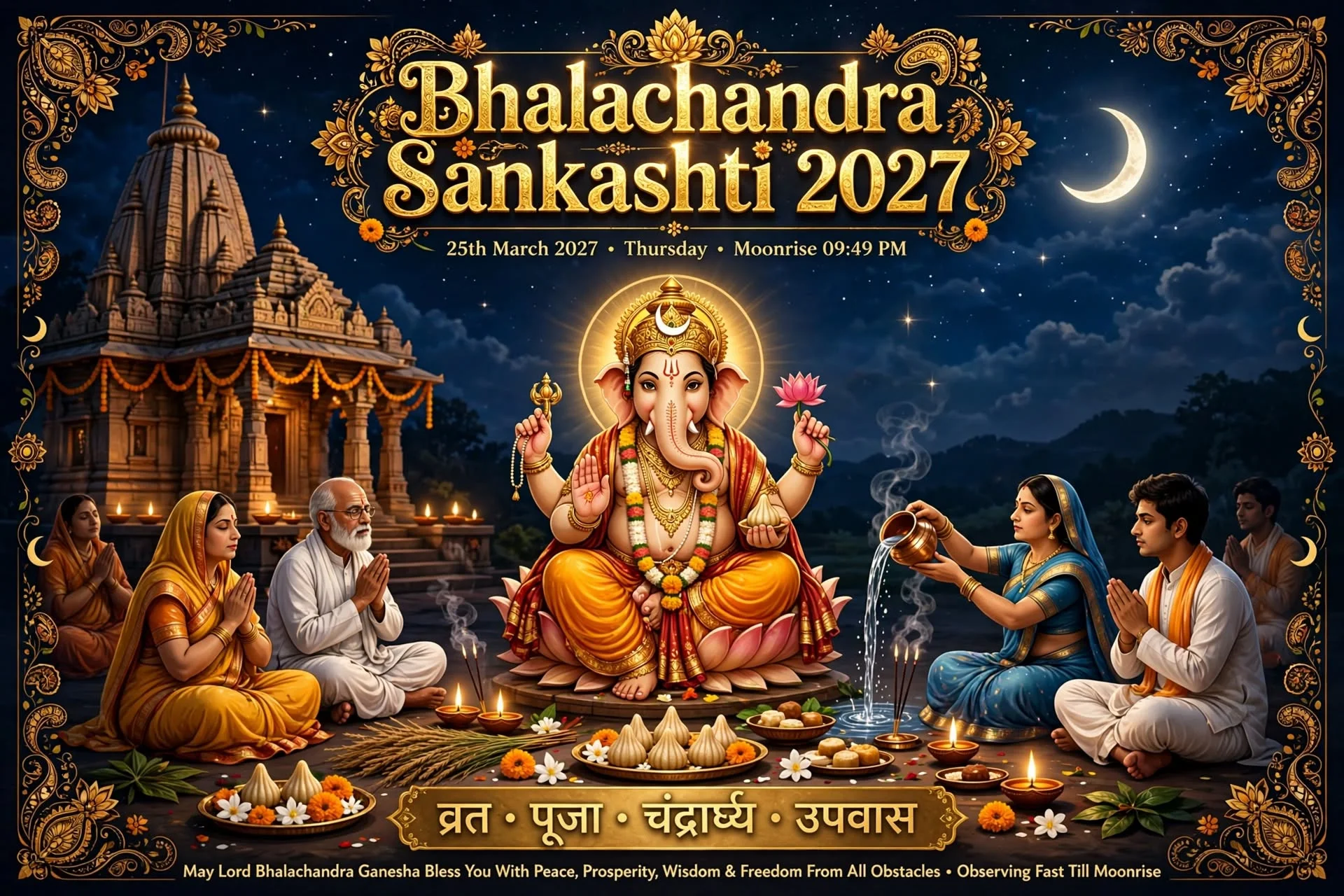
Thursday, Mar 25, 2027
Bhalachandra Sankashti
Bhalachandra Sankashti Chaturthi is an intensely sacred, spiritually liberating, and astrologically protective monthly Hindu fasting observance dedicated to Lord Ganesha, celebrated on the fourth day (Chaturthi tithi) of the Krishna Paksha (waning moon fortnight) during the lunar month of Chaitra according to the North Indian Purnimanta calendar (corresponding to Phalguna Krishna Chaturthi in the Amanta calendar followed in Maharashtra, Gujarat, Karnataka, Andhra Pradesh, and Tamil Nadu). The presiding divine manifestation venerated on this holy day is Bhalachandra Maha Ganapati—the 7th of the celebrated thirty-two classical iconographic forms of Lord Ganesha described in the sacred Mudgala Purana, and the 2nd of the legendary Ashta Vinayaka pilgrimage shrines situated at Pali in Maharashtra (Ballaleshwar / Bhalachandra).
View Festival Guide
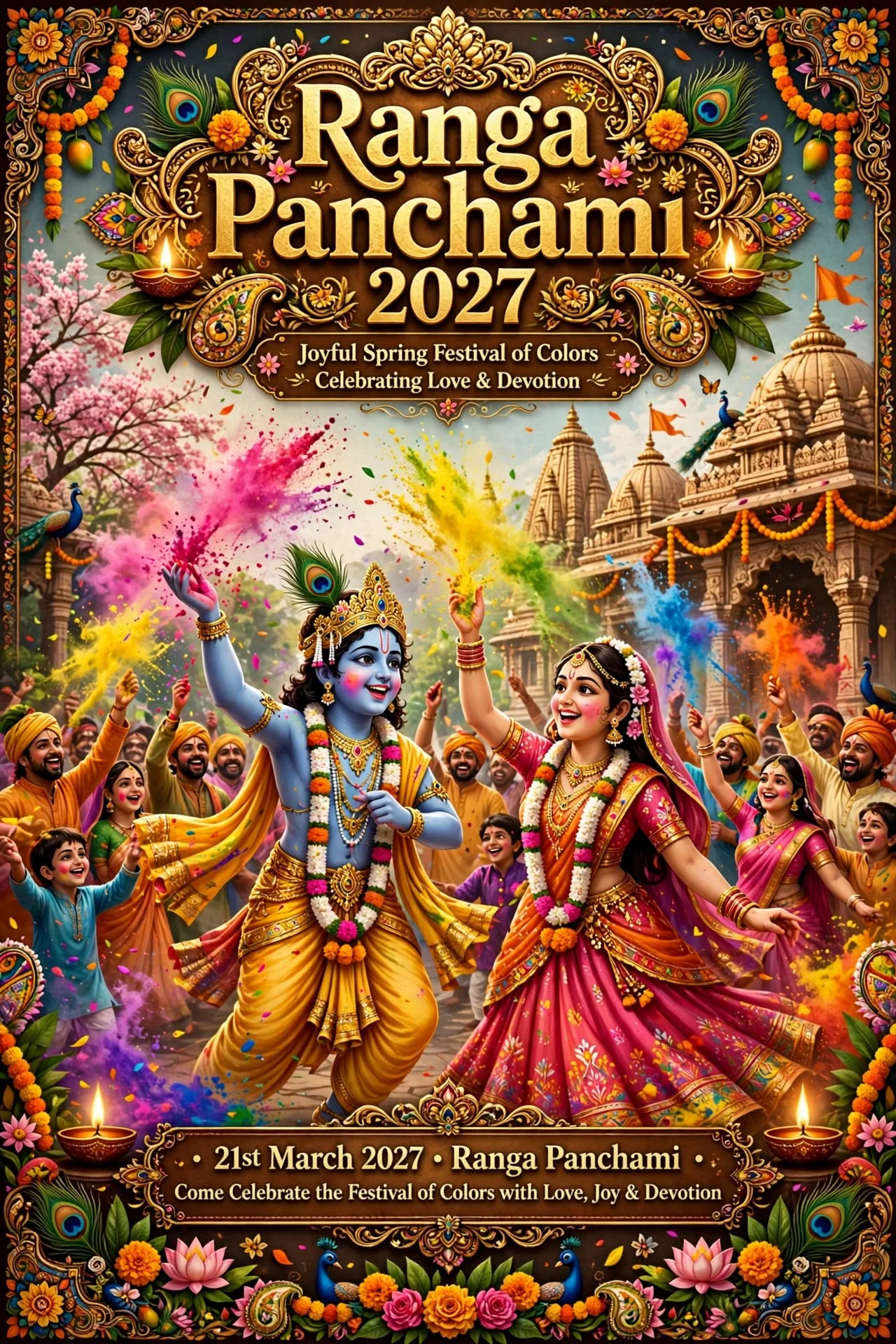
Saturday, Mar 27, 2027
Bhalachandra Sankashti
Bhalachandra Sankashti Chaturthi is an intensely sacred, spiritually liberating, and astrologically protective monthly Hindu fasting observance dedicated to Lord Ganesha, celebrated on the fourth day (Chaturthi tithi) of the Krishna Paksha (waning moon fortnight) during the lunar month of Chaitra according to the North Indian Purnimanta calendar (corresponding to Phalguna Krishna Chaturthi in the Amanta calendar followed in Maharashtra, Gujarat, Karnataka, Andhra Pradesh, and Tamil Nadu). The presiding divine manifestation venerated on this holy day is Bhalachandra Maha Ganapati—the 7th of the celebrated thirty-two classical iconographic forms of Lord Ganesha described in the sacred Mudgala Purana, and the 2nd of the legendary Ashta Vinayaka pilgrimage shrines situated at Pali in Maharashtra (Ballaleshwar / Bhalachandra).
View Festival Guide
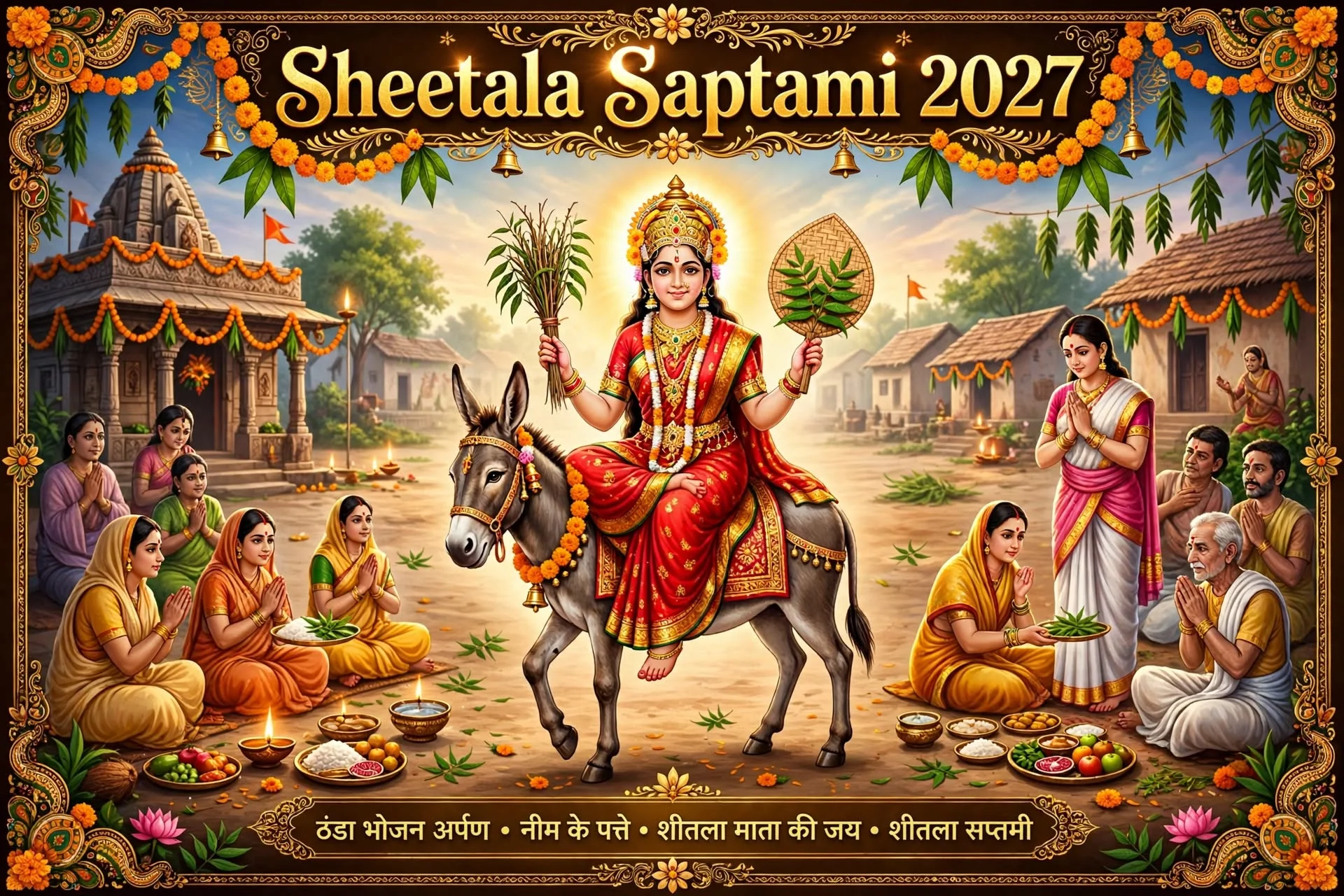
Sunday, Mar 28, 2027
Sheetala Saptami
Sheetala Saptami (शीतला सप्तमी) is an ancient, highly revered, and scientifically grounded Hindu fasting and protective festival celebrated on the seventh day (Saptami tithi) of the Krishna Paksha in the holy month of Chaitra according to the traditional Hindu calendar. Dedicated to Goddess Sheetala (the divine mother who presides over cooling energy, physical immunity, and protection against fevers, poxes, and epidemic illnesses), this sacred festival marks the annual observance of 'Basoda'—the unique ritual of consuming strictly cold, stale food (Baasi Bhojan) and refraining from lighting the domestic cooking fire.
View Festival Guide
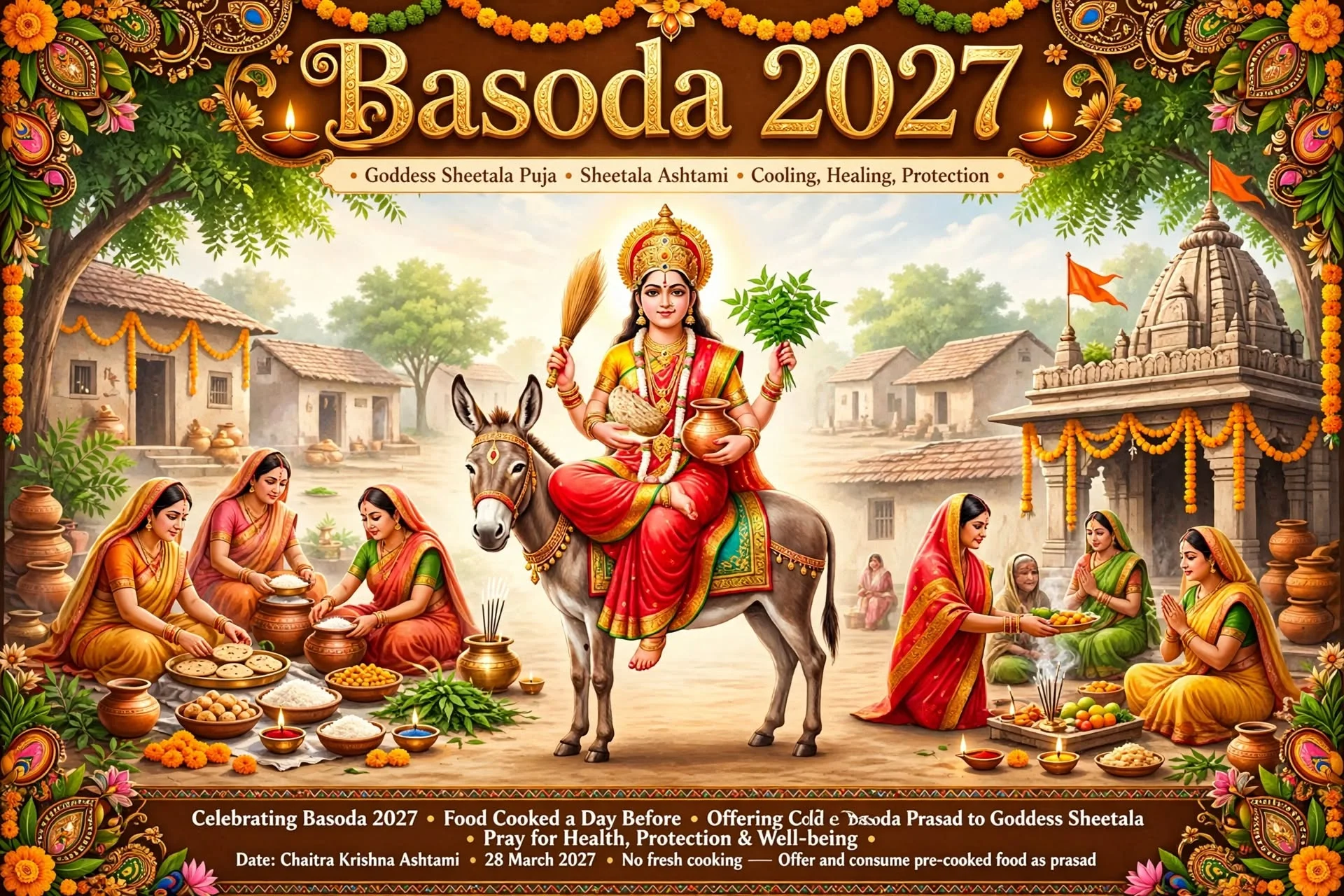
Tuesday, Mar 30, 2027
Basoda
Basoda (बासोड़ा), also revered across northern and western India as Sheetala Basoda or Baasi Kora, is an ancient, culturally unique, and epidemiologically profound Hindu festival observed on the seventh or eighth day (Saptami or Ashtami tithi) of the Krishna Paksha in the month of Chaitra. Dedicated to Goddess Sheetala (the divine mother presiding over cooling energy, hygiene, and protection against burning fevers and epidemic poxes), the term 'Basoda' is derived from the Hindi word 'Baasi', which translates to 'cooked on the previous day / cold'. On this consecrated day, millions of households strictly refrain from lighting the domestic cooking stove, consuming exclusively cold, stale food prepared on the preceding evening.
View Festival Guide
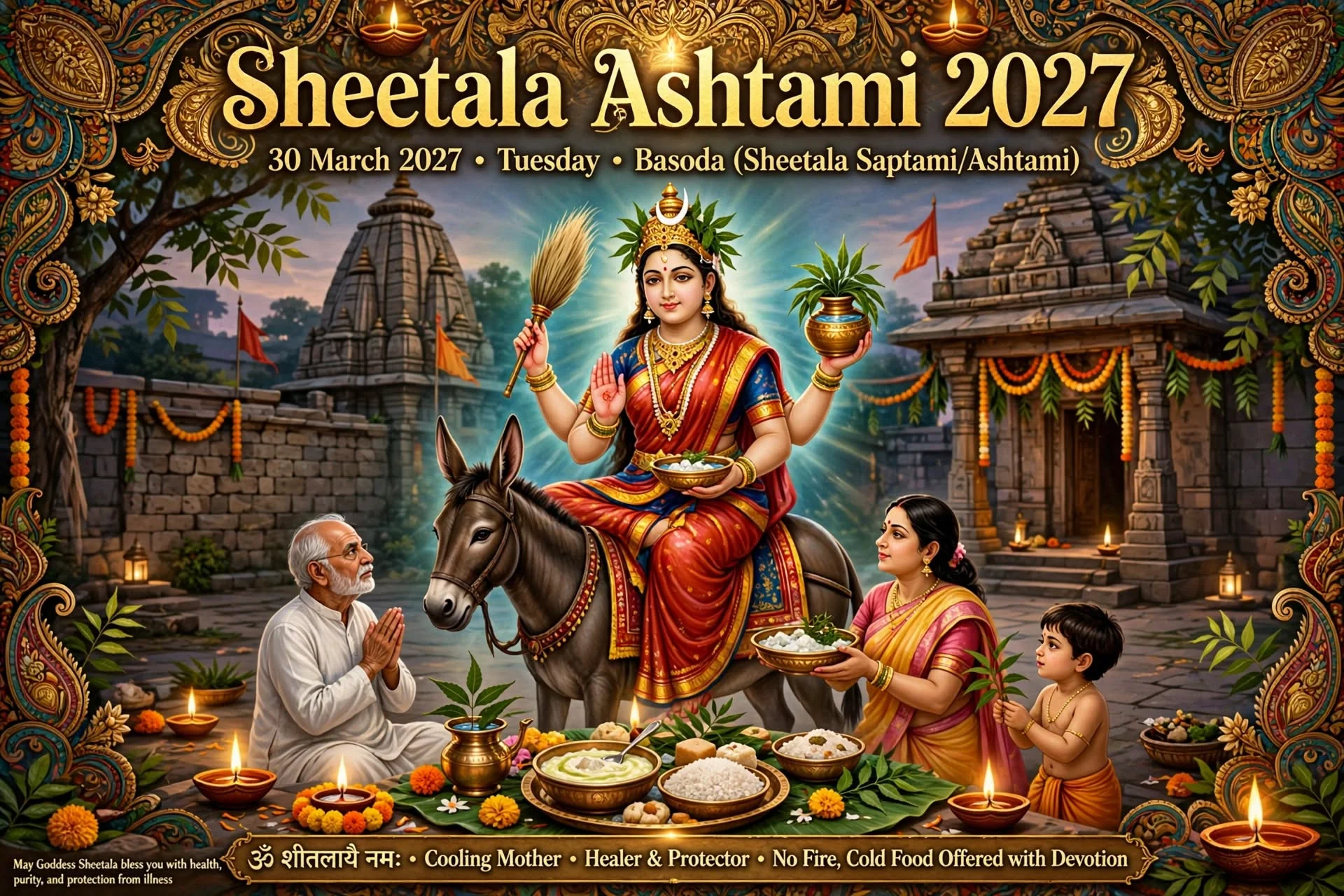
Tuesday, Mar 30, 2027
Sheetala Ashtami (Basoda)
Sheetala Ashtami (शीतला अष्टमी), also revered across northern and western India as the grand culmination of the Basoda festival, is an ancient, highly revered, and epidemiologically profound Hindu festival observed on the eighth day (Ashtami tithi) of the Krishna Paksha in the month of Chaitra. Dedicated to Goddess Sheetala (the divine mother who presides over cooling energy, physical immunity, and protection against fevers, poxes, and epidemic illnesses), this sacred festival marks the annual observance of 'Basoda'—the unique ritual of consuming strictly cold, stale food (Baasi Bhojan) and refraining from lighting the domestic cooking fire.
View Festival Guide

Friday, Apr 2, 2027
Papamochani Ekadashi
Papamochani Ekadashi holds a revered position in the Hindu calendar as the final Ekadashi of the lunar year. Falling during the Krishna Paksha of the closing lunar month (Phalguna in Purnimanta systems and Chaitra in Amanta systems), its name literally translates to 'the dissolver of sins' (Papa meaning sins, and Mochani meaning liberator). The sacred observance serves as an auspicious spiritual purge, offering devotees a divine opportunity to cleanse conscious and unconscious transgressions before entering the new spiritual cycle of Chaitra.
View Festival Guide
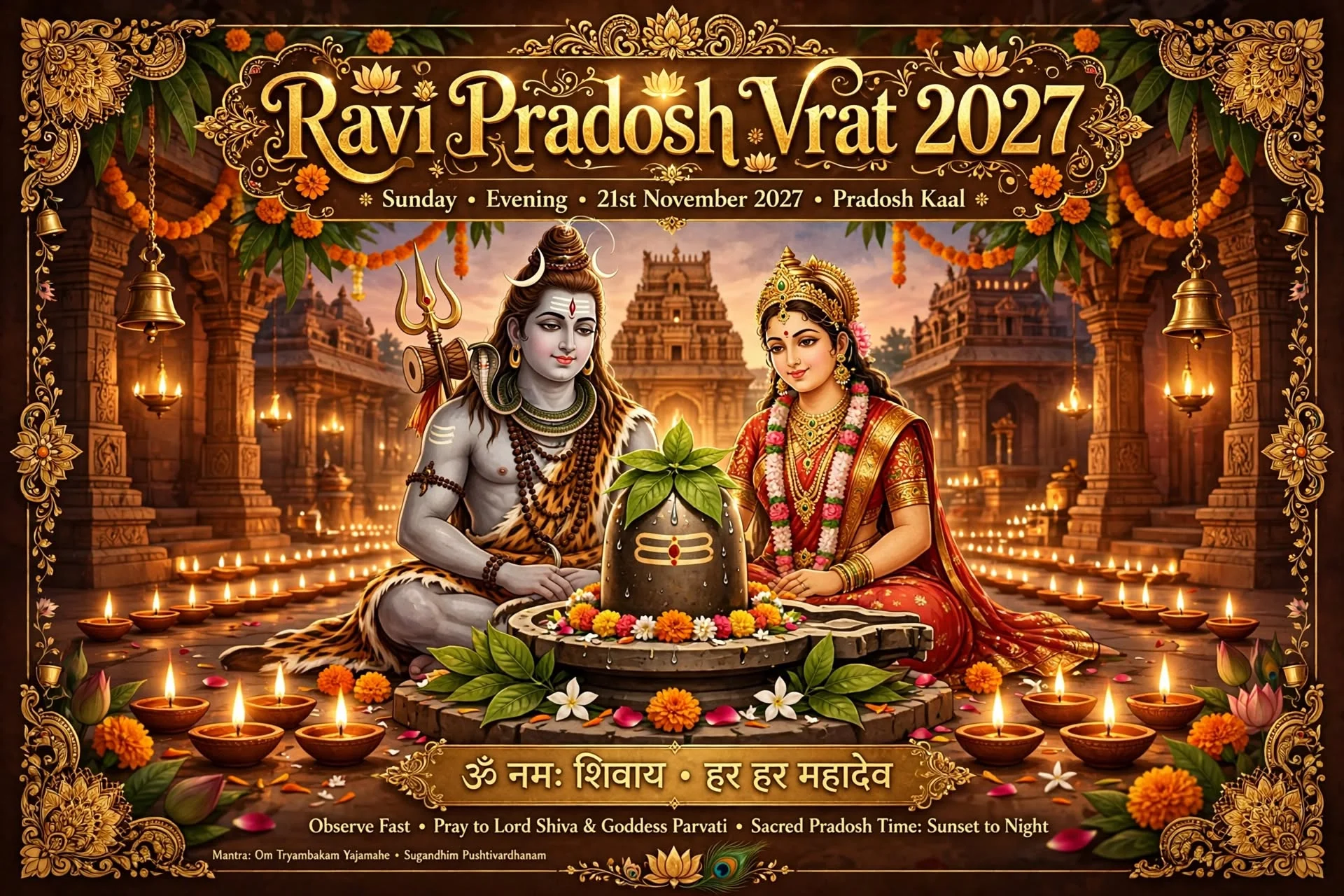
Sunday, Apr 4, 2027
Ravi Pradosh Vrat
Ravi Pradosh Vrat is an exceptionally sacred fasting day observed on the thirteenth lunar day (Trayodashi) that coincides with a Sunday (Ravivara). Dedicated to Lord Shiva, the cosmic dissolver of sorrow, this bimonthly vow unites the healing radiance of Surya Bhagavan with the boundless compassion of Mahadeva. Observed during the twilight Sandhya period, it is believed to banish physical ailments, clear karmic obstructions, and bestow vitality and longevity.
View Festival Guide