




Bhratri Dwitiya (भ्रातृ द्वितीया), linguistically derived from the Sanskrit terms 'Bhratri' (brother) and 'Dwitiya' (the second lunar tithi), is a time-honored, deeply venerable, and emotionally uplifting Hindu festival that sanctifies and celebrates the sacred bond between brothers and sisters. Observed on the second day (Dwitiya tithi) of the lunar fortnight—most prominently celebrated following Holi in the month of Chaitra as well as following Diwali in the month of Kartika—Bhratri Dwitiya represents the classical, scriptural manifestation of the pan-Indian sibling festival known in regional vernaculars as Bhai Dooj, Bhai Phota (in Bengal), and Bhav Bij (in Maharashtra).
Bhratri Dwitiya 2027: Date, Puja Timings, Rituals & Stories

Bhratri Dwitiya Timings & Panchang
Important festival dates and auspicious timings
Usha Arghya (Sunrise)
06:21 am
Sandhya Arghya (Sunset)
06:34 pm
Start Date
Wednesday, 24 Mar 2027
Puja Muhurat
02:28 pm – 01:14 pm
Bhratri Dwitiya
The antiquity and religious sanction of Bhratri Dwitiya are meticulously documented in the Bhavishya Purana (Uttara Parva), the Skanda Purana (Kashi Khanda), the Markandeya Purana, and the Padma Purana. In these holy texts, the festival is formally designated as 'Yama Dwitiya'. Scriptural lore records that on this consecrated tithi, Lord Yamaraj (the God of Death and cosmic righteousness) descended to the earthly realm to visit the riverbank hermitage of His beloved twin sister, Goddess Yamuna (Yami). Blessed by Her boundless hospitality and protective prayers, Yamaraj decreed that on this day, the gates of Yamaloka (the realm of punishment) are closed, and any brother who receives his sister's sacred tilak and partakes of food cooked by her hand is emancipated from the terror of untimely death (Apamrityu).
In classical Sanskrit ritual tradition, the sister seats her brother upon an unblemished wooden seat (Asana) facing the eastern sky, draws sacred protective mandalas using rice flour and sacred waters, and applies the auspicious tilak composed of red vermilion (Roli), pure sandalwood paste (Chandan), and unbroken white rice grains (Akshata) upon the brother's Ajna chakra (brow). While applying the tilak, the sister chants the classical Vedic and Puranic prayer: 'Bhratustavanujataham bhunkshva bhaktamimam shubham'—invoking the eternal longevity of Sage Markandeya and the protective grace of the Chiranjivis upon her brother.
Devotees observe Bhratri Dwitiya through heartfelt familial rituals, mutual gift-giving, and festive communal dining. The brother presents auspicious gifts of traditional garments, ornaments, or monetary dakshina, pledging his lifelong protective guardianship, while the sister feeds him sanctified homemade delicacies such as crisp Gujiya, sweet Payasam (Kheer), and Mawa Laddus. The festival stands as an immortal cultural testament to filial loyalty, unconditional sisterly compassion, and the triumph of pure love over mortality.
Why is Bhratri Dwitiya Celebrated?
Bhratri Dwitiya is celebrated to honor, sanctify, and elevate the timeless sibling bond of mutual protection, unconditional love, and moral support between brothers and sisters.
The festival commemorates the Puranic covenant between Lord Yamaraj and His sister Goddess Yamuna, establishing that sisterly prayers hold the transcendental power to avert untimely death (Apamrityu) and grant long life.
It provides a sacred occasion for sisters to perform ceremonial tilak and aarti on their brothers' brows, invoking health, success, fearlessness, and moral uprightness.
Brothers reaffirm their sacred duty to honor, respect, and defend their sisters throughout life, presenting gifts as an unbroken token of fraternal guardianship.
Scriptural Chronicles and Sacred Lore of Bhratri Dwitiya
The Covenant of Yamaraj and Yamuna in the Bhavishya Purana
The primary scriptural narrative of Bhratri Dwitiya (Yama Dwitiya) is detailed in the Bhavishya Purana (Uttara Parva, Chapter 32) and the Skanda Purana. Lord Surya's twin children, Yamaraj and Yamuna, shared an unbreakable bond of mutual affection. However, due to His stern, relentless duties of maintaining cosmic justice and guiding departed souls, Yamaraj was unable to visit His sister for countless millennia.
Yearning for Her brother, Yamuna sent continuous, loving invitations. Finally, on the second day of the lunar fortnight, Yamaraj arrived at Yamuna's celestial hermitage. Overwhelmed with tears of joy, Yamuna washed His feet, anointed His limbs with fragrant sandalwood oil, and prepared a sumptuous feast of sweet rice, fruits, and delicacies. She placed a garland of fresh lotus blossoms around His neck and applied an auspicious tilak upon His brow.
Profoundly touched by Her unconditional love, Yamaraj granted Yamuna a boon. Yamuna prayed: 'O brother, may all brothers who visit their sisters on this day, receive their sacred tilak, and eat food prepared by them be blessed with longevity, prosperity, and liberation from the fear of death.' Yamaraj rejoiced and declared: 'So be it! On this day, the gates of hell shall be shut, and all souls who honor this sibling rite shall attain peace.' Thus, the day became celebrated as Bhratri Dwitiya.
The Victory of Lord Krishna and Subhadra's Reception
In the Mahabharata and Bhagavata traditions, following the vanquishing of the tyrannical demon Narakasura, Lord Sri Krishna arrived at the palace of His sister Subhadra.
Subhadra welcomed Her victorious brother with deep reverence, washed His lotus feet, waved a golden aarti lamp around His effulgent form, and applied a protective tilak of saffron, sandalwood, and unbroken rice upon His forehead. Subhadra fed Krishna sweet delicacies with Her own hands. In return, Lord Krishna granted Her boundless divine boons, demonstrating that divine incarnations honor the sacred rites of Bhratri Dwitiya.
The Invocation of the Seven Chiranjivis (The Immortals)
Esoteric, Astrological, and Karmic Dimensions of Bhratri Dwitiya
Apamrityu Nivarana (Averting Untimely Death)
In Vedic astrology, untimely death (Apamrityu) and chronic debilitating diseases are governed by malefic planetary combinations associated with the 8th house and Saturn/Rahu.
The Bhavishya Purana explicitly promises that the sincere, selfless prayer of a sister offered during Bhratri Dwitiya acts as an impenetrable shield (Kavacha) that neutralizes fatal planetary alignments, securing the brother's longevity.
Activation of the Ajna Chakra (Seat of Intuition)
The tilak applied on the brother's forehead is placed directly over the Ajna chakra (the third eye). The cooling sandalwood paste pacifies mental agitation and stress, the red vermilion activates courageous prana, and unbroken rice (Akshata) represents wholeness and indestructible spiritual consciousness.
This consecration sharpens the brother's intellect, grants emotional equilibrium, and protects him from delusion.
The Sanctified Nectar of Sisterly Food (Annadana Mahatmya)
In the Skanda Purana, Lord Yamaraj declared that a man who dines in his own house on Bhratri Dwitiya loses spiritual merit, but one who eats food prepared by his sister drinks the nectar of life.
Food prepared with pure maternal and sisterly affection (Vatsalya Bhava) is naturally consecrated, dissolving psychological toxins and nourishing both the physical body and the subtle aura.
Strengthening Societal Harmony and Female Dignity
Bhratri Dwitiya elevates the status of the sister as an auspicious divine presence (Lakshmi-Swarupa). By mandating that brothers travel to their sisters' homes and present gifts with humility, Vedic culture established institutional respect and lifelong emotional security for married women.
Comprehensive Ritual Observance and Guide for Bhratri Dwitiya
Morning Purificatory Rites and Household Preparation
Both brother and sister rise early during Brahma Muhurta, take a purificatory bath with clean water mixed with holy Gangajal, and don clean traditional festive attire.
The sister cleans the household altar, lights an oil or pure cow-ghee lamp, and prepares the auspicious puja thali containing red roli (Kumkum), sandalwood paste, unbroken rice (akshata), flower petals, a whole dry coconut (Gola), and a pure ghee deepak.
Chowki Sthapana and Brother's Seating
Draw traditional rice-flour patterns (Chowk poorna) or spread a clean red silk cloth over a wooden chowki facing East or North. The brother sits comfortably upon the consecrated seat.
Sprinkle a few drops of Gangajal to purify the area. The sister performs ceremonial Achamana, sipping consecrated water thrice and purifying her hands.
The Sacred Tilak, Kalava, and Aarti Ceremony
The sister applies the auspicious vertical tilak of roli and sandalwood paste upon the brother's forehead, pressing unbroken white rice grains into the center while reciting the Bhratri Dwitiya mantra.
She ties the sacred red-yellow thread (Kalava) around his right wrist, waves a burning ghee lamp (Aarti) clockwise around his face, and places a whole dry coconut (Gola) and betel leaf into his palms.
Feeding Sweets, Exchanging Gifts, and the Sibling Feast
The sister feeds the brother a piece of sweet Gujiya, mawa laddu, or kheer with her own hands. In return, the brother touches her feet in reverence (if she is elder) or hugs her affectionately (if younger), presenting thoughtful gifts, clothes, or cash dakshina.
The celebration concludes with a joyful family feast featuring savory delicacies, Poha, Puri, and Kheer, spent in warm family harmony and joy.
Bhratri Dwitiya Puja Vidhi (Step by Step)
- 1
Brahma Muhurta Jagaran and Morning Snana
Wake before dawn during Brahma Muhurta. Meditate upon Lord Ganesha, Lord Yamaraj, and Goddess Yamuna. Take a purificatory bath with clean water mixed with holy Gangajal, wearing fresh clean traditional festive attire.
- 2
Altar Cleansing and Mandir Deepa Prajvalan
Clean the household altar thoroughly. Light a pure cow-ghee lamp and burn sweet sandalwood incense before the idols of Lord Vishnu, Goddess Lakshmi, and Ganesha, offering initial prayers for family welfare.
- 3
Chowk Poorna and Consecrating the Wooden Chowki
Draw auspicious swastika and floral motifs on the floor using rice flour or chalk. Cover a clean wooden chowki with a fresh red or yellow silk cloth, placing it facing towards the North or East.
- 4
Assembling the Sacred Bhratri Dwitiya Puja Thali
Arrange a clean brass or silver thali containing red roli (Kumkum), unbroken white rice (akshata), white sandalwood paste, flower petals, a whole dry coconut (Gola), sweet batashas or Gujiya, and a lighted ghee lamp.
- 5
Bhratri Dwitiya Puja Samagri List
Tilak and Consecration Essentials
Sacred powders, rice grains, and threads used for the forehead tilak and wrist binding.
- Sacred red roli (Kumkum) and cooling white sandalwood paste (Shweta Chandan)
- Unbroken, clean white rice grains (Akshata) - 50 grams
- Red-and-yellow sacred cotton thread (Kalava / Mauli) - 1 roll
- Pure holy Gangajal bottle and clean water in a small lota
- Clean wooden chowki (peetha) draped in red or yellow silk
Aarti and Traditional Offerings
Lamps, coconuts, and fragrant items for the aarti ritual.
- Silver or brass puja thali
- Whole unbroken dry coconut (Gola / Shreephal) - 1 or 2 pieces
- Pure cow-ghee lamp with cotton wicks and Bhimseni camphor
- Fresh marigold and rose petals for showering blessings
- Betel leaves (Paan), areca nuts (Supari), and green cardamom
Festive Sweets and Gift Items
Traditional delicacies and presents exchanged between siblings.
- Freshly prepared crisp Gujiya, Besan Laddus, or Mawa sweets
Mantras and Prayers for Bhratri Dwitiya
Bhratri Dwitiya Vrat Rules and Fasting Guidelines
Tilak and Dining Injunctions
Core scriptural rules governing the Bhratri Dwitiya dining ritual:
- Brothers must strictly avoid dining in their own home on Bhratri Dwitiya; they must travel to their sister's home to receive tilak and food.
- If a man has no real sister, he should visit a cousin, aunt's daughter, or regard a pious woman as his sister, or mentally offer tilak near a sacred river.
- Both brother and sister should fast until the completion of the tilak, aarti, and sweet-feeding ritual.
- The food prepared must be strictly vegetarian, sattvic, fresh, and cooked with love and cleanliness.
Ethical and Behavioral Decorum
Conduct and decorum during the festival:
- Maintain pure familial harmony, refraining from past grievances, property arguments, or bitter words.
- Avoid alcohol, non-vegetarian food, tobacco, onions, and garlic on this sacred day.
- Brothers must present gifts with genuine affection according to their financial capacity, without boasting.
- Sisters must pray selflessly for their brother's moral uprightness, courage, and health.
Coconut (Gola) Preservation Rules
Rules regarding the whole dry coconut gifted by the sister:
- The whole dry coconut (Gola) presented to the brother is an energized emblem of life-force and protection.
Dos and Don'ts of Bhratri Dwitiya
Good Practices (Do's)
- Wake early during Brahma Muhurta, take a purificatory bath with Gangajal, and don clean traditional clothes.
- Seat the brother reverently on a decorated wooden chowki facing East or North.
- Apply a vertical tilak of sacred red roli, sandalwood paste, and unbroken white rice (akshata) upon the brother's forehead.
- Tie the sacred protective thread (Kalava) on the brother's right wrist and wave the aarti lamp.
- Present a whole dry coconut (Gola) into the brother's hands as an emblem of longevity.
Bhratri Dwitiya Across Regions
| Region | Local Name |
|---|---|
| Bengal and Eastern India (Bhai Phota) | Bhai Phota |
| Maharashtra and Goa (Bhav Bij) | Bhav Bij |
| Nepal and Himalayan Regions (Bhai Tika) | Bhai Tika |
| Gujarat and Western India (Bhai Beej) | Bhai Beej |
Bhratri Dwitiya FAQs
What is Bhratri Dwitiya?
Bhratri Dwitiya is the classical Sanskrit name for the sacred Hindu sibling festival celebrating the brother-sister bond on the Dwitiya tithi (second lunar day), also known as Bhai Dooj or Bhai Phota.
Why is Bhratri Dwitiya also called 'Yama Dwitiya'?
It is called Yama Dwitiya because Lord Yamaraj (Dharmaraja) visited His sister Yamuna on this day, granting the boon of longevity and immunity from untimely death to all who observe this sibling rite.
What mantra does the sister recite while applying the tilak?
The sister recites: 'Bhratustavanujataham bhunkshva bhaktamimam shubham | Preetaye Yamarajasya Yamunaya visheshatah', praying for Yamaraj and Yamuna's eternal grace upon her brother.
Upcoming Festivals
View All
Wednesday, Mar 24, 2027
Bhai Dooj (Yama Dwitiya / Bhai Tika)
Bhai Dooj (also lovingly known as Holi Bhai Dooj or Chaitra Bhai Dooj) is an intensely affectionate, culturally sacred, and spiritually protective Hindu festival observed on the second day (Dwitiya tithi) of the Krishna Paksha in the month of Chaitra according to the traditional Hindu calendar. Occurring on the second day immediately following the vibrant festival of colors (Holi), this sacred observance mirrors the post-Diwali Bhai Dooj, serving to reaffirm, sanctify, and celebrate the pure, unconditional bond of love and protection between brothers and sisters across Sanatana Dharma.
View Festival Guide
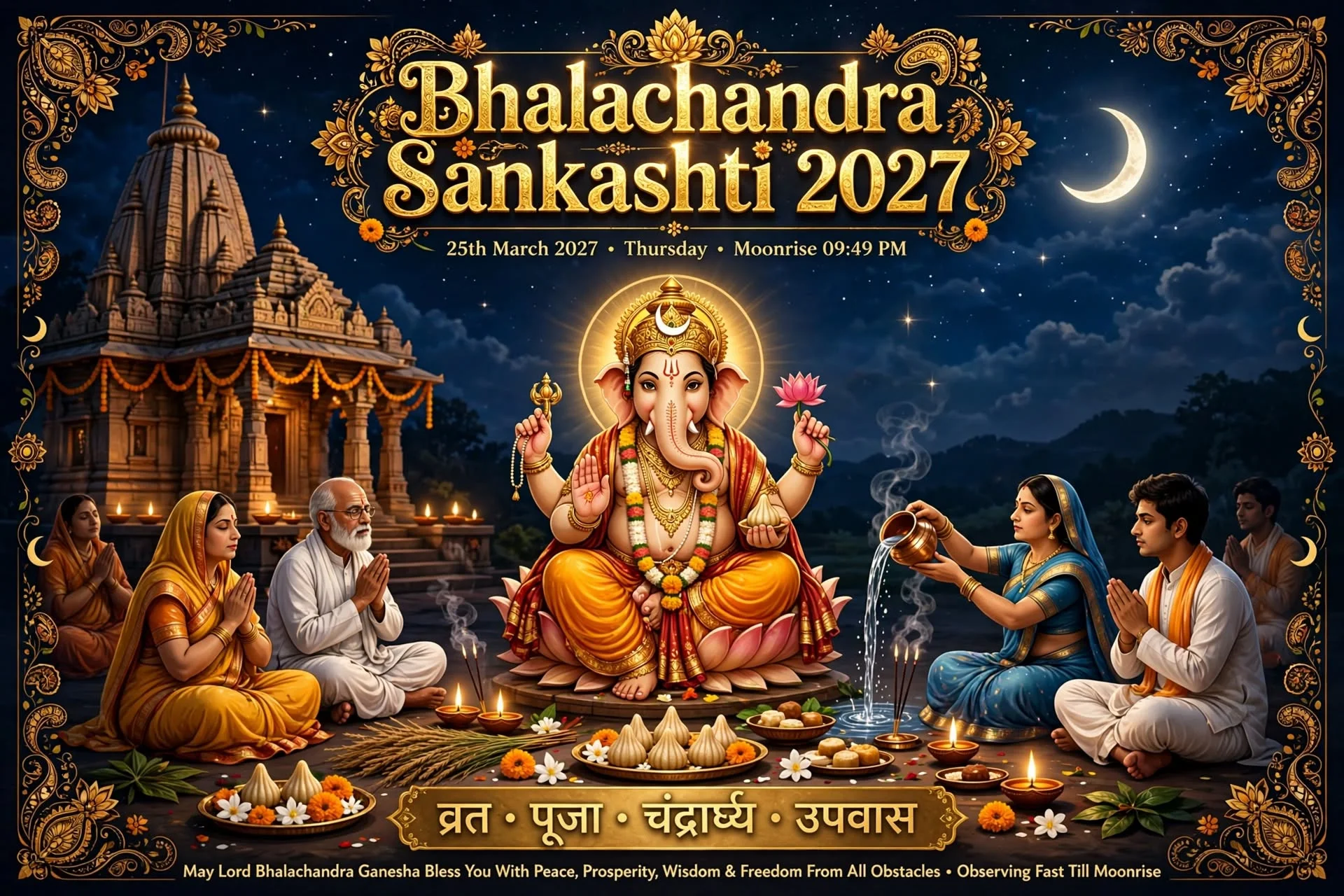
Thursday, Mar 25, 2027
Bhalachandra Sankashti
Bhalachandra Sankashti Chaturthi is an intensely sacred, spiritually liberating, and astrologically protective monthly Hindu fasting observance dedicated to Lord Ganesha, celebrated on the fourth day (Chaturthi tithi) of the Krishna Paksha (waning moon fortnight) during the lunar month of Chaitra according to the North Indian Purnimanta calendar (corresponding to Phalguna Krishna Chaturthi in the Amanta calendar followed in Maharashtra, Gujarat, Karnataka, Andhra Pradesh, and Tamil Nadu). The presiding divine manifestation venerated on this holy day is Bhalachandra Maha Ganapati—the 7th of the celebrated thirty-two classical iconographic forms of Lord Ganesha described in the sacred Mudgala Purana, and the 2nd of the legendary Ashta Vinayaka pilgrimage shrines situated at Pali in Maharashtra (Ballaleshwar / Bhalachandra).
View Festival Guide
Saturday, Mar 27, 2027
Bhalachandra Sankashti
Bhalachandra Sankashti Chaturthi is an intensely sacred, spiritually liberating, and astrologically protective monthly Hindu fasting observance dedicated to Lord Ganesha, celebrated on the fourth day (Chaturthi tithi) of the Krishna Paksha (waning moon fortnight) during the lunar month of Chaitra according to the North Indian Purnimanta calendar (corresponding to Phalguna Krishna Chaturthi in the Amanta calendar followed in Maharashtra, Gujarat, Karnataka, Andhra Pradesh, and Tamil Nadu). The presiding divine manifestation venerated on this holy day is Bhalachandra Maha Ganapati—the 7th of the celebrated thirty-two classical iconographic forms of Lord Ganesha described in the sacred Mudgala Purana, and the 2nd of the legendary Ashta Vinayaka pilgrimage shrines situated at Pali in Maharashtra (Ballaleshwar / Bhalachandra).
View Festival Guide
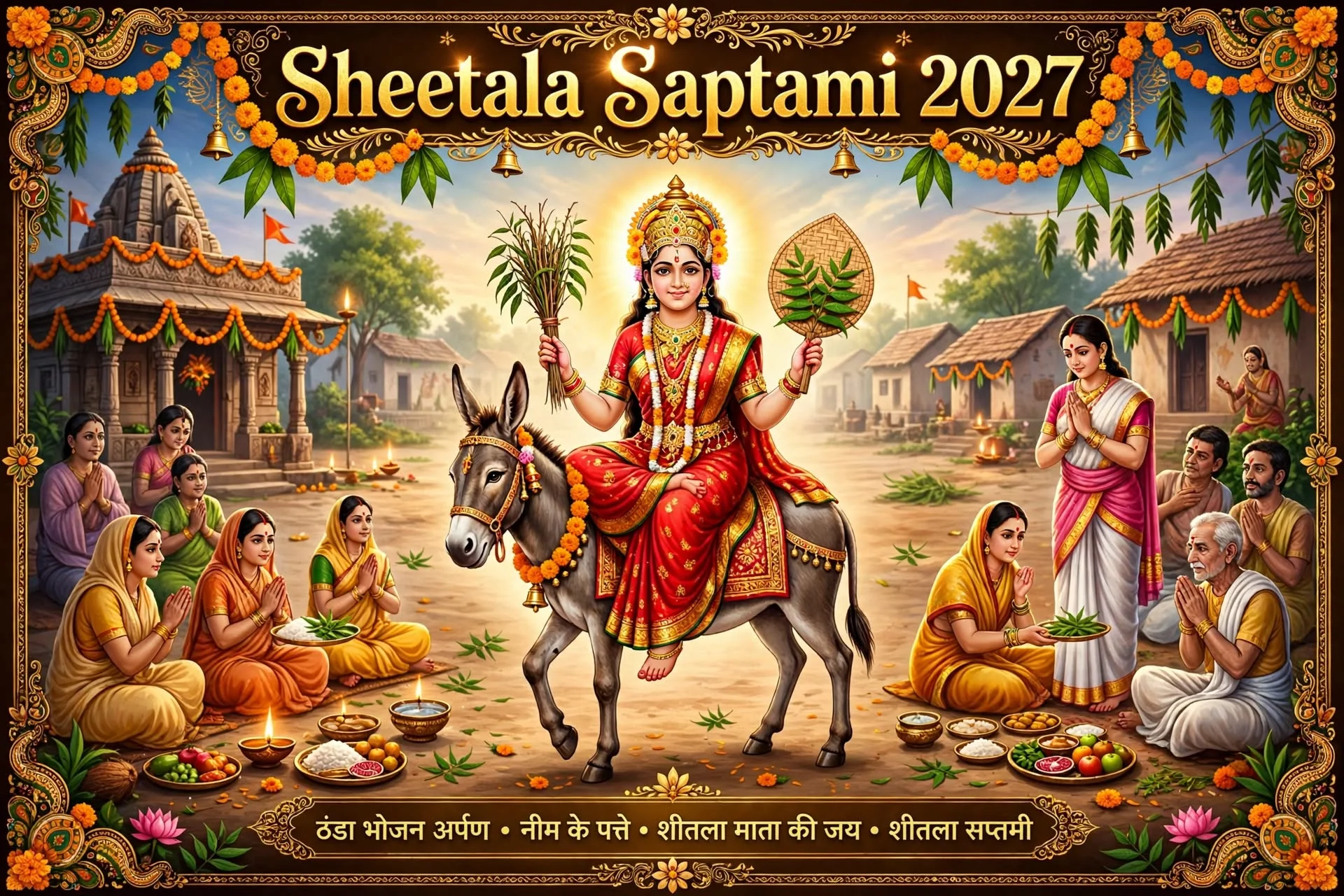
Sunday, Mar 28, 2027
Sheetala Saptami
Sheetala Saptami (शीतला सप्तमी) is an ancient, highly revered, and scientifically grounded Hindu fasting and protective festival celebrated on the seventh day (Saptami tithi) of the Krishna Paksha in the holy month of Chaitra according to the traditional Hindu calendar. Dedicated to Goddess Sheetala (the divine mother who presides over cooling energy, physical immunity, and protection against fevers, poxes, and epidemic illnesses), this sacred festival marks the annual observance of 'Basoda'—the unique ritual of consuming strictly cold, stale food (Baasi Bhojan) and refraining from lighting the domestic cooking fire.
View Festival Guide
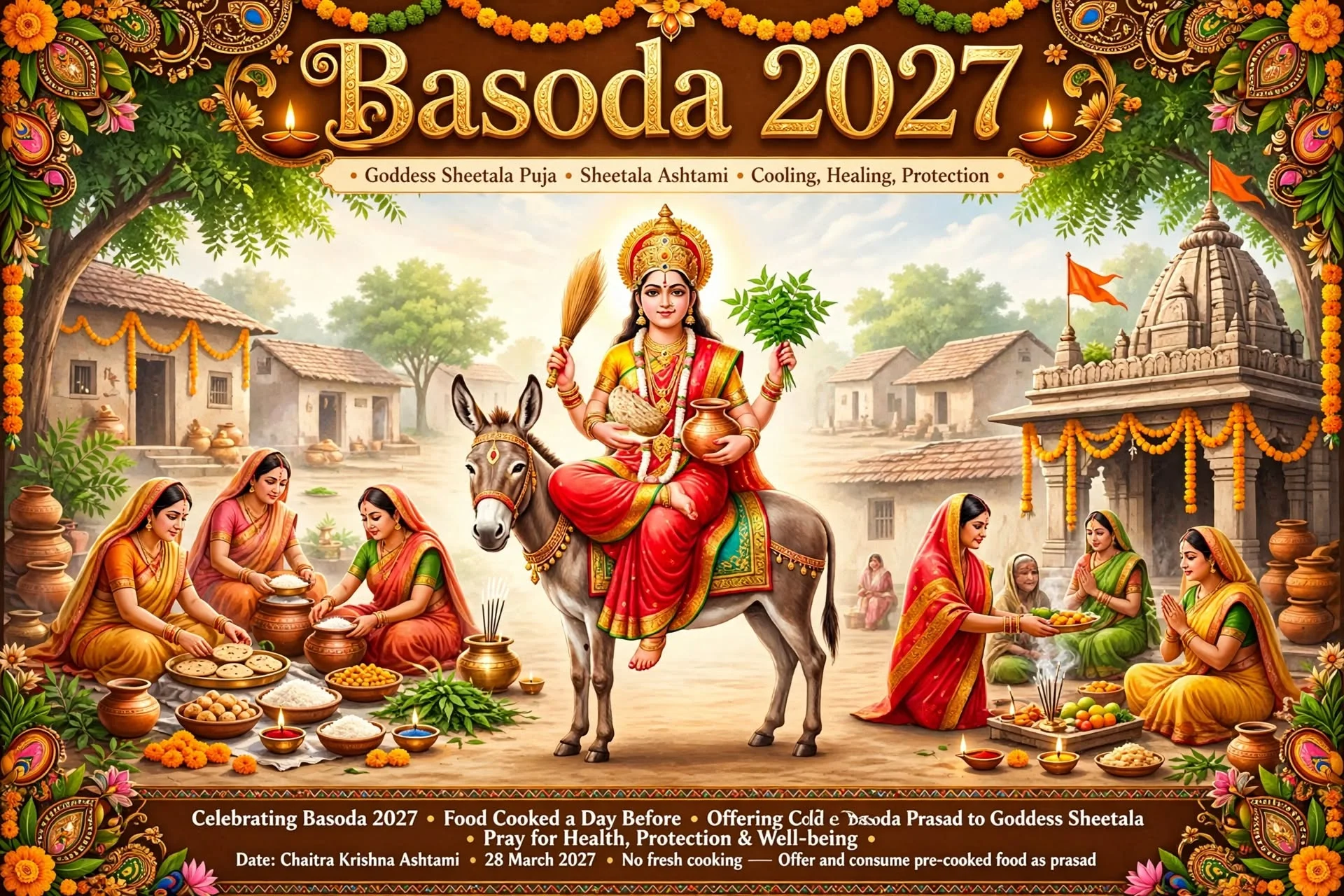
Tuesday, Mar 30, 2027
Basoda
Basoda (बासोड़ा), also revered across northern and western India as Sheetala Basoda or Baasi Kora, is an ancient, culturally unique, and epidemiologically profound Hindu festival observed on the seventh or eighth day (Saptami or Ashtami tithi) of the Krishna Paksha in the month of Chaitra. Dedicated to Goddess Sheetala (the divine mother presiding over cooling energy, hygiene, and protection against burning fevers and epidemic poxes), the term 'Basoda' is derived from the Hindi word 'Baasi', which translates to 'cooked on the previous day / cold'. On this consecrated day, millions of households strictly refrain from lighting the domestic cooking stove, consuming exclusively cold, stale food prepared on the preceding evening.
View Festival Guide
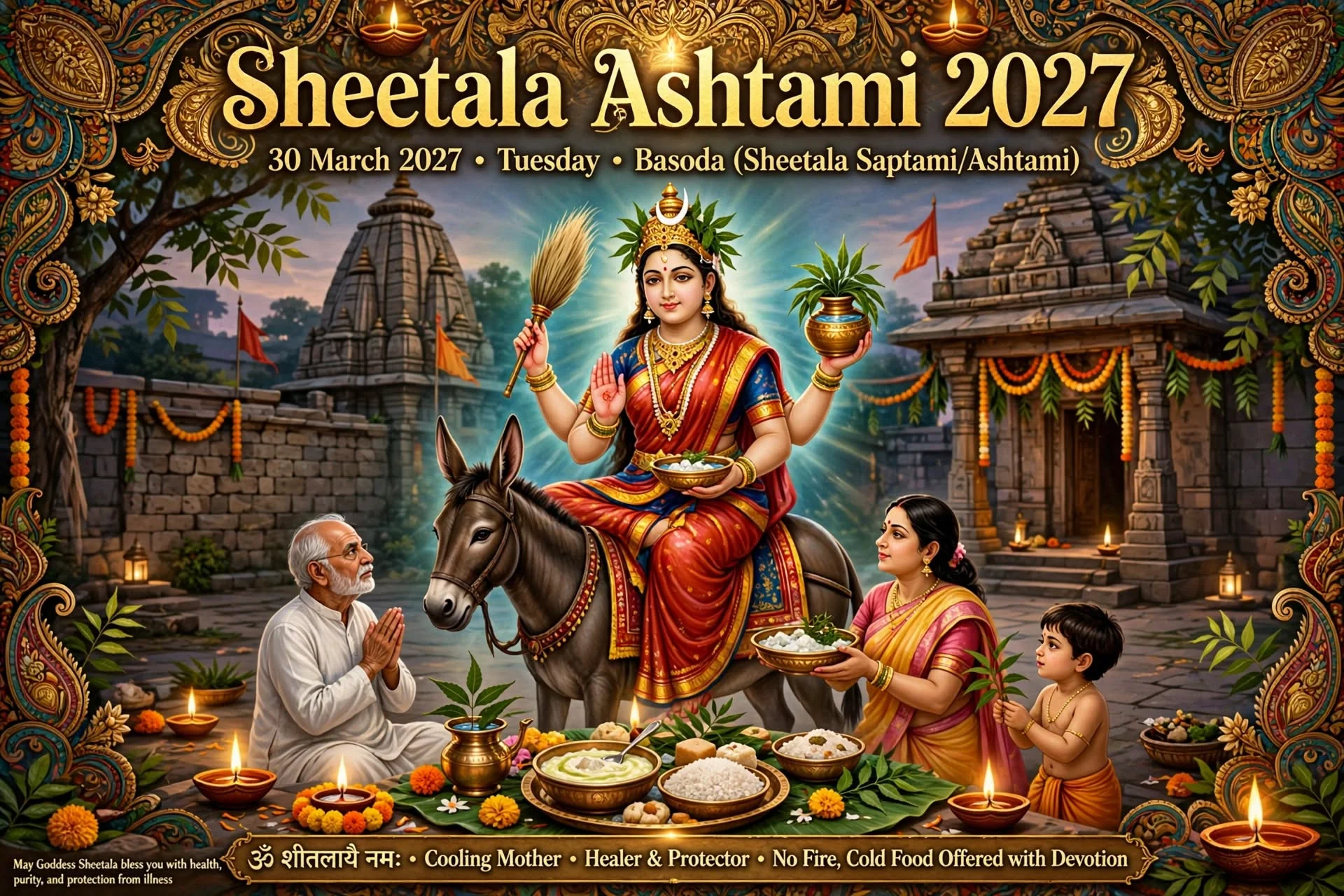
Tuesday, Mar 30, 2027
Sheetala Ashtami (Basoda)
Sheetala Ashtami (शीतला अष्टमी), also revered across northern and western India as the grand culmination of the Basoda festival, is an ancient, highly revered, and epidemiologically profound Hindu festival observed on the eighth day (Ashtami tithi) of the Krishna Paksha in the month of Chaitra. Dedicated to Goddess Sheetala (the divine mother who presides over cooling energy, physical immunity, and protection against fevers, poxes, and epidemic illnesses), this sacred festival marks the annual observance of 'Basoda'—the unique ritual of consuming strictly cold, stale food (Baasi Bhojan) and refraining from lighting the domestic cooking fire.
View Festival Guide
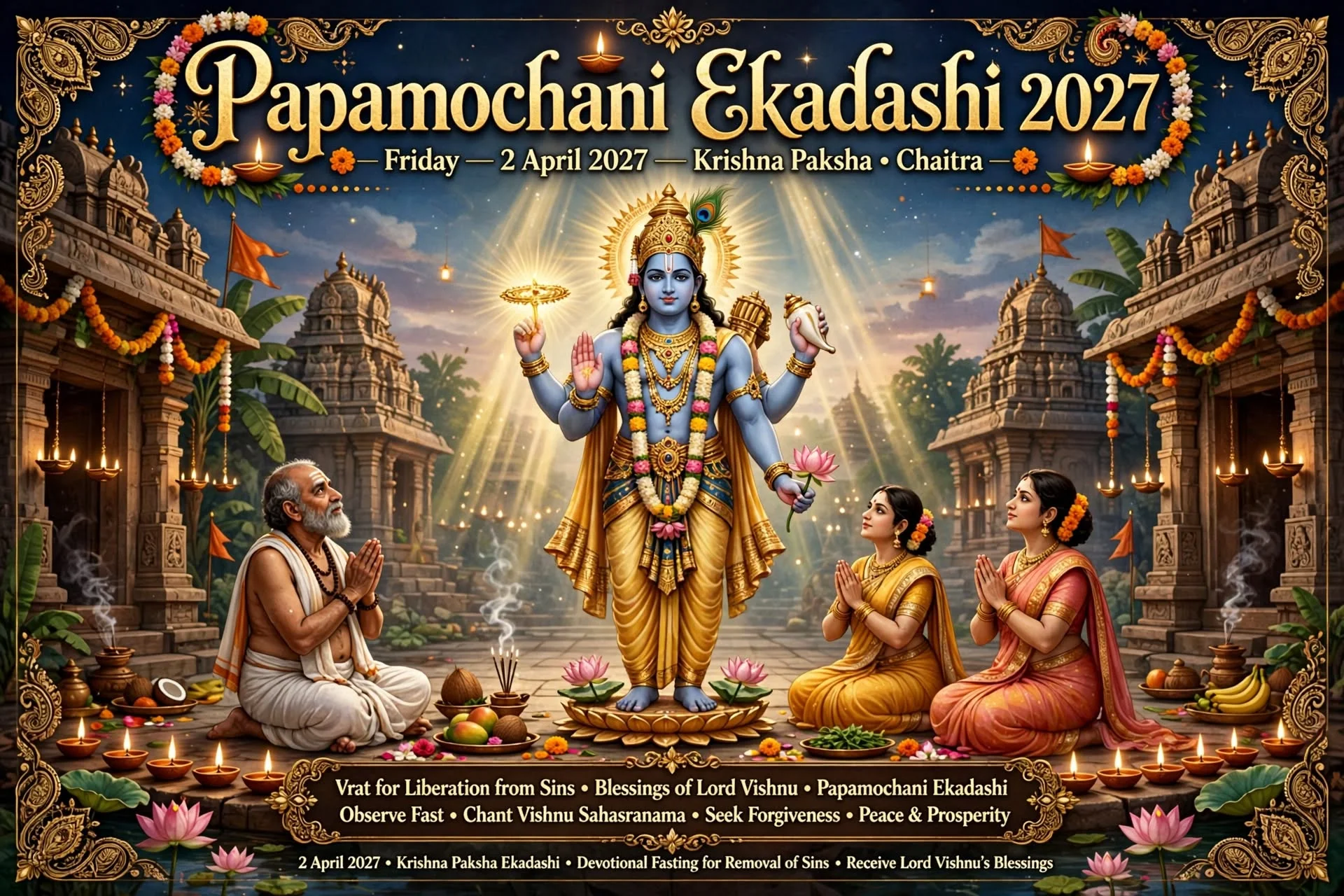
Friday, Apr 2, 2027
Papamochani Ekadashi
Papamochani Ekadashi holds a revered position in the Hindu calendar as the final Ekadashi of the lunar year. Falling during the Krishna Paksha of the closing lunar month (Phalguna in Purnimanta systems and Chaitra in Amanta systems), its name literally translates to 'the dissolver of sins' (Papa meaning sins, and Mochani meaning liberator). The sacred observance serves as an auspicious spiritual purge, offering devotees a divine opportunity to cleanse conscious and unconscious transgressions before entering the new spiritual cycle of Chaitra.
View Festival Guide
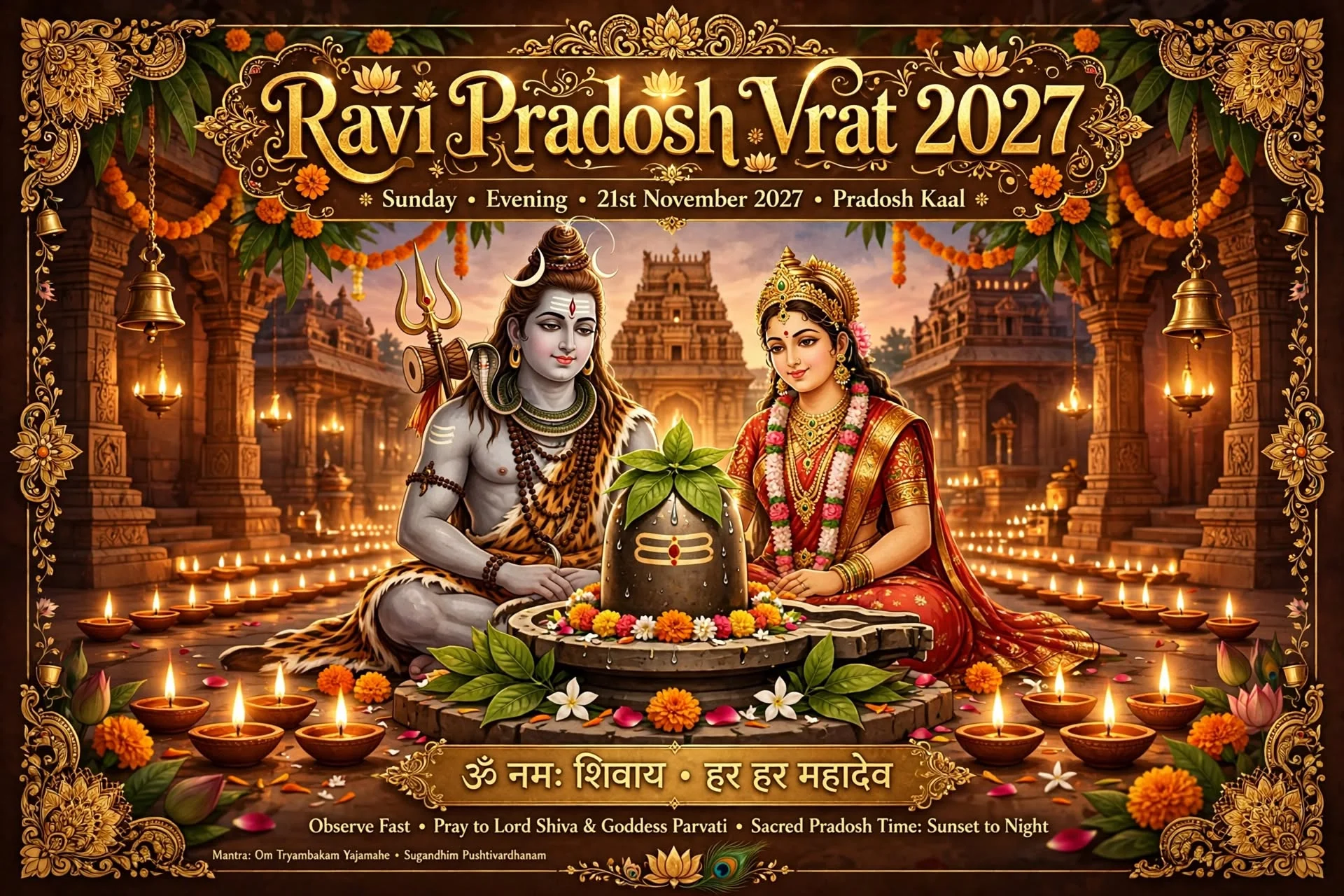
Sunday, Apr 4, 2027
Ravi Pradosh Vrat
Ravi Pradosh Vrat is an exceptionally sacred fasting day observed on the thirteenth lunar day (Trayodashi) that coincides with a Sunday (Ravivara). Dedicated to Lord Shiva, the cosmic dissolver of sorrow, this bimonthly vow unites the healing radiance of Surya Bhagavan with the boundless compassion of Mahadeva. Observed during the twilight Sandhya period, it is believed to banish physical ailments, clear karmic obstructions, and bestow vitality and longevity.
View Festival Guide