




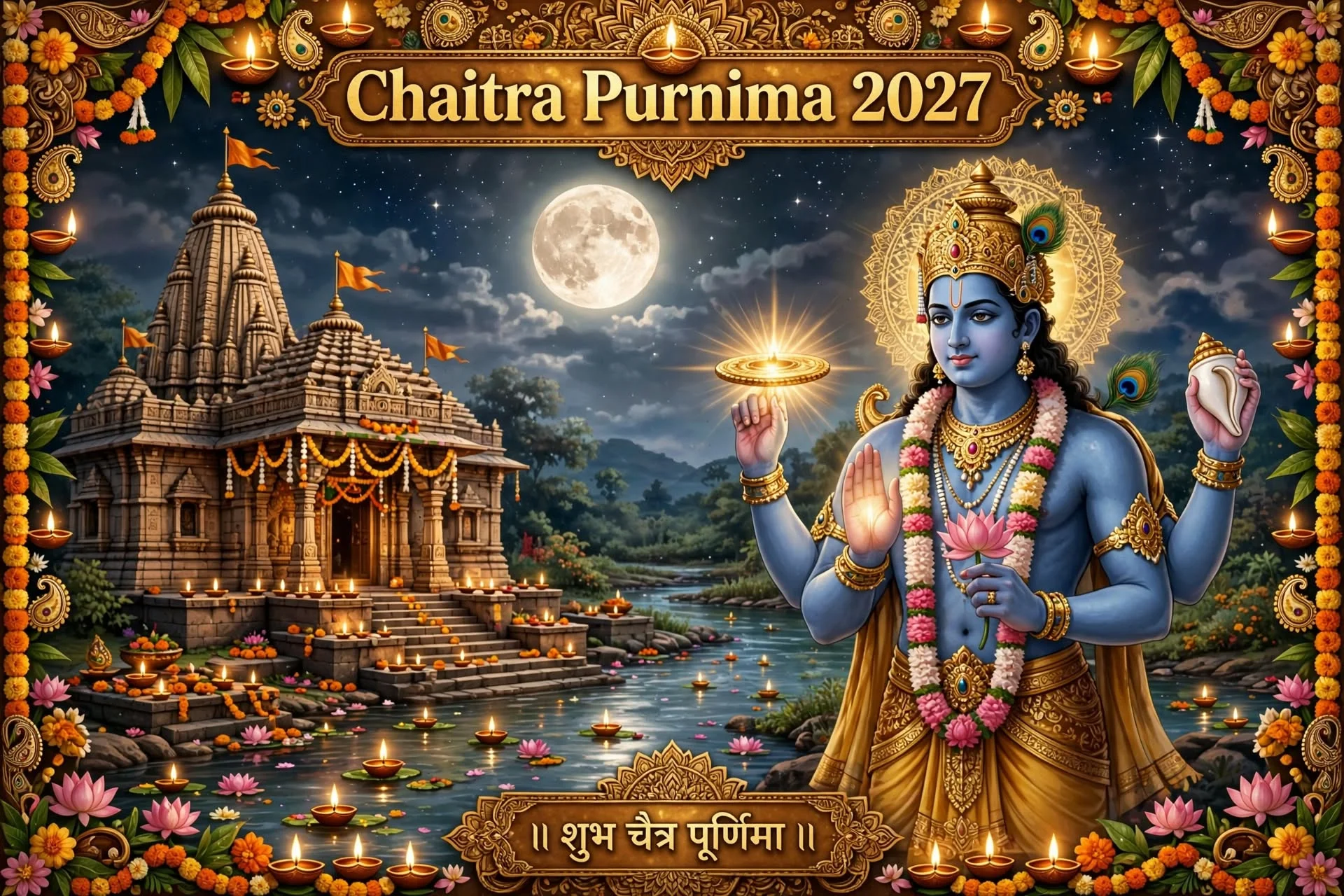
Chaitra Purnima, celebrated on the full moon day of the sacred month of Chaitra, holds an elevated position in the Hindu calendar as the inaugural full moon of the new lunar year. Characterized by the radiant illumination of the moon in the constellation of Chitra, this sacred tithi marks the arrival of the spring equinox's zenith and serves as a powerful spiritual vortex for holy river baths, Satyanarayana worship, ancestral prayers, and widespread charitable giving.
Chaitra Purnima 2027: Date, Puja Timings, Rituals & Stories
Chaitra Purnima Timings & Panchang
Important festival dates and auspicious timings
Usha Arghya (Sunrise)
05:51 am
Sandhya Arghya (Sunset)
06:50 pm
Start Date
Tuesday, 20 Apr 2027
Puja Muhurat
06:08 am – 03:57 am
Chaitra Purnima
The spiritual and mythological significance of Chaitra Purnima is celebrated across both northern and southern Indian traditions. In southern India, particularly Tamil Nadu and Kerala, it is observed with grandeur as Chitra Pournami, dedicated to Lord Chitragupta, the divine record-keeper of all human actions who assists Lord Yama. In northern and central India, the day is deeply consecrated to Lord Satyanarayana and celebrates the simultaneous appearance anniversary of Sri Hanuman (Hanuman Jayanti).
Devotees observe Chaitra Purnima by keeping a complete dawn-to-moonrise fast, performing purifying baths in sacred rivers such as the Ganga, Yamuna, Kaveri, and Vaigai, and conducting the auspicious Sri Satyanarayana Vrata Katha. Worshippers offer raw milk, white flowers, sandalwood, and sweet kheer to the rising full moon (Chandra Deva), praying for the expiation of secret sins, mental tranquility, and an unblemished karmic ledger for the new year.
Why is Chaitra Purnima Celebrated?
Chaitra Purnima is celebrated as the inaugural full moon of the Hindu year, providing a divine opportunity to cleanse past karmas, seek pardon for hidden transgressions, invoke the benevolent grace of Lord Satyanarayana and Chitragupta, and align the human mind with the serene, cooling illumination of the cosmic moon.
- Inaugural Full Moon of the Year: Sets a peaceful, prosperous, and sattvic foundation for the twelve upcoming lunar months.
- Worship of Lord Chitragupta: Devotees in southern India pray to Chitragupta to balance and forgive past negative karmic records.
- Sri Satyanarayana Vrata: Fulfills worldly and spiritual desires through the congregational recitation of the Satyanarayana Katha.
- Commemoration of Hanuman Jayanti: Celebrates the divine appearance of Sri Hanuman, the embodiment of strength and selfless devotion.
Scriptural Lore of Chitragupta and Satyanarayana
The Creation of Lord Chitragupta by Lord Brahma
The Bhavishya Purana records that when Yama, the lord of death and justice, became overwhelmed trying to keep track of the complex virtues and sins of billions of living creatures, he approached Lord Brahma for assistance. Lord Brahma entered deep cosmic meditation for eleven thousand years.
When Brahma opened his eyes, a radiant divine being holding an inkpot (Davati) and a reed pen (Lekhani) emerged from his body (Kaya), earning him the title Kayastha Chitragupta. Commissioned to meticulously record the actions (Karmas) of all beings, Chitragupta manifested on Chaitra Purnima, making it an eternal day of karmic reckoning and forgiveness.
The Origin of Satyanarayana Vrata on Purnima
The Skanda Purana recounts that Narada Muni, seeing humanity afflicted by poverty and sickness in Kaliyuga, sought a universal remedy from Lord Vishnu. The Supreme Lord revealed the Sri Satyanarayana Vrata as the easiest and most potent spiritual practice, especially when performed on Purnima tithis.
Observing this fast on the inaugural Purnima of Chaitra dispels worldly anxieties, restores lost fortune, harmonizes family life, and guarantees spiritual liberation at the end of life.
Source: Bhavishya Purana, Skanda Purana & Padma Purana
The Metaphysical Balance of Mind and Karma
The Full Moon and the Cosmic Mind (Manas)
In Vedic wisdom, the Moon rules the human mind ('Chandrama Manaso Jatah'). On Chaitra Purnima, the moon reflects the complete light of the Sun with zero obstruction, symbolizing the enlightened human intellect completely illuminated by the Supreme Soul.
Fasting on this full moon quiets the emotional turbulence of the mind, balances bodily fluids, and cleanses the subconscious memory of unresolved regrets, allowing the spiritual seeker to experience deep meditative peace.
Karmic Accountability and Self-Reflection
The worship of Chitragupta is not a petition to evade justice, but an act of profound moral accountability. It compels the devotee to examine their thoughts, speech, and deeds over the past year, resolve to make restitution, and commit to righteous living (Dharma).
Consuming food without salt or sugar on this day symbolizes penance and the purification of the senses.
Rituals & Devotional Protocol for Chaitra Purnima
Punya Snana, River Confluences, and Chitra Pournami
Devotees rise before sunrise, taking ritual dips in holy rivers such as the Ganga, Kaveri, or the sea. In Madurai, Tamil Nadu, the magnificent Chithirai Festival reaches its peak as Lord Kallazhagar (a form of Vishnu) enters the sacred Vaigai River mounted on a golden horse, witnessed by millions of ecstatic pilgrims.
Special pujas to Lord Chitragupta are conducted with offerings of varied colored rices (Chitrannam: lemon rice, tamarind rice, curd rice), raw sugar, and writing instruments, while donating umbrellas, footwear, and clothes to the needy.
Satyanarayana Vrata and Moonrise Arghya
In domestic shrines, families gather in the evening for the Sri Satyanarayana Vrata. An altar decorated with banana stems and mango leaves is established, and the five chapters of the sacred Katha are recited with devotion.
At moonrise, devotees offer Arghya to the radiant full moon with raw milk, Gangajal, and white flowers in a silver or brass vessel, followed by breaking their fast with the sweet Panjamrit and roasted wheat prasad (Sheera / Panjiri).
Chaitra Purnima Puja Vidhi (Step by Step)
- 1
Brahma Muhurta Snana & Sankalpa
Wake before dawn, take a purifying bath in holy river water or with Gangajal, wear clean white or yellow garments, and take the Purnima fasting vow.
- 2
Surya Arghya Samarpana
Offer clean water mixed with red chandan and flowers to the rising Sun God in a copper vessel, seeking physical vitality and spiritual clarity.
- 3
Altar & Peetha Preparation
Cleanse the family shrine, drape a clean yellow or red silk cloth over a wooden chauki, and fix four fresh banana plantain trunks at the corners.
- 4
Kalash Sthapana
Establish a sacred copper or brass Kalash filled with holy water, betel nut, silver coin, and mango leaves, crowning it with a coconut wrapped in red thread.
- 5
Satyanarayana & Chitragupta Sthapana
Install the sacred idols or images of Lord Satyanarayana and Lord Chitragupta, alongside Lord Ganesha and the Navagrahas.
Chaitra Purnima Puja Samagri List
Altar & Consecration Materials
Sacred articles required to establish the Satyanarayana altar and mandap.
- Idol or sacred framed picture of Lord Satyanarayana and Lord Chitragupta
- Four fresh banana stems (Kadali Stambha) to erect the mandap
- Yellow or red silk altar cloth, wooden chauki, and copper Kalash with coconut
- Gangajal, raw cow milk, curd, pure honey, cow ghee, and sugar for Panchamrit
Botanical Offerings & Fragrances
Sacred blossoms, perfumes, and writing instruments for Lord Chitragupta.
- Fresh white lotus blossoms, fragrant jasmine, and yellow marigold garlands
- Sacred Tulsi leaves and manjaris for Lord Vishnu
- Inkpot (Davati), traditional pen (Lekhani), and notebook for Chitragupta puja
- Sandalwood paste (Chandan), Kumkum, Haldi, and unbroken rice (Akshata)
- Pure cow-ghee brass lamps, cotton wicks, aromatic camphor, and dhoop sticks
Naivedya & Festive Prasad Ingredients
Traditional culinary offerings for the Satyanarayana Vrata and Chandra Arghya.
- Sapada Bhakshya ingredients: semolina/wheat flour, sugar, pure cow ghee, milk, bananas
Mantras and Prayers for Chaitra Purnima
Chaitra Purnima Vrat Rules and Fasting Guidelines
Observance Guidelines for Chaitra Purnima
Specific devotional disciplines and fasting protocols for Chaitra Purnima.
- Fasting Window: Maintain an unbroken fast from sunrise until the sighting of the full moon at dusk.
- Moonrise Arghya: The fast must be concluded only after offering Arghya to the rising full moon with raw milk and water.
- Satyanarayana Katha: The recitation of the Satyanarayana Katha should be listened to attentively with family members without leaving midway.
- Charitable Obligation: Donating white items—such as rice, milk, white clothing, and silver—on Purnima pacifies the mind and nullifies lunar defects.
Dos and Don'ts of Chaitra Purnima
Good Practices (Do's)
- Wake early during Brahma Muhurta and take a holy bath in sacred river water.
- Perform the Sri Satyanarayana Vrata and listen to the five chapters of the Katha.
- Offer Arghya to the full moon with raw milk, water, and white flowers at moonrise.
- Donate white items like rice, milk, curd, white clothes, and silver to the needy.
Things to Avoid (Don'ts)
Chaitra Purnima Across Regions
| Region | Local Name |
|---|---|
| Tamil Nadu (Madurai) | Chitra Pournami / Chithirai Festival |
| Northern India | Chaitra Purnima / Hanuman Jayanti |
| Kerala | Chitra Pournami |
Chaitra Purnima FAQs
What is Chaitra Purnima?
Chaitra Purnima is the first full moon day of the Hindu lunar year, celebrated with holy river baths, Satyanarayana Vrat, and Chitragupta worship.
Who is Lord Chitragupta and why is he worshipped on Chitra Pournami?
Lord Chitragupta is the divine recorder of human deeds assisting Lord Yama; worshipping him on Chitra Pournami grants pardon for past sins and balances karma.
What is the primary prasad offered during Satyanarayana Puja?
Sapada Bhakshya (Sheera / Panjiri), prepared using equal measures of semolina or wheat flour, pure cow ghee, sugar, milk, and bananas, is the sacred prasad.
Upcoming Festivals
View All
Tuesday, Apr 20, 2027
Anvadhan
Anvadhan (अन्वाधान) is an ancient, highly revered Vedic ritual and spiritual observance in Sanatana Dharma performed on the day immediately preceding the New Moon (Amavasya) or Full Moon (Purnima). Rooted in the pristine traditions of the Shrauta and Grihya Sutras, Anvadhan literally translates to 'the solemn placing and replenishment of sacred fuel wood into the consecrated Vedic fires'. In traditional Vedic ritualism, householders (Grihasthas) and priests who maintain the sacred Agnihotra fires perform Anvadhan to prepare the sacrificial altars for the grand Darsha Yajna (New Moon sacrifice) or Paurnamasa Yajna (Full Moon sacrifice) scheduled for the following day.
View Festival Guide
Tuesday, Apr 20, 2027
Hanuman Janmotsava
Hanuman Janmotsava marks the glorious birth celebration of Sri Hanuman, the immortal Rudra avatar of Lord Shiva and the supreme paragon of unalloyed devotion (Dasa Bhakti) to Lord Sri Rama. Celebrated with profound reverence on the full moon day (Purnima) of the sacred month of Chaitra, this divine occasion honors the eternal presence of Bajrangbali on earth. Traditional Vedic scholars and Vaishnava acharyas specifically designate this holy day as 'Janmotsava' (the celebration of birth) rather than 'Jayanti', because Sri Hanuman is one of the seven sacred Chiranjivis (deathless immortals) who eternally resides on earth wherever the holy name of Rama is chanted.
View Festival Guide
Tuesday, Apr 20, 2027
Hanuman Jayanti
Hanuman Jayanti marks the glorious appearance anniversary of Sri Hanuman, the Rudra avatar of Lord Shiva, the foremost servant of Lord Sri Rama, and the eternal epitome of selfless devotion (Seva), valor, and spiritual strength. Celebrated on the full moon day (Purnima) of the sacred month of Chaitra, this auspicious festival commemorates the auspicious moment when Lord Hanuman manifested on earth to assist Lord Rama in vanquishing the forces of evil and establishing the eternal kingdom of righteousness (Dharma).
View Festival Guide

Wednesday, Apr 21, 2027
Ishti
Ishti is a foundational Vedic ritual observance appearing prominently in Hindu Panchangs on the Pratipada tithi (the first lunar day) following either Amavasya (new moon) or Purnima (full moon), marking the prescribed performance day for the fortnightly Vedic Darsha-Purnamasa sacrifices.
View Festival Guide
Saturday, Apr 24, 2027
Vikata Sankashti
Vikata Sankashti Chaturthi is an auspicious fasting day dedicated to Lord Ganesha, celebrated on the fourth lunar day of the waning moon (Krishna Paksha Chaturthi) following Chaitra Purnima. In the traditional Purnimanta calendar, this tithi falls in the month of Vaishakha, while in the Amanta calendar followed in Maharashtra, Gujarat, and southern India, it falls in the month of Chaitra. Dedicated to 'Vikata Ganapati'—the fierce, formidable, and obstacle-crushing form of Lord Ganesha—this sacred fast possesses the divine power to demolish the most insurmountable hardships and emotional turmoil.
View Festival Guide
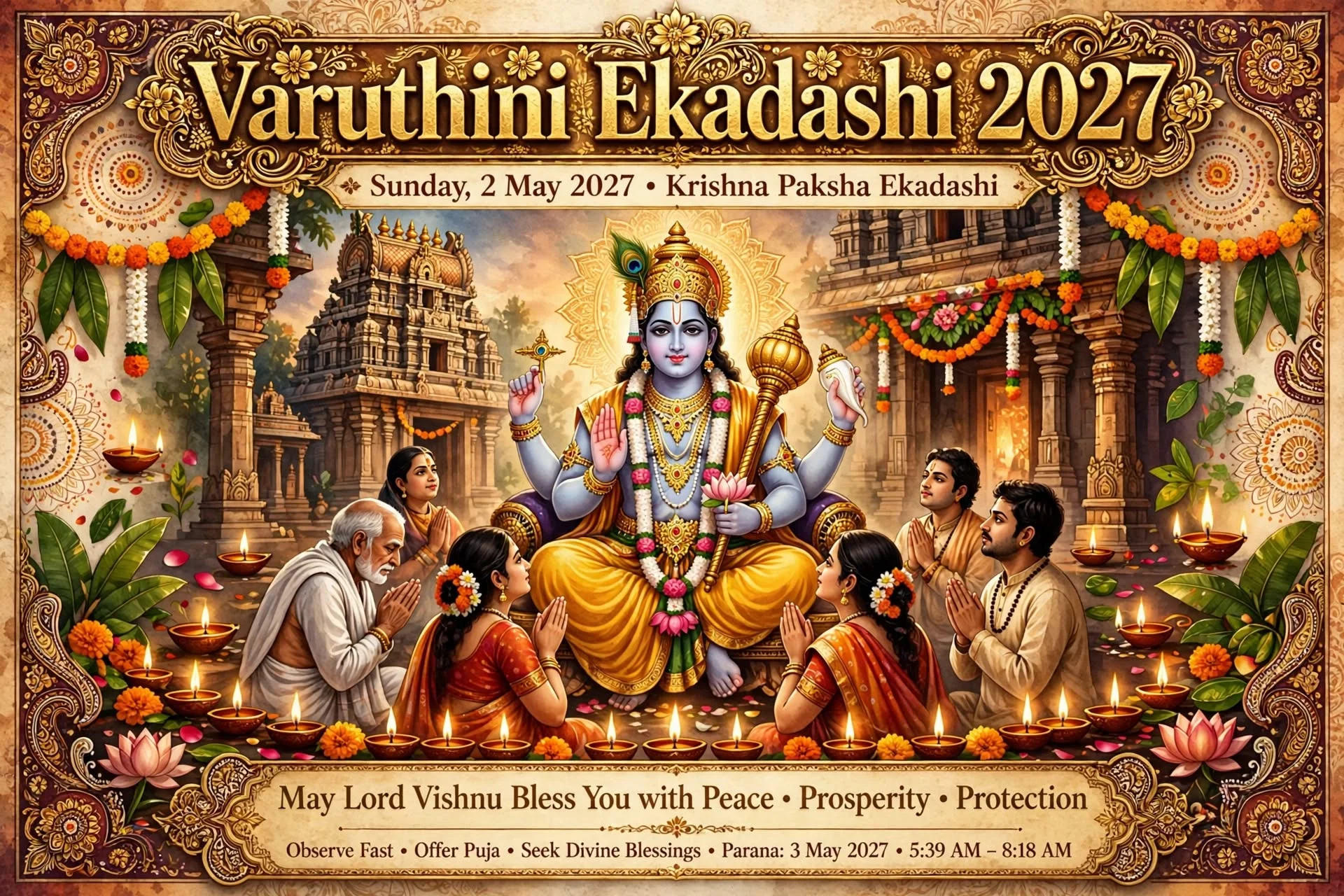
Sunday, May 2, 2027
Varuthini Ekadashi
Varuthini Ekadashi, also known as Baruthani Ekadashi or Varuthini Ekadashi Vrat, is an important Hindu fasting festival dedicated to Lord Vishnu. It is observed on the Krishna Paksha Ekadashi (eleventh lunar day of the waning moon) during the month of Vaishakha according to the North Indian Purnimanta calendar. In regions following the Amanta calendar, the same observance falls during Chaitra Krishna Paksha. The Sanskrit word Varuthini is associated with protection, armour, and divine safeguarding, symbolizing the protective grace of Lord Vishnu for devotees who observe this sacred vrata with faith and discipline.
View Festival Guide
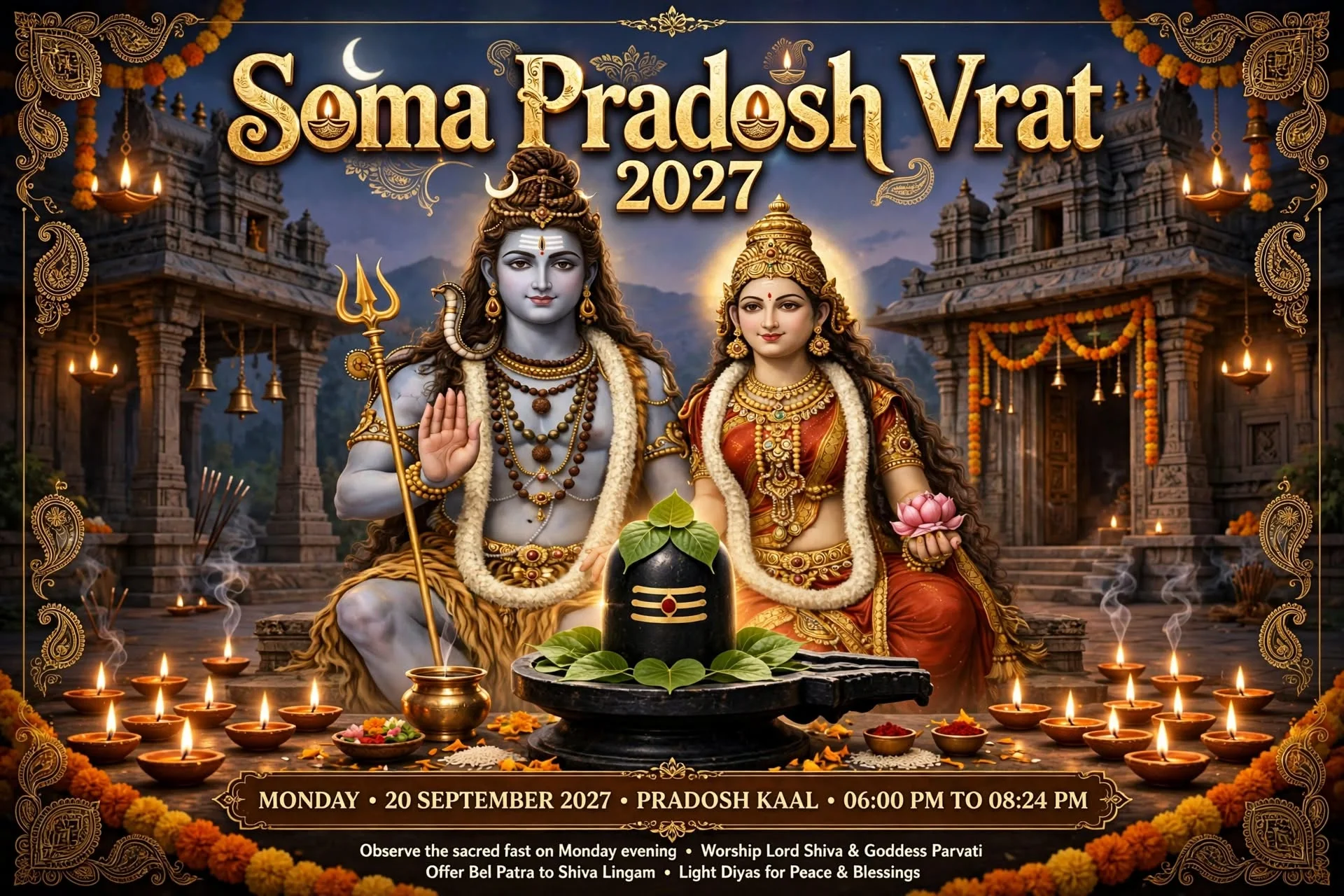
Monday, May 3, 2027
Soma Pradosh Vrat
Soma Pradosh Vrat, also known as Som Pradosh Vrat or Soma Trayodashi, is a Hindu fasting and worship observance dedicated primarily to Lord Shiva. It is observed when Trayodashi, the thirteenth lunar day of either Shukla Paksha or Krishna Paksha, coincides with Monday. Monday is traditionally associated with Lord Shiva, which gives this Pradosh observance its name.
View Festival Guide

Thursday, May 6, 2027
Darsha Amavasya
Darsha Amavasya is a significant new moon observance in the Hindu calendar designating the specific night when the Moon is completely invisible to the human eye, having fully merged into the conjunction of the Sun.
View Festival Guide