




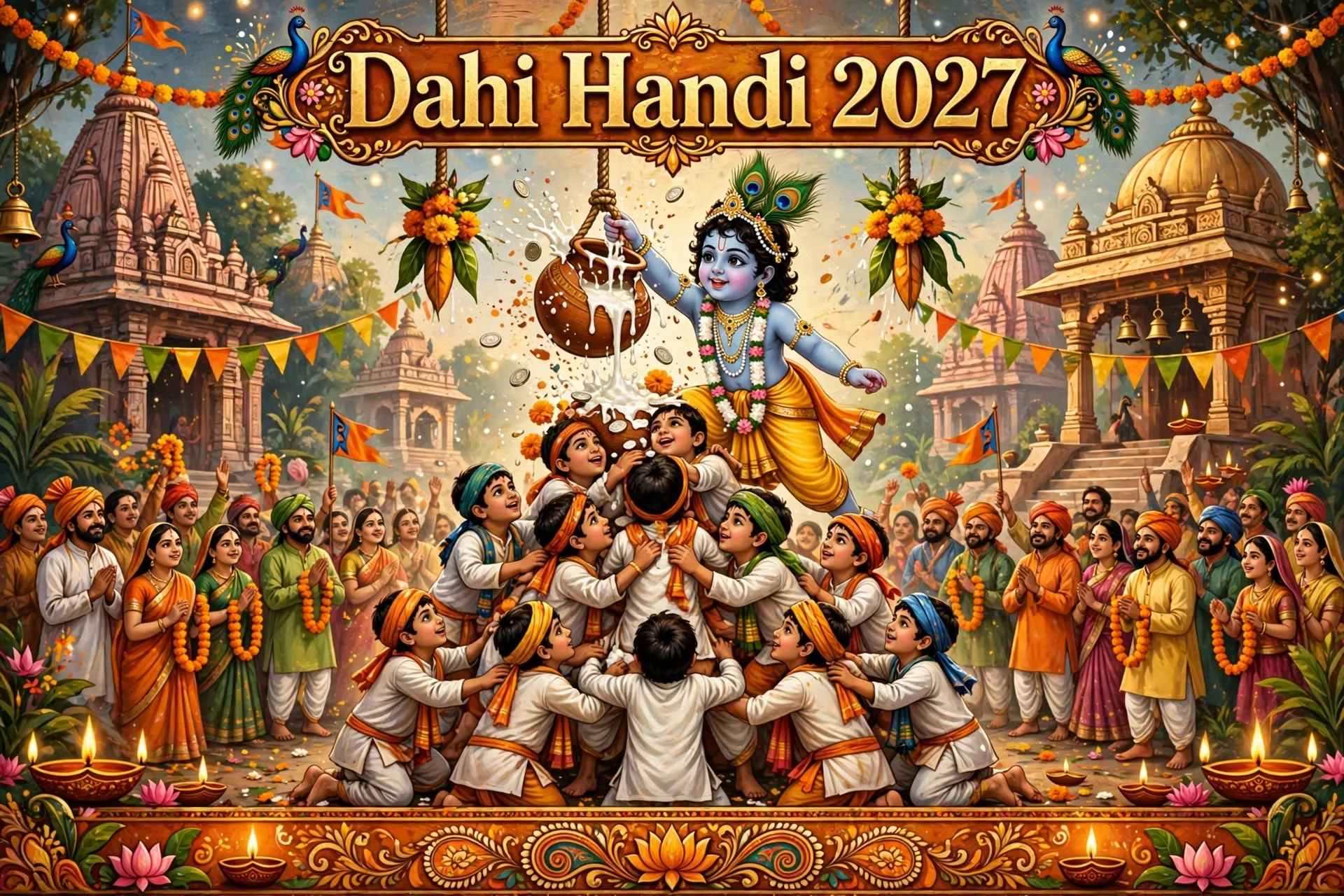
Dahi Handi, also celebrated as Gopalakala, Utlotsavam, or the Curd Pot Festival, is an exuberant, high-energy festival celebrated on the Navami tithi (ninth lunar day) of Krishna Paksha in the sacred monsoon month of Bhadrapada (or Shravana in the Amanta calendar). Occurring on the morning immediately following Krishna Janmashtami, Dahi Handi commemorates the enchanting childhood pastimes (Baal Leelas) of Bhagwan Sri Krishna in the pastoral village of Gokul, where the young Lord and His cowherd companions (Gopas) formed ingenious human pyramids to reach and break earthen pots filled with freshly churned curd, butter, and milk hung from the high ceilings of gopis' houses.
Dahi Handi 2027: Date, Puja Timings, Rituals & Stories
Dahi Handi Timings & Panchang
Important festival dates and auspicious timings
Usha Arghya (Sunrise)
05:56 am
Sandhya Arghya (Sunset)
06:50 pm
Start Date
Thursday, 26 Aug 2027
Puja Muhurat
07:20 pm – 05:39 pm
Dahi Handi
Celebrated with monumental fervor across Maharashtra (especially in Mumbai, Thane, Pune, and Nagpur), Gujarat, and South India (as Utlotsavam in Andhra Pradesh and Tamil Nadu), the festival brings together millions of people in a magnificent display of collective athleticism, coordination, teamwork, and spiritual joy. Athletic teams of young men and women—reverently known as 'Govindas'—form towering multi-tiered human pyramids rising up to nine levels high to reach clay pots suspended dozens of feet in the air, competing to shatter the pot amidst thunderous cheers, rhythmic beating of dhol-tashas, and splashing jets of water.
Beyond its athletic thrills, Dahi Handi is grounded in profound Vedantic and Vaishnava philosophy. The breaking of the earthen pot (Handi) symbolizes the shattering of the fragile human ego (Ahamkara) and the release of the divine nectar of pure love (Prema) residing within. The contents of the pot—a consecrated blend of curd, flattened rice (Poha / Poha Lahi), puffed grain, jaggery, and butter known as 'Kala'—are joyously distributed as prasad, honoring the egalitarian, casteless communal feasts shared by Lord Krishna with His beloved cowherd friends on the banks of the Yamuna.
Why is Dahi Handi Celebrated?
Dahi Handi is celebrated to reenact the joyous leelas of Lord Sri Krishna as 'Makhan Chor' (the Butter Thief), celebrating divine playfulness, innocent mischief, and communal harmony.
According to the Srimad Bhagavatam, when the gopis of Gokul attempted to hide their pots of sweet butter from young Krishna by hanging them high from rafters, Krishna mobilized the village children, forming human ladders on each other's shoulders to reach the pots and share the butter equally among all children and monkeys.
The festival instills enduring values of teamwork, mutual trust, fearlessness, physical endurance, and shared abundance across diverse social communities.
- Reenacting Sri Krishna's childhood butter-stealing pastimes with the cowherd boys of Gokul.
- Shattering the earthen pot to symbolize the destruction of ego and liberation of inner spiritual nectar.
- Fostering intense teamwork, unity, physical fitness, and trust through human pyramid building.
- Preparing and sharing 'Gopalakala'—the egalitarian mixture of beaten rice, curd, cucumber, and butter.
- Singing vibrant Marathi and Hindi devotional songs like 'Govinda Ala Re Ala' amidst ecstatic dancing.
Scriptural Origins in the Srimad Bhagavatam and Maharashtrian Traditions
The Butter-Stealing Pastimes in the Srimad Bhagavatam
In the eighth and ninth chapters of the Tenth Canto of the Srimad Bhagavatam, Sage Shukadeva Goswami narrates the enchanting childhood leelas of Sri Krishna. The elder gopis approached Mother Yashoda with affectionate complaints: 'O Yashoda, your beautiful son unlooses our calves before milking time, steals our stored curd, and feeds it to the monkeys!'
When the gopis hung their earthen pots from high ceilings on swings (Shika) and darkened the rooms to conceal them, Krishna and Balarama stacked wooden grinding mortars and climbed upon the shoulders of their cowherd friends. Puncturing the bottoms of the clay pots with sharp stones, they allowed the sweet buttermilk to stream down into their mouths, dancing with unbridled joy.
The Historical Emergence of Dahi Handi in Maharashtra
The organized public celebration of Dahi Handi in Maharashtra gained great impetus during the era of Chhatrapati Shivaji Maharaj and the saint-poets of Maharashtra (Sant Dnyaneshwar, Sant Tukaram, and Sant Eknath). The saints emphasized that Gopalakala represents the eradication of social hierarchies: in Krishna's company, rich and poor cowherds mixed their lunches into one collective pot, eating together without caste distinction.
In the early 20th century, during the Indian freedom struggle, neighborhood mandals organized Dahi Handi troupes (Govinda Pathaks) to foster physical endurance, martial readiness, and nationalist solidarity among youth.
Utlotsavam and Greased Pole Traditions in South India
In South Indian temple towns like Tirupati, Udupi, and Madurai, the festival is celebrated as 'Utlotsavam'. In temple courtyards, a tall wooden pole is smeared with slippery oil and grease, with a pot of curd and coins tied at the summit.
Youth take turns attempting to climb the slippery pole while spectators spray jets of cold water, testing their agility and balance in honor of young Krishna's daring exploits.
Ego Dissolution, Collective Harmony, and Gopalakala
The Handi as the Human Body and Mind
In Vedantic allegory, the earthen pot (Kumbha or Handi) represents the human body made of clay, and the curd and butter inside represent the churned essence of the pure soul (Atman) and devotional love.
When the divine grace of Krishna breaks the hardened vessel of identification with the physical body, the latent sweetness of spiritual bliss flows freely to nourish the entire community.
The Human Pyramid as Spiritual Cooperation
Building a multi-tiered human pyramid requires absolute surrender, mutual trust, and humility. The strongest members form the broad foundational base, bearing the weight of others in quiet sacrifice, while the agile child (the 'Govinda' representing Krishna) climbs to the peak.
This mirrors the ideal spiritual community (Satsang), where every member supports one another to elevate collective consciousness toward the Divine.
Govinda Training, Handi Suspension, and Gopalakala Preparation
Hanging the Sacred Handi and Mandap Setup
Local communities suspend a large, decorative clay pot 20 to 50 feet above street level using pulleys and strong ropes. The pot is decorated with bright floral garlands, mango leaves, and peacock feathers, and filled with curd, milk, puffed rice, fruits, and golden marigold petals.
Safety nets, medical teams, and water hoses are set up around the arena to ensure the well-being of the participating Govindas.
Preparation of Gopalakala Prasad
At domestic altars and community mandals, devotees prepare 'Gopalakala' by blending flattened rice (Poha), roasted puffed rice (Lahi), fresh curd, churned butter, finely chopped cucumber, green chilies, grated ginger, and pomegranate seeds.
Offered first to Lord Krishna with fresh Tulsi leaves, this sanctified dish is shared enthusiastically among all participants and visitors.
Dahi Handi Puja Vidhi (Step by Step)
- 1
Brahma Muhurta Snana & Sankalpa
Wake early, bathe in clean water, wear fresh traditional clothing, and take a solemn vow to celebrate Gopalakala in a spirit of friendship, devotion, and non-violence.
- 2
Bal Gopal Sthapana & Shringara
Seat the idol of Bal Gopal on the altar, drape Him in bright yellow garments, and decorate Him with fresh peacock feathers, flute, and marigold garlands.
- 3
Panchamrita Abhishekam
Bathe the deity with cow milk, curd, honey, ghee, and sugar water, followed by sanctified Gangajal, drying Him with a soft silk cloth.
- 4
Consecration of the Sacred Dahi Handi
Fill the earthen clay pot with fresh curd, milk, flattened rice (poha), bananas, and marigold flowers; anoint the outer surface with turmeric, rolli, and swastika marks.
- 5
Handi Arohana (Suspending the Pot)
Suspend the decorated clay pot high between buildings or tall poles using sturdy ropes, offering prayers for the safety of all participants.
Dahi Handi Puja Samagri List
Handi Pot and Suspension Gear
- Large decorative earthen clay pot (Handi / Matka)
- Sturdy ropes, pulleys, and secure overhead suspension poles
- Turmeric powder, red kumkum, and rolli for drawing swastikas on the pot
- Fresh whole coconuts for auspicious breaking before the climb
- Floral garlands of marigolds, mango leaves, and peacock feathers
Deity Worship and Altar Items
- Idol of Bal Gopal or Sri Krishna with flute and peacock feather
- Panchamrita ingredients: cow milk, curd, honey, ghee, and raw sugar
- Fresh holy Tulsi leaves and yellow marigold flowers
- Pure cow-ghee lamp, cotton wicks, and natural camphor tablets
- Brass bell (Ghanti) and shankha (conch shell)
Gopalakala Ingredients and Prasad
- Flattened beaten rice (Poha) and roasted puffed rice (Lahi)
- Fresh thick curd (yogurt) and freshly churned homemade butter
- Finely diced crisp cucumber, green chilies, and grated ginger
- Pomegranate arils, roasted peanuts, and unrefined jaggery
Mantras and Prayers for Dahi Handi
Dahi Handi Vrat Rules and Fasting Guidelines
Conduct and Athletic Safety Discipline
Govindas observe discipline, abstinence from alcohol and intoxicants, and mutual respect. The festival must be celebrated in a joyous, sportsmanship-driven spirit without aggressive rivalry.
- Strict prohibition of alcohol, drugs, or vulgar behavior among Govinda pathaks.
- Mandatory use of safety harnesses and protective helmets for young climbers.
- Offer prayers to Lord Krishna and break an auspicious coconut before forming pyramids.
- Share the Gopalakala prasad equally with all participants and bystanders.
Purity and Prasad Reverence
The curd and butter in the pot represent divine leela and must be treated with reverence. After breaking, the area should be cleansed, and food wastage must be prevented.
Dos and Don'ts of Dahi Handi
Good Practices (Do's)
- Form human pyramids with rigorous training, mutual trust, and adequate safety precautions.
- Prepare wholesome Gopalakala using beaten rice, curd, butter, and cucumber.
- Cheer for all teams with sportsmanship and chants of 'Govinda Ala Re Ala!'.
- Offer the broken handi prasad respectfully to Lord Krishna before partaking.
- Maintain clean premises and respect neighboring communities during celebrations.
Dahi Handi Across Regions
| Region | Local Name |
|---|---|
| Maharashtra (Mumbai, Thane, Pune) | Dahi Handi / Govinda Mahotsav |
| South India (Andhra Pradesh, Tamil Nadu, Udupi) | Utlotsavam / Vittalotsava |
| Gujarat (Dwarka, Ahmedabad) | Makhan Handi |
Dahi Handi FAQs
What does the breaking of the Dahi Handi symbolize?
The shattering of the earthen pot symbolizes breaking the brittle human ego (Ahamkara), releasing the divine nectar of pure love (Prema) and sharing God's grace with all beings.
What is Gopalakala?
Gopalakala is a traditional sattvic dish prepared by mixing beaten flattened rice (Poha), roasted puffed rice (Lahi), fresh curd, churned butter, diced cucumber, and jaggery, representing the shared meals of Krishna and His cowherd friends.
Who are 'Govindas' in the context of Dahi Handi?
'Govindas' are the enthusiastic participants and athletes who train rigorously in neighborhood groups (Govinda Pathaks) to build human pyramids and break the suspended pots.
Upcoming Festivals
View All
Saturday, Aug 28, 2027
Aja Ekadashi
Aja Ekadashi, also celebrated with immense spiritual reverence as Ananda Ekadashi, is observed on the eleventh lunar day (Ekadashi tithi) of the Krishna Paksha (dark waning fortnight) in the sacred monsoon month of Bhadrapada (or Shravana in the Amanta calendar). Dedicated to Bhagwan Vishnu in His divine form as Hrishikesha (the supreme master of the senses), this sanctified vrata is extolled in the Brahmavaivarta Purana and Padma Purana as an extraordinary spiritual penance capable of destroying all accumulated sins, reversing catastrophic worldly misfortunes, and bestowing liberation (Moksha).
View Festival Guide
Saturday, Aug 28, 2027
Bachha Baras Dwadashi
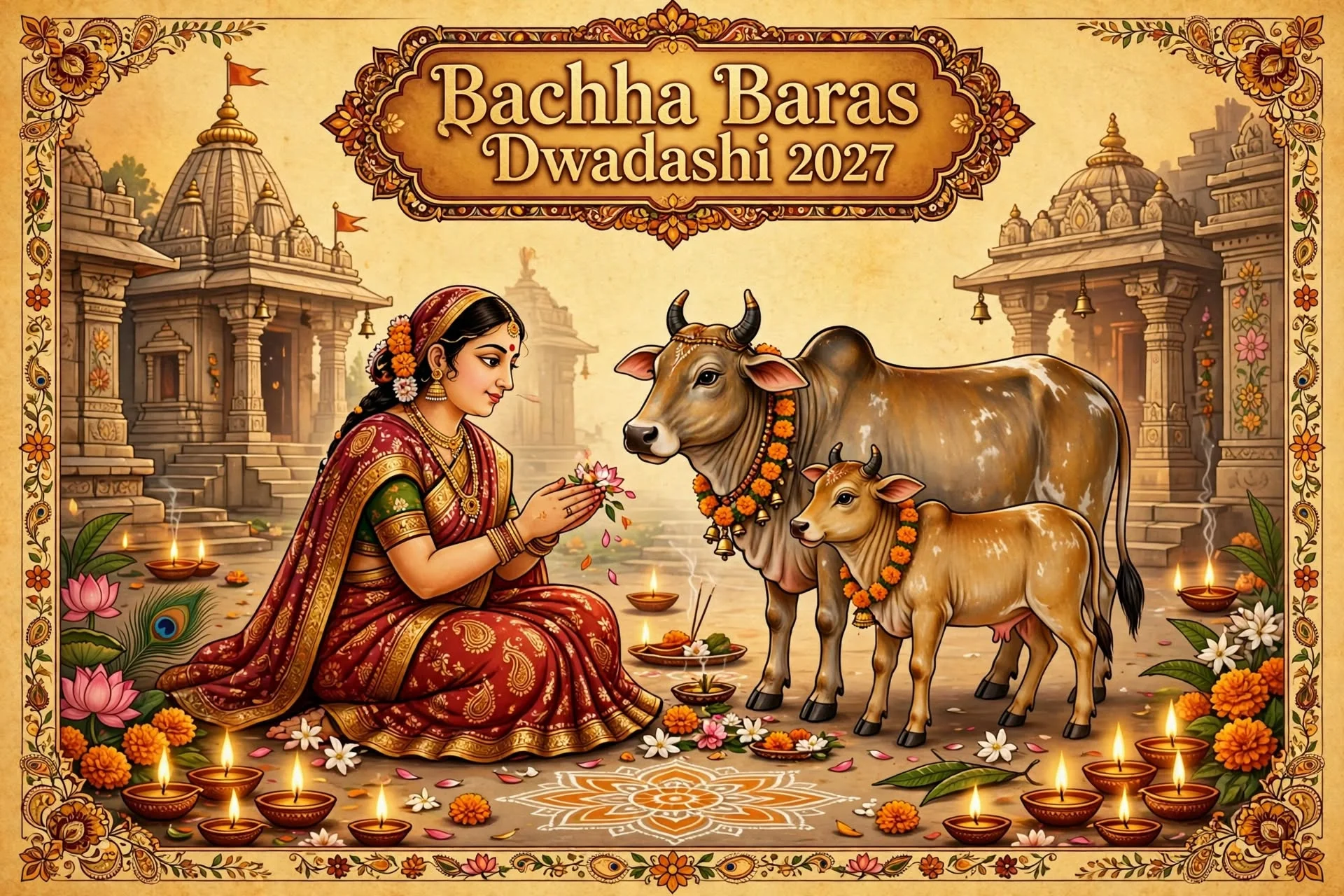
Bachha Baras Dwadashi, also reverently celebrated as Govatsa Dwadashi, Vasu Baras, or Vatsa Dwadashi, is observed on the twelfth lunar day (Dwadashi tithi) of Krishna Paksha in the sacred monsoon month of Bhadrapada (or Shravana in the Amanta calendar scheme). Falling four days after Krishna Janmashtami, this heartwarming festival is dedicated exclusively to the adoration of Kamadhenu's celestial daughter, the divine cow Nandini, and her young suckling calf (Bachha / Vatsa), celebrating maternal devotion, rural cattle welfare, and the sacred spiritual bond between humanity and the animal kingdom.
View Festival Guide
Sunday, Aug 29, 2027
Ravi Pradosh Vrat
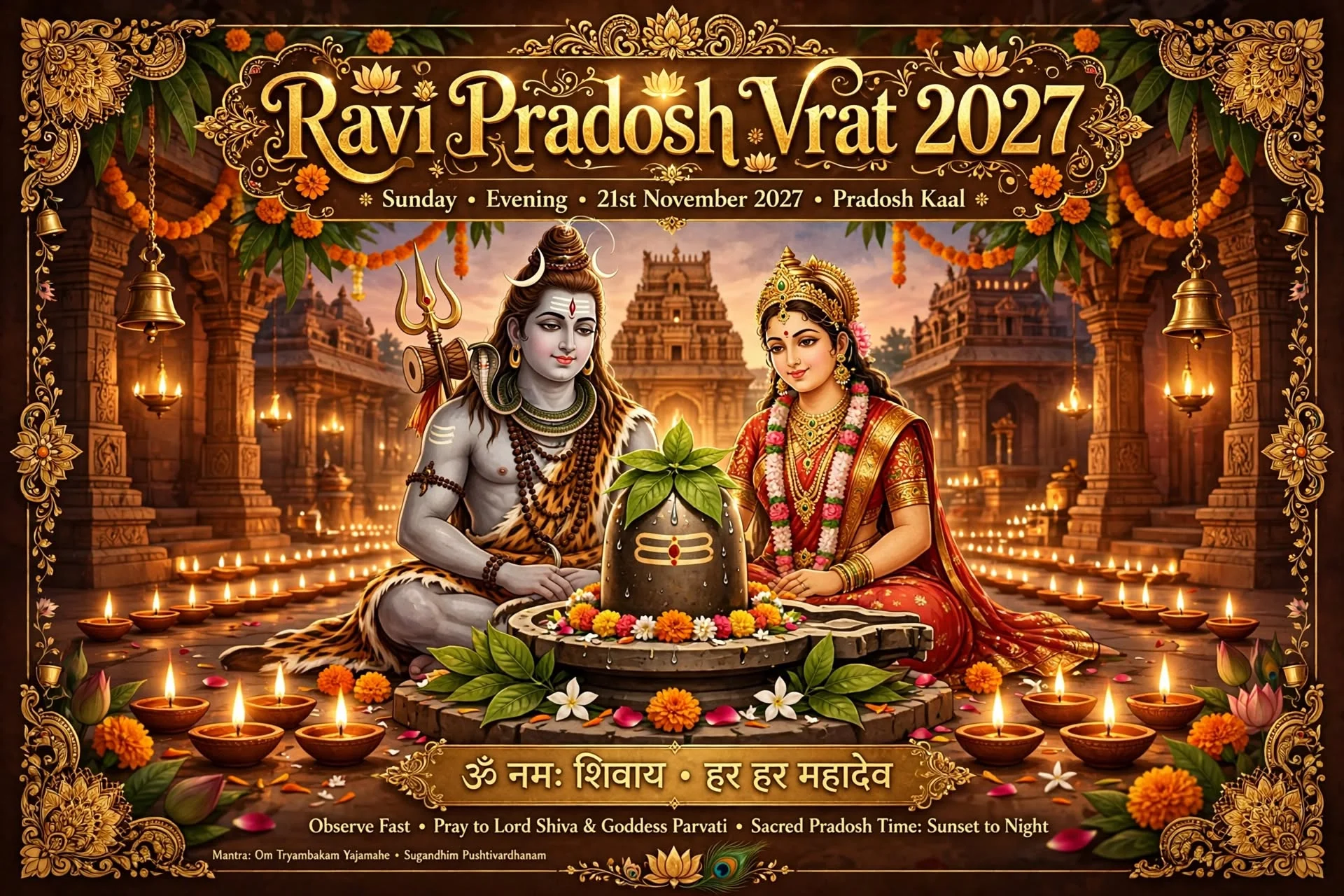
Ravi Pradosh Vrat is an exceptionally sacred fasting day observed on the thirteenth lunar day (Trayodashi) that coincides with a Sunday (Ravivara). Dedicated to Lord Shiva, the cosmic dissolver of sorrow, this bimonthly vow unites the healing radiance of Surya Bhagavan with the boundless compassion of Mahadeva. Observed during the twilight Sandhya period, it is believed to banish physical ailments, clear karmic obstructions, and bestow vitality and longevity.
View Festival Guide

Tuesday, Aug 31, 2027
Darsha Amavasya
Darsha Amavasya is a significant new moon observance in the Hindu calendar designating the specific night when the Moon is completely invisible to the human eye, having fully merged into the conjunction of the Sun.
View Festival Guide
Tuesday, Aug 31, 2027
Agastya Arghya
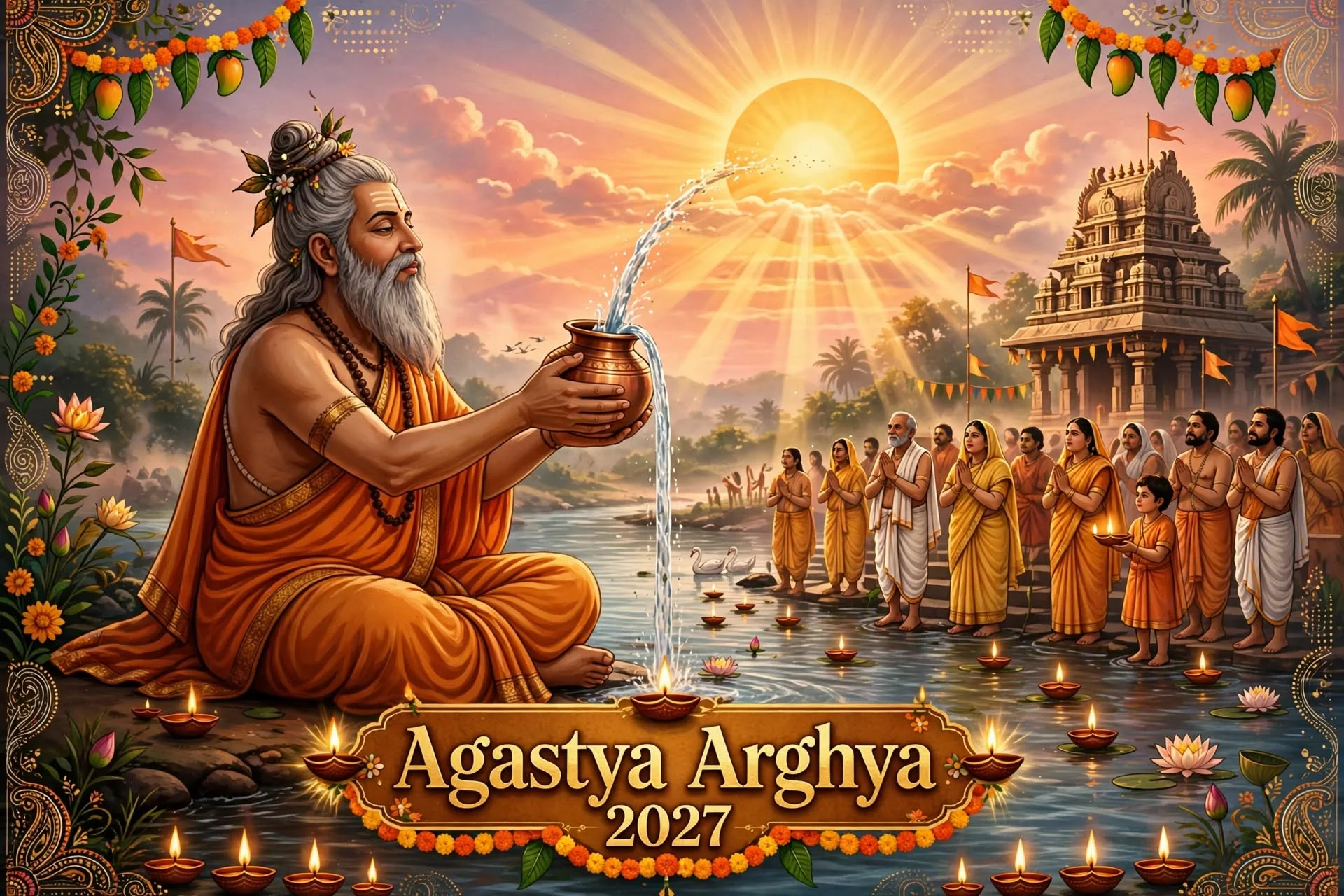
Agastya Arghya, also known as Agastya Udaya Arghya, is a profound astronomical and Vedic ritual observed during the transition of late monsoon into early autumn (Sharad Ritu), when the celestial star Canopus (known in Sanskrit as the Agastya Nakshatra) first rises above the southern horizon at dawn. In ancient Indian astronomy (Surya Siddhanta) and Puranic literature, the dawn rising of Agastya is celebrated as an extraordinary cosmic event marking the physical and energetic purification of all terrestrial waters, the calming of turbulent monsoon rivers, and the pacification of atmospheric toxins.
View Festival Guide
Tuesday, Aug 31, 2027
Pithori Amavasya
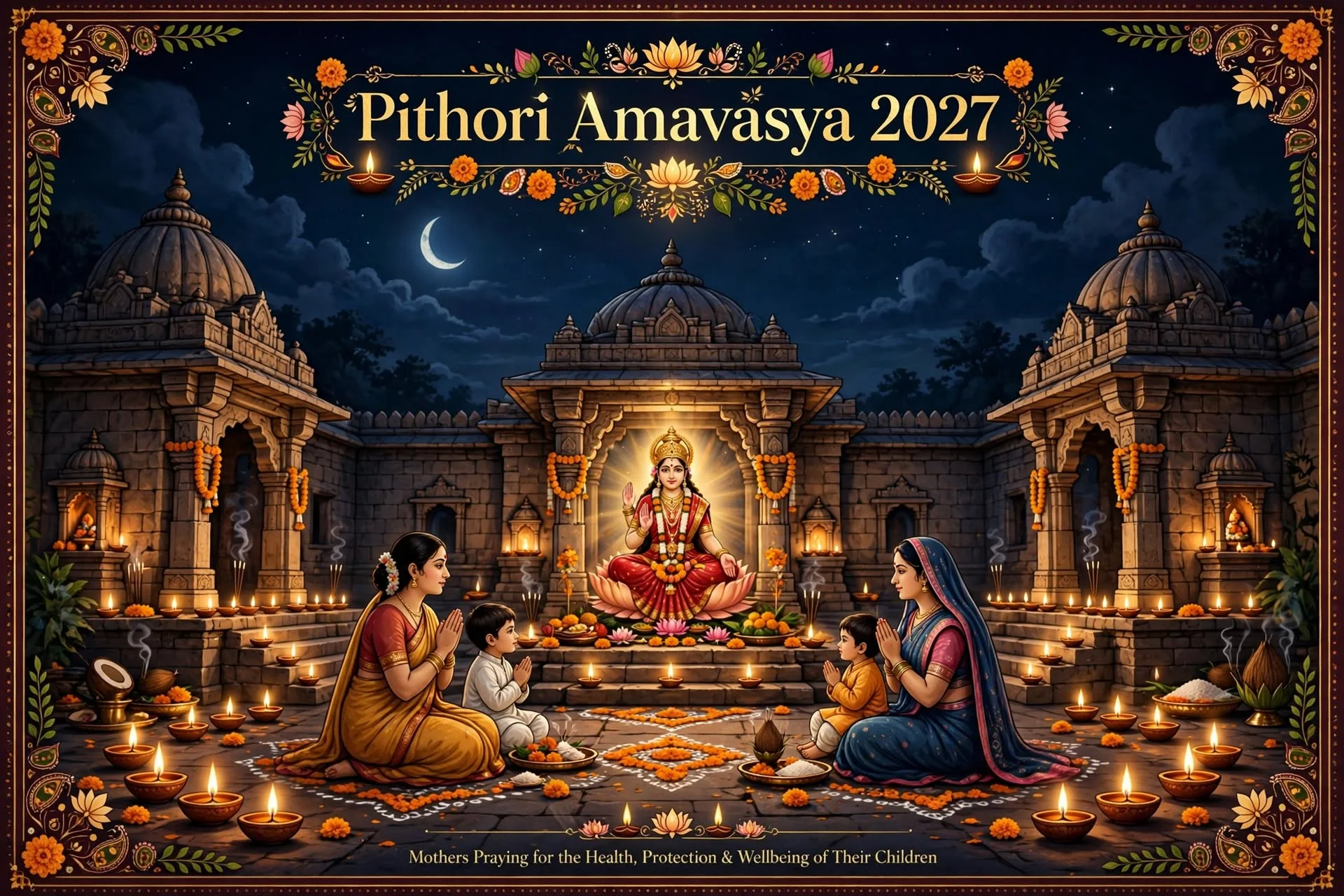
Pithori Amavasya, also reverently celebrated across India as Kushagrahani Amavasya, Pola Amavasya, or Pithori Vrat, is the sacred New Moon day concluding the holy monsoon month of Shravana (or Bhadrapada in the Purnimanta calendar scheme). Dedicated to Goddess Durga, Goddess Parvati, and the Sixty-Four Yoginis (Chausath Yogini), this ancient festival is celebrated with profound devotion by mothers for the longevity, health, moral strength, and spiritual protection of their children, as well as the pacification of ancestral souls (Pitrus).
View Festival Guide

Tuesday, Aug 31, 2027
Anvadhan
Anvadhan (अन्वाधान) is an ancient, highly revered Vedic ritual and spiritual observance in Sanatana Dharma performed on the day immediately preceding the New Moon (Amavasya) or Full Moon (Purnima). Rooted in the pristine traditions of the Shrauta and Grihya Sutras, Anvadhan literally translates to 'the solemn placing and replenishment of sacred fuel wood into the consecrated Vedic fires'. In traditional Vedic ritualism, householders (Grihasthas) and priests who maintain the sacred Agnihotra fires perform Anvadhan to prepare the sacrificial altars for the grand Darsha Yajna (New Moon sacrifice) or Paurnamasa Yajna (Full Moon sacrifice) scheduled for the following day.
View Festival Guide

Tuesday, Aug 31, 2027
Shravana Amavasya
Shravana Amavasya, also known as Darsha Amavasya, Hariyali Amavasya, or Pola Amavasya, is the dark New Moon night marking the grand conclusion of the sacred, rejuvenating monsoon month of Shravana. Positioned at the pivotal threshold between the height of the rainy season and the onset of early autumn, this sanctified tithi holds monumental spiritual, ancestral, and ecological significance across the Indian subcontinent.
View Festival Guide