




Dwijapriya Sankashti Chaturthi is an auspicious monthly Hindu fasting observance dedicated to Lord Ganesha, celebrated on the fourth day (Chaturthi tithi) of the Krishna Paksha (waning moon phase) during the month of Phalguna according to the North Indian Purnimanta calendar (corresponding to Magha Krishna Paksha in the Amanta calendar followed in Maharashtra, Gujarat, Karnataka, Andhra Pradesh, and Tamil Nadu).
Dwijapriya Sankashti 2027: Date, Puja Timings, Rituals & Stories
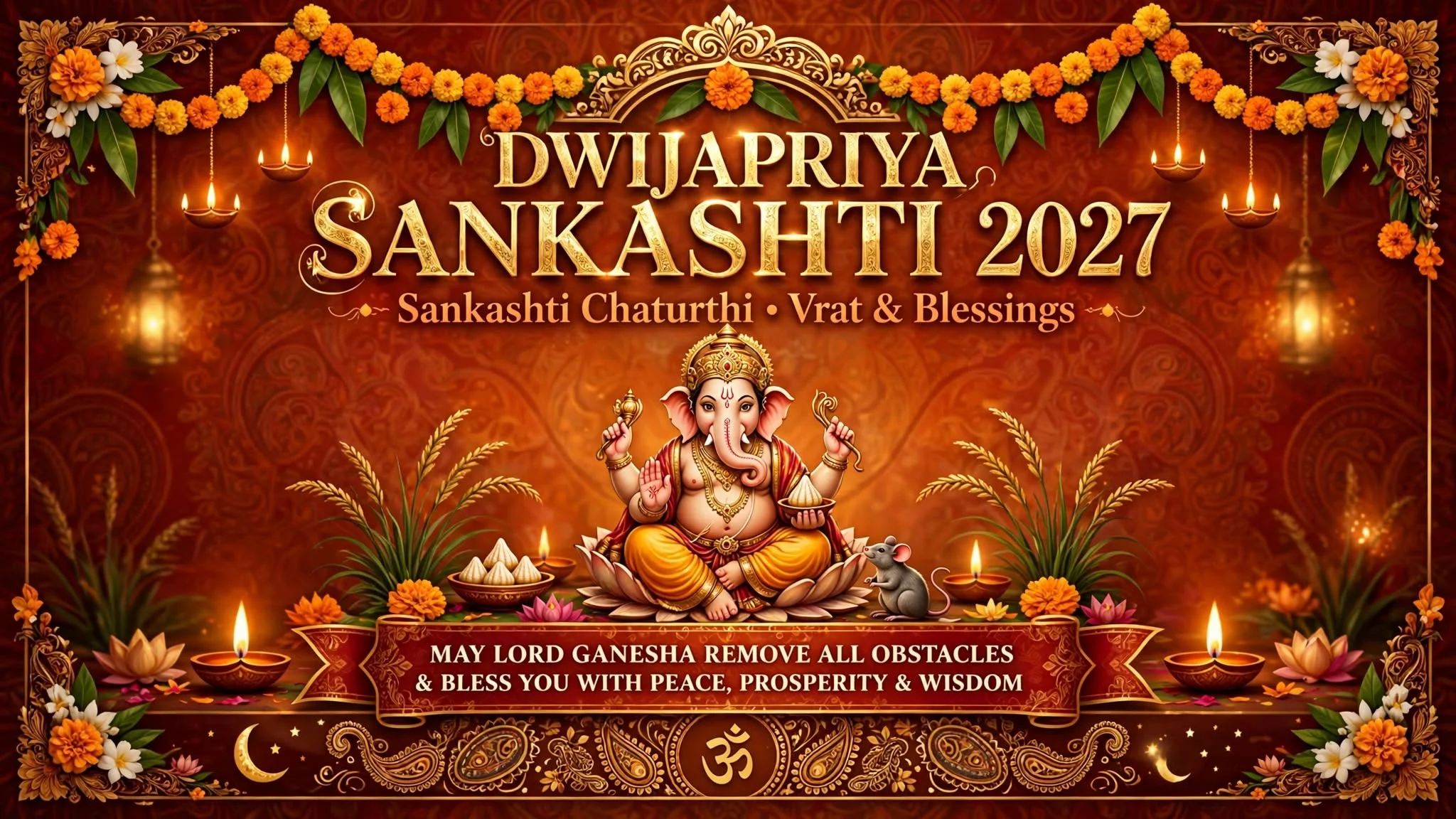
Dwijapriya Sankashti Timings & Panchang
Important festival dates and auspicious timings
Usha Arghya (Sunrise)
06:52 am
Sandhya Arghya (Sunset)
06:17 pm
Start Date
Wednesday, 24 Feb 2027
Puja Muhurat
06:17 pm – 07:33 pm
Dwijapriya Sankashti
The presiding divine form venerated on this holy day is Dwijapriya Maha Ganapati—the 6th of the celebrated thirty-two classical iconographic forms of Lord Ganesha described in the sacred Mudgala Purana and Silparatna. The Sanskrit term Dwijapriya translates to He who is dearly beloved of the twice-born (Dwija: seekers of spiritual truth, scholars, and Brahmins dedicated to the study of the Vedas). Dwijapriya Ganesha is iconographically envisioned with four radiant heads (Chaturmukha, representing the four Vedas: Rig, Sama, Yajur, and Atharva) and a brilliant golden-amber complexion.
In His four sacred hands, He bears a rosary of Rudraksha beads (Akshamala), a holy water vessel (Kamandalu), an ascetic staff (Danda), and sacred palm-leaf scriptures (Pustaka). Worship of Dwijapriya Ganapati dispels mental inertia, sharpens memory and discernment, and shields practitioners from material and spiritual obstacles.
Devotees undertake a rigorous day-long fast from sunrise until moonrise (Chandrodaya), abstaining from cereals and grains, chanting the Ganesha Atharvashirsha and Sankashta Nashana Stotra, offering 21 blades of Durva grass and delicious steamed modaks, and concluding the fast only after offering sanctified water and milk (Arghya) to the rising Moon (Chandra Deva). Observing this vrat is believed to annihilate accumulated karmic impediments, bestow academic excellence, erase financial indebtedness, and grant enduring inner tranquility.
Why is Dwijapriya Sankashti Celebrated?
Dwijapriya Sankashti Chaturthi is celebrated to invoke the grace of Lord Ganesha in His venerable scholarly and ascetic manifestation to conquer all existential difficulties (Sankata) and eliminate intellectual and karmic obstacles.
According to the Ganesha Purana (Upasana Khanda), the observance of Sankatahara Chaturthi was expounded by Lord Shiva to Goddess Parvati, and by Lord Krishna to King Yudhishthira during the Pandavas' exile to restore lost sovereignty, wealth, and honor.
Furthermore, the Mudgala Purana records that when righteous seekers and Vedic sages faced deep intellectual doubts and spiritual impediments, Lord Ganesha revealed Himself as Dwijapriya Ganapati—holding sacred scriptures and the ascetic staff—to protect the sanctity of knowledge, dissolve debts, and grant supreme wisdom and liberation.
Scriptural Chronicles and Divine Manifestation of Dwijapriya Ganapati
Manifestation of Dwijapriya Ganapati in Mudgala Purana and Silparatna
The iconography and metaphysical origin of Dwijapriya Ganapati are systematically expounded in the sacred Mudgala Purana (Saptama Khanda) and the classical iconography treatise Silparatna. According to these sacred texts, Lord Ganesha assumed thirty-two distinct forms (Dvatrimshat Ganapati) to perform cosmic functions and uplift seekers at different stages of spiritual evolution.
In His sixth divine manifestation, the Lord revealed Himself as Dwijapriya Ganapati to shower special benediction upon 'Dwijas'—those born anew through the initiation into sacred wisdom and Vedic learning. Envisioned with four magnificent elephantine faces gazing towards the four cardinal directions, Dwijapriya embodies the four Vedas (Rigveda, Yajurveda, Samaveda, and Atharvaveda).
His four hands carry the Akshamala (signifying uninterrupted meditation and japa), Kamandalu (representing purity and ascetic detachment), Danda (symbolizing moral discipline and control over the senses), and Pustaka (the eternal repository of divine vidya). When the righteous sages of Naimisharanya were afflicted by spiritual doubts and hostile forces that obstructed their continuous Vedic studies, they performed concentrated tapas dedicated to Lord Ganesha on Phalguna Krishna Chaturthi. The Lord manifested before them in this dazzling four-headed golden form, eradicated their intellectual doubts, shielded their hermitage from malevolent influences, and decreed that whoever worships Him on this day shall be blessed with supreme wisdom, unshakeable memory, and complete freedom from worldly sorrows.
Lord Krishna Narrates the Power of Sankashti to King Yudhishthira
In the Bhaviṣyottara Purana and the Ganesha Purana, during the twelve-year exile of the Pandavas in the Dvaita forest, King Yudhishthira was deeply distressed by the unbearable sufferings and ignominy thrust upon his brothers and Queen Draupadi. Approaching Lord Krishna with folded hands, Yudhishthira prayed: 'O Janardana, please reveal a holy vow by whose observance a monarch deprived of his throne, wealth, and honor can overcome all misfortunes and regain his righteous kingdom.'
Lord Krishna smiled compassionately and narrated the ancient observance of Sankashti Chaturthi Vrat, originally observed by King Kritavirya and Sage Lomasha. Krishna explained: 'O King, in ancient times, King Kritavirya observed this rigorous fast on Krishna Paksha Chaturthi dedicated to Lord Ganesha with unwavering devotion and completed the ritual by offering Arghya to the Moon at night. By virtue of this sacred vow, all his insurmountable obstacles dissolved like mist before the sun, his treasury overflowed with wealth, and he attained an invincible realm. Therefore, O Dharmaraja, you and Draupadi must observe the Sankashti Chaturthi Vrat.' Following Lord Krishna's divine counsel, Yudhishthira and Draupadi observed the fast devoutly on Phalguna Krishna Chaturthi, eventually regaining their sovereign empire.
Esoteric and Spiritual Virtues of Dwijapriya Sankashti
Annihilation of Existential Impediments (Vighna Nashana)
Lord Ganesha is universally lauded as Vighneshwara—the supreme commander who dispels all physical, mental, and spiritual obstacles. The prefix 'Sankata' denotes deep-rooted crisis, debt, fear, or persistent chronic sorrow.
The spiritual observance of Sankashti Chaturthi generates powerful sattvic momentum that dissolves deep karmic entanglements (Sanchita Karma) and clears the path toward material prosperity and liberation (Moksha).
Mastery over Knowledge and Vedic Wisdom (Dwijapriya Tattva)
As Dwijapriya Ganapati possesses four heads representing the Rig, Yajur, Sama, and Atharva Vedas, worshipping this deity directly enlivens the intellectual faculties (Buddhi), clarity of memory (Medha Shakti), and spiritual discrimination (Viveka).
For seekers on the path of Jnana Yoga and students of higher learning, this day provides accelerated progress in assimilating profound spiritual scriptures and conquering ignorance.
Synthesis of Mind and Intellect through Moon Worship
In Vedic astrology, Ganesha rules over Ketu and Mercury (intellect, analytical mind, and spiritual detachment), while the Moon governs the receptive emotional mind (Manas).
Fasting throughout the day and offering sacred Arghya to the Moon upon its sighting on Krishna Paksha Chaturthi creates a divine synthesis between intellectual clarity and emotional equilibrium, curing emotional instability, anxiety, and depression.
Sacred Offering of 21 Durva Blades and Modaks
The ritual offering of 21 blades of Durva (Bermuda grass) commemorates the legend where Lord Ganesha consumed the demon Analasura (the demon of fire and scorching agony). When cosmic flames burned within Ganesha's stomach, sages offered 21 blades of cooling Durva grass, which instantly pacified the heat.
Practical Worship Manual for Dwijapriya Sankashti Chaturthi
Dawn Purificatory Rites and Sankalpa
Devotees rise before sunrise during Brahma Muhurta, take a purificatory holy bath, don fresh clean clothing (preferably yellow or red), and make a formal Sankalpa (solemn vow) holding water, akshata, and a flower in hand before Lord Ganesha to observe a strict waterless (Nirjala) or fruit-based (Phalahari) fast until the night moonrise.
Pray sincerely to Lord Dwijapriya Ganesha to grant protection against all hindrances throughout the vow.
Morning Worship of Dwijapriya Ganesha
Install an idol or consecrated image of Lord Ganesha on a sanctified wooden altar decorated with a clean yellow cloth. Perform Shodashopachara Puja involving Avahana, Asana, Padya, Arghya, Snana (with Panchamrita and pure water), applying red vermilion (Sindoor) and yellow sandalwood paste, and offering 21 fresh blades of Durva grass and fragrant red hibiscus flowers.
Afternoon Devotional Sadhana and Scripture Recitation
Spend the afternoon in contemplative silence and devotional study. Devotees recite the Ganesha Atharvashirsha Upanishad 21 times, chant the Sankashta Nashana Ganesha Stotra composed by Sage Narada, and listen to the sacred Dwijapriya Sankashti Vrat Katha to maintain heightened spiritual awareness.
Evening Moonrise Worship, Arghya, and Parana
At the precise local time of moonrise (Chandrodaya), clean the courtyard or balcony. Light a ghee lamp and incense facing the rising Moon. Prepare an Arghya offering consisting of water, raw milk, white sandalwood, Durva blades, and akshata inside a silver or brass Kalash.
Offer Arghya to Chandra Deva thrice while reciting the Chandra Arghya Mantra, prostrate before Lord Ganesha, consume the consecrated Modak prasada, and conclude the fast.
Dwijapriya Sankashti Puja Vidhi (Step by Step)
- 1
Brahma Muhurta Jagaran and Purificatory Bath
Wake up during the auspicious Brahma Muhurta (approximately 90 minutes before dawn). Meditate briefly on Lord Ganesha and take a purifying bath using clean water mixed with a few drops of Gangajal.
- 2
Vrat Sankalpa (Solemn Resolution)
Sit comfortably facing East on a clean woolen or Kusha asana. Take water, white rice grains (akshata), a betel leaf, and a coin in your right palm and recite the formal Sankalpa vow to observe the Dwijapriya Sankashti Chaturthi Vrat for the eradication of all sorrows and attainment of divine wisdom.
- 3
Altar Preparation and Murti Sthapana
Cover a clean wooden chowki (peetha) with a fresh yellow or red silk cloth. Draw an Ashtadala Padma (eight-petaled lotus) using rice grains or turmeric powder. Reverently place the idol or sacred image of Dwijapriya Ganesha in the center.
- 4
Deepa Prajvalan and Achamana
Light an oil or pure cow-ghee lamp on the right side of the altar and an incense stick on the left. Perform Achamana by sipping consecrated water thrice with the names of Lord Vishnu ('Om Achyutaya Namah, Om Anantaya Namah, Om Govindaya Namah') and wash your palms.
Dwijapriya Sankashti Puja Samagri List
Deity Worship and Consecration Items
Sacred images, fabrics, and abhisheka ingredients for morning murti consecration.
- Dwijapriya Ganesha idol or framed sacred portrait depicting four heads and scriptures
- Panchamrita ingredients (pure cow milk, fresh curd, desi ghee, raw honey, and jaggery)
- Pure Gangajal and rose water for snana and altar sanctification
- Yellow and red unstitched silk cloth for altar chowki and deity vastra
Fragrances, Sacred Herbs, and Offerings
Botanical and aromatic elements cherished by Lord Ganesha during Shodashopachara worship.
- Fresh Durva grass (21 knotted pairs of green blades) free from roots and impurities
- Fresh red hibiscus blossoms and yellow marigold flower garland
- Pure red Sindoor (vermilion) and Ashtagandha yellow Chandan paste
- Pure cow ghee, cotton wicks, clay/brass deepak, and Bhimseni camphor for Aarti
Naivedya and Moon Arghya Items
Sattvic feast offerings and vessels for completing the fast upon moon sighting.
- 21 freshly prepared sweet Modaks (steamed Ukadiche Modak or Mawa/Besan Modak)
- Five betel leaves (Tambula), areca nuts (supari), cloves, and cardamoms
Mantras and Prayers for Dwijapriya Sankashti
Dwijapriya Sankashti Vrat Rules and Fasting Guidelines
Fasting Regulations and Discipline
Mandatory fasting regulations observed on Dwijapriya Sankashti Chaturthi:
- The fast begins at dawn and continues unbroken until the sighting of the Moon (Chandrodaya) at night.
- Devotees observing a fruit fast (Phalahar) may consume milk, fruits, water chestnut (Singhara) flour, and rock salt (Sendha Namak).
- Cereals, grains, wheat, rice, pulses, onions, garlic, and non-vegetarian foods are strictly forbidden.
- Practitioners must practice celibacy (Brahmacharya) and shun anger, falsehood, and frivolous arguments.
Devotional Observances During the Day
Spiritual activities recommended during the fasting hours:
- Recite the Ganesha Atharvashirsha Upanishad 21 times in the afternoon or evening.
- Chant the 108 names of Lord Ganesha (Ashtottara Shatanamavali) and the Sankashta Nashana Stotra.
- Offer 21 pairs of Durva blades to Lord Ganesha while chanting the Ganesha Mool Mantra.
- Listen to or read the sacred Sankashti Chaturthi Vrat Katha before the evening puja.
Parana and Moonrise Rites
Concluding the fast at night following the precise local moonrise:
- Verify the exact moonrise time from your local Panchang and prepare the Arghya Kalash.
Dos and Don'ts of Dwijapriya Sankashti
Good Practices (Do's)
- Wake up before sunrise during Brahma Muhurta and take a purificatory bath with holy water.
- Keep a clean yellow or red cloth on the altar and venerate the four-headed Dwijapriya Ganesha.
- Offer 21 pairs of freshly washed, clean Durva grass blades to Lord Ganesha's feet and belly.
- Prepare and offer 21 sweet Modaks or Besan Laddus as the primary divine offering (Naivedya).
- Recite the Ganesha Atharvashirsha, Sankashta Nashana Stotra, and Ganesha Mool Mantra with devotion.
Dwijapriya Sankashti Across Regions
| Region | Local Name |
|---|---|
| Maharashtra | Sankashti Vrat and Ashta Vinayaka Smaran |
| Karnataka | Sankatahara Ganapati Vrata and Modaka Samarpanam |
| Tamil Nadu | Sankatahara Chaturthi and Kozhukattai Neivedhyam |
| North India (Uttar Pradesh, Bihar, Rajasthan) | Sankata Chauth and Tilkut Katha |
Dwijapriya Sankashti FAQs
What is Dwijapriya Sankashti Chaturthi?
Dwijapriya Sankashti Chaturthi is the monthly Sankashti fast observed on the Krishna Paksha Chaturthi of Phalguna month (North Indian Purnimanta) or Magha month (Amanta calendar), dedicated to Dwijapriya Maha Ganapati, the four-headed manifestation of Lord Ganesha who dispels grief and bestows Vedic wisdom.
What is the meaning of the name 'Dwijapriya'?
'Dwijapriya' is composed of 'Dwija' (meaning twice-born, referring to scholars, Brahmins, and spiritual seekers who have taken initiation into sacred knowledge) and 'Priya' (meaning dearly beloved). It signifies Lord Ganesha as the supreme patron and protector of all true seekers of wisdom.
Why is it mandatory to sight the Moon and offer Arghya on Sankashti Chaturthi?
According to the Padma Purana, Chandra Deva was cursed by Lord Ganesha for his mocking arrogance, but was redeemed after deep repentance on Krishna Paksha Chaturthi. Lord Ganesha ordained that Sankashti fast is only completed when the devotee sights the Moon and offers sacred Arghya, harmonizing the devotee's mind and intellect.
Upcoming Festivals
View All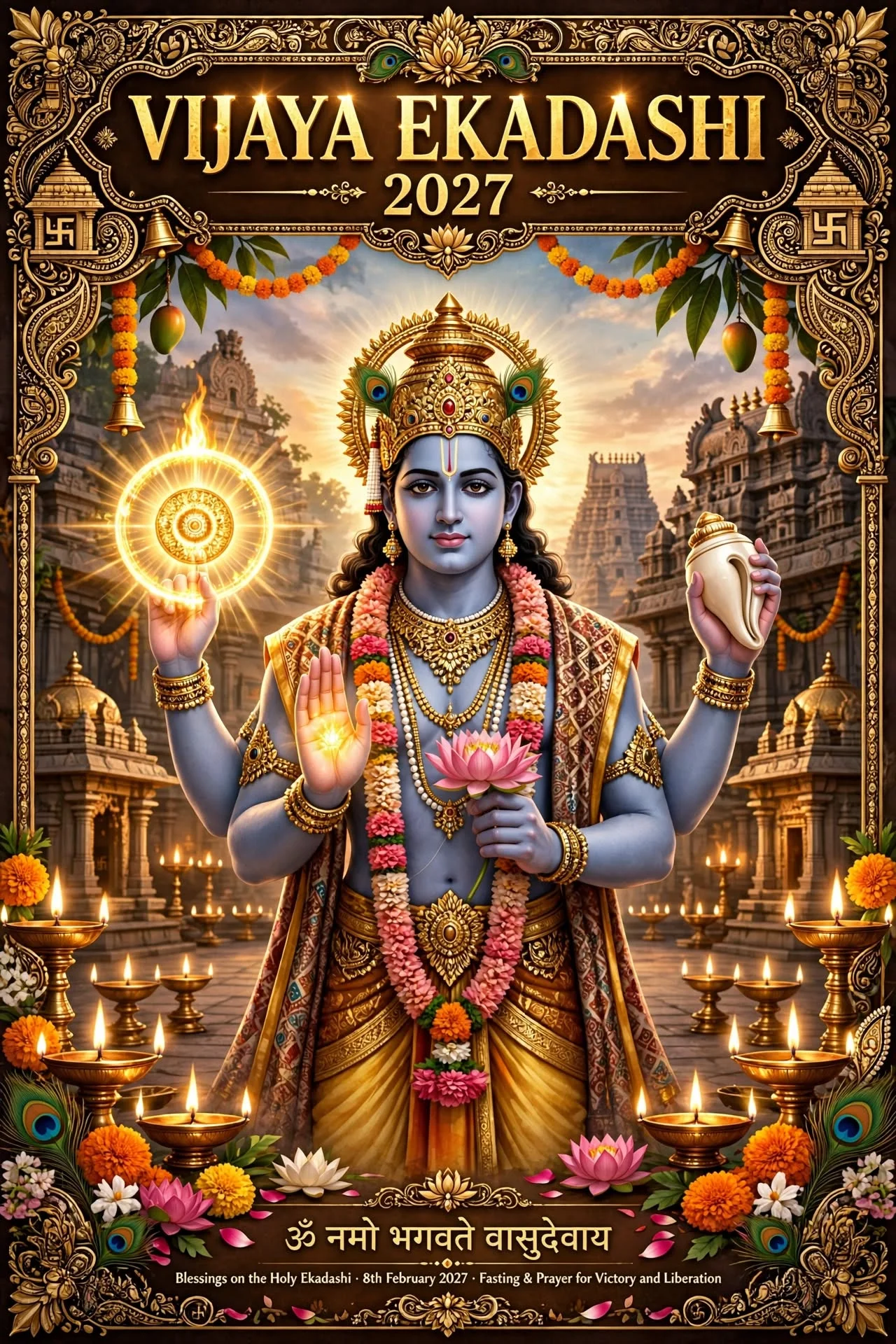
Thursday, Mar 4, 2027
Vijaya Ekadashi
Vijaya Ekadashi is an eminently sacred Hindu fasting observance celebrated on the eleventh day (Ekadashi tithi) of the Krishna Paksha (waning moon fortnight) during the lunar month of Phalguna according to the North Indian Purnimanta calendar (corresponding to Magha Krishna Paksha in the Amanta calendar followed in southern and western India). The word 'Vijaya' signifies unconquerable triumph, victory, and overcoming formidable adversaries. Dedicated to Lord Vishnu in His venerable manifestation as Sri Narayana, this holy Ekadashi is revered across Sanatana Dharma as the supreme vow for eradicating insurmountable hurdles, dissolving profound karmic obstacles, and ensuring definitive triumph in righteous endeavors.
View Festival Guide
Friday, Mar 5, 2027
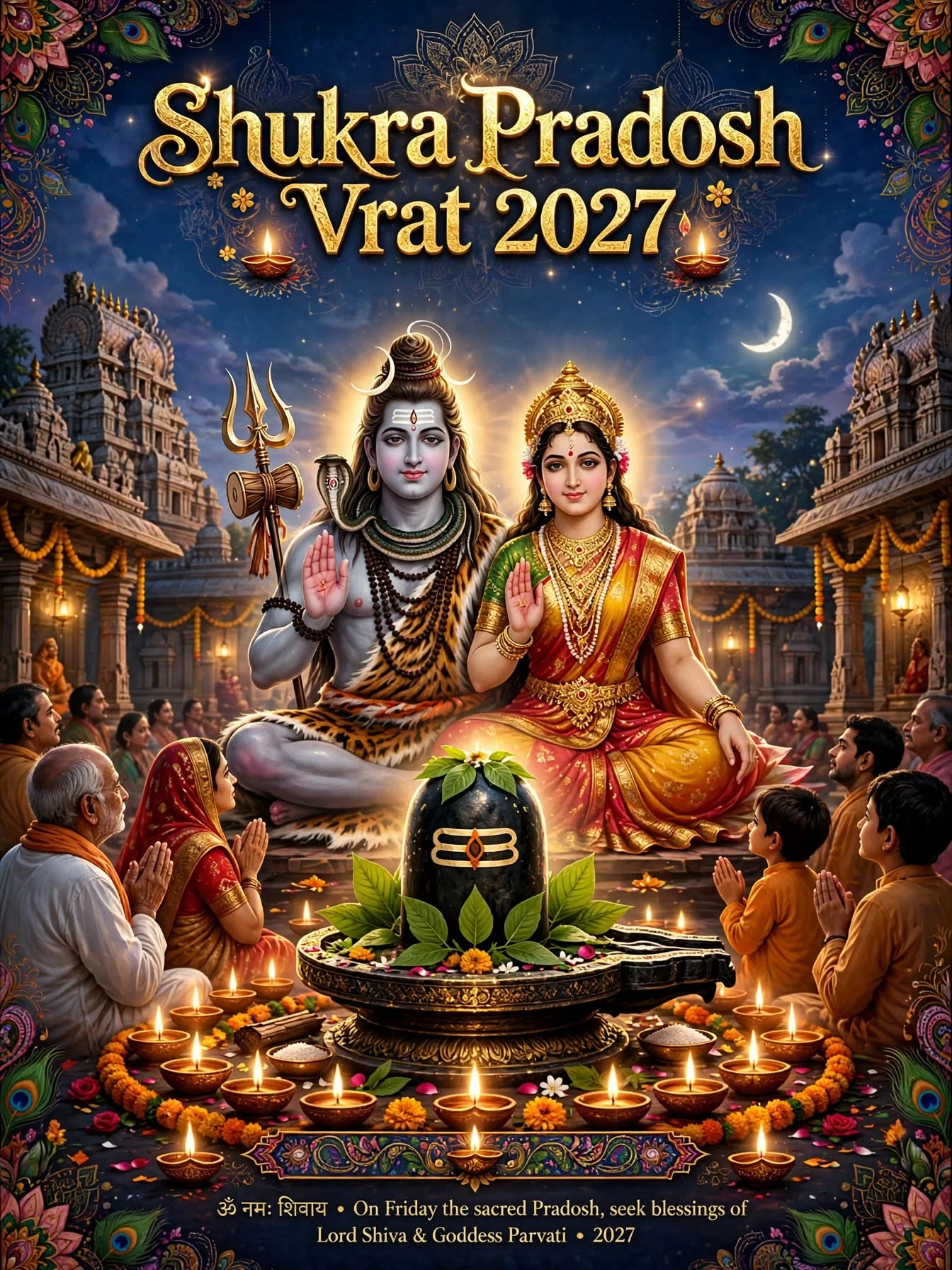
Shukra Pradosh Vrat
Shukra Pradosh Vrat is an exceedingly auspicious and spiritually elevating bi-monthly Hindu fasting observance dedicated to Lord Shiva and Goddess Parvati. Occurring on the thirteenth day (Trayodashi tithi) of either the waxing (Shukla) or waning (Krishna) lunar fortnight when it coincides with a Friday (Shukravara), this sacred vow is lauded in Vedic and Puranic literature for bestowing conjugal harmony, material abundance, refined artistic faculties, and liberation from deep-seated planetary afflictions.
View Festival Guide
Saturday, Mar 6, 2027
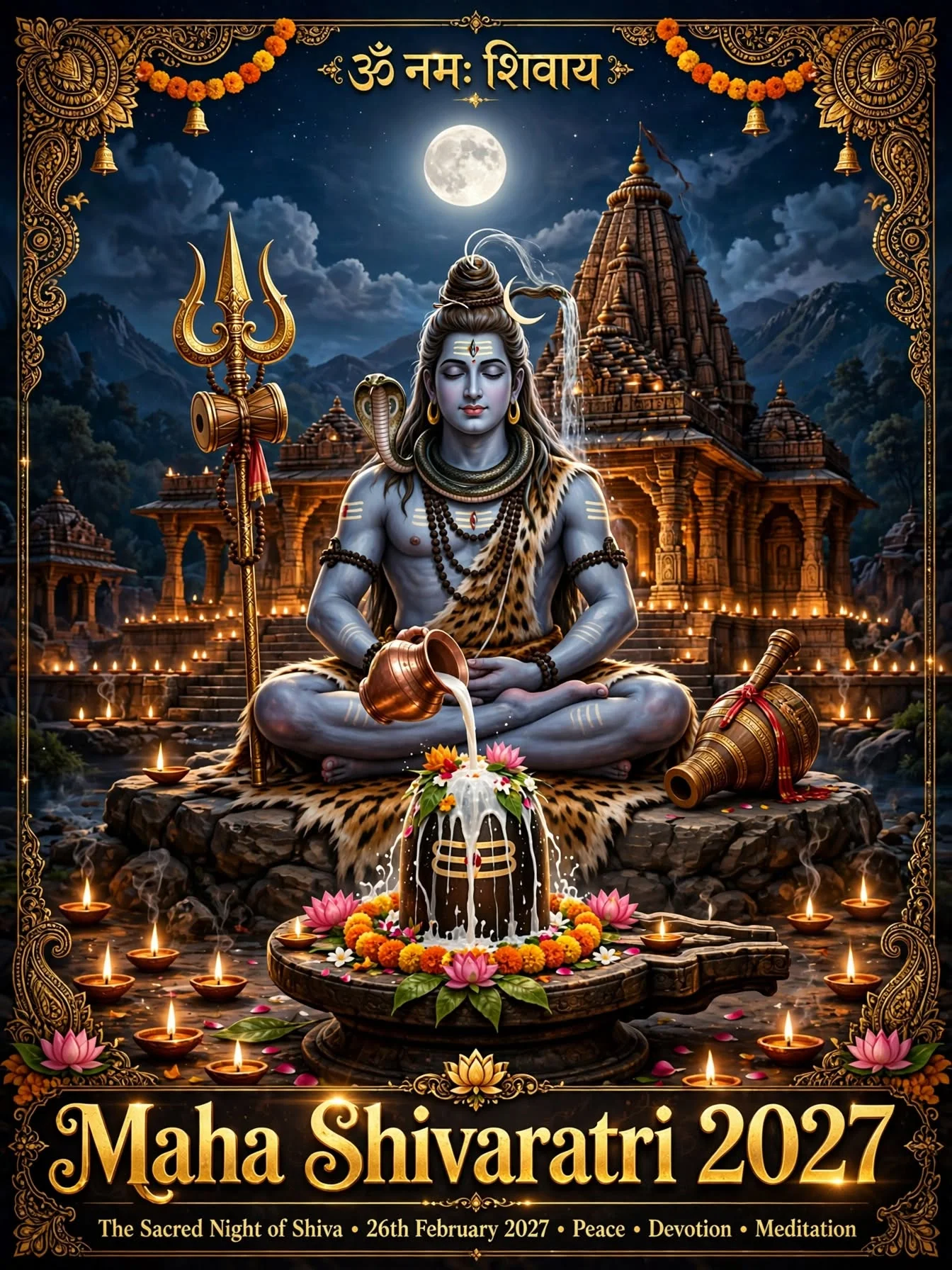
Maha Shivaratri
Maha Shivaratri, literally translated as 'The Great Night of Shiva', is the paramount and most spiritually profound festival dedicated to Lord Shiva in Sanatana Dharma. Celebrated on the fourteenth day (Chaturdashi tithi) of the Krishna Paksha (waning moon fortnight) during the lunar month of Phalguna according to the North Indian Purnimanta calendar (corresponding to Magha Krishna Chaturdashi in the South Indian and Western Indian Amanta calendar), this sacred night represents the pinnacle of Shaivite spiritual devotion, cosmic alignment, and yogic transformation.
View Festival Guide

Sunday, Mar 7, 2027
Darsha Amavasya
Darsha Amavasya is a significant new moon observance in the Hindu calendar designating the specific night when the Moon is completely invisible to the human eye, having fully merged into the conjunction of the Sun.
View Festival Guide
Monday, Mar 8, 2027
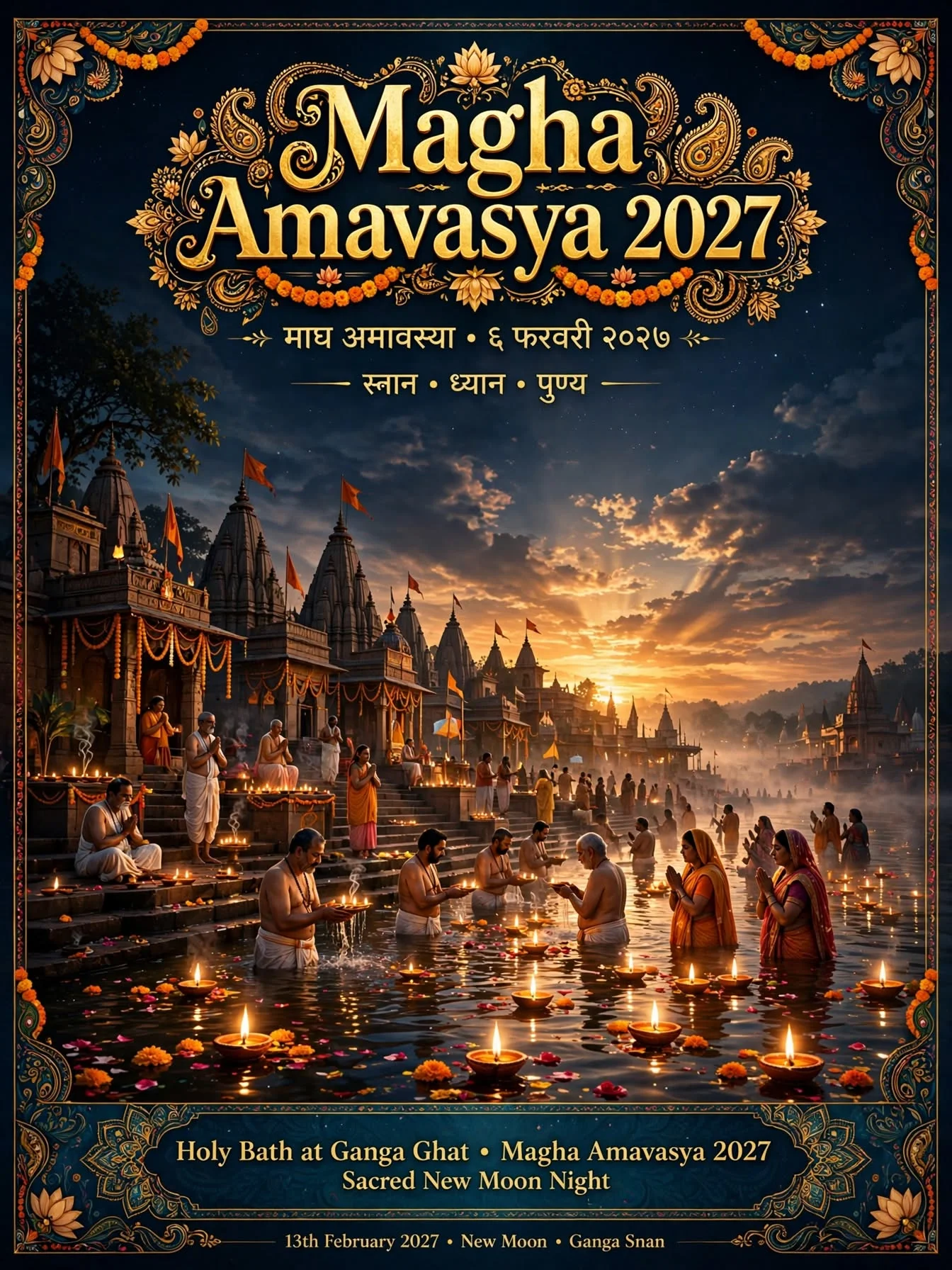
Magha Amavasya
Magha Amavasya, celebrated with supreme spiritual reverence throughout India, is the sacred New Moon day (Amavasya tithi) occurring during the holy lunar month of Magha according to the Hindu calendar (specifically marking the culmination of Magha in the Amanta calendar followed in Maharashtra, Gujarat, Karnataka, Andhra Pradesh, and Tamil Nadu, corresponding to the new moon preceding Phalguna). Revered as one of the most spiritually charged junctures in Sanatana Dharma, this sacred day is widely observed as 'Mauni Amavasya'—the holy day of complete ascetic silence (Mauna Vrata), deep contemplation, ancestral redemption, and sacred holy bathing.
View Festival Guide
Monday, Mar 8, 2027
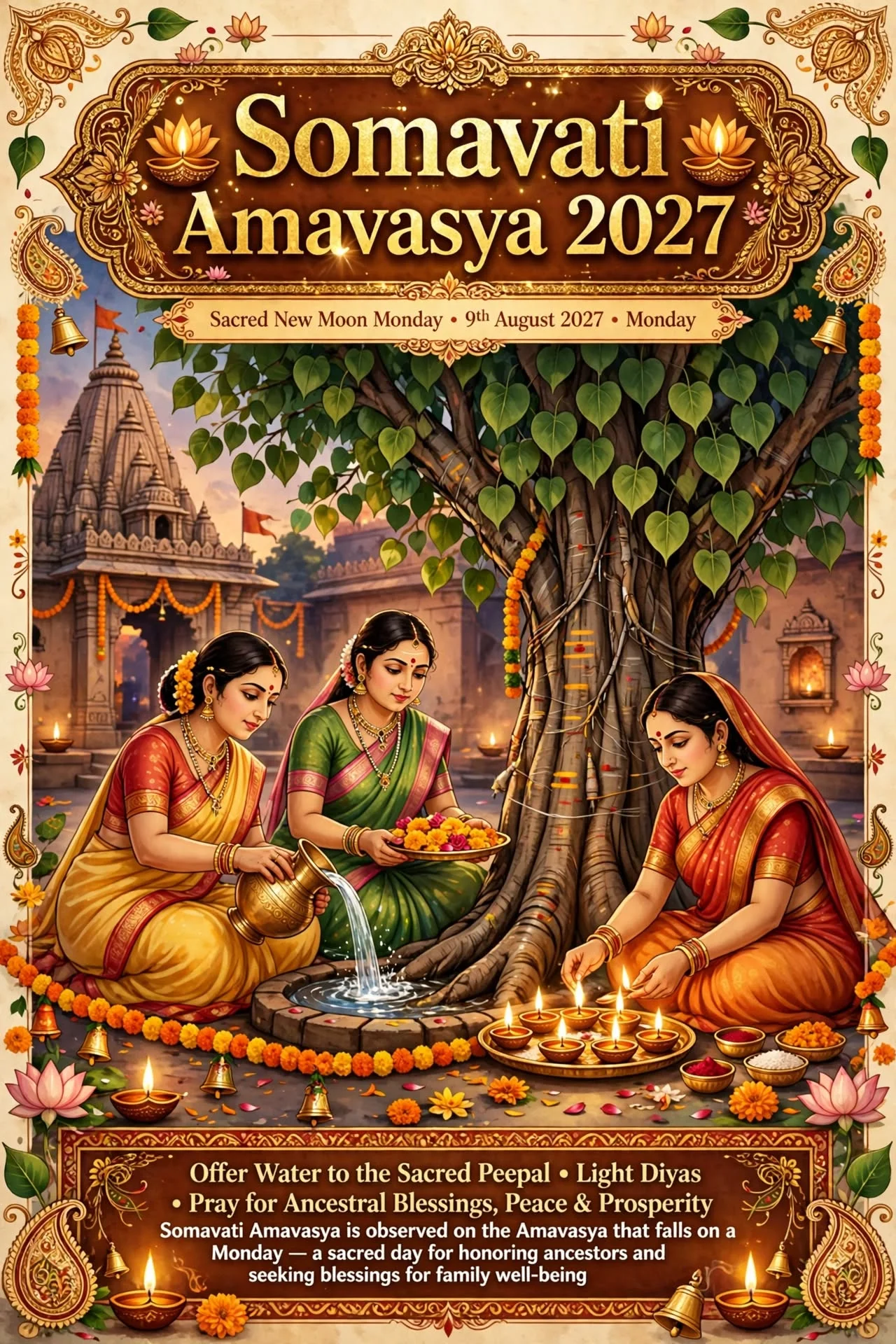
Somavati Amavasya
Somavati Amavasya is an exceedingly rare, sacred, and astrologically exalted Hindu fasting and pilgrimage observance that occurs when the New Moon day (Amavasya tithi) coincides with a Monday (Somavara). In Vedic tradition, Monday is governed by Soma (the Moon God / Chandra Deva) and is supremely sacred to Lord Shiva, who adorns the crescent moon upon His crown as Chandrashekhara. When the quiet, contemplative energy of Amavasya merges with the gentle, nectarine cooling rays of Monday, it creates an extraordinary cosmic alignment that is lauded across Sanatana Dharma as the 'King of all Amavasyas'.
View Festival Guide
Tuesday, Mar 9, 2027
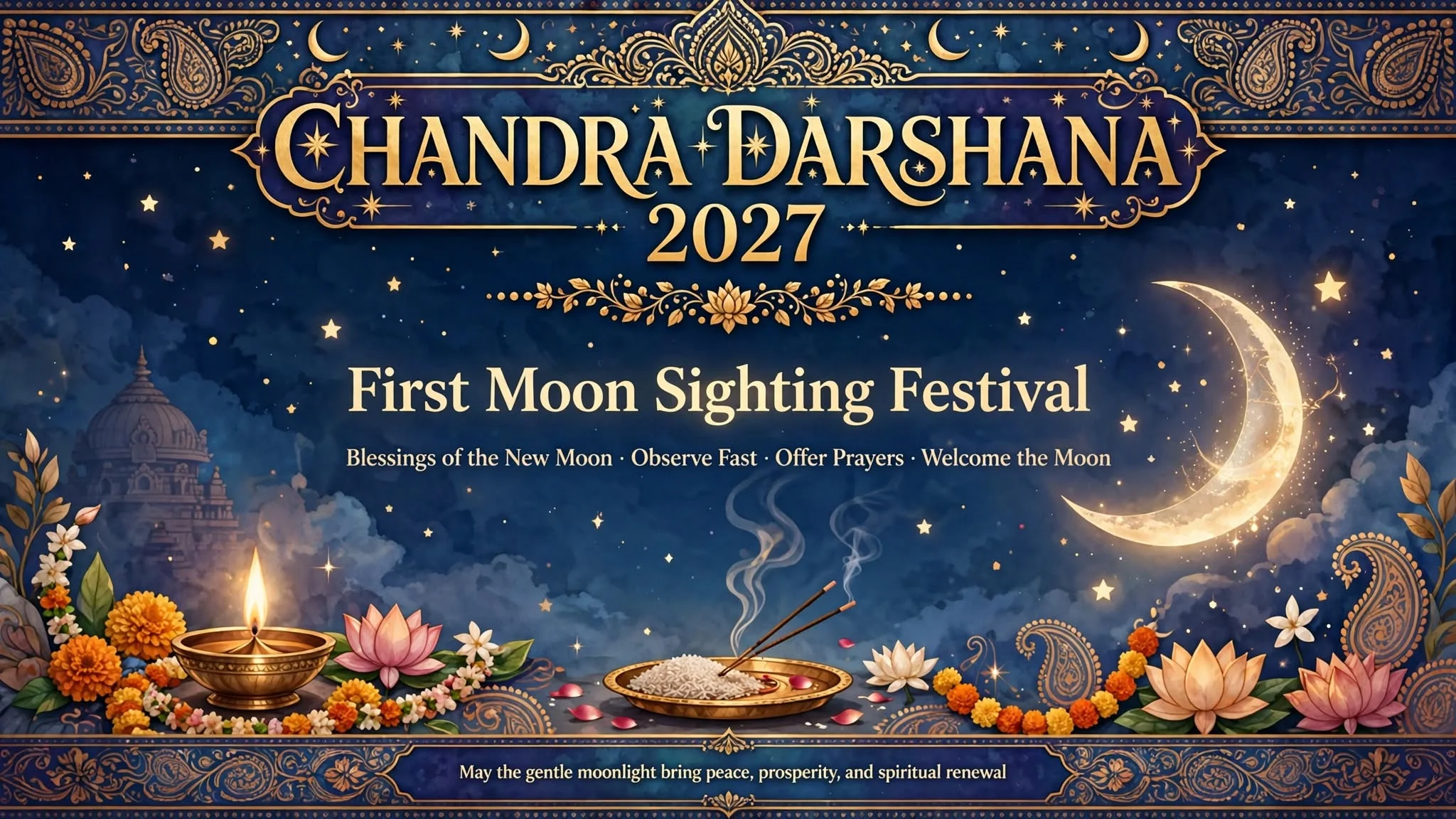
Chandra Darshana
Chandra Darshana is a revered monthly Hindu observance dedicated to sighting, venerating, and offering oblation to the delicate waxing crescent Moon immediately following the new moon (Amavasya), typically occurring during the twilight of Shukla Paksha Pratipada or Dwitiya.
View Festival Guide

Tuesday, Mar 9, 2027
Ishti
Ishti is a foundational Vedic ritual observance appearing prominently in Hindu Panchangs on the Pratipada tithi (the first lunar day) following either Amavasya (new moon) or Purnima (full moon), marking the prescribed performance day for the fortnightly Vedic Darsha-Purnamasa sacrifices.
View Festival Guide