




Shukra Pradosh Vrat is an exceedingly auspicious and spiritually elevating bi-monthly Hindu fasting observance dedicated to Lord Shiva and Goddess Parvati. Occurring on the thirteenth day (Trayodashi tithi) of either the waxing (Shukla) or waning (Krishna) lunar fortnight when it coincides with a Friday (Shukravara), this sacred vow is lauded in Vedic and Puranic literature for bestowing conjugal harmony, material abundance, refined artistic faculties, and liberation from deep-seated planetary afflictions.
Shukra Pradosh Vrat 2027: Date, Puja Timings, Rituals & Stories
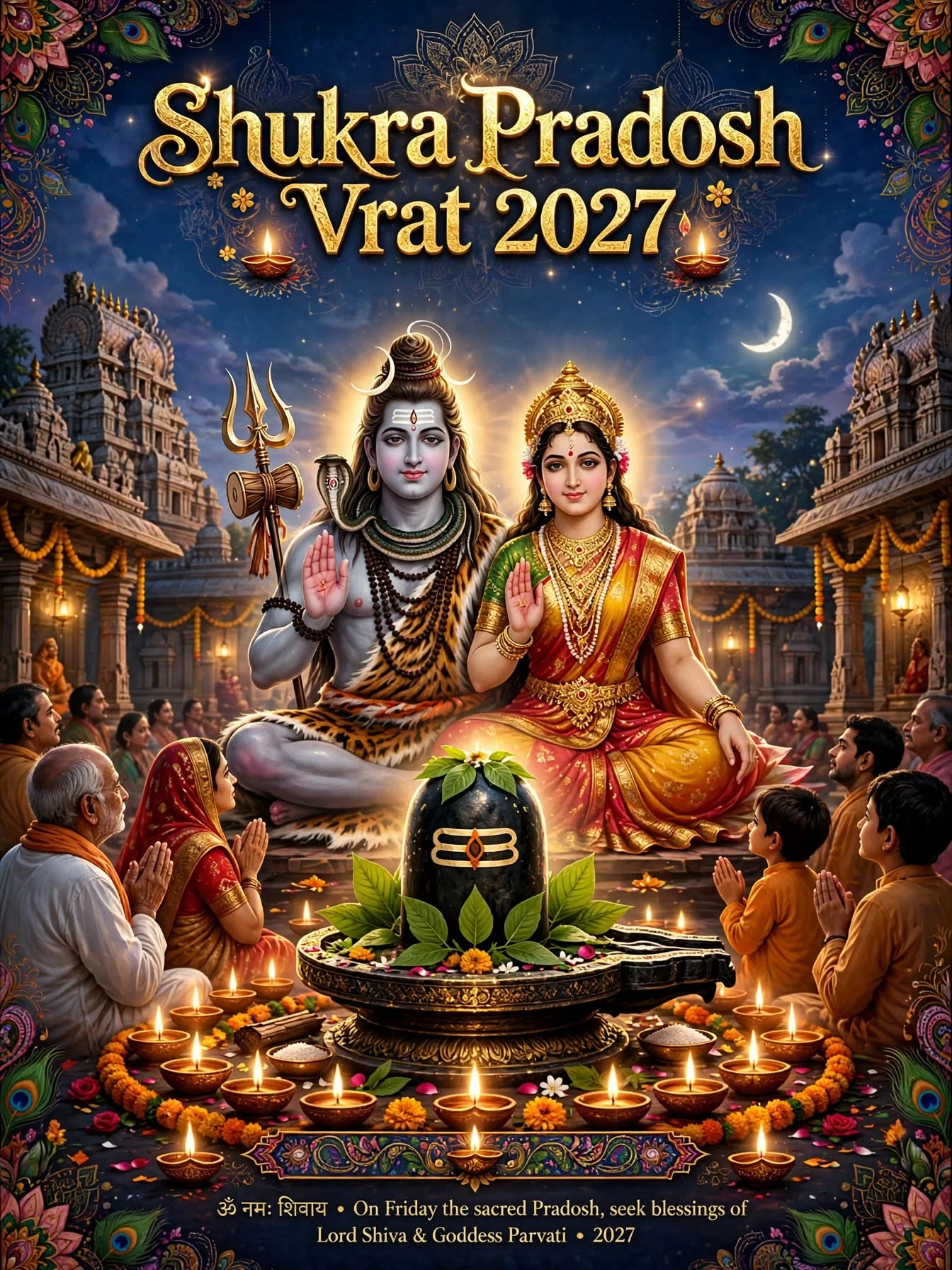
Shukra Pradosh Vrat Timings & Panchang
Important festival dates and auspicious timings
Usha Arghya (Sunrise)
07:15 am
Sandhya Arghya (Sunset)
05:37 pm
Start Date
Monday, 4 Jan 2027
Puja Muhurat
04:08 pm – 06:16 pm
Shukra Pradosh Vrat
The twilight window surrounding sunset—spanning approximately forty-five minutes before to forty-five minutes after sunset (totalling 1.5 hours or one Prahar)—is known as the sacred Pradosha Kaal. According to the Shiva Purana and the Skanda Purana, during this divine juncture, Lord Shiva performs the cosmic Ananda Tandava upon the summit of Mount Kailash, surrounded by the assembled celestial pantheon, sages, and Gandharvas singing His transcendental praises. Worshipping the Lord during this precise Sandhya interval dissolves impurities and grants profound inner peace.
In Vedic astrology (Jyotisha), Friday is governed by Shukra Deva (the planet Venus), who presides over marital affection, beauty, prosperity, artistic expression, and the reproductive vital essence (Shukra Dhatu). When Trayodashi falls on Friday, the fiery ascetic energy of Lord Shiva harmoniously blends with the graceful, nurturing shakti of Goddess Parvati and Shukra. Hence, Shukra Pradosh is especially commended for individuals seeking happy matrimonial alliances, resolution of marital discord, relief from financial debts, and fulfillment of virtuous desires.
Devotees observe this sacred day by maintaining a strict day-long fast, bathing during the late afternoon before twilight, adorning themselves in clean white or pale yellow attire, and performing the Shodashopachara Abhishekam of the Shiva Linga using Panchamrita, pure water, Bilva leaves (Belpatra), and holy ashes (Bhasma). The observance culminates after sunset with the recitation of the Pradosha Stotra and Shiva Chalisa, concluding with a light sattvic meal (Parana).
Why is Shukra Pradosh Vrat Celebrated?
Shukra Pradosh Vrat is celebrated to propitiate Lord Shiva and Goddess Parvati during their most accessible and benevolent twilight hour, securing both worldly prosperity and spiritual liberation.
The observance on Friday harmonizes the planetary energies of Venus (Shukra), counteracting malefic planetary placements, pacifying Shukra dosha, and fostering deep love, fidelity, and peace within family life.
Scriptures proclaim that observing Shukra Pradosh cleanses the devotee of physical and subtle sins, relieves chronic health ailments, removes poverty, and grants the supreme divine grace of Lord Mahadeva.
Scriptural Chronicles and Puranic Lore of Shukra Pradosh Vrat
The Churning of the Ocean and Neelakantha's Twilight Grace
The metaphysical genesis of the Pradosha vow is deeply intertwined with the cosmic churning of the Milk Ocean (Samudra Manthan) recounted in the Shiva Purana (Vidyeshvara Samhita) and the Bhagavata Purana (Canto 8). Prior to the emergence of the nectar of immortality (Amrita), the ocean churned out the terrifying, lethal poison known as Halahala (Kalkuta), whose blazing toxic fumes threatened to annihilate all three realms.
Overwhelmed with terror, the Devas and Asuras rushed to Mount Kailash and surrendered at the lotus feet of Lord Shiva. Driven by boundless cosmic compassion, Lord Shiva gathered the all-consuming venom into His palms and drank it. To prevent the poison from burning His internal organs, Goddess Parvati placed Her hand upon His throat, holding the venom there. The virulent poison turned the Lord's throat azure-blue, earning Him the eternal title 'Neelakantha'.
The moment Lord Shiva neutralized the lethal venom and emerged jubilant to perform His divine dance upon the peak of Kailash was the sacred Trayodashi twilight (Pradosha Kaal). Overflowing with supreme ecstasy and relief, the Devas worshiped Mahadeva with celestial flowers and songs of praise. Lord Shiva decreed that whoever fasts on Trayodashi and worships Him during the twilight Pradosha hour shall be shielded from all worldly poisons, dangers, and tribulations.
The Legend of the Impoverished Prince and Shukra's Benediction
In the Skanda Purana (Kashi Khanda, Pradosha Mahatmya), the sacred Katha of Shukra Pradosh Vrat details the plight of an impoverished widowed Brahmin woman who raised her own son and sheltered an orphaned prince named Suchivrata, whose father's kingdom had been usurped by hostile enemies. Struggling in severe penance and poverty, the noble woman visited the hermitage of Sage Shandilya.
Sage Shandilya instructed the mother and the two boys in the precise method of observing the Shukra Pradosh Vrat, explaining that worshipping Lord Shiva on Friday Trayodashi removes destitution and restores lost dignity. Faithfully adhering to the sage's counsel, both boys observed the vrat with deep devotion.
Subtle and Esoteric Virtues of Shukra Pradosh
Conjugal Harmony and Healing of Relationships
The unison of Lord Shiva (the supreme Purusha) and Goddess Parvati (the primordial Prakriti) represents the ultimate prototype of marital balance and spiritual unity. Shukra Pradosh is the paramount day to seek harmony between spouses.
Practicing austerity and prayers during this twilight hour heals emotional estrangement, dispels misunderstandings, fosters enduring companionship, and dissolves the negative karmas that cause matrimonial delays.
Sublimation of Venusian Energies (Shukra Tattva)
In spiritual anatomy, Shukra rules the reproductive essence, creative vitality (Ojas), and sensory attraction. Left undisciplined, these energies lead to sensual entanglement and material exhaustion.
Fasting on Shukra Pradosh channels these potent creative forces upward along the Sushumna Nadi toward the Sahasrara chakra, transforming raw desire into refined devotion, aesthetic elegance, and higher spiritual wisdom.
Neutralization of Financial Debt and Destitution (Daridrya Dahan)
Lord Shiva is hailed as 'Daridrya Dahana'—He who incinerates poverty into ashes. The planetary rays of Venus govern wealth, luxury, and physical comforts.
Performing abhishekam to the Shiva Linga on Shukra Pradosh while chanting the Daridrya Dahana Shiva Stotra clears chronic financial liabilities, invites legitimate prosperity, and bestows professional stability.
The Sacred Alchemy of the Twilight Pradosha Kaal
Twilight represents the Sandhya—the mystic junction between solar light and lunar darkness, pingala and ida nadis. During Pradosha, the spiritual atmosphere is exceptionally receptive.
Meditation and mantra recitation undertaken during this window bypass ordinary intellectual resistance, connecting the devotee directly with universal consciousness and granting deep mental serenity.
Ritual Protocol and Worship Manual for Shukra Pradosh
Morning Fasting Initiation and Sankalpa
Rise early during Brahma Muhurta, take a purifying bath, and don clean white or light-colored cotton attire. Sit before the altar facing East or North and make a formal Sankalpa vow.
Pledge to observe the Shukra Pradosh Vrat with purity of thought, word, and deed, refraining from solid grains and negative conduct until the evening Pradosha puja is accomplished.
Daytime Contemplation and Restraint
Maintain silent remembrance of Lord Shiva throughout the day. Practitioners may observe complete waterless fasting (Nirjala) or take milk, water, and seasonal fruits (Phalahari) if physically required.
Avoid idle discussions, sleep during the afternoon, and loud social gatherings, dedicating the midday hours to reciting the Shiva Mahimna Stotra or Shiva Sahasranama.
Pradosha Kaal Preparation and Shodashopachara Abhisheka
Approximately 45 minutes before local sunset, take a second purificatory bath. Clean the puja room and establish the Shiva Linga or portrait of Lord Shiva and Goddess Parvati upon a sacred brass or silver platform.
Perform the elaborate Shodashopachara Abhishekam with pure cow milk, curd, desi ghee, raw honey, sugar, sugarcane juice, and holy Gangajal. Apply fragrant white sandalwood paste and sacred Vibhuti (Bhasma).
Evening Stotra Recitation, Aarti, and Parana
Offer fresh unbroken Bilva leaves (Belpatra) with three leaflets, Dhatura fruit, white Kaner flowers, and light a pure cow-ghee lamp. Recite the Pradosha Vrat Katha, Shiva Chalisa, and Daridrya Dahana Stotra.
Conclude with a fervent Karpura Aarti. Partake of the sacred Charanamrita and sanctified fruit or kheer prasad, and break your fast with a simple, sattvic evening meal cooked without heavy spices or common salt.
Shukra Pradosh Vrat Puja Vidhi (Step by Step)
- 1
Brahma Muhurta Jagaran and Morning Snana
Wake before dawn during Brahma Muhurta. Meditate upon Lord Shiva and take a purificatory bath in clean water mixed with a few drops of Gangajal, wearing clean traditional white or light-colored clothes.
- 2
Pratah Sankalpa (Morning Resolution)
Sit facing East upon a clean woolen or Kusha mat. Take clean water, unbroken white rice (akshata), white flowers, and a coin in your right palm and recite the formal vow to observe the Shukra Pradosh Vrat for family peace and divine grace.
- 3
Daylong Fasting and Shiva Smaran
Maintain an austere fast throughout the day, refraining from cooked cereals and grains. Engage the mind in silent repetition of the Shiva Panchakshari Mantra: 'Om Namah Shivaya'.
- 4
Pradosha Sandhya Snana and Altar Preparation
Approximately 45 minutes before sunset, bathe again in fresh water. Thoroughly clean the worship space, drape a wooden chowki with a white or pale yellow silk cloth, and install a consecrated Shiva Linga or Parvati-Parameshwara portrait.
- 5
Shukra Pradosh Vrat Puja Samagri List
Abhisheka Ingredients and Holy Waters
Liquid offerings required for performing the comprehensive Panchamrita Abhisheka of the Shiva Linga.
- Pure unpasteurized cow milk (500 ml)
- Fresh homemade cow-milk curd (200 ml)
- Pure desi cow ghee (100 grams)
- Raw unheated organic honey (50 grams)
- Powdered jaggery or rock sugar syrup
- Pure holy Gangajal and clean filtered water in a copper lota
Sacred Flora, Leaves, and Fragrances
Botanical and sacred items dear to Lord Shiva and Goddess Parvati.
- Fresh three-leaflet Bilva leaves (Belpatra) - at least 21 unbroken leaves
- Dhatura fruit and flower - 2 pieces
- Sacred Vibhuti (Bhasma) - 1 packet
- Pure white sandalwood paste (Shweta Chandan)
- White fragrant flowers (Kaner, Jasmine, or white lotus)
- Sandalwood incense sticks (Dhoop) and pure cow-ghee lamp
Naivedya, Aarti, and Dressing Items
Sweet offerings, fabrics, and illuminants for concluding the evening puja.
Mantras and Prayers for Shukra Pradosh Vrat
Shukra Pradosh Vrat Vrat Rules and Fasting Guidelines
Fasting Discipline and Timing
Mandatory fasting regulations observed on Shukra Pradosh Vrat:
- The fast begins at dawn and continues until the completion of the Pradosha Kaal evening worship.
- Healthy adults observe either complete waterless (Nirjala) fasting or consume light fruits, milk, and tea (Phalahari).
- Cereals, grains, rice, wheat, pulses, onions, garlic, and non-vegetarian food are strictly forbidden.
- Do not consume food prepared with common sea salt; sendha namak (rock salt) may be used if taking phalahar.
Twilight Worship Regulations
Injunctions governing the evening Pradosha window:
- Worship must be conducted during the Pradosha Kaal (approx. 45 minutes before to 45 minutes after sunset).
- Devotees must take a fresh head-to-toe bath before the evening ritual and wear fresh, clean clothes.
- Never offer Champa flowers, Ketaki blossoms, or Tulsi leaves to the Shiva Linga.
- Never cross the Nirmalya channel (the outlet pipe for abhisheka liquids) during circumambulation.
Conduct and Ethical Vows
Ethical and spiritual code of conduct during the fast:
- Observe celibacy (Brahmacharya) and cultivate compassionate, gentle, and truthful speech.
- Refrain from anger, marital disputes, criticism of elders, and worldly debates.
Dos and Don'ts of Shukra Pradosh Vrat
Good Practices (Do's)
- Wake during Brahma Muhurta and take a purificatory bath with holy Gangajal.
- Make a sincere morning Sankalpa to observe the fast with mental purity.
- Bathe again in the late afternoon before sunset and perform Shiva puja during the exact Pradosha Kaal.
- Offer fresh three-leaflet Bilva leaves, Dhatura, and holy ash (Bhasma) to the Shiva Linga.
- Chant the Mahamrityunjaya Mantra and Shiva Panchakshari Mantra throughout the day.
Shukra Pradosh Vrat Across Regions
| Region | Local Name |
|---|---|
| Varanasi and Uttar Pradesh (North India) | Kashi Vishwanath Pradosha Sandhya Aarti |
| Tamil Nadu and South India | Nandi Pradosham and Rishabha Vahana Utsavam |
| Madhya Pradesh (Ujjain Mahakaleshwar) | Bhasma Sandhya Puja & Shringar |
| Maharashtra | Pradosha Vrat and Rudrabhisheka |
Shukra Pradosh Vrat FAQs
What is Shukra Pradosh Vrat?
Shukra Pradosh Vrat is the bi-monthly Hindu fasting observance dedicated to Lord Shiva and Goddess Parvati, observed on the Trayodashi tithi (thirteenth lunar day) when it falls on a Friday (Shukravara).
What is the meaning and duration of Pradosha Kaal?
Pradosha Kaal is the sacred twilight window surrounding sunset, approximately 45 minutes before sunset to 45 minutes after sunset (totalling 1.5 hours). It is the prime time for worshipping Lord Shiva.
Why is observing Pradosha on Friday especially powerful?
Friday is ruled by the planet Venus (Shukra), which governs love, beauty, wealth, and relationships. Observing Pradosha on Friday brings conjugal happiness, removes debts, and cures Shukra dosha.
Upcoming Festivals
View All
Saturday, Mar 6, 2027
Maha Shivaratri
Maha Shivaratri, literally translated as 'The Great Night of Shiva', is the paramount and most spiritually profound festival dedicated to Lord Shiva in Sanatana Dharma. Celebrated on the fourteenth day (Chaturdashi tithi) of the Krishna Paksha (waning moon fortnight) during the lunar month of Phalguna according to the North Indian Purnimanta calendar (corresponding to Magha Krishna Chaturdashi in the South Indian and Western Indian Amanta calendar), this sacred night represents the pinnacle of Shaivite spiritual devotion, cosmic alignment, and yogic transformation.
View Festival Guide

Sunday, Mar 7, 2027
Darsha Amavasya
Darsha Amavasya is a significant new moon observance in the Hindu calendar designating the specific night when the Moon is completely invisible to the human eye, having fully merged into the conjunction of the Sun.
View Festival Guide
Monday, Mar 8, 2027
Somavati Amavasya
Somavati Amavasya is an exceedingly rare, sacred, and astrologically exalted Hindu fasting and pilgrimage observance that occurs when the New Moon day (Amavasya tithi) coincides with a Monday (Somavara). In Vedic tradition, Monday is governed by Soma (the Moon God / Chandra Deva) and is supremely sacred to Lord Shiva, who adorns the crescent moon upon His crown as Chandrashekhara. When the quiet, contemplative energy of Amavasya merges with the gentle, nectarine cooling rays of Monday, it creates an extraordinary cosmic alignment that is lauded across Sanatana Dharma as the 'King of all Amavasyas'.
View Festival Guide
Monday, Mar 8, 2027
Magha Amavasya
Magha Amavasya, celebrated with supreme spiritual reverence throughout India, is the sacred New Moon day (Amavasya tithi) occurring during the holy lunar month of Magha according to the Hindu calendar (specifically marking the culmination of Magha in the Amanta calendar followed in Maharashtra, Gujarat, Karnataka, Andhra Pradesh, and Tamil Nadu, corresponding to the new moon preceding Phalguna). Revered as one of the most spiritually charged junctures in Sanatana Dharma, this sacred day is widely observed as 'Mauni Amavasya'—the holy day of complete ascetic silence (Mauna Vrata), deep contemplation, ancestral redemption, and sacred holy bathing.
View Festival Guide

Tuesday, Mar 9, 2027
Ishti
Ishti is a foundational Vedic ritual observance appearing prominently in Hindu Panchangs on the Pratipada tithi (the first lunar day) following either Amavasya (new moon) or Purnima (full moon), marking the prescribed performance day for the fortnightly Vedic Darsha-Purnamasa sacrifices.
View Festival Guide

Tuesday, Mar 9, 2027
Chandra Darshana
Chandra Darshana is a revered monthly Hindu observance dedicated to sighting, venerating, and offering oblation to the delicate waxing crescent Moon immediately following the new moon (Amavasya), typically occurring during the twilight of Shukla Paksha Pratipada or Dwitiya.
View Festival Guide

Wednesday, Mar 10, 2027
Phulera Dooj
Phulera Dooj (फुलेरा दूज) is a wonderfully joyous, vibrant, and spiritually sweet Hindu festival celebrated on the second day (Dwitiya tithi) of the Shukla Paksha (waxing moon fortnight) in the holy month of Phalguna according to the traditional Hindu calendar. Dedicated to the supreme divine couple, Bhagavan Sri Krishna and Sri Radha Rani, this radiant festival heralds the arrival of the spring festival of colors (Holi) across the sacred land of Braj (Vrindavan, Mathura, Barsana, Nandgaon, and Govardhan). The word 'Phulera' is derived from 'Phool' (blossoming flowers), and on this day, the divine realm of Braj is enveloped in an enchanting floral ecstasy.
View Festival Guide
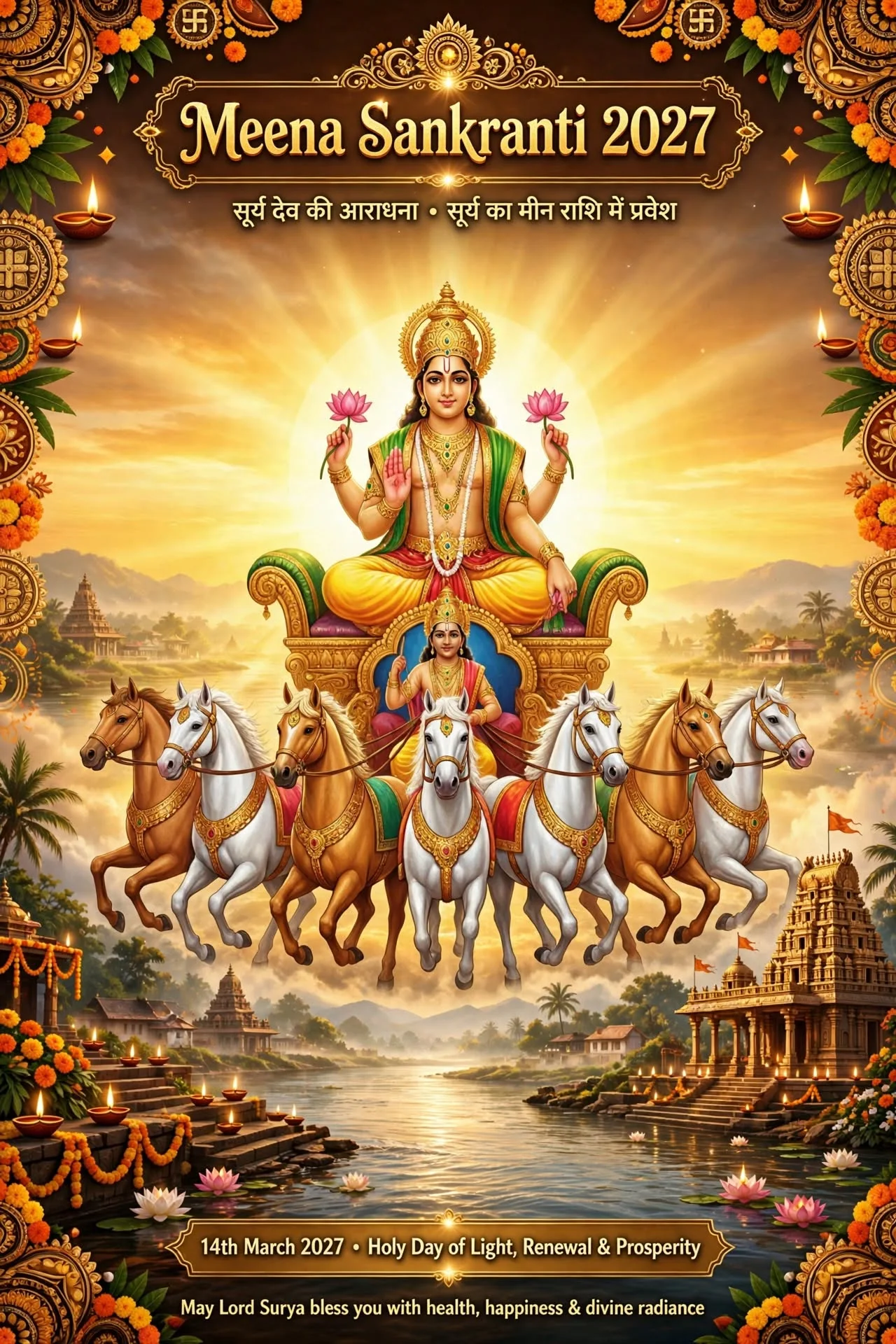
Monday, Mar 15, 2027
Meena Sankranti
Meena Sankranti is a paramount astronomical transit and holy festival in the Hindu solar calendar, marking the entry of the Sun God (Surya Deva) from Kumbha Rashi (Aquarius) into Meena Rashi (Pisces). In Vedic astronomy and Jyotisha, this celestial ingression signifies the commencement of the twelfth and final solar month (Meena Masa) of the sidereal solar year. Occurring in mid-March, Meena Sankranti holds extraordinary significance across Sanatana Dharma as an auspicious juncture of profound spiritual purification, solar adoration, and charitable oblations.
View Festival Guide