




Magha Amavasya, celebrated with supreme spiritual reverence throughout India, is the sacred New Moon day (Amavasya tithi) occurring during the holy lunar month of Magha according to the Hindu calendar (specifically marking the culmination of Magha in the Amanta calendar followed in Maharashtra, Gujarat, Karnataka, Andhra Pradesh, and Tamil Nadu, corresponding to the new moon preceding Phalguna). Revered as one of the most spiritually charged junctures in Sanatana Dharma, this sacred day is widely observed as 'Mauni Amavasya'—the holy day of complete ascetic silence (Mauna Vrata), deep contemplation, ancestral redemption, and sacred holy bathing.
Magha Amavasya 2027: Date, Puja Timings, Rituals & Stories
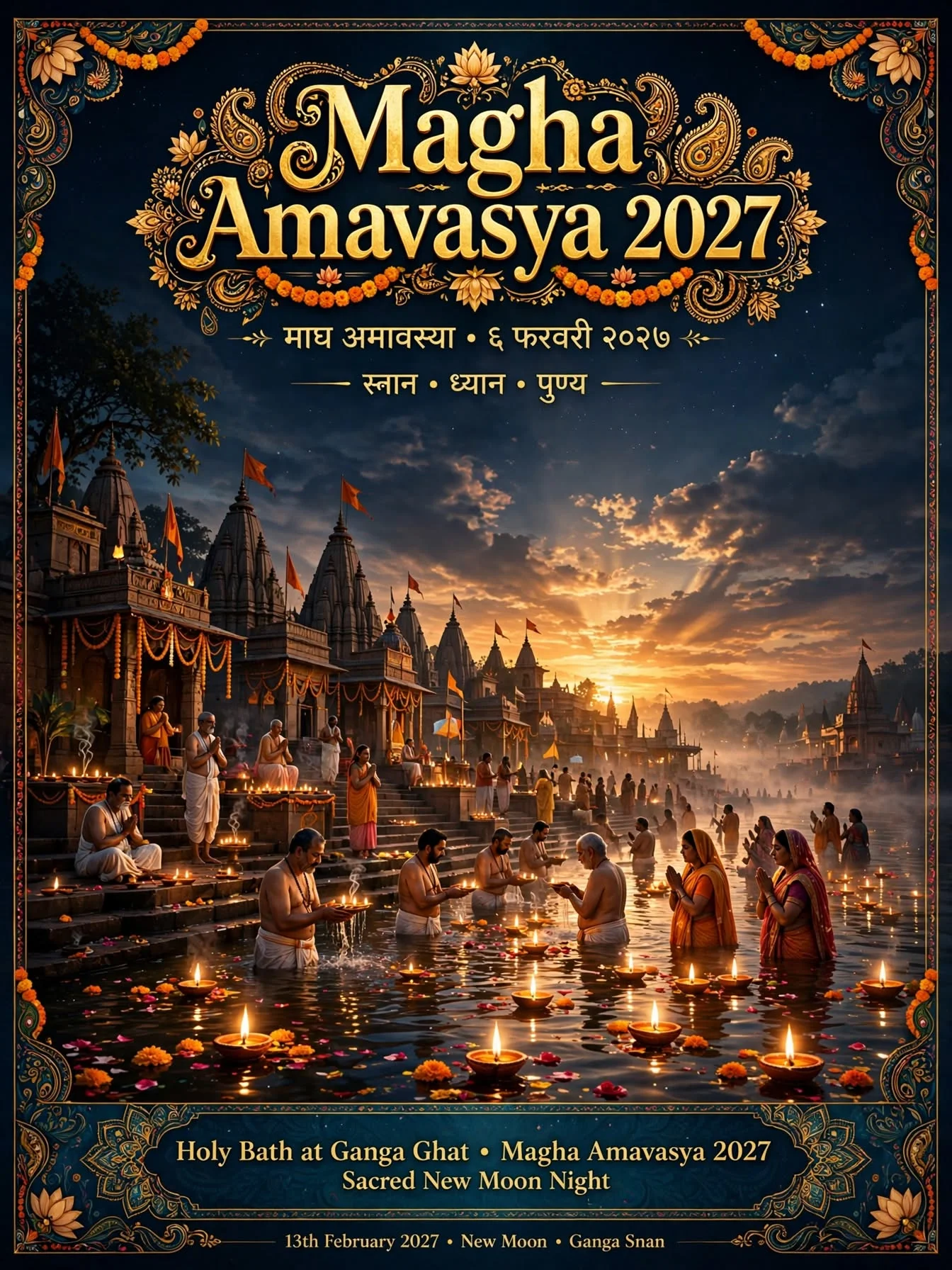
Magha Amavasya Timings & Panchang
Important festival dates and auspicious timings
Usha Arghya (Sunrise)
07:07 am
Sandhya Arghya (Sunset)
06:04 pm
Start Date
Saturday, 6 Feb 2027
Puja Muhurat
07:05 pm – 09:26 pm
Magha Amavasya
The religious and theological sanctity of Magha Amavasya is expounded in the Matsya Purana, the Padma Purana (Uttara Khanda), and the Skanda Purana. According to these sacred texts, during the month of Magha, and particularly on Magha Amavasya, all holy rivers, streams, and lakes on earth absorb the transcendental nectar of immortality (Amrita). The Puranas proclaim that on this day, the celestial Devas, Gandharvas, and ancestral Pitrus descend in subtle, luminous forms to bathe in the sanctified confluence of the Ganga, Yamuna, and mystical Saraswati at Prayagraj (the Triveni Sangam).
A hallmark observance of Magha Amavasya is the practice of Mauna Vrata—the sacred vow of complete verbal silence. In Vedic psychology, speech (Vak) is the primary vehicle through which mental energy and sensory focus are dissipated outward. By practicing absolute silence from dawn until midday or twilight, the spiritual practitioner restrains the sensory organs (Indriya Nigraha), quietens the wandering subconscious mind (Chitta), and redirects the internal life-force (Prana) inward toward self-realization and communion with the Supreme Being.
Devotees observe Magha Amavasya by taking early morning holy dips (Maha Snana) in sacred rivers or at home with water infused with holy Gangajal and black sesame seeds (Kala Til), performing solemn ancestral oblations (Pitru Tarpan and Shraddha), and distributing generous charity (Dana) consisting of sesame seeds, warm blankets, food grains, and gold to impoverished individuals and spiritual seekers to wash away lifetimes of sins.
Why is Magha Amavasya Celebrated?
Magha Amavasya is celebrated to attain spiritual purification and inner stillness through the sacred confluence of holy river bathing (Snana), mental and verbal silence (Mauna), and ancestral propitiation (Pitru Tarpan).
The day commemorates the legendary descent of all celestial deities, Rishis, and ancestral spirits into the sacred waters of the Triveni Sangam at Prayagraj, where ordinary water transforms into divine nectar (Amrita).
Devotees observe this sacred New Moon to satisfy departed ancestors, remove Pitru Dosha, burn away accumulated negative karmas, and invoke the supreme grace of Lord Vishnu and Lord Shiva for liberation (Moksha).
Scriptural Chronicles and Sacred Lore of Magha Amavasya
The Descent of Deities and Amrita at Prayagraj in the Matsya Purana
The profound scriptural origin of Magha Amavasya is chronicled in the Matsya Purana (Chapter 108) and the Padma Purana. During the historic churning of the ocean (Samudra Manthan), as divine physician Dhanvantari emerged carrying the celestial urn of nectar (Amrita Kumbha), a fierce struggle ensued between the Devas and Asuras.
During the celestial flight of Jayanta (son of Lord Indra) carrying the urn, sacred drops of nectar fell upon four consecrated earthly locations: Prayagraj, Haridwar, Ujjain, and Nashik. The Matsya Purana declares that on the New Moon of Magha month, the planetary alignment of the Sun and Moon in Capricorn (Makara Rashi) activates these divine nectarine vibrations across all sacred waters, multiplying the merits of a single holy bath to equal millions of ordinary ablutions.
The Appearance of Sage Manu and the Genesis of 'Mauni'
Ancient traditions recorded in the Skanda Purana link Magha Amavasya to the appearance of Sage Manu—the primordial progenitor of humanity and author of sacred laws. The term 'Mauni' is linguistically and spiritually derived from 'Muni' (the silent sage who meditates upon the eternal truth) and 'Manu'.
It is recorded that Sage Manu achieved supreme transcendental illumination (Samadhi) on this very New Moon day through continuous, unbroken practice of silence and contemplation. To honor the ancient heritage of the Munis and awaken the divine wisdom of the soul, Sanatana Dharma instituted the mandatory observance of Mauna Vrata on Magha Amavasya.
The Legend of the Righteous Brahmin and the Washerwoman Somi
In Puranic folklore, a virtuous and impoverished Brahmin named Devaswami lived with his pious wife Dhanavati and seven sons. When his virtuous daughter Gunavati's marriage was being arranged, an astrologer discovered that her planetary chart bore the curse of widowhood (Vaidhavya Yoga) immediately following marriage.
Grief-stricken, Devaswami sought the counsel of a realized sage, who revealed that only the extraordinary spiritual merit of a pious washerwoman named Somi, residing on the distant island of Singhaladvipa, could avert the catastrophe. Somi was renowned for her lifelong devotion to Lord Vishnu and regular holy bathing on Magha Amavasya. Devaswami's youngest son traveled across the ocean and served Somi faithfully. Deeply touched by his filial piety, Somi traveled to their home and transferred the boundless merits of her Magha Amavasya bath to Gunavati, neutralizing the malefic dosha and blessing her with a long, prosperous marriage.
Esoteric, Psychological, and Karmic Merits of Magha Amavasya
The Spiritual Alchemy of Silence (Mauna Vrata)
In the Bhagavad Gita (Chapter 17, Verse 16), Lord Krishna defines silence of the mind and speech (Mauna) as the supreme austerity of the psyche ('Manah-Prasadah Saumyatvam Maunam Atma-Vinigrahah'). Human speech consumes immense pranic energy and frequently generates conflict, falsehood, and sensory agitation.
By observing absolute verbal silence on Magha Amavasya, the outward flow of vital energy is stemmed. The restless intellect naturally calms, intuition sharpens, and the soul enters into direct, silent communion with the indwelling divine presence.
Ancestral Redemption and Pitru Tarpan (Kala Til Samarpan)
The New Moon tithi belongs inherently to the ancestral realm (Pitru Loka). On Magha Amavasya, the ancestral gateway opens wide, allowing departed souls to draw nourishment and peace from their descendants' offerings.
Offering pure water mixed with black sesame seeds (Kala Til), Kusha grass, and white flowers during mid-day Pitru Tarpan quenches the thirst of ancestors across three generations, resolving ancestral curses (Pitru Dosha) and inviting blessings of family peace and progeny.
Purification through Triple River Snana (Triveni Sangam)
The sacred waters on Magha Amavasya carry distinct geomagnetic and cosmological properties. Bathing in a flowing river or with water infused with Gangajal resets the human bio-field, washes away toxic metabolic residues, and neutralizes lifetimes of accumulated sins.
The Skanda Purana asserts that one who bathes during the dawn of Magha Amavasya achieves the spiritual merit equivalent to performing a thousand Ashwamedha sacrifices.
The Merit of Gupt Dana (Anonymous Charity)
Charity performed on Magha Amavasya is traditionally kept anonymous and selfless (Gupt Dana). Donating black sesame seeds, warm woolens, shoes, umbrellas, and food grains without ego or desire for recognition destroys deep-seated karmic debts and secures enduring spiritual grace.
Practical Worship Manual and Guide for Magha Amavasya
Dawn Awakening and Observance of Absolute Silence (Mauna)
Wake up during Brahma Muhurta (approximately 90 minutes before sunrise) and immediately take the internal resolve of silence (Mauna Vrata). Do not utter a single spoken word to family members or outsiders.
Proceed quietly to take a purificatory bath in a flowing sacred river, or add holy Gangajal and black sesame seeds to clean water at home, bathing with intense devotion and mental prayers.
Surya Arghya and Lord Vishnu Worship
After the holy bath, face East towards the rising Sun and offer sacred Arghya using a copper lota filled with water, red sandalwood, red flowers, and black sesame seeds while reciting the Surya Gayatri in your mind.
Clean the household altar, light a pure cow ghee lamp, and perform Shodashopachara puja of Lord Vishnu and Lord Shiva using white flowers, Tulsi leaves, and sandalwood, maintaining silent inner remembrance.
Mid-Day Pitru Tarpan and Shraddha Rites
During the auspicious Kutapa and Rohina muhurats around noon, face South upon a clean Kusha grass mat. Prepare water mixed with black sesame seeds, barley, and Gangajal.
Offer three oblations of sesame water (Tarpan) through the Pitru Tirtha (the space between the thumb and index finger) for ancestors, reciting: 'Om Pitridevatabhyo Namah'. Offer food or flour balls (Pinda) to crows, cows, and fish.
Dana Samarpan and Concluding the Mauna Vow
Distribute generous charity (Dana) comprising black sesame, warm blankets, mustard oil, food grains, and dakshina to deserving Brahmins and the poor.
After completing all charitable deeds and twilight prayers, conclude the vow of silence by gently chanting 'Om Namo Narayanaya' or the Gayatri Mantra, and partake of a simple sattvic vegetarian meal.
Magha Amavasya Puja Vidhi (Step by Step)
- 1
Brahma Muhurta Jagaran and Mauna Sankalpa
Wake before dawn during Brahma Muhurta. Maintain complete silence without speaking a single word. Mentally pray to Lord Vishnu, Surya Deva, and ancestral Pitrus, resolving to maintain Mauna Vrata and observe holy ablutions.
- 2
Maha Snana with Gangajal and Black Sesame
Bathe in a sacred river or add drops of holy Gangajal and black sesame seeds (Kala Til) to your bathing water at home. Bathe with profound reverence, mentally invoking the sacred rivers: Ganga, Yamuna, Godavari, and Saraswati.
- 3
Surya Devata Arghya Samarpanam
Dress in clean, traditional unstitched white or pale yellow attire. Fill a copper lota with fresh water, black sesame seeds, raw sugar, and red sandalwood paste. Face the rising Sun and offer Arghya thrice without breaking your silence.
- 4
Altar Sanctification and Deepa Prajvalan
Clean the puja altar thoroughly. Spread a fresh yellow cloth on a wooden chowki and install portraits or idols of Lord Sri Hari Vishnu and Lord Shiva. Light a pure cow-ghee lamp and burn natural guggul incense.
- 5
Magha Amavasya Puja Samagri List
Snana and Ancestral Tarpan Items
Essentials required for the dawn holy bath and mid-day Pitru Tarpan.
- Pure holy Gangajal bottle and clean copper lota
- Black sesame seeds (Kala Til) - 250 grams for snana, tarpan, and charity
- Kusha (Darbha) grass bundle and woven Kusha asana for seated worship
- Barley grains (Jau) and raw unbroken white rice (Akshata)
Deity Worship and Fragrance Essentials
Fragrances, leaves, and illuminants for worshipping Lord Vishnu and Lord Shiva.
- Pure yellow sandalwood paste (Gopi Chandan) and red Kumkum
- Fresh Tulsi leaves (harvested on the preceding day, never plucked on Amavasya)
- Fresh three-leaflet Bilva leaves (Belpatra) and white Kaner flowers
- Pure cow ghee, cotton wicks, and brass/earthen deepak
- Natural guggul, sandalwood incense, and Bhimseni camphor for aarti
Dana (Charity) and Punya Items
Warm items, food grains, and fabrics distributed to the impoverished on Magha Amavasya.
- Warm woolen blankets, shawls, or sweaters for winter charity
- Raw food grain packets (wheat flour, rice, lentils, jaggery)
Mantras and Prayers for Magha Amavasya
Magha Amavasya Vrat Rules and Fasting Guidelines
Mauna Vrata (Vow of Silence) Rules
Injunctions governing the practice of silence on Magha Amavasya:
- Devotees must maintain complete verbal silence from the moment of waking up until the conclusion of the holy bath and midday worship.
- Avoid writing notes, texting, or using excessive hand gestures to communicate frivolous desires while observing the vow.
- Strict practitioners maintain unbroken silence until sunset, breaking it only by chanting sacred Vedic mantras.
- Channel internal mental energy toward japa of 'Om Namah Shivaya' or 'Om Namo Bhagavate Vasudevaya'.
Fasting and Dietary Restrictions
Food discipline observed during the New Moon fast:
- Householders fast until the completion of mid-day Pitru Tarpan and Dana rites.
- All non-vegetarian food, alcohol, tobacco, garlic, onions, and stale foods are strictly forbidden.
- Do not consume common sea salt; single phalahari meals may incorporate rock salt (Sendha Namak).
- Do not pluck fresh Tulsi leaves or Bilva leaves on Amavasya day.
Ancestral and Charitable Injunctions
Rules for performing Tarpan and charity:
- Tarpan must be performed facing South during the afternoon Kutapa Muhurat using black sesame seeds and Kusha grass.
Dos and Don'ts of Magha Amavasya
Good Practices (Do's)
- Wake during Brahma Muhurta and maintain complete verbal silence (Mauna Vrata) until midday.
- Take a purificatory bath in a holy river or with clean water infused with holy Gangajal and black sesame seeds.
- Offer Arghya to the rising Sun using water, red chandan, and sesame seeds in a copper lota.
- Perform solemn Pitru Tarpan with black sesame seeds and Kusha grass around midday facing South.
- Distribute anonymous charity (Gupt Dana) of warm blankets, food grains, sesame, and mustard oil to the poor.
Magha Amavasya Across Regions
| Region | Local Name |
|---|---|
| Prayagraj and Uttar Pradesh (North India) | Triveni Sangam Maha Snana & Kalpavas |
| Haridwar and Uttarakhand | Har Ki Pauri Brahma Kund Snana |
| Maharashtra and Western India | Godavari & Trimbakeshwar Maha Snana |
| Tamil Nadu and Southern India | Rameshwaram Teertha Snanam |
Magha Amavasya FAQs
What is Magha Amavasya?
Magha Amavasya is the sacred New Moon day of the holy month of Magha, widely revered as Mauni Amavasya, dedicated to holy river bathing, complete verbal silence (Mauna), and ancestral rites (Pitru Tarpan).
Why is this day celebrated as 'Mauni' Amavasya?
The term 'Mauni' stems from 'Muni' (silent sage) and the practice of 'Mauna' (complete silence). Observing silence on this day restrains sensory distractions, conserves vital prana, and fosters deep spiritual awakening.
What is the scriptural significance of bathing at the Triveni Sangam on this day?
According to the Matsya Purana, celestial deities and ancestral spirits descend to bathe in the Sangam on Magha Amavasya. Water in all rivers turns to nectar (Amrita), multiplying the merit of a bath millions of times.
Upcoming Festivals
View All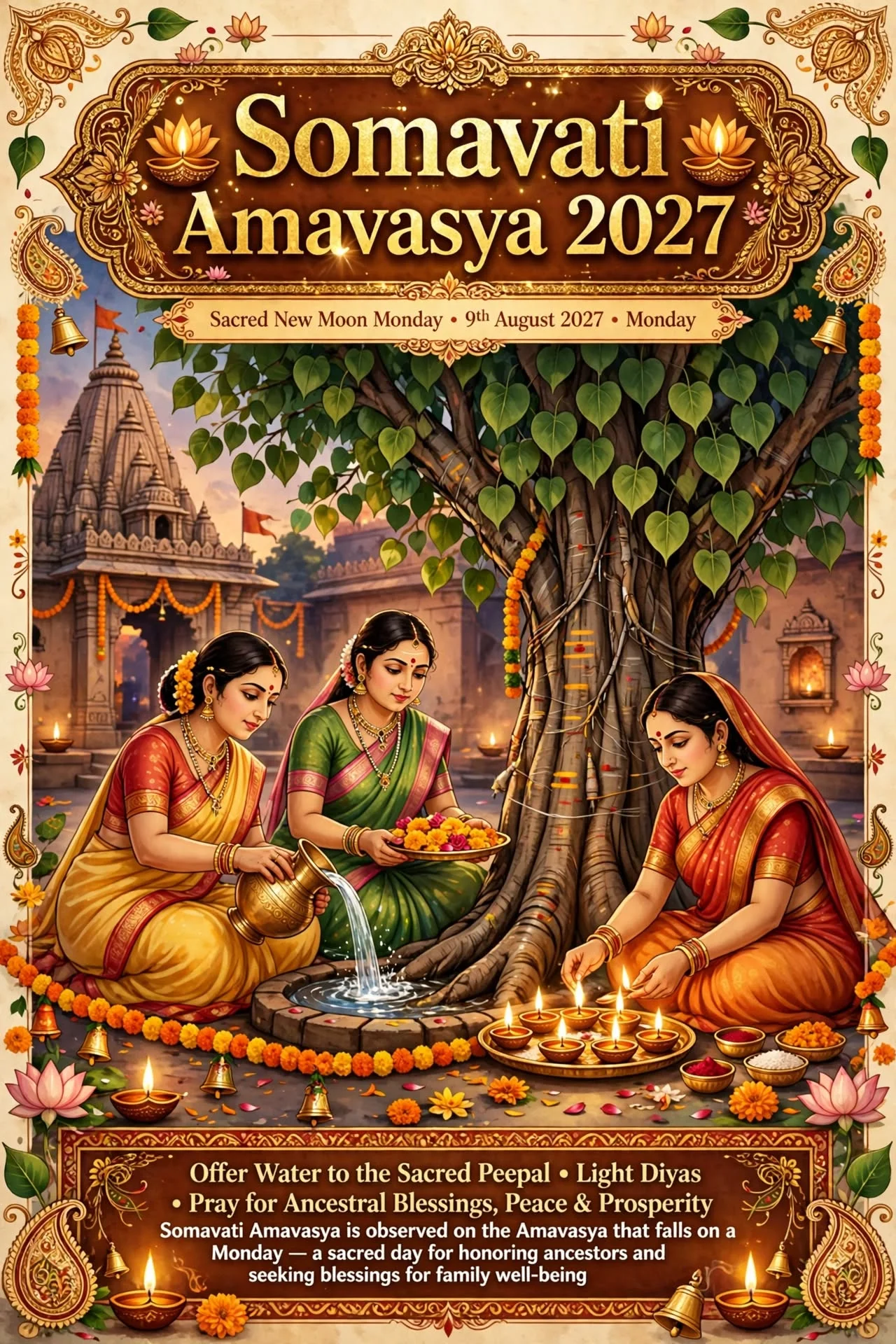
Monday, Mar 8, 2027
Somavati Amavasya
Somavati Amavasya is an exceedingly rare, sacred, and astrologically exalted Hindu fasting and pilgrimage observance that occurs when the New Moon day (Amavasya tithi) coincides with a Monday (Somavara). In Vedic tradition, Monday is governed by Soma (the Moon God / Chandra Deva) and is supremely sacred to Lord Shiva, who adorns the crescent moon upon His crown as Chandrashekhara. When the quiet, contemplative energy of Amavasya merges with the gentle, nectarine cooling rays of Monday, it creates an extraordinary cosmic alignment that is lauded across Sanatana Dharma as the 'King of all Amavasyas'.
View Festival Guide

Tuesday, Mar 9, 2027
Chandra Darshana
Chandra Darshana is a revered monthly Hindu observance dedicated to sighting, venerating, and offering oblation to the delicate waxing crescent Moon immediately following the new moon (Amavasya), typically occurring during the twilight of Shukla Paksha Pratipada or Dwitiya.
View Festival Guide

Tuesday, Mar 9, 2027
Ishti
Ishti is a foundational Vedic ritual observance appearing prominently in Hindu Panchangs on the Pratipada tithi (the first lunar day) following either Amavasya (new moon) or Purnima (full moon), marking the prescribed performance day for the fortnightly Vedic Darsha-Purnamasa sacrifices.
View Festival Guide

Wednesday, Mar 10, 2027
Phulera Dooj
Phulera Dooj (फुलेरा दूज) is a wonderfully joyous, vibrant, and spiritually sweet Hindu festival celebrated on the second day (Dwitiya tithi) of the Shukla Paksha (waxing moon fortnight) in the holy month of Phalguna according to the traditional Hindu calendar. Dedicated to the supreme divine couple, Bhagavan Sri Krishna and Sri Radha Rani, this radiant festival heralds the arrival of the spring festival of colors (Holi) across the sacred land of Braj (Vrindavan, Mathura, Barsana, Nandgaon, and Govardhan). The word 'Phulera' is derived from 'Phool' (blossoming flowers), and on this day, the divine realm of Braj is enveloped in an enchanting floral ecstasy.
View Festival Guide
Monday, Mar 15, 2027
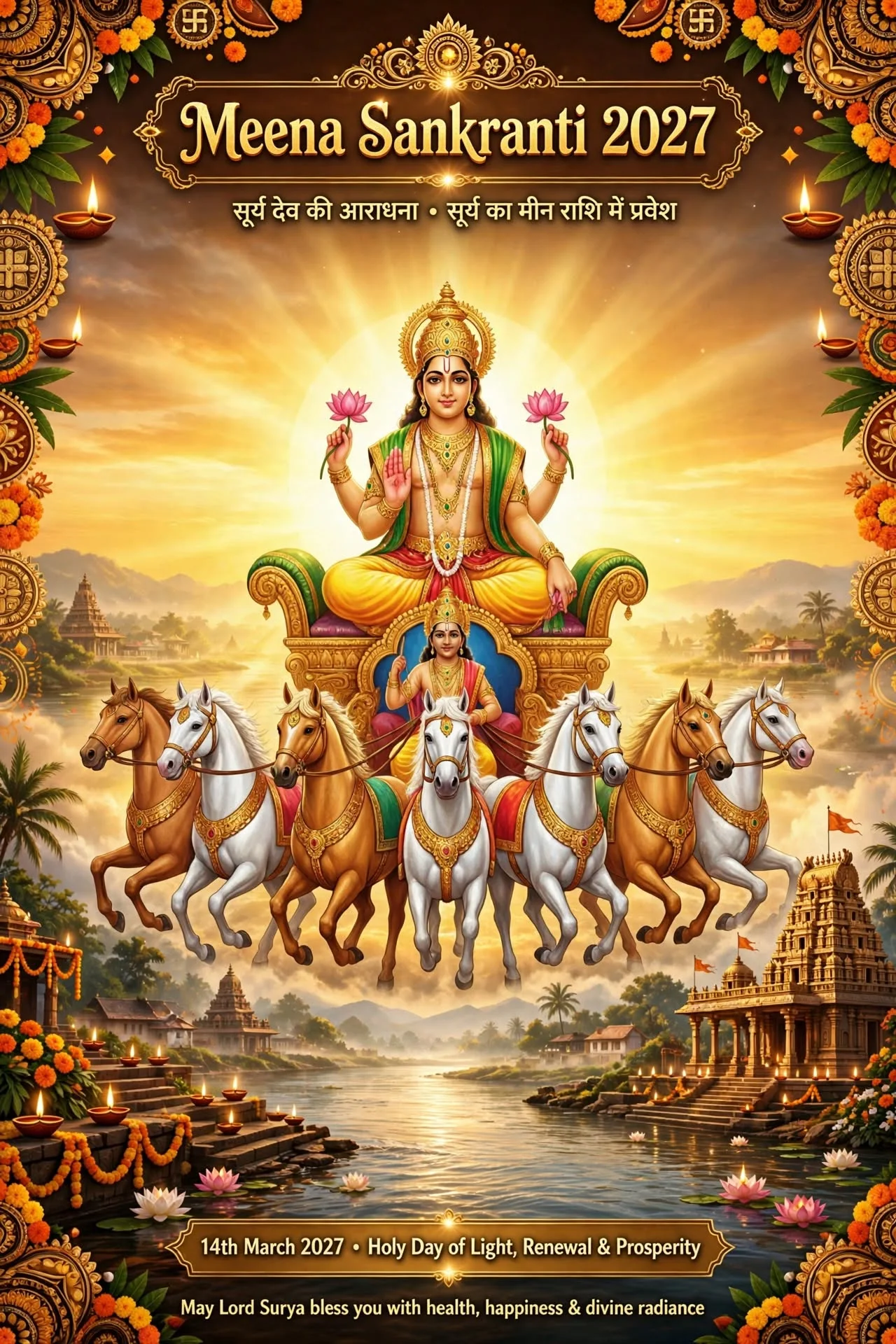
Meena Sankranti
Meena Sankranti is a paramount astronomical transit and holy festival in the Hindu solar calendar, marking the entry of the Sun God (Surya Deva) from Kumbha Rashi (Aquarius) into Meena Rashi (Pisces). In Vedic astronomy and Jyotisha, this celestial ingression signifies the commencement of the twelfth and final solar month (Meena Masa) of the sidereal solar year. Occurring in mid-March, Meena Sankranti holds extraordinary significance across Sanatana Dharma as an auspicious juncture of profound spiritual purification, solar adoration, and charitable oblations.
View Festival Guide
Thursday, Mar 18, 2027
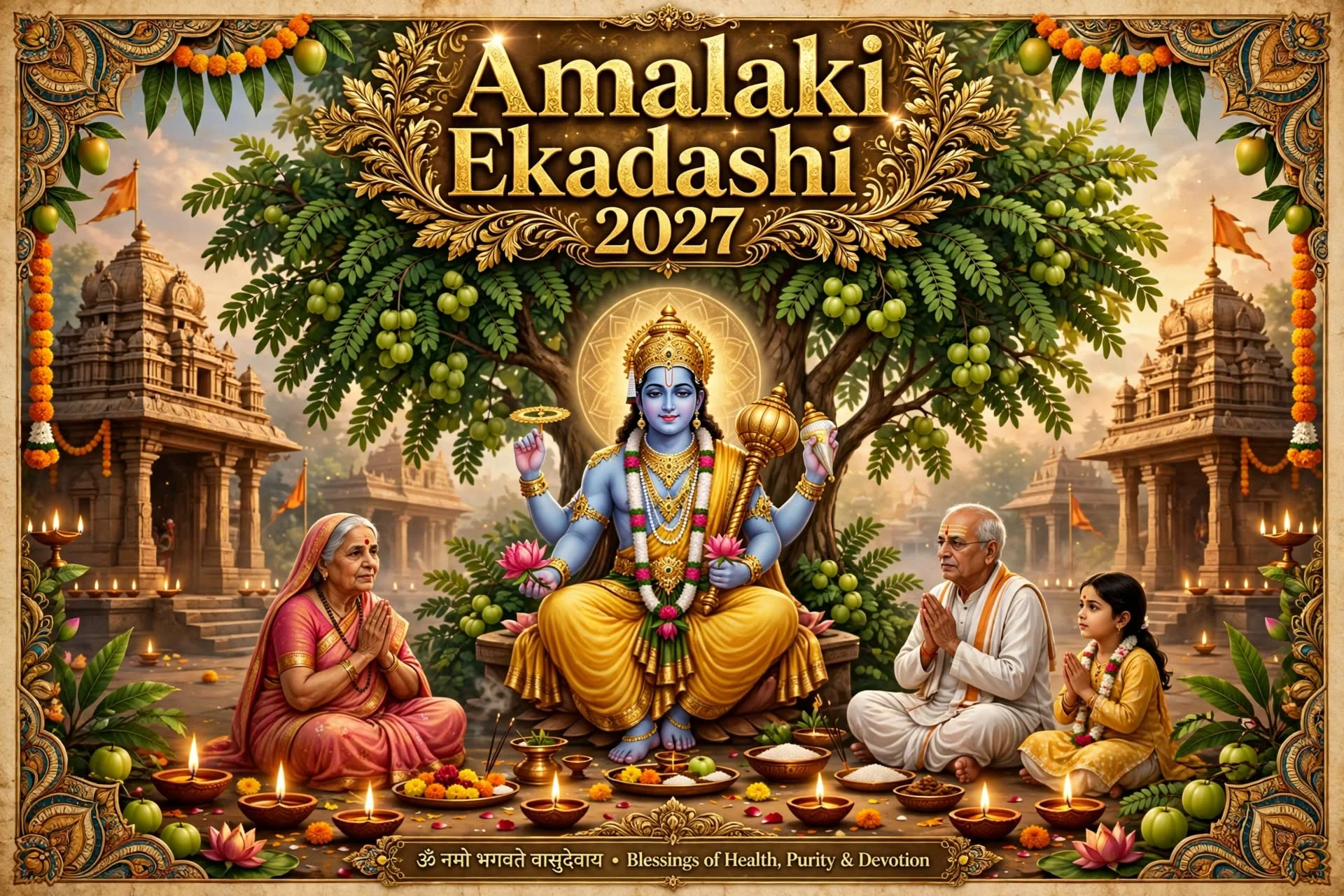
Amalaki Ekadashi
Amalaki Ekadashi, also known as Amla Ekadashi, is a celebrated and spiritually illuminating Hindu fasting observance observed on the eleventh day (Ekadashi tithi) of the Shukla Paksha (waxing moon fortnight) in the auspicious month of Phalguna according to the traditional Hindu calendar. Occurring majestically between the great festivals of Maha Shivaratri and Holi, this sacred Ekadashi is uniquely consecrated to the veneration of the holy Amalaki tree (Indian Gooseberry - Phyllanthus emblica) and Lord Sri Hari Vishnu. In Vedic metaphysics and Ayurveda, the Amalaki tree is revered as the first botanical tree to manifest in the cosmos, imbued with the living divine presence of Lord Vishnu, Goddess Lakshmi, and the entire celestial pantheon.
View Festival Guide
Saturday, Mar 20, 2027
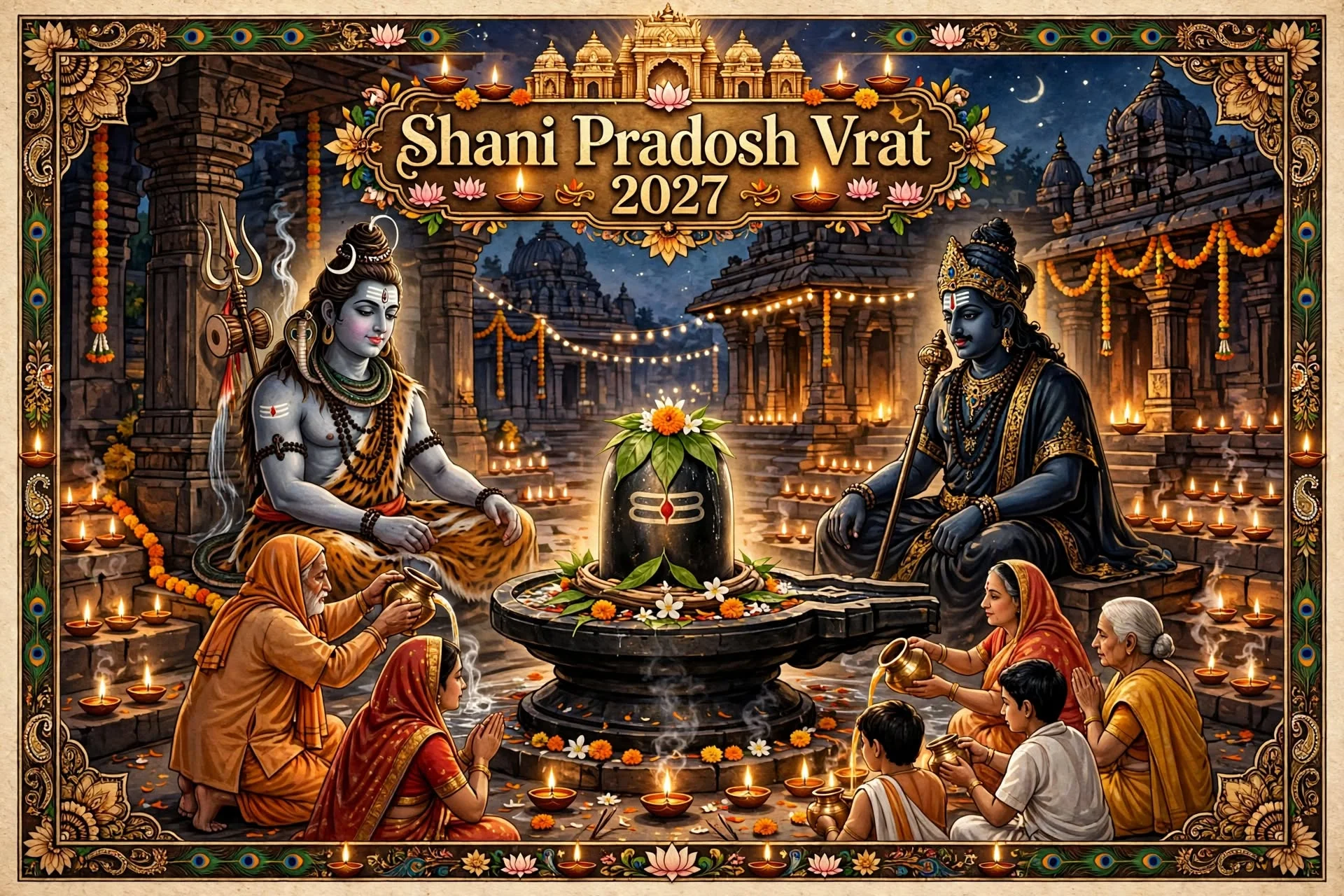
Shani Pradosh Vrat
Shani Pradosh Vrat is an exceptionally potent, revered, and astrologically transformative bi-monthly Hindu fasting observance dedicated to Lord Shiva, Goddess Parvati, and Lord Shani Deva (the planetary deity of Saturn). Occurring on the thirteenth day (Trayodashi tithi) of either the waxing (Shukla) or waning (Krishna) lunar fortnight when it coincides with a Saturday (Shanivara), this sacred vow is lauded across Vedic and Puranic literature as the supreme, infallible spiritual remedy for dissolving chronic karmic impediments, neutralizing severe planetary afflictions, and securing profound peace and prosperity.
View Festival Guide

Sunday, Mar 21, 2027
Chhoti Holi
Chhoti Holi, celebrated with boundless excitement and devotion across North, Central, and Western India, is the auspicious festival observed on the fourteenth and fifteenth tithis (Chaturdashi merging into Purnima) of the Shukla Paksha in the month of Phalguna. Serving as the divine prelude to the grand festival of colors (Dhulandi or Badi Holi), Chhoti Holi is universally centered around the sacred ritual of assembling, consecrating, and lighting the community bonfire known as Holika Dahan. It commemorates the eternal victory of pure devotion, righteousness, and truth over demonic arrogance, persecution, and darkness.
View Festival Guide