




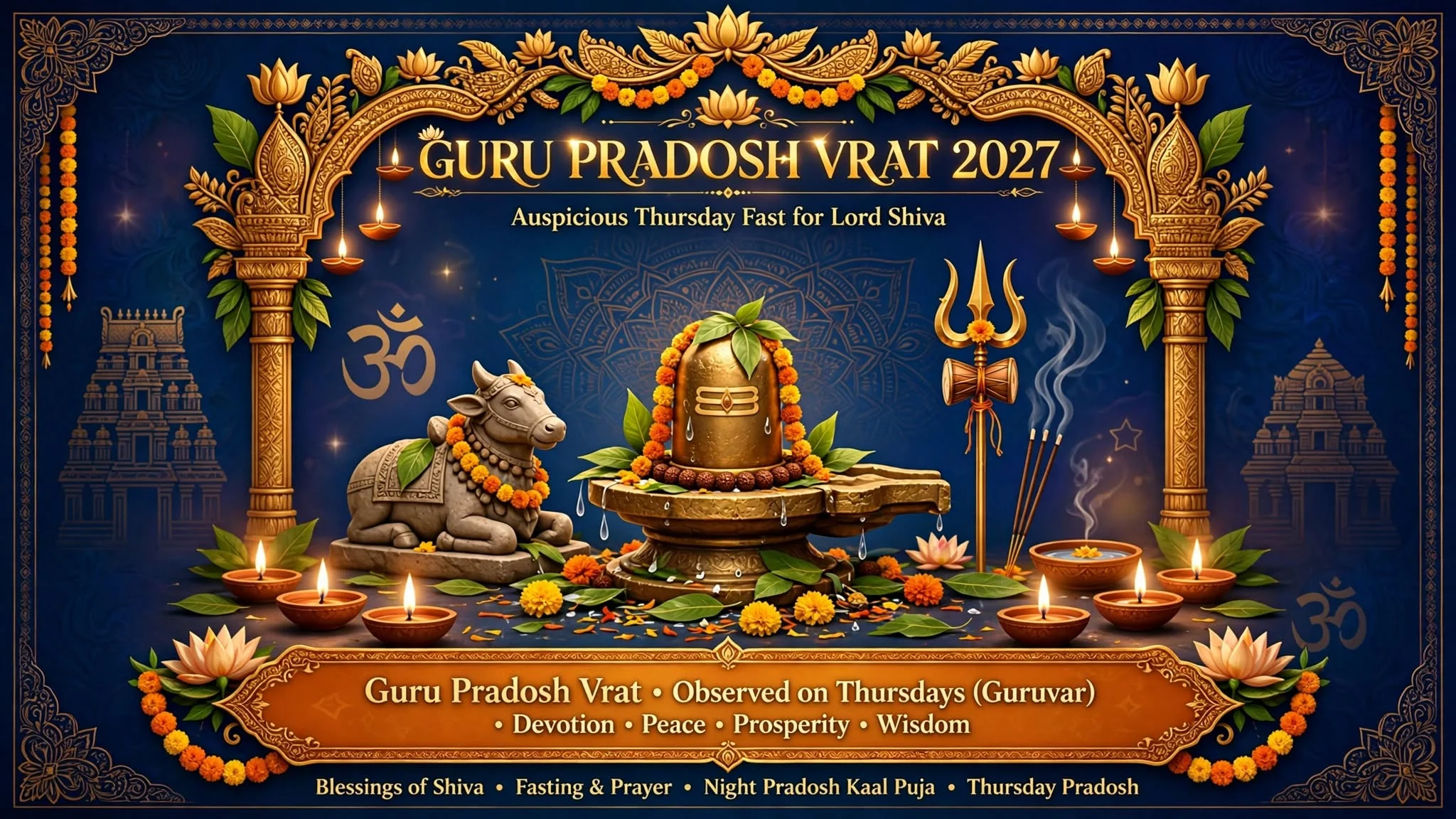
Guru Pradosh Vrat, also known as Guruvara Pradosham or Brihaspati Pradosham, is a sacred bimonthly Hindu fasting observance occurring when the Trayodashi tithi (thirteenth lunar day) coincides with a Thursday (Guruvara) during the twilight Pradosha Kaal period.
Guru Pradosh Vrat 2027: Date, Puja Timings, Rituals & Stories
Guru Pradosh Vrat Timings & Panchang
Important festival dates and auspicious timings
Usha Arghya (Sunrise)
07:15 am
Sandhya Arghya (Sunset)
05:37 pm
Start Date
Monday, 4 Jan 2027
Puja Muhurat
04:08 pm – 06:16 pm
Guru Pradosh Vrat
Observed during both the waxing fortnight (Shukla Paksha) and waning fortnight (Krishna Paksha) of the lunar month, Pradosha Vrat is dedicated to the worship of Lord Shiva, Goddess Parvati, Lord Ganesha, and Lord Shiva's divine vehicle, Nandi Deva.
The confluence of Trayodashi with Thursday holds exalted spiritual and astrological significance because Thursday is presided over by Guru Brihaspati (Jupiter), the celestial preceptor of the gods who governs higher wisdom, spiritual discernment, righteous counsel, auspicious matrimony, and wealth.
Devotees observe a disciplined day-long fast and perform intensive twilight worship during the auspicious Pradosha Kaal—spanning roughly 96 minutes across and immediately following sunset—seeking spiritual liberation, resolution of Guru Dosha (Jupiter afflictions in astrology), academic success, and lasting family peace.
Why is Guru Pradosh Vrat Celebrated?
Guru Pradosh Vrat is celebrated to venerate the boundless compassion of Lord Shiva, who consumed the deadly Halahala poison during the churning of the cosmic ocean (Samudra Manthan) to protect the universe, an event eternally commemorated during the twilight of Trayodashi.
The observance unites the grace of Mahadeva with the benevolence of Guru Brihaspati, making it a supreme occasion for overcoming delays in marriage, dissolving intellectual confusion, rectifying karmic offenses committed against spiritual teachers, and attaining dharmic success.
- To express reverence to Lord Shiva for preserving creation from the all-consuming Halahala poison.
- To invoke the blessings of Guru Brihaspati for academic excellence, wisdom, and auspicious marriage.
- To obtain relief from Guru Chandal Dosha and weak Jupiter placements in one's Vedic horoscope.
- To worship Nandi Deva during the twilight Ananda Tandava (cosmic blissful dance) of Mahadeva.
- To purify accumulated negative karma and cultivate spiritual fortitude through voluntary austerity and evening contemplation.
Puranic Origins and Sacred Lore of Guru Pradosh
The Cosmic Dance Following Samudra Manthan
The foundational theology of Pradosha worship originates in the Puranic accounts of the churning of the milk ocean (Samudra Manthan) by the Devas and Asuras, described in the Shiva Purana and Skanda Purana.
When the lethal Kalakuta (Halahala) poison arose and threatened to engulf all creation, Lord Shiva consumed it out of absolute benevolence. Goddess Parvati gently pressed His throat to contain the toxin, turning His neck deep blue and earning Him the epithet Neelakantha.
On the thirteenth lunar day (Trayodashi) during the evening twilight (Pradosha Kaal), Lord Shiva performed His blissful cosmic dance (Ananda Tandava) on Mount Kailash between the horns of His sacred mount, Nandi, while all the celestial deities sang His praises. Worshipping Shiva during this twilight hour is thus universally revered as immensely purifying.
The Legend of the Devas and Vritrasura
A celebrated historical narrative attributed to Guru Pradosha Vrat in the Skanda Purana recounts the fierce war between the celestial gods and the mighty demon Vritrasura. Having disrespected their preceptor Brihaspati in pride, the Devas were stripped of their divine luster and were routed by the demon forces.
Realizing their grave error, the repentant Devas sought refuge in Brihaspati, who advised them to propitiate Lord Shiva: 'O Devas, only the supreme grace of Mahadeva can overturn this calamity. Observe the sacred fast of Guru Pradosh on the upcoming Thursday Trayodashi, perform twilight abhishekam, and worship Lord Shiva alongside Nandi.'
The Devas observed the fast with complete humility, performing elaborate worship during the Pradosha Kaal. Pleased by their sincere surrender, Lord Shiva blessed them with divine weapons and instructed them to approach Sage Dadhichi for his sacred bones to fashion the invincible Vajra. Armed with divine grace, King Indra defeated Vritrasura and reclaimed the celestial throne, establishing Guru Pradosh as the supreme vow for regaining lost glory and overcoming insurmountable obstacles.
Source: Skanda Purana (Maheshwara Khanda) and Shiva Purana (Vidyeshvara & Rudra Samhitas)
Philosophical, Astrological, and Esoteric Dimensions
The Convergence of Consciousness (Shiva) and Wisdom (Guru)
In Hindu metaphysics, Lord Shiva is the supreme Guru—Adi Guru and Dakshinamurti—who imparts silent, transcendental wisdom to sages. Guru Brihaspati represents applied wisdom, righteous conduct (Dharma), and intellectual illumination in the manifest world.
Observing Pradosha on Thursday harmonizes the unmanifest consciousness of Shiva with the manifest ethical wisdom of Jupiter, dispelling spiritual blindness (Avidya) and establishing the seeker in truth.
Astrological Harmony and Pacification of Jupiter
Jupiter (Guru) rules education, children, fortune, and righteousness. An afflicted Jupiter in a birth chart manifests as poor decision-making, financial stagnation, and marital obstacles. Worshipping Lord Shiva on Guru Pradosh pacifies Jupiter, turning malefic planetary transits into auspicious opportunities.
Purification of Karmic Obstacles
- Dissolution of sins committed through arrogance, disrespecting teachers, and breaking solemn oaths.
- Awakening of devotional surrender (Sharanagati) and peaceful clarity in decision-making.
- Attainment of domestic harmony, righteous offspring, and career advancement.
Practical Preparations, Ritual Timing, and Temple Worship
Morning Preparations and The Sacred Sankalpa
Preparation begins early on the morning of Trayodashi during Brahma Muhurta. Devotees cleanse their homes, take a purificatory bath with Gangajal, and dress in clean yellow or white traditional clothing (yellow honors both Jupiter and Lord Shiva).
Before the domestic altar or a Shiva Linga, the practitioner recites the formal Sankalpa (solemn vow), dedicating the day's fasting and prayers to Lord Shiva and Devi Parvati.
Daylight Fasting and Mental Quietude
Throughout the day, practitioners observe a disciplined fast (either complete waterless Nirjala or light fruit-and-milk Phalahari). Loud speech, anger, deceit, and commercial conflicts are avoided, while mental japa of the Panchakshari Mantra ('Om Namah Shivaya') is sustained.
The Twilight Pradosha Kaal Worship
Approximately 45 minutes before sunset, devotees take a fresh purificatory bath and visit a local Shiva temple or arrange the domestic altar. The primary worship is conducted strictly during the Pradosha Kaal window.
In Shiva temples, grand public Abhishekam is performed over the principal Shiva Linga and Nandi Deva using milk, curd, honey, sugarcane juice, and holy water while Vedic priests chant Sri Rudram. Devotees listen to the Guru Pradosha Vrata Katha, perform Karpura Aarti, and accept sanctified prasad.
Guru Pradosh Vrat Puja Vidhi (Step by Step)
- 1
Pratah Snana and Guru Pradosh Sankalpa (Morning Vow)
Wake before dawn during Brahma Muhurta. Take a purificatory bath infused with Gangajal and wear clean traditional yellow or white attire. Sit facing East, take water, unbroken rice (Akshata), and a yellow flower in your right hand, and make a solemn vow (Sankalpa) to observe Guru Pradosha Vrat for the grace of Lord Shiva, Goddess Parvati, and Guru Brihaspati.
- 2
Evening Shuddhikaran and Altar Preparation
About 45 minutes before sunset, take a fresh purificatory bath. Clean the worship sanctuary and place a wooden chauki draped with an unstitched yellow cloth. Place a Shiva Linga or an image of the Shiva Parivar inside a broad brass or copper vessel (Arghya patra) to receive the abhishekam fluids.
- 3
Dhyana and Avahana (Meditation and Invocation)
Light a pure cow ghee lamp on the right side and an incense burner (Dhoop) on the left. Fold hands in namaskara mudra and meditate upon Lord Shiva accompanied by Goddess Parvati, Ganesha, Kartikeya, and Nandi. Scatter flowers and invite Their divine presence onto the altar.
- 4
Panchamrit Abhishekam (Holy Bathing of the Shiva Linga)
Gently bathe the Shiva Linga sequentially with pure Gangajal, raw cow milk, fresh curd, pure honey, desi cow ghee, and powdered sugar (or sugarcane juice). Conclude with a generous shower of pure water infused with fragrant rosewater and sandalwood paste while reciting the Panchakshara Mantra ('Om Namah Shivaya') or Sri Rudra Prashna.
Guru Pradosh Vrat Puja Samagri List
Altar and Abhisheka Essentials
Specific vessels and liquid ingredients required for conducting the holy twilight abhishekam to Lord Shiva and Nandi Deva.
- Consecrated Shiva Linga (stone, parad, or brass) and Nandi idol
- Broad brass, copper, or silver vessel (Arghya Patra) to catch abhishekam fluids
- Pure holy water (Gangajal) and clean freshwater
- Raw unboiled cow milk (Kaccha Dudh)
- Fresh unflavored cow curd (Dahi)
- Pure bee honey (Madhu)
- Clarified cow butter (Desi Ghee)
- Powdered sugar, rock candy (Mishri), or fresh sugarcane juice
Sacred Adornments and Botanical Offerings
Auspicious botanicals dear to Lord Shiva and favorable for propitiating Jupiter (Brihaspati).
- Bilva Patra (Bael leaves) – at least 11, 21, or 108 intact trifoliate leaves
- Dhatura fruit and bell-shaped flowers
- Shami leaves (Prosopis cineraria)
- Fresh yellow marigold flowers (Genda) and yellow blossoms
- White jasmine and blue aparajita flowers
- Fresh Durva grass blades (for Lord Ganesha)
- A small bowl of whole yellow split chickpeas (Chana Dal) representing Jupiter
Mantras and Prayers for Guru Pradosh Vrat
Guru Pradosh Vrat Vrat Rules and Fasting Guidelines
Modes and Guidelines of Fasting
The fast of Guru Pradosh is observed according to individual endurance, adopting one of three customary modes:
- Nirjala Vrata: A waterless fast maintained from sunrise until the conclusion of the evening Pradosha puja (only for seasoned practitioners in robust health).
- Sajala Vrata: Consuming only water, fresh coconut water, or herbal infusions throughout the daylight hours.
- Phalahara Vrata: A light diet consisting of fresh fruits, raw cow milk, and nuts taken once during midday, remaining free of grains, beans, and table salt.
Dietary Restrictions and Sattvic Conduct
- Strictly avoid all non-vegetarian items, alcohol, tobacco, onion, garlic, mushrooms, and fermented or stale food.
- Do not consume food prepared with common sea salt; if an evening meal is taken after the puja, use rock salt (sendha namak) sparingly.
- Avoid grains such as wheat, rice, barley, and lentils during the period of the fast.
- Maintain celibacy (Brahmacharya) and refrain from lying, anger, deceit, and contentious debates on this sacred day.
Fasting Conclusion and Parana Procedure
The completion of the fast depends on lineage tradition. In most Shaivite traditions, devotees conclude the fast immediately after the Pradosha Kaal evening puja and Aarti by partaking of sanctified fruit prasad and a simple sattvic meal (such as kuttu or singhara flour preparations). In other traditions, complete Parana is performed on the following morning (Chaturdashi) after sunrise prayers.
Dos and Don'ts of Guru Pradosh Vrat
Good Practices (Do's)
- Wake early during Brahma Muhurta, take a purificatory bath, and make a sincere mental Sankalpa.
- Conduct the principal Shiva worship strictly during the Pradosha Kaal twilight window (around sunset).
- Bathe the Shiva Linga with Panchamrit and pure water while chanting 'Om Namah Shivaya'.
- Offer unblemished three-leaf Bilva Patra with the smooth surface facing the Shiva Linga.
- Offer yellow flowers and worship Nandi Deva before presenting offerings to Shiva.
Guru Pradosh Vrat Across Regions
| Region | Local Name |
|---|---|
| Tamil Nadu and Kerala | Guru Pradosham / Brihaspati Pradosham |
| North India (Uttar Pradesh, Bihar, Rajasthan, Madhya Pradesh) | Guru Pradosh Vrat |
| Karnataka and Andhra Pradesh / Telangana | Guruvara Pradosha Vratam |
| Maharashtra and Gujarat | Guruwar Pradosh |
Guru Pradosh Vrat FAQs
What is Guru Pradosh Vrat?
Guru Pradosh Vrat is the observance of Pradosha Vrat when the Trayodashi tithi (thirteenth lunar day) falls on a Thursday (Guruvara). It combines the worship of Lord Shiva and Goddess Parvati with the propitiation of Guru Brihaspati (Jupiter).
What is the most auspicious time to perform puja on Guru Pradosh?
The most sacred time is during Pradosha Kaal, which spans approximately 45 minutes to 72 minutes before and after sunset. Worshiping Lord Shiva during this evening twilight window is considered essential to harvest the full spiritual fruits of the fast.
Who can observe the Guru Pradosh fast?
Any devotee regardless of gender, age, or varna can observe Guru Pradosh Vrat with devotion. It is especially recommended for students, educators, individuals seeking auspicious marriage, and those experiencing Guru Dosha in astrology.
Upcoming Festivals
View All
Saturday, Jul 3, 2027
Anvadhan
Anvadhan (अन्वाधान) is an ancient, highly revered Vedic ritual and spiritual observance in Sanatana Dharma performed on the day immediately preceding the New Moon (Amavasya) or Full Moon (Purnima). Rooted in the pristine traditions of the Shrauta and Grihya Sutras, Anvadhan literally translates to 'the solemn placing and replenishment of sacred fuel wood into the consecrated Vedic fires'. In traditional Vedic ritualism, householders (Grihasthas) and priests who maintain the sacred Agnihotra fires perform Anvadhan to prepare the sacrificial altars for the grand Darsha Yajna (New Moon sacrifice) or Paurnamasa Yajna (Full Moon sacrifice) scheduled for the following day.
View Festival Guide

Saturday, Jul 3, 2027
Darsha Amavasya
Darsha Amavasya is a significant new moon observance in the Hindu calendar designating the specific night when the Moon is completely invisible to the human eye, having fully merged into the conjunction of the Sun.
View Festival Guide

Sunday, Jul 4, 2027
Ishti
Ishti is a foundational Vedic ritual observance appearing prominently in Hindu Panchangs on the Pratipada tithi (the first lunar day) following either Amavasya (new moon) or Purnima (full moon), marking the prescribed performance day for the fortnightly Vedic Darsha-Purnamasa sacrifices.
View Festival Guide
Sunday, Jul 4, 2027
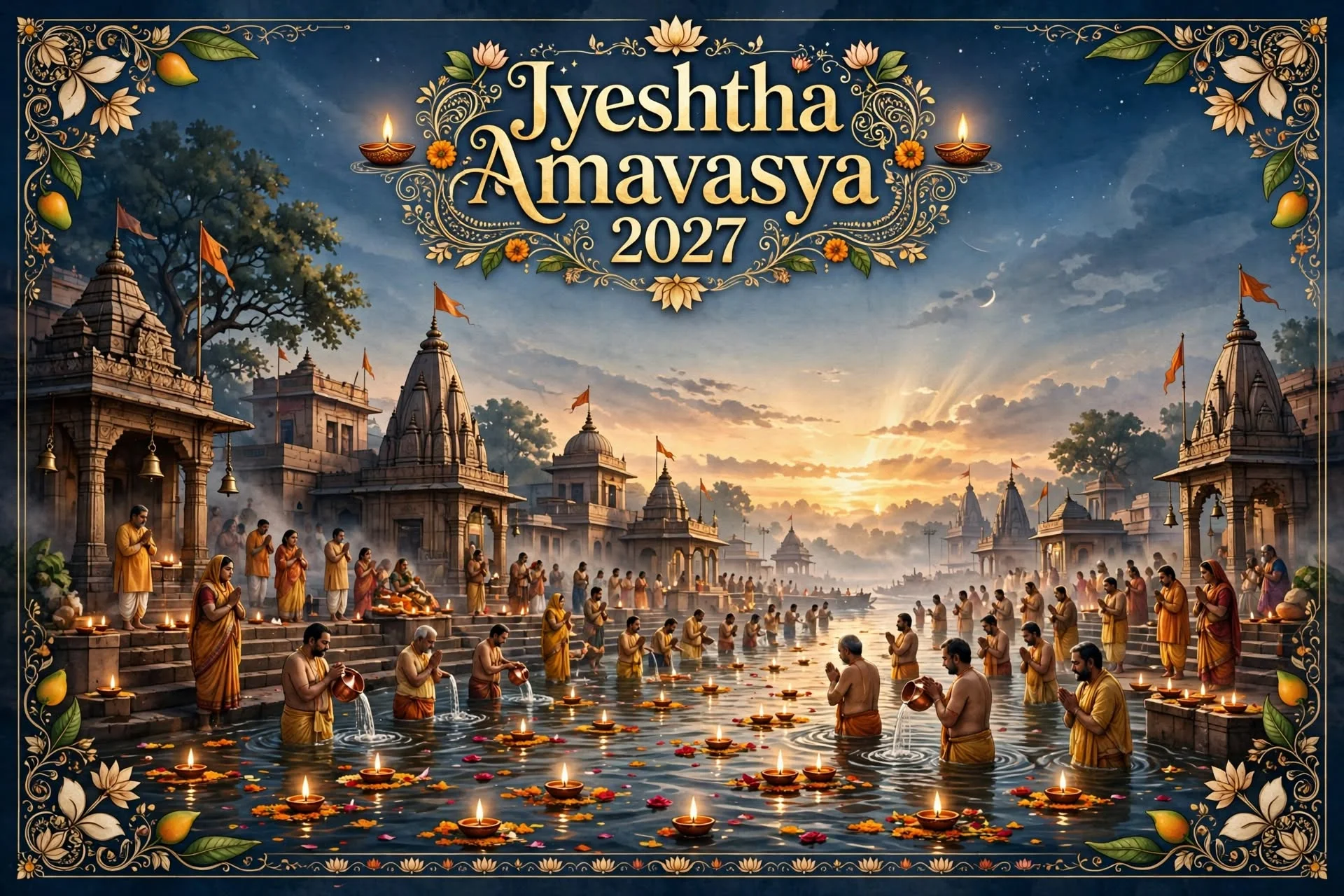
Jyeshtha Amavasya
Jyeshtha Amavasya is the sacred new moon tithi that marks the culmination of the Krishna Paksha in the Hindu lunar month of Jyeshtha according to the Amavasyanta calendar, transitioning into the sacred monsoon month of Ashadha in the Gregorian calendar month of July. In Hindu cosmology, Amavasya is governed by the Pitrus (ancestral souls) and Aryaman, the presiding solar deity of ancestral realms. As the sun and moon align in perfect celestial conjunction, cosmic spiritual energies become inward-flowing, rendering this day uniquely potent for ancestral veneration, planetary purification, and austere introspective sadhana.
View Festival Guide
Sunday, Jul 4, 2027
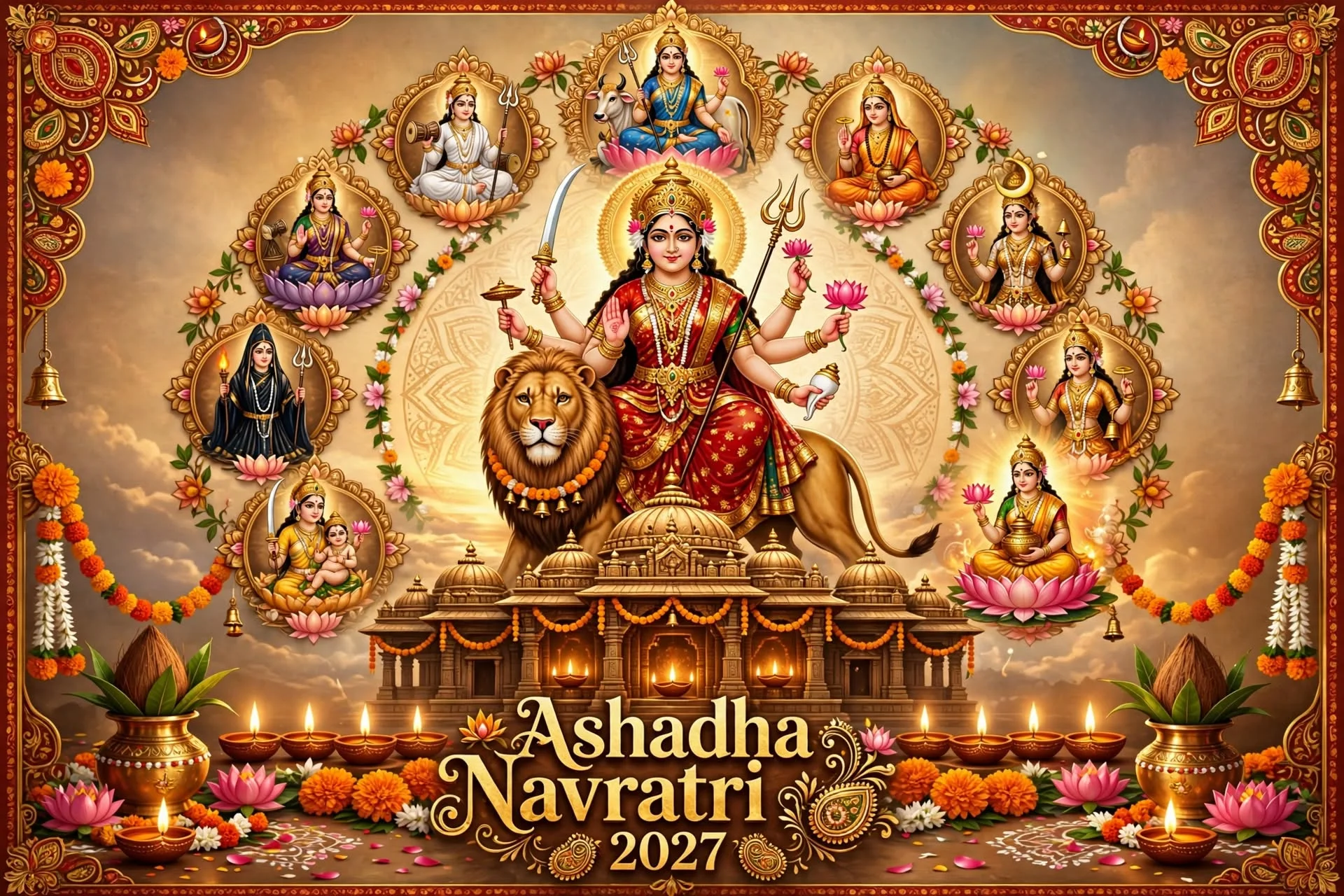
Ashadha Navratri
Ashadha Navratri, prominently revered across Shakta and Tantric traditions as Ashadha Gupta Navratri or Varahi Navratri, is a sacred nine-night festival commencing on the Pratipada (first lunar day) and culminating on the Navami (ninth lunar day) of the Shukla Paksha in the Hindu lunar month of Ashadha (occurring in July). While Sharad Navratri (autumn) and Chaitra Navratri (spring) are widely celebrated as public socio-cultural festivals, the two secret or 'Gupta' Navratris—observed in the months of Magha and Ashadha—are esoteric, contemplative periods primarily dedicated to intensive Shakta Sadhana, internal Kundalini awakening, and deep Tantric communion with the Supreme Divine Mother.
View Festival Guide
Monday, Jul 5, 2027
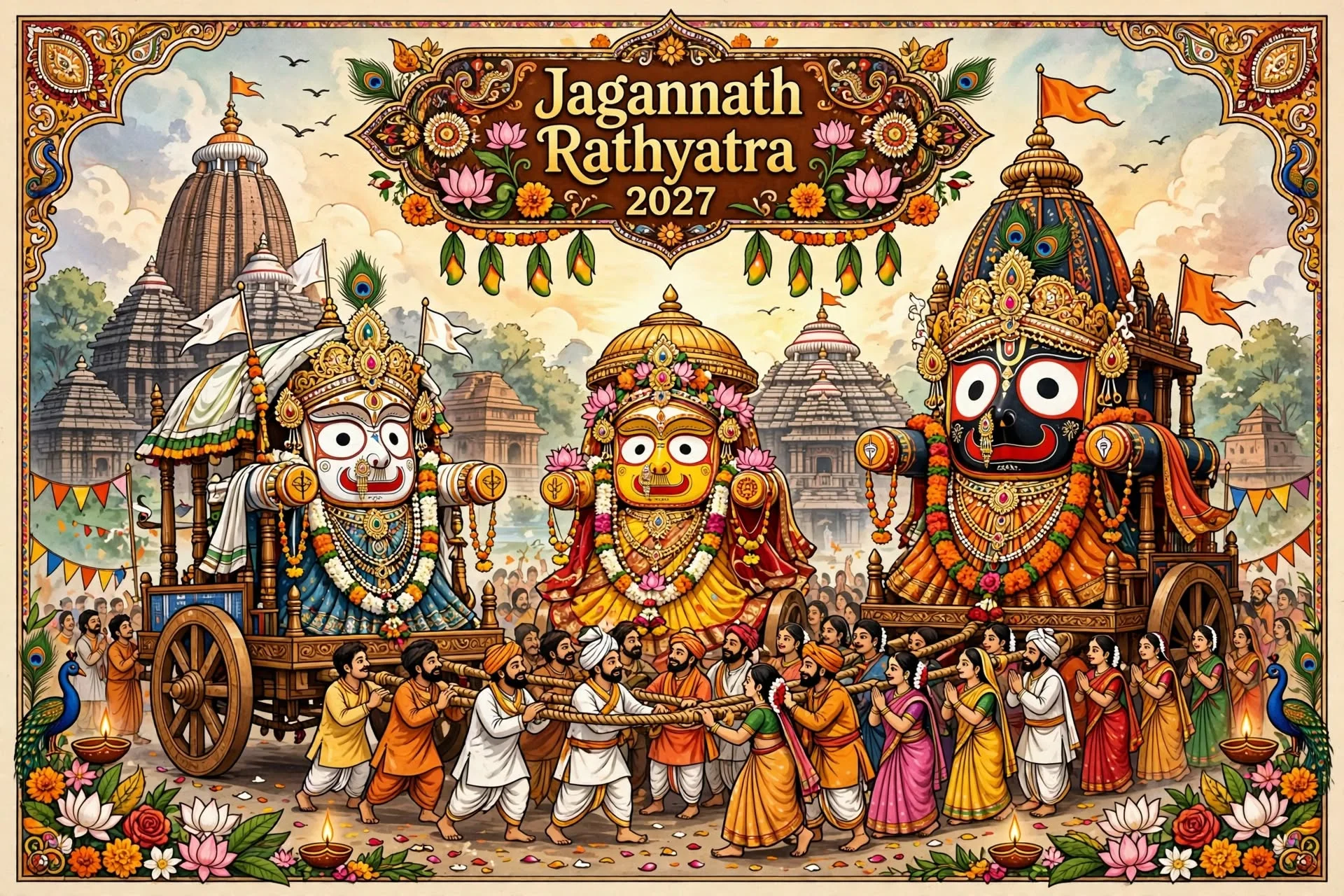
Jagannath Rathyatra
Jagannath Rathyatra, celebrated with cosmic majesty on the Dwitiya tithi (second lunar day) of Shukla Paksha in the Hindu month of Ashadha (occurring in July), is one of the most ancient, grandest, and spiritually celebrated chariot festivals on earth. Originating from the sacred coastal city of Puri (Srikshetra / Jagannath Puri) in Odisha, this monumental nine-day event marks the celestial journey of Bhagwan Jagannath—the Lord of the Universe and an affectionate manifestation of Lord Sri Krishna—accompanied by His elder brother Lord Balabhadra (Balarama) and His younger sister Devi Subhadra, from their magnificent 12th-century shrine (Srimandir) to their ancestral garden abode at the Gundicha Temple, situated three kilometers away.
View Festival Guide

Monday, Jul 5, 2027
Chandra Darshana
Chandra Darshana is a revered monthly Hindu observance dedicated to sighting, venerating, and offering oblation to the delicate waxing crescent Moon immediately following the new moon (Amavasya), typically occurring during the twilight of Shukla Paksha Pratipada or Dwitiya.
View Festival Guide
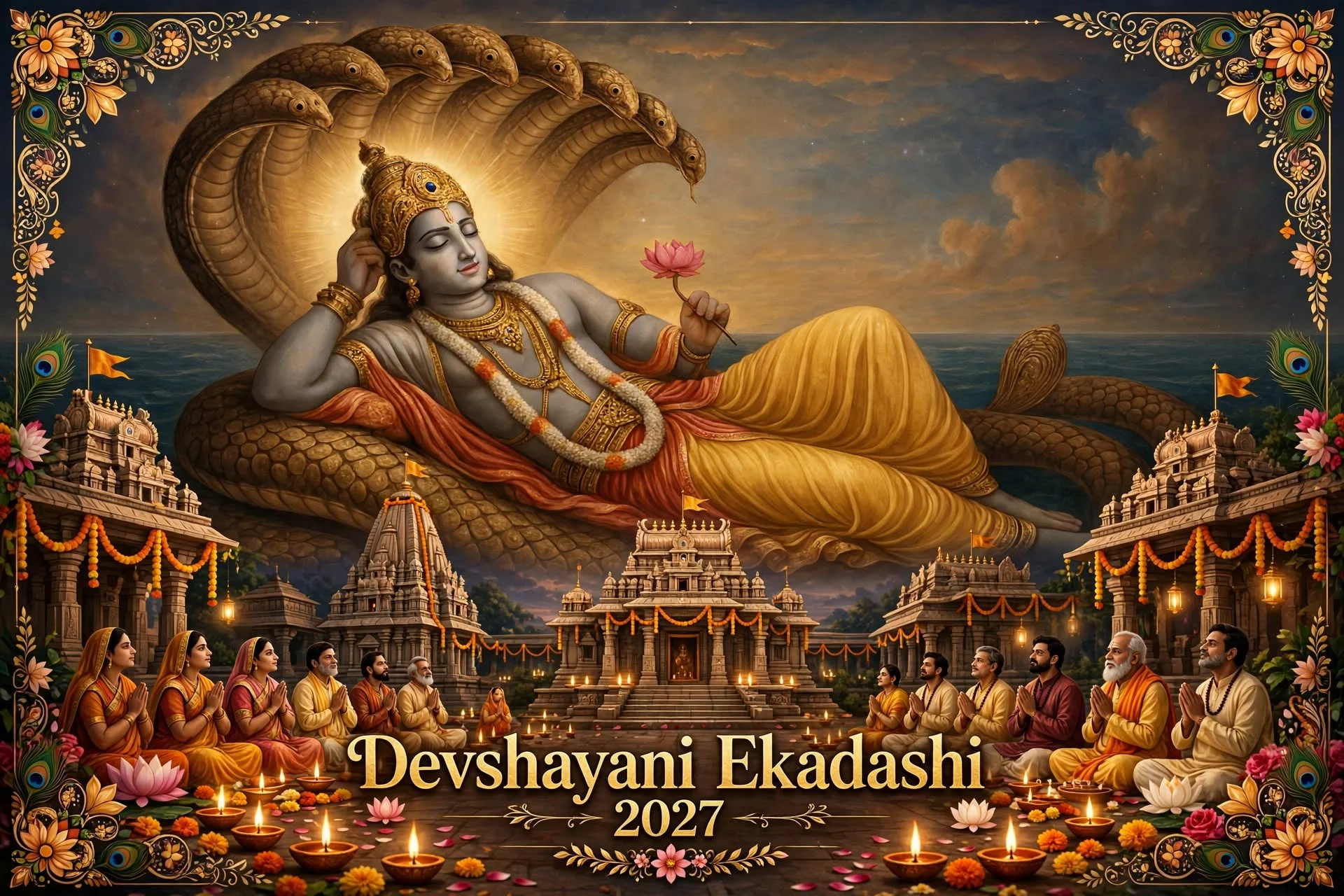
Wednesday, Jul 14, 2027
Devshayani Ekadashi
Devshayani Ekadashi, also reverently celebrated as Ashadhi Ekadashi, Padma Ekadashi, or Hari Shayani Ekadashi, falls on the eleventh lunar day (Ekadashi) of the Shukla Paksha (waxing phase of the moon) in the sacred Hindu month of Ashadha. This sanctified tithi marks the celestial moment when Bhagwan Vishnu, the cosmic preserver, enters an epoch of four months of cosmic meditative slumber (Yoga Nidra) upon the coils of the thousand-headed serpent Adishesha in the Kshirasagara (Cosmic Ocean of Milk).
View Festival Guide