




Jyeshtha Amavasya is the sacred new moon tithi that marks the culmination of the Krishna Paksha in the Hindu lunar month of Jyeshtha according to the Amavasyanta calendar, transitioning into the sacred monsoon month of Ashadha in the Gregorian calendar month of July. In Hindu cosmology, Amavasya is governed by the Pitrus (ancestral souls) and Aryaman, the presiding solar deity of ancestral realms. As the sun and moon align in perfect celestial conjunction, cosmic spiritual energies become inward-flowing, rendering this day uniquely potent for ancestral veneration, planetary purification, and austere introspective sadhana.
Jyeshtha Amavasya 2027: Date, Puja Timings, Rituals & Stories

Jyeshtha Amavasya Timings & Panchang
Important festival dates and auspicious timings
Usha Arghya (Sunrise)
05:23 am
Sandhya Arghya (Sunset)
07:16 pm
Start Date
Friday, 4 Jun 2027
Puja Muhurat
06:34 am – 01:10 am
Jyeshtha Amavasya
Falling during the severe summer heat before the full onset of the monsoon rains, Jyeshtha Amavasya holds profound agricultural, astronomical, and theological importance. In ancient Vedic lore, this tithi is venerated as an ideal occasion for performing Tarpana, Shraddha, and Pinda Dana on the banks of sacred rivers such as the Ganga, Yamuna, Godavari, and Narmada. It is widely believed that oblations of holy water mixed with black sesame seeds (Kala Til) and kusha grass offered on this day reach the departed forefathers in Pitruloka, liberating them from astral suffering and bestowing long-lasting blessings of peace, health, lineage continuity (Vamsha Vriddhi), and spiritual prosperity upon the living descendants.
Beyond ancestral worship, Jyeshtha Amavasya is intimately linked with the appearance day (Jayanti) of Lord Shani (Saturn), the stern dispenser of cosmic karmic justice (Karmaphala Data), as well as the conclusion of the holy Vat Savitri Vrata in several regional traditions. Temples dedicated to Lord Shiva and Lord Shani witness grand ceremonial Tailabhishekam (mustard oil baths) and blue floral offerings to pacify malefic planetary influences like Sade Sati and Dhaiya. Seekers dedicate themselves to charity (Dana), distributing earthenware water pots, hand fans, grains, umbrellas, and food to the poor, embodying the highest ethical virtue of selfless compassion amidst nature's seasonal transition.
Astronomically, Jyeshtha Amavasya aligns with the transition toward the summer solstice (Dakshinayana), when the solar ingress influences the gravitational equilibrium of the earth's waters and subtle atmospheric prana. In the Vedic calendar, the alignment of the Sun and Moon in the asterism of Rohini or Mrigashira marks an auspicious threshold wherein psychological agitations subside, rendering the mind extraordinarily receptive to transcendental contemplation, ancestral gratitude, and ethical self-correction.
Why is Jyeshtha Amavasya Celebrated?
The observance of Jyeshtha Amavasya is deeply rooted in the ancient Puranic injunctions found in the Garuda Purana, Matsya Purana, and Vishnu Dharmottara Purana, which declare that the new moon tithi is the designated day when the departed ancestors draw near to the earth realm seeking sustenance and remembrance from their earthly progeny.
According to sacred tradition, King Bhagiratha's ancestors, the sixty thousand sons of King Sagara, were consumed by the fiery wrath of Sage Kapila due to an inadvertent transgression during the Ashvamedha Yajna. Their wandering spirits remained trapped in the nether regions until Bhagiratha undertook centuries of unprecedented tapasya to bring the celestial River Ganga down to earth to sanctify their ashes. Amavasya oblations commemorate this sacred responsibility of children toward their forebears, ensuring that karmic debts (Pitri Rina) are conscientiously acknowledged and dissolved.
Furthermore, the day commemorates the manifestation of Lord Shani Dev, born to the Sun God Surya and Goddess Chhaya. Because Shani signifies discipline, detachment, justice, and the fruits of past actions, devotees celebrate this day by engaging in rigorous prayer, humility, and penance to balance their karmic ledgers and gain inner spiritual fortitude.
- Performing Pitru Tarpana, Shraddha, and Pinda Dana to satisfy departed ancestors and resolve Pitru Dosha.
- Honoring Lord Shani Dev through mustard oil abhishekam and charity to alleviate severe planetary hardships.
- Concluding seasonal vows such as Vat Savitri Vrata, praying for marital longevity and unwavering spousal devotion.
- Distributing vital summer charity including cool water pots, umbrellas, fans, and food grains to alleviate human suffering.
- Bathing in holy tirthas to cleanse accumulated mental impurities and prepare the spirit for the upcoming monsoon sadhana.
Scriptural Origins, The Descent of Ganga, and The Birth of Shani Dev
The Eternal Obligation of Pitri Rina in the Garuda Purana
In the Garuda Purana, Lord Vishnu instructs Garuda regarding the subtle journey of the soul across the astral corridors. Lord Vishnu explains that human beings are born with three fundamental metaphysical debts: Deva Rina (debt to the deities), Rishi Rina (debt to the seers and knowledge traditions), and Pitri Rina (debt to ancestors who provided the biological vehicle and ancestral heritage).
On every Amavasya, and particularly on potent seasonal new moons like Jyeshtha Amavasya, the sun and moon reside in the same zodiacal sign, opening an energetic channel between the earth plane and the realm of Aryaman (Pitruloka). When a devoted son or daughter offers water mixed with sesame seeds, the departed ancestors absorb the subtle essence of the oblation and experience immense solace, blessing the household with harmony and protection from spiritual blockages.
The Manifestation of Lord Shani Dev from Chhaya and Surya
The Skanda Purana narrates the appearance of Lord Shani Dev. Goddess Sanjna, the daughter of the celestial architect Vishwakarma and wife of the Sun God Surya, could not bear the blinding brilliance and scorching heat of her husband. She created a clone of herself from her own shadow, naming her Chhaya (or Samvarna), entrusted her with the care of her children, and departed to the forest to perform penance.
Surya Deva lived with Chhaya without perceiving the substitution. From their union, Shani Dev was born on the Amavasya of Jyeshtha. Due to Chhaya's intense austerities and exposure to the sun during pregnancy, Shani was born with a dark complexion. When Surya saw the newborn's dark hue, he doubted his paternity and uttered harsh words. Offended, Shani cast a single gaze upon his father, causing Surya's golden chariot to stall and his skin to turn dark until Shiva intervened. Pleased by Shani's uncompromising tapasya, Lord Shiva bestowed upon him the role of supreme judge of all beings, declaring that even devas, asuras, and humans must pass through Shani's impartial justice.
The Deliverance of Sagara's Sons by King Bhagiratha
Metaphysics of the Void, Karmic Justice, and Ancestral Resonance
The Amavasya Void: Symbol of Pure Consciousness and Inward Reflection
In Vedantic psychology, the moon represents the human mind (Manas), as declared in the Purusha Sukta: 'Chandrama Manaso Jatah' (The moon was born from the cosmic mind). On Amavasya, the complete absence of reflected sunlight symbolizes the dissolution of external mental agitation into the inner silence of the Atman.
Rather than viewing the new moon as a day of darkness or fear, Sanatana Dharma views it as a portal of stillness. It is a time when the extroverted senses must be consciously reined in, enabling the seeker to confront their shadow nature, observe their karmic patterns, and cultivate dispassion (Vairagya).
Lord Shani's Ethical Mirror: The Necessity of Karmic Rectitude
Lord Shani represents neither malice nor blind wrath; He is the cosmic mirror reflecting an individual's accumulated karma. In Hindu ethics, suffering is not arbitrary punishment but corrective medicine designed to erode pride, greed, and egoic delusion.
Worshiping Shani on Jyeshtha Amavasya instills profound reverence for truth (Satya), humility, perseverance, and social justice. Devotees are reminded that social rank, accumulated wealth, and intellectual vanity provide no immunity before the universal moral laws of the cosmos.
Intergenerational Continuity and Psychological Healing
Modern transgenerational psychology confirms what the Vedic rishis recognized millennia ago: unresolved trauma, behavioral tendencies, and emotional patterns are inherited through ancestral lineages. The performance of Tarpana on Jyeshtha Amavasya is a sacred psychological and spiritual ritual of forgiveness, gratitude, and reconciliation.
By acknowledging ancestral sacrifices and consciously forgiving past ancestral errors, the seeker unburdens their subtle subconscious mind, establishing harmony between past generations and future progeny.
Practical Observance Protocols, Holy Bathing, and Charity
Brahma Muhurta Purification and Sacred Tirtha Snana
Devotees wake up during the auspicious Brahma Muhurta (approximately an hour and a half before dawn). If situated near sacred rivers such as the Ganga, Yamuna, Godavari, or Narmada, pilgrims perform ceremonial immersion three times while chanting Vedic purification mantras.
For those observing at home, clean water is consecrated by chanting the Tirtha Avahana mantra ('Gange Cha Yamune Chaiva...'), infusing common water with the spiritual vibration of the seven holy rivers.
Pitri Tarpana and Shraddha Ceremonies
Around midday (Aparahna period), when the sun reaches its zenith, householders sit on a kusha grass mat facing South—the direction of the ancestors. Wearing a ring of kusha grass (Pavitri) on the ring finger, they hold water, black sesame seeds, and white barley in their palms, offering libations (Tarpana) to departed parents, grandparents, and forgotten ancestors, praying for their eternal satisfaction.
Shani Mandir Worship and Mahadana
During the late afternoon and twilight (Sandhya), devotees visit Shani temples, pouring pure mustard oil over the stone idol of Lord Shani, offering black sesame seeds, blue aparajita flowers, black cloth, and iron nails. Lamps filled with mustard oil are lit beneath sacred Peepal (Ashvattha) trees. The day concludes with the generous distribution of cooked food, drinking water pots (Ghatas), handheld bamboo fans, and umbrellas to impoverished individuals.
Jyeshtha Amavasya Puja Vidhi (Step by Step)
- 1
Pratah Snana and Shuddhi (Morning Holy Ablution)
Rise before dawn during Brahma Muhurta, bathe thoroughly in holy river water or water infused with Gangajal and black sesame seeds, wearing clean, unstitched white or traditional garments.
- 2
Surya Arghya and Gayatri Japa (Solar Oblation)
Face East at sunrise, hold pure water mixed with red sandalwood, red flowers, and unbroken rice in a copper vessel, and offer Arghya to Lord Surya while chanting the Gayatri Mantra three times.
- 3
Aparahna Pitru Tarpana Sankalpa (Ancestral Vow)
During the afternoon (Aparahna kaal), sit facing South on a kusha grass mat. Wear a kusha pavitri on the right ring finger, take water, black sesame seeds, and kusha grass, reciting the solemn Sankalpa to offer oblations for ancestral peace.
- 4
Deva, Rishi, and Divya Pitru Tarpana (Offering Libations to Devas and Sages)
Offer water mixed with white barley through the tips of the fingers to the Devas (facing East), through the palm base to the Rishis (facing North), and through the space between thumb and index finger (Pitri Tirtha) to divine ancestors.
- 5
Jyeshtha Amavasya Puja Samagri List
Pitru Tarpana and Shraddha Samagri
- Fresh Kusha grass mats and Kusha grass finger rings (Pavitri)
- Unpolished black sesame seeds (Kala Til) and white barley grains (Jau)
- Pure brass or copper Tarpana vessels, Arghya patra, and wooden seats
- Gangajal or clean natural spring water in generous quantity
- Cooked white rice, raw honey, pure cow ghee, and fresh milk for Pinda Dana
- Fresh banana leaves or Palash leaves for placing ancestral food portions
Lord Shani Dev Puja Samagri
- Pure unrefined mustard oil (Sarson ka Tel) for Tailabhishekam
- Iron or brass oil lamp with unbleached dark or raw cotton wicks
- Fresh dark blue flowers (Aparajita / Butterfly Pea), black whole urad dal, and iron nails
- Clean black or navy blue cloth piece (Krishna Vastra)
- Natural camphor (Karpura) and aromatic guggulu incense sticks
Seasonal Mahadana and Charitable Offerings
- Earthen water pots (Mitti ka Ghada / Kalash) filled with cool water and camphor
- Handmade bamboo or palm leaf fans (Pankha) for summer relief
- Black umbrellas, leather/rubber footwear, and warm/cotton clothing for the needy
Mantras and Prayers for Jyeshtha Amavasya
Jyeshtha Amavasya Vrat Rules and Fasting Guidelines
Dietary Code and Fasting Injunctions
Devotees observing Jyeshtha Amavasya maintain an uncompromising fast until the completion of afternoon Pitru Tarpana or evening Shani Puja. While many observe a strict water-only or fruit-based fast, elderly persons and householders may consume a single sattvic meal in the late afternoon after offering food to cows, crows, and the poor. All forms of grains must be prepared without onions, garlic, mushrooms, or asafoetida. Salt is ideally minimized and replaced with pure rock salt (Sendha Namak).
- Total abstinence from non-vegetarian foods, eggs, alcohol, tobacco, and processed commercial snacks.
- Strict avoidance of onions, garlic, radishes, carrots, mustard greens, and stale leftover food.
- Consumption of food is permitted only after completing ancestral oblations and feeding five living creatures (Pancha Bali).
Moral Discipline and Conduct Guidelines
Because Amavasya is a tithi of subtle internal alignment, seekers observe Brahmacharya (celibacy), speak with measured gentleness, and refrain from anger, gossip, falsehood, and legal disputes. Initiating secular auspicious celebrations such as marriages or purchasing luxury commercial goods is traditionally avoided on new moon days, focusing attention exclusively on prayer, charity, and ancestral remembrance.
Dos and Don'ts of Jyeshtha Amavasya
Good Practices (Do's)
- Wake up during Brahma Muhurta and take a purifying holy bath in river water or water infused with Gangajal.
- Perform Pitru Tarpana using black sesame seeds, clean water, and kusha grass during the afternoon (Aparahna kaal).
- Offer unadulterated mustard oil and black sesame seeds to Lord Shani Dev to mitigate planetary hardships.
- Donate earthen water pots, hand fans, umbrellas, and food grains to the destitute and laborers.
- Feed cows, crows, dogs, and ants before partaking of your own meal.
Jyeshtha Amavasya Across Regions
| Region | Local Name |
|---|---|
| North India (Uttar Pradesh, Bihar, Madhya Pradesh) | Shani Jayanti and Ganga Tirtha Snana |
| Maharashtra and Gujarat | Vat Savitri Amavasya |
| South India (Tamil Nadu, Karnataka, Andhra Pradesh) | Amavasya Pitru Tarpana |
| Odisha and Coastal Bengal | Savitri Amabasya and Shani Aradhana |
Jyeshtha Amavasya FAQs
Why is Jyeshtha Amavasya considered particularly auspicious for ancestral rituals?
Jyeshtha Amavasya marks the transition toward the southern solstitial course (Dakshinayana), when the sun and moon align closely with ancestral cosmic channels. Oblations offered on this day provide deep spiritual nourishment to departed forefathers, neutralizing Pitru Dosha.
What is the relationship between Jyeshtha Amavasya and Lord Shani Dev?
According to the Skanda Purana, Lord Shani was born on the Amavasya of Jyeshtha to Surya Deva and Goddess Chhaya. Therefore, this day is celebrated as Shani Jayanti, an ideal time to perform Tailabhishekam and seek divine relief from planetary afflictions.
What items are traditionally recommended for donation on Jyeshtha Amavasya?
Because this day falls during intense summer heat, scriptures recommend donating earthen water pots (Ghada) filled with cool water, handmade bamboo fans, black umbrellas, shoes, wheat flour, jaggery, and black sesame seeds.
Upcoming Festivals
View All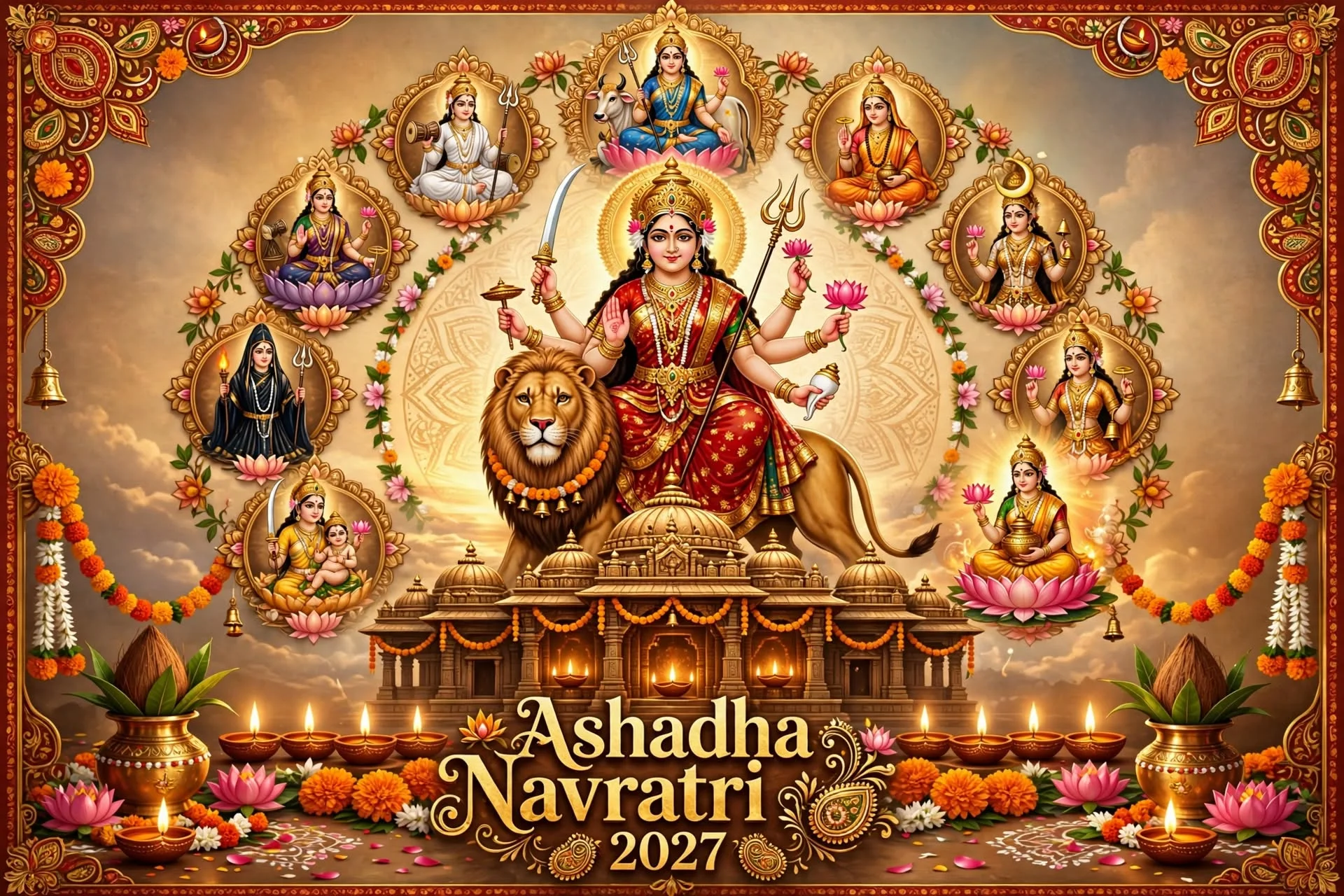
Sunday, Jul 4, 2027
Ashadha Navratri
Ashadha Navratri, prominently revered across Shakta and Tantric traditions as Ashadha Gupta Navratri or Varahi Navratri, is a sacred nine-night festival commencing on the Pratipada (first lunar day) and culminating on the Navami (ninth lunar day) of the Shukla Paksha in the Hindu lunar month of Ashadha (occurring in July). While Sharad Navratri (autumn) and Chaitra Navratri (spring) are widely celebrated as public socio-cultural festivals, the two secret or 'Gupta' Navratris—observed in the months of Magha and Ashadha—are esoteric, contemplative periods primarily dedicated to intensive Shakta Sadhana, internal Kundalini awakening, and deep Tantric communion with the Supreme Divine Mother.
View Festival Guide

Sunday, Jul 4, 2027
Ishti
Ishti is a foundational Vedic ritual observance appearing prominently in Hindu Panchangs on the Pratipada tithi (the first lunar day) following either Amavasya (new moon) or Purnima (full moon), marking the prescribed performance day for the fortnightly Vedic Darsha-Purnamasa sacrifices.
View Festival Guide

Monday, Jul 5, 2027
Chandra Darshana
Chandra Darshana is a revered monthly Hindu observance dedicated to sighting, venerating, and offering oblation to the delicate waxing crescent Moon immediately following the new moon (Amavasya), typically occurring during the twilight of Shukla Paksha Pratipada or Dwitiya.
View Festival Guide
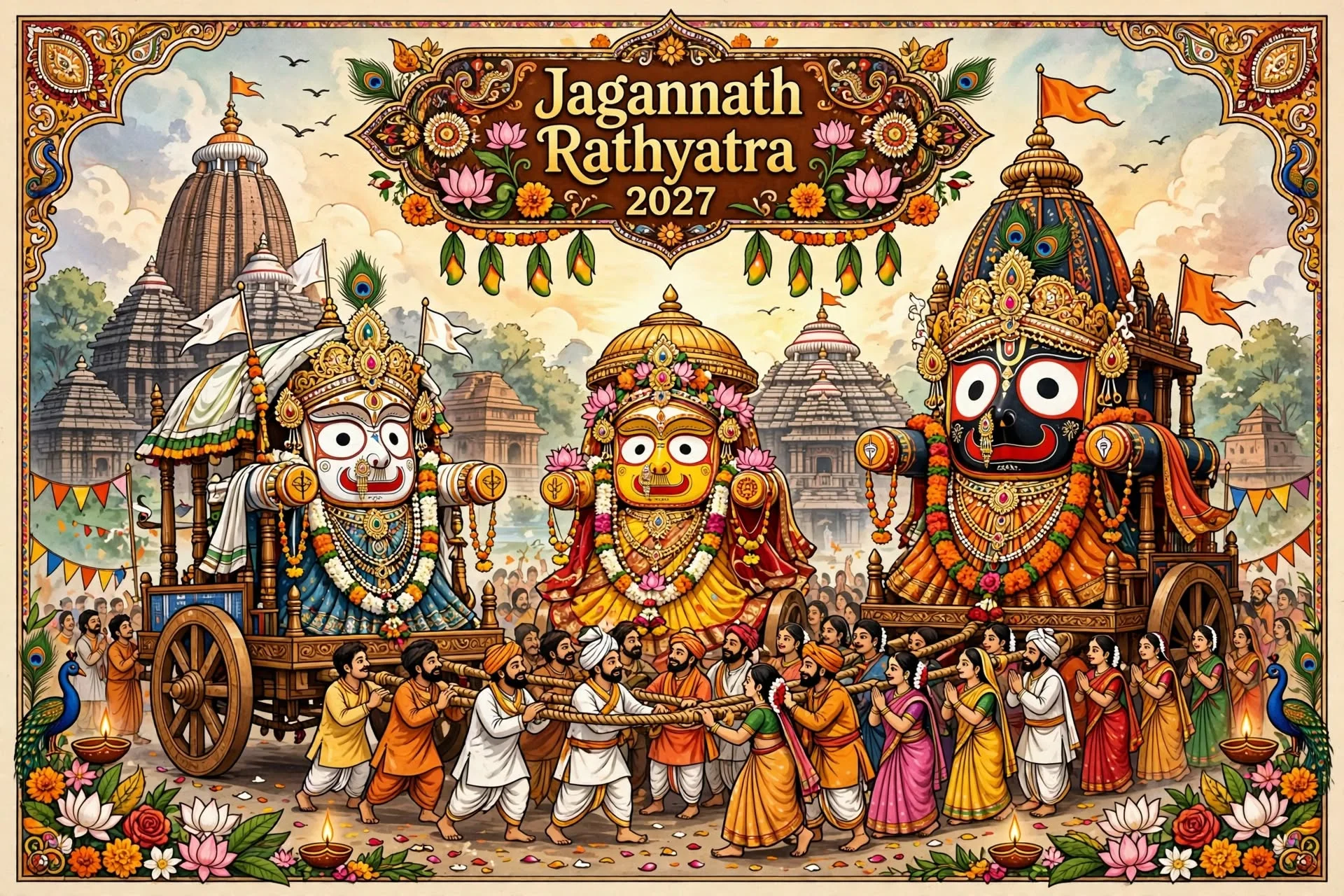
Monday, Jul 5, 2027
Jagannath Rathyatra
Jagannath Rathyatra, celebrated with cosmic majesty on the Dwitiya tithi (second lunar day) of Shukla Paksha in the Hindu month of Ashadha (occurring in July), is one of the most ancient, grandest, and spiritually celebrated chariot festivals on earth. Originating from the sacred coastal city of Puri (Srikshetra / Jagannath Puri) in Odisha, this monumental nine-day event marks the celestial journey of Bhagwan Jagannath—the Lord of the Universe and an affectionate manifestation of Lord Sri Krishna—accompanied by His elder brother Lord Balabhadra (Balarama) and His younger sister Devi Subhadra, from their magnificent 12th-century shrine (Srimandir) to their ancestral garden abode at the Gundicha Temple, situated three kilometers away.
View Festival Guide
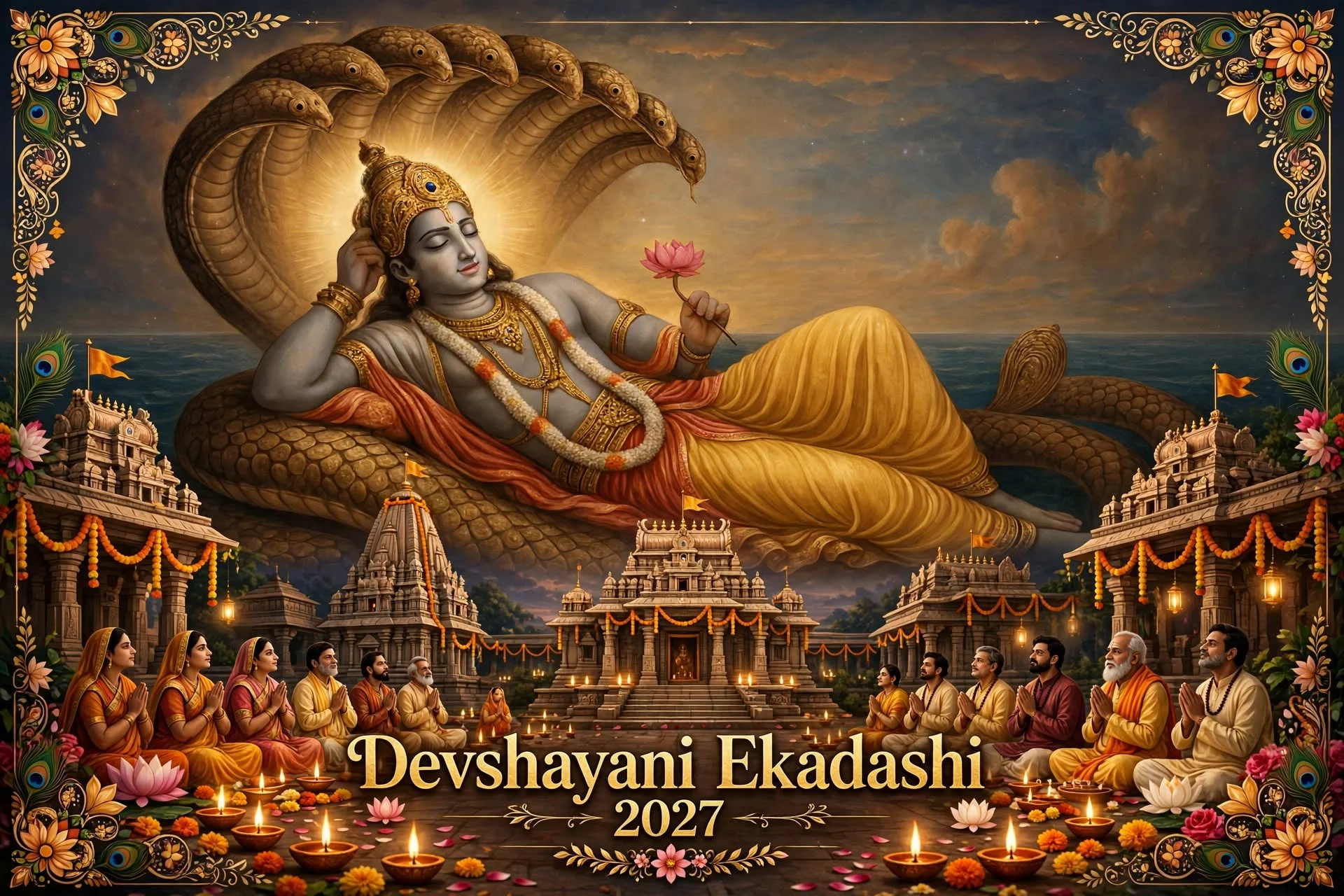
Wednesday, Jul 14, 2027
Devshayani Ekadashi
Devshayani Ekadashi, also reverently celebrated as Ashadhi Ekadashi, Padma Ekadashi, or Hari Shayani Ekadashi, falls on the eleventh lunar day (Ekadashi) of the Shukla Paksha (waxing phase of the moon) in the sacred Hindu month of Ashadha. This sanctified tithi marks the celestial moment when Bhagwan Vishnu, the cosmic preserver, enters an epoch of four months of cosmic meditative slumber (Yoga Nidra) upon the coils of the thousand-headed serpent Adishesha in the Kshirasagara (Cosmic Ocean of Milk).
View Festival Guide
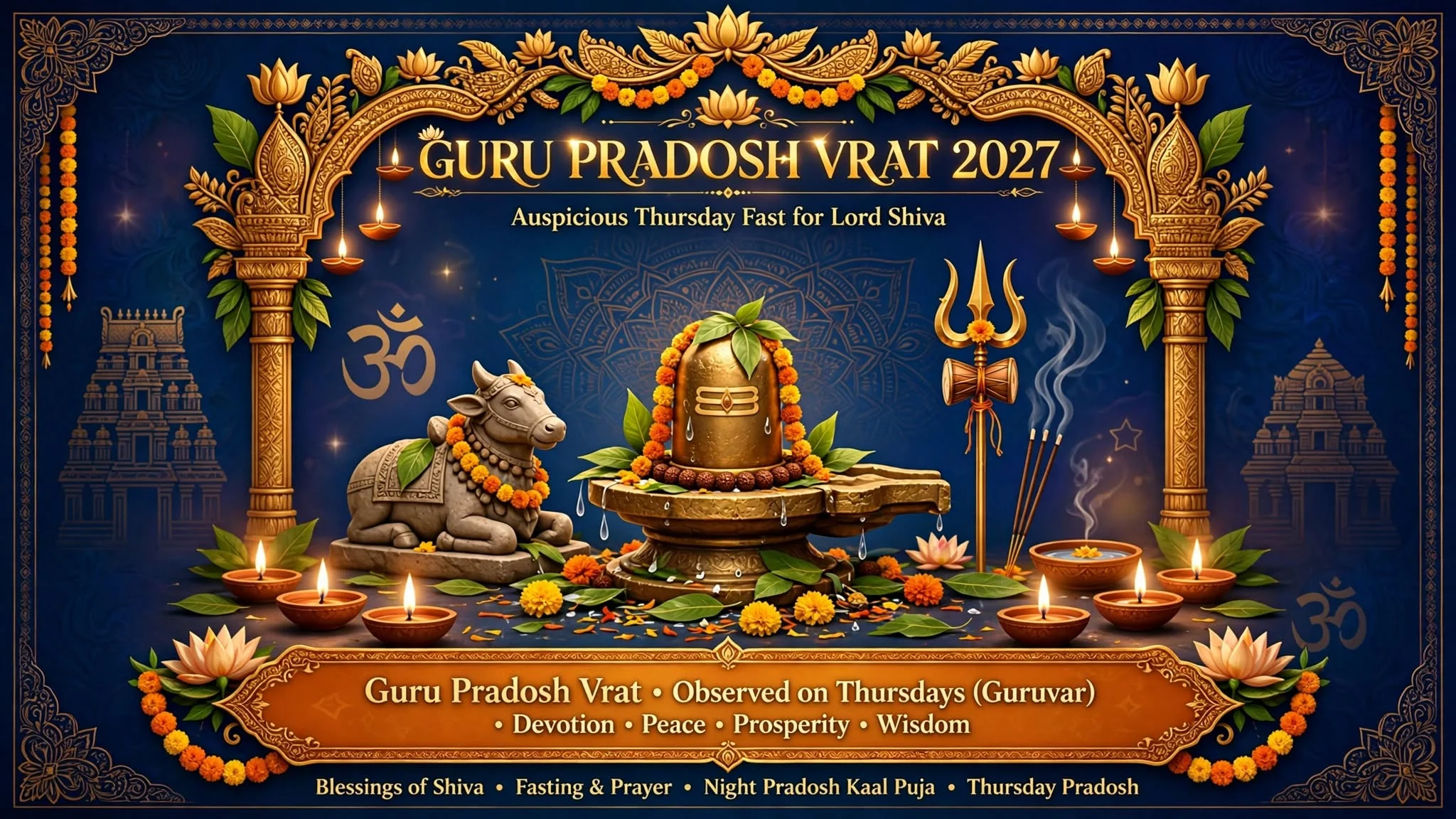
Thursday, Jul 15, 2027
Guru Pradosh Vrat
Guru Pradosh Vrat, also known as Guruvara Pradosham or Brihaspati Pradosham, is a sacred bimonthly Hindu fasting observance occurring when the Trayodashi tithi (thirteenth lunar day) coincides with a Thursday (Guruvara) during the twilight Pradosha Kaal period.
View Festival Guide
Friday, Jul 16, 2027
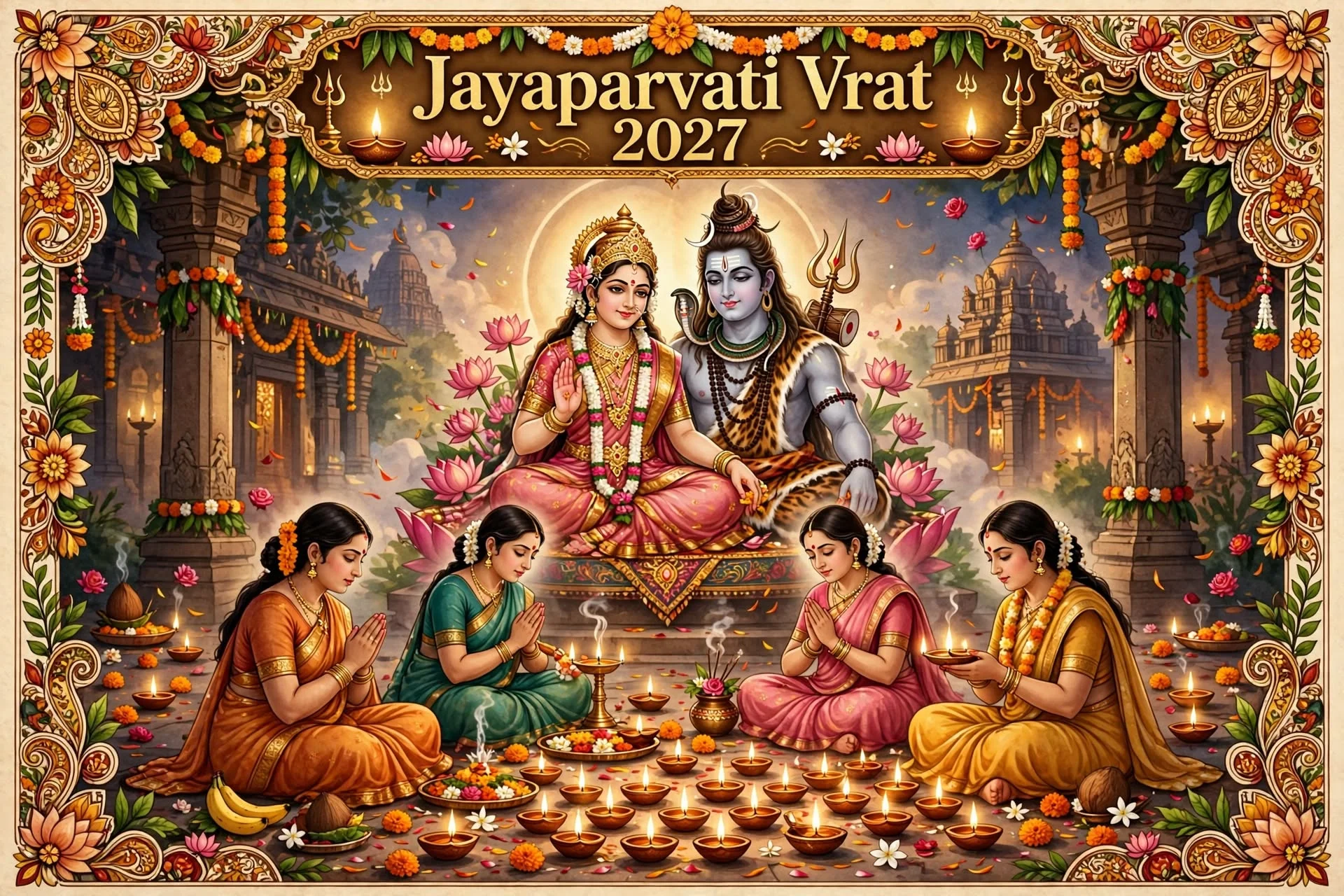
Jayaparvati Vrat
Jayaparvati Vrat, also known as Gauri Vrat or Jaya-Vijaya Vrata, is an ancient, highly revered five-day spiritual observance commencing on the Trayodashi tithi (thirteenth lunar day) of Shukla Paksha in the holy Hindu month of Ashadha (occurring in July) and concluding on Krishna Tritiya. Celebrated with immense piety and joy across Western India—predominantly in Gujarat and parts of Rajasthan and Maharashtra—the vrata is dedicated to Goddess Parvati (in Her victorious aspect as Jaya) and Lord Shiva. It is observed primarily by unmarried maidens praying for a virtuous, long-lived, and loving husband, as well as by married women seeking enduring marital bliss (Akhanda Saubhagya), domestic peace, and the welfare of their family lineage.
View Festival Guide
Saturday, Jul 17, 2027
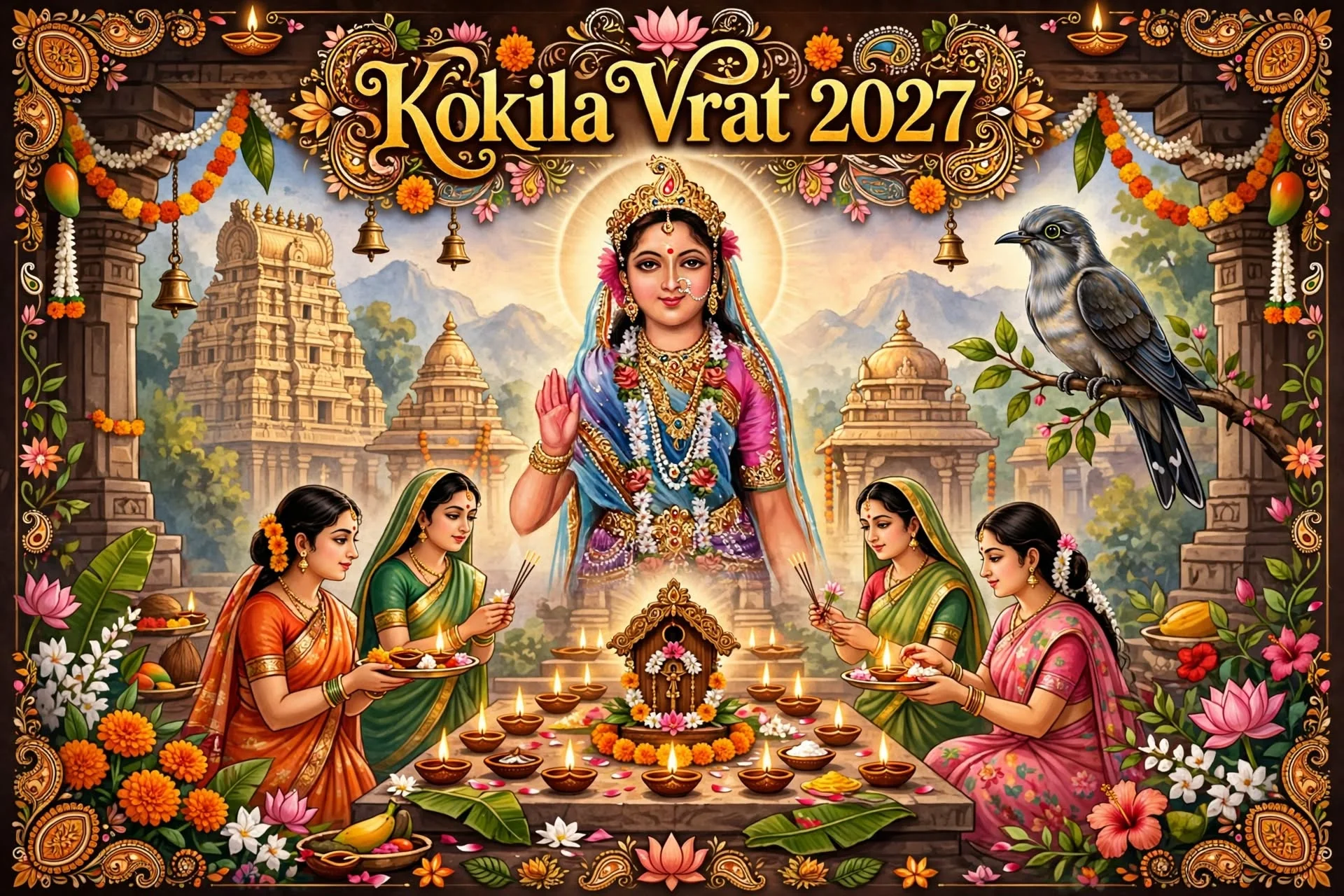
Kokila Vrat
Kokila Vrat is a rare, mystical, and deeply revered Hindu fasting observance celebrated on the Purnima (full moon day) of the Hindu lunar month of Ashadha, often extending into the sacred monsoon month of Shravana (falling in July). Dedicated to Goddess Parvati (in Her form as Sati) and Lord Shiva, this sanctified vrata derives its name from 'Kokila' (the Indian cuckoo bird), commemorating the poignant cosmological epoch when Goddess Sati incarnated as a divine cuckoo bird for ten thousand celestial years in the sacred groves of Nandanavana to perform austere, single-minded penance to reunite with Lord Shiva.
View Festival Guide