




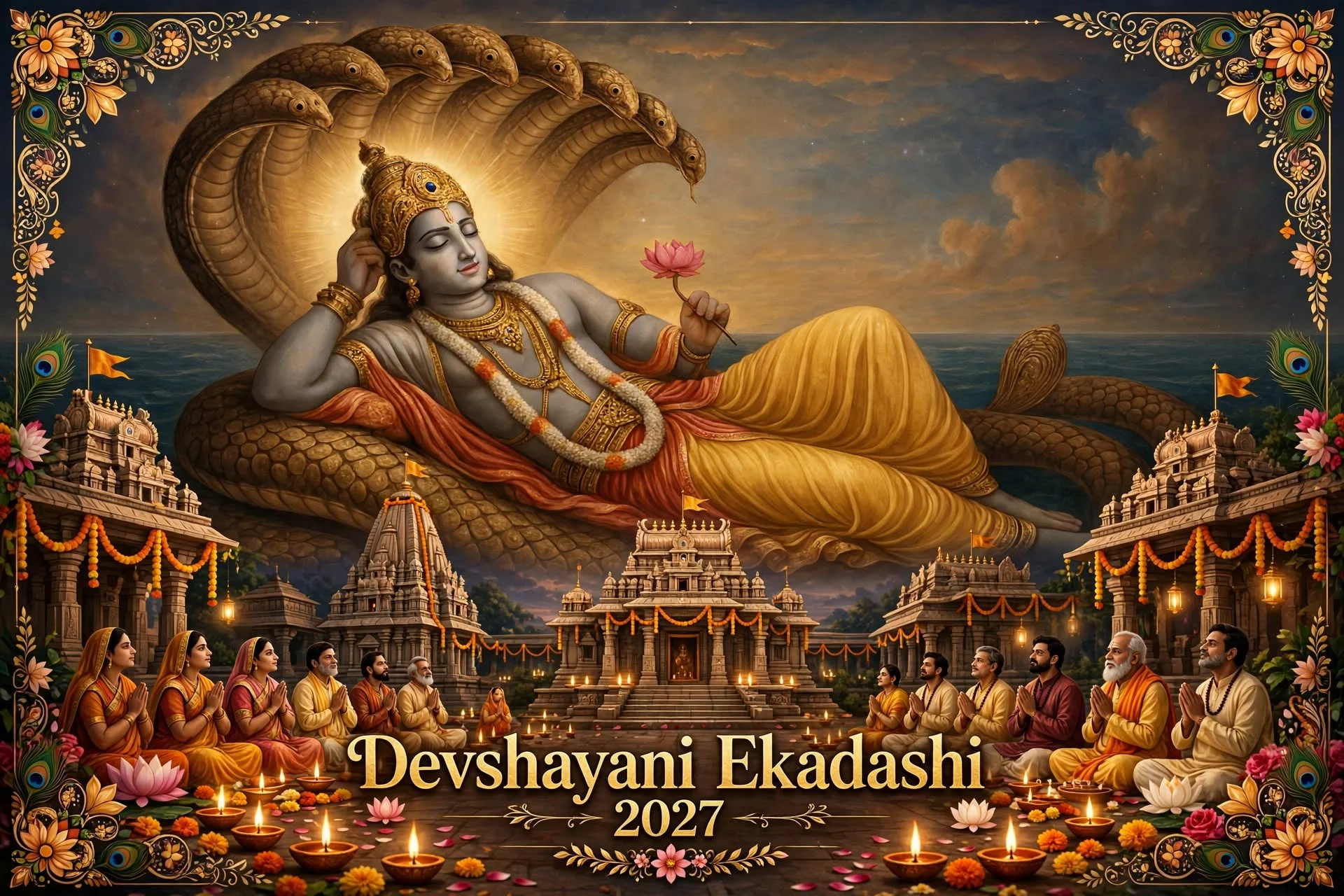
Devshayani Ekadashi, also reverently celebrated as Ashadhi Ekadashi, Padma Ekadashi, or Hari Shayani Ekadashi, falls on the eleventh lunar day (Ekadashi) of the Shukla Paksha (waxing phase of the moon) in the sacred Hindu month of Ashadha. This sanctified tithi marks the celestial moment when Bhagwan Vishnu, the cosmic preserver, enters an epoch of four months of cosmic meditative slumber (Yoga Nidra) upon the coils of the thousand-headed serpent Adishesha in the Kshirasagara (Cosmic Ocean of Milk).
Devshayani Ekadashi 2027: Date, Puja Timings, Rituals & Stories
Devshayani Ekadashi Timings & Panchang
Important festival dates and auspicious timings
Usha Arghya (Sunrise)
05:33 am
Sandhya Arghya (Sunset)
07:21 pm
Start Date
Wednesday, 14 Jul 2027
Puja Muhurat
12:09 pm – 01:10 pm
Devshayani Ekadashi
The commencement of Devshayani Ekadashi inaugurates the sacred four-month ascetic season known as Chaturmas, spanning Shravana, Bhadrapada, Ashwina, and Kartika, culminating on Devutthana (Prabodhini) Ekadashi when Bhagwan Vishnu awakens. Because the supreme protector enters mystical slumber, conventional secular milestones and auspicious celebrations (Shubh Samskaras) such as Hindu marriages, housewarmings (Griha Pravesha), and sacred thread ceremonies (Upanayana) are paused. Instead, spiritual energy is channeled inward toward rigorous tapasya, fasting, scriptural discourse, and devotional purifications.
Celebrated with monumental devotion across India, particularly in Maharashtra and Karnataka, Devshayani Ekadashi represents the zenith of the epic Pandharpur Wari pilgrimage. Millions of Varkari pilgrims traverse hundreds of kilometers on foot carrying the sacred Padukas (palkhis) of Sant Dnyaneshwar and Sant Tukaram to unite with Lord Vitthal (Vithoba) on the banks of the Chandrabhaga River, creating one of the world's most magnificent demonstrations of casteless, unalloyed Bhakti.
Why is Devshayani Ekadashi Celebrated?
The observance of Devshayani Ekadashi is steeped in profound cosmic cosmology and scriptural history recorded in the Bhavishyottara Purana, Bhavishya Purana, and Padma Purana.
According to sacred narrative, King Mandhata—a noble, righteous sovereign of the Ikshvaku dynasty—found his kingdom devastated by a continuous three-year drought, resulting in severe famine and human suffering. Despite his spotless governance, the cosmic order was disrupted. Seeking counsel from Sage Angiras, the king was advised that observing the rigorous vrat of Ashadha Shukla Ekadashi with utter purity, fast, and worship of Lord Vishnu would restore cosmic harmony, propitiate Indra and Varuna, and shower the earth with life-giving rains.
Upon observing the vrata with all his subjects, celestial rains drenched the realm, dispelling famine, disease, and despair. Ever since, devout seekers observe Devshayani Ekadashi to invoke divine grace, cleanse accumulated karmic impurities, and obtain peace and prosperity.
- Marking the commencement of Lord Vishnu's four-month divine Yoga Nidra in the Milk Ocean.
- Initiating the holy period of Chaturmas dedicated to spiritual discipline, self-restraint, and meditation.
- Culmination of the historic Pandharpur Wari pilgrimage honoring Lord Vitthal in Maharashtra.
- Eradication of karmic sins, fulfillment of legitimate worldly desires, and attainment of spiritual liberation (Moksha).
Scriptural Origins and the Puranic Legend of King Mandhata
The Dialogue between Lord Krishna and King Yudhishthira
In the Uttara Khanda of the Padma Purana and the Bhavishyottara Purana, Dharmaraja Yudhishthira entreats Lord Sri Krishna: 'O Janardana, please narrate to me the glory, rituals, and presiding deity of the Ekadashi that falls in the Shukla Paksha of the month of Ashadha.' Lord Krishna graciously replies that this sacred day is celebrated as Devshayani or Padma Ekadashi, possessing the boundless capacity to grant both temporal boons and ultimate release from the cycle of rebirth.
Lord Krishna recounts that ancient Brahma himself had narrated this history to Sage Narada. The universe's rhythmic maintenance is mirrored in the divine sleep of Narayana, who rests during the monsoon months when the clouds cover the sun and nature undergoes gestation and replenishment.
The Calamity in the Realm of King Mandhata
In the golden age of the Ikshvaku lineage, King Mandhata ruled with exemplary virtue, regarding his subjects as his own children. However, due to past cosmic karmic alignments, a relentless drought plagued his kingdom for three consecutive years. Rivers dried into dusty ravines, agriculture collapsed, yajnas could no longer be performed due to lack of grain and ghee, and the populace starved.
Distressed by his people's agony, the king left his capital and ventured deep into the forest to seek divine guidance. He arrived at the hermitage of Sage Angiras, the illustrious son of Lord Brahma. After offering prostrations, Mandhata laid his grief before the sage, inquiring what flaw in his administration had invited such cosmic wrath.
The Counsel of Sage Angiras and the Restoration of Prosperity
Sage Angiras enlightened the king: 'O King, in this Satya Yuga, supreme righteousness must be preserved. To alleviate this calamity, you and your subjects must observe the fast of Ashadha Shukla Ekadashi, named Padma or Devshayani Ekadashi. Observe this vrata with complete faith, worshiping Lord Narayana with yellow flowers, incense, water oblations, and pure foods.'
Metaphysical and Philosophical Dimensions of Cosmic Slumber
The Symbolism of Yoga Nidra and Inward Contemplation
The cosmic sleep (Yoga Nidra) of Bhagwan Vishnu is not a state of passive inertia or unconsciousness; rather, it is a sublime transcendental state of dynamic inner awareness and meditative equilibrium. In Vedantic philosophy, Vishnu's slumber represents the withdrawing of the senses (Pratyahara) from sensory illusions into the divine core.
As the macrocosm enters the brooding, cloud-laden rainy season, devotees are instructed to mirror the Supreme Lord's inward state. By halting extroverted festivities, spiritual aspirants dive deep into self-inquiry (Atma-Vichara), prayer, and scriptural contemplation.
The Chaturmas Paradigm: Ethical Restraint and Environmental Harmony
Devshayani Ekadashi initiates Chaturmas, a discipline deeply rooted in ecological wisdom and ethical living. During the Indian monsoon, travel was traditionally perilous, waterborne pathogens proliferated, and millions of tiny insects and sprouting flora flourished across walking pathways.
By taking a vow of stillness, monastics (Sannyasis) and householders refrained from travel (Ahimsa), conserved physical energy, observed dietary austerities (such as giving up leafy greens in Shravana and yogurt in Bhadrapada), and fostered community cohesion through daily scriptural recitation (Satsang).
Surrender and the Varkari Philosophy of Universal Compassion
In the Varkari tradition of Maharashtra, Ashadhi Ekadashi is the supreme embodiment of 'Prapatti' or unconditional surrender to the Divine. Vitthal, standing patiently upon a brick (veet) with hands on His hips, waits to embrace every devotee regardless of caste, creed, gender, or social status.
The arduous walk in the Wari teaches detachment from bodily comfort, mutual service (Seva), and the realization of Vasudhaiva Kutumbakam—the whole world as one divine family.
Practical Observance and Observance Rituals of Devshayani Ekadashi
Pre-Puja Cleansing and Preparations
Devotees commence their preparations on Dashami (the tenth lunar day) by consuming a single, simple sattvic meal devoid of onion, garlic, and heavy grains. All household areas and the domestic shrine (puja mandir) are thoroughly cleansed and sanctified with Ganga water or cow dung wash.
On the dawn of Ekadashi, spiritual seekers rise during the auspicious Brahma Muhurta (approximately 90 minutes before sunrise), take a holy bath with sacred waters or water infused with tulsi leaves, and wear unstitched clean yellow or white garments.
Sankalpa and Day-Long Observance
Facing East or North before the deity of Lord Vishnu or Sri Krishna, the devotee holds water, unbroken rice grains (akshata), flowers, and a coin in their right palm, reciting the sacred Sankalpa vow to observe an uncompromising fast free from deceit, anger, and worldly attachments.
The day is sanctified with chanting the Vishnu Sahasranama, reciting the 12-syllable Om Namo Bhagavate Vasudevaya mantra, and reading sacred scriptures like the Bhagavad Gita and Srimad Bhagavatam.
Night Vigil (Ratri Jagaran) and Parana on Dwadashi
A traditional night vigil (Ratri Jagaran) is sustained with devotional songs, kirtans, and chanting to prevent sleep on Ekadashi night. On the following morning (Dwadashi tithi), after morning ablutions and offering worship to Lord Vishnu, the fast is broken (Parana) strictly within the prescribed Dwadashi time window after offering food and charity (dana) to Brahmins and the needy.
Devshayani Ekadashi Puja Vidhi (Step by Step)
- 1
Dhyana and Avahana (Meditation and Invocation)
Sit on a clean wool or kusha grass asana facing East. Meditate on Lord Vishnu reclining on Adishesha with four arms holding Shankha, Chakra, Gada, and Padma, and invoke His presence into the murti or Shaligram shila.
- 2
Asana and Padya (Offering Seat and Washing Feet)
Offer a consecrated seat (yellow cloth or fresh flowers) to Lord Vishnu, followed by offering fresh water in an achamani cup to symbolically wash the holy lotus feet of the Supreme Lord.
- 3
Arghya and Achamaniya (Offering Scented Water)
Present Arghya consisting of clean water infused with sandalwood paste, fragrant flowers, and unbroken rice to the Lord's hands, followed by offering pure water three times for divine sipping (Achamana).
- 4
Snana and Panchamrita Snana (Holy Bathing)
Bathe the deity reverently with pure water, followed by the five sacred nectars (Panchamrita: cow milk, curd, honey, ghee, and raw cane sugar), concluding with a purifying ablution of fragrant water scented with tulsi leaves.
- 5
Devshayani Ekadashi Puja Samagri List
Essential Shodashopachara Ritual Items
- Consecrated brass, silver, or copper idol of Lord Vishnu, Krishna, or Shaligram Shila
- Decorative small miniature bed or palanquin with soft yellow silk bedding for Sayana Seva
- Pure brass or copper puja thali, Panchapatra, and Achamani spoon
- Pure brass oil/ghee lamps (Diyas) and pure cow ghee with unbleached cotton wicks
- Pure natural camphor (Karpura) and incense sticks (Dhoop)
- Aromatic sandalwood powder, Ashtagandha paste, Kumkum, and turmeric
Botanical and Floral Offerings
- Fresh sacred Tulsi leaves (basil sprigs, plucked respectfully on the day prior)
- Fresh yellow marigold flowers, yellow roses, and fresh lotus blossoms
- Betel leaves (Paan), whole betel nuts (Supari), green cardamom, and cloves
- Kusha grass mat (asana) and sacred thread (Yajnopavita)
Sacred Food Offerings (Naivedya and Panchamrita)
- Fresh raw cow milk, fresh homemade curd, pure cow ghee, wild honey, and powdered raw sugar for Panchamrita
- Seasonal fruits including yellow bananas, apples, pomegranate, and seasonal berries
- Panchamrita bowl and copper Kalash filled with Ganga water and sanctified Tulsi leaves
Mantras and Prayers for Devshayani Ekadashi
Devshayani Ekadashi Vrat Rules and Fasting Guidelines
Dietary Guidelines and Fasting Protocols
Devotees observe fasting according to their individual physical constitution, age, and health capacity. The highest observance is Nirjala (without water), followed by Sajala (consuming only water), or Phalahari (consuming fruits, cow milk, nuts, and sago/sabudana). Under all circumstances, grains, pulses, cereals, beans, wheat, rice, corn, and non-vegetarian food are strictly prohibited. The use of common table salt is avoided, replacing it with rock salt (Sendha Namak) in modest quantities.
- Strict avoidance of all grains, rice, lentils, legumes, flours, onions, garlic, and mushrooms.
- Permissible foods include fresh fruits, boiled sweet potatoes, singhara (water chestnut flour), sabudana, and cow milk products.
- Consumption of alcohol, tobacco, tea, coffee, and all intoxicants is rigorously banned.
Conduct, Restraints, and Parana Protocols
Physical purity must be matched by mental restraint. Practitioners observe Brahmacharya (chastity), speak truth with gentleness, avoid anger, gossip, falsehood, and greed. On Dwadashi morning, the fast is broken (Parana) within the auspicious time window after sunrise and before the Dwadashi tithi concludes. Food and Dakshina should be served to an ascetic or Brahmin before the observer partakes of food.
Dos and Don'ts of Devshayani Ekadashi
Good Practices (Do's)
- Wake up during Brahma Muhurta and take a purifying holy bath meditating on sacred rivers.
- Take a formal Sankalpa to dedicate your speech, thoughts, and deeds to Lord Narayana.
- Worship Lord Vishnu with fragrant yellow flowers, Tulsi leaves, and pure cow ghee lamps.
- Perform Sayana Seva by symbolically placing the deity of Lord Vishnu on a soft decorative bed.
- Recite sacred stotras including the Vishnu Sahasranama, Bhagavad Gita, and Om Namo Bhagavate Vasudevaya.
Devshayani Ekadashi Across Regions
| Region | Local Name |
|---|---|
| Maharashtra | Ashadhi Ekadashi and Pandharpur Wari |
| South India (Andhra Pradesh, Telangana, Karnataka, Tamil Nadu) | Toli Ekadashi / Prathama Ekadashi |
| Gujarat and Rajasthan | Dev Podhi Agiyaras |
Devshayani Ekadashi FAQs
Why is Devshayani Ekadashi also called Ashadhi Ekadashi or Hari Shayani?
It is called Ashadhi Ekadashi because it falls in the waxing phase of the Hindu lunar month of Ashadha, and Hari Shayani or Devshayani because Bhagwan Hari (Vishnu) enters His cosmic meditative sleep (Yoga Nidra) on this day for four months.
Can marriages and housewarming ceremonies be held after Devshayani Ekadashi?
According to traditional Vedic astrology and Hindu scriptures, major auspicious secular milestones (Shubh Samskaras) such as Hindu weddings (Vivaha), housewarmings (Griha Pravesha), and sacred thread ceremonies (Upanayana) are paused during the four months of Chaturmas because Lord Vishnu, the preserver and granter of auspiciousness, is in Yoga Nidra. Auspicious rites resume on Devutthana Ekadashi in the month of Kartika.
What foods are permitted during the Devshayani Ekadashi fast?
Upcoming Festivals
View All
Thursday, Jul 15, 2027
Guru Pradosh Vrat
Guru Pradosh Vrat, also known as Guruvara Pradosham or Brihaspati Pradosham, is a sacred bimonthly Hindu fasting observance occurring when the Trayodashi tithi (thirteenth lunar day) coincides with a Thursday (Guruvara) during the twilight Pradosha Kaal period.
View Festival Guide
Friday, Jul 16, 2027
Jayaparvati Vrat
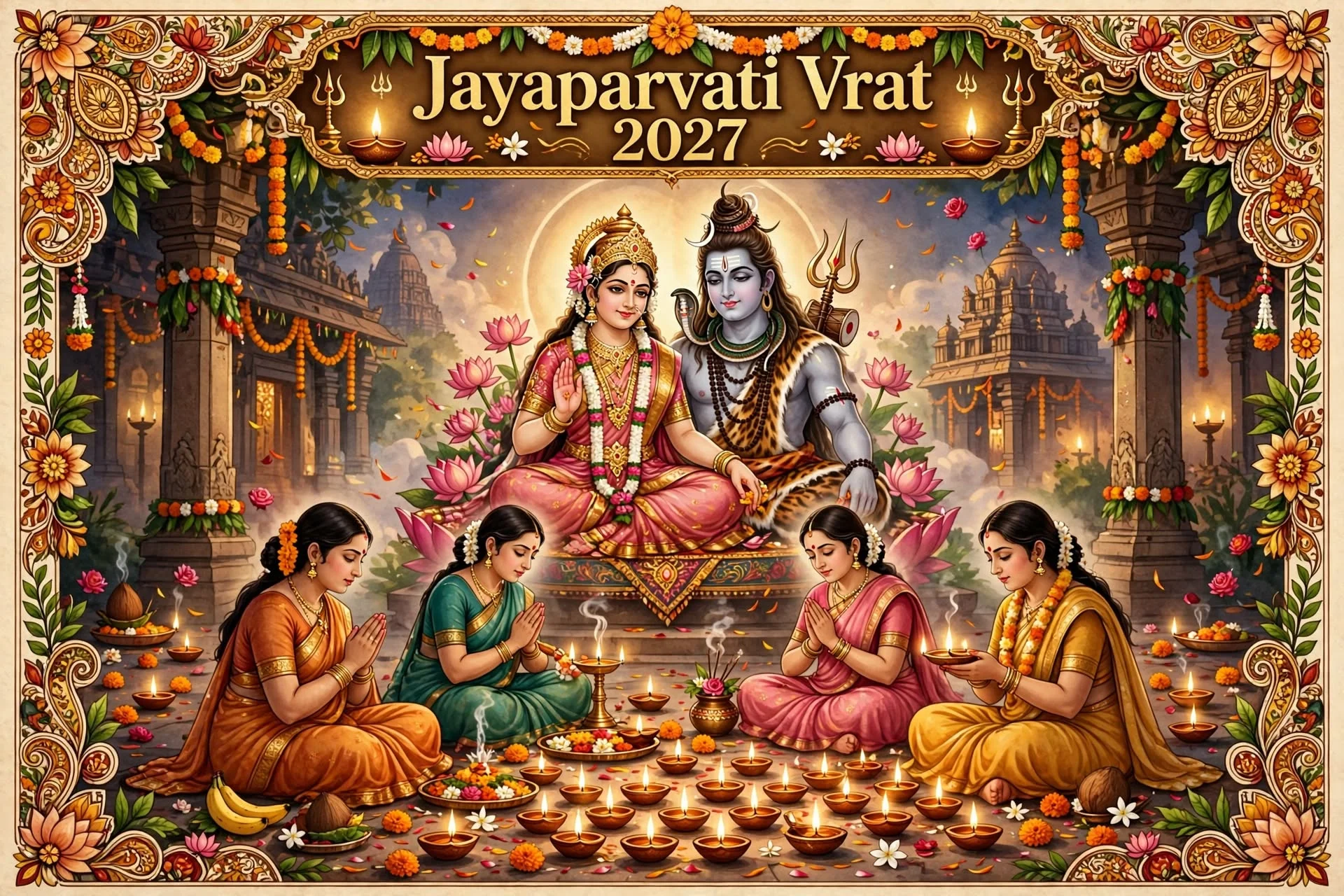
Jayaparvati Vrat, also known as Gauri Vrat or Jaya-Vijaya Vrata, is an ancient, highly revered five-day spiritual observance commencing on the Trayodashi tithi (thirteenth lunar day) of Shukla Paksha in the holy Hindu month of Ashadha (occurring in July) and concluding on Krishna Tritiya. Celebrated with immense piety and joy across Western India—predominantly in Gujarat and parts of Rajasthan and Maharashtra—the vrata is dedicated to Goddess Parvati (in Her victorious aspect as Jaya) and Lord Shiva. It is observed primarily by unmarried maidens praying for a virtuous, long-lived, and loving husband, as well as by married women seeking enduring marital bliss (Akhanda Saubhagya), domestic peace, and the welfare of their family lineage.
View Festival Guide
Saturday, Jul 17, 2027
Karka Sankranti
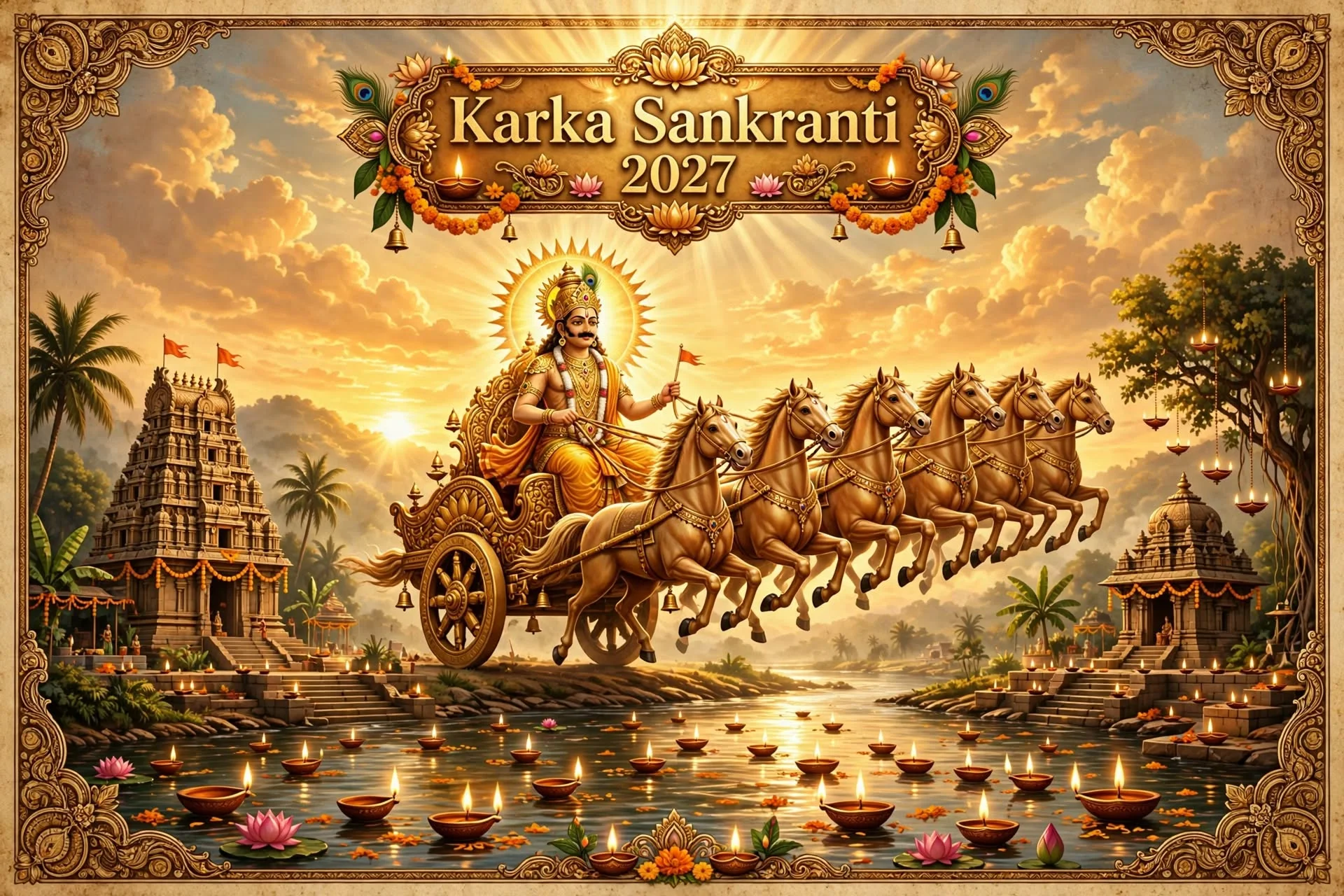
Karka Sankranti, occurring in mid-July, is an astronomically and spiritually momentous date marking the celestial ingress (transit) of the Sun (Surya Deva) into the zodiac sign of Cancer (Karka Rashi). In the Vedic astronomical calendar, this transit represents the pivotal turning point known as the commencement of Dakshinayana—the six-month period when the Sun moves southward along the celestial sphere, concluding the northern transit (Uttarayana).
View Festival Guide
Saturday, Jul 17, 2027
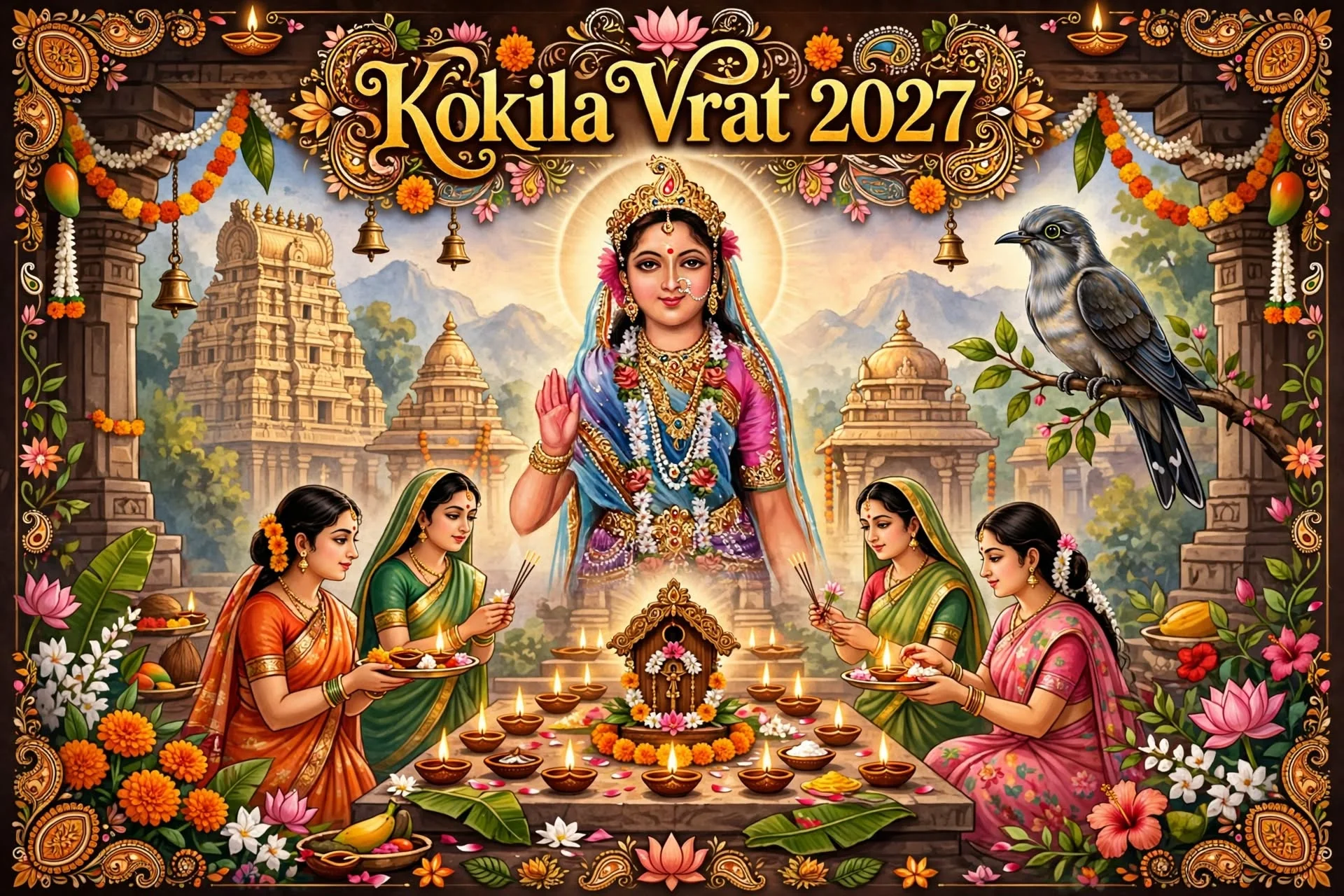
Kokila Vrat
Kokila Vrat is a rare, mystical, and deeply revered Hindu fasting observance celebrated on the Purnima (full moon day) of the Hindu lunar month of Ashadha, often extending into the sacred monsoon month of Shravana (falling in July). Dedicated to Goddess Parvati (in Her form as Sati) and Lord Shiva, this sanctified vrata derives its name from 'Kokila' (the Indian cuckoo bird), commemorating the poignant cosmological epoch when Goddess Sati incarnated as a divine cuckoo bird for ten thousand celestial years in the sacred groves of Nandanavana to perform austere, single-minded penance to reunite with Lord Shiva.
View Festival Guide

Sunday, Jul 18, 2027
Anvadhan
Anvadhan (अन्वाधान) is an ancient, highly revered Vedic ritual and spiritual observance in Sanatana Dharma performed on the day immediately preceding the New Moon (Amavasya) or Full Moon (Purnima). Rooted in the pristine traditions of the Shrauta and Grihya Sutras, Anvadhan literally translates to 'the solemn placing and replenishment of sacred fuel wood into the consecrated Vedic fires'. In traditional Vedic ritualism, householders (Grihasthas) and priests who maintain the sacred Agnihotra fires perform Anvadhan to prepare the sacrificial altars for the grand Darsha Yajna (New Moon sacrifice) or Paurnamasa Yajna (Full Moon sacrifice) scheduled for the following day.
View Festival Guide
Sunday, Jul 18, 2027
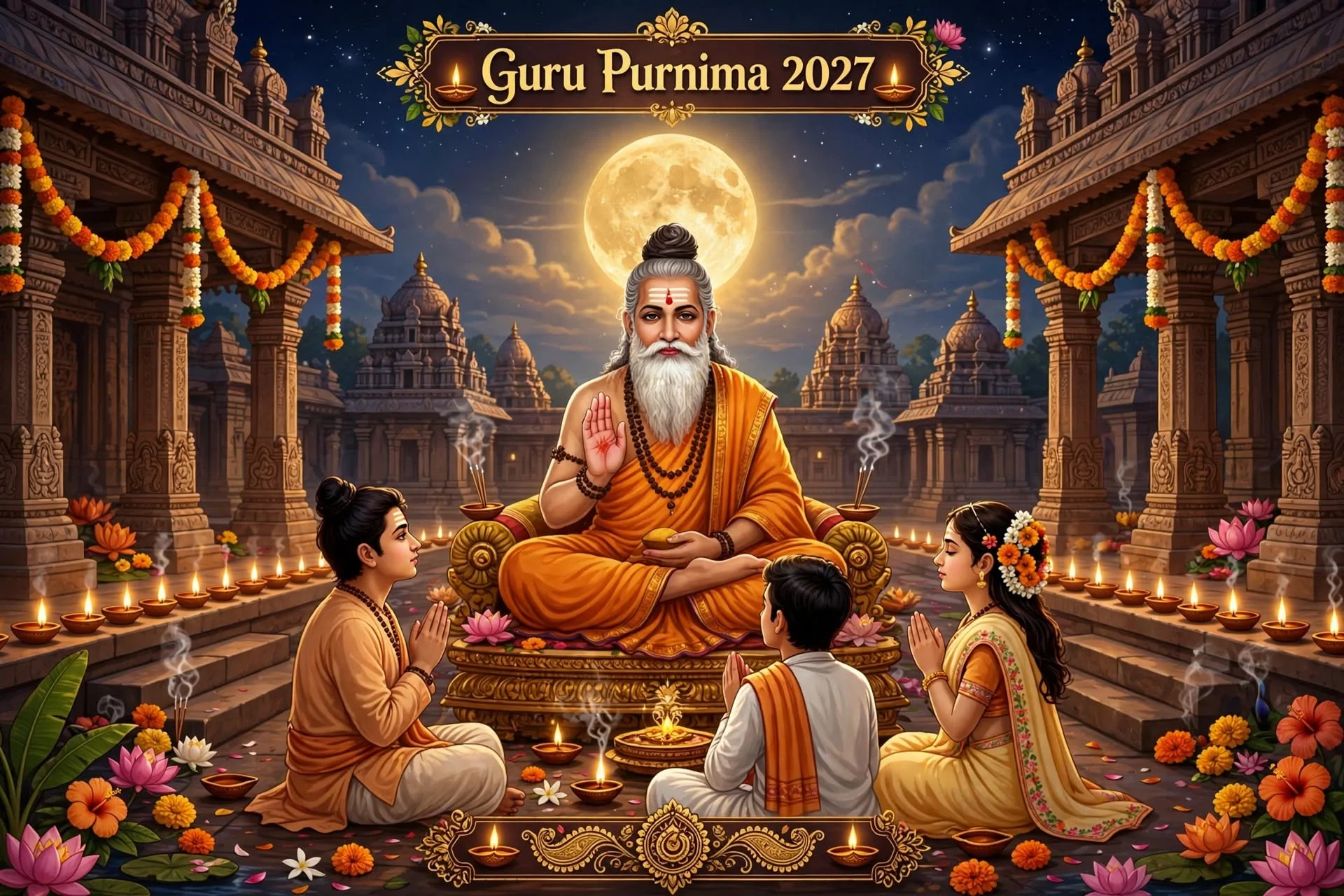
Guru Purnima
Guru Purnima, celebrated on the full moon day (Purnima) in the Hindu lunar month of Ashadha, is one of the most sacred and venerable festivals across Sanatana Dharma, Buddhism, and Jainism. Dedicated to the eternal lineage of spiritual preceptors (Guru Parampara), this day honors the divine principle that dispels the darkness of ignorance (Gu) and illumines the radiance of self-realization and wisdom (Ru).
View Festival Guide
Sunday, Jul 18, 2027
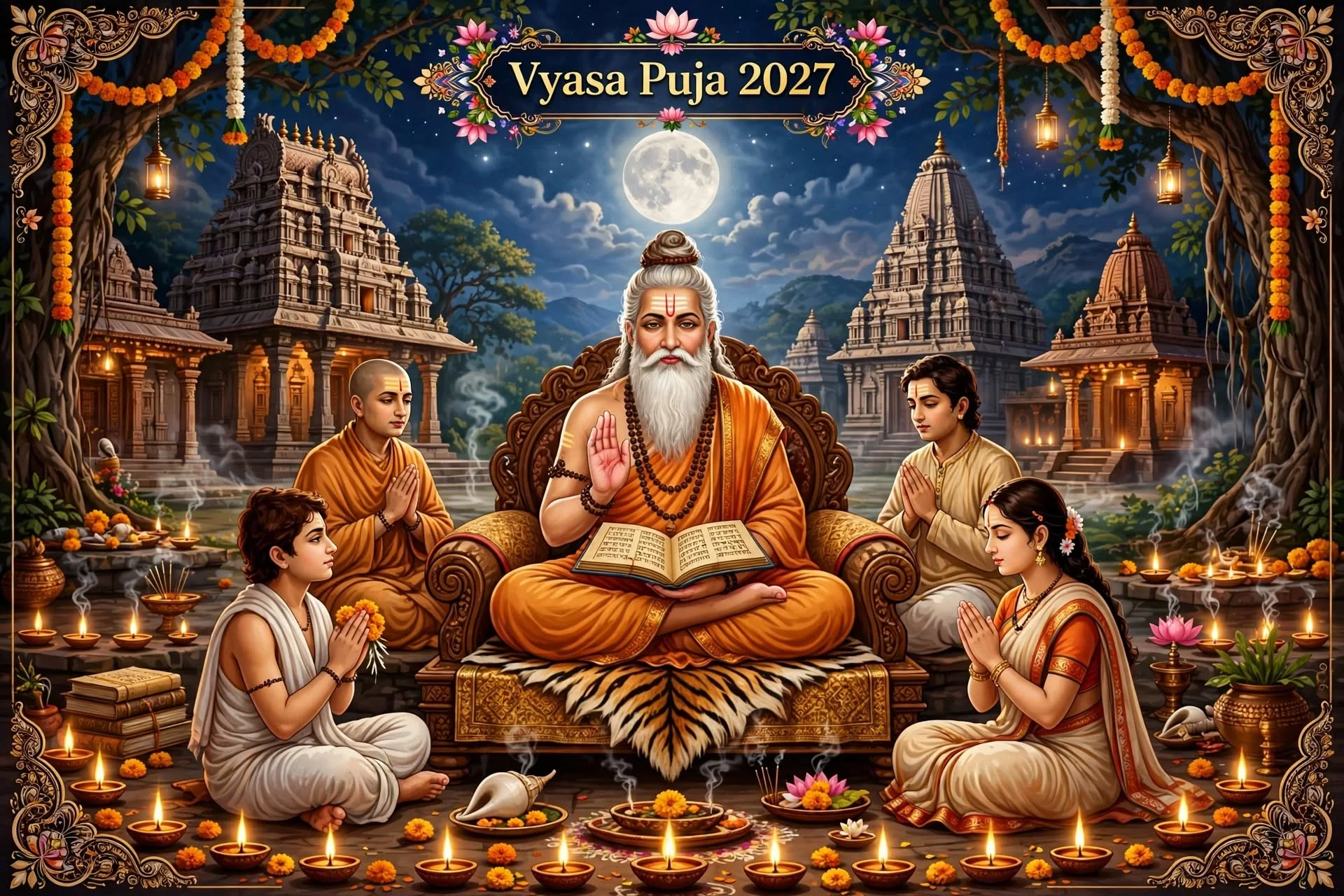
Vyasa Puja
Vyasa Puja is the paramount ritual celebration and liturgical solemnity observed on the Purnima (full moon day) of the Hindu lunar month of Ashadha (occurring in July), dedicated exclusively to Maharishi Krishna Dvaipayana Veda Vyasa—the immortal compiler of the four Vedas, author of the eighteen Mahapuranas, the monumental 100,000-verse Mahabharata, and the profound Brahma Sutras. While commonly celebrated in conjunction with Guru Purnima, Vyasa Puja specifically refers to the formal, highly codified liturgical ritual of worshiping the Vyasa Peetha (the sacred seat of scriptural authority) and honoring the unbroken Guru Parampara (lineage of enlightened masters) from Lord Narayana and Lord Sadashiva down to one's living spiritual preceptor.
View Festival Guide
Sunday, Jul 18, 2027
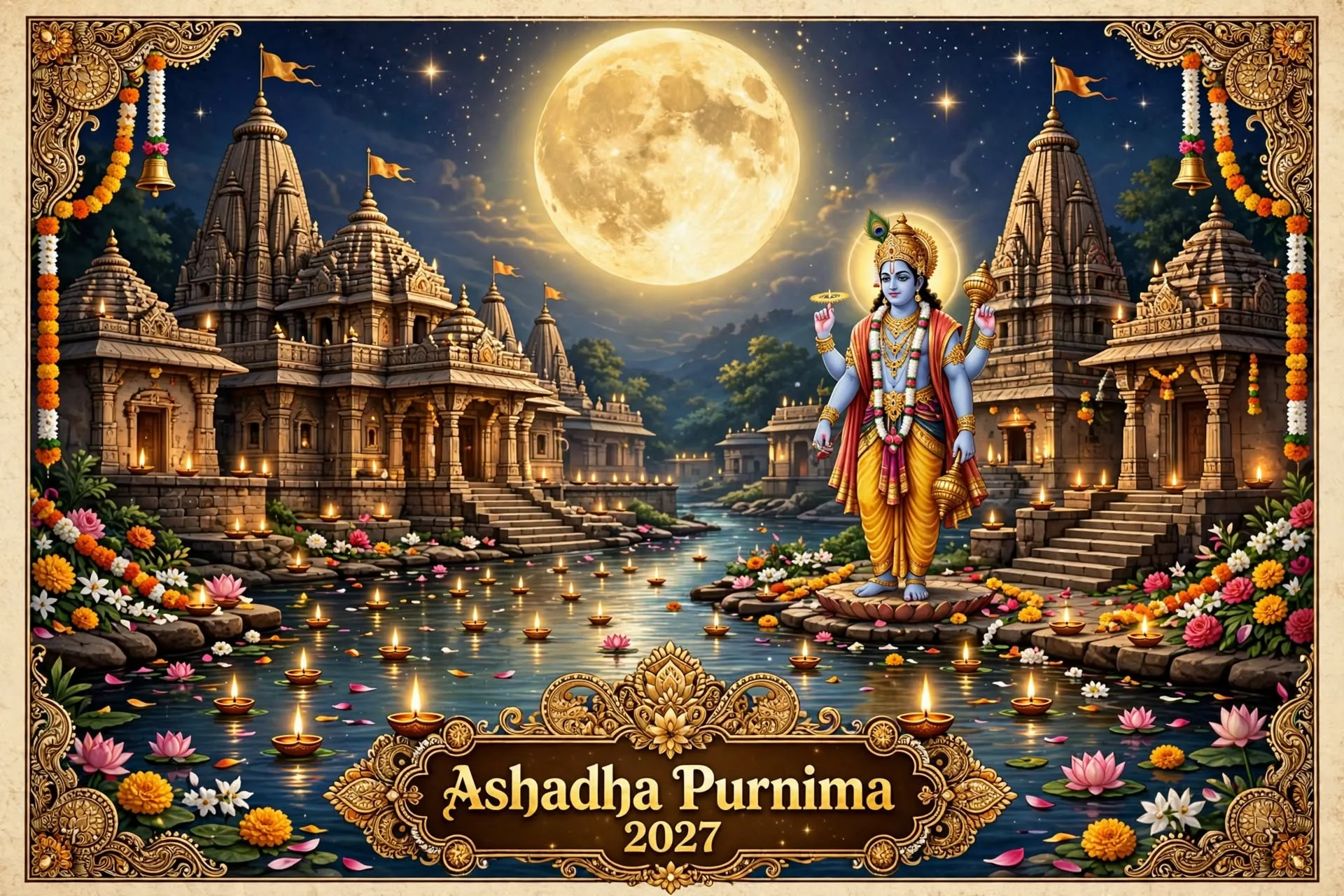
Ashadha Purnima
Ashadha Purnima is the radiant full moon tithi culminating the Shukla Paksha of the Hindu lunar month of Ashadha (occurring in July). Illuminating the mid-monsoon night sky with celestial brilliance, this sacred tithi represents one of the most auspicious spiritual junctures in Sanatana Dharma, Buddhism, and Jainism. As the full moon reaches its astrological peak in the constellations of Purva Ashadha and Uttara Ashadha, cosmic lunar and solar forces align to produce an atmosphere of profound mental clarity, devotional receptivity, and spiritual illumination.
View Festival Guide