




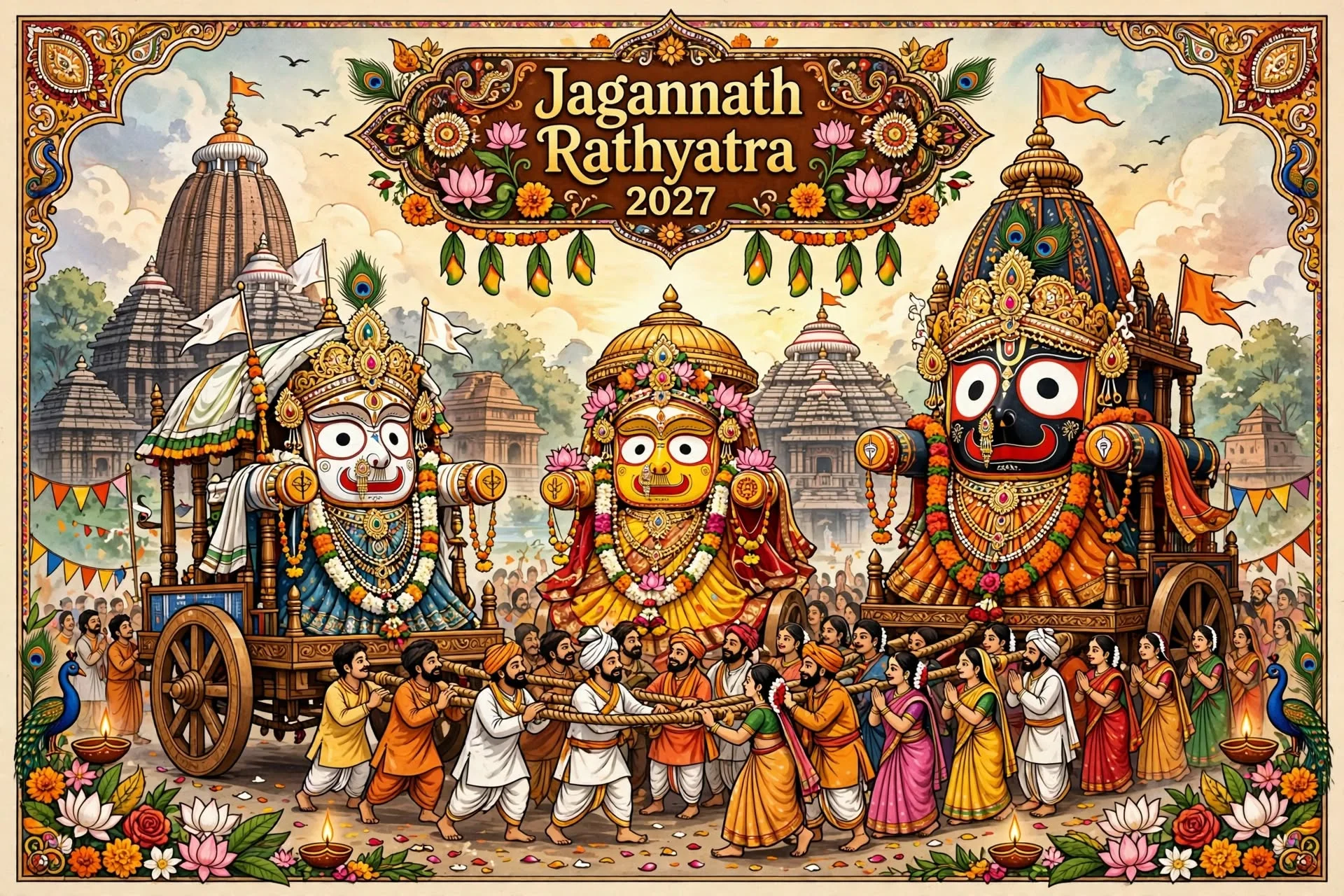
Jagannath Rathyatra, celebrated with cosmic majesty on the Dwitiya tithi (second lunar day) of Shukla Paksha in the Hindu month of Ashadha (occurring in July), is one of the most ancient, grandest, and spiritually celebrated chariot festivals on earth. Originating from the sacred coastal city of Puri (Srikshetra / Jagannath Puri) in Odisha, this monumental nine-day event marks the celestial journey of Bhagwan Jagannath—the Lord of the Universe and an affectionate manifestation of Lord Sri Krishna—accompanied by His elder brother Lord Balabhadra (Balarama) and His younger sister Devi Subhadra, from their magnificent 12th-century shrine (Srimandir) to their ancestral garden abode at the Gundicha Temple, situated three kilometers away.
Jagannath Rathyatra 2027: Date, Puja Timings, Rituals & Stories
Jagannath Rathyatra Timings & Panchang
Important festival dates and auspicious timings
Usha Arghya (Sunrise)
05:28 am
Sandhya Arghya (Sunset)
07:23 pm
Start Date
Monday, 5 Jul 2027
Puja Muhurat
08:31 am – 01:13 am
Jagannath Rathyatra
The theological essence of Rathyatra embodies the supreme magnanimity of the Divine. For the entire year, the sacred deities remain sheltered within the inner sanctum (Garbhagriha), accessible only to orthodox pilgrims and resident priests. However, on Rathyatra, the Lord of the Universe descends from His ratnavedi throne and steps out into the open streets ('Patita Pavana'—the purifier of the fallen), making His divine darshan available unconditionally to all human beings, irrespective of caste, creed, religion, social status, or nationality. Millions of devotees assemble from across the globe on the grand avenue (Bada Danda), singing, weeping with ecstatic devotion, and eagerly striving to touch the sacred coir ropes (Sankhachuda ropes) that pull the colossal wooden chariots.
According to the Skanda Purana and Niladri Mahodaya, touching the chariot ropes or catching a single glimpse of Lord Jagannath seated upon His chariot Nandighosha instantly destroys the accumulated karmic sins of hundreds of lifetimes, liberating the soul from the agonizing cycle of rebirth ('Rathe tu Vamanam drishtva punarjanma na vidyate'). The festival incorporates historic egalitarian rituals such as the Chhera Panhara, where the reigning Gajapati Maharaja of Puri—the royal scion of the Gajapati dynasty—sweeps the chariot floors with a golden-handled broom, demonstrating before millions that before the Supreme Divine, even the highest emperor is merely an humble, barefooted servant.
Why is Jagannath Rathyatra Celebrated?
The observance of Jagannath Rathyatra is steeped in sacred Puranic legends documented in the Skanda Purana (Utkala Khanda), Brahma Purana, Narada Purana, and the Padma Purana.
According to the primary Puranic legend, Queen Gundicha, the pious consort of King Indradyumna of Avanti, had requested the divine artisan Vishwakarma (who had assumed the form of an elderly carpenter named Ananta Maharana) to carve the sacred Daru-Brahma (neem wood log) into the murtis of Jagannath, Balabhadra, and Subhadra. When King Indradyumna prematurely opened the doors of the carving chamber, Vishwakarma vanished, leaving the idols with large round eyes and uncarved limbs. Deeply grief-stricken, Indradyumna prayed to Lord Brahma, who consecrated the incomplete deities, stating that the Lord had deliberately manifested in this form to embrace the entire cosmos without physical limitations.
Queen Gundicha, filled with maternal affection for the deities, secured a divine promise from Lord Jagannath that He would visit Her palace once every year for nine days. Rathyatra fulfills this eternal divine promise, allowing the Lord to rest, partake of special baked cakes (Poda Pitha), and bestow boundless joy upon His mother-figure and millions of earthly children.
- Commemorating the annual journey of Lord Jagannath, Balabhadra, and Subhadra to the Gundicha Temple.
- Embodying the 'Patita Pavana' form of the Divine, offering universal salvation to all people without discrimination.
- Demonstrating supreme humility through the Chhera Panhara ritual performed by the Gajapati Maharaja.
- Re-enacting the joyful arrival of Lord Krishna from Dwarka to the pastoral fields of Vrindavan to meet the Gopis.
- Attaining immediate spiritual liberation (Moksha) by beholding the deities upon their sacred chariots.
Puranic Origins in the Skanda Purana and the Legend of King Indradyumna
The Quest of King Indradyumna and the Manifestation of Daru-Brahma
In the ancient Satya Yuga, the devout King Indradyumna of Malwa desired to behold the Supreme Reality in visible form. Hearing of a sacred blue gem deity (Nila Madhava) worshiped secretly in the dense forests of Odisha by the tribal Sabara chieftain Viswavasu, the king sent his Brahmin minister Vidyapati to locate the shrine.
Vidyapati won the trust of Viswavasu and was guided blindfolded to the cave shrine. Dropping mustard seeds along the path, Vidyapati returned later with King Indradyumna, only to find that Nila Madhava had vanished into the earth. Distraught, the king performed thousands of Ashvamedha sacrifices on the seashore until a divine voice instructed him that the Lord would float ashore as a sacred fragrant neem log (Daru-Brahma) bearing the symbols of the conch, discus, mace, and lotus.
The Disappearance of the Old Carpenter and the Consecration by Brahma
When no sculptor could carve the divine iron-hard neem log, the celestial architect Vishwakarma arrived disguised as a frail old craftsman named Ananta Maharana. He agreed to sculpt the deities on one strict condition: that the temple doors remain locked for twenty-one days and no one disturb his work. After fifteen days, hearing total silence from within, Queen Gundicha feared the old carpenter had starved and persuaded the king to unlock the doors.
Inside, they found the carpenter gone and three incomplete wooden idols with large unblinking eyes and stumped arms. Weeping with remorse, Indradyumna prepared to immolate himself. Suddenly, Lord Jagannath spoke from the heavens: 'O King, weep not! In this cosmic age of Kali Yuga, I choose to remain in this transcendental form—having no hands, I accept all offerings; having no feet, I traverse the cosmos; having large open eyes, I gaze perpetually upon My children with unconditional love.' Lord Brahma personally descended from Satyaloka to consecrate the idols, inaugurating the eternal tradition of the Ratha Yatra.
The Royal Sweeping: The Chhera Panhara Tradition
Historically, the Gajapati rulers of Odisha considered themselves merely the earthly deputies (Raut) of Lord Jagannath. In the 15th century, Gajapati Purushottama Deva formalized the Chhera Panhara ritual. On the morning of Rathyatra, the king climbs the chariots barefoot, washes the platforms with fragrant sandalwood water, and sweeps the floor using a golden broom amidst the cheers of hundreds of thousands.
The Chariot as the Human Body, Bhakti Democracy, and Srimati Radharani's Longing
The Katha Upanishad Allegory of the Chariot
The monumental structure of the Ratha carries profound metaphysical symbolism directly rooted in the Katha Upanishad: 'Atmanam rathinam viddhi shareeram rathameva tu, buddhim tu sarathim viddhi manah pragrahameva cha' (Know the Soul as the passenger seated within the chariot, the physical body as the chariot, the intellect as the charioteer, and the mind as the reins).
The wooden chariot represents the human body traversing the road of material existence (Bada Danda). By pulling the heavy chariot ropes toward the Gundicha Temple (representing the pure spiritual realm), the devotee symbolically harnesses their wandering senses, reorients the wandering mind, and surrenders the reins of their life to the Supreme Charioteer, Lord Krishna.
Gaudiya Vaishnava Theology: Pulling Krishna Back to Vrindavan
In the Gaudiya Vaishnava tradition revivified by Sri Chaitanya Mahaprabhu in the 16th century, the Ratha Yatra represents the deepest emotional core of Radha-Krishna Bhakti. Srimandir represents the majestic, royal city of Dwarka, where Krishna lives as an opulent king surrounded by royal protocol.
Gundicha Temple represents the pastoral, loving groves of Vrindavan. When devotees pull the chariot of Jagannath, they embody the intense ecstatic longing of Srimati Radharani and the Gopis, striving with tears of divine love to pull their beloved Krishna away from royal Dwarka back to the joyful, unreserved embrace of Vrindavan.
The Spirit of Casteless Equality (Maha Prasada and Patita Pavana)
Nowhere in the Hindu world is the doctrine of human equality demonstrated more visibly than in Puri. In the presence of Lord Jagannath, caste distinctions and untouchability are completely abolished. The sacred food of the Lord (Maha Prasada / Kaivalya) can be eaten together from the same earthen pot by a Brahmin and an outcaste without hesitation.
During Rathyatra, the Lord reaches out to the physically challenged, the non-orthodox, and the destitute who cannot enter temples, proving that divine love transcends all human-made boundaries.
The Nine-Day Festival Schedule, Snana Yatra, and Chariot Details
Snana Yatra, Anasara, and Netrotsava
Fifteen days prior to Rathyatra, on Jyeshtha Purnima, the deities undergo the grand Snana Yatra, bathed with 108 pots of herbal and fragrant water from the golden well (Suna Kua). Following this intense cold bath, the deities symbolically catch a fever and enter a 15-day period of sacred isolation known as Anasara (Anavasara).
During Anasara, the deities are tended secretly by the Daitapati servitors, treated with medicinal herbs, oils, and fruit juices. On the eve of Rathyatra, the deities emerge radiant and rejuvenated during the Netrotsava ceremony, their eyes freshly painted by temple painters, filling millions with anticipation.
The Three Sacred Chariots and Their Specifications
Three colossal wooden chariots are hand-crafted anew every year from selected sacred trees by traditional carpenters without using a single iron nail: Nandighosha (Lord Jagannath: 45 feet high, 16 wheels, draped in red and yellow fabric, bearing the Garuda flag), Taladhwaja (Lord Balabhadra: 44 feet high, 14 wheels, draped in red and green/blue fabric, bearing the palm tree flag), and Darpadalana / Padmadhwaja (Devi Subhadra: 43 feet high, 12 wheels, draped in red and black fabric, bearing the lotus flag).
Accompanied by the thunderous rhythm of thousands of brass gongs (Ghantas), cymbals, and mridangas, the deities are carried out of the temple in the swaying ceremonial dance known as Pahandi Bije.
Gundicha Stay, Bahuda Yatra, and Suna Besha
The deities reside at the Gundicha Temple for seven days, partaking of special cakes (Poda Pitha). On the tenth day (Ashadha Shukla Dashami), they begin their return journey known as Bahuda Yatra. On the eleventh day (Ekadashi), upon returning to the Srimandir gates, the deities are adorned in magnificent solid gold attire and jewelry weighing hundreds of kilograms, known as the Suna Besha (Golden Attire), viewed by over a million pilgrims before entering the sanctum.
Jagannath Rathyatra Puja Vidhi (Step by Step)
- 1
Mangala Alati and Mailam (Early Morning Waking and Unrobing)
At dawn on Dwitiya tithi, temple priests awaken the deities with sacred conch blowing, performing Mangala Alati, changing their night garments (Mailam), and offering sanctified neem toothsticks and cooling herbal mouthwash.
- 2
Gopala Vallabha and Sakala Dhupa (Morning Food Offerings)
Offer fresh morning bhoga consisting of sweet curd, ripe bananas, coconut, parched paddy, and butter to the deities, followed by the main morning feast (Sakala Dhupa) prepared in the sacred Anandabazar kitchen.
- 3
Senapatilagi and Tahiya Bandha (Securing Giant Floral Headgear)
Special hereditary Daitapati servitors tie protective cane armor (Senapatilagi) around the deities' wooden torsos and secure magnificent, towering floral crowns (Tahiyas) crafted by the Raghav Das Matha.
- 4
Pahandi Bije (The Royal Swaying Procession)
In an epic ceremonial spectacle, the deities are carried out of the Singhadwara down the 22 steps (Baisi Pahacha) in rhythmic, swaying steps (Pahandi) amidst the deafening roar of hundreds of brass cymbals and gongs.
- 5
Jagannath Rathyatra Puja Samagri List
Chariot Construction and Consecration Materials
- 862 designated sacred logs of Phasi, Dhaura, Asan, and Neem timber sourced from the Dasapalla forest
- 1,090 meters of traditional hand-spun cotton and velvet canopy fabric (red, yellow, blue, green, black)
- Six massive Sankhachuda pulling ropes woven from unbleached wild coconut coir (250 feet long each)
- Carved wooden horses, charioteers (Daruka, Matali), parshwadevatas (guardian deities), and brass kalash finials
- Pure Malayagiri sandalwood paste, camphor, and fragrant rose water for the Chhera Panhara sweeping
Deity Adornments and Floral Offerings
- Giant floral headgear (Tahiyas) handcrafted using bamboo strips, white thermocol, arecanut flowers, and marigolds
- Cane chest armors (Senapatilagi) and silk ropes for the swaying Pahandi procession
- Garlands of fresh holy Tulsi leaves, lotus blossoms, fragrant champaka, and yellow marigolds
- Solid gold ornaments and crowns weighing over 208 kilograms for the grand Suna Besha ceremony
Maha Prasada and Food Offerings
- Traditional Poda Pitha (slow-baked earthen cakes prepared with rice flour, jaggery, grated coconut, and cardamom)
- Khaja (flaky layered sweets made with wheat flour, pure cow ghee, and sugar syrup)
Mantras and Prayers for Jagannath Rathyatra
Jagannath Rathyatra Vrat Rules and Fasting Guidelines
Pilgrim Fasting Guidelines and Conduct
Pilgrims pulling the chariots or participating in Rathyatra maintain strict bodily purity. Many observe a fast until the deities have completed their Pahandi procession and are safely seated upon their chariots. After the chariots begin to roll, devotees break their fast with holy Mahaprasada (such as Khaja or dry Nirmalya) distributed along the Bada Danda. All pilgrims abstain from meat, fish, alcohol, onions, garlic, and intoxicants throughout the nine-day duration of the festival.
- Total abstinence from non-vegetarian food, alcohol, and commercial processed food.
- Maintaining an attitude of universal brotherhood, helping elderly pilgrims, and avoiding rowdy or selfish behavior while pulling chariot ropes.
- Honoring Mahaprasada with reverence, accepting it regardless of who offers it.
Ethical Observance for Home Seekers
Those celebrating Rathyatra at home clean their personal shrines, place idols of Krishna, Jagannath, or Shaligram upon small decorated miniature chariots or palanquins, pull them joyfully around their courtyards or neighborhood streets, and distribute sweets and sanctified food to all neighbors and passersby.
Dos and Don'ts of Jagannath Rathyatra
Good Practices (Do's)
- Chant 'Jai Jagannath' and the Hare Krishna Maha Mantra while pulling the chariot ropes.
- Seek a glance of Lord Jagannath seated upon the chariot (Nandighosha) with a humble, prayerful heart.
- Partake of Mahaprasada without hesitation or pride of caste, wealth, or status.
- Help frail, elderly, and female pilgrims navigate the massive crowds with utmost care and chivalry.
- Sing the Jagannatha Ashtakam and recite verses from the Gita Govinda.
Jagannath Rathyatra Across Regions
| Region | Local Name |
|---|---|
| Puri and Odisha | Puri Sri Mandir Ratha Yatra |
| West Bengal and ISKCON Worldwide (Mayapur, Kolkata, Mahesh) | Mahesh Ratha Yatra and Global Chariot Festivals |
| Gujarat (Ahmedabad) | Ahmedabad Jagannath Mandir Rathyatra |
Jagannath Rathyatra FAQs
Why does Lord Jagannath step out of the temple for Rathyatra?
Lord Jagannath steps out of the temple as 'Patita Pavana' (the redeemer of the fallen). For those who cannot enter the inner temple due to physical infirmity, distance, or social limitations, the Lord comes out onto the public street to embrace and bless every living being unconditionally.
What is the meaning of the ritual 'Chhera Panhara'?
Chhera Panhara is the royal ritual where the Gajapati Maharaja of Puri sweeps the chariot floors with a golden broom. It signifies that before the Supreme Lord of the Universe, all worldly emperors, prime ministers, and wealthy elites are merely humble, barefooted servants.
What is the theological significance of pulling the chariot ropes?
Pulling the heavy chariot ropes symbolizes pulling the Supreme Lord into the temple of one's own heart, aligning the body, mind, and intellect with the divine will, and attaining liberation from the cycle of birth and death.
Upcoming Festivals
View All
Monday, Jul 5, 2027
Chandra Darshana
Chandra Darshana is a revered monthly Hindu observance dedicated to sighting, venerating, and offering oblation to the delicate waxing crescent Moon immediately following the new moon (Amavasya), typically occurring during the twilight of Shukla Paksha Pratipada or Dwitiya.
View Festival Guide
Wednesday, Jul 14, 2027
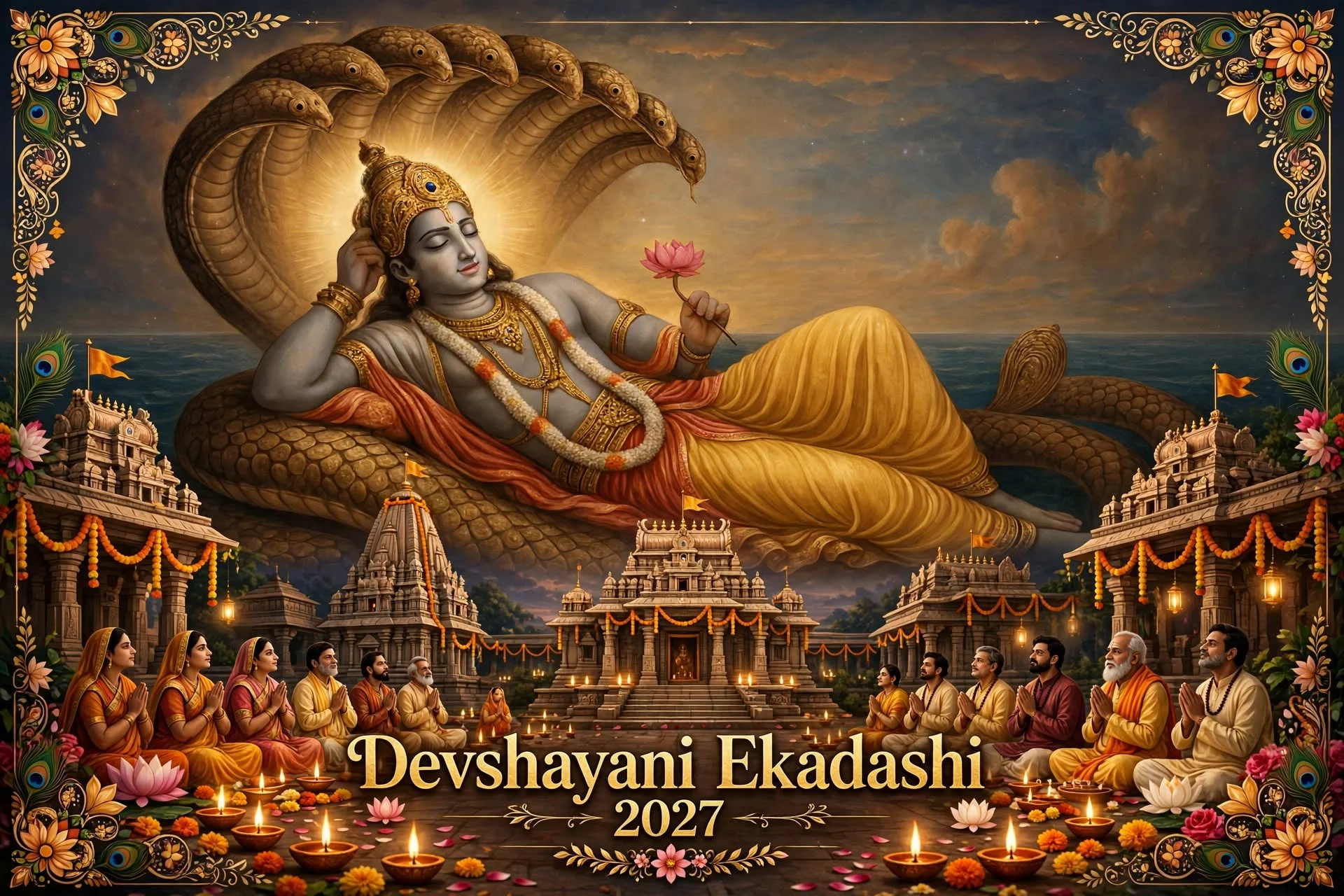
Devshayani Ekadashi
Devshayani Ekadashi, also reverently celebrated as Ashadhi Ekadashi, Padma Ekadashi, or Hari Shayani Ekadashi, falls on the eleventh lunar day (Ekadashi) of the Shukla Paksha (waxing phase of the moon) in the sacred Hindu month of Ashadha. This sanctified tithi marks the celestial moment when Bhagwan Vishnu, the cosmic preserver, enters an epoch of four months of cosmic meditative slumber (Yoga Nidra) upon the coils of the thousand-headed serpent Adishesha in the Kshirasagara (Cosmic Ocean of Milk).
View Festival Guide
Thursday, Jul 15, 2027
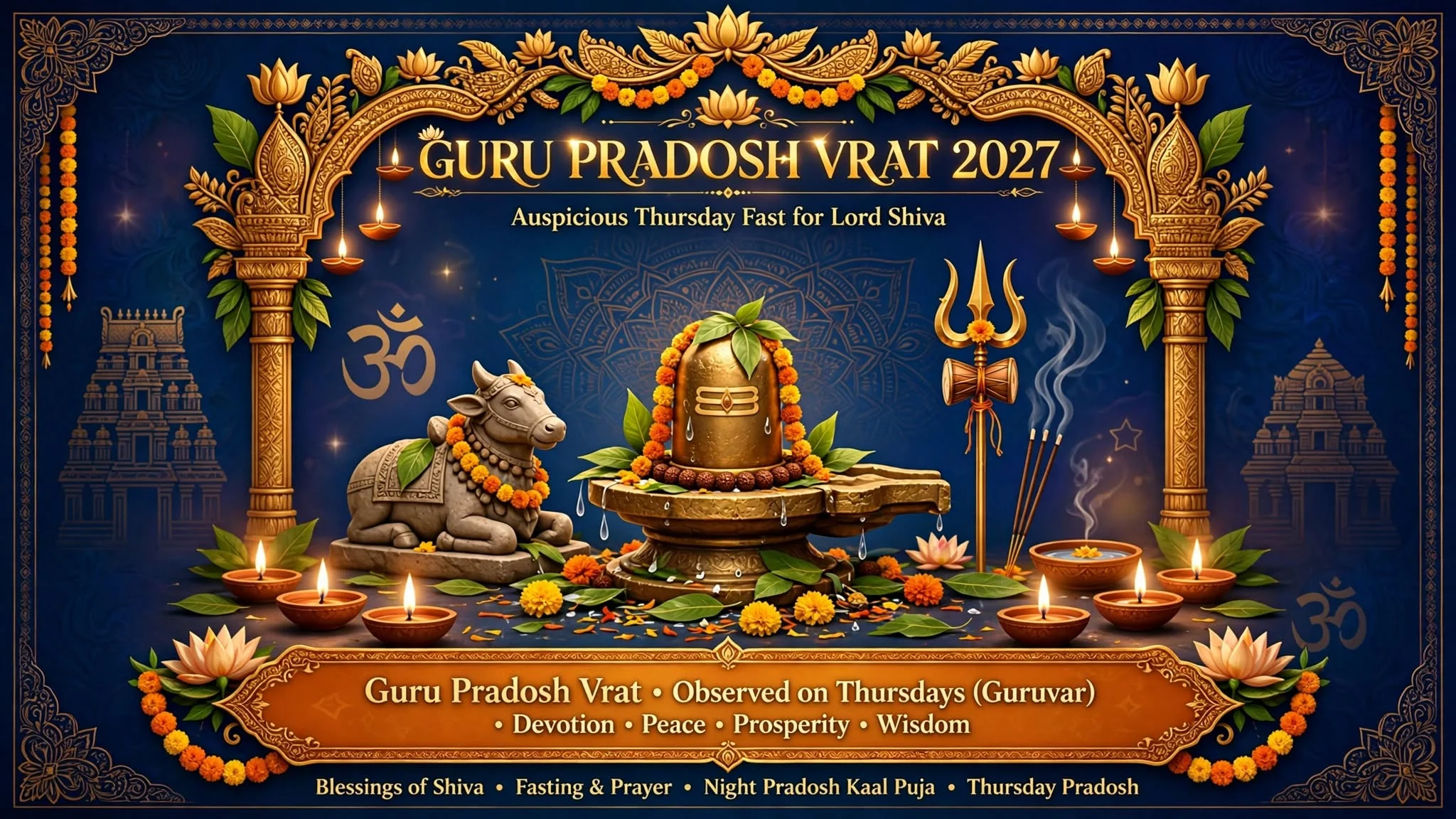
Guru Pradosh Vrat
Guru Pradosh Vrat, also known as Guruvara Pradosham or Brihaspati Pradosham, is a sacred bimonthly Hindu fasting observance occurring when the Trayodashi tithi (thirteenth lunar day) coincides with a Thursday (Guruvara) during the twilight Pradosha Kaal period.
View Festival Guide
Friday, Jul 16, 2027
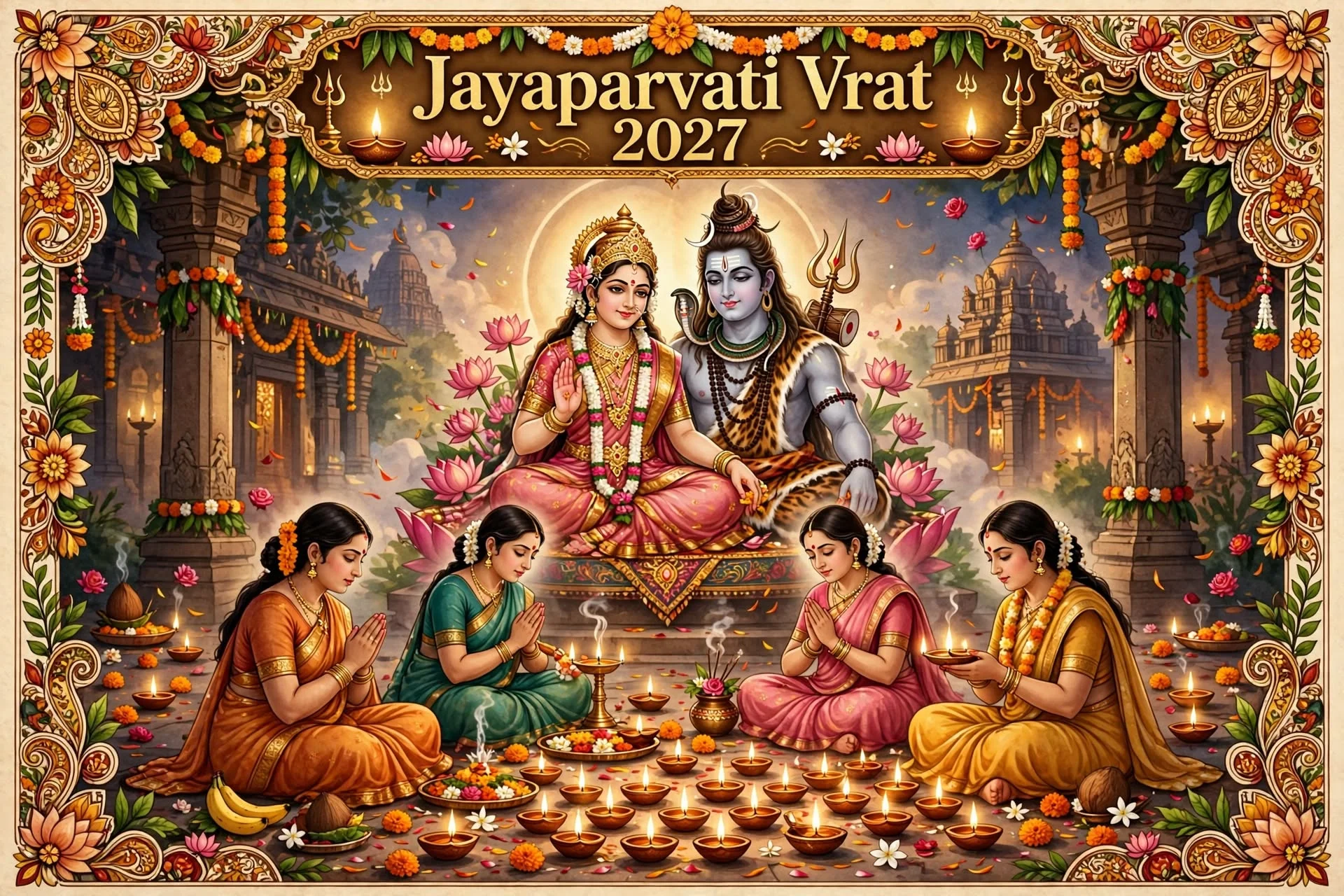
Jayaparvati Vrat
Jayaparvati Vrat, also known as Gauri Vrat or Jaya-Vijaya Vrata, is an ancient, highly revered five-day spiritual observance commencing on the Trayodashi tithi (thirteenth lunar day) of Shukla Paksha in the holy Hindu month of Ashadha (occurring in July) and concluding on Krishna Tritiya. Celebrated with immense piety and joy across Western India—predominantly in Gujarat and parts of Rajasthan and Maharashtra—the vrata is dedicated to Goddess Parvati (in Her victorious aspect as Jaya) and Lord Shiva. It is observed primarily by unmarried maidens praying for a virtuous, long-lived, and loving husband, as well as by married women seeking enduring marital bliss (Akhanda Saubhagya), domestic peace, and the welfare of their family lineage.
View Festival Guide
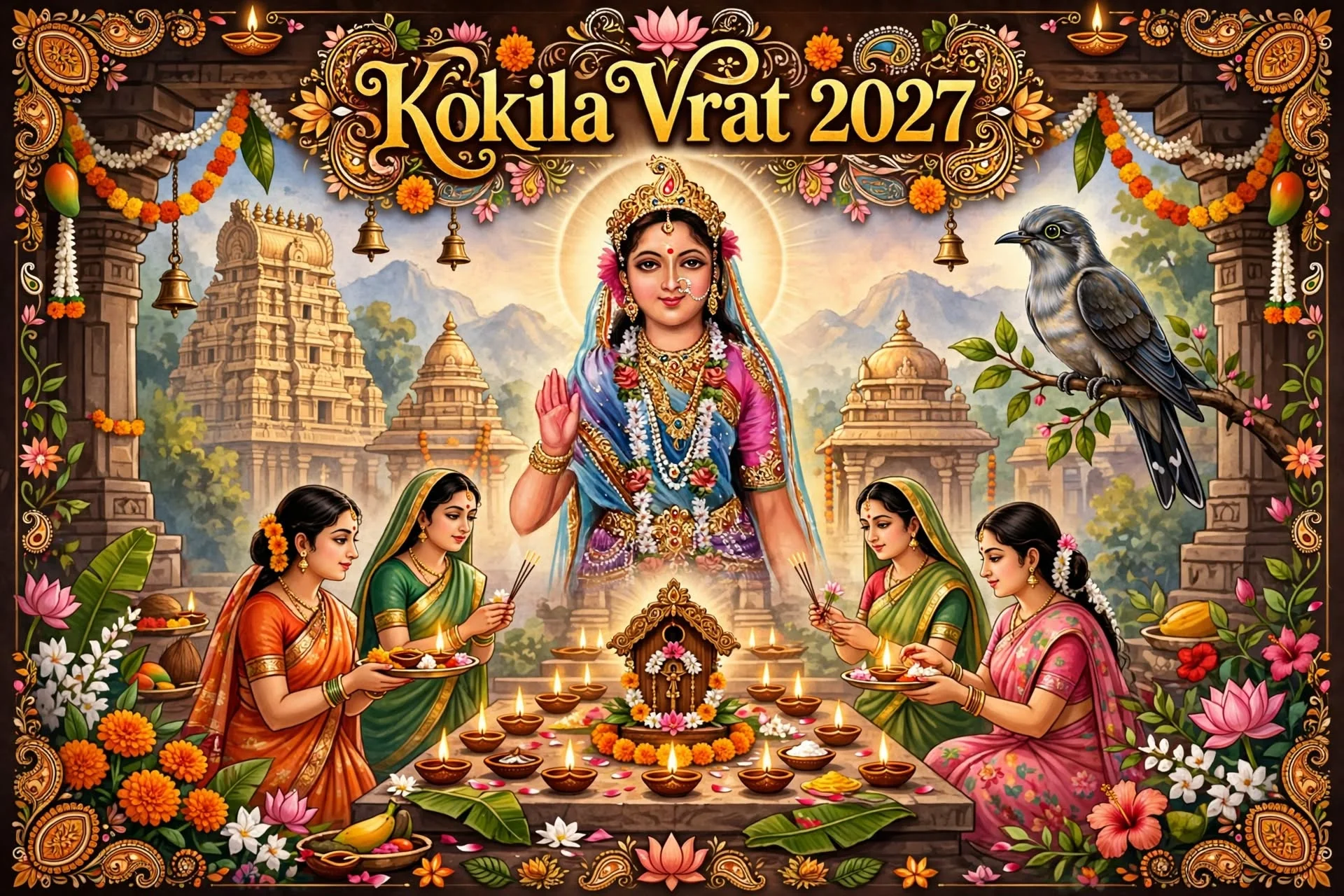
Saturday, Jul 17, 2027
Kokila Vrat
Kokila Vrat is a rare, mystical, and deeply revered Hindu fasting observance celebrated on the Purnima (full moon day) of the Hindu lunar month of Ashadha, often extending into the sacred monsoon month of Shravana (falling in July). Dedicated to Goddess Parvati (in Her form as Sati) and Lord Shiva, this sanctified vrata derives its name from 'Kokila' (the Indian cuckoo bird), commemorating the poignant cosmological epoch when Goddess Sati incarnated as a divine cuckoo bird for ten thousand celestial years in the sacred groves of Nandanavana to perform austere, single-minded penance to reunite with Lord Shiva.
View Festival Guide
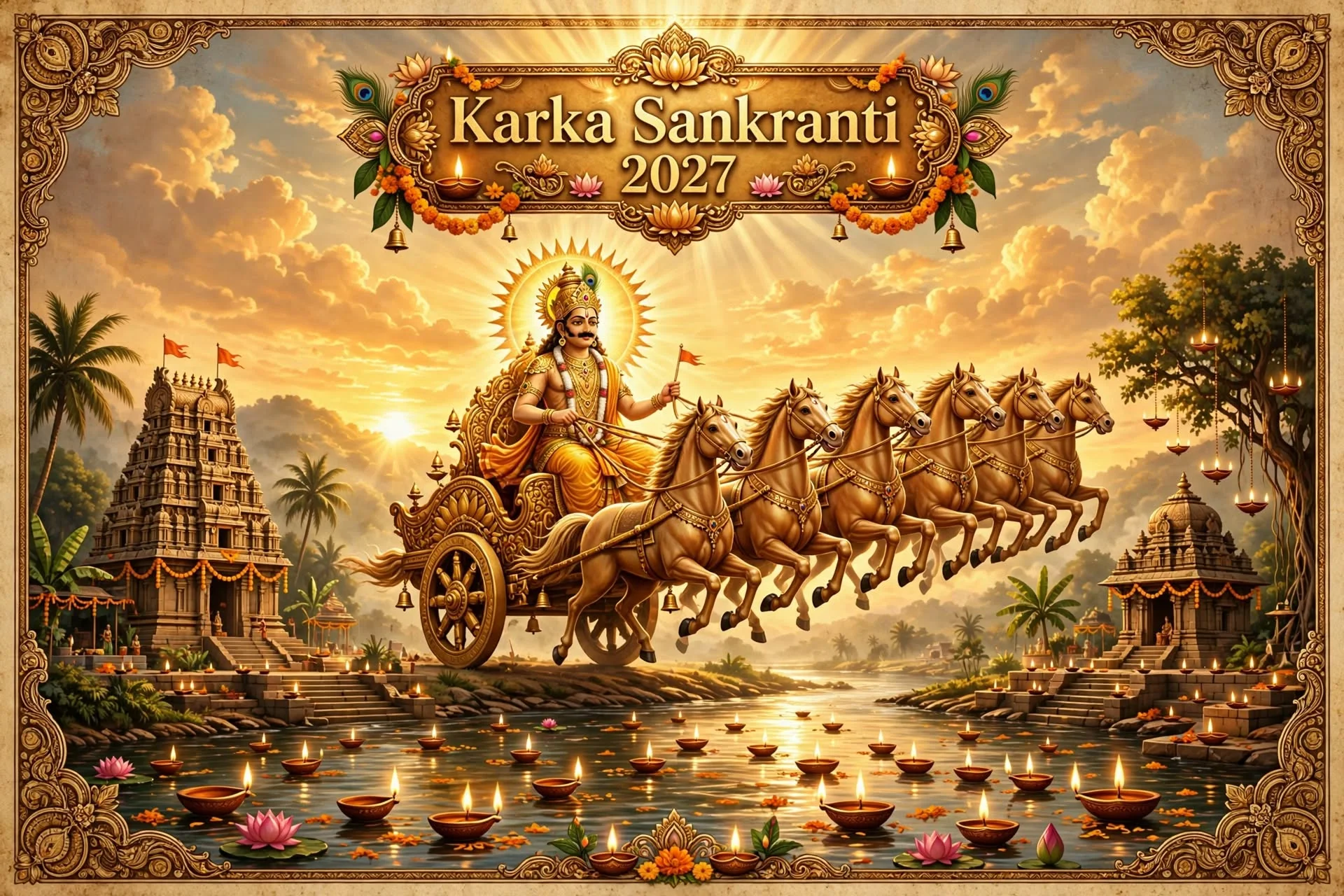
Saturday, Jul 17, 2027
Karka Sankranti
Karka Sankranti, occurring in mid-July, is an astronomically and spiritually momentous date marking the celestial ingress (transit) of the Sun (Surya Deva) into the zodiac sign of Cancer (Karka Rashi). In the Vedic astronomical calendar, this transit represents the pivotal turning point known as the commencement of Dakshinayana—the six-month period when the Sun moves southward along the celestial sphere, concluding the northern transit (Uttarayana).
View Festival Guide
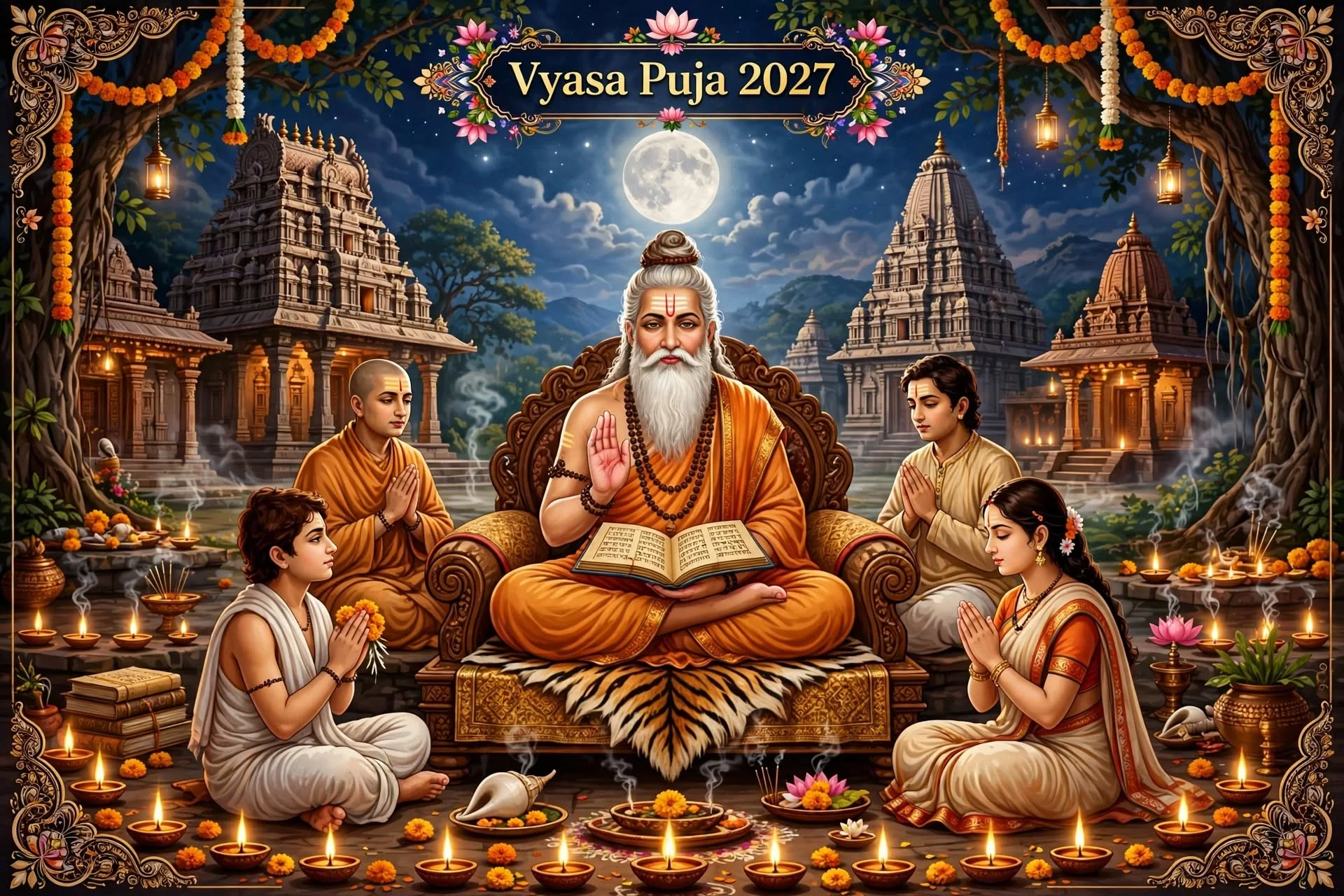
Sunday, Jul 18, 2027
Vyasa Puja
Vyasa Puja is the paramount ritual celebration and liturgical solemnity observed on the Purnima (full moon day) of the Hindu lunar month of Ashadha (occurring in July), dedicated exclusively to Maharishi Krishna Dvaipayana Veda Vyasa—the immortal compiler of the four Vedas, author of the eighteen Mahapuranas, the monumental 100,000-verse Mahabharata, and the profound Brahma Sutras. While commonly celebrated in conjunction with Guru Purnima, Vyasa Puja specifically refers to the formal, highly codified liturgical ritual of worshiping the Vyasa Peetha (the sacred seat of scriptural authority) and honoring the unbroken Guru Parampara (lineage of enlightened masters) from Lord Narayana and Lord Sadashiva down to one's living spiritual preceptor.
View Festival Guide
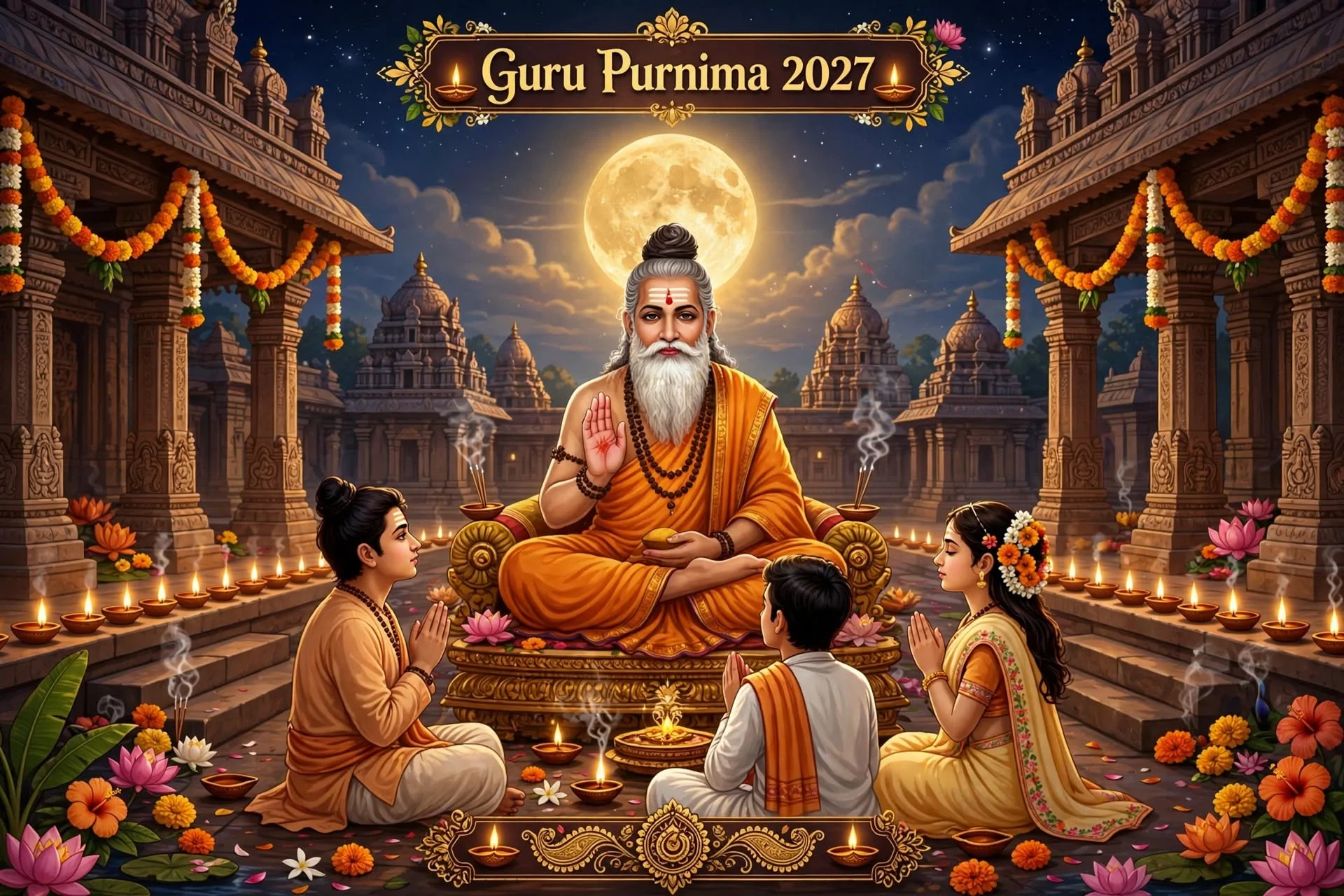
Sunday, Jul 18, 2027
Guru Purnima
Guru Purnima, celebrated on the full moon day (Purnima) in the Hindu lunar month of Ashadha, is one of the most sacred and venerable festivals across Sanatana Dharma, Buddhism, and Jainism. Dedicated to the eternal lineage of spiritual preceptors (Guru Parampara), this day honors the divine principle that dispels the darkness of ignorance (Gu) and illumines the radiance of self-realization and wisdom (Ru).
View Festival Guide