




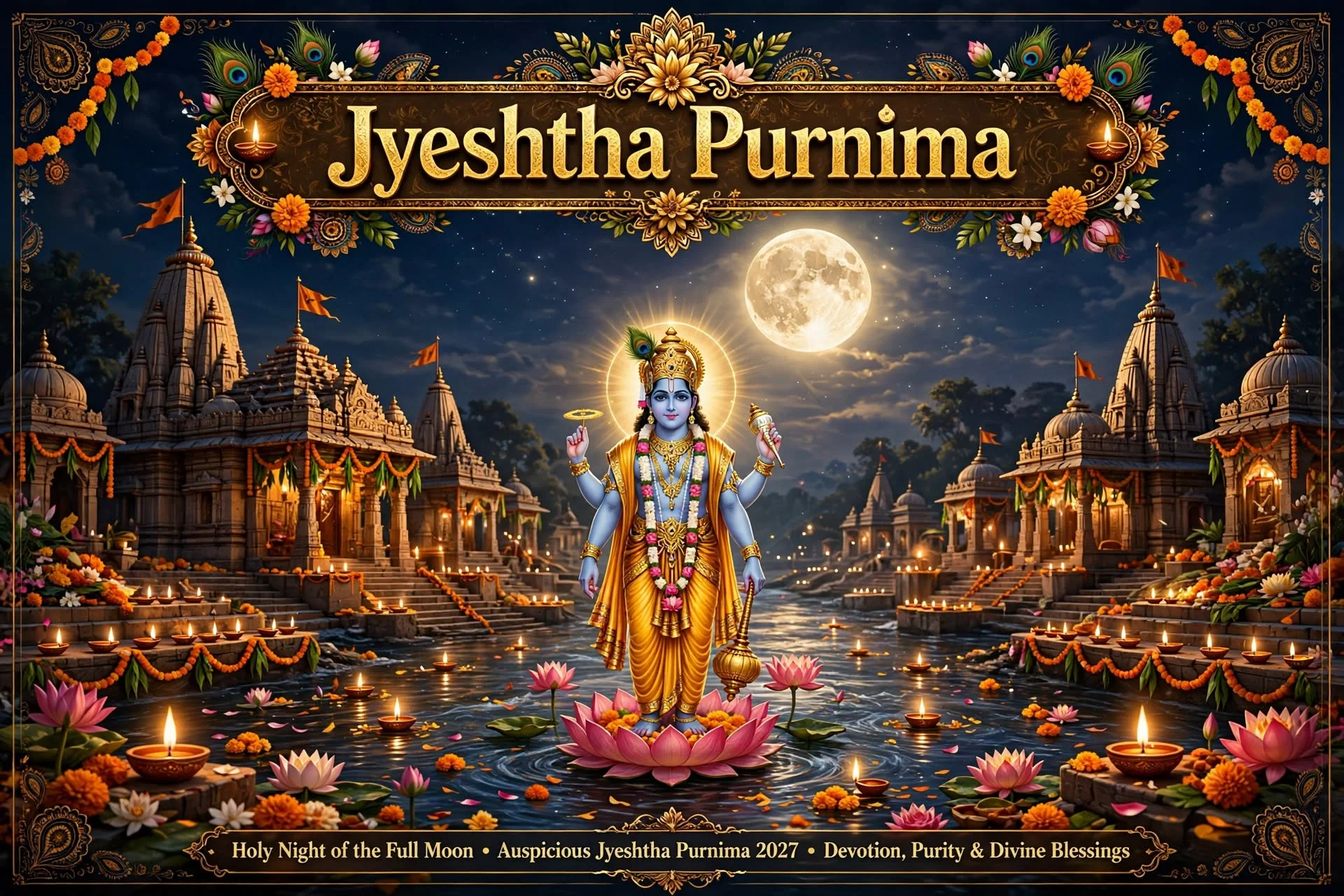
Jyeshtha Purnima is the sacred full-moon day that marks the conclusion of Shukla Paksha in the Hindu month of Jyeshtha. It generally falls during May or June in the Gregorian calendar and is considered an important occasion for worship, fasting, holy bathing, charity and spiritual reflection. The word Purnima refers to the full-moon tithi, while Jyeshtha identifies the lunar month in which it occurs.
Jyeshtha Purnima 2027: Date, Puja Timings, Rituals & Stories
Jyeshtha Purnima Timings & Panchang
Important festival dates and auspicious timings
Usha Arghya (Sunrise)
05:23 am
Sandhya Arghya (Sunset)
07:21 pm
Start Date
Friday, 18 Jun 2027
Puja Muhurat
04:35 am – 06:14 am
Jyeshtha Purnima
The significance of Jyeshtha Purnima is reflected in several Hindu religious traditions. Devotees observe Purnima Vrat, worship Lord Vishnu and Lord Satyanarayana, perform Snana and Daan, and offer prayers for peace, prosperity and spiritual well-being. The full moon is traditionally associated with completeness, auspiciousness and the fulfilment of devotional observances.
In Maharashtra, Gujarat, Goa and parts of western India, Jyeshtha Purnima is especially associated with Vat Purnima, also known as Vat Savitri Purnima. Married women worship the banyan tree and remember the story of Savitri and Satyavan. They traditionally pray for the well-being and longevity of their husbands and for harmony within their families.
In Odisha, the full-moon day is associated with Devasnana Purnima, also known as Snana Yatra. At the Jagannath Temple in Puri, the deities Lord Jagannatha, Lord Balabhadra and Devi Subhadra are ceremonially brought to the Snana Mandapa and given a grand ritual bath. This important temple festival is followed by the traditional Anasara period, during which the deities remain away from public darshan according to temple custom.
Jyeshtha Purnima is also traditionally associated with Kabir Jayanti, the birth anniversary of the poet-saint Kabir. Devotees remember his teachings on devotion, equality, compassion and the unity of the divine. Religious gatherings, devotional singing and readings of his verses are organised by followers in several regions.
The observance of Jyeshtha Purnima therefore combines different expressions of Hindu spirituality. Some devotees focus on fasting and Vishnu worship, others perform holy bathing and charity, while regional communities celebrate Vat Purnima or Snana Yatra. The exact practices depend on local customs, temple traditions and family observances.
Why is Jyeshtha Purnima Celebrated?
Jyeshtha Purnima is observed to honour the spiritual importance of the full-moon tithi and to dedicate the day to prayer, purification, charity and devotional activities. Purnima has a special place in Hindu religious practice, and many devotees use this occasion to worship Lord Vishnu, perform Satyanarayana Puja, undertake holy bathing and offer donations.
The day also carries regional significance through festivals and religious traditions associated with the Jyeshtha full moon. Vat Purnima commemorates the devotion and wisdom of Savitri, while Devasnana Purnima celebrates the ceremonial bathing of Lord Jagannatha and the other deities at Puri. Kabir Jayanti provides an opportunity to remember the spiritual teachings of Kabir.
- To worship Lord Vishnu and Lord Satyanarayana and seek blessings for peace and prosperity.
- To observe Purnima Vrat as a practice of devotion, discipline and spiritual purification.
- To perform holy bathing and charitable activities according to traditional customs.
- To honour Goddess Savitri through the regional Vat Purnima observance.
- To celebrate Devasnana Purnima and the ceremonial bathing of Lord Jagannatha at Puri.
- To remember the teachings and devotional philosophy of Sant Kabir.
- To pray for family harmony, health, prosperity and spiritual progress.
- To practise compassion, generosity, self-restraint and service to others.
History and Religious Traditions of Jyeshtha Purnima
Jyeshtha Purnima is not associated with one exclusive origin story. It is a full-moon observance within the Hindu lunar calendar, and its religious significance comes from the broader importance of Purnima, traditional monthly worship, regional vrata practices and temple festivals.
Hindu religious literature contains numerous references to the spiritual value of Purnima, including bathing, worship, fasting and charitable giving. Different Purnima observances have their own rules and traditions. Jyeshtha Purnima is especially notable because several regional religious events are associated with this day.
The Place of Purnima in the Hindu Calendar
Purnima is the fifteenth lunar tithi of Shukla Paksha, the bright fortnight during which the Moon appears to grow from new moon towards fullness. It marks the completion of the waxing lunar phase. In Hindu religious practice, full-moon days are commonly associated with prayer, worship, charity, pilgrimage and fasting.
Jyeshtha is the third lunar month in the traditional Hindu calendar. It generally corresponds to May and June, a period associated with intense summer heat across much of the Indian subcontinent. Water-related acts of charity, providing drinking water, feeding people and caring for animals are particularly meaningful during this season.
The full-moon observance of Jyeshtha is therefore connected with both the regular religious significance of Purnima and the seasonal practices associated with Jyeshtha. Its observances differ according to regional calendars and community traditions.
The Tradition of Purnima Vrat
Purnima Vrat is a recurring religious observance followed on full-moon days throughout the Hindu lunar year. Devotees may observe fasting, perform Vishnu or Satyanarayana worship, recite sacred texts, offer food and donations, and conclude their worship with prayers to the Moon.
The form of the fast is not identical in every household. Some devotees abstain from food for part of the day, some follow a fruit-based fast, and others eat a simple vegetarian meal after completing their worship. The observance is generally understood as an opportunity to practise devotion, restraint and gratitude.
Spiritual Significance of Jyeshtha Purnima
Jyeshtha Purnima represents the completion of the waxing lunar fortnight and is considered a suitable occasion for devotion, prayer, charity and spiritual reflection. The full moon is traditionally associated with completeness and illumination. Devotees use this day to turn their attention towards divine worship and positive actions.
The spiritual meaning of Jyeshtha Purnima is expressed through several traditions. Vishnu worship represents the preservation of dharma, Satyanarayana Puja emphasises truth and gratitude, Vat Purnima honours devotion and courage, and Snana Yatra celebrates the divine presence through temple worship. These traditions share an emphasis on faith, discipline and service.
Spiritual Meaning of the Full Moon
The full moon has a prominent place in Hindu religious symbolism. Its brightness is associated with completeness, calmness and the illumination of the mind. Purnima is traditionally considered suitable for devotional activities, religious gatherings, sacred readings and charitable deeds.
For devotees, observing a full-moon fast can provide an opportunity to reduce distractions, practise self-control and spend more time in prayer. The observance encourages a disciplined approach to daily life and a deeper awareness of spiritual responsibilities.
Devotion to Lord Vishnu and Satyanarayana
Lord Vishnu is traditionally worshipped as the preserver and protector of the universe. His worship on Jyeshtha Purnima expresses the desire for stability, protection, righteousness and peace within the family.
Satyanarayana Puja highlights the importance of truth and sincere devotion. The word Satya means truth, and the name Satyanarayana is associated with the divine Lord who upholds truth. The accompanying katha teaches devotees to remain grateful, fulfil their commitments and avoid arrogance or dishonesty.
The puja also encourages sharing prasad and food with others. This act represents gratitude and the understanding that religious blessings should be accompanied by generosity.
How Jyeshtha Purnima Is Celebrated
Jyeshtha Purnima is celebrated through religious worship, fasting, holy bathing, charity and regional festivals. The exact form of observance depends on the devotee's community and family tradition. Some families focus on Lord Vishnu and Satyanarayana Puja, while others participate in Vat Purnima or temple celebrations associated with Snana Yatra.
A devotee may observe the day through a simple prayer routine at home or participate in a larger temple gathering. The central idea is to spend the day in devotion, practise self-discipline and perform charitable acts.
Early Morning Bath and Preparation
Devotees traditionally wake up early and take a bath. Some people perform a holy dip in a sacred river or visit a pilgrimage place when possible. Others take a bath at home and begin the day with prayers.
After bathing, devotees wear clean clothes and prepare the puja area. Those observing a fast may take a sankalpa according to their family tradition. A small altar may be arranged with an image of Lord Vishnu or Lord Satyanarayana, flowers, a lamp and other worship materials.
Worship of Lord Vishnu
Devotees may worship Lord Vishnu by offering flowers, tulsi leaves, incense, a lamp, fruits and naivedya. They may recite Vishnu mantras, Vishnu Sahasranama or other devotional prayers.
Tulsi leaves are especially associated with Vishnu worship. Where available and appropriate, devotees offer fresh tulsi leaves during the puja. The worship is concluded with prayers for peace, protection, righteousness and family well-being.
Satyanarayana Puja and Katha
Many families perform Satyanarayana Puja on Jyeshtha Purnima. The worship generally begins with purification and sankalpa, followed by the invocation of Lord Satyanarayana and the offering of flowers, fruits, tulsi, incense, lamps and naivedya.
Jyeshtha Purnima Puja Vidhi (Step by Step)
- 1
Wake Up Early and Take a Bath
Wake up early on Jyeshtha Purnima and take a bath. Devotees may visit a sacred river or pilgrimage place if possible. Otherwise, a clean bath at home is suitable for beginning the observance. Wear clean clothes and prepare the worship area.
- 2
Prepare the Puja Area
Clean the place of worship and arrange an image or idol of Lord Vishnu or Lord Satyanarayana. Keep flowers, tulsi leaves, fruits, incense, a lamp, water and other puja materials ready. Devotees following a particular family tradition should prepare the materials prescribed by that tradition.
- 3
Take the Sankalpa
Sit calmly before the deity and take a sankalpa to observe Jyeshtha Purnima with devotion. Pray for spiritual progress, peace, prosperity and the well-being of the family. The wording may be adapted according to the devotee's tradition.
- 4
Invoke Lord Vishnu
Begin the worship by remembering Lord Vishnu. Offer water, flowers, sandalwood paste, akshata and tulsi leaves according to the customary procedure. Chant Vishnu mantras or recite Vishnu Sahasranama if desired.
- 5
Jyeshtha Purnima Puja Samagri List
Items for Lord Vishnu and Satyanarayana Worship
- Image or idol of Lord Vishnu or Lord Satyanarayana
- Clean puja cloth
- Flowers and flower garland
- Fresh tulsi leaves
- Sandalwood paste
- Turmeric powder
- Kumkum
- Akshata (unbroken rice grains)
- Incense sticks
- Cotton wicks
- Ghee or oil for the lamp
- Camphor, if used in the family tradition
Fruits and Naivedya
Prepare vegetarian offerings according to the family tradition. Seasonal fruits and simple homemade sweets may be offered to Lord Vishnu or Satyanarayana.
- Bananas
- Mangoes or other seasonal fruits
- Coconut
- Sugar or jaggery
- Milk
- Curd, where customary
- Homemade sweets or panjiri
Mantras and Prayers for Jyeshtha Purnima
Jyeshtha Purnima Vrat Rules and Fasting Guidelines
Sankalpa and Devotional Observance
Devotees observing Jyeshtha Purnima Vrat traditionally begin the day with a bath and a devotional sankalpa. The fast is undertaken as an expression of faith, self-discipline and prayer. The exact method may vary according to the family tradition.
- Begin the day with cleanliness and prayer.
- Take a sankalpa according to the chosen observance.
- Worship Lord Vishnu or Lord Satyanarayana.
- Read or listen to religious texts and devotional stories.
- Perform charity according to one's capacity.
- Maintain a peaceful and respectful attitude throughout the day.
Fasting and Dietary Practices
Purnima fasting practices are not identical across all Hindu communities. Some devotees observe a complete fast, while others consume fruits, milk or a simple vegetarian meal. The choice depends on personal capacity and the tradition being followed.
- Follow the fasting method prescribed by the family tradition.
- Some devotees consume fruits and milk during the fast.
- Some households avoid grains or certain foods according to their vrata rules.
- Avoiding meat and alcohol is customary for many devotees during the observance.
- Conclude the fast according to the selected Purnima tradition.
- Do not undertake restrictive fasting when it may affect health.
Dos and Don'ts of Jyeshtha Purnima
Good Practices (Do's)
- Begin the day with a bath and a prayerful state of mind.
- Worship Lord Vishnu or Lord Satyanarayana according to the chosen tradition.
- Read or listen to Satyanarayana Katha when performing the puja.
- Offer flowers, tulsi leaves, fruits and other suitable naivedya.
- Observe fasting according to personal capacity and family tradition.
- Perform charity and help people in need.
Jyeshtha Purnima Across Regions
| Region | Local Name |
|---|---|
| Maharashtra | Vat Pournima |
| Gujarat | Vat Purnima |
| Goa and Konkan | Vat Pournima |
| Odisha | Devasnana Purnima or Snana Yatra |
| Uttar Pradesh | Jyeshtha Purnima and Kabir Jayanti |
| Madhya Pradesh | Jyeshtha Purnima Vrat |
| Bihar and Jharkhand | Purnima Vrat and Kabir Jayanti |
| Rajasthan | Jyeshtha Purnima Vrat |
| Andhra Pradesh and Telangana | Jyeshtha Purnima |
| Karnataka | Jyeshtha Purnima and Vata Savitri traditions |
| Punjab and Northern India | Jyeshtha Purnima and Kabir Jayanti |
Jyeshtha Purnima FAQs
What is Jyeshtha Purnima?
Jyeshtha Purnima is the full-moon day of the Hindu month of Jyeshtha. It is observed through fasting, worship, holy bathing and charity. It is also associated with regional celebrations such as Vat Purnima, Devasnana Purnima and Kabir Jayanti.
When is Jyeshtha Purnima celebrated?
Jyeshtha Purnima falls on the Purnima tithi of Jyeshtha Shukla Paksha. Its Gregorian date changes every year. The exact observance date depends on the lunar tithi, local sunrise and the rules applicable to the particular ritual.
Why is Jyeshtha Purnima important?
Jyeshtha Purnima is important because it is associated with Purnima Vrat, Vishnu worship, Satyanarayana Puja, holy bathing and charity. In different regions, it is also celebrated as Vat Purnima, Devasnana Purnima and Kabir Jayanti.
Upcoming Festivals
View All
Friday, Jun 18, 2027
Anvadhan
Anvadhan (अन्वाधान) is an ancient, highly revered Vedic ritual and spiritual observance in Sanatana Dharma performed on the day immediately preceding the New Moon (Amavasya) or Full Moon (Purnima). Rooted in the pristine traditions of the Shrauta and Grihya Sutras, Anvadhan literally translates to 'the solemn placing and replenishment of sacred fuel wood into the consecrated Vedic fires'. In traditional Vedic ritualism, householders (Grihasthas) and priests who maintain the sacred Agnihotra fires perform Anvadhan to prepare the sacrificial altars for the grand Darsha Yajna (New Moon sacrifice) or Paurnamasa Yajna (Full Moon sacrifice) scheduled for the following day.
View Festival Guide
Friday, Jun 18, 2027
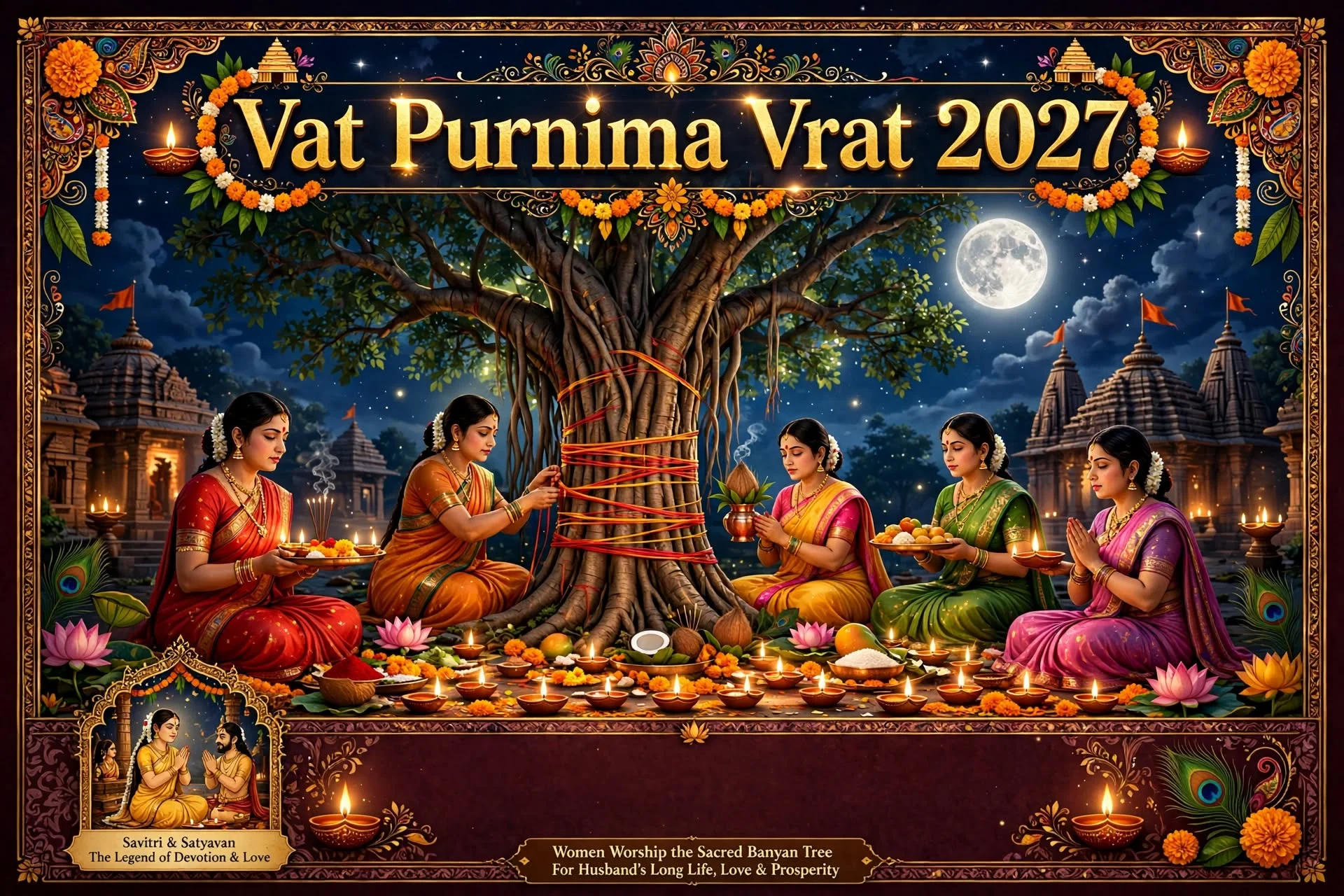
Vat Purnima Vrat
Vat Purnima Vrat, also known as Vat Savitri Purnima or Vata Pournima, is a traditional Hindu observance celebrated on Jyeshtha Shukla Purnima, the full-moon day of the Jyeshtha month. It is especially popular in Maharashtra, Gujarat, Goa and the Konkan region. The festival is associated with the devotion of Goddess Savitri towards her husband Satyavan and her encounter with Yama, the god of death.
View Festival Guide

Saturday, Jun 19, 2027
Ishti
Ishti is a foundational Vedic ritual observance appearing prominently in Hindu Panchangs on the Pratipada tithi (the first lunar day) following either Amavasya (new moon) or Purnima (full moon), marking the prescribed performance day for the fortnightly Vedic Darsha-Purnamasa sacrifices.
View Festival Guide
Tuesday, Jun 22, 2027
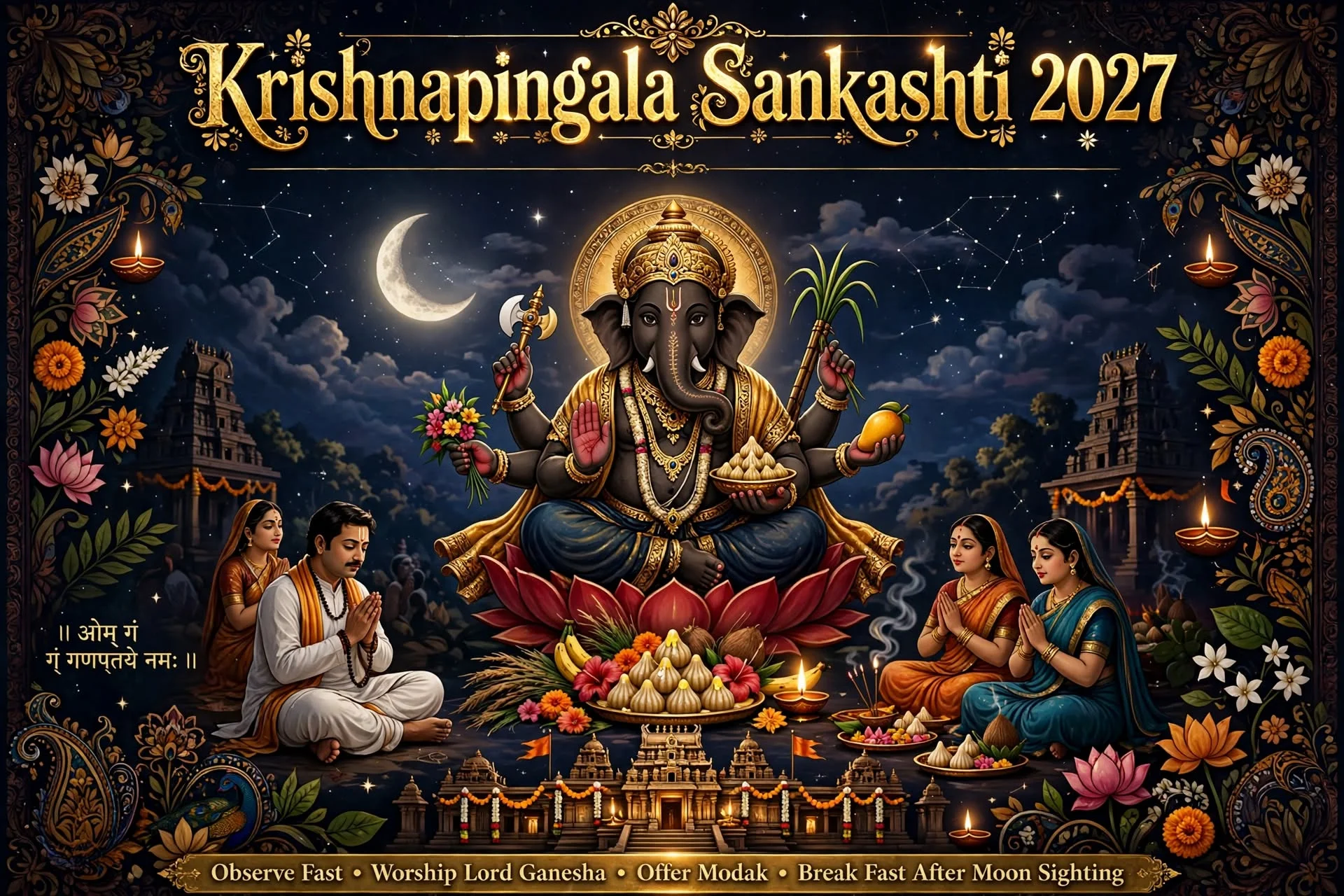
Krishnapingala Sankashti Chaturthi
Krishnapingala Sankashti Chaturthi is a sacred Hindu vrata dedicated to Lord Ganesha, observed on Krishna Paksha Chaturthi of the Jyeshtha month according to the Amanta Hindu calendar. In the Purnimanta calendar, the same lunar observance falls in Ashadha Krishna Paksha. It is one of the monthly Sankashti Chaturthi observances and is associated with the worship of Lord Ganesha in his Krishnapingala form.
View Festival Guide
Wednesday, Jun 30, 2027
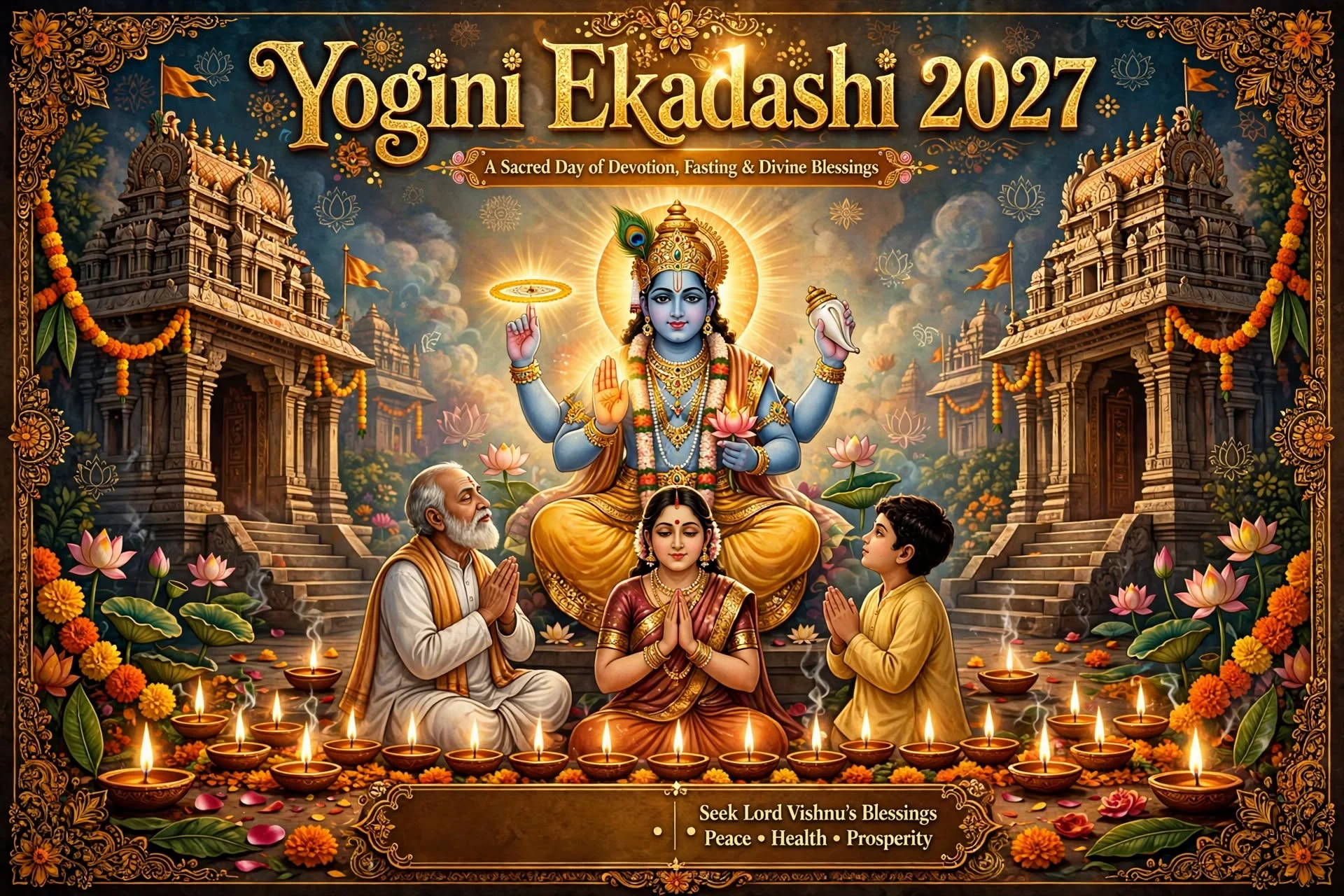
Yogini Ekadashi
Yogini Ekadashi is an important Hindu fasting observance dedicated to Lord Vishnu. It falls on the Ekadashi tithi, the eleventh lunar day of the Krishna Paksha of Ashadha month according to the Purnimanta calendar. In the Amanta calendar, the same observance is known as Jyeshtha Krishna Ekadashi. It occurs between Nirjala Ekadashi and Devshayani Ekadashi in the annual cycle of Ekadashi observances.
View Festival Guide
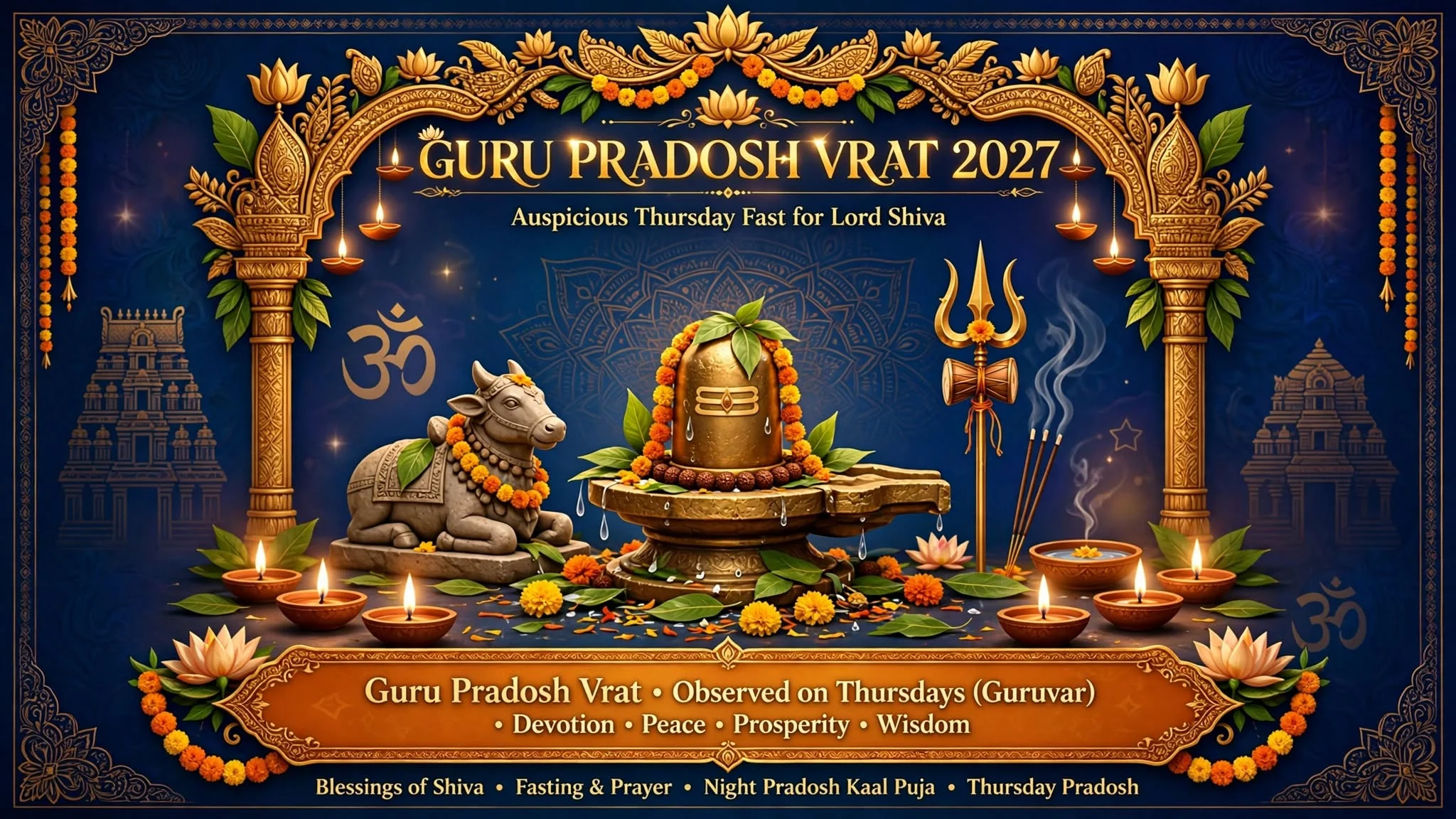
Thursday, Jul 1, 2027
Guru Pradosh Vrat
Guru Pradosh Vrat, also known as Guruvara Pradosham or Brihaspati Pradosham, is a sacred bimonthly Hindu fasting observance occurring when the Trayodashi tithi (thirteenth lunar day) coincides with a Thursday (Guruvara) during the twilight Pradosha Kaal period.
View Festival Guide
Saturday, Jul 3, 2027
Anvadhan
Anvadhan (अन्वाधान) is an ancient, highly revered Vedic ritual and spiritual observance in Sanatana Dharma performed on the day immediately preceding the New Moon (Amavasya) or Full Moon (Purnima). Rooted in the pristine traditions of the Shrauta and Grihya Sutras, Anvadhan literally translates to 'the solemn placing and replenishment of sacred fuel wood into the consecrated Vedic fires'. In traditional Vedic ritualism, householders (Grihasthas) and priests who maintain the sacred Agnihotra fires perform Anvadhan to prepare the sacrificial altars for the grand Darsha Yajna (New Moon sacrifice) or Paurnamasa Yajna (Full Moon sacrifice) scheduled for the following day.
View Festival Guide

Saturday, Jul 3, 2027
Darsha Amavasya
Darsha Amavasya is a significant new moon observance in the Hindu calendar designating the specific night when the Moon is completely invisible to the human eye, having fully merged into the conjunction of the Sun.
View Festival Guide