




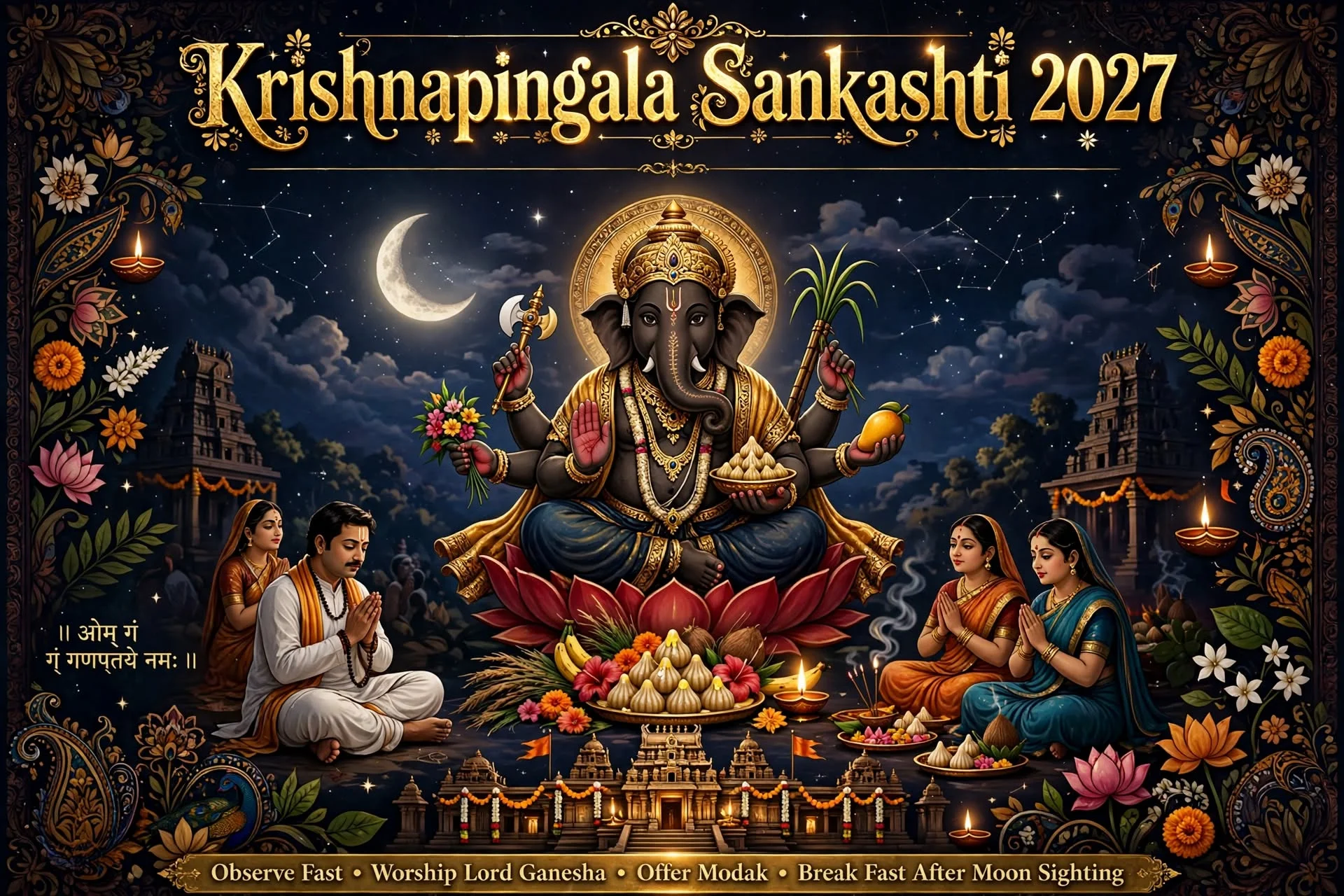
Krishnapingala Sankashti Chaturthi is a sacred Hindu vrata dedicated to Lord Ganesha, observed on Krishna Paksha Chaturthi of the Jyeshtha month according to the Amanta Hindu calendar. In the Purnimanta calendar, the same lunar observance falls in Ashadha Krishna Paksha. It is one of the monthly Sankashti Chaturthi observances and is associated with the worship of Lord Ganesha in his Krishnapingala form.
Krishnapingala Sankashti Chaturthi 2027: Date, Puja Timings, Rituals & Stories
Krishnapingala Sankashti Chaturthi Timings & Panchang
Important festival dates and auspicious timings
Usha Arghya (Sunrise)
06:52 am
Sandhya Arghya (Sunset)
06:17 pm
Start Date
Wednesday, 24 Feb 2027
Puja Muhurat
06:17 pm – 07:33 pm
Krishnapingala Sankashti Chaturthi
The name Krishnapingala combines the Sanskrit words Krishna, meaning dark, and Pingala, referring to a tawny, brownish or golden-brown complexion. Krishnapingala therefore identifies a distinctive form of Lord Ganesha traditionally described with a dark or tawny appearance. Devotees worship this form to seek the removal of obstacles, wisdom, prosperity, family welfare and success in righteous undertakings.
Sankashti is derived from the Sanskrit expression associated with deliverance from difficulties. Every lunar month has a Krishna Paksha Chaturthi known as Sankashti Chaturthi. Devotees traditionally observe a fast during the day, worship Lord Ganesha and offer prayers in the evening. The fast is generally concluded after sighting the Moon and performing the prescribed Chandra Arghya, subject to the applicable regional tradition.
The traditional Krishnapingala Sankashti Vrat Katha narrates the story of King Mahijit of Mahishmati. Although he was a righteous and generous ruler, he had no child. Following the advice of Sage Lomash, the King observed the Krishnapingala Ganesha vrata and performed charity. According to the story, Lord Ganesha blessed the King and Queen Sudakshina with a virtuous son.
This vrata teaches the importance of devotion, discipline, charity and faith. It encourages devotees to seek Lord Ganesha's blessings before undertaking important responsibilities and to cultivate wisdom, patience and perseverance when facing difficulties.
Krishnapingala Sankashti Chaturthi is observed according to the local lunar calendar and moonrise. Its Gregorian date changes every year. The exact fasting date, Chaturthi tithi and moonrise should therefore be determined using a location-specific Panchang rather than a fixed calendar date.
Why is Krishnapingala Sankashti Chaturthi Celebrated?
Krishnapingala Sankashti Chaturthi is observed to worship Lord Ganesha and seek his blessings for the removal of obstacles, prosperity, wisdom and the fulfilment of righteous desires. The vrata is especially associated with the Krishnapingala form of Ganesha and the traditional story of King Mahijit, whose sincere observance is followed by the blessing of a child.
Devotees observe fasting, perform Ganesha puja, recite sacred prayers and listen to the Krishnapingala Sankashti Vrat Katha. The observance also provides an opportunity to practise self-discipline, gratitude, charity and spiritual reflection.
- To worship Lord Ganesha in his Krishnapingala form.
- To seek the removal of obstacles, difficulties and hindrances.
- To pray for wisdom, intelligence, patience and success in righteous activities.
- To seek blessings for family happiness, prosperity and well-being.
- To remember the traditional story of King Mahijit and his devotion to Lord Ganesha.
- To seek blessings for progeny and family continuity, as described in the traditional Vrat Katha.
- To practise fasting, prayer, self-restraint and spiritual discipline.
- To perform charity and help people in need.
- To strengthen devotion towards Lord Ganesha through mantra recitation and worship.
History and Origin of Krishnapingala Sankashti Chaturthi
Krishnapingala Sankashti Chaturthi belongs to the traditional cycle of monthly Ganesha vrata observances. Each Krishna Paksha Chaturthi is associated with a particular name and form of Lord Ganesha. Krishnapingala Sankashti is connected with the Jyeshtha Krishna Chaturthi in the Amanta calendar, corresponding to Ashadha Krishna Chaturthi in the Purnimanta calendar.
The traditional Vrat Katha is presented as a dialogue involving Goddess Parvati and Lord Ganesha. Parvati asks about the significance, worship and story of the Ashadha Krishna Chaturthi observance. Lord Ganesha then recounts the account previously narrated by Lord Krishna to King Yudhishthira. The story centres on King Mahijit, Sage Lomash and the blessings obtained through the observance of the Ganesha vrata.
The Righteous King Mahijit
In ancient times, King Mahijit ruled the kingdom of Mahishmati. He was known as a virtuous, generous and responsible ruler who cared for his subjects as a father cares for his children. He governed his kingdom according to dharma, protected the people and supported religious and charitable activities.
Despite his prosperity and good reputation, the King remained unhappy because he had no child. His childlessness troubled him deeply, and he worried about the future of his family and the continuation of his royal lineage.
The King had already performed various religious activities, including austerities, donations and yajnas, in the hope of receiving the blessing of a child. However, his efforts had not brought the desired result. As he grew older, his concern increased.
The King Seeks Guidance
Unable to find a solution, King Mahijit called learned Brahmins, wise people and respected members of his kingdom. He explained his distress and asked why he had remained childless despite attempting to rule justly and perform religious duties.
The Brahmins and citizens were devoted to their King because he had protected them, supported righteous conduct and worked for the welfare of the kingdom. They decided that they should seek guidance from a spiritually accomplished sage who could suggest an appropriate vrata or religious observance.
Spiritual Significance of Krishnapingala Sankashti Chaturthi
Krishnapingala Sankashti Chaturthi represents devotion to Lord Ganesha, the deity traditionally worshipped before important undertakings and revered as the remover of obstacles. The observance encourages devotees to develop wisdom, discipline, patience and faith while dealing with challenges in life.
The traditional story of King Mahijit gives the vrata an additional significance connected with family welfare, progeny, prosperity and the importance of seeking spiritual guidance. It teaches that sincere devotion should be accompanied by righteous conduct, charity and responsibility.
Worship of Lord Krishnapingala
Krishnapingala is a distinctive form of Lord Ganesha worshipped on this Sankashti Chaturthi. The name refers to a dark or tawny complexion. Devotees remember this form while offering prayers for the removal of difficulties and the development of clarity and wisdom.
The worship reminds devotees that obstacles can be approached with patience, understanding and determination. Lord Ganesha is invoked at the beginning of religious ceremonies and important activities because he represents auspicious beginnings and the ability to overcome hindrances.
Meaning of Sankashti
Sankashti Chaturthi is traditionally associated with relief from difficulties. The observance encourages devotees to surrender their worries to Lord Ganesha while making sincere efforts to fulfil their responsibilities.
The vrata is a reminder that faith should be accompanied by thoughtful decisions and disciplined action. Devotees use the day for prayer, reflection and renewal of their commitment to righteous conduct.
Fasting and Self-Discipline
Fasting is an important practice associated with Sankashti Chaturthi. Devotees traditionally observe restraint in food and other activities, devote time to worship and conclude the fast according to the applicable moonrise tradition.
How Krishnapingala Sankashti Chaturthi Is Celebrated
Krishnapingala Sankashti Chaturthi is celebrated through fasting, worship of Lord Ganesha, recitation of devotional mantras, listening to the Vrat Katha and offering prayers after moonrise. The exact ritual sequence differs among regions and households, but devotion to Lord Ganesha remains central to the observance.
Devotees generally begin the day with a bath and a sankalpa to observe the vrata. They maintain a fast during the day, arrange the puja materials and worship Lord Ganesha in the evening. The traditional story of King Mahijit is read or heard before the fast is concluded according to the local moonrise practice.
Morning Preparation and Sankalpa
Devotees wake up early, bathe and wear clean clothes. The puja area is cleaned and an image or idol of Lord Ganesha is arranged. A personal sankalpa is taken to observe the fast with devotion and seek the blessings of Lord Krishnapingala.
Some devotees begin the day with a short prayer to Lord Ganesha and recite his names or a familiar Ganesha mantra. The day's activities are approached with discipline and a prayerful attitude.
Observing the Fast
Devotees traditionally fast during the day. Depending on family custom, the fast may involve complete abstinence from food, a fruit-based fast or a permitted fasting diet. Some devotees avoid regular grains and meals until the evening worship and moonrise.
The fasting method is not identical in every community. People who are unwell, pregnant, elderly, taking medication or unable to fast safely may follow a suitable alternative.
Evening Ganesha Puja
In the evening, devotees prepare the puja materials and worship Lord Ganesha. An image or idol is placed on a clean platform, and the worship may be performed with sixteen traditional offerings known as Shodashopachara Puja.
Krishnapingala Sankashti Chaturthi Puja Vidhi (Step by Step)
- 1
Wake Up Early and Take a Bath
Wake up early on Krishnapingala Sankashti Chaturthi and take a bath. Wear clean clothes and prepare the worship area. Begin the day with a prayer to Lord Ganesha and maintain a devotional state of mind.
- 2
Take the Vrat Sankalpa
Sit before the image or idol of Lord Ganesha and take a personal sankalpa to observe the vrata with devotion. Pray to Lord Krishnapingala for wisdom, the removal of obstacles, family welfare and spiritual progress.
- 3
Observe the Fast
Observe the fast according to the family or regional tradition. Some devotees abstain from food, while others follow a fruit-based or permitted fasting diet. Maintain restraint and spend time in prayer, mantra recitation and devotional activities.
- 4
Prepare the Ganesha Puja Area
Clean the puja area and place an image or idol of Lord Ganesha on a clean platform. Arrange flowers, durva grass, sandalwood paste, turmeric, kumkum, incense, a lamp, fruits and naivedya.
- 5
Krishnapingala Sankashti Chaturthi Puja Samagri List
Ganesha Worship Essentials
- Image or idol of Lord Ganesha
- Clean puja platform or chowki
- Red or yellow cloth for the platform
- Flowers and flower garland
- Durva grass
- Akshata (unbroken rice grains)
- Turmeric powder
- Kumkum or vermilion
- Sandalwood paste
- Incense sticks
- Cotton wicks
- Oil or ghee for the lamp
- Camphor, if used in the family tradition
Offerings for Lord Krishnapingala
Prepare suitable vegetarian offerings for Lord Ganesha. Modak is a well-known traditional offering, while fruits and other sweets may also be used according to household practice.
- Modak
- Laddu or other traditional sweets
- Coconut
- Bananas
- Seasonal fruits
- Jaggery
Mantras and Prayers for Krishnapingala Sankashti Chaturthi
Krishnapingala Sankashti Chaturthi Vrat Rules and Fasting Guidelines
Rules for Observing the Fast
Devotees traditionally observe a fast on Krishnapingala Sankashti Chaturthi and worship Lord Ganesha in the evening. The fast is commonly concluded after moonrise and the prescribed Chandra Arghya. The precise fasting method can differ according to regional and family traditions.
- Wake up early and take a bath before beginning the observance.
- Take a sankalpa to observe the vrata with devotion.
- Worship Lord Ganesha and remember his Krishnapingala form.
- Observe a complete or partial fast according to one's capacity and tradition.
- Spend time in prayer, mantra recitation and devotional reading.
- Read or listen to the Krishnapingala Sankashti Vrat Katha.
- Perform evening Ganesha puja.
- Offer Arghya to the Moon after moonrise according to local practice.
- Conclude the fast according to the customary procedure.
Food and Dietary Observances
Dietary rules vary among devotees. Some observe a strict fast, while others consume fruits, milk or foods permitted under their family's fasting tradition. Many devotees avoid regular grains and meals during the fasting period. No single food rule should be treated as compulsory for every community.
- Fruits and milk may be consumed by devotees following a fruit-based fast.
- Some traditions permit specific fasting preparations.
Dos and Don'ts of Krishnapingala Sankashti Chaturthi
Good Practices (Do's)
- Begin the day with a bath and a prayer to Lord Ganesha.
- Take a sincere sankalpa before beginning the vrata.
- Worship Lord Ganesha in his Krishnapingala form.
- Offer durva grass, flowers, fruits and suitable naivedya.
- Recite Ganesha mantras with devotion.
- Read or listen to the Krishnapingala Sankashti Vrat Katha.
Krishnapingala Sankashti Chaturthi Across Regions
| Region | Local Name |
|---|---|
| Maharashtra | Krishnapingala Sankashti Chaturthi |
| Rajasthan | Krishnapingala Sankashti |
| North India | Krishnapingala Sankashti Chaturthi |
| Gujarat | Sankashti Chaturthi |
| South India | Sankashti Chaturthi |
Krishnapingala Sankashti Chaturthi FAQs
What is Krishnapingala Sankashti Chaturthi?
Krishnapingala Sankashti Chaturthi is a monthly Hindu vrata dedicated to Lord Ganesha. It is observed on Krishna Paksha Chaturthi of Jyeshtha month in the Amanta calendar, corresponding to Ashadha Krishna Chaturthi in the Purnimanta calendar. Devotees worship Lord Ganesha in his Krishnapingala form and traditionally fast until the prescribed moonrise ritual.
Who is worshipped on Krishnapingala Sankashti Chaturthi?
Lord Ganesha is worshipped in his Krishnapingala form. The name refers to a dark or tawny complexion traditionally associated with this form of the deity.
When is Krishnapingala Sankashti Chaturthi observed?
It is observed on Jyeshtha Krishna Chaturthi according to the Amanta calendar or Ashadha Krishna Chaturthi according to the Purnimanta calendar. Its Gregorian date changes every year and should be determined using a local Panchang.
Upcoming Festivals
View All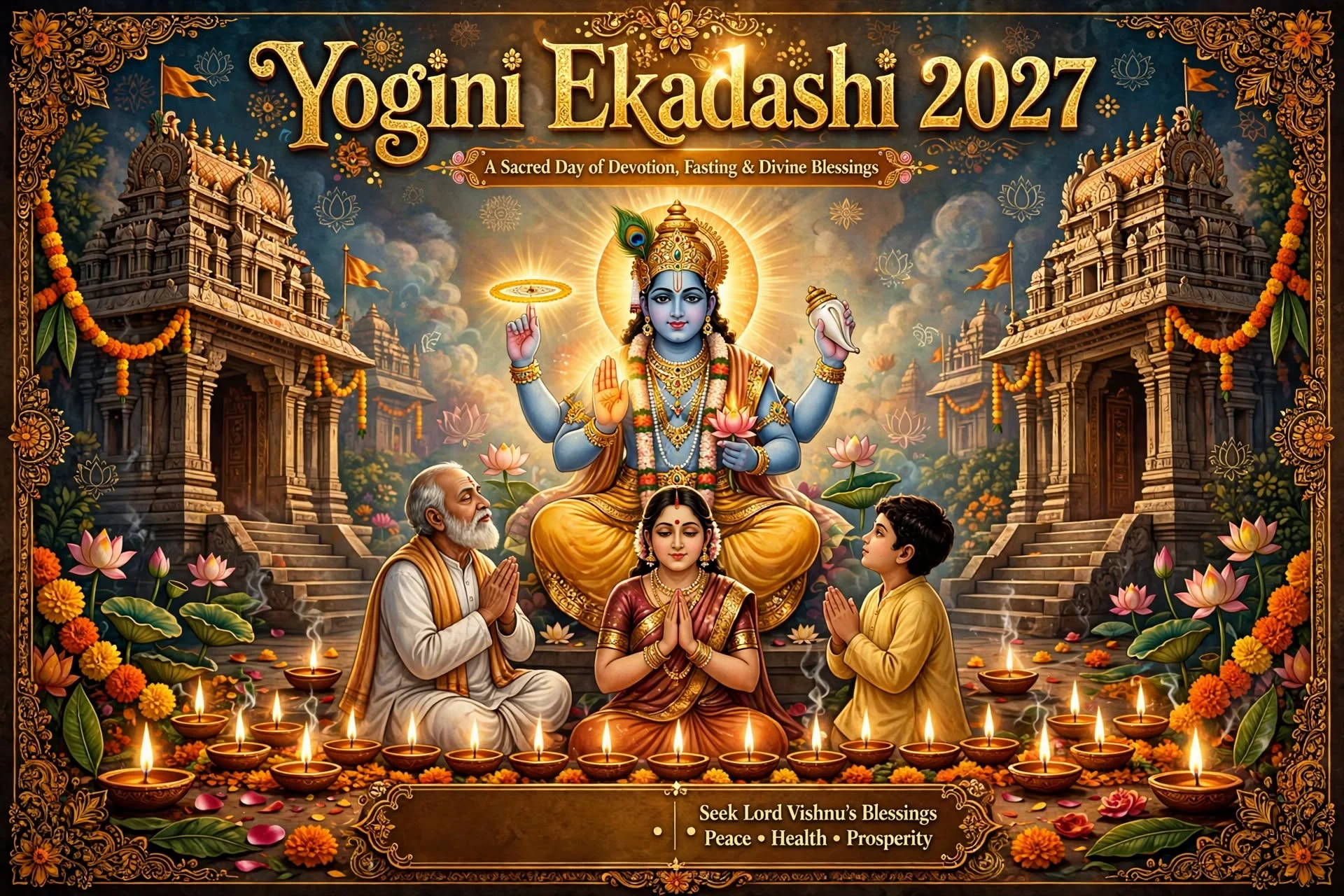
Wednesday, Jun 30, 2027
Yogini Ekadashi
Yogini Ekadashi is an important Hindu fasting observance dedicated to Lord Vishnu. It falls on the Ekadashi tithi, the eleventh lunar day of the Krishna Paksha of Ashadha month according to the Purnimanta calendar. In the Amanta calendar, the same observance is known as Jyeshtha Krishna Ekadashi. It occurs between Nirjala Ekadashi and Devshayani Ekadashi in the annual cycle of Ekadashi observances.
View Festival Guide
Thursday, Jul 1, 2027
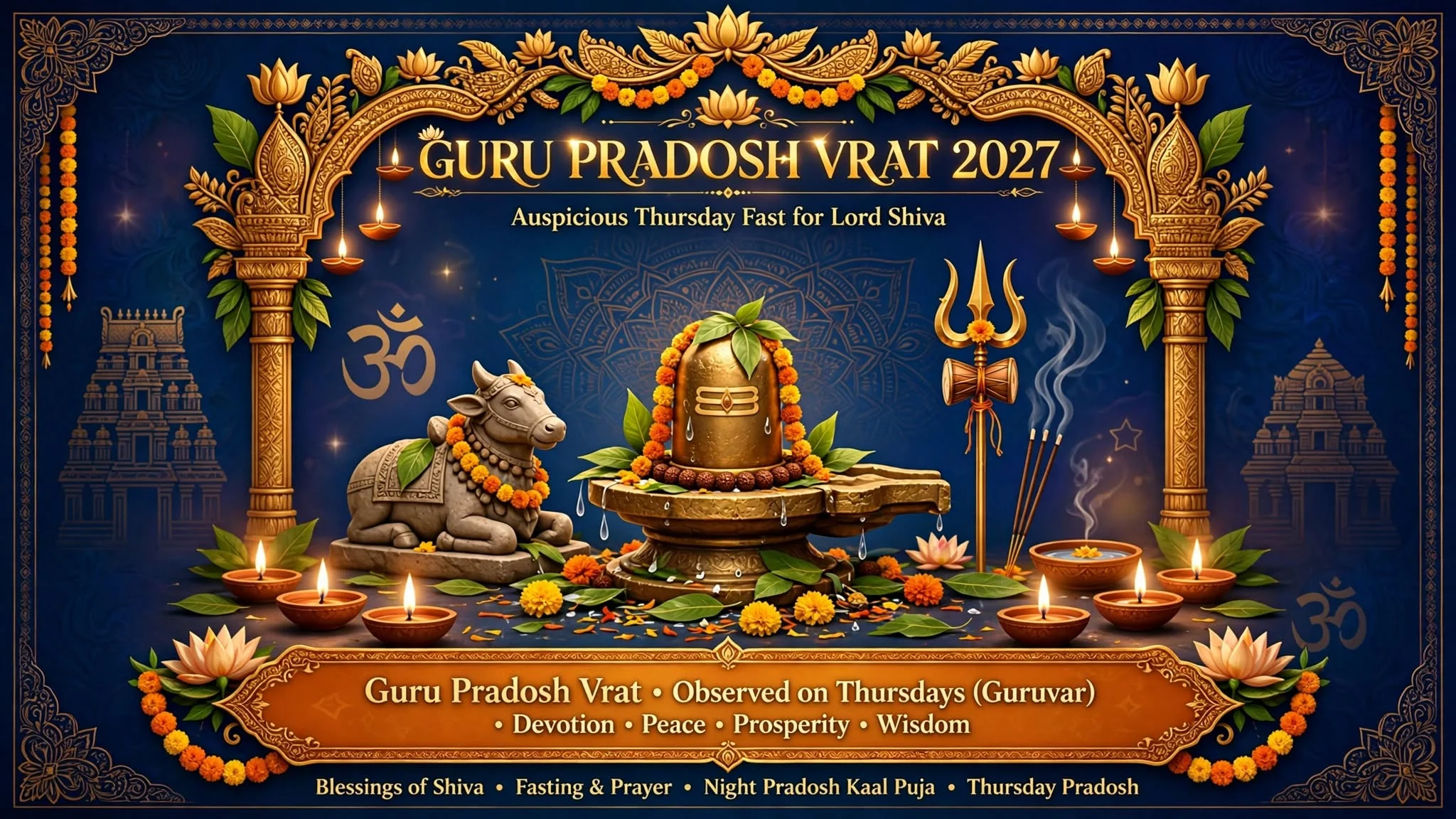
Guru Pradosh Vrat
Guru Pradosh Vrat, also known as Guruvara Pradosham or Brihaspati Pradosham, is a sacred bimonthly Hindu fasting observance occurring when the Trayodashi tithi (thirteenth lunar day) coincides with a Thursday (Guruvara) during the twilight Pradosha Kaal period.
View Festival Guide

Saturday, Jul 3, 2027
Anvadhan
Anvadhan (अन्वाधान) is an ancient, highly revered Vedic ritual and spiritual observance in Sanatana Dharma performed on the day immediately preceding the New Moon (Amavasya) or Full Moon (Purnima). Rooted in the pristine traditions of the Shrauta and Grihya Sutras, Anvadhan literally translates to 'the solemn placing and replenishment of sacred fuel wood into the consecrated Vedic fires'. In traditional Vedic ritualism, householders (Grihasthas) and priests who maintain the sacred Agnihotra fires perform Anvadhan to prepare the sacrificial altars for the grand Darsha Yajna (New Moon sacrifice) or Paurnamasa Yajna (Full Moon sacrifice) scheduled for the following day.
View Festival Guide

Saturday, Jul 3, 2027
Darsha Amavasya
Darsha Amavasya is a significant new moon observance in the Hindu calendar designating the specific night when the Moon is completely invisible to the human eye, having fully merged into the conjunction of the Sun.
View Festival Guide
Sunday, Jul 4, 2027
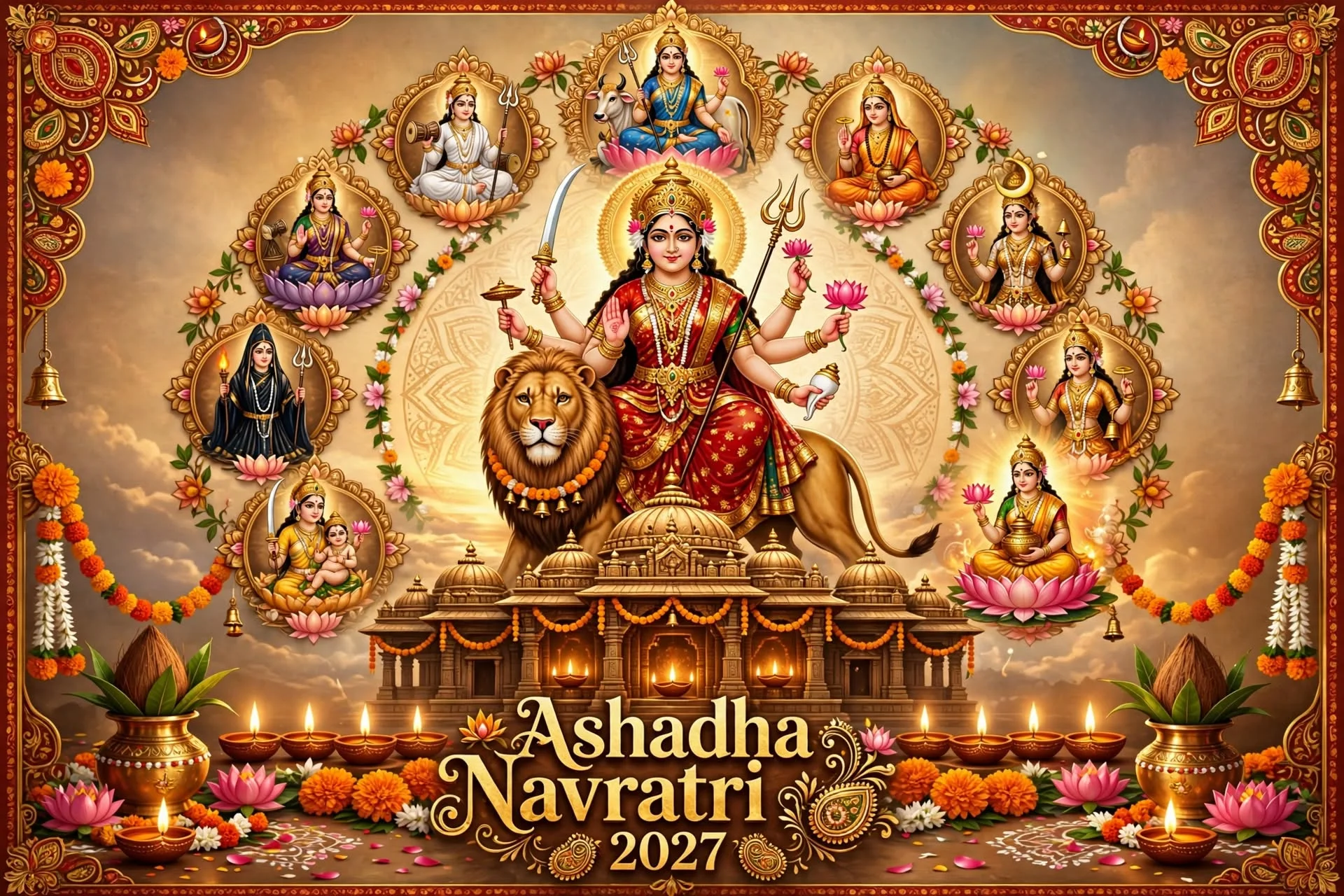
Ashadha Navratri
Ashadha Navratri, prominently revered across Shakta and Tantric traditions as Ashadha Gupta Navratri or Varahi Navratri, is a sacred nine-night festival commencing on the Pratipada (first lunar day) and culminating on the Navami (ninth lunar day) of the Shukla Paksha in the Hindu lunar month of Ashadha (occurring in July). While Sharad Navratri (autumn) and Chaitra Navratri (spring) are widely celebrated as public socio-cultural festivals, the two secret or 'Gupta' Navratris—observed in the months of Magha and Ashadha—are esoteric, contemplative periods primarily dedicated to intensive Shakta Sadhana, internal Kundalini awakening, and deep Tantric communion with the Supreme Divine Mother.
View Festival Guide

Sunday, Jul 4, 2027
Ishti
Ishti is a foundational Vedic ritual observance appearing prominently in Hindu Panchangs on the Pratipada tithi (the first lunar day) following either Amavasya (new moon) or Purnima (full moon), marking the prescribed performance day for the fortnightly Vedic Darsha-Purnamasa sacrifices.
View Festival Guide
Sunday, Jul 4, 2027
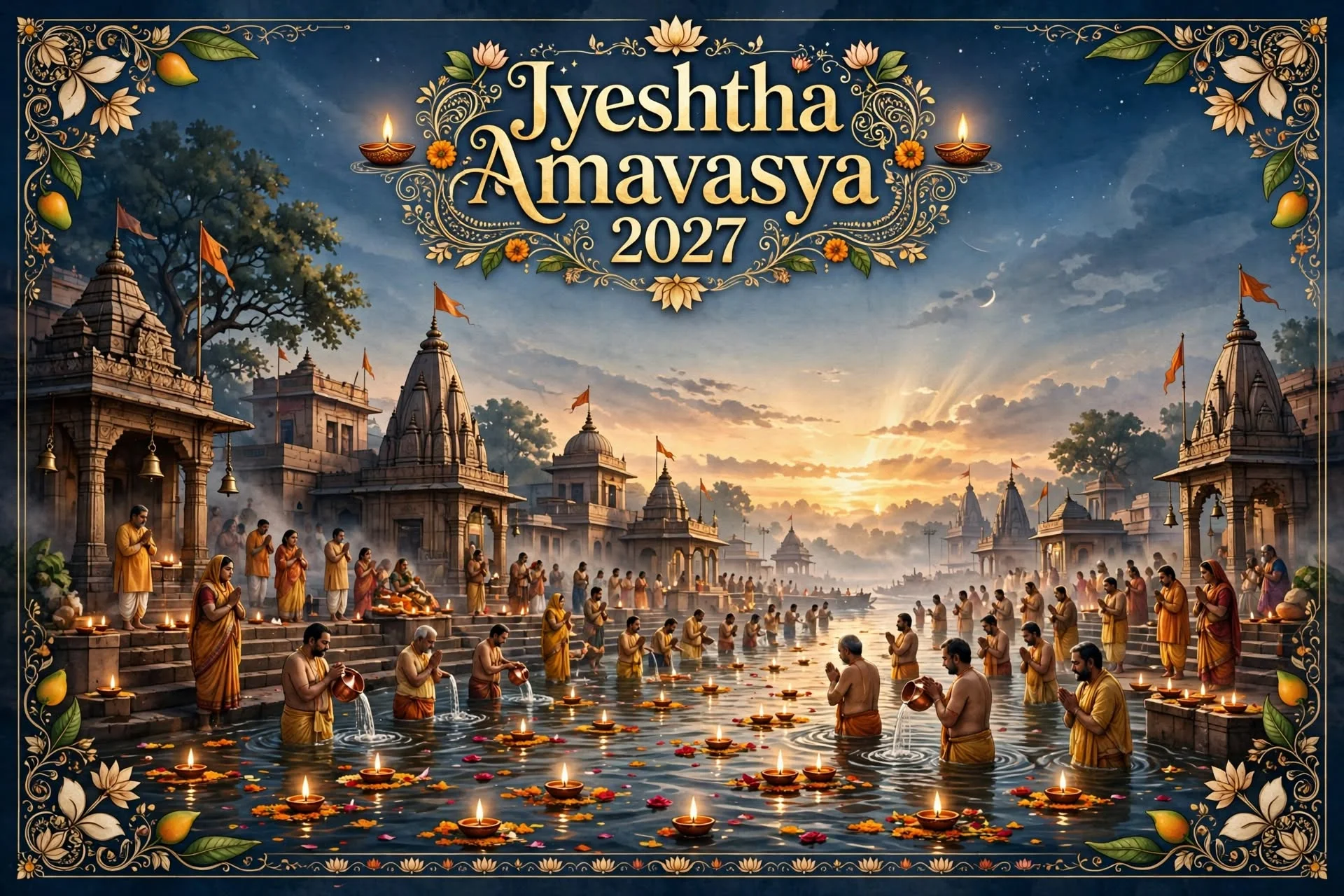
Jyeshtha Amavasya
Jyeshtha Amavasya is the sacred new moon tithi that marks the culmination of the Krishna Paksha in the Hindu lunar month of Jyeshtha according to the Amavasyanta calendar, transitioning into the sacred monsoon month of Ashadha in the Gregorian calendar month of July. In Hindu cosmology, Amavasya is governed by the Pitrus (ancestral souls) and Aryaman, the presiding solar deity of ancestral realms. As the sun and moon align in perfect celestial conjunction, cosmic spiritual energies become inward-flowing, rendering this day uniquely potent for ancestral veneration, planetary purification, and austere introspective sadhana.
View Festival Guide
Monday, Jul 5, 2027
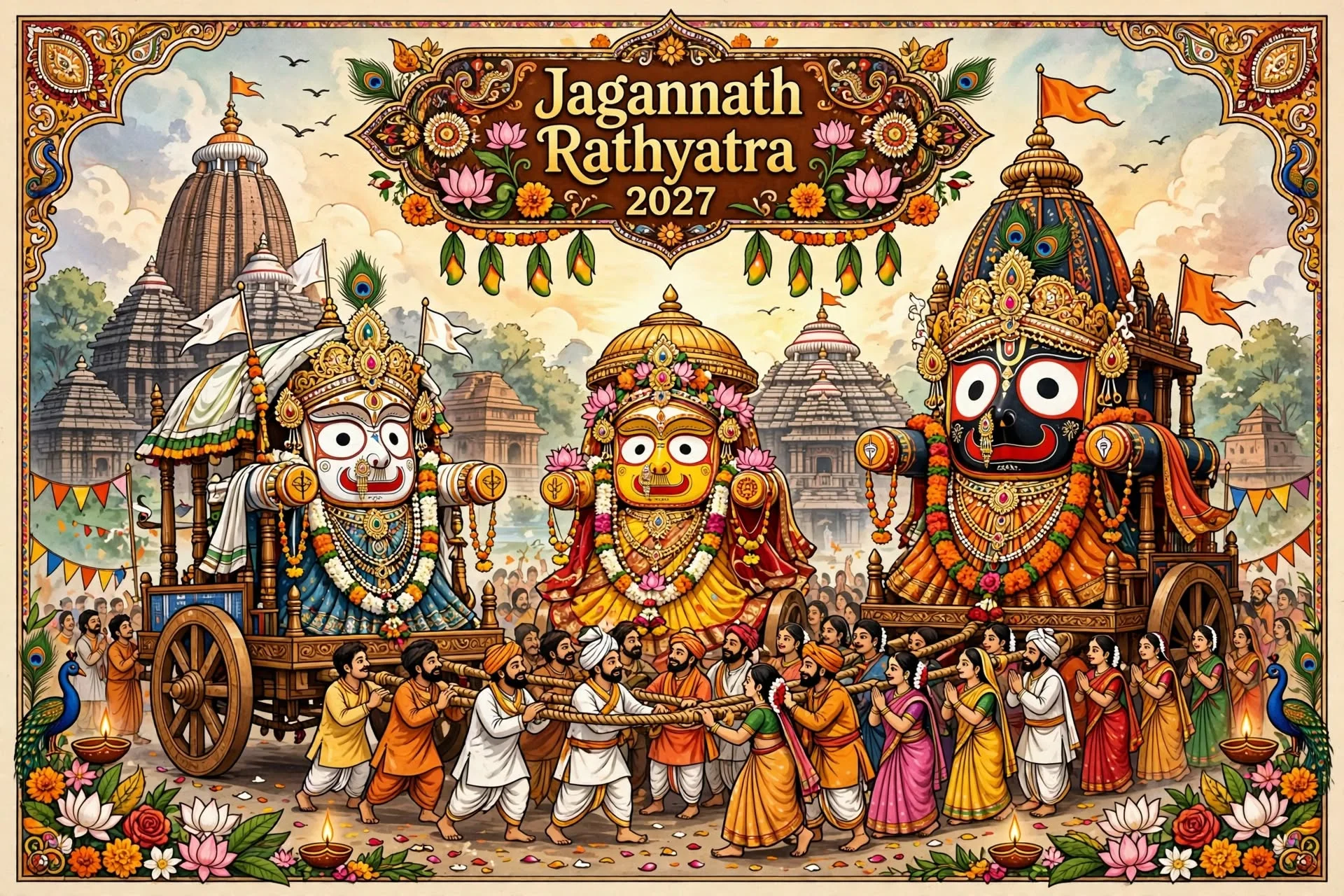
Jagannath Rathyatra
Jagannath Rathyatra, celebrated with cosmic majesty on the Dwitiya tithi (second lunar day) of Shukla Paksha in the Hindu month of Ashadha (occurring in July), is one of the most ancient, grandest, and spiritually celebrated chariot festivals on earth. Originating from the sacred coastal city of Puri (Srikshetra / Jagannath Puri) in Odisha, this monumental nine-day event marks the celestial journey of Bhagwan Jagannath—the Lord of the Universe and an affectionate manifestation of Lord Sri Krishna—accompanied by His elder brother Lord Balabhadra (Balarama) and His younger sister Devi Subhadra, from their magnificent 12th-century shrine (Srimandir) to their ancestral garden abode at the Gundicha Temple, situated three kilometers away.
View Festival Guide