




Magha Purnima, widely celebrated as Maghi Purnima or Maha Maghi, is the culminating and most spiritually radiant full moon festival in the Hindu liturgical calendar, falling in the holy month of Magha (January–February).
Magha Purnima 2027: Date, Puja Timings, Rituals & Stories

Magha Purnima Timings & Panchang
Important festival dates and auspicious timings
Usha Arghya (Sunrise)
06:56 am
Sandhya Arghya (Sunset)
06:15 pm
Start Date
Saturday, 20 Feb 2027
Puja Muhurat
11:14 am – 08:00 am
Magha Purnima
It marks the grand conclusion of the sacred month-long 'Magha Snana' and the austere 'Kalpavas' spiritual vows observed by millions of pilgrims, ascetics, and sadhus at the holy Triveni Sangam in Prayagraj and along the sacred banks of the Ganga, Yamuna, Godavari, and Narmada rivers.
According to the Matsya Purana and Brahma Purana, Lord Vishnu personally resides in the waters of the sacred river Ganga throughout this day; taking a purificatory holy dip and donating food and blankets on Magha Purnima is scripturally declared to yield the spiritual merit of performing thousands of Ashvamedha sacrifices.
Devotees observe a day-long fast, perform the sacred Sri Satyanarayan Vrata Katha, worship Goddess Lakshmi, offer Arghya to the resplendent full moon at night, float earthen lamps on sacred rivers (Deep-Dana), and feed Brahmins and the poor to invite divine grace, liberation, and prosperity.
Why is Magha Purnima Celebrated?
Magha Purnima is celebrated to commemorate the cosmic presence of Lord Vishnu and the celestial assembly of deities who are believed to descend in subtle forms to bathe in the holy waters of the Triveni Sangam on this day.
The festival honors the spiritual culmination of the austere month of Magha, transforming the merits of prolonged dawn bathing, mantra japa, and self-restraint into permanent karmic liberation (Moksha) and divine blessings.
- To take the supreme purificatory holy bath (Maha Snana) in sacred rivers, washing away accumulated sins of past lifetimes.
- To conclude the month-long ascetic Kalpavas vows observed along the banks of the sacred Triveni Sangam.
- To perform the auspicious Sri Satyanarayan Vrata and recitation of the sacred Puranic narrative.
- To honor Goddess Lakshmi and Chandra Dev under the radiant fullness of the Magha moon.
- To engage in universal charity (Dana) of sesame seeds, food grains, warm clothing, and gold or silver to the needy.
Scriptural Roots and Sacred Legends of Magha Purnima
The Descent of Deities at Prayagraj in the Matsya Purana
The Matsya Purana and the Padma Purana describe Magha Purnima as the day when all celestial devas, gandharvas, yakshas, and ancestral pitrus assume invisible subtle forms and descend to the confluence of the Ganga, Yamuna, and Saraswati at Prayagraj to take their holy ablutions.
Lord Vishnu declared to the sages that whoever bathes in the sacred Sangam on Magha Purnima with deep devotion attains instant purification from sins committed across millions of lifetimes, achieving the spiritual destination of Vaikuntha without the tribulation of intermediate rebirths.
The Legend of King Kantadeva and the Power of Charity
A celebrated historical narrative recorded in the Brahma Purana relates the story of King Kantadeva of the Solar dynasty. Proud of his military might and vast treasury, the king neglected charitable works and ancestral duties, resulting in his gradual loss of health, royal vigor, and mental peace.
Distressed by his physical decline, Kantadeva consulted his venerable royal preceptor, Sage Vasishtha. The sage revealed that physical ailments and loss of sovereignty stem from stinginess and lack of charity. Vasishtha advised the king to observe the sacred fast of Magha Purnima, bathe at the confluence of holy rivers, feed thousands of hungry souls, and donate cows, land, and gold vessels filled with sesame seeds.
King Kantadeva observed the rites on Magha Purnima with profound humility and total generosity. Upon completing the grand Dana, his debilitating diseases vanished, his royal luster was restored, and his kingdom was blessed with unprecedented agricultural abundance, establishing the timeless sanctity of charitable giving on this full moon.
Source: Matsya Purana, Padma Purana (Uttara Khanda), and Brahma Purana (Kshetra Mahatmya)
Metaphysical, Cosmological, and Philanthropic Dimensions
The Full Moon as the Fulfillment of Consciousness
In Vedic philosophy, Purnima (the full moon) represents the complete, unshadowed illumination of the mind (Manas) by the light of the inner soul (Atman). The month of Magha, governed by austerity and cold, reaches its luminous culmination on Magha Purnima, symbolizing the triumph of disciplined sadhana over physical inertia.
The combination of the Sun in Aquarius (Kumbha) and the Moon in Leo (Simha) in Magha Nakshatra (governed by the Pitrus) creates an extraordinary energetic convergence for balancing individual sovereignty with ancestral harmony.
The Mysticism of Deep-Dana (Floating River Lamps)
At twilight on Magha Purnima, thousands of small earthen lamps fueled with ghee or sesame oil are lit and floated upon flowing sacred rivers. This act represents offering the light of individual consciousness to the cosmic river of divine existence, guiding ancestral souls and dispelling darkness from terrestrial realms.
The Transformative Grace of Sri Satyanarayan
- Lord Satyanarayan personifies the eternal supremacy of Truth (Satya) over transient worldly illusion (Maya).
- Hearing the sacred Katha instills honesty in trade, harmony in marriage, and spiritual contentment.
- Promotes selfless hospitality, universal feeding (Annadana), and communal harmony.
Practical Protocol, Ritual Sequencing, and Pilgrimage Observances
The Maha Snana at Dawn and Kalpavas Concluding Rites
Observance begins before sunrise during Brahma Muhurta. In Prayagraj, Haridwar, Kashi, and coastal shrines, millions gather on the riverbanks to take the auspicious 'Maha Snana'. Devotees bathing at home add consecrated Gangajal and black sesame seeds to clean water.
For Kalpavasis who have resided in tents on the riverbanks observing strict vows of single daily meals and scriptural study for the entire month, Magha Purnima marks the triumphant conclusion of their penance with grand yajnas and feeding of sadhus.
Sri Satyanarayan Vrata and Domestic Worship
In the afternoon or early evening, families assemble around a sanctified wooden altar draped in yellow cloth and decorated with banana plantain stems. A Shaligram or idol of Lord Vishnu is consecrated and worshiped with Panchamrit, sandalwood paste, and Tulsi leaves.
The five chapters of the Sri Satyanarayan Vrata Katha are recited aloud in the presence of family and friends, accompanied by the singing of devotional hymns and the offering of Panjiri and Panchamrit prasad.
Full Moon Arghya, Deep-Dana, and Feast Completion
As the brilliant full moon rises on the eastern horizon, devotees offer Arghya using a silver or brass vessel filled with raw cow milk, water, white sandalwood, and white flowers, chanting the Chandra Gayatri.
Devotees float earthen lamps (Deep-Dana) on sacred water bodies or place them at the home threshold. The fast is broken with family members partaking in the sanctified Satyanarayan prasad, sweet kheer, and a wholesome vegetarian feast.
Magha Purnima Puja Vidhi (Step by Step)
- 1
Brahma Muhurta Jagaran and Magha Maha Snana
Wake before dawn during Brahma Muhurta. Proceed to a flowing sacred river or add drops of holy Gangajal and black sesame seeds to your bathing water at home. Bathe with pure reverence while reciting the sacred river invocation: 'Gange Cha Yamune Chaiva Godavari Saraswati, Narmade Sindhu Kaveri Jalesmin Sannidhim Kuru'. Dress in clean traditional yellow or white attire.
- 2
Surya Arghya and Morning Invocations
Fill a pure copper lota with clean water, red sandalwood paste, a red flower, and unbroken rice (Akshata). Stand facing the rising Sun, raise the vessel above your forehead, and pour water in a continuous stream while reciting the Surya Gayatri or 'Om Suryaya Namah'.
- 3
Magha Purnima Maha Sankalpa (Solemn Vow)
Sit on a clean wool or kusha asana facing East. Take water, unbroken rice, yellow flowers, and a Tulsi leaf in your right palm. Recite the day's tithi (Magha Purnima), your gotra, and make a formal vow (Sankalpa) to observe the full moon fast, worship Lord Satyanarayan, and distribute charity for family welfare and spiritual elevation.
- 4
Satyanarayan Altar and Mandap Setup
Place a wooden chauki (platform) draped with an unstitched yellow cloth. Erect four fresh banana plantain stems (Kadali Stambha) around the four corners of the platform. Install a sacred Kalash filled with pure water, mango leaves, and a coconut wrapped in red cloth in the center, placing a Shaligram Shila or idol of Lord Vishnu on a golden or brass plate.
Magha Purnima Puja Samagri List
Satyanarayan Mandap and Kalash Essentials
Specific botanical and sacred structures required to erect the traditional Satyanarayan altar on Magha Purnima.
- Four fresh small banana plantain trees (Kadali Stambha) to tie to altar corners
- Clean wooden platform (Chauki) draped in unstitched bright yellow cloth
- Copper or brass Kalash with pure water, five mango leaves, and a coconut wrapped in red thread
- Consecrated Shaligram Shila, Lord Vishnu idol, or Sri Satyanarayan portrait
- Pure holy water (Gangajal) and copper lota
Botanical Offerings and Sacred Embellishments
Auspicious flowers, sandalwoods, and herbs dear to Lord Vishnu.
- Fresh, unblemished Tulsi leaves and sacred Tulsi Manjari in abundance
- Yellow sandalwood paste (Hari Chandan) and Kumkum
- Unbroken white rice grains (Akshata) mixed with turmeric
- Fresh yellow marigold garlands and loose flowers (roses, white lotus)
- Yellow ceremonial cotton cloth (Pitambara) and sacred thread (Janeu)
- Pure natural sandalwood attar (perfume)
Special Sapad-Bhakshya Prasad Ingredients
Mantras and Prayers for Magha Purnima
Magha Purnima Vrat Rules and Fasting Guidelines
Purnima Fasting Regulations
On Magha Purnima, practitioners observe fasting from sunrise until the evening worship and sighting of the full moon:
- Bathe before dawn during Brahma Muhurta in flowing sacred water or with Gangajal.
- Fast from morning until the conclusion of the evening Satyanarayan Puja and moonrise Arghya.
- Strictly avoid all non-vegetarian items, eggs, alcohol, tobacco, onions, garlic, and stale foods.
- Do not consume food prepared with common sea salt during the daylight hours of the fast.
Satyanarayan Katha and Prasad Injunctions
- Prepare the sacred Sapad-Bhakshya prasad in proportional measures (one and a quarter measures of flour, ghee, sugar, and banana).
- Never leave the Katha midway or disrespect the offered prasad.
- Listen to all five chapters of the Puranic narrative with full focus and devotion alongside family.
- Distribute prasad generously to neighbors, friends, and the poor before taking one's own share.
Parana and Fast Completion
The fast is completed after offering Arghya to the full moon, floating lamps (Deep-Dana), and performing Karpura Aarti. Devotees break the fast by partaking in the consecrated Satyanarayan prasad and sweet kheer, followed by a wholesome vegetarian dinner.
Dos and Don'ts of Magha Purnima
Good Practices (Do's)
- Wake early during Brahma Muhurta, take a purificatory bath with Gangajal, and make a sincere Sankalpa.
- Conduct or participate in the sacred Sri Satyanarayan Vrata Katha with family.
- Offer Arghya to the rising full moon in the evening using milk, water, and white sandalwood.
- Light earthen lamps and float them on rivers or place them at the home entrance (Deep-Dana).
- Prepare and distribute the traditional Sapad-Bhakshya prasad containing fresh Tulsi leaves.
Magha Purnima Across Regions
| Region | Local Name |
|---|---|
| Prayagraj and Uttar Pradesh (Triveni Sangam) | Maha Maghi Snana & Kalpavas Samapan |
| Tamil Nadu (Madurai and Kumbakonam) | Masi Magam Float Festival (Teppam) |
| Varanasi (Kashi) | Maha Maghi Ganga Snana & Deepotsav |
| Odisha (Bhubaneswar and Puri) | Magha Purnima & Dola Jatra Prep |
Magha Purnima FAQs
What is the primary spiritual significance of Magha Purnima?
Magha Purnima marks the grand culmination of the holy month of Magha and Kalpavas. Puranas declare that Lord Vishnu personally resides in sacred waters on this day, granting liberation (Moksha) and boundless spiritual merit to those who bathe and perform charity.
Why is the Sri Satyanarayan Vrata performed on this day?
Lord Satyanarayan personifies the eternal truth of Vishnu. Performing the Vrata Katha on the auspicious full moon day dissolves family distress, promotes domestic harmony, and invites prosperity and longevity.
What is 'Deep-Dana', and why is it performed on Magha Purnima?
Deep-Dana is the ritual of floating lit earthen lamps upon sacred rivers or placing them at temple doorways at twilight. It symbolizes offering inner light to the Supreme Divine and dispels spiritual darkness for living beings and ancestors.
Upcoming Festivals
View All
Sunday, Feb 21, 2027
Chandra Grahan
Chandra Grahan (Lunar Eclipse) is a sacred cosmic and spiritual juncture (Parva Kaal) in Sanatana Dharma occurring exclusively on Purnima (the full moon day) when the Earth moves directly between the Sun and the Moon, casting its conical shadow across the lunar orb. In Vedic philosophy and Jyotisha, the Moon presides over the mind, subconscious emotions, and water elements (Chandrama Manaso Jatah - Rigveda Purusha Sukta). The temporary obscuration of the Moon by the shadowy nodes Rahu or Ketu induces profound subtle energetic shifts across terrestrial nature and human consciousness.
View Festival Guide

Sunday, Feb 21, 2027
Ishti
Ishti is a foundational Vedic ritual observance appearing prominently in Hindu Panchangs on the Pratipada tithi (the first lunar day) following either Amavasya (new moon) or Purnima (full moon), marking the prescribed performance day for the fortnightly Vedic Darsha-Purnamasa sacrifices.
View Festival Guide
Wednesday, Feb 24, 2027
Dwijapriya Sankashti
Dwijapriya Sankashti Chaturthi is an auspicious monthly Hindu fasting observance dedicated to Lord Ganesha, celebrated on the fourth day (Chaturthi tithi) of the Krishna Paksha (waning moon phase) during the month of Phalguna according to the North Indian Purnimanta calendar (corresponding to Magha Krishna Paksha in the Amanta calendar followed in Maharashtra, Gujarat, Karnataka, Andhra Pradesh, and Tamil Nadu).
View Festival Guide
Thursday, Mar 4, 2027
Vijaya Ekadashi
Vijaya Ekadashi is an eminently sacred Hindu fasting observance celebrated on the eleventh day (Ekadashi tithi) of the Krishna Paksha (waning moon fortnight) during the lunar month of Phalguna according to the North Indian Purnimanta calendar (corresponding to Magha Krishna Paksha in the Amanta calendar followed in southern and western India). The word 'Vijaya' signifies unconquerable triumph, victory, and overcoming formidable adversaries. Dedicated to Lord Vishnu in His venerable manifestation as Sri Narayana, this holy Ekadashi is revered across Sanatana Dharma as the supreme vow for eradicating insurmountable hurdles, dissolving profound karmic obstacles, and ensuring definitive triumph in righteous endeavors.
View Festival Guide
Friday, Mar 5, 2027
Shukra Pradosh Vrat
Shukra Pradosh Vrat is an exceedingly auspicious and spiritually elevating bi-monthly Hindu fasting observance dedicated to Lord Shiva and Goddess Parvati. Occurring on the thirteenth day (Trayodashi tithi) of either the waxing (Shukla) or waning (Krishna) lunar fortnight when it coincides with a Friday (Shukravara), this sacred vow is lauded in Vedic and Puranic literature for bestowing conjugal harmony, material abundance, refined artistic faculties, and liberation from deep-seated planetary afflictions.
View Festival Guide
Saturday, Mar 6, 2027
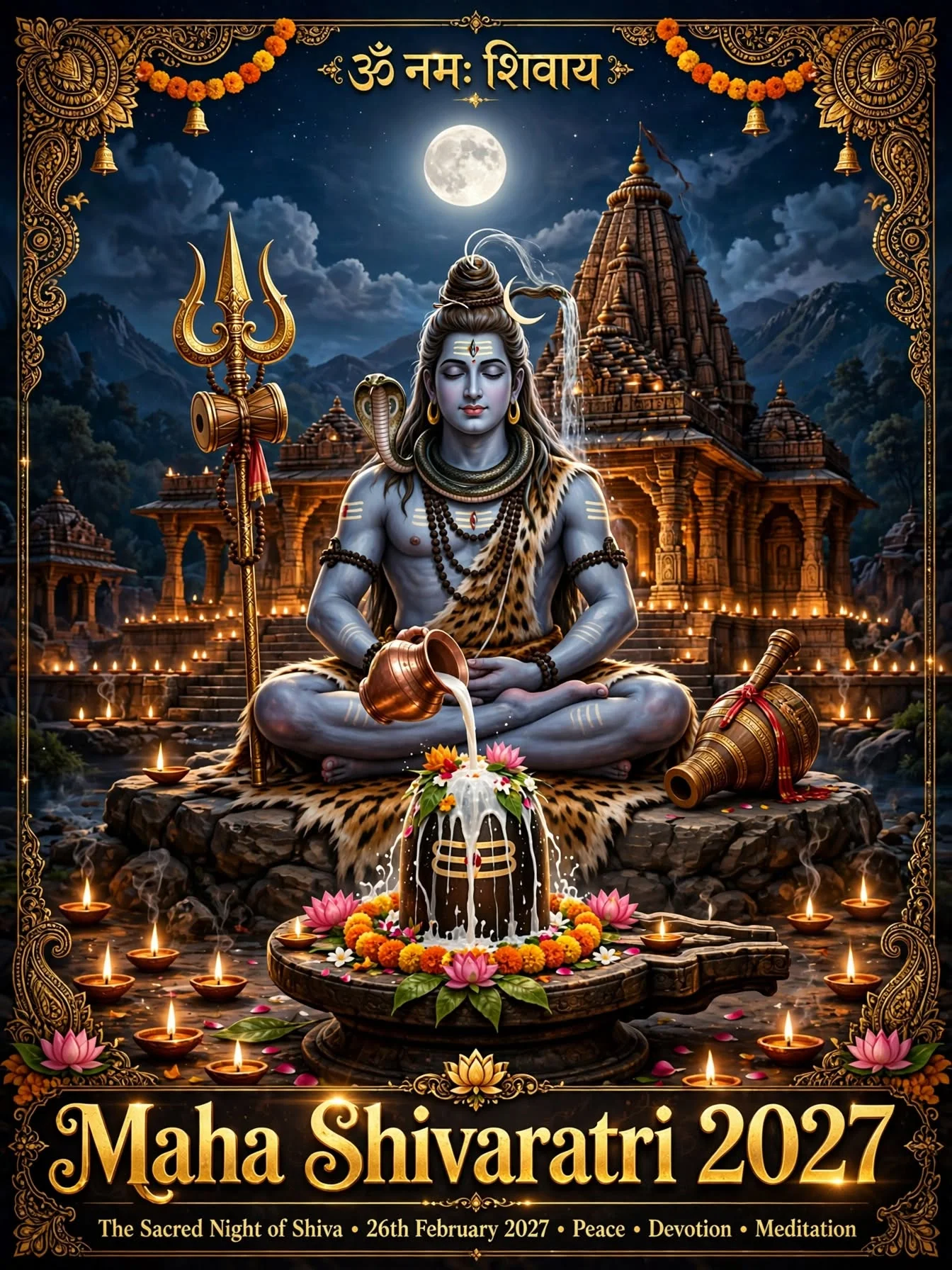
Maha Shivaratri
Maha Shivaratri, literally translated as 'The Great Night of Shiva', is the paramount and most spiritually profound festival dedicated to Lord Shiva in Sanatana Dharma. Celebrated on the fourteenth day (Chaturdashi tithi) of the Krishna Paksha (waning moon fortnight) during the lunar month of Phalguna according to the North Indian Purnimanta calendar (corresponding to Magha Krishna Chaturdashi in the South Indian and Western Indian Amanta calendar), this sacred night represents the pinnacle of Shaivite spiritual devotion, cosmic alignment, and yogic transformation.
View Festival Guide

Sunday, Mar 7, 2027
Darsha Amavasya
Darsha Amavasya is a significant new moon observance in the Hindu calendar designating the specific night when the Moon is completely invisible to the human eye, having fully merged into the conjunction of the Sun.
View Festival Guide
Monday, Mar 8, 2027
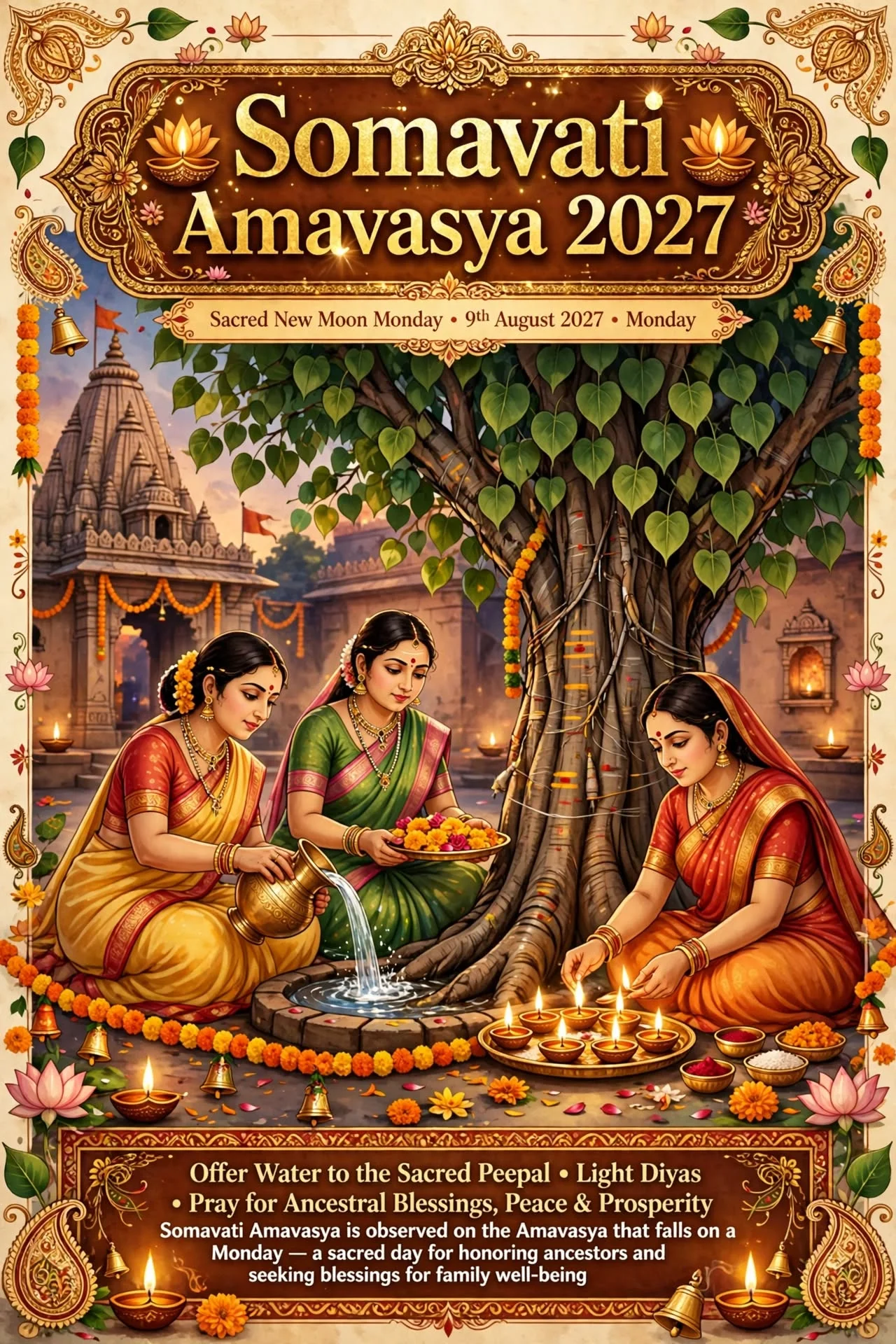
Somavati Amavasya
Somavati Amavasya is an exceedingly rare, sacred, and astrologically exalted Hindu fasting and pilgrimage observance that occurs when the New Moon day (Amavasya tithi) coincides with a Monday (Somavara). In Vedic tradition, Monday is governed by Soma (the Moon God / Chandra Deva) and is supremely sacred to Lord Shiva, who adorns the crescent moon upon His crown as Chandrashekhara. When the quiet, contemplative energy of Amavasya merges with the gentle, nectarine cooling rays of Monday, it creates an extraordinary cosmic alignment that is lauded across Sanatana Dharma as the 'King of all Amavasyas'.
View Festival Guide