




Pausha Purnima, also known as Paush Purnima, is an important Hindu observance celebrated on the full moon day of the Shukla Paksha in the lunar month of Pausha. It is traditionally associated with sacred bathing, fasting, charity, devotion and spiritual purification.
Pausha Purnima (Shakambhari Jayanti) 2027: Date, Puja Timings, Rituals & Stories
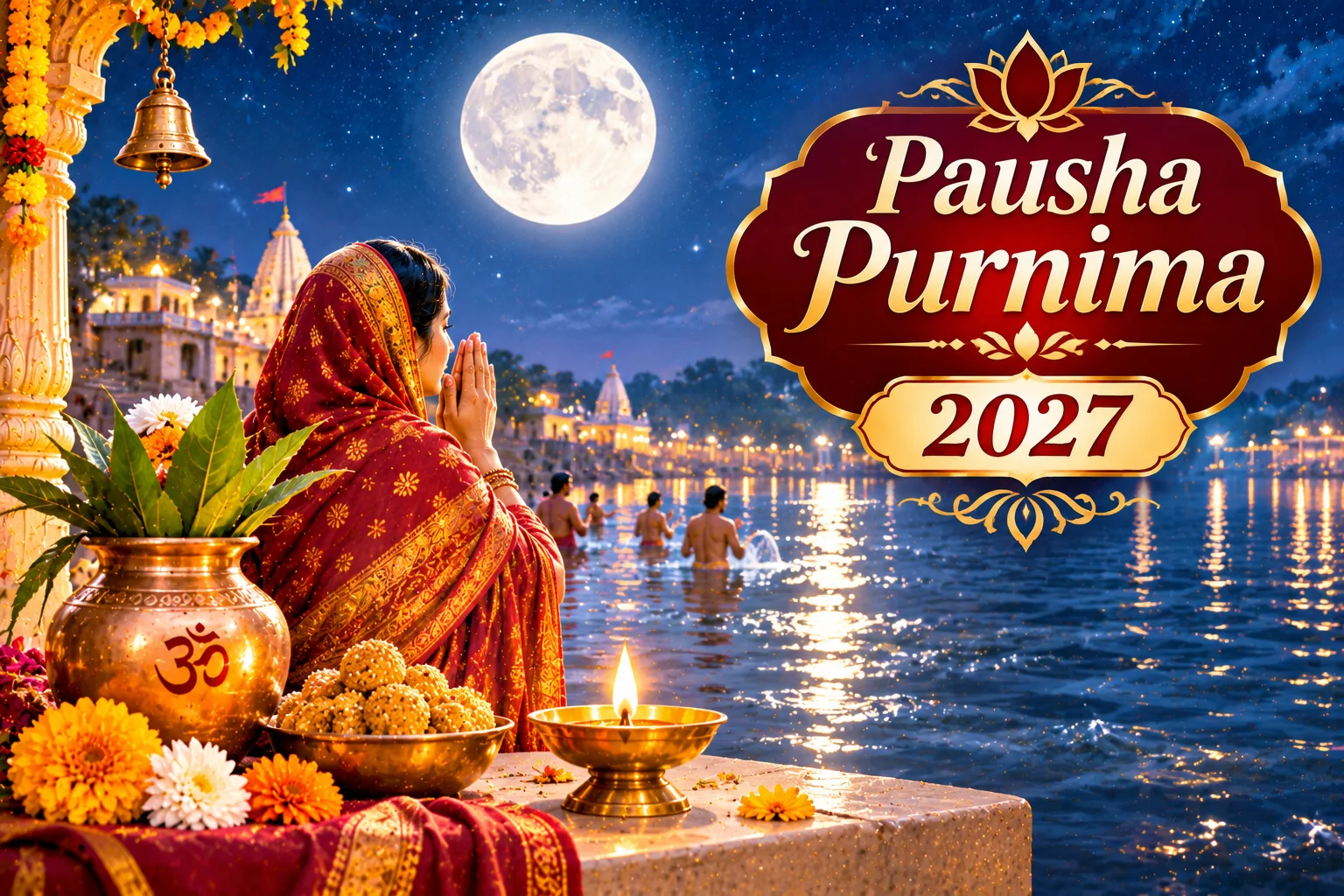
Pausha Purnima (Shakambhari Jayanti) Timings & Panchang
Important festival dates and auspicious timings
Usha Arghya (Sunrise)
07:14 am
Sandhya Arghya (Sunset)
05:52 pm
Start Date
Friday, 22 Jan 2027
Puja Muhurat
09:30 pm – 05:47 pm
Pausha Purnima (Shakambhari Jayanti)
The full moon of Pausha holds special importance in many Hindu traditions because it marks the transition towards the sacred month of Magha. In North India, Pausha Purnima is regarded as the beginning of the Magha Snan period, during which devotees undertake regular holy baths, prayers, meditation and charitable activities.
Pausha Purnima is particularly significant at Prayagraj, where the Magha Mela begins and many devotees commence Kalpavas on the banks of the Triveni Sangam. Kalpavas is a period of spiritual discipline involving sacred bathing, simple living, prayer, charity and self-restraint.
In many North Indian traditions, Pausha Purnima also coincides with Shakambhari Purnima, the sacred day associated with Goddess Shakambhari, a form of Goddess Durga. She is worshipped as the divine provider of vegetables, fruits, grains and nourishment. Her appearance is traditionally associated with relieving the suffering of living beings during a severe drought.
Devotees worship Lord Vishnu, Lord Satyanarayana, Goddess Lakshmi, Goddess Shakambhari and the Sun God according to their family and regional traditions. Satyanarayana Puja, Vishnu worship, Chandra Arghya, holy bathing and donations of food and warm clothing are common observances.
The full moon represents completeness, illumination and spiritual fulfilment. Pausha Purnima encourages devotees to purify their thoughts, express gratitude for nature's nourishment, serve those in need and strengthen their devotion through prayer and disciplined living.
Why is Pausha Purnima (Shakambhari Jayanti) Celebrated?
Pausha Purnima is celebrated to mark the full moon of the sacred Pausha month and to encourage spiritual purification through holy bathing, fasting, prayer, charity and devotion. It is regarded as an auspicious occasion for worshipping Lord Vishnu and performing acts of selfless service.
The observance is especially important because it marks the beginning of the Magha bathing period in several North Indian traditions. Devotees visit sacred rivers and pilgrimage centres to take ritual baths and begin spiritual practices that may continue throughout the month of Magha.
In traditions that observe Shakambhari Purnima on this day, devotees also honour Goddess Shakambhari for nourishing the world and protecting living beings from hunger and scarcity.
- To seek the blessings of Lord Vishnu and Lord Satyanarayana for peace, prosperity and spiritual well-being.
- To perform sacred bathing and begin the Magha Snan observance.
- To undertake Kalpavas and practise spiritual discipline at sacred pilgrimage locations.
- To worship Goddess Shakambhari and express gratitude for food, vegetation and nature's nourishment.
- To seek the blessings of Goddess Lakshmi for abundance and family welfare.
- To offer prayers to the Moon and Sun as expressions of gratitude towards the forces that sustain life.
- To perform charity, especially Annadana, and support people who lack food, clothing or other necessities.
- To practise fasting, meditation, self-control and devotional activities.
- To remember ancestors through traditional prayers and charitable acts where family customs prescribe them.
History and Sacred Legends of Pausha Purnima
The Ancient Tradition of Purnima Worship
Purnima, or the full moon day, has long held an important place in Hindu religious observances. The full Moon is associated with brightness, completeness, nourishment and the influence of Soma, the divine principle connected with the Moon.
Hindu traditions prescribe different forms of worship, fasting, bathing, prayer and charity on Purnima days. Pausha Purnima is one such observance, distinguished by its connection with winter pilgrimage, the beginning of Magha Snan and the worship of Lord Vishnu.
Devotees traditionally consider sacred bathing on this day a means of spiritual purification. The act of bathing in a holy river is accompanied by prayer, remembrance of the Divine and a resolve to live with greater discipline and compassion.
The Beginning of Magha Snan
One of the most important traditions associated with Pausha Purnima is the commencement of Magha Snan. In several North Indian traditions, the sacred bathing period begins on Pausha Purnima and continues through the month of Magha, concluding on Magha Purnima.
Prayagraj is especially associated with this observance because of the sacred Triveni Sangam, the confluence of the Ganga, Yamuna and the traditionally believed invisible Saraswati. Pilgrims gather there to undertake holy baths, prayers, charity and spiritual practices.
The annual Magha Mela is organised during this period. Pausha Purnima marks an important opening bathing occasion, and many pilgrims begin their month-long spiritual observances from this day.
The practice reflects the Hindu belief that pilgrimage is not merely a physical journey. It is also an opportunity to reduce attachment to material comforts, practise self-discipline and devote time to prayer and service.
The Tradition of Kalpavas
Kalpavas is a traditional spiritual observance undertaken by devotees, particularly at Prayagraj during the Magha Mela. Many Kalpavasis begin their observance on Pausha Purnima and continue until Magha Purnima.
Spiritual Significance of Pausha Purnima
Spiritual Purification Through Sacred Bathing
Sacred bathing is one of the central practices associated with Pausha Purnima. Devotees visit holy rivers, pilgrimage centres and sacred water bodies to perform Snana and offer prayers.
The ritual bath symbolises the purification of the body and the intention to cleanse the mind of negative thoughts, harmful habits and unnecessary attachments. It encourages a fresh beginning through devotion and self-discipline.
For those who cannot visit a river, bathing at home with a prayerful mind is an acceptable way to observe the day. The spiritual purpose lies in devotion and inner purity rather than the distance travelled.
The Blessings of Lord Vishnu
Lord Vishnu is worshipped as the protector and preserver of the universe. Pausha Purnima provides an opportunity to remember His divine qualities through prayer, mantra chanting, Vishnu Sahasranama and Satyanarayana Puja.
Devotees seek His blessings for peace, stability, family welfare, prosperity and spiritual progress. His worship encourages the practice of truth, compassion, responsibility and righteousness.
The Divine Nourishment of Goddess Shakambhari
Goddess Shakambhari represents the nurturing aspect of the Divine Mother. Her traditional story highlights the importance of food, vegetation, water and the natural environment in sustaining life.
Her worship encourages gratitude for agricultural produce and respect for the resources provided by nature. Offering fruits, vegetables and grains symbolises the recognition that nourishment is a divine blessing.
The spiritual message of Shakambhari worship is that compassion should extend beyond human beings to plants, animals and the entire natural world.
The Importance of Kalpavas
How Pausha Purnima Is Celebrated
Early Morning Bath and Preparation
Devotees traditionally wake early, bathe and wear clean clothes. Those living near sacred rivers may visit a river or pilgrimage centre for a holy dip. Others perform a ritual bath at home with devotion.
After bathing, devotees offer prayers to the Sun God and make a Sankalpa to observe Pausha Purnima through worship, fasting, charity and self-discipline.
Sacred Bathing and Magha Snan Sankalpa
Many devotees begin the Magha Snan observance on Pausha Purnima. Those undertaking a month-long vow make a Sankalpa to perform regular sacred bathing and maintain spiritual discipline during Magha.
At Prayagraj, pilgrims gather near the Triveni Sangam for the beginning of the Magha Mela. Devotees who undertake Kalpavas may establish a simple living arrangement near the river and follow their chosen religious discipline.
Lord Vishnu and Satyanarayana Puja
Devotees worship Lord Vishnu or Lord Satyanarayana at home or in a temple. The Puja may include a clean worship platform, a Kalasha, flowers, Tulsi leaves, incense, a lamp, fruits and sweets.
Families may recite the Satyanarayana Katha and offer Panchamrita and other suitable Naivedya. After the worship, Prasad is distributed among family members, guests and devotees.
Goddess Shakambhari Worship
In regions where Pausha Purnima is observed as Shakambhari Purnima, devotees worship Goddess Shakambhari with special devotion. Her image or idol is decorated with flowers, fruits, vegetables and other natural offerings.
Seasonal vegetables, green leaves, roots, fruits and grains may be arranged before the Goddess as symbols of nourishment. Devotees offer prayers for food security, agricultural well-being and the protection of nature.
Pausha Purnima (Shakambhari Jayanti) Puja Vidhi (Step by Step)
- 1
Wake Up Early and Take a Holy Bath
Wake up early in the morning, bathe and wear clean clothes. If possible, visit a sacred river or water body for Snana. If travelling is not possible, perform a ritual bath at home with devotion and remember the sacred rivers.
- 2
Offer Arghya to the Sun God
After bathing, face the rising Sun and offer water using a clean vessel. Pray for health, vitality, wisdom and well-being. The offering may be accompanied by the chanting of Om Suryaya Namah.
- 3
Take the Pausha Purnima Sankalpa
Sit in a clean place of worship and make a Sankalpa to observe Pausha Purnima with devotion. Express your intention to perform prayer, charity, fasting and spiritual discipline according to your ability.
- 4
Prepare the Puja Area
Clean the Puja space and arrange an image or idol of Lord Vishnu or Lord Satyanarayana. Place a clean cloth, Kalasha, lamp, incense, flowers, Tulsi leaves, fruits and other required materials.
- 5
Pausha Purnima (Shakambhari Jayanti) Puja Samagri List
Main Puja Materials
- Image or idol of Lord Vishnu
- Image or idol of Lord Satyanarayana
- Image or idol of Goddess Lakshmi
- Image or idol of Goddess Shakambhari, where worshipped
- Clean Puja Chowki
- Clean yellow or red cloth
- Kalasha filled with clean water
- Panchapatra and spoon
- Bell and Aarti plate
Flowers and Sacred Offerings
- Fresh yellow flowers
- Red flowers for Goddess Shakambhari
- Lotus flowers, if available
- Tulsi leaves for Lord Vishnu
- Garlands
- Akshata or unbroken rice grains
- Sandalwood paste
- Roli and turmeric
Abhishekam and Kalasha Materials
- Clean water
Mantras and Prayers for Pausha Purnima (Shakambhari Jayanti)
Pausha Purnima (Shakambhari Jayanti) Vrat Rules and Fasting Guidelines
Fasting Rules
Pausha Purnima fasting is observed according to personal faith, family tradition and health. Some devotees observe a complete fast, while others follow a fruit-based fast or take one simple meal. The purpose is to practise devotion, self-control and spiritual discipline.
- Observe a complete fast only if your health and circumstances permit.
- A Phalahar fast may include fruits, milk, nuts and other permitted foods.
- Some traditions permit a single meal after the customary worship.
- Avoid overeating when concluding the fast.
- Drink sufficient water unless medically advised otherwise.
- Do not consider a strict or waterless fast compulsory.
Sacred Bathing Rules
A holy bath is one of the most important traditions of Pausha Purnima. Devotees may bathe in a sacred river or water body, or perform a ritual bath at home when travel is not possible.
- Take a clean bath and offer prayers with devotion.
- Follow the safety rules of the river or pilgrimage location.
- Avoid entering deep or unsafe water during cold weather.
- Do not force children, elderly people or unwell individuals to bathe in cold rivers.
- Keep rivers and pilgrimage sites clean and avoid littering.
- Remember the sacred rivers through prayer if a pilgrimage is not possible.
Dos and Don'ts of Pausha Purnima (Shakambhari Jayanti)
Good Practices (Do's)
- Wake up early and take a bath with a prayerful mind.
- Visit a sacred river or pilgrimage centre if it is safe and practical.
- Offer Arghya to the Sun God in the morning.
- Worship Lord Vishnu or Lord Satyanarayana according to family tradition.
- Observe Shakambhari Devi Puja where it is part of your regional tradition.
- Offer seasonal fruits, vegetables and grains as a symbol of gratitude for nourishment.
Pausha Purnima (Shakambhari Jayanti) Across Regions
| Region | Local Name |
|---|---|
| Uttar Pradesh | Paush Purnima |
| Prayagraj, Uttar Pradesh | Magha Mela and Kalpavas |
| Rajasthan | Shakambhari Purnima |
| Uttarakhand | Paush Purnima |
| Bihar | Paush Purnima |
| Madhya Pradesh | Paush Purnima |
| West Bengal | Poush Purnima |
| Odisha | Pousha Purnima |
| Gujarat | Pausha Poonam |
| Maharashtra | Paush Pournima |
| Karnataka | Pushya Purnima |
| South India | Purnima observances |
Pausha Purnima (Shakambhari Jayanti) FAQs
What is Pausha Purnima?
Pausha Purnima is the full moon day of the Shukla Paksha in the Hindu lunar month of Pausha. It is associated with sacred bathing, fasting, Lord Vishnu worship, charity and the beginning of the Magha Snan period in many North Indian traditions.
What is another name for Pausha Purnima?
It is also known as Paush Purnima or Paush Poonam. In many traditions where Goddess Shakambhari is worshipped on the same day, it is also called Shakambhari Purnima or Shakambhari Jayanti.
Which deities are worshipped on Pausha Purnima?
Lord Vishnu and Lord Satyanarayana are commonly worshipped. Goddess Lakshmi, Goddess Shakambhari, the Sun God and the Moon deity may also be honoured according to regional and family traditions.
Upcoming Festivals
View All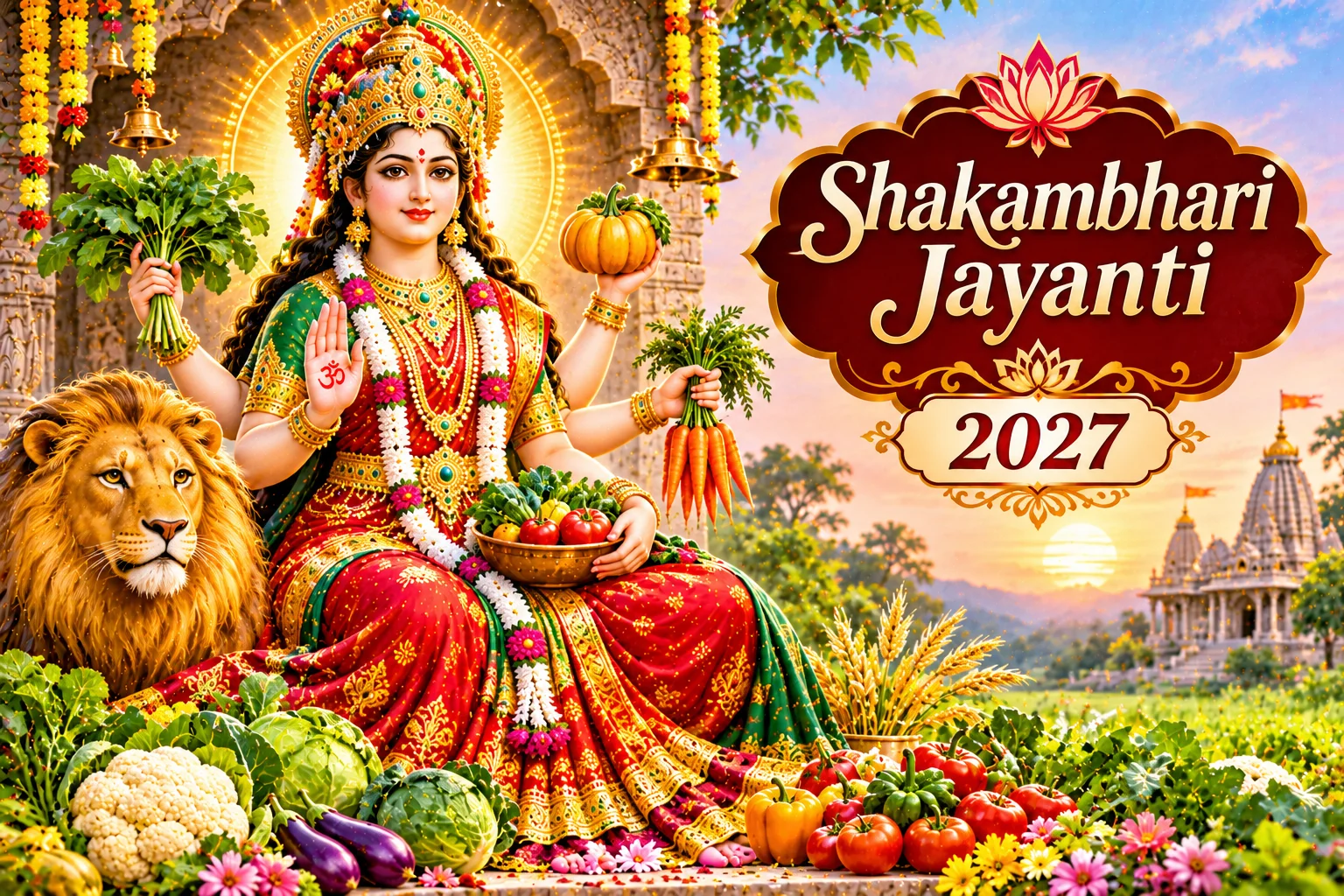
Friday, Jan 22, 2027
Shakambhari Jayanti
Shakambhari Jayanti is a sacred Hindu festival celebrating the divine appearance of Goddess Shakambhari, a compassionate manifestation of Goddess Durga and Adi Shakti. She is worshipped as the Goddess of vegetation, nourishment, food and the natural resources that sustain life.
View Festival Guide
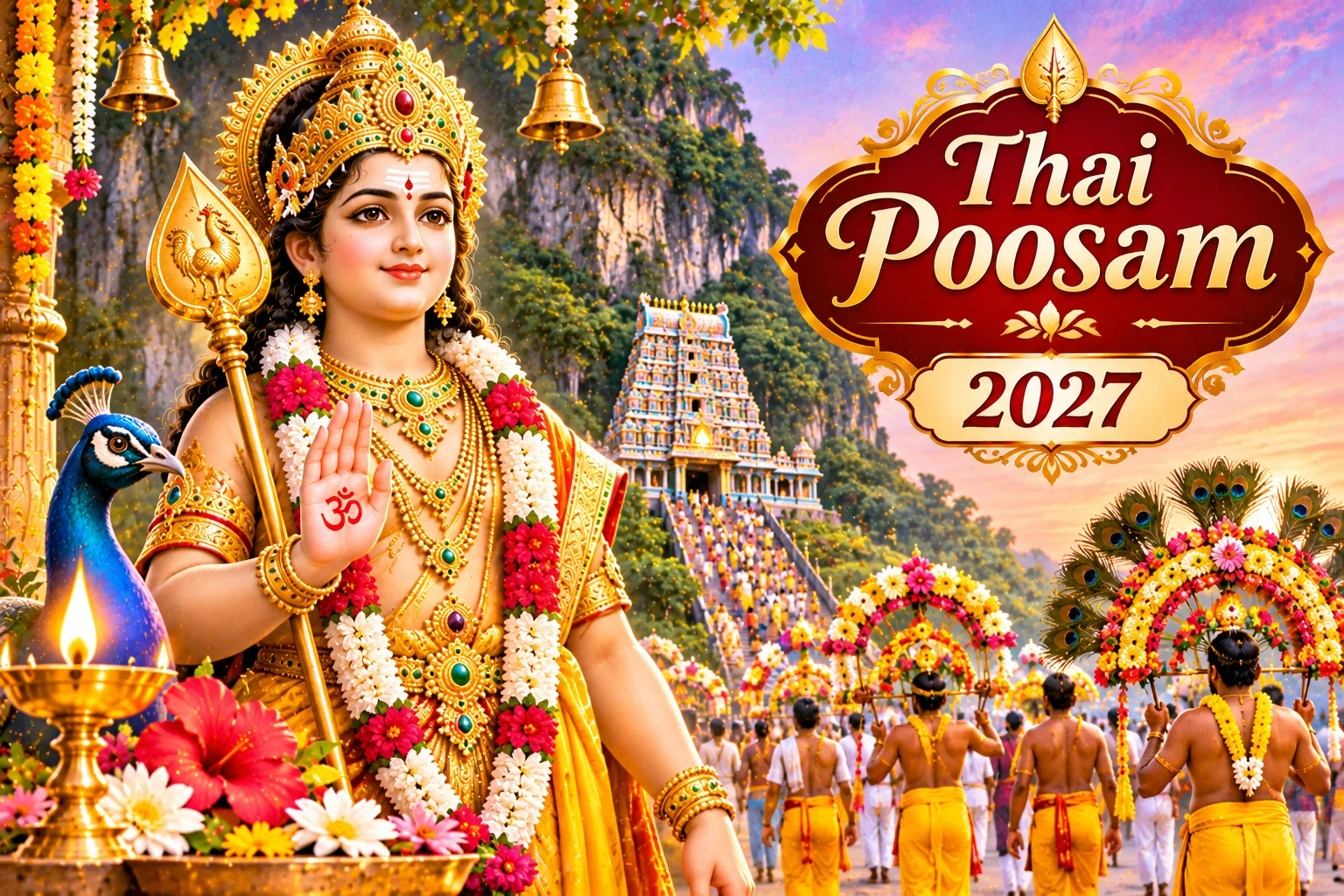
Friday, Jan 22, 2027
Thai Poosam
Thai Poosam, also known as Thaipusam or Thai Poosam Thiruvizha, is an important Hindu festival dedicated to Lord Murugan, the divine son of Lord Shiva and Goddess Parvati. It is celebrated with great devotion by Tamil Hindu communities in India and across the world.
View Festival Guide
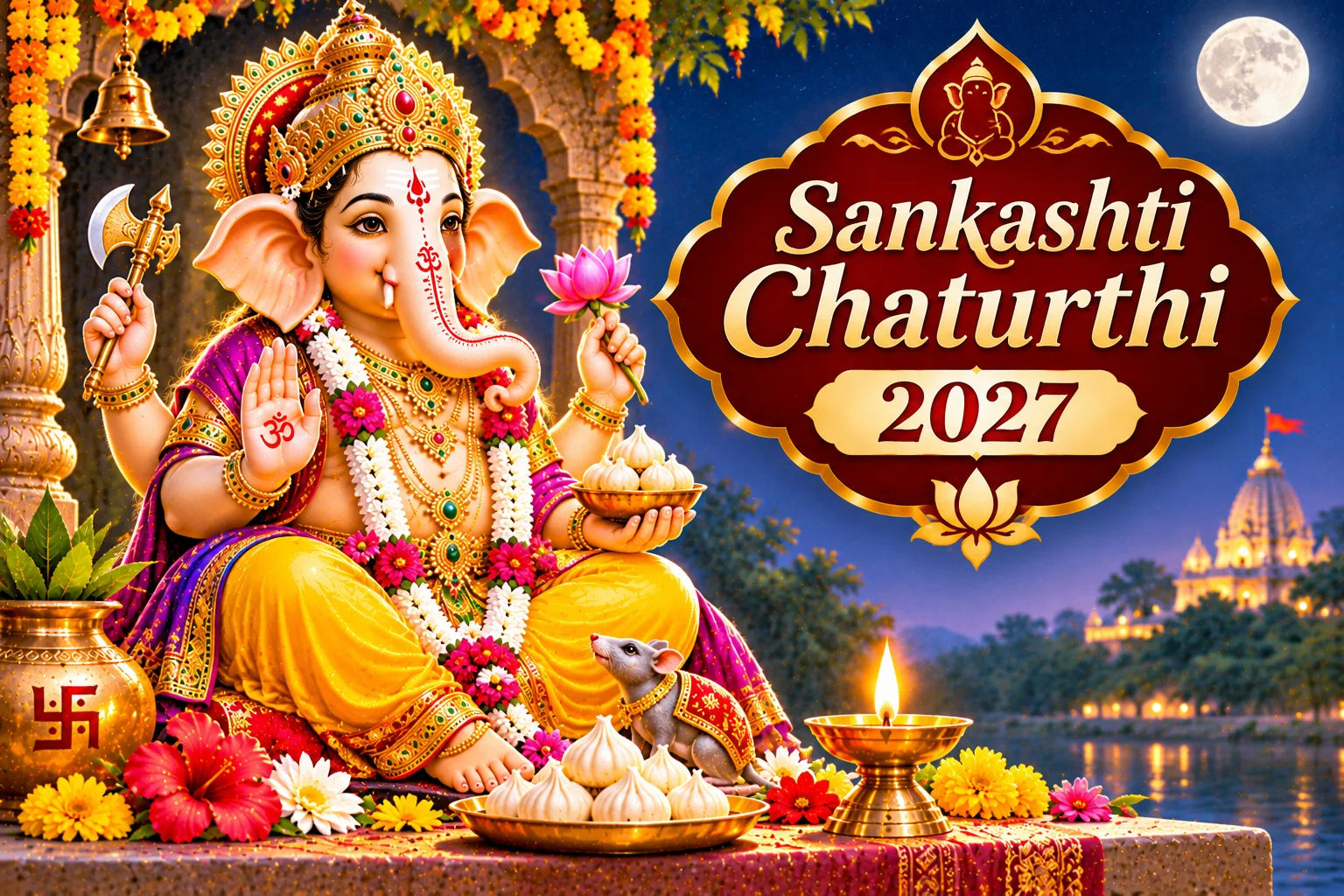
Monday, Jan 25, 2027
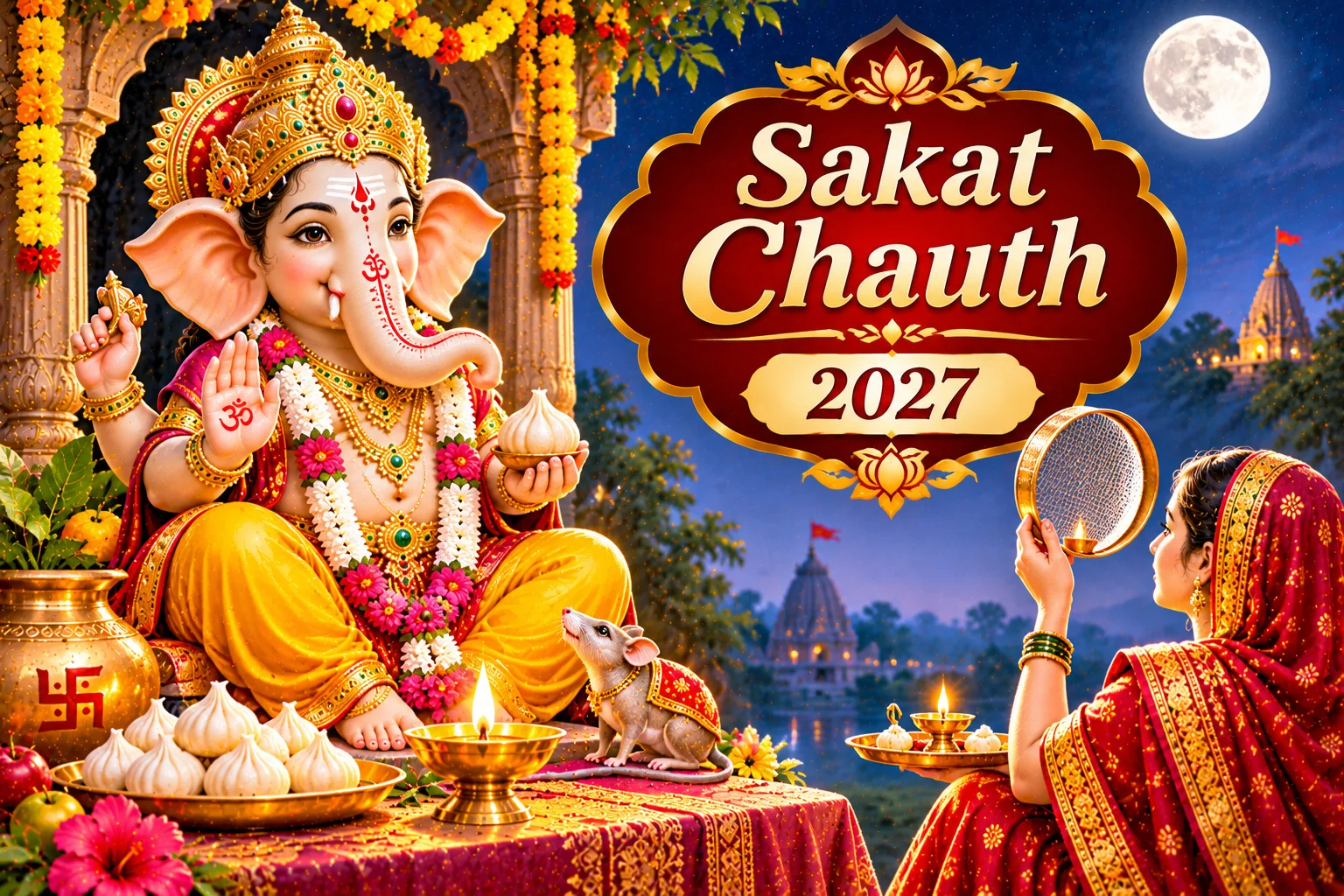
Sankashti Chaturthi
Sankashti Chaturthi is an important Hindu fasting observance dedicated to Lord Ganesha, the remover of obstacles and the giver of wisdom, prosperity and auspicious beginnings. It is observed on Chaturthi, the fourth lunar day of Krishna Paksha, the waning phase of the Moon, every month.
View Festival Guide
Monday, Jan 25, 2027
Sakat Chauth
Sakat Chauth is an important Hindu fasting festival dedicated primarily to Lord Ganesha and Goddess Sakat Mata. It is observed on Krishna Paksha Chaturthi, the fourth day of the waning lunar fortnight, during the month traditionally known as Magha in North Indian calendars.
View Festival Guide
Friday, Jan 29, 2027
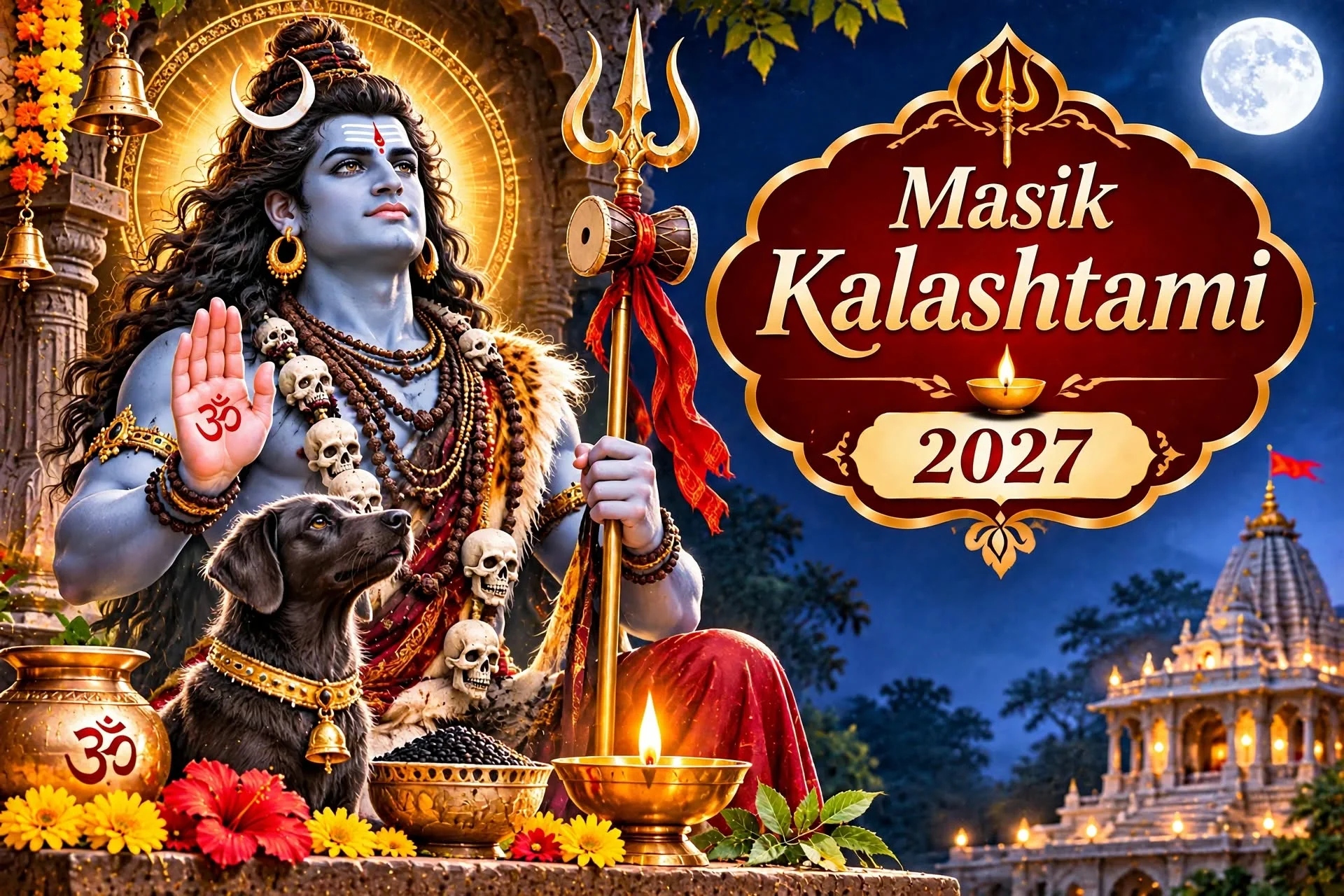
Masik Kalashtami
Masik Kalashtami, also known as Masik Kala Ashtami or Kala Ashtami, is a monthly Hindu observance dedicated to Lord Kala Bhairava, a fierce and protective manifestation of Lord Shiva. It is observed on Krishna Paksha Ashtami, the eighth lunar day of the waning fortnight.
View Festival Guide
Friday, Jan 29, 2027
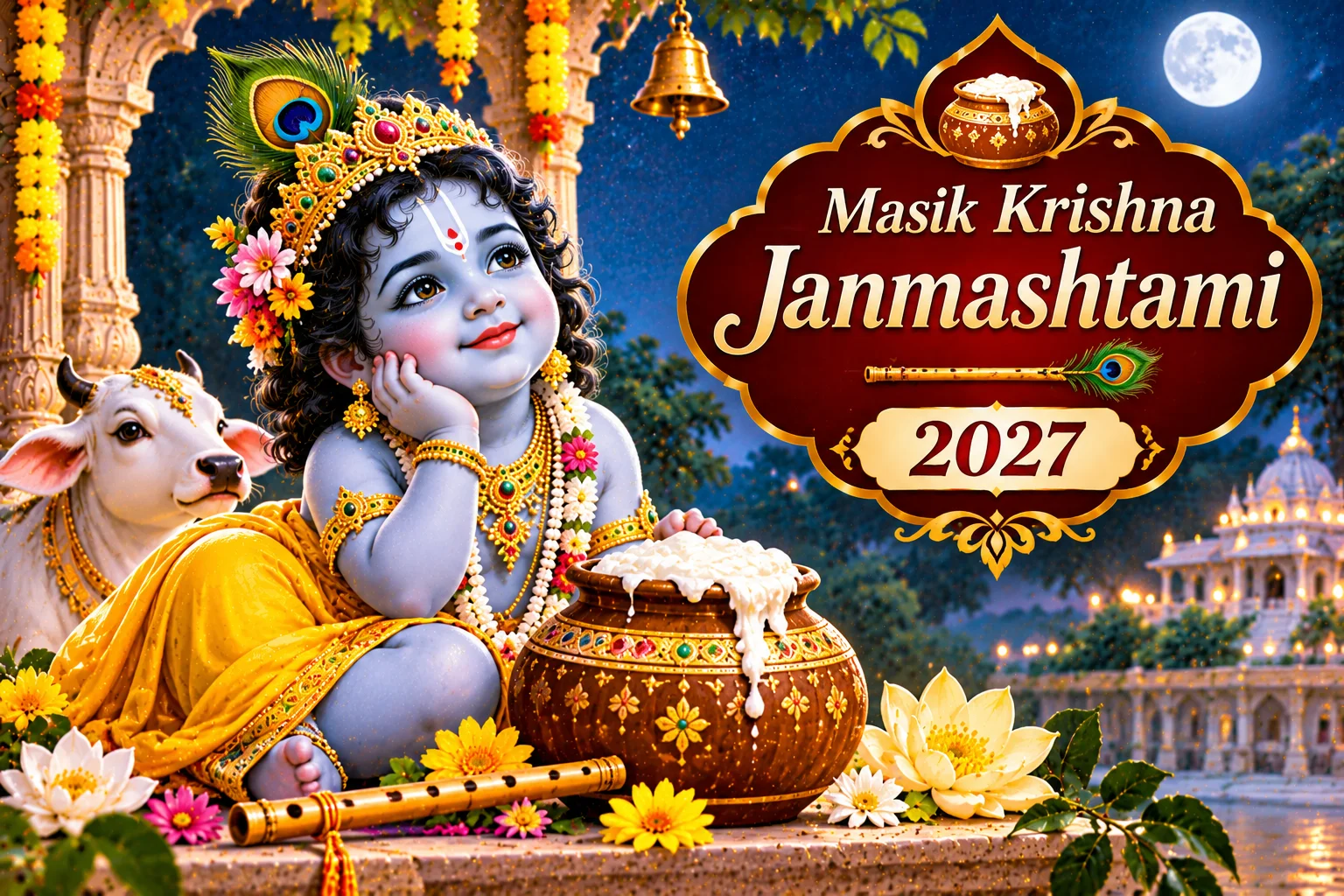
Masik Krishna Janmashtami
Masik Krishna Janmashtami, also known as Masik Janmashtami, Masik Krishnashtami and Krishna Ashtami Vrat, is a monthly Hindu observance dedicated to Lord Krishna. It is observed on Krishna Paksha Ashtami, the eighth lunar day of the waning fortnight, every lunar month.
View Festival Guide
Tuesday, Feb 2, 2027
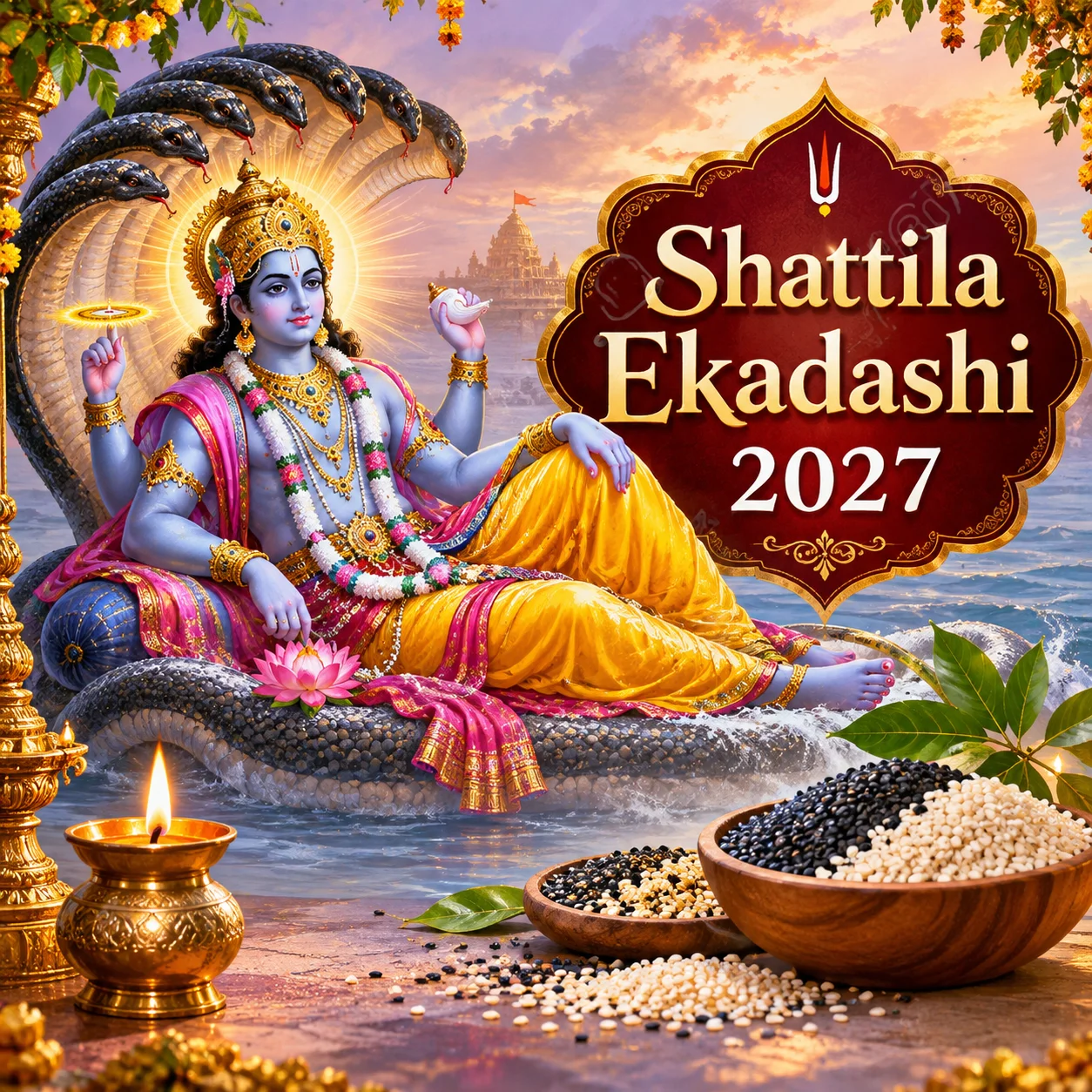
Shattila Ekadashi
Shattila Ekadashi, also known as Sat-Tila Ekadashi, is an important Hindu fasting festival dedicated to Lord Vishnu, observed on the Krishna Paksha Ekadashi (eleventh lunar day of the waning moon) during the month of Magha. The Sanskrit name Shattila is derived from two words: Shat, meaning six, and Tila, meaning sesame seeds. The festival emphasizes the spiritual importance of sesame seeds through six sacred practices associated with purification, worship, ancestral offerings, consumption, and charity.
View Festival Guide
Wednesday, Feb 3, 2027
Budha Pradosh Vrat
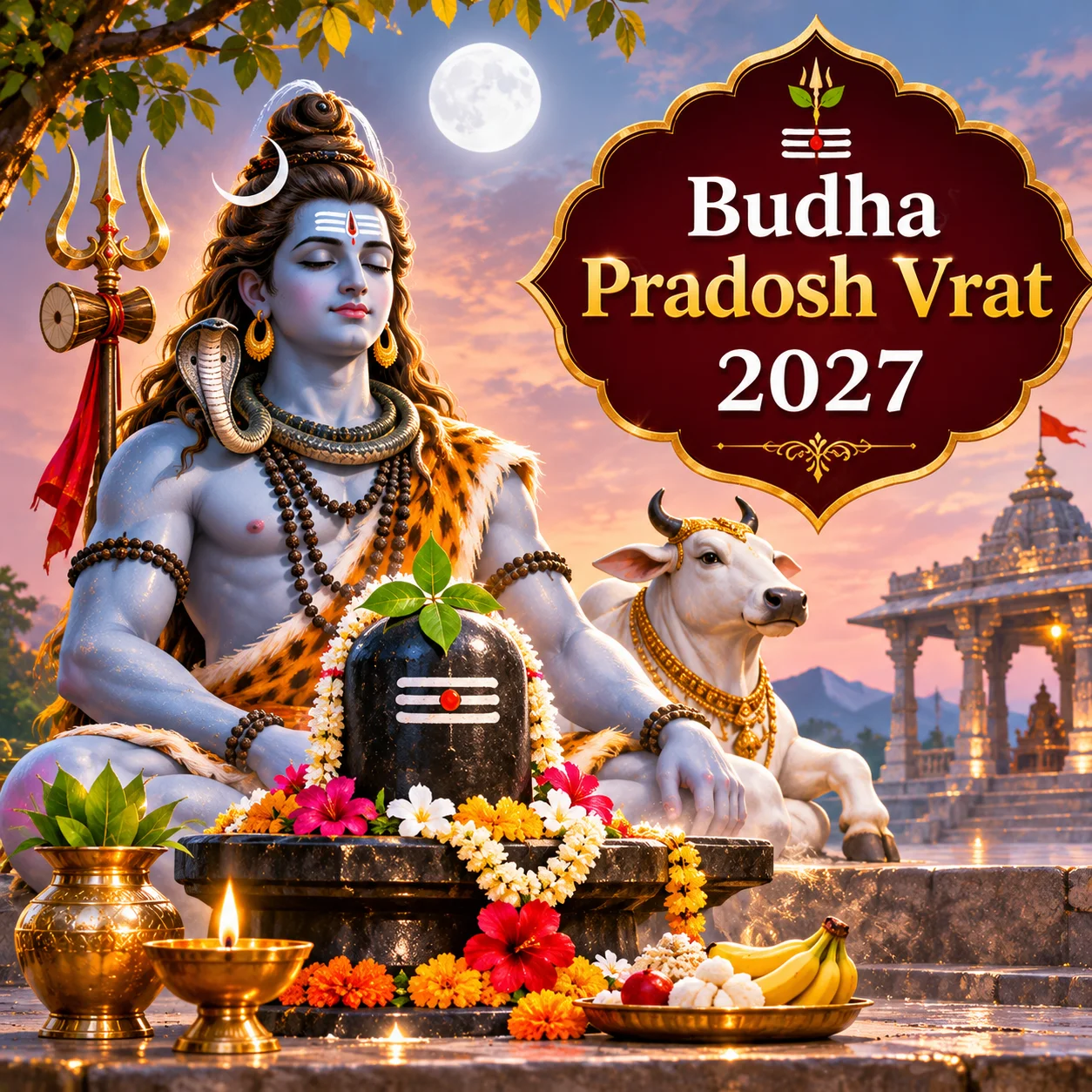
Budha Pradosh Vrat, also known as Saumya Vara Pradosham, is a sacred bimonthly Hindu observance occurring when the Trayodashi tithi (thirteenth lunar day) coincides with a Wednesday (Budhavara) during the Pradosha Kaal twilight period.
View Festival Guide