




Thai Poosam, also known as Thaipusam or Thai Poosam Thiruvizha, is an important Hindu festival dedicated to Lord Murugan, the divine son of Lord Shiva and Goddess Parvati. It is celebrated with great devotion by Tamil Hindu communities in India and across the world.
Thai Poosam 2027: Date, Puja Timings, Rituals & Stories
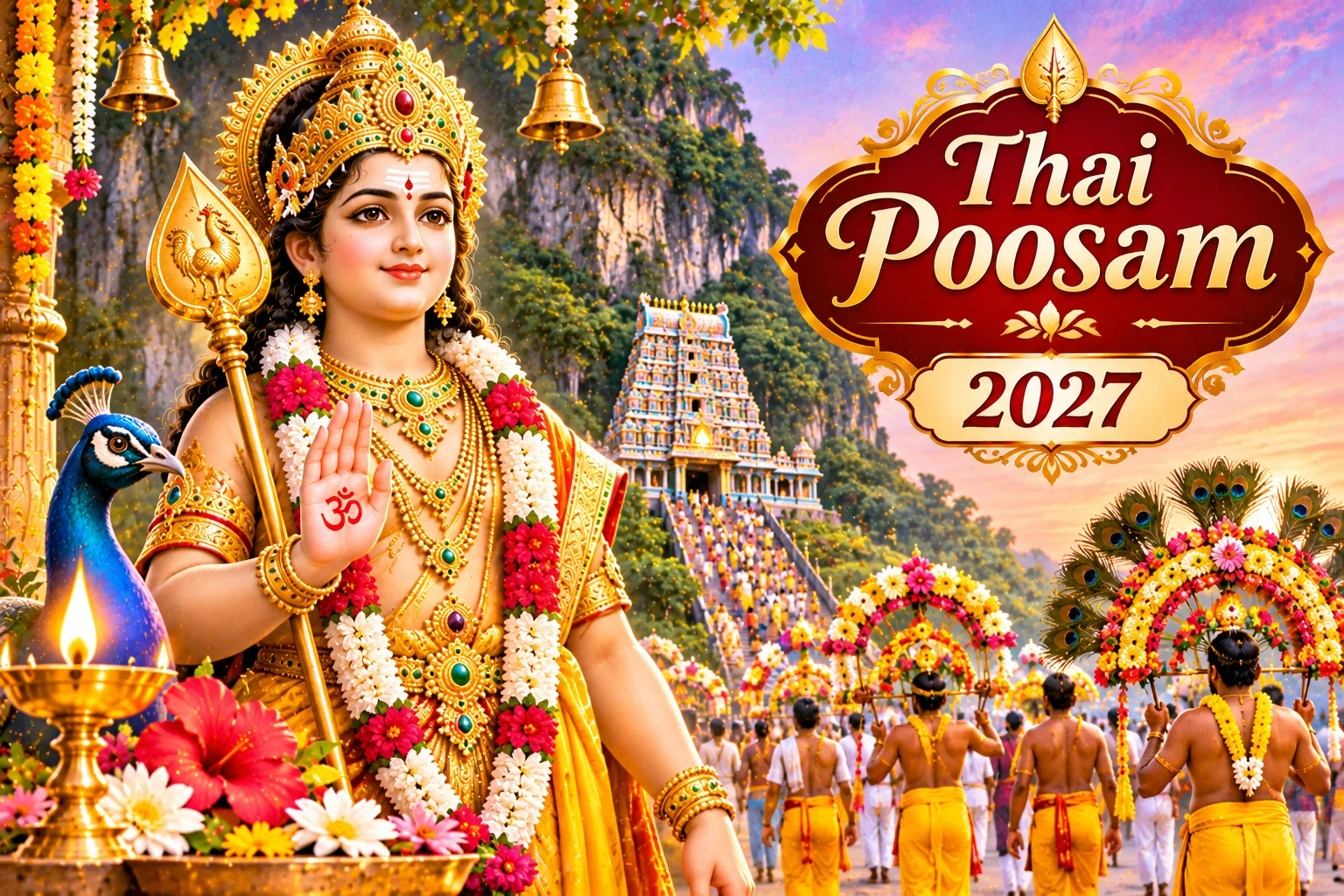
Thai Poosam Timings & Panchang
Important festival dates and auspicious timings
Usha Arghya (Sunrise)
07:14 am
Sandhya Arghya (Sunset)
05:52 pm
Start Date
Friday, 22 Jan 2027
Puja Muhurat
09:30 pm – 05:47 pm
Thai Poosam
The festival is observed during the Tamil month of Thai, generally corresponding to January or February, when the Poosam (Pushya) Nakshatra is prominent, traditionally coinciding with the full moon. The word Thai refers to the Tamil month, while Poosam refers to the star associated with the festival.
Thai Poosam commemorates the divine occasion when Goddess Parvati presented the sacred Vel, a powerful spear, to Lord Murugan. The Vel was given to him to defeat the demon Surapadman and protect the celestial beings and the world from evil forces.
Lord Murugan is also known as Skanda, Kartikeya, Subramanya, Shanmukha, Arumugam, Kumara, Saravana and Dandapani. He represents courage, wisdom, spiritual knowledge and the destruction of ignorance.
One of the most distinctive traditions of Thai Poosam is Kavadi Attam, in which devotees carry decorated structures called Kavadi as an offering to Lord Murugan. Some devotees also carry milk pots known as Paal Kudam, walk barefoot in processions, undertake vows and perform acts of penance as expressions of gratitude and devotion.
The festival is especially celebrated at Palani in Tamil Nadu, where the Arulmigu Dhandayuthapani Swamy Temple attracts thousands of devotees. Other important celebrations take place at Thiruchendur, Swamimalai, Batu Caves in Malaysia and Murugan temples in Singapore, Sri Lanka, Mauritius and other parts of the world.
The tradition of carrying Kavadi is closely associated with the legend of Idumban, who carried two sacred hills on behalf of Sage Agastya. His devotion to Lord Murugan became the foundation of a practice in which devotees carry symbolic burdens to express their vows and surrender their difficulties to the deity.
Why is Thai Poosam Celebrated?
Thai Poosam is celebrated to commemorate the divine event in which Goddess Parvati gave Lord Murugan the sacred Vel to defeat Surapadman and his demonic forces. The Vel represents divine wisdom, courage and the power to destroy ignorance and evil.
The festival honours Lord Murugan as the protector of righteousness and the remover of obstacles. Devotees offer prayers and undertake vows to seek his blessings for strength, success, health, family welfare and spiritual progress.
The observance is also associated with the tradition of Kavadi, which symbolises the burdens, difficulties and responsibilities that devotees surrender to Lord Murugan. By carrying Kavadi, performing penance and completing devotional vows, worshippers express gratitude and strengthen their faith.
- To commemorate Goddess Parvati's presentation of the divine Vel to Lord Murugan.
- To celebrate Murugan's victory over Surapadman and the forces of evil.
- To worship Lord Murugan as the embodiment of courage, wisdom, knowledge and divine protection.
- To seek blessings for the removal of obstacles and difficulties.
- To express gratitude for prayers answered and vows fulfilled.
- To undertake Kavadi as a symbolic offering of personal burdens and devotion.
- To offer Paal Kudam, flowers, fruits and other sacred offerings to Lord Murugan.
- To practise self-discipline through fasting, prayer, meditation and control over the senses.
- To develop humility, patience, courage and spiritual strength.
- To overcome negative tendencies such as anger, greed, hatred, arrogance and ignorance.
History and Sacred Legends of Thai Poosam
The Divine Birth and Mission of Lord Murugan
Lord Murugan is one of the most revered deities in Hinduism, particularly in Tamil religious and cultural traditions. He is the son of Lord Shiva and Goddess Parvati and is worshipped as the divine commander of the celestial forces.
According to traditional accounts, powerful demons disturbed the balance of the universe and caused suffering among the Devas, sages and other living beings. The celestial beings sought the protection of Lord Shiva and Goddess Parvati.
The divine power of Shiva and Shakti manifested as Lord Murugan, who was destined to restore righteousness and defeat the forces threatening the universe.
Murugan is traditionally associated with six sacred faces, symbolising his extraordinary divine knowledge, vision and power. He is also known as Shanmukha or Arumugam, meaning the six-faced Lord.
His mission is closely connected with the destruction of ignorance, arrogance and adharma. His worship represents the belief that divine wisdom and courage can overcome even the greatest difficulties.
The Divine Vel Given by Goddess Parvati
One of the central legends associated with Thai Poosam describes the moment when Goddess Parvati presented a sacred weapon to her son, Lord Murugan.
The weapon was the Vel, a divine spear representing the supreme power of wisdom and the ability to destroy evil. Goddess Parvati gave it to Murugan so that he could defeat the demon Surapadman and restore peace to the universe.
The Vel was not merely a physical weapon. It symbolised divine knowledge, spiritual clarity, courage and the destruction of ignorance. Its pointed form is traditionally interpreted as the power of wisdom that penetrates falsehood and removes darkness.
Lord Murugan accepted the Vel from his divine mother and prepared to lead the celestial forces against the demons. This event became the central religious significance of Thai Poosam.
Spiritual Significance of Thai Poosam
Victory of Wisdom Over Ignorance
The divine Vel represents spiritual wisdom and clarity. Its role in defeating Surapadman symbolises the destruction of ignorance, arrogance, hatred and negative tendencies.
Devotees worship Lord Murugan to develop discrimination between right and wrong, courage in difficult circumstances and the wisdom to follow a righteous path.
The Divine Grace of Goddess Parvati
The presentation of the Vel by Goddess Parvati represents the transfer of divine Shakti to Lord Murugan. It symbolises the power of the Divine Mother supporting the protection of righteousness.
Her role in the festival reminds devotees that divine strength is accompanied by compassion, protection and motherly guidance.
The Significance of Kavadi
Kavadi represents the burdens and responsibilities carried by human beings. When devotees carry it towards a Murugan temple, they symbolically surrender their difficulties, ego and negative attachments to the divine.
The act of carrying Kavadi is also an expression of gratitude for prayers answered and vows fulfilled. It encourages discipline, determination, humility and faith.
Self-Discipline and Spiritual Penance
Many devotees prepare for Thai Poosam through fasting, prayer, vegetarian food, meditation and control over their senses. The preparation may continue for several weeks depending on the devotee's vow and temple tradition.
These practices are intended to purify the mind and strengthen devotion. The physical discipline is meaningful when accompanied by kindness, honesty, humility and a sincere spiritual intention.
The Devotion of Idumban
How Thai Poosam Is Celebrated
Preparations Before the Festival
Devotees who plan to carry Kavadi or fulfil a major vow often begin preparations well before Thai Poosam. The preparation period varies according to personal commitment, family custom and temple tradition.
Many devotees follow a vegetarian diet, maintain personal cleanliness, perform daily prayers, avoid intoxicating substances and practise self-restraint. Some observe a longer vow that may extend for several weeks.
Devotees may also visit a Murugan temple regularly, chant devotional hymns and seek guidance from a temple priest or spiritual teacher regarding their chosen observance.
Early Morning Bath and Murugan Worship
On Thai Poosam, devotees wake early, take a ritual bath and wear clean clothes. Many wear yellow, saffron, orange or other traditional devotional attire.
They worship Lord Murugan at home or visit a nearby temple. Flowers, fruits, milk, sandalwood paste and other suitable offerings are prepared for the Puja.
Carrying Paal Kudam
Paal Kudam refers to a pot of milk carried by devotees as an offering to Lord Murugan. The milk is taken to the temple and used for Abhishekam according to temple customs.
Some devotees carry the pot on their heads, while others carry it in their hands or as part of a larger Kavadi structure. The offering symbolises purity, surrender and gratitude.
Kavadi Attam
Kavadi Attam is one of the most recognisable traditions of Thai Poosam. Devotees carry decorated Kavadi structures towards a Murugan temple while chanting devotional slogans and singing Murugan hymns.
The Kavadi may be decorated with peacock feathers, flowers, cloth, bells and images of Lord Murugan. Some structures contain milk pots or other offerings.
Thai Poosam Puja Vidhi (Step by Step)
- 1
Wake Up Early and Take a Holy Bath
Wake up early in the morning, take a bath and wear clean traditional clothes. Devotees may wear yellow, saffron or orange garments according to their family and temple customs. Clean the Puja area and prepare for Lord Murugan's worship.
- 2
Prepare the Puja Platform
Place an image or idol of Lord Murugan on a clean Puja Chowki. Keep a Vel symbol or image of the sacred spear near the deity. Arrange flowers, fruits, milk, sandalwood paste, incense and other required materials.
- 3
Take the Sankalpa
Sit before Lord Murugan and make a sincere Sankalpa to observe Thai Poosam with devotion. Pray for courage, wisdom, protection, the removal of obstacles and the fulfilment of righteous wishes.
- 4
Invoke Lord Ganesha
Begin the Puja by remembering Lord Ganesha and seeking his blessings for the successful completion of the worship. Offer flowers, incense and a prayer according to your family tradition.
- 5
Invoke Lord Murugan
Thai Poosam Puja Samagri List
Main Puja Materials
- Image or idol of Lord Murugan
- Image of Goddess Parvati
- Image of Lord Shiva, if available
- Vel symbol or small Vel
- Peacock feather
- Clean Puja Chowki
- Yellow, red or saffron cloth
- Kalasha filled with clean water
- Panchapatra and spoon
- Bell and Aarti plate
Abhishekam Materials
- Clean water
- Gangajal
- Milk
- Curd
- Honey
- Ghee
- Sugar
- Panchamrita
- Tender coconut water
- Sandalwood water
Abhishekam materials vary according to temple and household traditions. Simple water and milk offerings are sufficient for many forms of home worship.
Mantras and Prayers for Thai Poosam
Thai Poosam Vrat Rules and Fasting Guidelines
Fasting Rules
Devotees may observe fasting on Thai Poosam according to their personal vow, health and family tradition. Some follow a complete fast, while others consume fruits, milk or simple vegetarian food. Those undertaking Kavadi may follow a longer preparation period.
- Observe a complete fast only if your health and circumstances permit.
- A fruit-based fast may include fruits, milk and other permitted foods.
- Some devotees follow a simple vegetarian diet throughout their vow period.
- Avoid overeating when concluding the fast.
- Drink sufficient water unless medically advised otherwise.
- Do not assume that a waterless fast is compulsory.
- Follow the fasting requirements prescribed by your family or temple tradition.
Preparation for Kavadi
Devotees who undertake Kavadi may prepare through prayer, dietary discipline and personal vows for a period determined by their tradition. The duration is not identical for all devotees and may vary from several days to several weeks.
- Maintain personal cleanliness and regular prayer.
- Follow a vegetarian diet if required by the chosen vow.
- Avoid intoxicating substances.
- Practise self-restraint and control over the senses.
- Chant Murugan mantras and devotional hymns.
Dos and Don'ts of Thai Poosam
Good Practices (Do's)
- Begin the day with a bath and a sincere Sankalpa.
- Worship Lord Murugan and the sacred Vel with devotion.
- Offer milk, fruits, flowers and suitable vegetarian Naivedya.
- Chant Om Saravanabhavaya Namah or other Murugan mantras.
- Recite Kanda Sashti Kavasam, Tiruppugazh or other devotional hymns.
- Observe fasting according to your health and family tradition.
Thai Poosam Across Regions
| Region | Local Name |
|---|---|
| Tamil Nadu | Thai Poosam |
| Palani, Tamil Nadu | Thaipoosam Thiruvizha |
| Madurai, Tamil Nadu | Thai Poosam |
| Thiruchendur, Tamil Nadu | Thai Poosam |
| Kerala | Thaipooyam |
| Karnataka | Thai Poosam |
| Malaysia | Thaipusam |
| Batu Caves, Malaysia | Thaipusam Festival |
| Singapore | Thaipusam |
| Sri Lanka | Thai Poosam |
| Mauritius | Cavadee |
| Reunion Island | Cavadee |
Thai Poosam FAQs
What is Thai Poosam?
Thai Poosam is a Hindu festival dedicated to Lord Murugan, observed during the Tamil month of Thai when the Poosam Nakshatra is prominent. It commemorates the divine Vel given by Goddess Parvati to Murugan to defeat the demon Surapadman.
Who is worshipped on Thai Poosam?
Lord Murugan, also known as Skanda, Kartikeya and Subramanya, is the principal deity worshipped. Devotees also honour Goddess Parvati, who gave Murugan the divine Vel, and may offer prayers to Lord Shiva and Idumban according to temple tradition.
When is Thai Poosam celebrated?
Thai Poosam is observed during the Tamil month of Thai, which generally falls in January or February. It is associated with the Poosam or Pushya Nakshatra and traditionally coincides with the full moon. The exact Gregorian date changes each year.
Upcoming Festivals
View All
Friday, Jan 22, 2027
Pausha Purnima (Shakambhari Jayanti)
Pausha Purnima, also known as Paush Purnima, is an important Hindu observance celebrated on the full moon day of the Shukla Paksha in the lunar month of Pausha. It is traditionally associated with sacred bathing, fasting, charity, devotion and spiritual purification.
View Festival Guide
Friday, Jan 22, 2027
Shakambhari Jayanti
Shakambhari Jayanti is a sacred Hindu festival celebrating the divine appearance of Goddess Shakambhari, a compassionate manifestation of Goddess Durga and Adi Shakti. She is worshipped as the Goddess of vegetation, nourishment, food and the natural resources that sustain life.
View Festival Guide
Monday, Jan 25, 2027
Sankashti Chaturthi
Sankashti Chaturthi is an important Hindu fasting observance dedicated to Lord Ganesha, the remover of obstacles and the giver of wisdom, prosperity and auspicious beginnings. It is observed on Chaturthi, the fourth lunar day of Krishna Paksha, the waning phase of the Moon, every month.
View Festival Guide
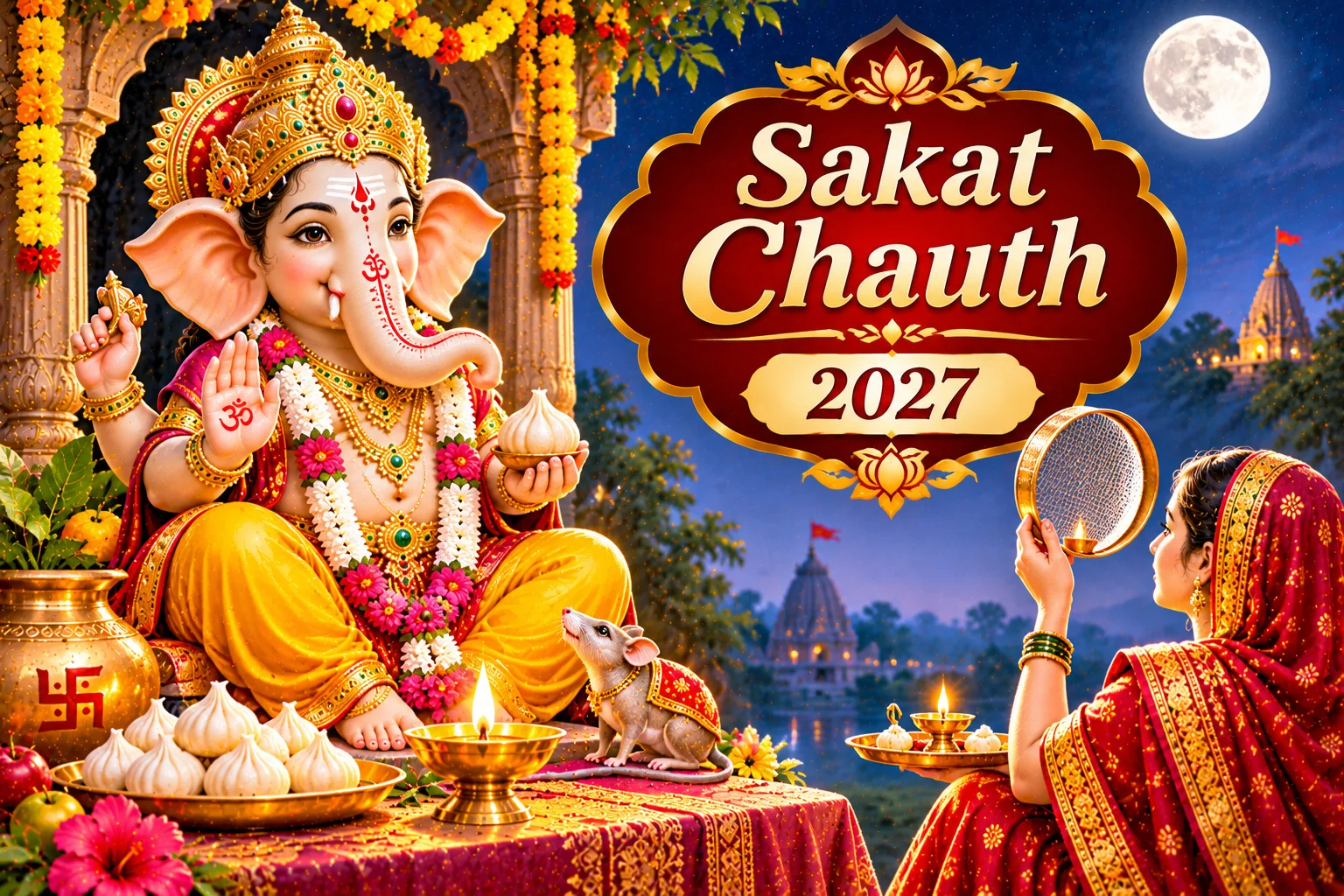
Monday, Jan 25, 2027
Sakat Chauth
Sakat Chauth is an important Hindu fasting festival dedicated primarily to Lord Ganesha and Goddess Sakat Mata. It is observed on Krishna Paksha Chaturthi, the fourth day of the waning lunar fortnight, during the month traditionally known as Magha in North Indian calendars.
View Festival Guide
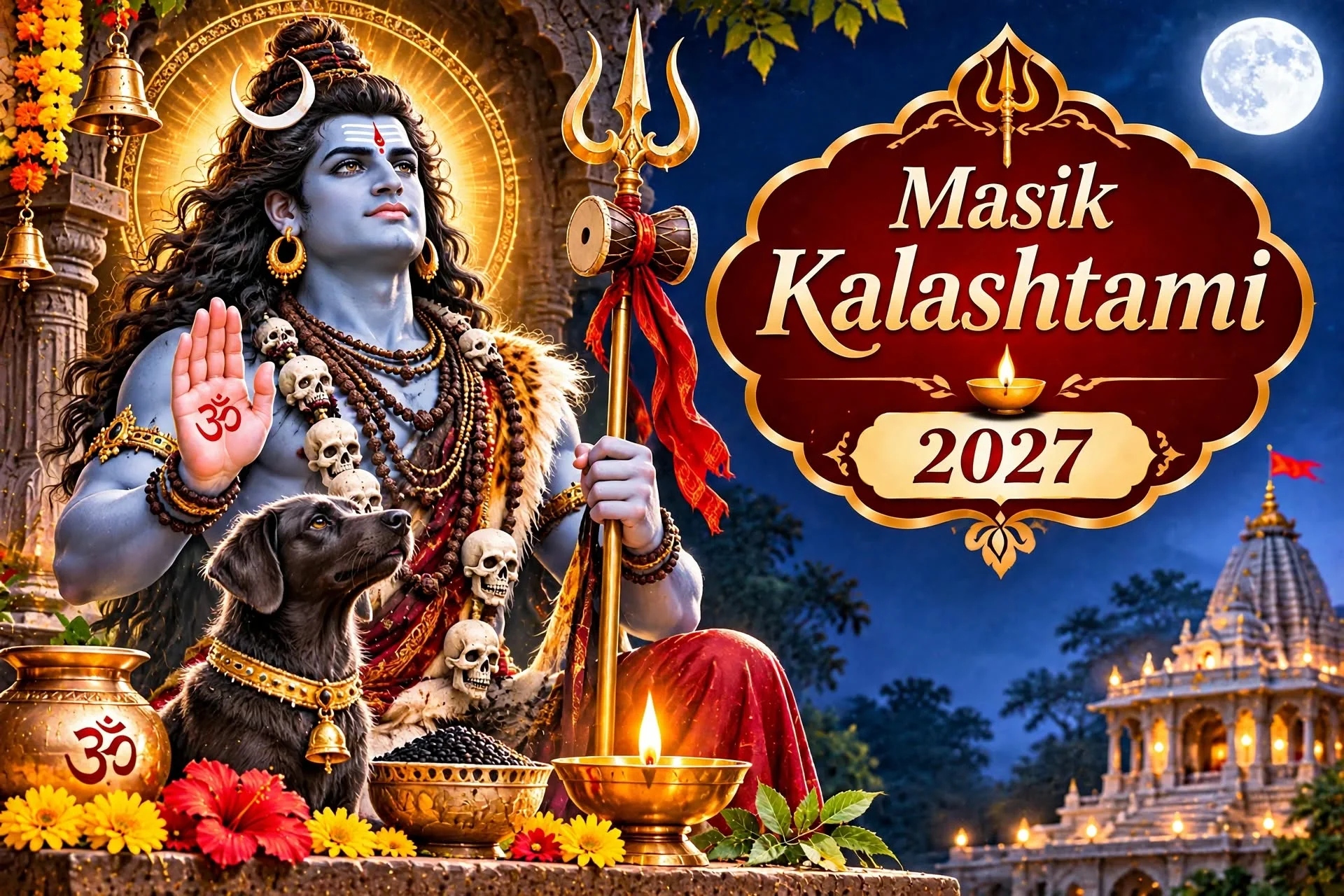
Friday, Jan 29, 2027
Masik Kalashtami
Masik Kalashtami, also known as Masik Kala Ashtami or Kala Ashtami, is a monthly Hindu observance dedicated to Lord Kala Bhairava, a fierce and protective manifestation of Lord Shiva. It is observed on Krishna Paksha Ashtami, the eighth lunar day of the waning fortnight.
View Festival Guide
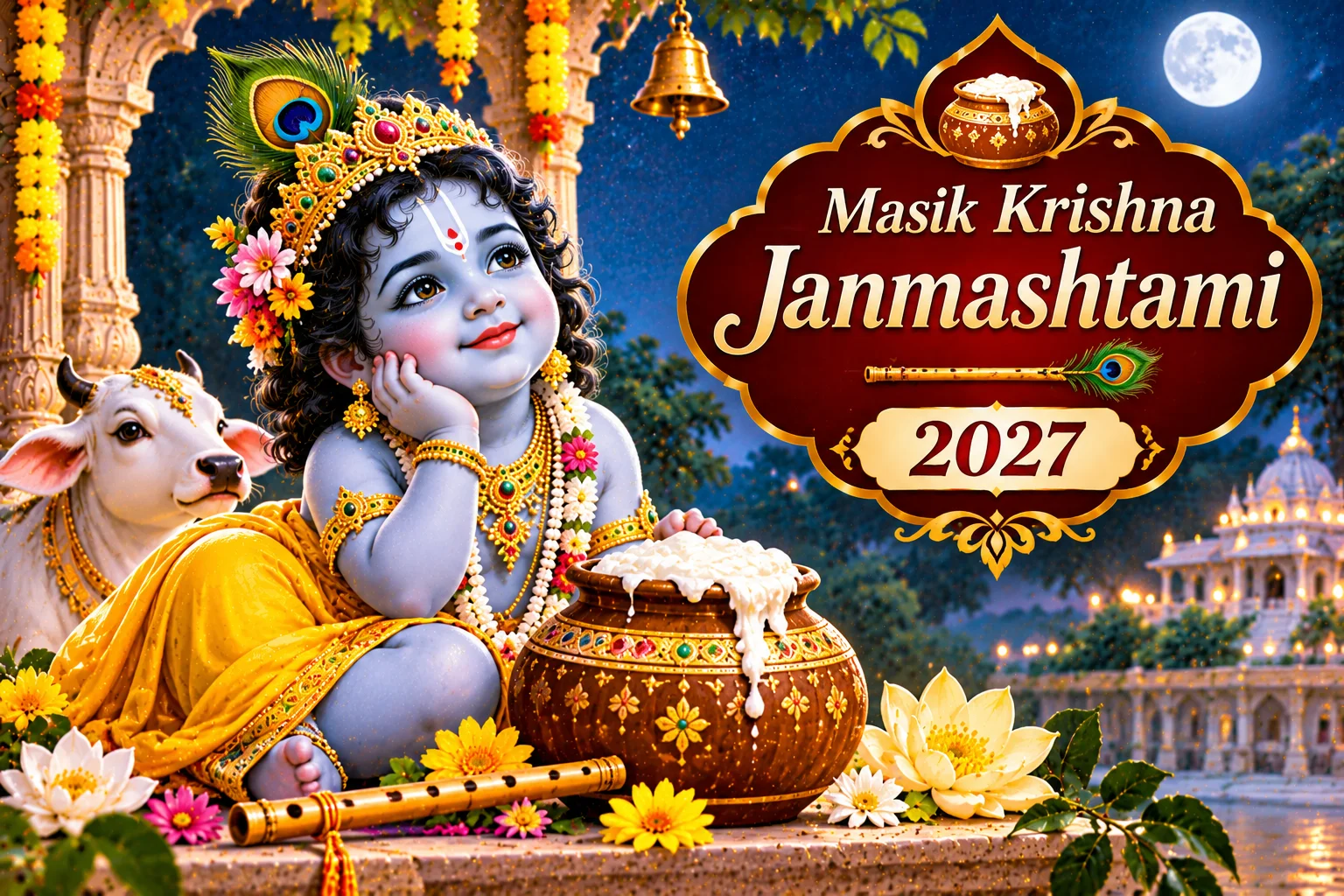
Friday, Jan 29, 2027
Masik Krishna Janmashtami
Masik Krishna Janmashtami, also known as Masik Janmashtami, Masik Krishnashtami and Krishna Ashtami Vrat, is a monthly Hindu observance dedicated to Lord Krishna. It is observed on Krishna Paksha Ashtami, the eighth lunar day of the waning fortnight, every lunar month.
View Festival Guide
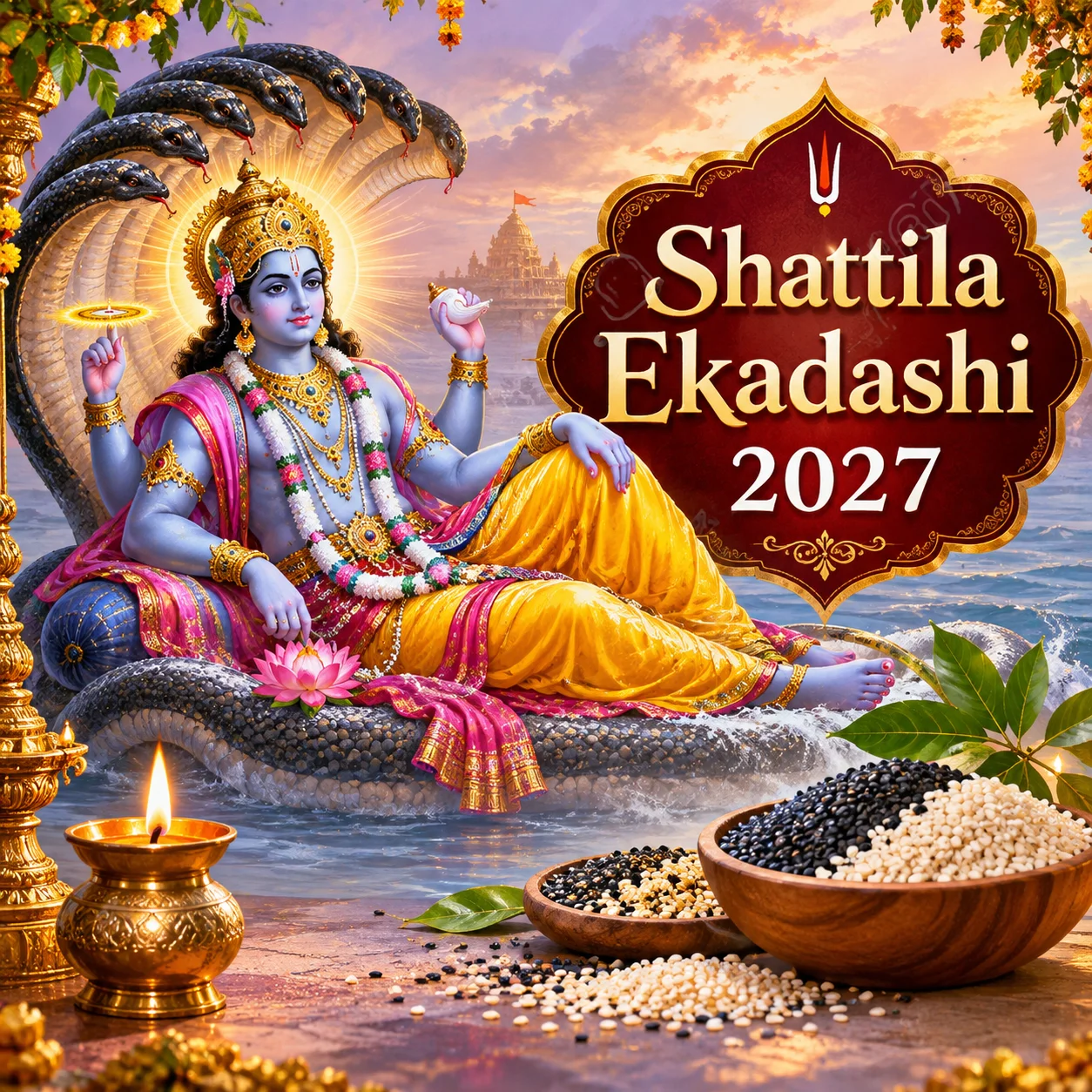
Tuesday, Feb 2, 2027
Shattila Ekadashi
Shattila Ekadashi, also known as Sat-Tila Ekadashi, is an important Hindu fasting festival dedicated to Lord Vishnu, observed on the Krishna Paksha Ekadashi (eleventh lunar day of the waning moon) during the month of Magha. The Sanskrit name Shattila is derived from two words: Shat, meaning six, and Tila, meaning sesame seeds. The festival emphasizes the spiritual importance of sesame seeds through six sacred practices associated with purification, worship, ancestral offerings, consumption, and charity.
View Festival Guide
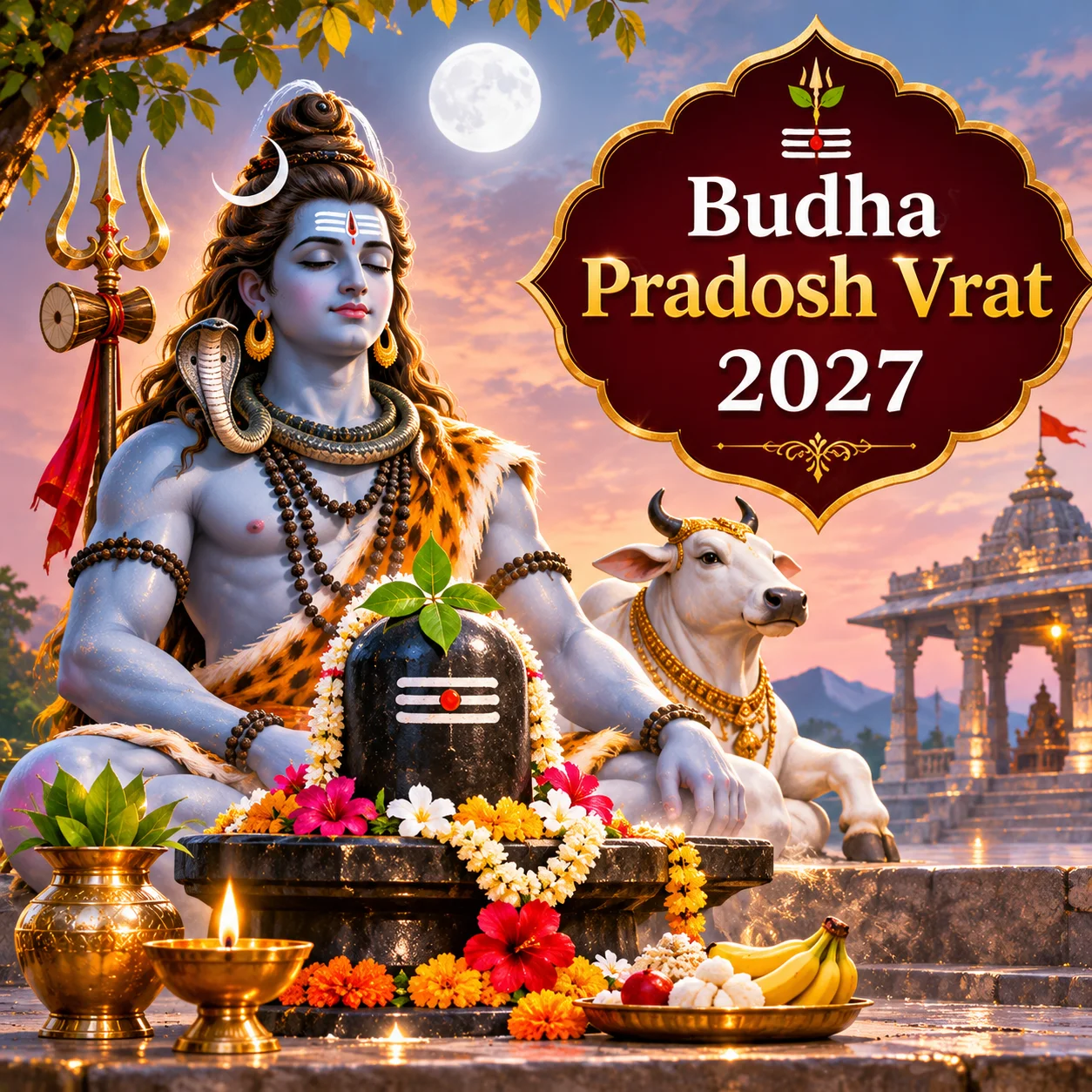
Wednesday, Feb 3, 2027
Budha Pradosh Vrat
Budha Pradosh Vrat, also known as Saumya Vara Pradosham, is a sacred bimonthly Hindu observance occurring when the Trayodashi tithi (thirteenth lunar day) coincides with a Wednesday (Budhavara) during the Pradosha Kaal twilight period.
View Festival Guide