




Shani Jayanti, also known as Shani Janma Jayanti or Shani Amavasya, is an important Hindu observance dedicated to Lord Shani, the deity associated with the planet Saturn and one of the nine Navagrahas. Devotees observe this sacred day as the birth anniversary of Shani Dev, the son of Lord Surya and Goddess Chhaya. It is traditionally celebrated on Jyeshtha Amavasya, the new moon day in the Hindu month of Jyeshtha according to the Purnimanta calendar system.
Shani Jayanti 2027: Date, Puja Timings, Rituals & Stories
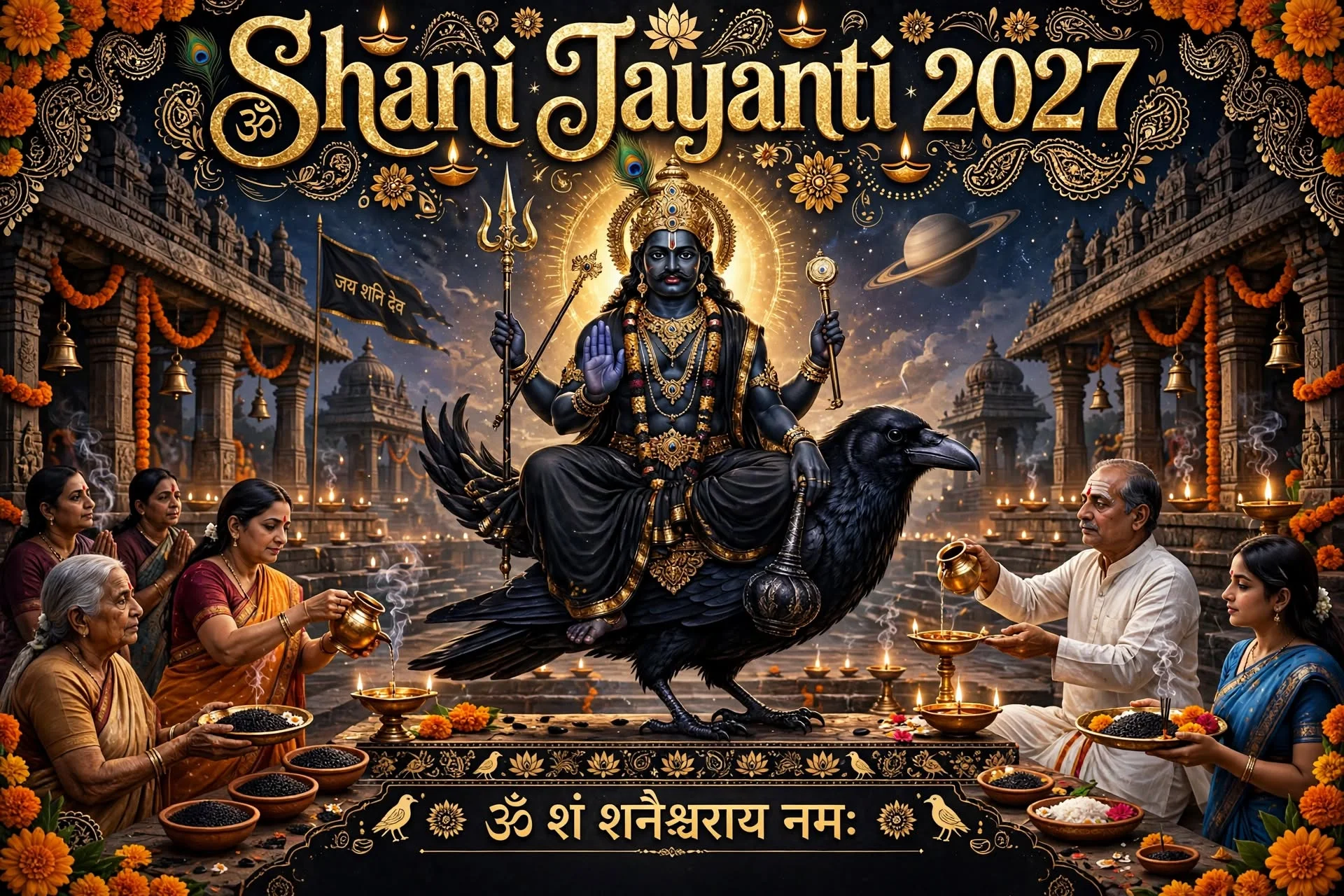
Shani Jayanti Timings & Panchang
Important festival dates and auspicious timings
Usha Arghya (Sunrise)
05:23 am
Sandhya Arghya (Sunset)
07:16 pm
Start Date
Friday, 4 Jun 2027
Puja Muhurat
06:34 am – 01:10 am
Shani Jayanti
Lord Shani is revered as the divine dispenser of karma, justice, discipline, patience, responsibility, and the consequences of one's actions. In Hindu religious and astrological traditions, he is believed to give results according to an individual's deeds rather than personal preference or partiality. His influence is associated with perseverance, humility, hard work, self-discipline, and the understanding that actions have consequences.
Shani Jayanti is observed through prayers, fasting according to personal capacity, Shani Dev puja, mantra recitation, oil offerings, and charity. Devotees commonly offer black sesame seeds, mustard oil, black urad dal, dark-coloured flowers, and food to people in need. Many visit Shani temples, worship beneath Peepal trees, recite the Shani Chalisa, and listen to traditional accounts of Shani Dev's birth and divine role.
The observance is not intended merely to seek relief from astrological difficulties. It also reminds devotees to live honestly, fulfil their responsibilities, respect others, and practise compassion towards people who experience hardship. Shani Dev is therefore worshipped as a symbol of impartial justice and the importance of righteous conduct.
The observance is known by different calendar names in different regions. The same new moon is called Jyeshtha Amavasya in the Purnimanta calendar, commonly followed in North India, and Vaishakha Amavasya in the Amanta calendar, commonly followed in several western and southern Indian traditions. These are two calendar names for the same lunar new moon, not two separate Shani Jayanti celebrations.
Why is Shani Jayanti Celebrated?
Shani Jayanti commemorates the traditional birth of Lord Shani, who is described in Hindu scriptures as the son of Surya Dev and Chhaya. Devotees worship him to honour his divine position among the Navagrahas and reflect on the principles of karma, justice, discipline, and righteous living.
- To commemorate the birth of Shani Dev, the son of Lord Surya and Goddess Chhaya.
- To worship Shani Dev as the traditional dispenser of the results of human actions.
- To develop patience, discipline, humility, honesty, and responsibility in everyday life.
- To seek spiritual strength and guidance during challenging circumstances associated with Shani in traditional astrology.
- To perform charity, especially donations of food, black sesame, clothing, and other useful necessities to people experiencing hardship.
- To remember that righteous conduct, compassion, and sincere effort are important principles of a balanced spiritual life.
- To worship Shani Dev as one of the Navagrahas and acknowledge his traditional association with Saturn and Saturday.
The observance also provides an opportunity for devotees to examine their conduct and correct harmful habits. Instead of approaching the day only with fear of planetary difficulties, worshippers are encouraged to practise fairness, fulfil their duties, avoid exploitation, and help those who are economically or socially vulnerable.
History and Birth of Lord Shani
Surya Dev and Goddess Sanjna
The traditional account of Shani Dev's parentage is connected with the story of Lord Surya and his wife Sanjna, also known as Samjna. According to the Vishnu Purana, Sanjna was the daughter of Vishvakarma. She found it difficult to endure the intense radiance of Surya Dev and eventually decided to undertake austerities away from him.
Before leaving, Sanjna created or appointed her shadow-form, known as Chhaya, to remain in her place and continue serving Surya Dev. The text describes how Surya initially regarded Chhaya as Sanjna. During this period, Surya and Chhaya had children, including Shanaishchara, another Manu known as Savarni, and Tapati.
This account establishes Shani's connection with Surya Dev and Chhaya. It is important to distinguish this scriptural account from additional details found in later devotional birth narratives.
The Birth of Shanaishchara
The Vishnu Purana, in its Third Amsa, Chapter 2, identifies Shanaishchara as one of the children born to Surya Dev and Chhaya. The name Shanaishchara is traditionally understood as referring to the slow-moving celestial body, corresponding to the planet Saturn in Hindu astrology.
The Skanda Purana also preserves a significant account in its Avanti Khanda. In this narrative, Chhaya gives birth to twins: the sacred river Tapi and Shanaishchara. The passage associates Shani with a powerful cosmic presence and establishes his connection with the river Tapi.
These scriptural accounts are among the important traditional references concerning Shani Dev's birth and divine identity. They explain his relationship with Surya Dev and Chhaya and his place within Hindu religious cosmology.
Shani Dev's Place Among the Navagrahas
Lord Shani occupies an important position among the nine celestial deities known as the Navagrahas. These nine grahas are traditionally worshipped for their association with different aspects of cosmic order and human life. Shani represents Saturn and is associated with discipline, responsibility, perseverance, restraint, justice, and the consequences of actions.
Spiritual Significance of Shani Jayanti
The Principle of Karma and Justice
The most important spiritual teaching associated with Shani Dev is the principle of karma. Hindu philosophy teaches that actions, intentions, and conduct have consequences. Shani is traditionally worshipped as the celestial authority who administers these consequences without personal bias.
His worship reminds devotees that good intentions should be accompanied by responsible actions. A person should not expect positive results while continuing to act dishonestly or harmfully. Shani Jayanti therefore encourages self-examination, accountability, and the determination to follow Dharma.
Discipline, Patience, and Perseverance
Shani Dev is associated with discipline and sustained effort. His slow-moving nature in traditional astrology is often interpreted as a reminder that meaningful achievements require patience, consistency, and dedication.
Devotees use Shani Jayanti as an opportunity to strengthen their commitment to personal responsibilities, professional duties, family obligations, and spiritual practices. The day encourages people not to abandon their efforts simply because progress appears slow.
Humility and Freedom from Ego
Shani's traditional association with hardship and responsibility teaches the importance of humility. Wealth, social position, physical strength, and influence are temporary aspects of worldly life. A person should not use these privileges to exploit or disrespect others.
The observance encourages devotees to treat everyone with dignity, regardless of their economic circumstances or social position. Helping workers, elderly people, poor families, and individuals facing difficulties is considered a meaningful expression of devotion.
Charity and Service
Charity is an important part of Shani Jayanti worship. Devotees traditionally donate black sesame seeds, black urad dal, mustard oil, dark-coloured clothing, food, and other useful necessities. The deeper purpose of these offerings is to develop generosity and support people who need assistance.
How Shani Jayanti Is Celebrated
Morning Purification and Sankalpa
Devotees generally begin Shani Jayanti with an early morning bath and prayers. Some people add black sesame seeds to their bathing water as part of their family tradition. After purification, they wear clean clothes and prepare a peaceful place for worship.
A sankalpa, or personal religious intention, may be taken before beginning the puja. Devotees resolve to worship Shani Dev with sincerity, practise good conduct, and perform charity according to their capacity.
Shani Dev Puja
The main worship is performed before an image, idol, or representation of Shani Dev. Devotees offer flowers, incense, a lamp, black sesame seeds, mustard oil, and suitable food offerings. The exact procedure varies between temples, households, and regional traditions.
At some temples, priests perform special abhishek rituals according to the temple's established practice. Devotees may offer mustard oil to Shani Dev or place it in a designated offering vessel. Worshippers should follow the instructions of the temple rather than assume that every shrine permits the same offerings.
Mantra Recitation and Shani Chalisa
Devotees commonly chant Om Sham Shanaishcharaya Namah as a prayer to Shani Dev. Some recite the Navagraha Stotra, Shani Stotra, or Shani Chalisa. Repetition of a mantra is often performed using a prayer bead mala, traditionally with 108 repetitions.
The purpose of mantra recitation is to focus the mind, develop devotion, and remember the qualities associated with Shani Dev. Devotees may also listen to religious discourses or traditional accounts of Shani's birth.
Lighting an Oil Lamp
Lighting a mustard-oil or sesame-oil lamp is a common devotional practice associated with Shani Dev. Some devotees light the lamp near a Shani shrine or beneath a Peepal tree, where permitted.
Shani Jayanti Puja Vidhi (Step by Step)
- 1
Prepare for the Puja
Wake up early and take a bath. Wear clean clothes and prepare a clean place for worship. Arrange an image or idol of Shani Dev, a lamp, incense, flowers, black sesame seeds, mustard oil, and other offerings according to your family tradition.
- 2
Take a Sankalpa
Sit peacefully before the image of Shani Dev and take a sincere sankalpa to perform the worship with devotion. Pray for wisdom, discipline, patience, and the strength to follow Dharma.
- 3
Offer Water and Perform Initial Prayers
Begin with a short prayer to Lord Ganesha and your family deity according to your tradition. Offer clean water and flowers to Shani Dev. Perform achamana and other purification practices if they are part of your household puja.
- 4
Offer Mustard Oil
Offer mustard oil to Shani Dev in the manner permitted by the temple or household tradition. Some devotees perform an oil abhishek, while others place oil in a designated offering vessel. Do not pour oil on a temple idol unless the temple specifically permits it.
- 5
Shani Jayanti Puja Samagri List
Main Puja Items
- Image or idol of Lord Shani
- Clean puja cloth
- Copper or other suitable water vessel
- Clean water
- Puja plate
- Flowers according to family tradition
- Incense sticks
- Camphor
- Cotton wicks
- Earthen or metal diya
Traditional Offerings for Shani Dev
- Mustard oil
- Black sesame seeds
- Black urad dal
- Black or dark-coloured cloth
- Blue or dark-coloured flowers
- Iron item, where appropriate as a symbolic offering or donation
- Suitable fruits
- Simple vegetarian naivedya
The specific offerings differ among temples and regional traditions. Use only items permitted by the temple and avoid placing anything directly on a sacred image without permission.
Mantra and Reading Materials
Mantras and Prayers for Shani Jayanti
Shani Jayanti Vrat Rules and Fasting Guidelines
Preparation and Sankalpa
Devotees who choose to observe a Shani Jayanti fast generally begin the day with purification and a sincere sankalpa. The observance should be undertaken according to one's family tradition and physical capacity.
- Wake up early and take a bath.
- Wear clean and modest clothing.
- Prepare a peaceful place for worship.
- Take a sankalpa to observe the fast with devotion and self-discipline.
- Spend time in prayer, mantra recitation, and spiritual reflection.
Fasting Practices
Fasting practices vary across families and regions. Some devotees observe a complete fast, while others consume fruits, milk, water, or a simple vegetarian meal. There is no need to undertake an extreme fast to demonstrate devotion.
- Follow the fasting method traditionally observed in your family.
- Some devotees avoid grains or consume only permitted fasting foods.
- Maintain adequate hydration.
- Avoid alcohol and non-vegetarian food if these are excluded by your fasting tradition.
- Break the fast according to your customary practice and personal health requirements.
Conduct During the Observance
The spiritual purpose of the fast is not limited to food restrictions. Devotees are encouraged to practise honesty, patience, kindness, and restraint throughout the day.
Dos and Don'ts of Shani Jayanti
Good Practices (Do's)
- Begin the day with cleanliness, prayer, and a sincere sankalpa.
- Worship Shani Dev with devotion and follow your family or temple tradition.
- Recite Om Sham Shanaishcharaya Namah or a recognised Shani Stotra.
- Offer black sesame seeds and mustard oil where permitted by the temple.
- Donate food, clothing, and essential supplies to people in need.
- Treat workers, elderly people, and disadvantaged individuals with dignity.
Shani Jayanti Across Regions
| Region | Local Name |
|---|---|
| North India | Shani Jayanti or Jyeshtha Amavasya |
| Maharashtra | Shani Jayanti |
| Gujarat | Shani Jayanti |
| Rajasthan | Shani Jayanti |
| Uttar Pradesh | Shani Jayanti |
| Tamil Nadu | Shani Bhagavan Worship |
| Karnataka | Shani Devara Puja |
| Andhra Pradesh and Telangana | Shani Bhagavan Puja |
Shani Jayanti FAQs
What is Shani Jayanti?
Shani Jayanti is the traditional birth anniversary of Lord Shani, the son of Surya Dev and Goddess Chhaya. Devotees worship him as one of the Navagrahas and associate him with karma, justice, discipline, patience, and responsibility.
When is Shani Jayanti celebrated?
Shani Jayanti is traditionally observed on Jyeshtha Amavasya, the new moon day of the Jyeshtha month according to the Purnimanta calendar. In the Amanta calendar, the same lunar day is called Vaishakha Amavasya.
Why is Lord Shani worshipped on Shani Jayanti?
Devotees worship Shani Dev to honour his traditional birth anniversary and seek spiritual guidance, patience, discipline, and the strength to follow righteous conduct. He is also worshipped as the traditional dispenser of the results of karma.
Upcoming Festivals
View All
Friday, Jun 4, 2027
Vaishakha Amavasya
Vaishakha Amavasya is the new moon day observed during the Hindu month of Vaishakha according to the Amanta lunar calendar. It is considered an important day for worship, spiritual purification, remembrance of ancestors, charity, and religious observances. In the Purnimanta calendar, the same new moon is generally known as Jyeshtha Amavasya. The difference in naming arises from the two lunar calendar systems and does not indicate two separate new moons.
View Festival Guide
Friday, Jun 4, 2027
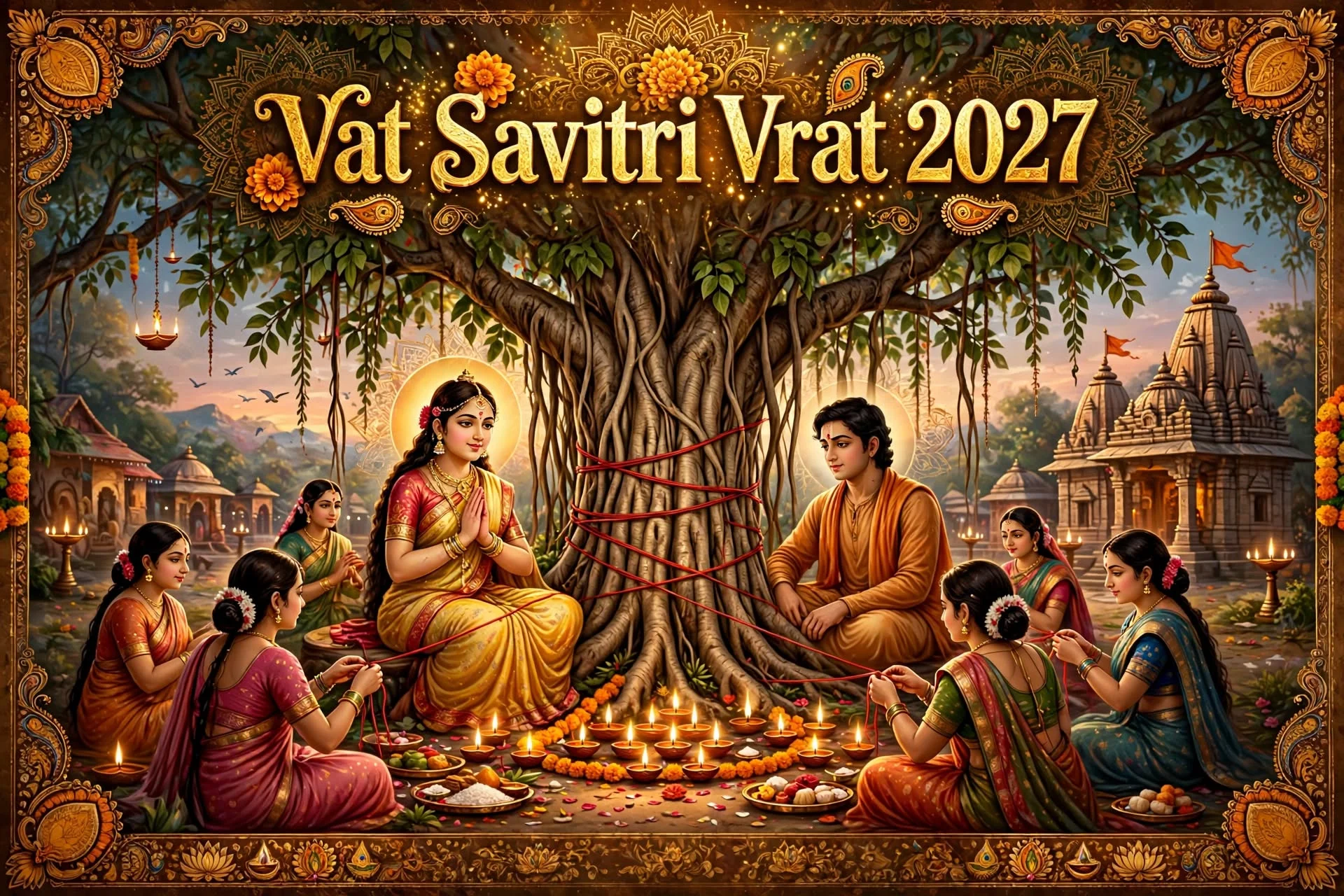
Vat Savitri Vrat
Vat Savitri Vrat is an important Hindu observance dedicated to the devotion, courage and determination of Savitri, the legendary wife of Satyavan. The festival is traditionally observed by married women who pray for their husband's long life, good health, prosperity and the well-being of their family.
View Festival Guide

Friday, Jun 4, 2027
Anvadhan
Anvadhan (अन्वाधान) is an ancient, highly revered Vedic ritual and spiritual observance in Sanatana Dharma performed on the day immediately preceding the New Moon (Amavasya) or Full Moon (Purnima). Rooted in the pristine traditions of the Shrauta and Grihya Sutras, Anvadhan literally translates to 'the solemn placing and replenishment of sacred fuel wood into the consecrated Vedic fires'. In traditional Vedic ritualism, householders (Grihasthas) and priests who maintain the sacred Agnihotra fires perform Anvadhan to prepare the sacrificial altars for the grand Darsha Yajna (New Moon sacrifice) or Paurnamasa Yajna (Full Moon sacrifice) scheduled for the following day.
View Festival Guide

Friday, Jun 4, 2027
Darsha Amavasya
Darsha Amavasya is a significant new moon observance in the Hindu calendar designating the specific night when the Moon is completely invisible to the human eye, having fully merged into the conjunction of the Sun.
View Festival Guide

Saturday, Jun 5, 2027
Ishti
Ishti is a foundational Vedic ritual observance appearing prominently in Hindu Panchangs on the Pratipada tithi (the first lunar day) following either Amavasya (new moon) or Purnima (full moon), marking the prescribed performance day for the fortnightly Vedic Darsha-Purnamasa sacrifices.
View Festival Guide

Saturday, Jun 5, 2027
Chandra Darshana
Chandra Darshana is a revered monthly Hindu observance dedicated to sighting, venerating, and offering oblation to the delicate waxing crescent Moon immediately following the new moon (Amavasya), typically occurring during the twilight of Shukla Paksha Pratipada or Dwitiya.
View Festival Guide

Sunday, Jun 13, 2027
Ganga Dussehra
Ganga Dussehra, also known as Ganga Dashami, Gangavataran and Gangā Daśaharā, is an important Hindu festival dedicated to Goddess Ganga. It commemorates the sacred descent of the River Ganga from the celestial realms to the earthly world. The festival is observed on Jyeshtha Shukla Dashami, the tenth day of the waxing phase of the Moon in the Hindu month of Jyeshtha.
View Festival Guide
Monday, Jun 14, 2027
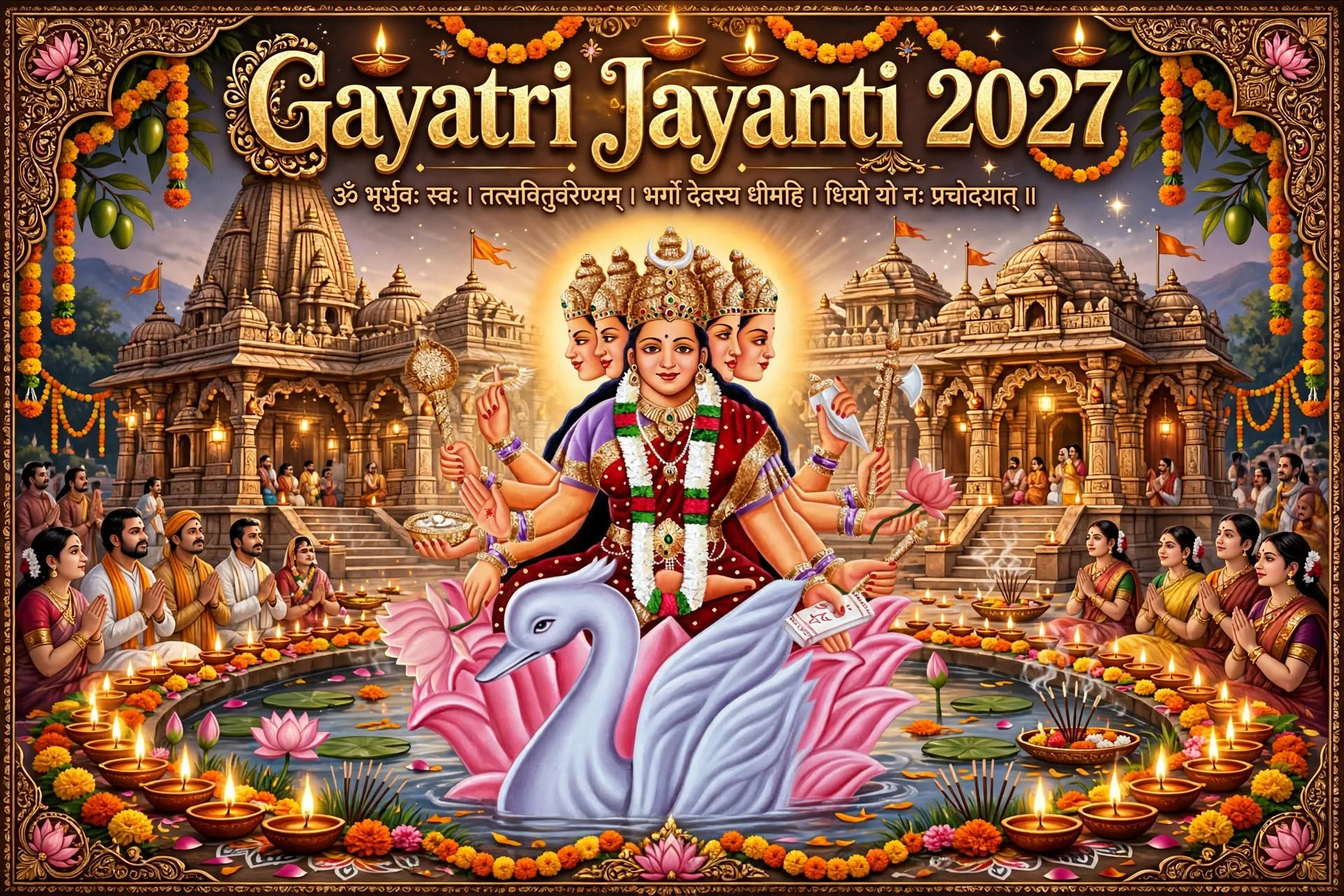
Gayatri Jayanti
Gayatri Jayanti is a sacred Hindu festival dedicated to Goddess Gayatri, revered as Ved Mata, the Mother of the Vedas. She represents divine wisdom, spiritual illumination, purity and the power of sacred knowledge. Devotees worship her as the personification of the Gayatri Mantra, one of the most revered prayers in the Vedic tradition.
View Festival Guide