




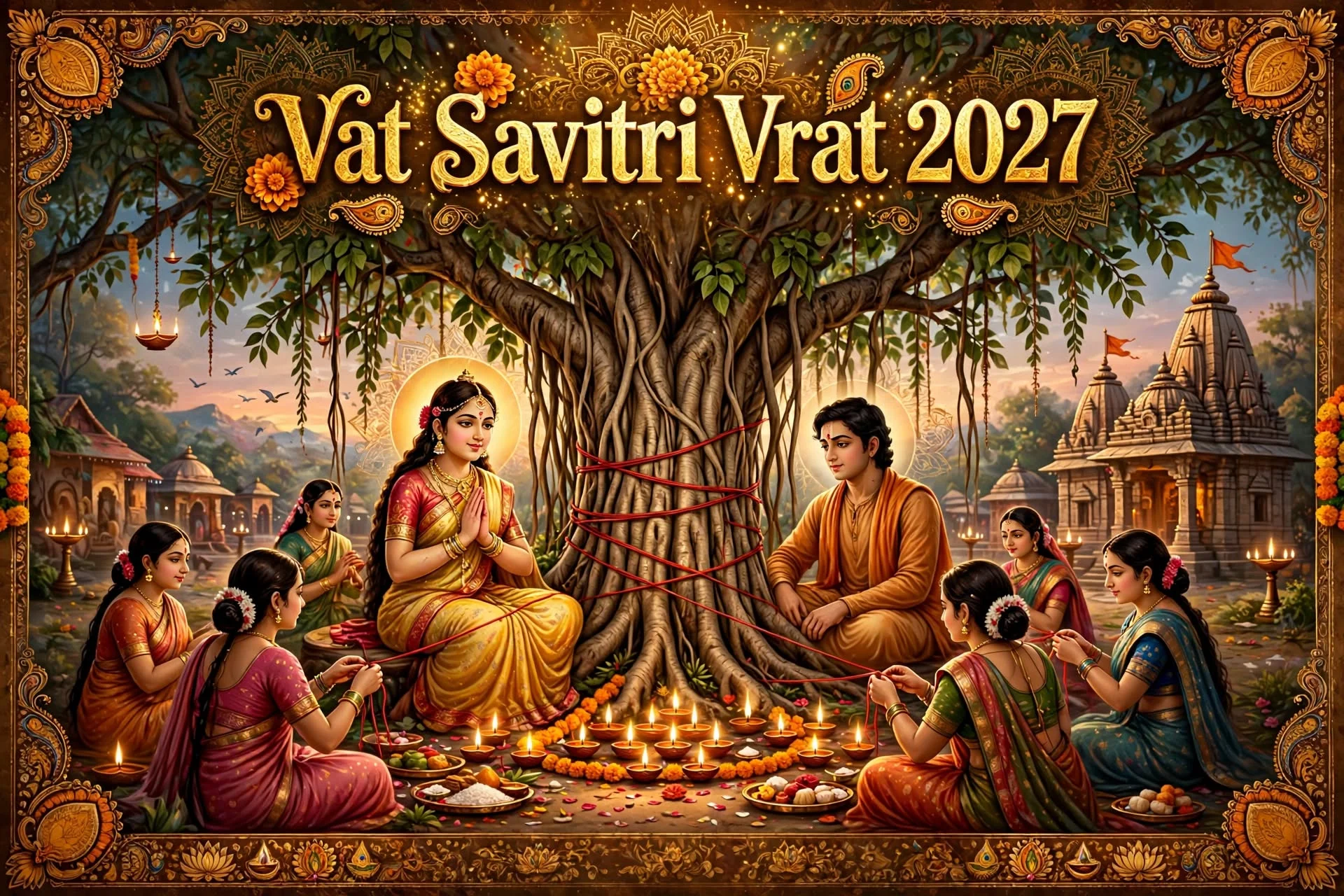
Vat Savitri Vrat is an important Hindu observance dedicated to the devotion, courage and determination of Savitri, the legendary wife of Satyavan. The festival is traditionally observed by married women who pray for their husband's long life, good health, prosperity and the well-being of their family.
Vat Savitri Vrat 2027: Date, Puja Timings, Rituals & Stories
Vat Savitri Vrat Timings & Panchang
Important festival dates and auspicious timings
Usha Arghya (Sunrise)
05:23 am
Sandhya Arghya (Sunset)
07:16 pm
Start Date
Friday, 4 Jun 2027
Puja Muhurat
06:34 am – 01:10 am
Vat Savitri Vrat
The observance is associated with the Jyeshtha month. In much of North India, Vat Savitri Vrat is observed on Jyeshtha Krishna Amavasya. In Maharashtra, Gujarat and some other regions, the related observance is celebrated on Jyeshtha Shukla Purnima and is popularly known as Vat Purnima or Vat Pournima.
The central story comes from the Savitri Upakhyana in the Vana Parva of the Mahabharata. Savitri was the daughter of King Ashwapati of Madra. She chose Satyavan, the son of the exiled and blind King Dyumatsena, as her husband. Although Sage Narada warned that Satyavan was destined to die within a year, Savitri remained firm in her decision.
When Yama, the god of death, came to take Satyavan's life, Savitri followed him and engaged him in a conversation about dharma, righteousness and virtue. Impressed by her wisdom and steadfastness, Yama granted her several boons. Through her careful choice of requests, Savitri ultimately secured the restoration of Satyavan's life.
The Banyan tree, known as Vat or Vata Vriksha, holds an important place in the later ritual traditions associated with this observance. Its long life, extensive branches and ability to produce new roots are regarded as symbols of longevity, continuity and stability. Women worship the tree, offer water and flowers, and wrap sacred cotton thread around its trunk while performing circumambulations.
The observance includes fasting, worship of Savitri and Satyavan, recitation or listening to the Vrat Katha, offerings to the Banyan tree and prayers for family welfare. Some communities also exchange Vayana or traditional gifts with married women and seek blessings from elders.
Why is Vat Savitri Vrat Celebrated?
Vat Savitri Vrat is observed in remembrance of Savitri's devotion, wisdom and determination in protecting the life of her husband, Satyavan. Her story is regarded as an example of courage, patience, intelligence and commitment to dharma. Married women traditionally observe the fast and worship the Banyan tree while praying for their husband's longevity and the happiness of their household.
The festival also celebrates the power of thoughtful speech and righteous conduct. Savitri does not overcome Yama through physical strength or anger. Instead, she follows him, speaks with wisdom and obtains boons through her understanding of dharma. Her story teaches that courage and intelligence can be expressed through patience, clarity and moral conviction.
- To remember Savitri and her unwavering devotion to Satyavan.
- To pray for the long life, good health and well-being of one's husband.
- To worship the Banyan tree as a traditional symbol of longevity and continuity.
- To seek peace, prosperity and happiness for the family.
- To honour the values of patience, courage, wisdom and righteousness.
- To preserve the traditional Vrat Katha and rituals associated with Savitri and Satyavan.
- To strengthen family relationships through prayer, blessings and charitable actions.
- To express gratitude towards nature and respect the significance of trees in Hindu traditions.
Although the observance is traditionally associated with married women's prayers for their husbands, its broader teachings include devotion, moral courage, compassion, family responsibility and respect for nature. The religious benefits associated with the fast are matters of faith and traditional belief.
History and Traditional Story of Vat Savitri Vrat
The Story of Savitri in the Mahabharata
The central narrative associated with Vat Savitri Vrat appears in the Savitri Upakhyana, also known as the Pativrata Mahatmya, in the Vana Parva of the Mahabharata. The sage Markandeya narrates the story to King Yudhishthira during the Pandavas' period in the forest.
The story begins with King Ashwapati of Madra, who was deeply concerned because he had no children. He performed religious austerities and worshipped Goddess Savitri with the desire to receive a child. Pleased with his devotion, the goddess blessed him with a daughter, who was named Savitri in her honour.
Savitri grew into a wise, virtuous and radiant princess. As she reached the age of marriage, her father found it difficult to identify a suitable husband for her. He therefore allowed her to travel and choose a husband according to her own judgment.
During her journey, Savitri met Satyavan, the son of King Dyumatsena. Dyumatsena had lost his kingdom and eyesight and was living in the forest with his family. Savitri recognised Satyavan's virtues and chose him as her husband.
Sage Narada's Prediction
After Savitri announced her choice, Sage Narada informed King Ashwapati about Satyavan's qualities. He praised Satyavan's character, truthfulness, courage and noble nature. However, Narada also revealed a troubling prediction: Satyavan was destined to die after a short period, traditionally described as one year.
King Ashwapati became worried and tried to persuade Savitri to choose another husband. However, Savitri remained determined. She explained that she had already chosen Satyavan and would not change her decision. Her response reflected her commitment, clarity and firmness.
Recognising his daughter's determination, Ashwapati accepted her decision. Savitri married Satyavan and began living with him and his parents in the forest. She served her family with affection and fulfilled her household responsibilities.
Savitri's Vow Before Satyavan's Predicted Death
Spiritual Significance of Vat Savitri Vrat
Savitri as an Example of Courage and Devotion
Savitri is remembered as an example of devotion, determination and moral courage. Her story demonstrates that devotion is not merely an emotional attachment but can also involve intelligence, responsibility and the ability to remain steady during difficult circumstances.
Her conversation with Yama is particularly significant because she does not rely on anger or confrontation. She uses thoughtful reasoning and her understanding of dharma to obtain the blessings that ultimately restore Satyavan's life.
Significance of the Banyan Tree
The Banyan tree, known as Vat Vriksha, is an important symbol in the observance. Its long life, wide canopy and aerial roots represent stability, endurance and continuity.
The tree's ability to spread and establish new roots is traditionally associated with the continuity of family life and relationships. Worshipping the Banyan tree is therefore regarded as a symbolic expression of prayers for longevity, protection and prosperity.
The tree is also respected as part of nature and as a sacred presence in Hindu religious traditions. Its worship encourages reverence for trees and the natural environment.
Symbolism of the Sacred Thread
Wrapping raw cotton thread around the Banyan tree is one of the most recognisable rituals of Vat Savitri Vrat. The thread represents prayer, commitment and the continuity of relationships.
As devotees perform circumambulations and wrap the thread around the trunk, they remember Savitri's determination and pray for the well-being of their families. The number of circumambulations differs according to regional and household customs.
The Importance of Dharma
The Savitri-Satyavan story is deeply connected with dharma. Savitri's conversation with Yama discusses the importance of truthfulness, virtue, compassion, self-control and righteous conduct.
How to Celebrate Vat Savitri Vrat
Preparation Before the Vrat
Devotees traditionally prepare for Vat Savitri Vrat by cleaning the home and arranging the materials required for worship. Women may prepare a puja thali containing flowers, fruits, water, sandalwood paste, turmeric, kumkum, rice, incense, a diya and raw cotton thread.
Some families begin their observance on Trayodashi and follow a three-day vrata. Others observe the fast only on the principal Amavasya or Purnima day. The duration depends on regional and family customs.
Morning Bath and Sankalpa
On the day of the observance, devotees traditionally wake up early and take a bath. They wear clean clothes and may dress in traditional attire, including a saree and customary ornaments.
After preparing the place of worship, devotees take a sankalpa, or religious resolution, to observe the vrata with sincerity. They pray for their family's well-being and remember Savitri's devotion and determination.
Worship of the Banyan Tree
The Banyan tree is the principal focus of the outdoor worship. Devotees visit a nearby Banyan tree and clean the area around its base respectfully. They offer water to the roots and place flowers, turmeric, kumkum, rice and other traditional offerings.
Some families place an image or small representation of Savitri and Satyavan near the tree. The worship is performed with prayers for longevity, prosperity and family welfare.
Tying the Sacred Thread
After making the offerings, devotees take raw cotton thread or a traditional sacred thread and wrap it around the trunk of the Banyan tree while performing circumambulations.
The number of rounds varies. Seven circumambulations are common in some households, while other traditions prescribe different numbers. Devotees should follow their family or regional practice rather than treating one number as universally compulsory.
Vat Savitri Vrat Puja Vidhi (Step by Step)
- 1
Clean the Worship Area
Clean the home and prepare the puja materials. If worship is being performed beneath a Banyan tree, respectfully clean the surrounding area without damaging the tree or its roots.
- 2
Take a Morning Bath
Wake up early and take a bath. Wear clean traditional clothes and prepare yourself for the observance with a calm and devotional mind.
- 3
Take the Sankalpa
Sit before the deity or the Banyan tree and take a sincere resolution to observe Vat Savitri Vrat. Pray for the well-being of your husband and family and remember Savitri's devotion.
- 4
Arrange the Puja Thali
Arrange water, flowers, raw cotton thread, turmeric, kumkum, rice, fruits, incense, a diya and other materials according to your family tradition.
- 5
Remember Savitri and Satyavan
Offer prayers to Savitri and Satyavan. Remember their story and the values of devotion, courage, wisdom and righteous conduct.
Vat Savitri Vrat Puja Samagri List
Deity and Worship Arrangements
Arrange the following materials for worship of Savitri, Satyavan and the sacred Banyan tree.
- Picture or representation of Goddess Savitri
- Picture or representation of Satyavan
- Banyan tree or a potted Banyan plant
- Clean puja cloth
- Puja thali
- Kalash or water vessel
- Clean water
- Akshat (unbroken rice)
Flowers and Traditional Offerings
These materials are commonly used for offerings during the Banyan tree worship.
- Fresh flowers
- Marigold flowers
- Seasonal fruits
- Mango
- Coconut
- Soaked black gram
- Jaggery
- Betel leaves
- Betel nuts
Sacred Thread and Adornment Materials
Mantras and Prayers for Vat Savitri Vrat
Vat Savitri Vrat Vrat Rules and Fasting Guidelines
Preparation Before the Vrat
Devotees traditionally prepare for Vat Savitri Vrat by maintaining cleanliness and arranging the required worship materials. Some families begin their vrata on Trayodashi and follow a three-day observance.
- Clean the home and worship area.
- Arrange the puja materials in advance.
- Follow the fasting preparation customary in your family.
- Maintain a peaceful and devotional mindset.
- Avoid unnecessary arguments and harmful behaviour.
- Consult the local Panchang for the correct observance date.
Fasting on Vat Savitri Vrat
Fasting is an important part of the observance. The method differs between households and regions. Some women observe a strict fast, while others consume water, fruits or a simple permitted meal.
- Observe the fast according to your family tradition.
- Some traditions follow a single-day fast.
- Some traditions observe a three-day vrata beginning on Trayodashi.
- Some devotees avoid food and water during a strict fast.
- Others follow a fruit-based or water-permitted fast.
- Do not force a strict fast if it is unsuitable for your health.
Worship of the Banyan Tree
Dos and Don'ts of Vat Savitri Vrat
Good Practices (Do's)
- Observe the fast according to your health and family tradition.
- Check the local Panchang for the correct observance date.
- Wake up early and wear clean clothes before the puja.
- Offer water, flowers and traditional offerings to the Banyan tree.
- Wrap sacred thread around the tree respectfully.
- Perform circumambulations according to your regional custom.
Vat Savitri Vrat Across Regions
| Region | Local Name |
|---|---|
| Uttar Pradesh | Vat Savitri Amavasya |
| Bihar and Jharkhand | Vat Savitri Vrat |
| Rajasthan | Vat Savitri Vrat / Bad Amavasya |
| Madhya Pradesh | Vat Savitri Vrat |
| Haryana and Punjab | Vat Savitri Vrat |
| Delhi | Vat Savitri Vrat |
| Maharashtra | Vat Purnima / Vat Pournima |
| Gujarat | Vat Purnima / Vad Savitri Vrat |
| Goa | Vat Purnima |
| Odisha | Savitri Amavasya / Savitri Brata |
| West Bengal | Savitri Chaturdashi / Savitri-related Vrat |
| South India | Vat Savitri / Vat Purnima |
Vat Savitri Vrat FAQs
What is Vat Savitri Vrat?
Vat Savitri Vrat is a Hindu observance associated with the story of Savitri and Satyavan. Married women traditionally observe the fast, worship the Banyan tree and pray for their husband's long life and the well-being of their family.
Why is Vat Savitri Vrat celebrated?
The observance commemorates Savitri's devotion, courage and wisdom when she followed Yama and secured the restoration of her husband Satyavan's life. Women traditionally observe the vrata for family welfare and their husband's longevity.
When is Vat Savitri Vrat observed?
In much of North India, Vat Savitri Vrat is observed on Jyeshtha Krishna Amavasya. In Maharashtra, Gujarat and some other regions, the related observance is celebrated on Jyeshtha Shukla Purnima as Vat Purnima.
Upcoming Festivals
View All
Friday, Jun 4, 2027
Vaishakha Amavasya
Vaishakha Amavasya is the new moon day observed during the Hindu month of Vaishakha according to the Amanta lunar calendar. It is considered an important day for worship, spiritual purification, remembrance of ancestors, charity, and religious observances. In the Purnimanta calendar, the same new moon is generally known as Jyeshtha Amavasya. The difference in naming arises from the two lunar calendar systems and does not indicate two separate new moons.
View Festival Guide
Friday, Jun 4, 2027
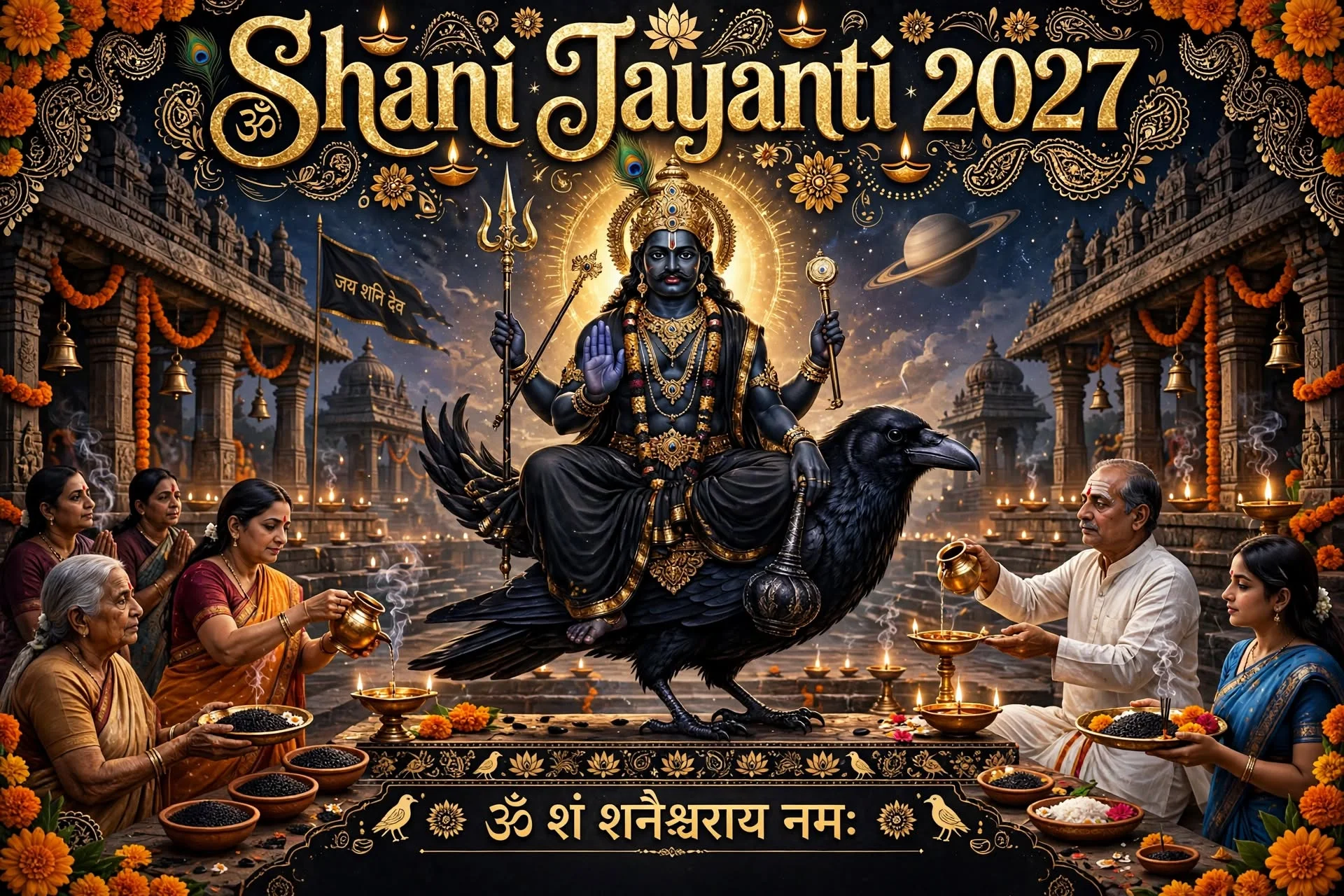
Shani Jayanti
Shani Jayanti, also known as Shani Janma Jayanti or Shani Amavasya, is an important Hindu observance dedicated to Lord Shani, the deity associated with the planet Saturn and one of the nine Navagrahas. Devotees observe this sacred day as the birth anniversary of Shani Dev, the son of Lord Surya and Goddess Chhaya. It is traditionally celebrated on Jyeshtha Amavasya, the new moon day in the Hindu month of Jyeshtha according to the Purnimanta calendar system.
View Festival Guide

Friday, Jun 4, 2027
Anvadhan
Anvadhan (अन्वाधान) is an ancient, highly revered Vedic ritual and spiritual observance in Sanatana Dharma performed on the day immediately preceding the New Moon (Amavasya) or Full Moon (Purnima). Rooted in the pristine traditions of the Shrauta and Grihya Sutras, Anvadhan literally translates to 'the solemn placing and replenishment of sacred fuel wood into the consecrated Vedic fires'. In traditional Vedic ritualism, householders (Grihasthas) and priests who maintain the sacred Agnihotra fires perform Anvadhan to prepare the sacrificial altars for the grand Darsha Yajna (New Moon sacrifice) or Paurnamasa Yajna (Full Moon sacrifice) scheduled for the following day.
View Festival Guide

Friday, Jun 4, 2027
Darsha Amavasya
Darsha Amavasya is a significant new moon observance in the Hindu calendar designating the specific night when the Moon is completely invisible to the human eye, having fully merged into the conjunction of the Sun.
View Festival Guide

Saturday, Jun 5, 2027
Ishti
Ishti is a foundational Vedic ritual observance appearing prominently in Hindu Panchangs on the Pratipada tithi (the first lunar day) following either Amavasya (new moon) or Purnima (full moon), marking the prescribed performance day for the fortnightly Vedic Darsha-Purnamasa sacrifices.
View Festival Guide

Saturday, Jun 5, 2027
Chandra Darshana
Chandra Darshana is a revered monthly Hindu observance dedicated to sighting, venerating, and offering oblation to the delicate waxing crescent Moon immediately following the new moon (Amavasya), typically occurring during the twilight of Shukla Paksha Pratipada or Dwitiya.
View Festival Guide

Sunday, Jun 13, 2027
Ganga Dussehra
Ganga Dussehra, also known as Ganga Dashami, Gangavataran and Gangā Daśaharā, is an important Hindu festival dedicated to Goddess Ganga. It commemorates the sacred descent of the River Ganga from the celestial realms to the earthly world. The festival is observed on Jyeshtha Shukla Dashami, the tenth day of the waxing phase of the Moon in the Hindu month of Jyeshtha.
View Festival Guide
Monday, Jun 14, 2027
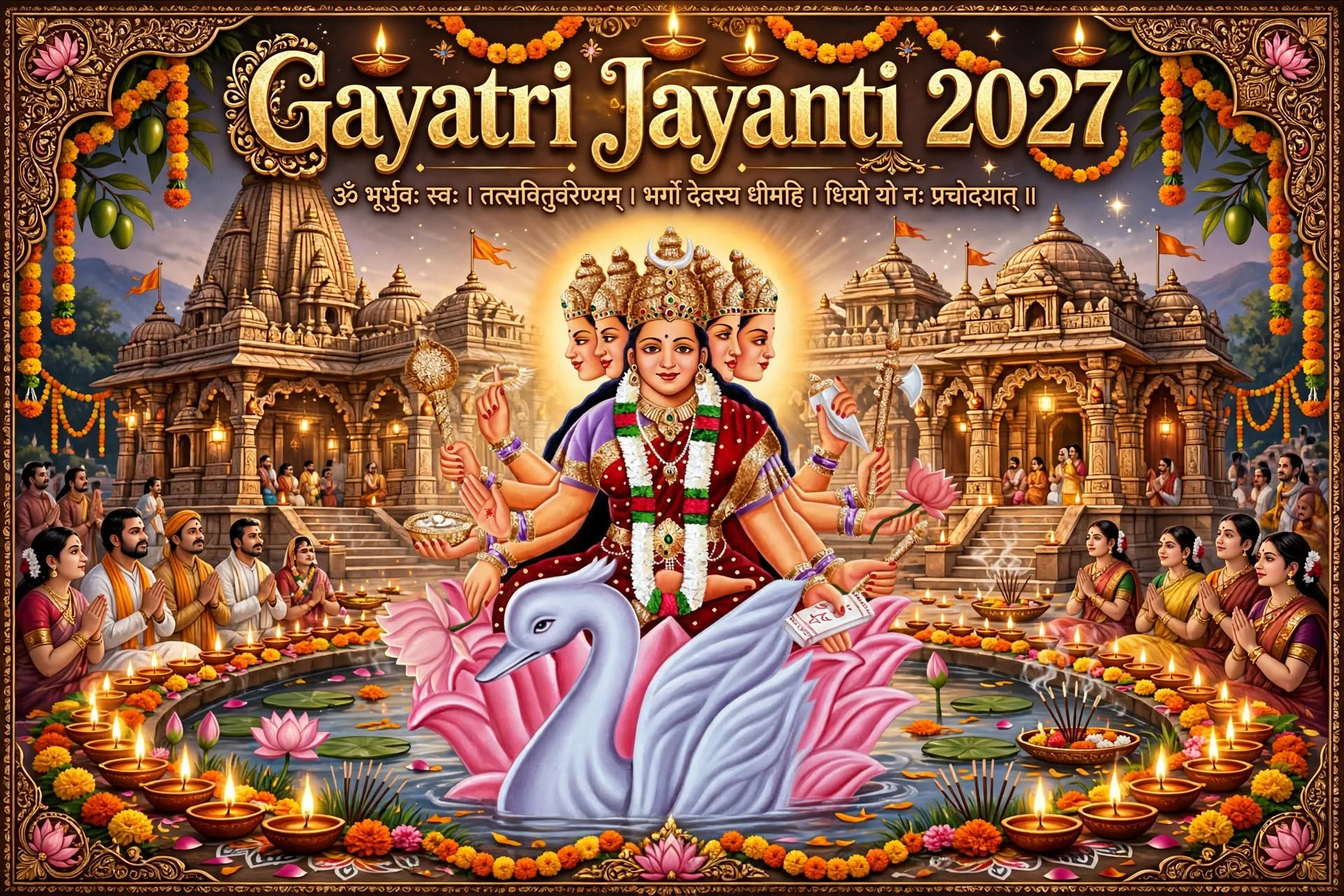
Gayatri Jayanti
Gayatri Jayanti is a sacred Hindu festival dedicated to Goddess Gayatri, revered as Ved Mata, the Mother of the Vedas. She represents divine wisdom, spiritual illumination, purity and the power of sacred knowledge. Devotees worship her as the personification of the Gayatri Mantra, one of the most revered prayers in the Vedic tradition.
View Festival Guide