




Ganga Dussehra, also known as Ganga Dashami, Gangavataran and Gangā Daśaharā, is an important Hindu festival dedicated to Goddess Ganga. It commemorates the sacred descent of the River Ganga from the celestial realms to the earthly world. The festival is observed on Jyeshtha Shukla Dashami, the tenth day of the waxing phase of the Moon in the Hindu month of Jyeshtha.
Ganga Dussehra 2027: Date, Puja Timings, Rituals & Stories

Ganga Dussehra Timings & Panchang
Important festival dates and auspicious timings
Usha Arghya (Sunrise)
05:23 am
Sandhya Arghya (Sunset)
07:20 pm
Start Date
Sunday, 13 Jun 2027
Puja Muhurat
02:44 am – 02:12 am
Ganga Dussehra
According to Hindu tradition, King Bhagiratha performed intense penance to bring Goddess Ganga to Earth so that the souls of his ancestors could attain liberation. Lord Shiva received the powerful celestial river in his matted locks and released her gently onto the Earth. This divine event is remembered as Gangavataran.
The word Dussehra is traditionally associated with the removal of ten kinds of sins. Devotees believe that bathing in the sacred Ganga, remembering the Goddess, performing prayers and engaging in charitable activities on this day help purify the body, speech and mind. The tenfold significance is also reflected in traditional offerings made in groups of ten.
Devotees celebrate Ganga Dussehra by taking a holy dip in the Ganga or another sacred river, offering flowers and lamps, reciting Ganga Stotras, performing Ganga Aarti and donating food, water and other essential items. Those who cannot visit the river worship Goddess Ganga at home using clean water and, where available, a few drops of Ganga Jal.
Beyond its religious importance, Ganga Dussehra reminds devotees of the spiritual and cultural significance of rivers. Goddess Ganga is revered as a mother who sustains life, grants purification and represents compassion, generosity and divine grace.
Why is Ganga Dussehra Celebrated?
Ganga Dussehra is celebrated to commemorate the descent of Goddess Ganga from the heavenly realms to Earth through the devotion and penance of King Bhagiratha. According to the traditional account, her earthly arrival helped liberate the souls of King Sagara's ancestors. The festival honours this divine event and the sacred role of the Ganga in Hindu tradition.
- To commemorate Gangavataran, the descent of Goddess Ganga to Earth.
- To honour King Bhagiratha's determination and devotion towards the liberation of his ancestors.
- To worship Goddess Ganga as a divine mother and a source of spiritual purification.
- To seek forgiveness for wrongdoing and cultivate purity in thoughts, words and actions.
- To perform charitable activities, particularly donations of water, food, clothes and other essentials.
- To express gratitude towards rivers and recognise their importance in sustaining life.
- To remember the spiritual connection between sacred rivers, ancestral traditions and liberation.
The Sacred Story of Ganga's Descent to Earth
The traditional account of Ganga's descent is described in the Bala Kanda of the Valmiki Ramayana and in several Puranic narratives. It tells the story of King Sagara, his descendants and the extraordinary determination of King Bhagiratha, whose penance eventually brought the sacred river from the celestial realm to Earth.
King Sagara and the Fate of His Sons
According to the traditional narrative, King Sagara of the Ikshvaku dynasty performed an Ashwamedha Yajna. During the sacrifice, the ceremonial horse disappeared. The king sent his sons to search for it. Their search eventually brought them to the hermitage of Sage Kapila, where they found the horse near the sage.
The sons disturbed the sage's meditation and behaved disrespectfully towards him. In the account narrated in the Ramayana, the power of the sage's spiritual radiance reduced them to ashes. Their souls could not attain liberation through ordinary funeral rites, and the family was left searching for a way to redeem them.
Bhagiratha's Resolve and Penance
Generations later, King Bhagiratha resolved to fulfil the unfinished responsibility of his ancestors. He understood that the sacred waters of Ganga were required for their spiritual redemption. With this purpose, he renounced royal comforts and performed severe penance to please Lord Brahma.
Pleased with his devotion, Lord Brahma granted his request and agreed to send Ganga to Earth. However, the force of her celestial descent was so immense that it threatened to overwhelm the world. Bhagiratha therefore sought the help of Lord Shiva, who alone could receive her powerful flow safely.
Lord Shiva Receives Goddess Ganga
Bhagiratha performed further penance to please Lord Shiva. Accepting his prayer, Shiva allowed Ganga to descend upon his head. The powerful river entered the Lord's matted locks, where her immense force was restrained. Shiva then released her in gentle streams so that she could flow across the Earth without destroying it.
Spiritual Significance of Ganga Dussehra
Ganga Dussehra represents spiritual purification, divine compassion, ancestral redemption and the importance of selfless effort. Goddess Ganga is revered not merely as a river but as a sacred mother whose waters symbolise purity, grace and the continuous flow of life. Worshipping her is an expression of gratitude towards the divine forces that sustain the world.
Purification of Body, Speech and Mind
The traditional meaning of Dashahara is associated with the removal of ten forms of wrongdoing. Hindu religious interpretations commonly group these into three related to the body, four related to speech and three related to the mind. A holy bath and sincere prayer symbolise the devotee's intention to abandon harmful conduct and follow a righteous path.
The Significance of the Number Ten
The number ten is central to the traditional observance of Ganga Dussehra. Devotees may offer ten flowers, ten lamps, ten fruits or other offerings in accordance with their family traditions and capacity. The number symbolises the tenfold theme of purification associated with the festival.
Ancestral Liberation and Gratitude
The story of Bhagiratha connects Ganga Dussehra with ancestral reverence. His efforts to bring Ganga to Earth represent the responsibility of remembering one's ancestors and performing righteous acts for their welfare. Some devotees therefore offer water oblations or prayers for their departed family members according to their family customs.
The Divine Connection Between Shiva and Ganga
Ganga's descent through Lord Shiva's matted locks represents the controlled expression of immense divine power. Shiva's role illustrates protection, balance and compassion, while Ganga's flow represents purity and the ability to nourish and transform life.
Charity, Compassion and Environmental Responsibility
How Ganga Dussehra Is Celebrated
Ganga Dussehra is celebrated through sacred bathing, worship of Goddess Ganga, recitation of prayers, river Aarti and charitable activities. The celebrations are especially prominent in places situated along the Ganga, although devotees across India observe the festival at home and near local rivers, lakes and other sacred water bodies.
Holy Bath in the Ganga
Devotees traditionally begin the day with a bath in the River Ganga. Haridwar, Rishikesh, Varanasi, Prayagraj and other sacred river locations attract devotees who gather at the ghats to offer prayers. Those who cannot travel to the Ganga may add a few drops of Ganga Jal to their bathing water, if available, and remember Goddess Ganga with devotion.
Worship of Goddess Ganga
After bathing, devotees worship Goddess Ganga by offering flowers, sandalwood paste, incense, lamps, fruits and sweets. Some families use a picture or an image of the Goddess, while others worship a clean vessel containing water as a symbolic representation of the sacred river.
Recitation of Ganga Mantras and Stotras
Devotees recite Ganga mantras, Ganga Stotram and other traditional prayers. Listening to the story of Bhagiratha and the descent of Ganga is also a common part of the observance. Families may follow the prayer texts and recitation traditions customary in their region.
Ganga Aarti and Deepdaan
In the evening, devotees gather at river ghats to participate in Ganga Aarti. Priests offer lamps, incense and prayers while devotional hymns are sung. Some devotees perform Deepdaan by offering lamps near the river. Any lamp offering should be carried out responsibly, without releasing plastic, non-biodegradable materials or harmful substances into the water.
Charity and Seva
Ganga Dussehra Puja Vidhi (Step by Step)
- 1
Wake Up Early and Prepare for Worship
Wake up early, clean the home and prepare the place of worship. Take a bath using clean water. Devotees who have access to the Ganga may take a holy dip while following local safety instructions. Those who cannot visit the river may add a few drops of Ganga Jal to their bathing water, if available.
- 2
Take a Sankalpa
Sit peacefully before the image of Goddess Ganga or a vessel containing clean water. Take a personal sankalpa to worship the Goddess with devotion, seek spiritual purification and perform righteous actions. The sankalpa may be expressed in one's own words or according to family tradition.
- 3
Establish the Worship Area
Place the image or picture of Goddess Ganga on a clean platform. Keep a water-filled kalash or vessel nearby. Decorate the worship area with flowers and arrange incense, a lamp, sandalwood paste, fruits and other offerings.
- 4
Invoke Goddess Ganga
Fold your hands and respectfully invoke Goddess Ganga. Chant 'Om Shri Gangayai Namah' with devotion. Remember her divine descent and pray for purity, wisdom, compassion and the strength to follow a righteous life.
Ganga Dussehra Puja Samagri List
Goddess Ganga Worship Essentials
These materials are used to prepare the worship area and offer prayers to Goddess Ganga.
- Image or picture of Goddess Ganga
- Clean water in a copper, brass or other suitable vessel
- Ganga Jal, if available
- Kalash or water pot
- Fresh flowers
- Akshata (unbroken rice grains)
- Sandalwood paste
- Kumkum and turmeric, according to family tradition
- Clean puja cloth
Lighting and Aarti Materials
These materials are used for offering light, fragrance and devotional prayers.
- Ghee or oil diya
- Cotton wicks
- Incense sticks
- Camphor
- Aarti thali
- Bell
- Flowers for offering
Naivedya and Prasad
Simple vegetarian offerings and seasonal foods may be prepared for Goddess Ganga and distributed as prasad.
Mantras and Prayers for Ganga Dussehra
Ganga Dussehra Vrat Rules and Fasting Guidelines
Purity and Preparation
Devotees traditionally begin the observance with personal cleanliness and a pure state of mind.
- Wake up early and take a bath.
- Keep the worship area clean.
- Wear clean clothes for the puja.
- Maintain a peaceful and devotional attitude.
- Avoid anger, dishonesty and harmful behaviour.
Food and Fasting Practices
Fasting is not compulsory for every devotee on Ganga Dussehra. Some people observe a simple fast, while others eat vegetarian food and perform worship without fasting.
- Follow the fasting practice prescribed by your family tradition.
- Choose simple vegetarian food if observing a fast.
- Drink sufficient clean water, especially during hot weather.
- Avoid fasting practices that may harm your health.
- People with medical conditions, children, older adults and pregnant individuals should prioritise their health and follow appropriate medical advice.
Worship and Charity
The central observance is devotion to Goddess Ganga, remembrance of her descent and acts of charity.
- Offer prayers to Goddess Ganga.
Dos and Don'ts of Ganga Dussehra
Good Practices (Do's)
- Wake up early and begin the day with cleanliness and prayer.
- Worship Goddess Ganga with devotion and offer clean water and flowers.
- Recite Ganga mantras, Ganga Stotram or other traditional prayers.
- Listen to or read the story of Bhagiratha and the descent of Ganga.
- Donate food, drinking water, grains, clothes or summer essentials according to your means.
- Help provide clean drinking water to people and animals during the summer.
Ganga Dussehra Across Regions
| Region | Local Name |
|---|---|
| Uttarakhand | Ganga Dussehra |
| Uttar Pradesh | Ganga Dashahara |
| Bihar | Ganga Dussehra |
| West Bengal | Ganga Puja |
| Delhi | Ganga Dussehra |
| Rajasthan | Ganga Dussehra |
| Madhya Pradesh | Ganga Dussehra |
| Maharashtra | Ganga Dussehra |
| Gujarat | Ganga Dussehra |
Ganga Dussehra FAQs
What is Ganga Dussehra?
Ganga Dussehra is a Hindu festival dedicated to Goddess Ganga. It commemorates the descent of the sacred River Ganga from the celestial realms to Earth through the penance of King Bhagiratha.
When is Ganga Dussehra celebrated?
Ganga Dussehra is traditionally observed on Jyeshtha Shukla Dashami, the tenth day of the waxing lunar fortnight in the Hindu month of Jyeshtha. Its exact Gregorian date changes every year according to the Hindu lunar calendar.
Why is Ganga Dussehra celebrated for ten days or ten sins?
The word Dashahara is traditionally associated with the removal of ten forms of wrongdoing. The number ten is also reflected in certain offerings and charitable practices. Some regional observances extend the celebrations across several days, although the principal festival is associated with Jyeshtha Shukla Dashami.
Upcoming Festivals
View All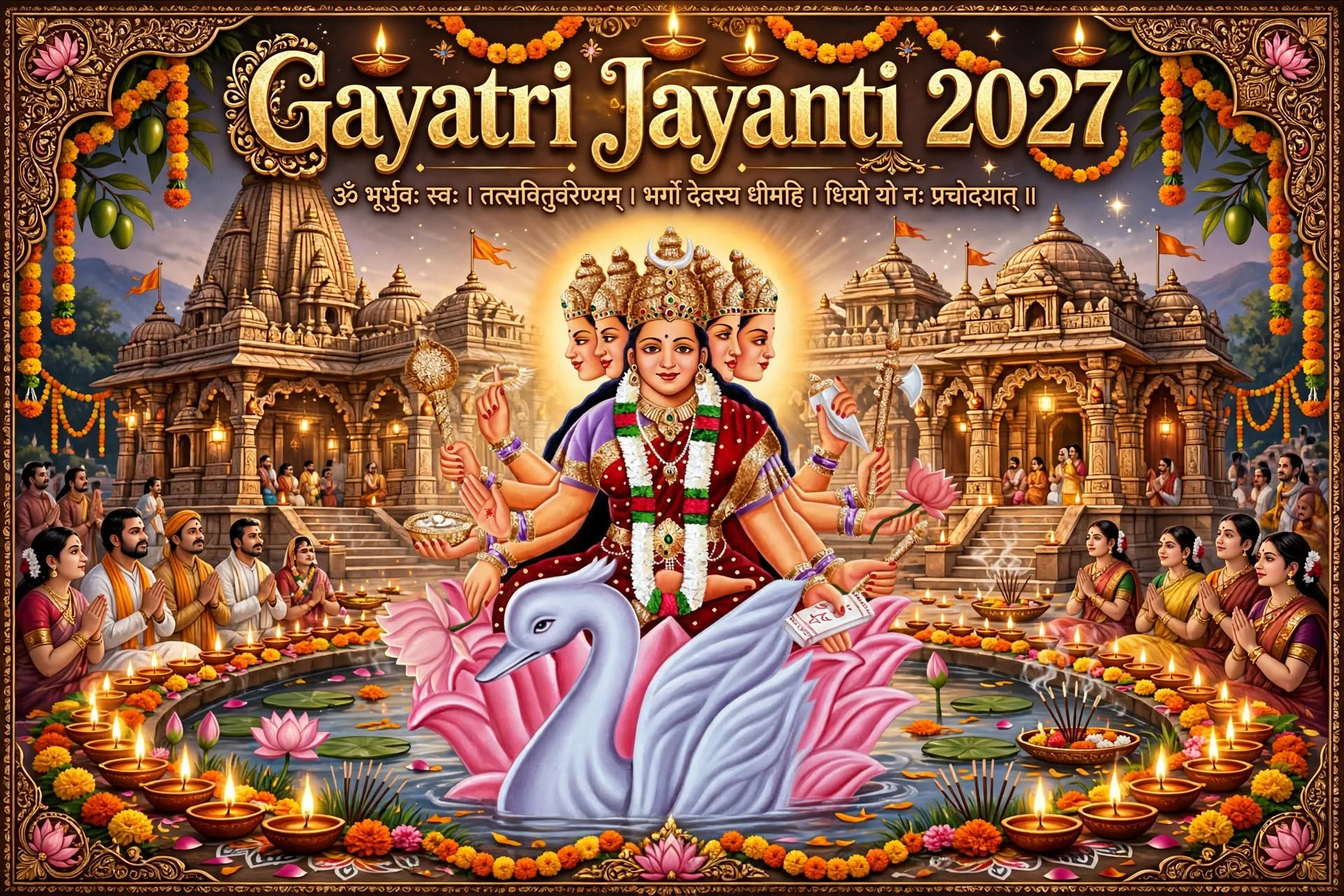
Monday, Jun 14, 2027
Gayatri Jayanti
Gayatri Jayanti is a sacred Hindu festival dedicated to Goddess Gayatri, revered as Ved Mata, the Mother of the Vedas. She represents divine wisdom, spiritual illumination, purity and the power of sacred knowledge. Devotees worship her as the personification of the Gayatri Mantra, one of the most revered prayers in the Vedic tradition.
View Festival Guide
Monday, Jun 14, 2027
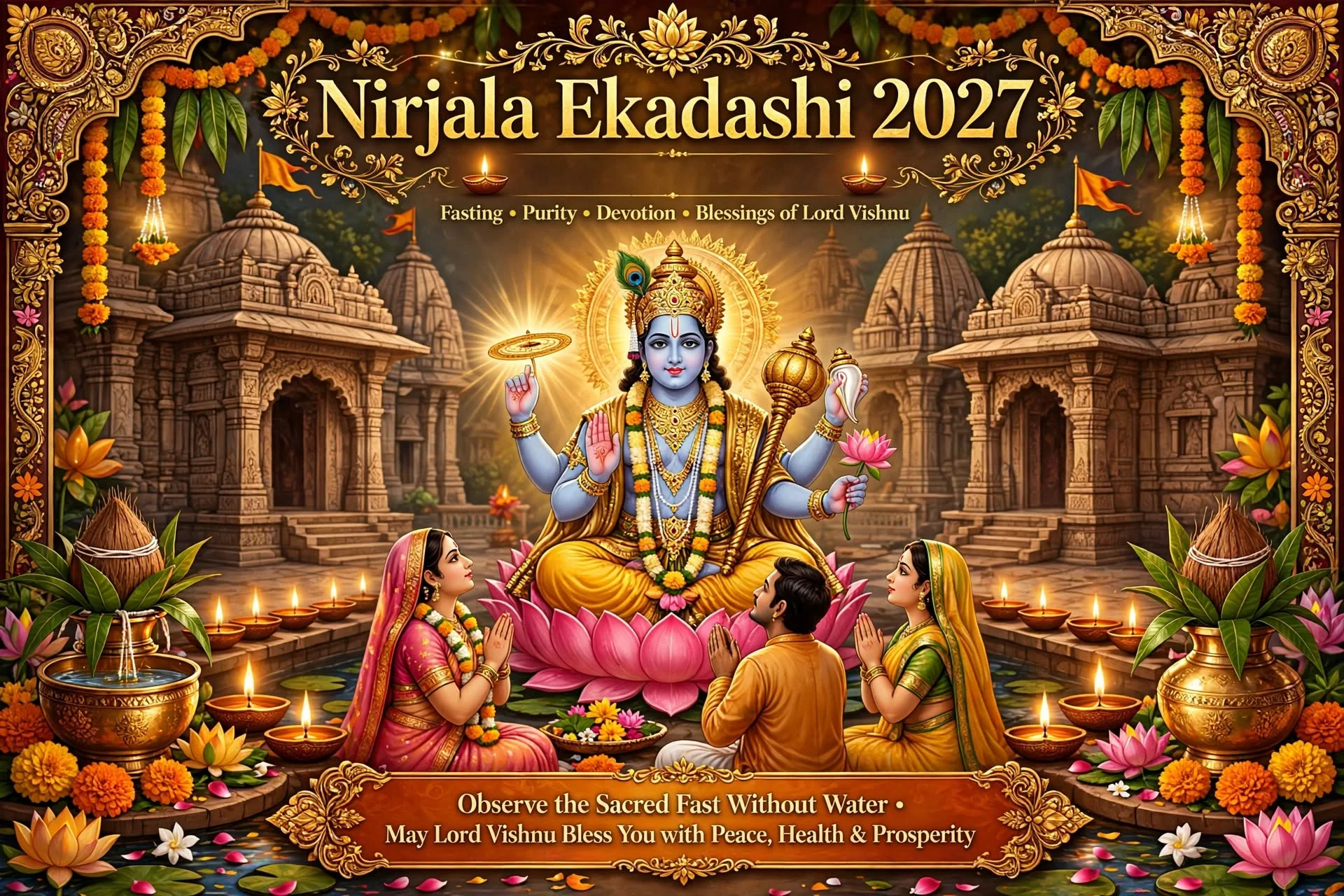
Nirjala Ekadashi
Nirjala Ekadashi is one of the most significant Ekadashi observances in Hindu tradition. It falls on the Shukla Paksha Ekadashi, the eleventh lunar day of the waxing fortnight, in the Hindu month of Jyeshtha. The word Nirjala means without water, referring to the traditional practice of observing a strict fast without consuming food or water.
View Festival Guide
Tuesday, Jun 15, 2027
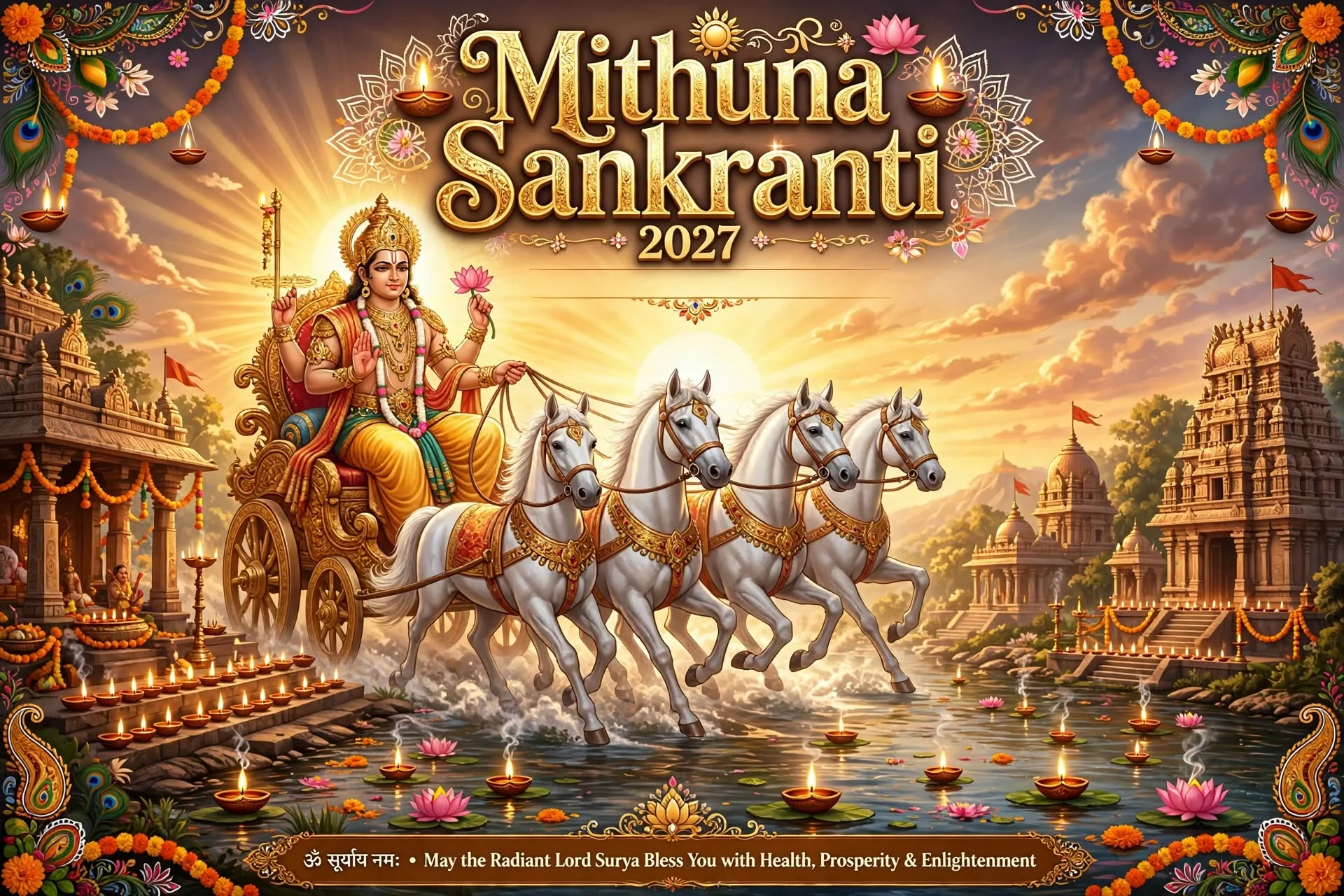
Mithuna Sankranti
Mithuna Sankranti is an important Hindu solar observance that marks the Sun's transition from Vrishabha Rashi (Taurus) into Mithuna Rashi (Gemini). This transition signals the beginning of the third month in the traditional Hindu solar calendar. It generally occurs around 14 or 15 June, although the exact date and time depend on the astronomical calculation of the Sun's entry into Gemini.
View Festival Guide
Wednesday, Jun 16, 2027
Budha Pradosh Vrat
Budha Pradosh Vrat, also known as Saumya Vara Pradosham, is a sacred bimonthly Hindu observance occurring when the Trayodashi tithi (thirteenth lunar day) coincides with a Wednesday (Budhavara) during the Pradosha Kaal twilight period.
View Festival Guide
Friday, Jun 18, 2027
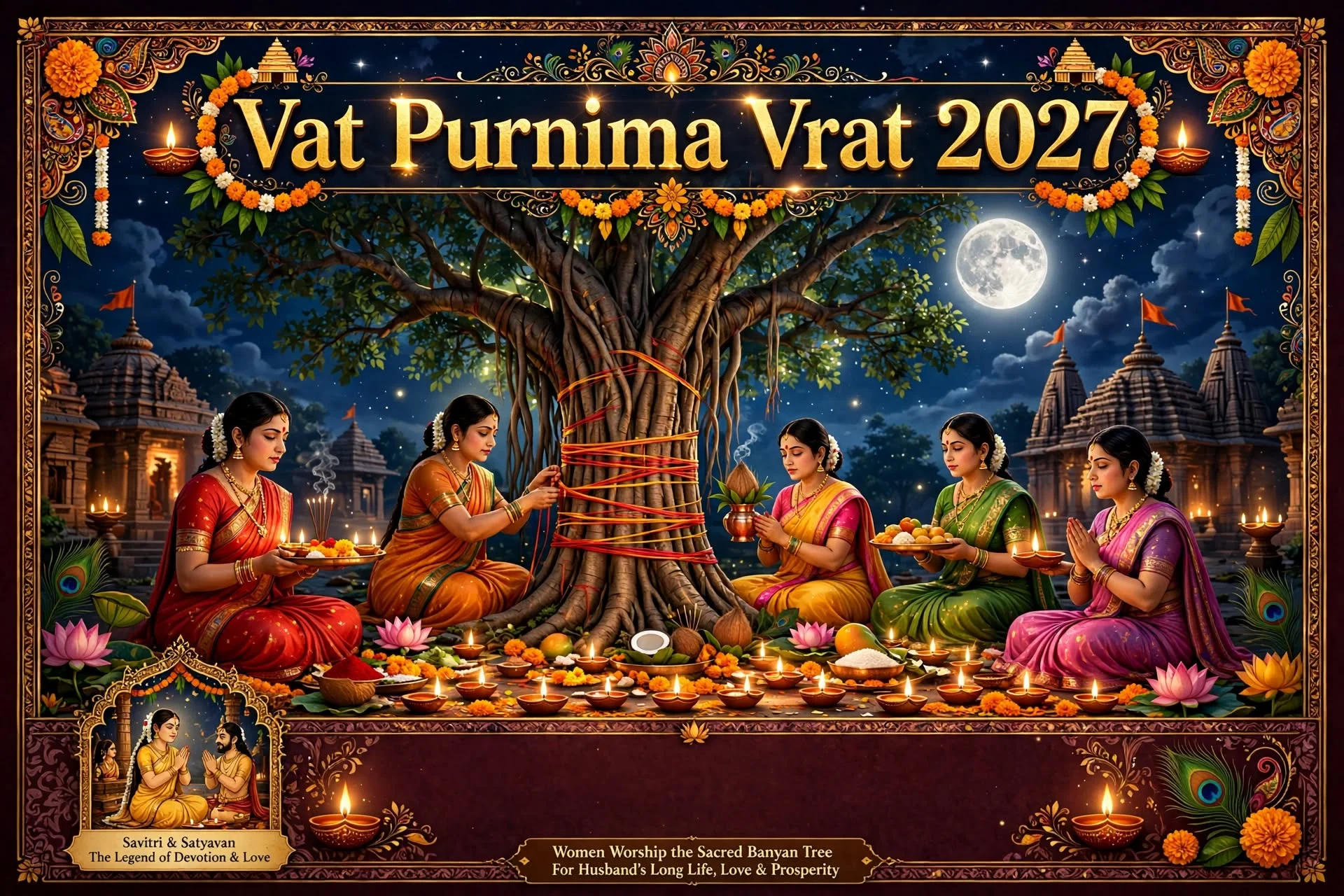
Vat Purnima Vrat
Vat Purnima Vrat, also known as Vat Savitri Purnima or Vata Pournima, is a traditional Hindu observance celebrated on Jyeshtha Shukla Purnima, the full-moon day of the Jyeshtha month. It is especially popular in Maharashtra, Gujarat, Goa and the Konkan region. The festival is associated with the devotion of Goddess Savitri towards her husband Satyavan and her encounter with Yama, the god of death.
View Festival Guide
Friday, Jun 18, 2027
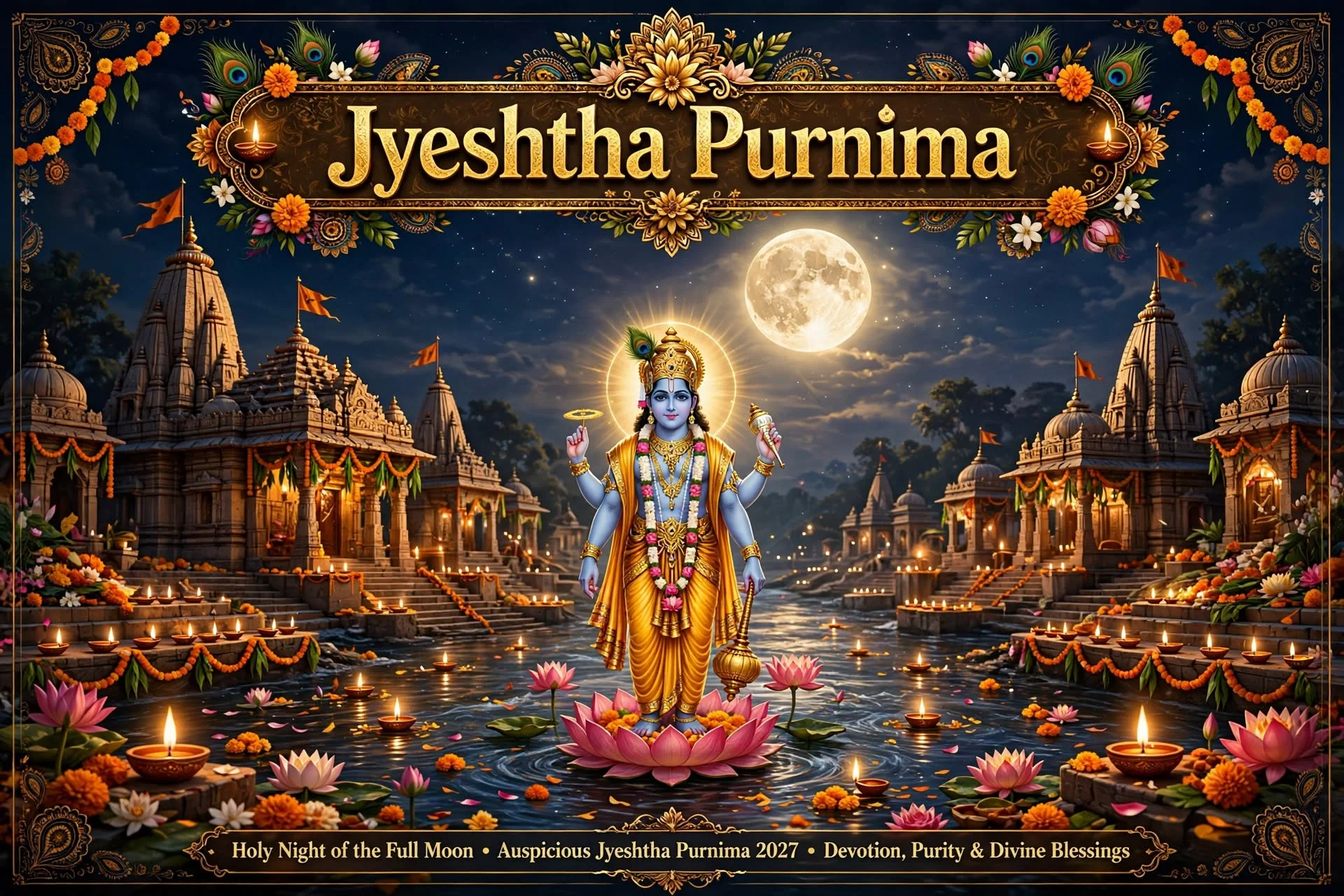
Jyeshtha Purnima
Jyeshtha Purnima is the sacred full-moon day that marks the conclusion of Shukla Paksha in the Hindu month of Jyeshtha. It generally falls during May or June in the Gregorian calendar and is considered an important occasion for worship, fasting, holy bathing, charity and spiritual reflection. The word Purnima refers to the full-moon tithi, while Jyeshtha identifies the lunar month in which it occurs.
View Festival Guide

Friday, Jun 18, 2027
Anvadhan
Anvadhan (अन्वाधान) is an ancient, highly revered Vedic ritual and spiritual observance in Sanatana Dharma performed on the day immediately preceding the New Moon (Amavasya) or Full Moon (Purnima). Rooted in the pristine traditions of the Shrauta and Grihya Sutras, Anvadhan literally translates to 'the solemn placing and replenishment of sacred fuel wood into the consecrated Vedic fires'. In traditional Vedic ritualism, householders (Grihasthas) and priests who maintain the sacred Agnihotra fires perform Anvadhan to prepare the sacrificial altars for the grand Darsha Yajna (New Moon sacrifice) or Paurnamasa Yajna (Full Moon sacrifice) scheduled for the following day.
View Festival Guide

Saturday, Jun 19, 2027
Ishti
Ishti is a foundational Vedic ritual observance appearing prominently in Hindu Panchangs on the Pratipada tithi (the first lunar day) following either Amavasya (new moon) or Purnima (full moon), marking the prescribed performance day for the fortnightly Vedic Darsha-Purnamasa sacrifices.
View Festival Guide