




Chandra Darshana is a revered monthly Hindu observance dedicated to sighting, venerating, and offering oblation to the delicate waxing crescent Moon immediately following the new moon (Amavasya), typically occurring during the twilight of Shukla Paksha Pratipada or Dwitiya.
Chandra Darshana 2027: Date, Puja Timings, Rituals & Stories
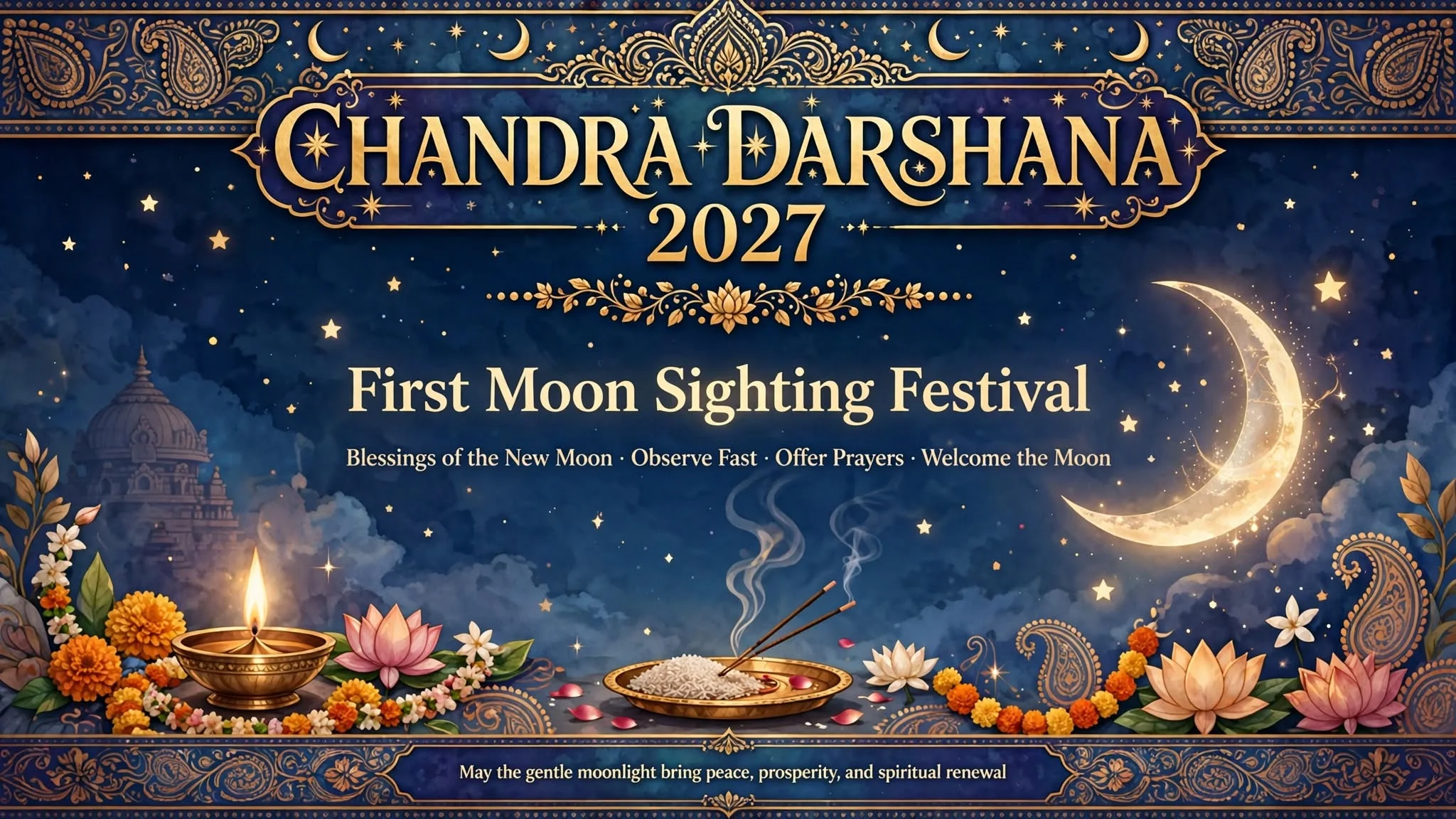
Chandra Darshana Timings & Panchang
Important festival dates and auspicious timings
Usha Arghya (Sunrise)
05:23 am
Sandhya Arghya (Sunset)
07:16 pm
Start Date
Saturday, 5 Jun 2027
Puja Muhurat
01:10 am – 09:58 pm
Chandra Darshana
In Vedic astronomical tradition and spiritual philosophy, the return of the first visible crescent represents cosmic rejuvenation, the rebirth of lunar light (Soma), and the renewal of mental and emotional vitality in all living beings.
Because the Moon (Chandra Dev) presides over human emotions, mental stability (Manas), intuition, and biological fertility, beholding the crescent Moon with pure devotion and offering Arghya (sacred water oblation) is held to dispel chronic melancholy, emotional confusion, and psychological fatigue.
Devotees observe a partial or day-long fast, gather in open courtyards or riverbanks at sunset to catch the first glimpse of the crescent, perform circumambulation, and distribute white-colored charitable items (milk, rice, sugar, white clothes, and silver) to invite prosperity, family peace, and mental poise.
Why is Chandra Darshana Celebrated?
Chandra Darshana is celebrated to welcome the cyclical restoration of the Moon God, thanking cosmic forces for the gift of cooling light, physical fertility, and peace of mind.
The observance provides a potent astrological antidote to Chandra Dosha (afflictions of the Moon in one's Vedic horoscope), transforming restless emotional instability into calm intuition and creative inspiration.
- To behold the auspicious waxing crescent Moon and receive the rejuvenating cosmic nectar (Soma) at twilight.
- To offer sacred Arghya (water, raw cow milk, white sandalwood, and unbroken rice) to Chandra Dev and Rohini Devi.
- To appease Chandra Dosha, mitigating mood disorders, mental stress, anxiety, and depression.
- To venerate Lord Shiva as Chandrashekhara (the Lord who crowns the crescent Moon upon His head).
- To foster marital bliss, mutual affection between spouses, and domestic peace through the distribution of white charitable gifts.
Puranic Cosmology and Scriptural Legends of Chandra Darshana
The Churning of the Ocean and the Emergence of Chandra
In the Srimad Bhagavatam and Vishnu Purana, the origin of the Moon God is traced to the Samudra Manthan (churning of the cosmic milk ocean). When the divine waters churned, Chandra Dev emerged radiant and serene, bearing the cooling essence of immortality (Amrita).
Recognizing His exquisite beauty and cooling grace, Lord Shiva adorned Chandra as a crescent jewel upon His matted crown, establishing an eternal metaphysical link between Mahadeva's supreme consciousness and the emotional rhythms of the Moon.
The Curse of King Daksha and the Boon of Somnath
A celebrated legend in the Shiva Purana and Skanda Purana relates that Chandra Dev married the twenty-seven daughters of King Daksha Prajapati, which represent the twenty-seven lunar constellations (Nakshatras). However, Chandra was exceptionally infatuated with Rohini, neglecting his other twenty-six wives.
Distressed by their daughters' abandonment, King Daksha reprimanded Chandra. When Chandra's favoritism persisted, the enraged Daksha cursed him with consumption (Kshaya Roga), causing Chandra to lose his luster, vital essence, and radiance day by day.
As the Moon waned towards total annihilation, all plant life withered, medicinal herbs lost their potency, and cosmic reproduction ground to a halt. In terror, the Devas led Chandra to Prabhas Patan (modern Somnath in Gujarat), where Chandra established a sacred Shiva Linga and performed intense tapas, bathing with holy water and chanting the Maha Mrityunjaya Mantra.
Pleased by his unreserved surrender, Lord Shiva appeared and declared that while Daksha's curse could not be entirely erased, it could be harmoniously modified: Chandra would wane gradually for fifteen days (Krishna Paksha) and then wax in radiance for fifteen days (Shukla Paksha), eternally renewed. Lord Shiva crowned the rejuvenated crescent upon His forehead. The day when this radiant crescent first reappears is joyously celebrated as Chandra Darshana.
Source: Shiva Purana (Kotirudra Samhita), Vishnu Purana (Amsa 1), and Skanda Purana (Prabhasa Khanda)
Metaphysical, Psychological, and Astrological Significance
The Moon as the Archetype of Consciousness (Manas)
The Rigvedic Purusha Sukta declares: 'Chandrama Manaso Jatah' ('The Moon was born from the cosmic mind of the Supreme Being'). In human beings, the physical brain and subtle mind fluctuate with lunar phases. The disappearance of the Moon during Amavasya represents the dark night of the soul, while Chandra Darshana represents the dawn of renewed hope, psychological clarity, and spiritual illumination.
By gazing intently at the crescent Moon (Trataka) during twilight, the practitioner calms agitated brain waves, cools excessive physical heat (Pitta), and awakens the creative faculty of the subconscious mind.
Soma Tattva and the Nourishment of Creation
In Vedic philosophy, Chandra is the custodian of Soma—the cosmic nectar that infuses medicinal herbs, vegetation, and water bodies with healing properties during the night. Worshipping the Moon re-establishes ecological gratitude and harmony with natural biological rhythms.
Astrological Harmony and Peaceful Relationships
- Alleviates afflictions of the Moon caused by conjunctions with Saturn, Rahu, or Ketu in astrological charts.
- Imparts emotional resilience to mothers and young children, whose vitality is ruled by lunar energies.
- Promotes harmony, tenderness, and mutual empathy in marital and family relationships.
Practical Protocol, Sighting Guidelines, and Evening Worship
Preparations During the Day
Devotees maintain clean domestic surroundings and observe a fast from sunrise, consuming only fresh fruits, water, or milk. Anger, loud speech, and harsh behavior are strictly avoided throughout the day to mirror the serene composure of the Moon.
In the late afternoon, an Arghya vessel is prepared containing pure water, unboiled raw cow milk, white sandalwood paste, unbroken rice (Akshata), white flowers, and rock sugar (Mishri).
The Sacred Sighting at Twilight (Sandhya Kaal)
Immediately after sunset, devotees assemble on rooftops, open terraces, balconies, or sacred riverbanks facing the western horizon. Because the crescent Moon is extremely slender and sets rapidly, devotees watch the western sky with patient anticipation.
Upon first catching sight of the silver crescent, devotees fold their hands in deep reverence, bow their heads, and invoke Chandra Dev alongside Rohini Devi with prayers of joy and thanksgiving.
Offering Arghya and Concluding the Vow
Holding the Arghya vessel with both hands at chest level, the practitioner pours the milky water in a gentle, uninterrupted stream towards the Moon while looking at the crescent through the falling stream, reciting the Chandra Arghya mantra.
After offering the Arghya, devotees perform circumambulation (Pradakshina), chant the Chandra Bija Mantra 108 times, and offer white-colored food (such as rice kheer, makhana kheer, or milk sweets) to the Lord before partaking of the blessed prasad to break their fast.
Chandra Darshana Puja Vidhi (Step by Step)
- 1
Evening Purificatory Bath (Sandhya Snana)
Approximately 45 minutes prior to sunset, take a fresh purificatory bath using clean water infused with Gangajal. Wear clean, freshly washed white, light blue, or silver-hued traditional clothing, which harmonizes with lunar frequencies.
- 2
Preparation of the Sacred Chandra Arghya Patra
Take a clean silver, brass, or copper vessel (lota). Fill it with pure freshwater mixed with a generous portion of unboiled raw cow milk. Add white sandalwood paste (Shweta Chandan), unbroken white rice grains (Akshata), fresh white flowers (such as jasmine or white kaner), and a piece of rock sugar (Mishri).
- 3
Chandra Darshana (Observing the Waxing Crescent)
Step into an open terrace, courtyard, or riverbank facing the western horizon immediately following sunset. Patiently look for the delicate, luminous sliver of the waxing crescent Moon. As soon as the crescent becomes visible, fold hands in namaskara mudra and bow in profound reverence.
- 4
Chandra Arghya Samarpan (Offering Milk-Water Libation)
Raise the Arghya vessel above eye level with both hands. Slowly pour the sanctified milk-water in a smooth, steady stream towards the crescent Moon while gazing at the Moon through the falling cascade, reciting the Chandra Arghya mantra: 'Kshirodarnava Sambhuta Atrinetra Samudbhava, Grihanarghyam Shashankesha Rohinya Sahito Mama'.
Chandra Darshana Puja Samagri List
Arghya and Sighting Essentials
Specific vessels and liquid ingredients required for presenting the sacred evening Arghya to the crescent Moon.
- Pure silver, brass, or copper vessel (lota) for Arghya
- Fresh, unboiled cow milk (Kaccha Dudh)
- Pure holy water (Gangajal) mixed with freshwater
- White sandalwood paste (Shweta Chandan)
- Unbroken, cleaned white rice grains (Akshata)
- Fresh white blossoms (jasmine, mogra, white lotus, or white kaner)
- Rock candy crystals (Mishri)
Meditation and Deity Worship Articles
Implements and offerings dedicated to the Moon God and Lord Chandrashekhara.
- Sphatika (crystal) mala, silver mala, or pearl (moti) rosary (108 beads)
- Small Shiva Linga or picture of Shiva Chandrashekhara
- Fresh Bilva leaves and holy ash (Bhasma / Vibhuti)
- Clean white cloth for the domestic altar
- Camphor tablets (Bhimseni Karpoor) and brass aarti diya
Naivedya and Sweet Offerings
- Rice Kheer prepared with pure cow milk, rice, and jaggery/sugar
Mantras and Prayers for Chandra Darshana
Chandra Darshana Vrat Rules and Fasting Guidelines
Fasting Discipline and Conduct
On Chandra Darshana, practitioners maintain a gentle, reflective fast throughout the day until the evening sighting of the Moon:
- Observe a partial fast (Phalahari) consuming only milk, fresh fruits, and nuts during the day.
- Strictly avoid all non-vegetarian items, alcohol, tobacco, onions, garlic, and heavily spiced foods.
- Maintain composure, patience, and kindness; avoid shouting, domestic quarrels, and deceitful conduct.
- Do not consume salty foods during the daylight hours of the fast.
Sighting and Arghya Regulations
- The Arghya must be offered immediately upon sighting the Moon, before it sinks below the western horizon.
- Never offer Arghya using salty water or water in iron/aluminum vessels; use silver, brass, or copper.
- Always include raw cow milk and white flowers in the Arghya preparation.
- If clouds obstruct direct vision, devotees face the western twilight sky where the Moon resides, offering mental prayers and Arghya according to Panchang timings.
Parana and Fast Completion
The fast is broken immediately after offering the evening Arghya, completing 108 mantra repetitions, and performing aarti. The first food consumed should be white and sweet, specifically the sanctified rice kheer or milk pedas, followed by a simple sattvic dinner.
Dos and Don'ts of Chandra Darshana
Good Practices (Do's)
- Wake early, maintain mental tranquility, and observe a sattvic fast during the day.
- Take an evening bath before sunset and don clean white, light blue, or silver clothes.
- Watch the western horizon at twilight to catch the first sight of the crescent Moon.
- Offer Arghya composed of water, raw cow milk, white sandalwood, and akshata.
- Chant the Chandra Bija Mantra ('Om Shram Shreem Shroum Sah Chandramase Namah') 108 times.
Chandra Darshana Across Regions
| Region | Local Name |
|---|---|
| Gujarat and Western India (Somnath Kshetra) | Chandra Darshan & Someshwara Puja |
| North India (Uttar Pradesh, Rajasthan, Bihar) | Chand Darshan |
| South India (Tamil Nadu, Karnataka, Andhra Pradesh) | Chandra Darshanam & Pirai Paarthal |
| Maharashtra | Chandra Darshan |
Chandra Darshana FAQs
What is Chandra Darshana, and when does it occur?
Chandra Darshana is the religious observance of sighting and worshiping the first visible waxing crescent Moon following Amavasya (new moon). It occurs during the evening twilight of Shukla Paksha Pratipada or Dwitiya tithi.
What are the spiritual benefits of observing Chandra Darshana?
Worshipping the crescent Moon soothes the nervous system, alleviates anxiety, depression, and mental fatigue, enhances memory and intuition, pacifies Chandra Dosha in birth charts, and promotes domestic harmony.
What should be offered during Chandra Arghya?
The Arghya should consist of pure water mixed with raw unboiled cow milk, white sandalwood paste, unbroken rice grains (akshata), fresh white flowers, and rock sugar (mishri), offered from a silver, brass, or copper vessel.
Upcoming Festivals
View All
Saturday, Jun 5, 2027
Ishti
Ishti is a foundational Vedic ritual observance appearing prominently in Hindu Panchangs on the Pratipada tithi (the first lunar day) following either Amavasya (new moon) or Purnima (full moon), marking the prescribed performance day for the fortnightly Vedic Darsha-Purnamasa sacrifices.
View Festival Guide
Sunday, Jun 13, 2027
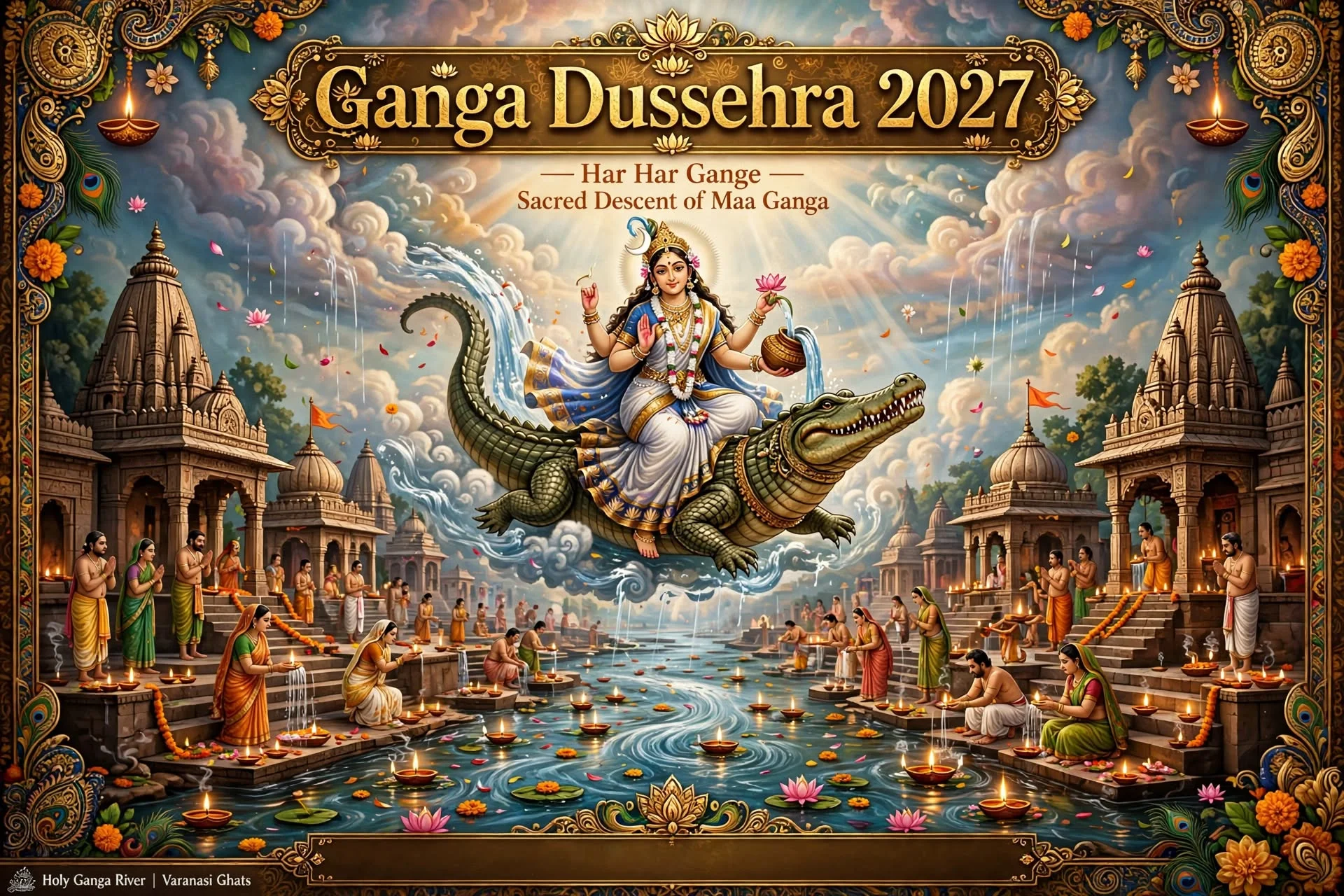
Ganga Dussehra
Ganga Dussehra, also known as Ganga Dashami, Gangavataran and Gangā Daśaharā, is an important Hindu festival dedicated to Goddess Ganga. It commemorates the sacred descent of the River Ganga from the celestial realms to the earthly world. The festival is observed on Jyeshtha Shukla Dashami, the tenth day of the waxing phase of the Moon in the Hindu month of Jyeshtha.
View Festival Guide
Monday, Jun 14, 2027
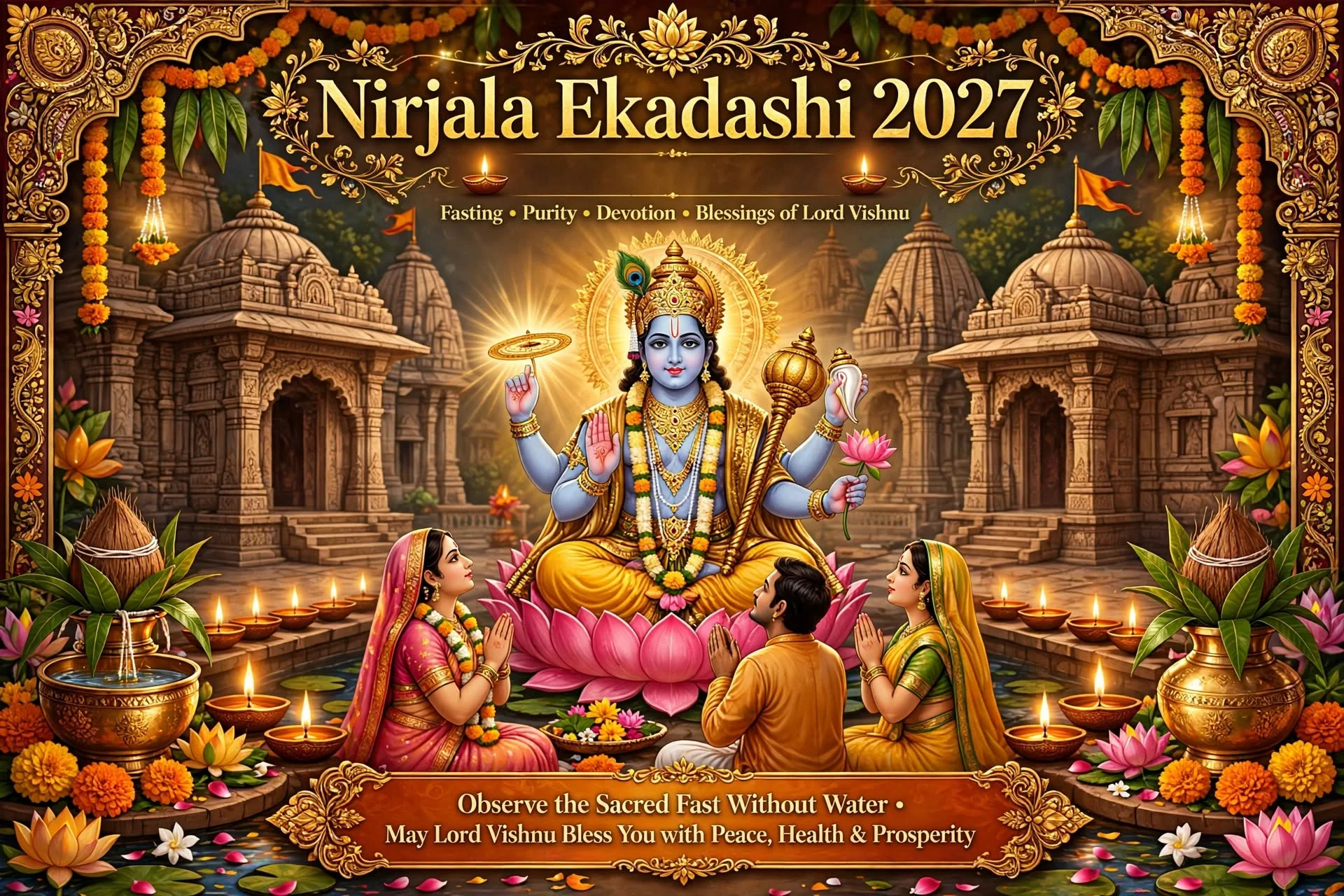
Nirjala Ekadashi
Nirjala Ekadashi is one of the most significant Ekadashi observances in Hindu tradition. It falls on the Shukla Paksha Ekadashi, the eleventh lunar day of the waxing fortnight, in the Hindu month of Jyeshtha. The word Nirjala means without water, referring to the traditional practice of observing a strict fast without consuming food or water.
View Festival Guide
Monday, Jun 14, 2027
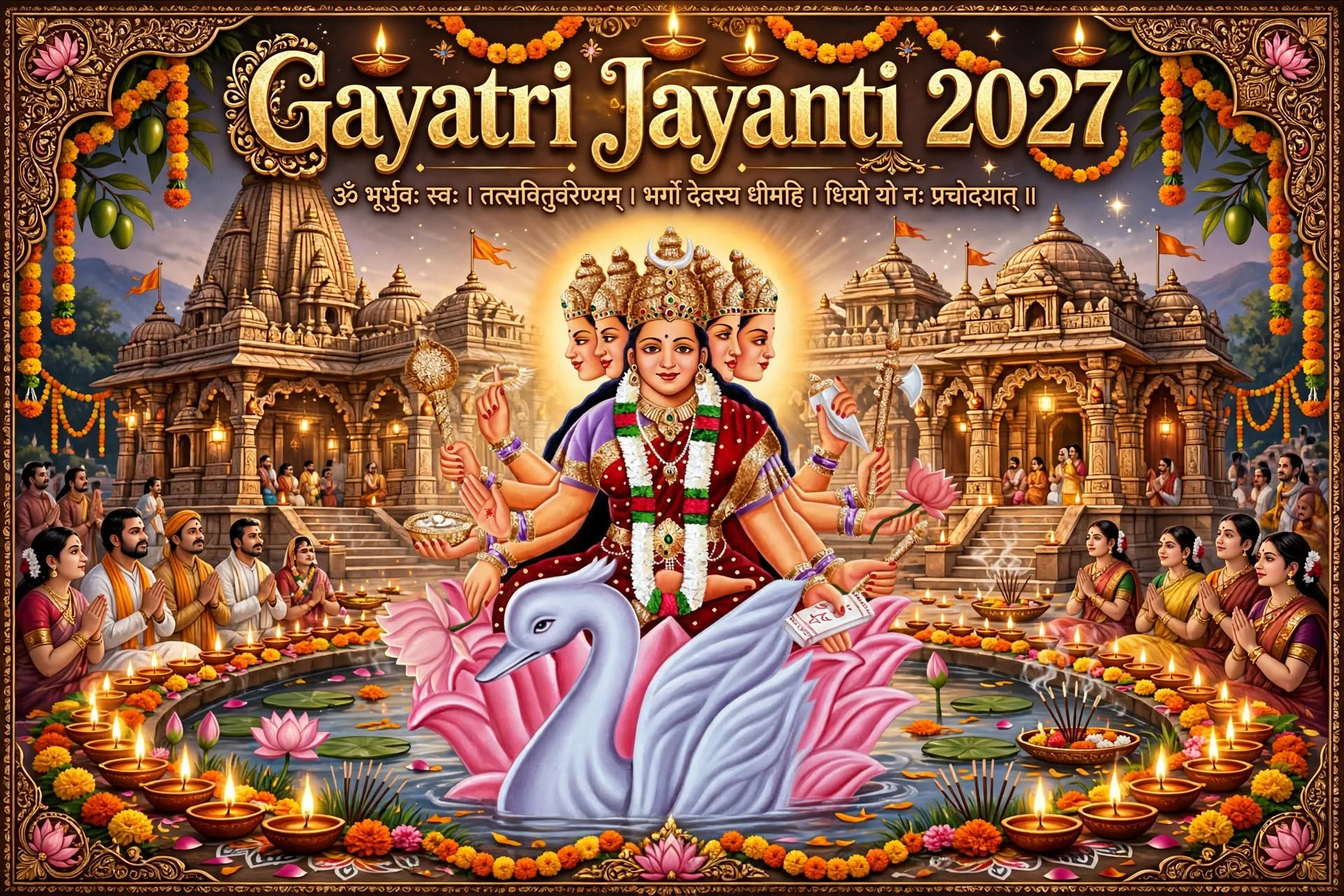
Gayatri Jayanti
Gayatri Jayanti is a sacred Hindu festival dedicated to Goddess Gayatri, revered as Ved Mata, the Mother of the Vedas. She represents divine wisdom, spiritual illumination, purity and the power of sacred knowledge. Devotees worship her as the personification of the Gayatri Mantra, one of the most revered prayers in the Vedic tradition.
View Festival Guide
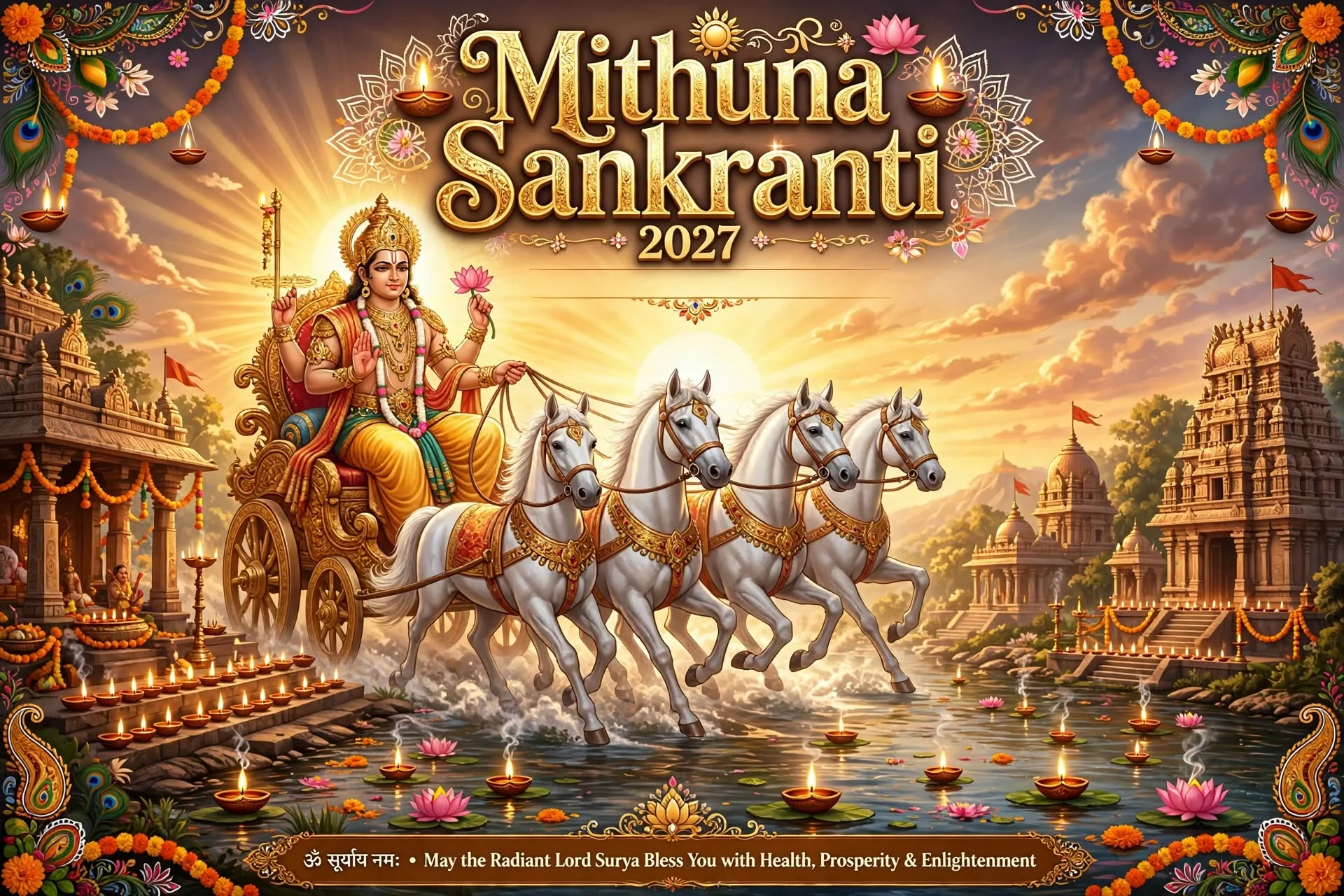
Tuesday, Jun 15, 2027
Mithuna Sankranti
Mithuna Sankranti is an important Hindu solar observance that marks the Sun's transition from Vrishabha Rashi (Taurus) into Mithuna Rashi (Gemini). This transition signals the beginning of the third month in the traditional Hindu solar calendar. It generally occurs around 14 or 15 June, although the exact date and time depend on the astronomical calculation of the Sun's entry into Gemini.
View Festival Guide
Wednesday, Jun 16, 2027
Budha Pradosh Vrat
Budha Pradosh Vrat, also known as Saumya Vara Pradosham, is a sacred bimonthly Hindu observance occurring when the Trayodashi tithi (thirteenth lunar day) coincides with a Wednesday (Budhavara) during the Pradosha Kaal twilight period.
View Festival Guide
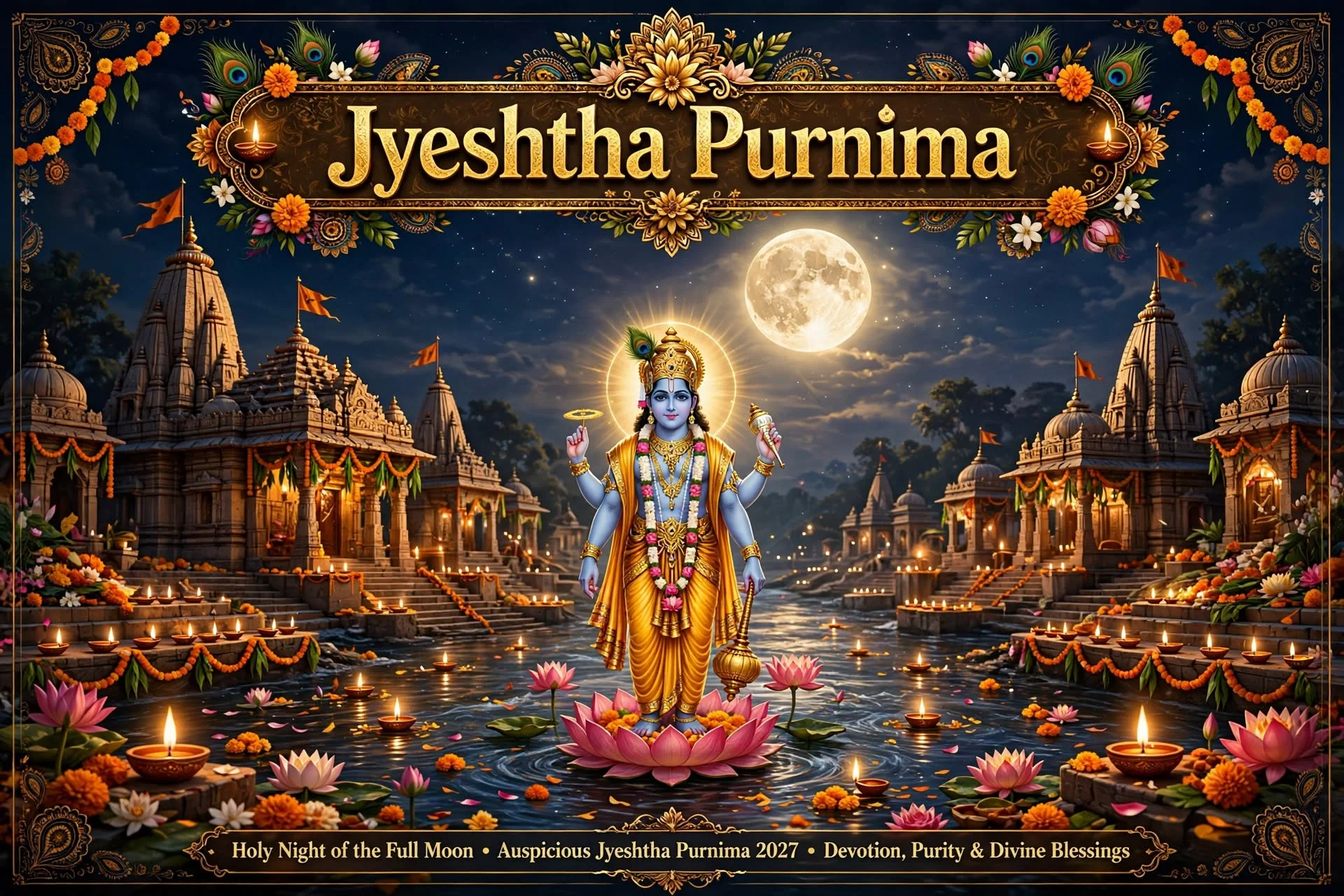
Friday, Jun 18, 2027
Jyeshtha Purnima
Jyeshtha Purnima is the sacred full-moon day that marks the conclusion of Shukla Paksha in the Hindu month of Jyeshtha. It generally falls during May or June in the Gregorian calendar and is considered an important occasion for worship, fasting, holy bathing, charity and spiritual reflection. The word Purnima refers to the full-moon tithi, while Jyeshtha identifies the lunar month in which it occurs.
View Festival Guide
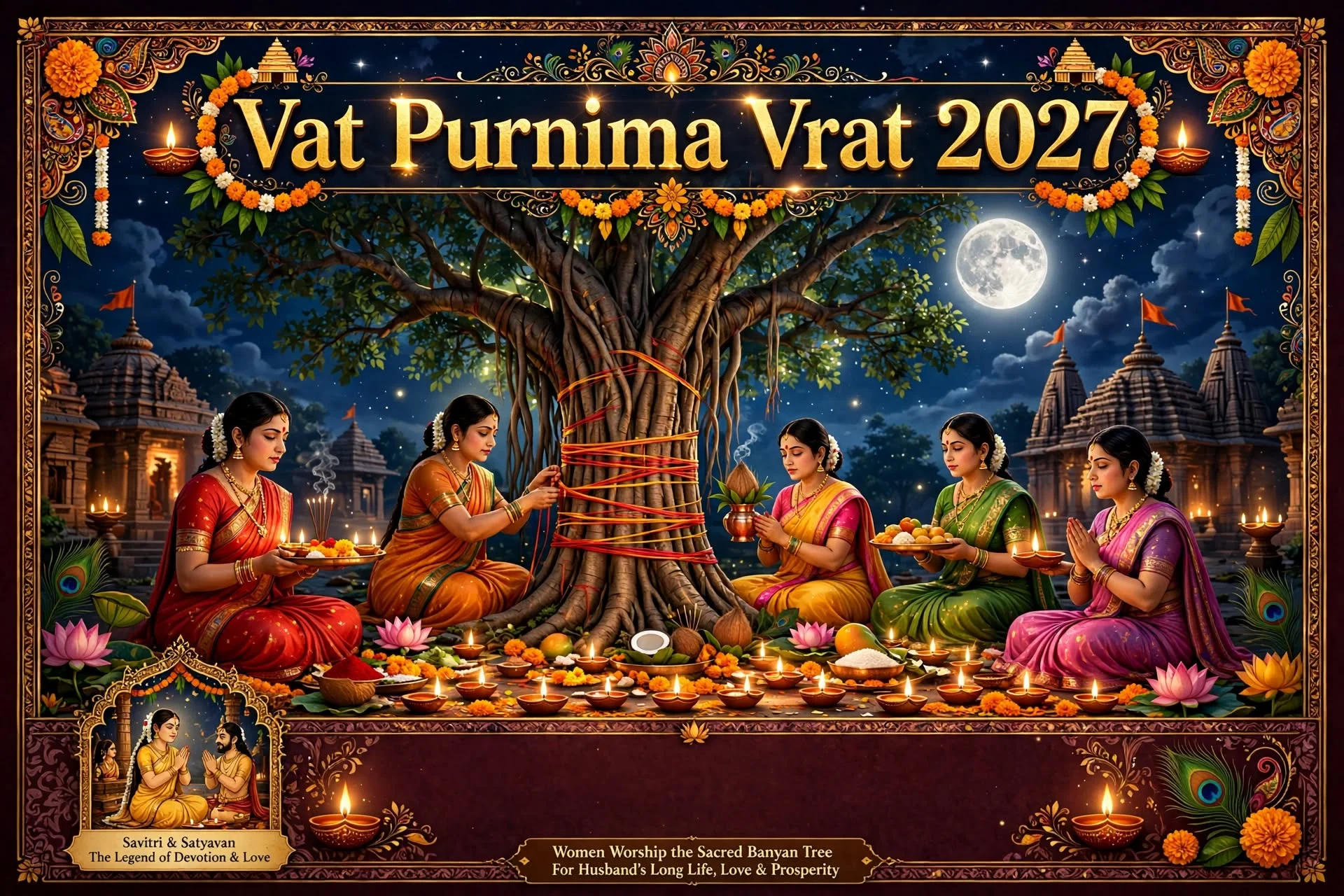
Friday, Jun 18, 2027
Vat Purnima Vrat
Vat Purnima Vrat, also known as Vat Savitri Purnima or Vata Pournima, is a traditional Hindu observance celebrated on Jyeshtha Shukla Purnima, the full-moon day of the Jyeshtha month. It is especially popular in Maharashtra, Gujarat, Goa and the Konkan region. The festival is associated with the devotion of Goddess Savitri towards her husband Satyavan and her encounter with Yama, the god of death.
View Festival Guide