




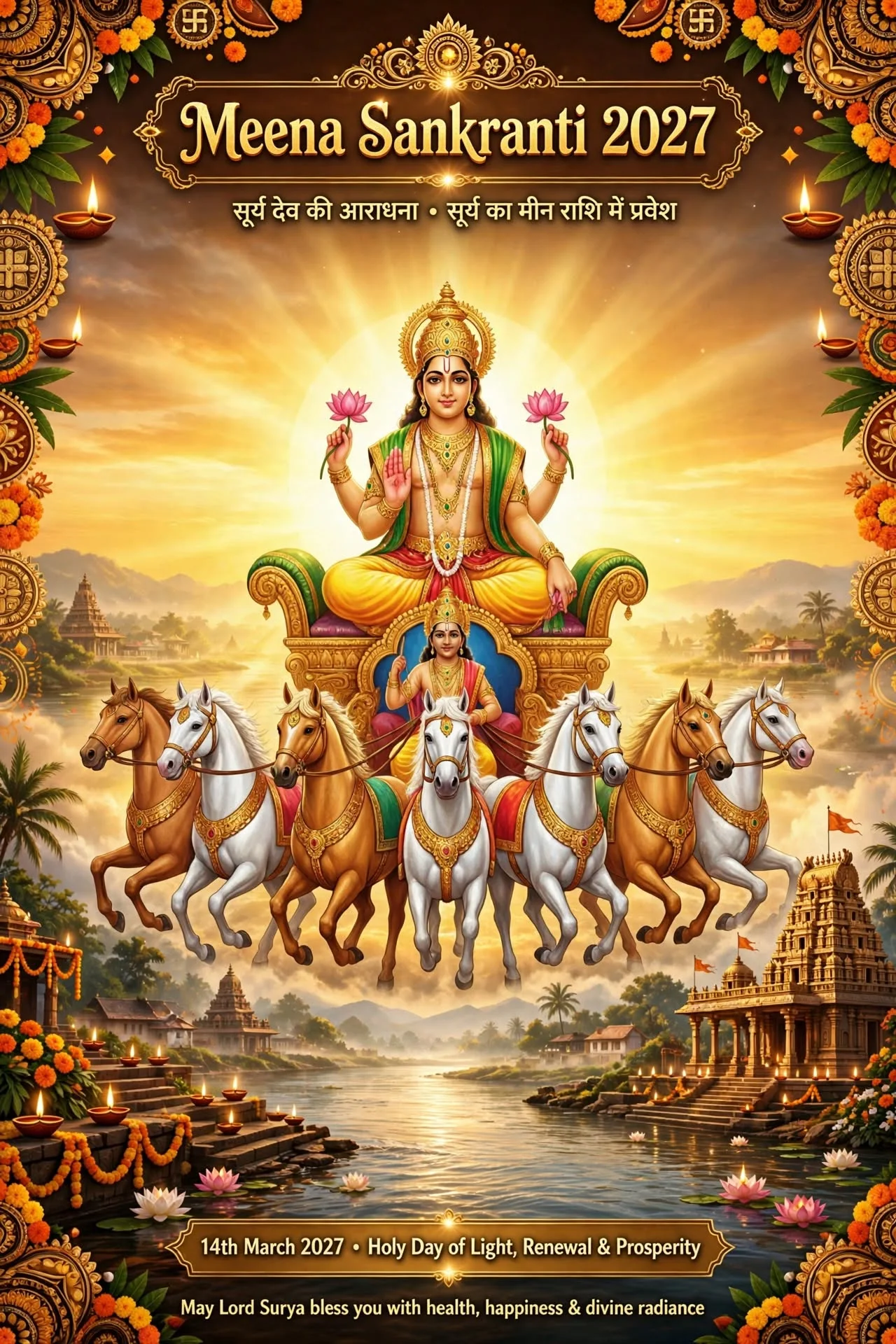
Meena Sankranti is a paramount astronomical transit and holy festival in the Hindu solar calendar, marking the entry of the Sun God (Surya Deva) from Kumbha Rashi (Aquarius) into Meena Rashi (Pisces). In Vedic astronomy and Jyotisha, this celestial ingression signifies the commencement of the twelfth and final solar month (Meena Masa) of the sidereal solar year. Occurring in mid-March, Meena Sankranti holds extraordinary significance across Sanatana Dharma as an auspicious juncture of profound spiritual purification, solar adoration, and charitable oblations.
Meena Sankranti 2027: Date, Puja Timings, Rituals & Stories
Meena Sankranti Timings & Panchang
Important festival dates and auspicious timings
Usha Arghya (Sunrise)
06:32 am
Sandhya Arghya (Sunset)
06:29 pm
Start Date
Monday, 15 Mar 2027
Puja Muhurat
12:32 pm – 10:51 am
Meena Sankranti
The transit of the Sun into Pisces initiates the sacred astronomical period known as 'Kharmaas' (खरमास) or 'Malmaas' across North and Western India. In Vedic cosmological treatises such as the Surya Siddhanta and the Brihat Samhita, Meena is the nocturnal, watery, and spiritual sign owned by Brihaspati (Jupiter), the preceptor of the gods. When the blazing solar luminary enters the exalted domain of Jupiter, material mundane activities such as weddings, housewarmings (Griha Pravesh), and coronations are traditionally paused, while inner spiritual pursuits, holy river bathing, Vedic japa, and self-restraint yield merits multiplied manifold.
The religious and scriptural virtues of Meena Sankranti are extolled in the Matsya Purana, the Bhavishya Purana (Surya Khanda), and the Skanda Purana. The specific window surrounding the exact moment of ingress is divided into 'Punya Kaal' (the sacred time window) and 'Maha Punya Kaal' (the peak thirty-minute window of transcendent potency). Taking a purificatory bath in holy rivers during these consecrated hours is believed to destroy sins committed over three lifetimes and liberate the soul from spiritual lethargy.
Devotees observe Meena Sankranti by rising before dawn to offer sacred water (Arghya) to Surya Deva using a copper vessel filled with water, red sandalwood, red flowers, and unbroken rice. Practitioners observe fasting, chant the Aditya Hridaya Stotra and Surya Gayatri Mantra, and distribute generous charity (Dana) consisting of food grains, yellow clothing, brass utensils, and cows (Godana) to Brahmins and underprivileged seekers, ensuring health, vitality, and spiritual elevation.
Why is Meena Sankranti Celebrated?
Meena Sankranti is celebrated to honor the Sun God's cosmic entry into Meena Rashi (Pisces), concluding the annual solar zodiac cycle and inaugurating the solar month of Meena.
The festival marks the sacred commencement of Kharmaas, providing a consecrated sabbatical from material ostentation to dedicate one's energies toward inner spiritual sadhana, scriptural study, and meditation.
Devotees observe this holy transit to purge past negative karmas through holy river ablutions (Punya Kaal Snana), cure chronic physical ailments, and invoke the life-giving vitality of Lord Surya.
Extensive charitable donations (Dana) made during Meena Sankranti are lauded in the Puranas as bestowing inexhaustible spiritual merit (Akshaya Punya) and peace to ancestral lineages.
Scriptural Chronicles and Astronomical Foundations of Meena Sankranti
Astronomical Exposition in Surya Siddhanta and Brihat Samhita
The scientific and metaphysical foundation of Meena Sankranti is expounded in the Surya Siddhanta (Chapter 14, Manadhyaya) and Acharya Varahamihira's monumental Brihat Samhita (Chapter 3, Aditya Chara). The ancient Indian astronomers mathematically defined Sankranti as the precise astronomical moment the center of the solar disc crosses the cusp into a new zodiac sign.
As the Sun traverses the twelfth constellation of Meena (ruled by Jupiter), solar rays interact with terrestrial water bodies in a distinct manner. Ancient sages recognized that during this astronomical realignment, atmospheric ionization and cosmic prana undergo a transformative shift, creating ideal conditions for physical detoxification and mental introspection.
The Puranic Origin of Kharmaas and the Chariot of the Sun
In the Bhavishya Purana and folk Puranic lore, a charming allegorical legend explains why the solar transit into Meena and Dhanu is called 'Kharmaas'. According to the legend, Lord Surya traverses the cosmos relentlessly upon His single-wheeled chariot drawn by seven radiant horses (representing the seven colors of light and the days of the week).
Arriving at the celestial lake within the sign of Jupiter, the divine horses grew exhausted from their non-stop cosmic journey. To allow His celestial steeds to rest and drink water without halting the wheel of cosmic time, Lord Surya temporarily hitched two donkeys ('Khara') grazing on the shore to pull His chariot through the watery signs of Jupiter. Because the pace slackened and the energy turned meditative, this period became known as 'Kharmaas'—a time reserved for soul-purifying contemplation rather than material celebration.
The Dialogue of Sage Pulastya and King Dilipa in the Matsya Purana
In the Matsya Purana (Chapter 98, Sankranti Vrata Mahatmya), Sage Pulastya instructs King Dilipa on the transcendental fruits of observing solar transits. Pulastya states: 'O King, among all twelve Sankrantis, Meena Sankranti represents the final dissolution of the solar year's karma.'
Esoteric, Cosmological, and Pranic Dimensions of Meena Sankranti
The Union of Solar Vitality and Jupiterian Wisdom (Surya-Guru Yoga)
In Vedic astrology, the Sun represents the individual soul (Atman), vitality, and supreme consciousness, while Jupiter (Guru) represents spiritual wisdom, dharma, and higher learning. When Surya enters Meena, Jupiter's watery sign, the soul is bathed in the cooling waters of divine wisdom.
This planetary conjunction diminishes egotistical pride (Ahamkara) and awakens genuine humility, dispassion (Vairagya), and philosophical contemplation in the seeker.
The Sacred Alchemy of Punya Kaal Snana
Vedic treatises designate specific ghatikas (units of 24 minutes) before and after the transit as Punya Kaal. Taking a bath in sacred rivers like the Ganga, Yamuna, or Narmada during this window resets the biological clock and purifies the subtle nadis.
Water, acting as an energetic conductor, absorbs the unique solar frequencies of the transit, transmitting life-force (Prana) and vitality directly to the practitioner's physical cells.
Spiritual Sabbatical and Psychological Rest (Kharmaas Introspection)
The pause on mundane societal celebrations during Kharmaas is a deliberate spiritual mechanism designed by ancient rishis to prevent human beings from becoming totally consumed by worldly ambitions.
By designating this month for scriptural study, satsang, fasting, and charity, society was periodically redirected toward the ultimate purpose of human life: spiritual liberation (Moksha).
Ancestral Liberation and Akshaya Punya Dana
Offering oblations (Tarpan) to ancestors during Meena Sankranti quenches the thirst of departed Pitrus. Puranas declare that charitable gifts given during Sankranti become 'Akshaya' (inexhaustible), shielding the donor and their descendants from adversity.
Practical Worship Manual and Guide for Meena Sankranti
Ascertaining the Exact Punya Kaal Muhurat
Consult your authentic regional Panchang to determine the exact astronomical time of the Sun's transit into Pisces (Meena Rashi). Note both the general Punya Kaal (extending several hours around the transit) and the Maha Punya Kaal (the peak 30 to 45 minutes of maximum potency).
Ensure that your purificatory bath, Surya Arghya, and charitable donations are executed precisely within these sacred astronomical windows.
Dawn Purificatory Snana and Surya Arghya
Wake before dawn during Brahma Muhurta. Proceed to a flowing river or bathe at home with clean water infused with holy Gangajal, red sandalwood paste, and black sesame seeds.
Fill a clean copper lota with fresh water, red flowers, raw sugar, red sandalwood paste, and unbroken rice grains. Stand facing East, raise the lota above your head, and pour the water in an unbroken stream while reciting the Gayatri Mantra or Surya Beej Mantra.
Surya and Vishnu Puja with Aditya Hridaya Stotra
Clean the puja altar, spread a clean red or yellow cloth on a wooden chowki, and install an idol or portrait of Surya Deva and Lord Vishnu. Light a pure cow-ghee lamp and burn fragrant sandalwood incense.
Apply red sandalwood paste, offer fresh red blossoms (Kaner, Hibiscus, or marigold), and recite the celebrated Aditya Hridaya Stotra (imparted by Sage Agastya to Lord Rama) three times for victory, health, and vitality.
Charity (Dana) and Fasting Discipline
Prepare generous charitable gifts consisting of raw food grains, jaggery, yellow cloth, brass or copper utensils, and dakshina. Donate these items reverently to needy persons and Brahmins.
Observe a day-long fast, consuming only fruits, milk, and water, or a single meal without common salt, breaking the fast peacefully after sunset.
Meena Sankranti Puja Vidhi (Step by Step)
- 1
Brahma Muhurta Jagaran and Punya Kaal Snana
Wake before dawn during Brahma Muhurta. Proceed to a sacred river or bathe at home in clean water mixed with holy Gangajal and black sesame seeds during the prescribed Meena Sankranti Punya Kaal window.
- 2
Surya Deva Arghya Samarpanam
Don clean traditional attire (yellow, white, or red). Fill a spotless copper lota with clean water, red sandalwood paste, red flowers, and raw sugar. Face the rising Sun, raise your hands, and pour the water in an unbroken stream while reciting: 'Om Suryaya Namah'.
- 3
Altar Preparation and Chowki Sthapana
Clean the household worship altar. Spread a fresh red or yellow silk cloth over a wooden chowki. Reverently install a brass, copper, or stone idol of Surya Deva alongside Lord Sri Hari Vishnu.
- 4
Deepa Prajvalan and Achamana
Light an oil or pure cow-ghee lamp on the right side of the altar and an aromatic incense stick on the left. Perform Achamana by ceremonially sipping consecrated water thrice and wash your hands.
- 5
Meena Sankranti Puja Samagri List
Surya Arghya and Snana Essentials
Core items required for the morning holy bath and solar water libations.
- Spotless copper lota (Kalash) for pouring Surya Arghya
- Pure holy Gangajal bottle and clean filtered water
- Red sandalwood paste (Rakta Chandan) and Kumkum
- Red hibiscus or red kaner flowers for water offering
- Black sesame seeds (Kala Til) and Kusha grass for snana
Altar Worship and Fragrance Items
Offerings and fabrics for deity consecration.
- Idol of Lord Surya Deva and Lord Vishnu (brass or copper)
- Panchamrita ingredients (cow milk, curd, ghee, honey, raw sugar)
- Yellow or red unstitched cotton/silk cloth for the chowki
- Pure cow-ghee lamp, cotton wicks, and sandalwood incense sticks (Dhoop)
- Bhimseni camphor for aarti
Sankranti Dana (Charitable Items)
Specific sattvic grains and utensils traditionally donated on Meena Sankranti.
- Raw food grains (wheat, rice, jaggery/gur, lentils) - at least 2 kg each
- Brass, copper, or bronze drinking vessel or plate for charity
Mantras and Prayers for Meena Sankranti
Meena Sankranti Vrat Rules and Fasting Guidelines
Punya Kaal Timing and Bathing Discipline
Rules for observing the Punya Kaal window on Meena Sankranti:
- Holy bathing, Surya Arghya, and charitable donations must strictly occur during the prescribed Punya Kaal and Maha Punya Kaal.
- Devotees should bathe in a natural flowing river if possible, or add holy Gangajal to home bathing water.
- Refrain from consuming solid cooked meals before completing the morning purificatory bath and Surya Arghya.
- Strictly avoid common sea salt on Sankranti day; single phalahari meals may incorporate rock salt (Sendha Namak).
Kharmaas Injunctions and Conduct
Guidelines for observing the Kharmaas period initiated by Meena Sankranti:
- Auspicious worldly rites such as weddings, sacred thread ceremonies (Upanayana), Griha Pravesh, and coronations are strictly paused during Kharmaas.
- Dedicated spiritual practices, scriptural reading, pilgrimage, Japa, and charity are encouraged and yield magnified merits.
- Avoid arrogance, disputes, speculation, and entering into major worldly contracts during this reflective window.
- Maintain pure sattvic vegetarian eating, refraining from alcohol, non-vegetarian food, onions, and garlic.
Charity (Dana) Regulations
Rules for distributing gifts on Sankranti:
- Charitable gifts of raw food grains, jaggery, clothing, and copper/brass utensils must be given directly to deserving individuals.
Dos and Don'ts of Meena Sankranti
Good Practices (Do's)
- Wake during Brahma Muhurta and take a purificatory bath with holy Gangajal and black sesame seeds during Punya Kaal.
- Offer Arghya to Lord Surya using a copper lota filled with water, red chandan, red flowers, and raw sugar.
- Recite the Aditya Hridaya Stotra and Surya Gayatri Mantra for health, longevity, and vitality.
- Donate raw food grains (wheat, rice), jaggery, yellow clothing, and copper utensils to the poor.
- Observe a light sattvic diet or fruit fast during the day, maintaining mental calm.
Meena Sankranti Across Regions
| Region | Local Name |
|---|---|
| Varanasi and Uttar Pradesh (North India) | Ganga Snana & Surya Tarpan |
| Odisha (Puri Jagannath Temple) | Meena Sankranti & Chaula Bhoga |
| Tamil Nadu and Kerala (South India) | Meena Masam & Temple Festivals |
| Gujarat and Western India | Surya Puja & Kamurtas |
Meena Sankranti FAQs
What is Meena Sankranti?
Meena Sankranti is the sacred astronomical transit when the Sun God (Surya Deva) leaves Kumbha Rashi (Aquarius) and enters Meena Rashi (Pisces), marking the beginning of the final month of the Hindu solar year.
What is 'Kharmaas' and how does it relate to Meena Sankranti?
Kharmaas (or Malmaas) is the solar month when the Sun resides in Jupiter's signs (Meena or Dhanu). During this month, worldly celebrations like weddings are paused, while spiritual practices like fasting, japa, and charity yield magnified merit.
What is Punya Kaal and Maha Punya Kaal on Sankranti?
Punya Kaal is the specific auspicious window around the solar ingress, and Maha Punya Kaal is the peak 30-45 minute window. Holy bathing, prayer, and charity during these windows bestow supreme spiritual purification.
Upcoming Festivals
View All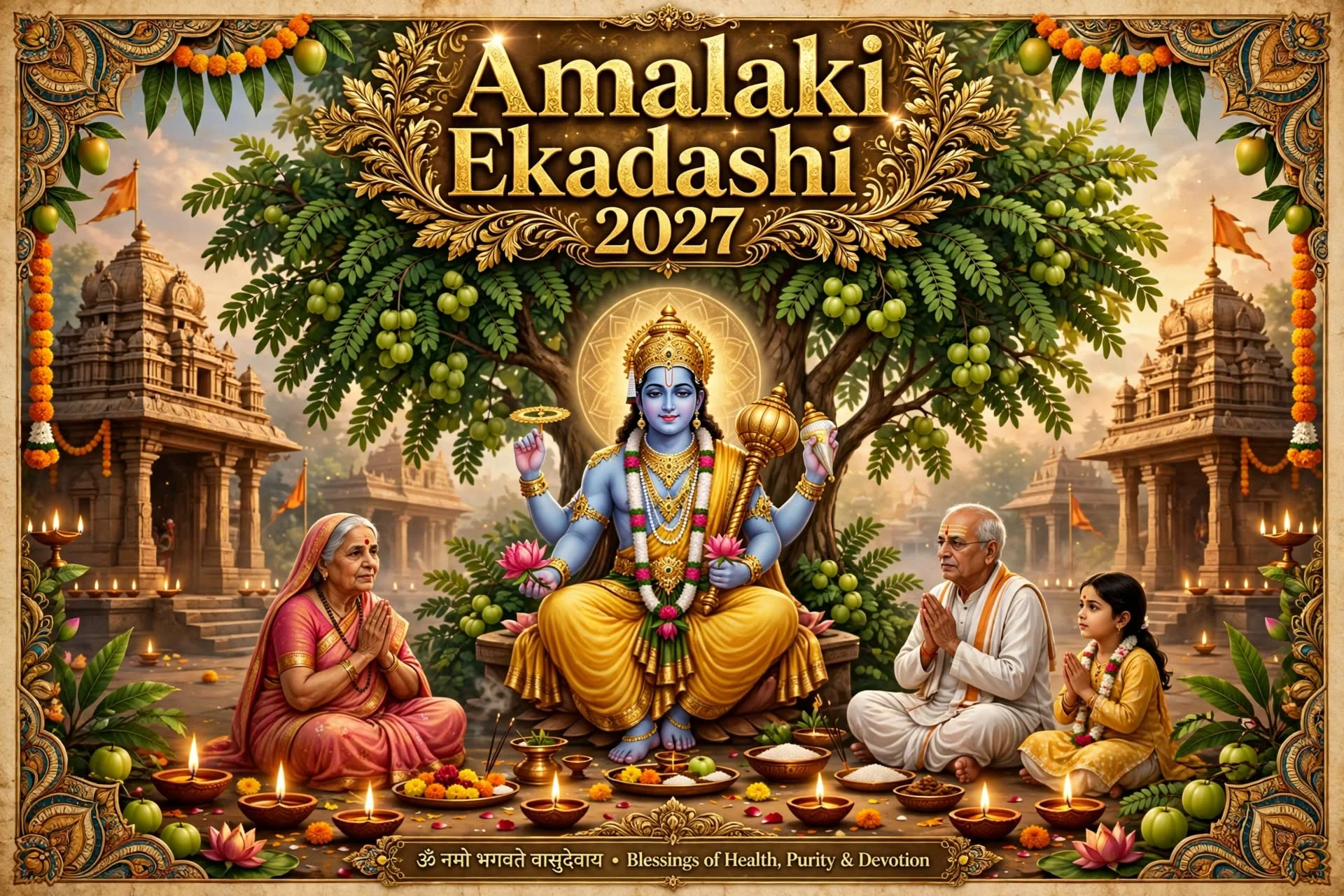
Thursday, Mar 18, 2027
Amalaki Ekadashi
Amalaki Ekadashi, also known as Amla Ekadashi, is a celebrated and spiritually illuminating Hindu fasting observance observed on the eleventh day (Ekadashi tithi) of the Shukla Paksha (waxing moon fortnight) in the auspicious month of Phalguna according to the traditional Hindu calendar. Occurring majestically between the great festivals of Maha Shivaratri and Holi, this sacred Ekadashi is uniquely consecrated to the veneration of the holy Amalaki tree (Indian Gooseberry - Phyllanthus emblica) and Lord Sri Hari Vishnu. In Vedic metaphysics and Ayurveda, the Amalaki tree is revered as the first botanical tree to manifest in the cosmos, imbued with the living divine presence of Lord Vishnu, Goddess Lakshmi, and the entire celestial pantheon.
View Festival Guide
Saturday, Mar 20, 2027
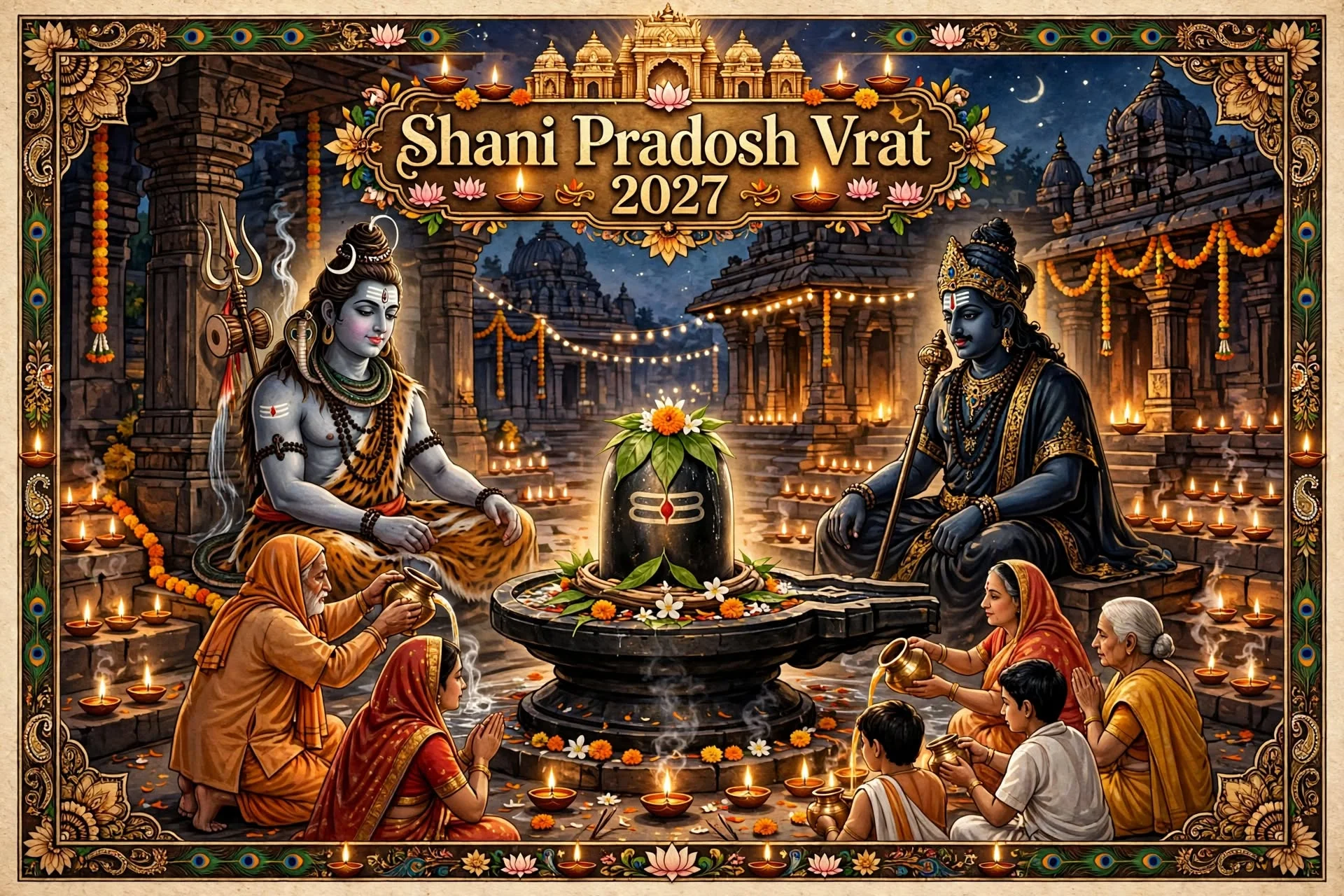
Shani Pradosh Vrat
Shani Pradosh Vrat is an exceptionally potent, revered, and astrologically transformative bi-monthly Hindu fasting observance dedicated to Lord Shiva, Goddess Parvati, and Lord Shani Deva (the planetary deity of Saturn). Occurring on the thirteenth day (Trayodashi tithi) of either the waxing (Shukla) or waning (Krishna) lunar fortnight when it coincides with a Saturday (Shanivara), this sacred vow is lauded across Vedic and Puranic literature as the supreme, infallible spiritual remedy for dissolving chronic karmic impediments, neutralizing severe planetary afflictions, and securing profound peace and prosperity.
View Festival Guide
Sunday, Mar 21, 2027
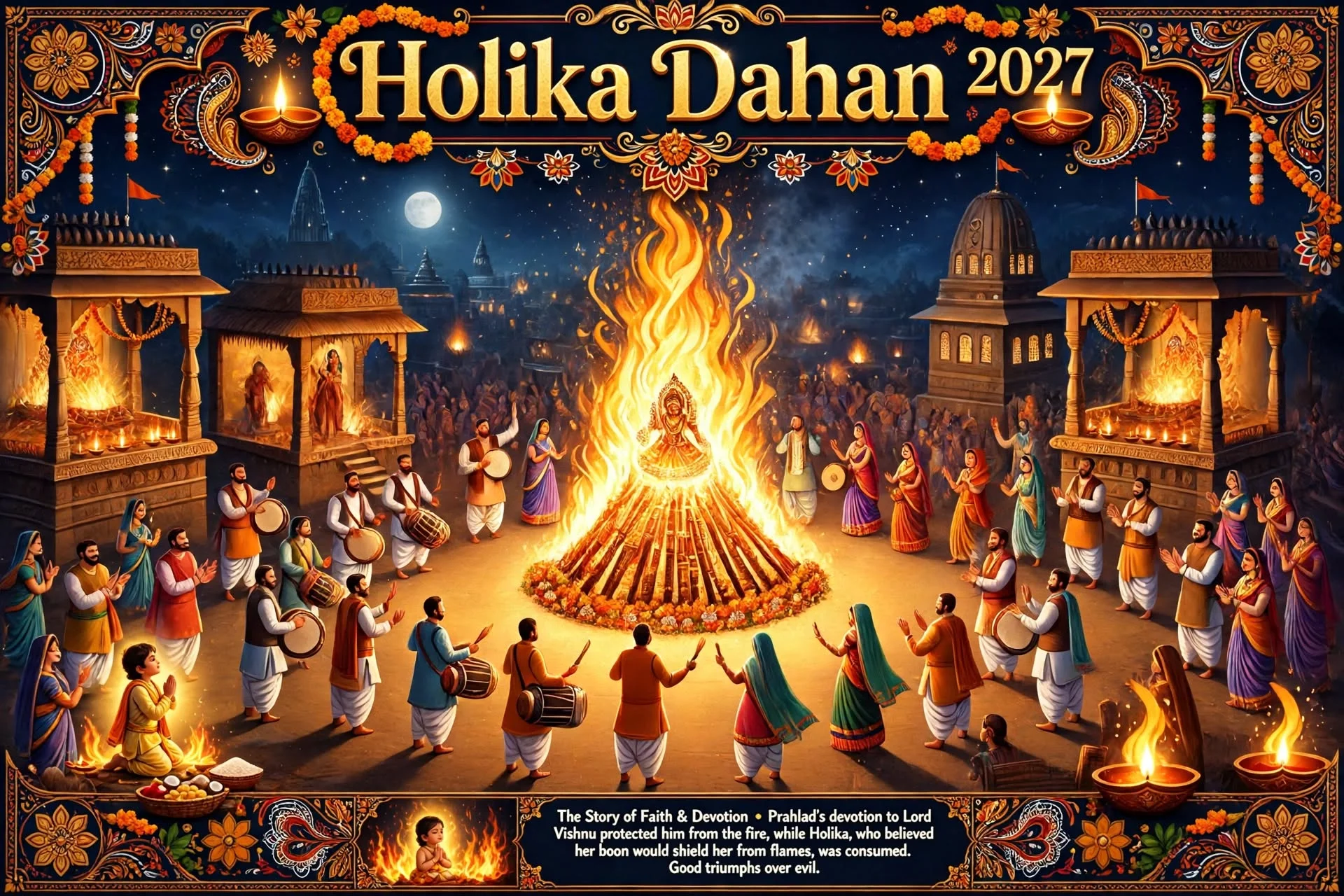
Holika Dahan (Choti Holi)
Holika Dahan, affectionately celebrated as the sacred bonfire night of Holi, is an ancient, monumental, and deeply spiritual Vedic ritual performed on the full moon night (Purnima tithi) of the lunar month of Phalguna according to the Hindu calendar. Celebrated on the night preceding the exuberant festival of colors (Dhulandi or Rangwali Holi), Holika Dahan marks the ceremonial burning of the cosmic pyre, symbolizing the inevitable triumph of divine righteousness (Dharma), supreme devotion (Bhakti), and spiritual truth over demonic tyranny, pride, and persecution.
View Festival Guide
Sunday, Mar 21, 2027
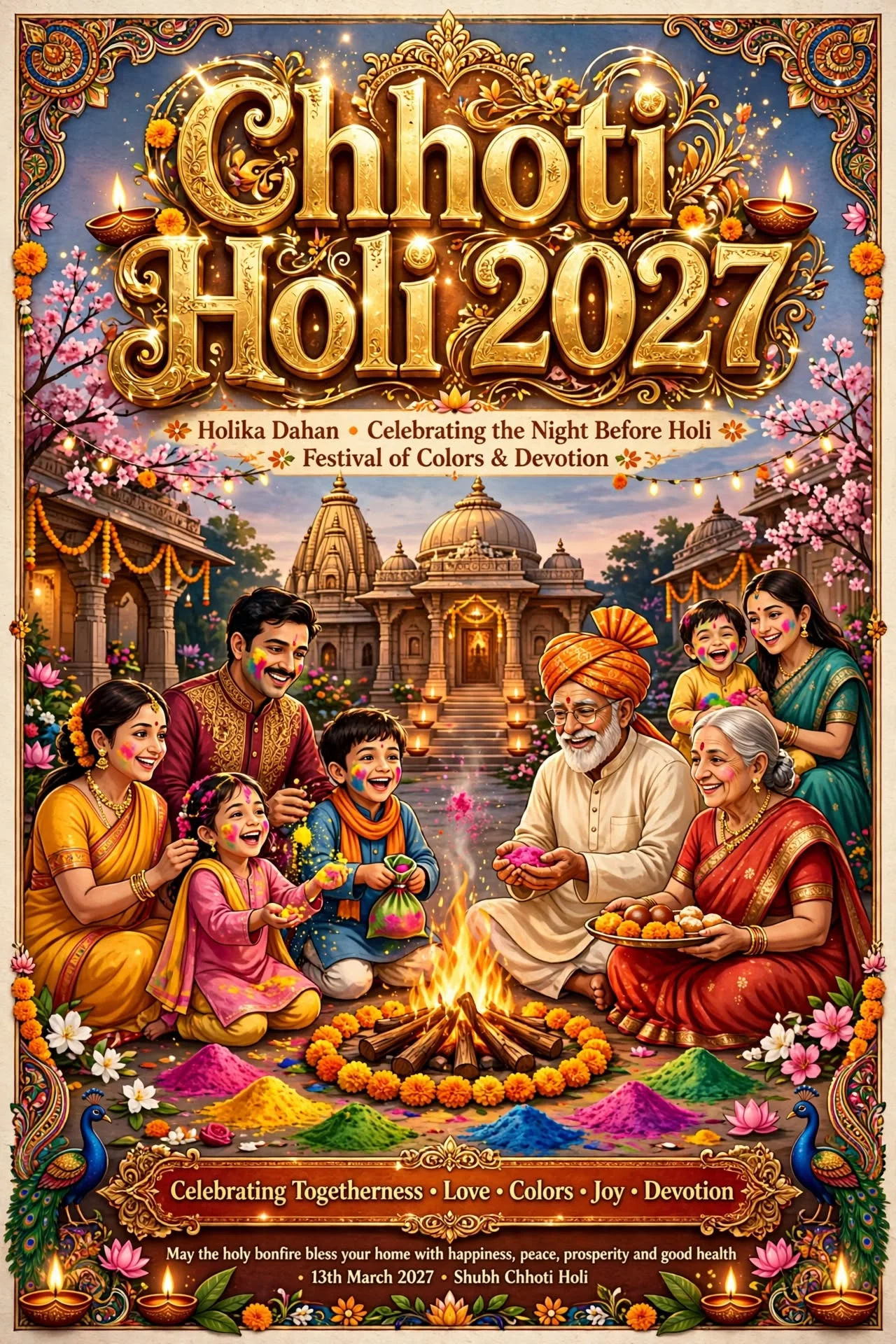
Chhoti Holi
Chhoti Holi, celebrated with boundless excitement and devotion across North, Central, and Western India, is the auspicious festival observed on the fourteenth and fifteenth tithis (Chaturdashi merging into Purnima) of the Shukla Paksha in the month of Phalguna. Serving as the divine prelude to the grand festival of colors (Dhulandi or Badi Holi), Chhoti Holi is universally centered around the sacred ritual of assembling, consecrating, and lighting the community bonfire known as Holika Dahan. It commemorates the eternal victory of pure devotion, righteousness, and truth over demonic arrogance, persecution, and darkness.
View Festival Guide
Monday, Mar 22, 2027
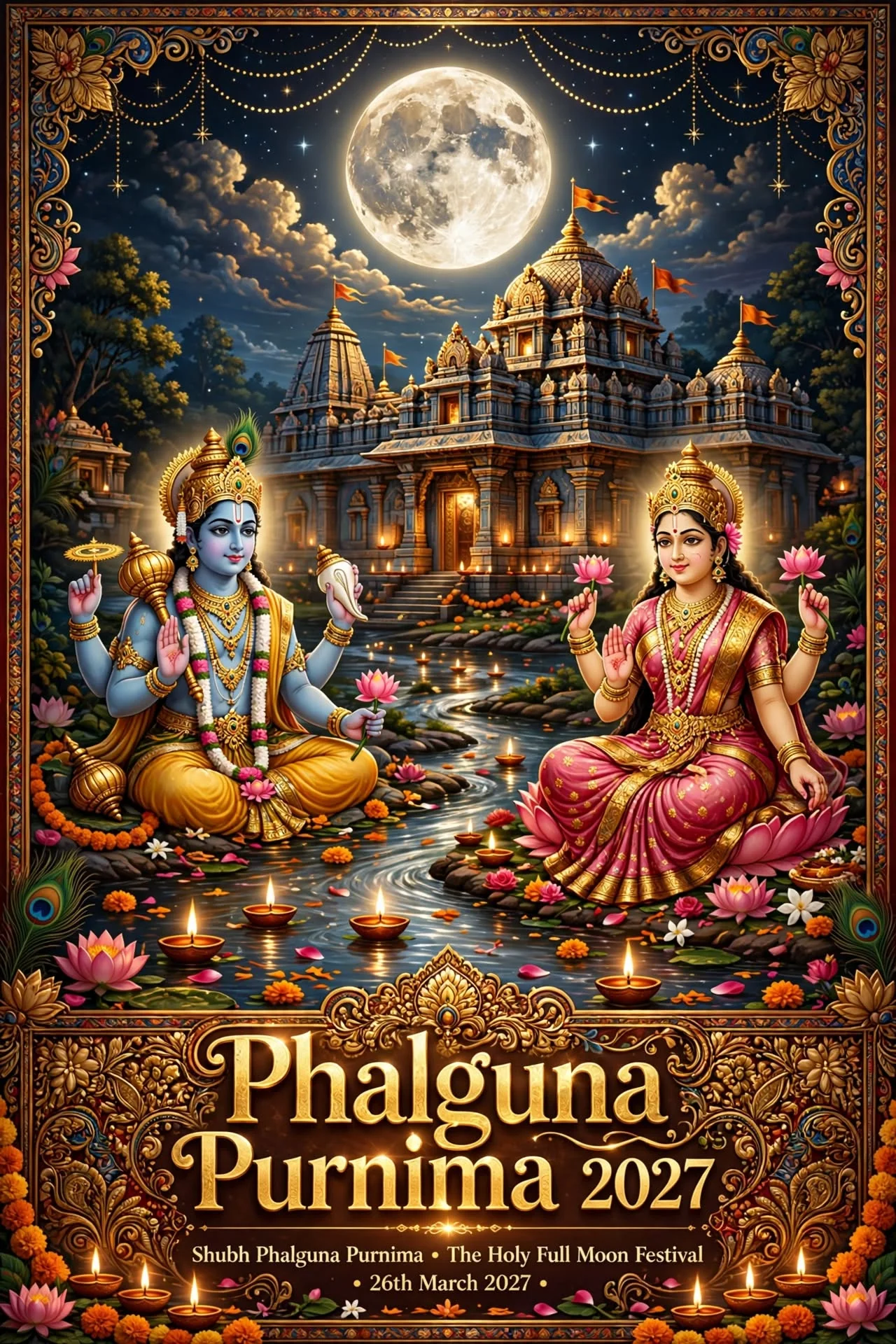
Phalguna Purnima
Phalguna Purnima is one of the most spiritually multifaceted, sacred, and joyously celebrated full moon days in the Hindu calendar, marking the magnificent culmination of the holy lunar month of Phalguna. Occurring on the final day of the Phalguna month in the Purnimanta calendar, this momentous full moon represents the harmonious convergence of several monumental religious observances: the sacred bonfire night of Holika Dahan, the divine advent day of Sri Chaitanya Mahaprabhu (Gaura Purnima), the glorious appearance day of Goddess Lakshmi (Lakshmi Jayanti), and the vibrant swing festivals (Dolotsava) celebrated across India.
View Festival Guide
Monday, Mar 22, 2027
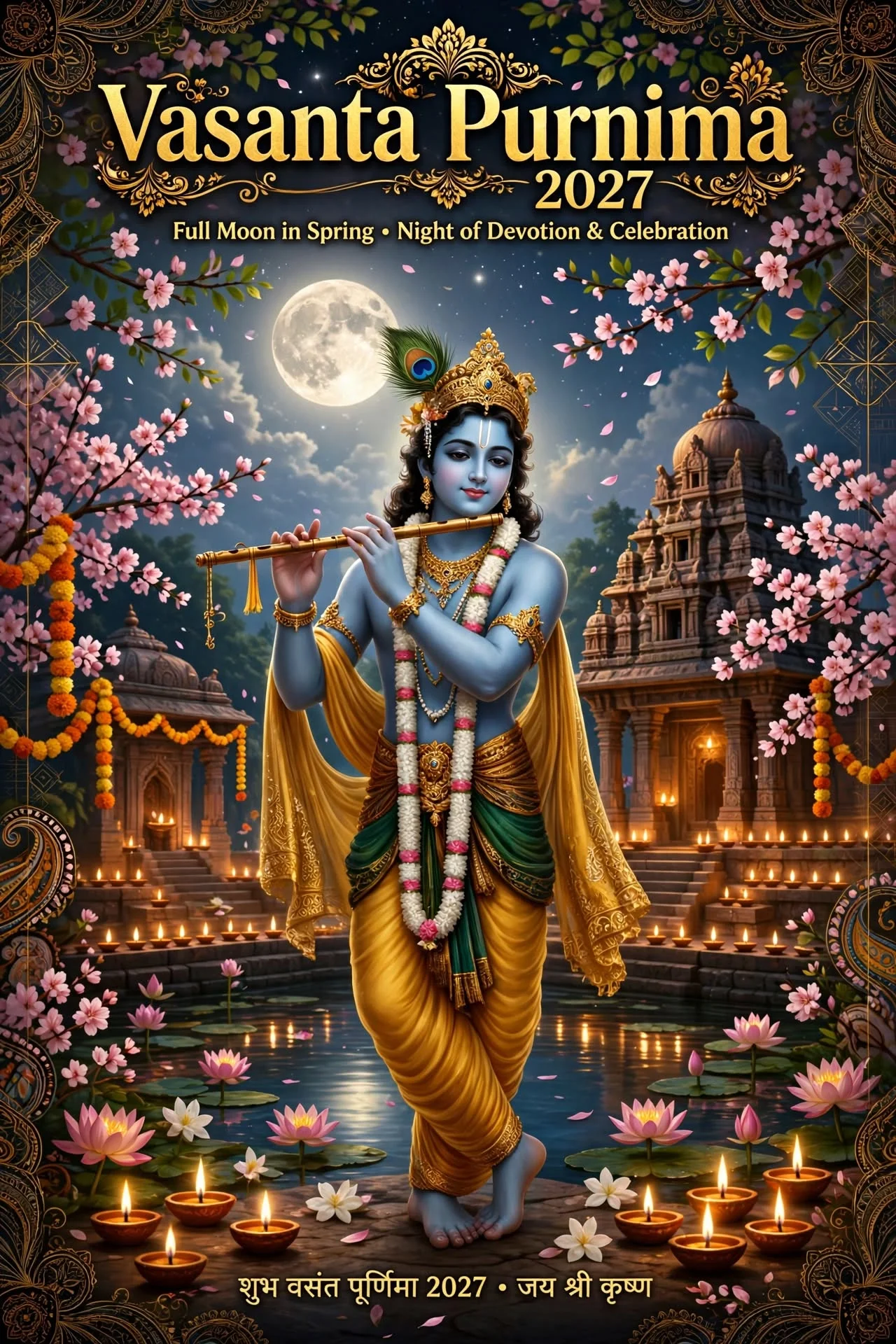
Vasanta Purnima
Vasanta Purnima (also known as Vasantotsava Purnima or the Spring Full Moon) is an extraordinarily radiant, culturally celebrated, and spiritually elevating Hindu festival observed on the full moon day (Purnima tithi) of the lunar month of Phalguna according to the traditional Hindu calendar. Coinciding with the peak of the spring season (Rituraj Vasant), this glorious night represents the full flowering of natural beauty, romantic affection, aesthetic grace, and sublime divine devotion (Prema Bhakti) across Sanatana Dharma. Celebrated as the eve of the vibrant festival of colors and the sacred night of Holika Dahan, Vasanta Purnima serves as the crowning jewel of the spring festival cycle.
View Festival Guide
Monday, Mar 22, 2027
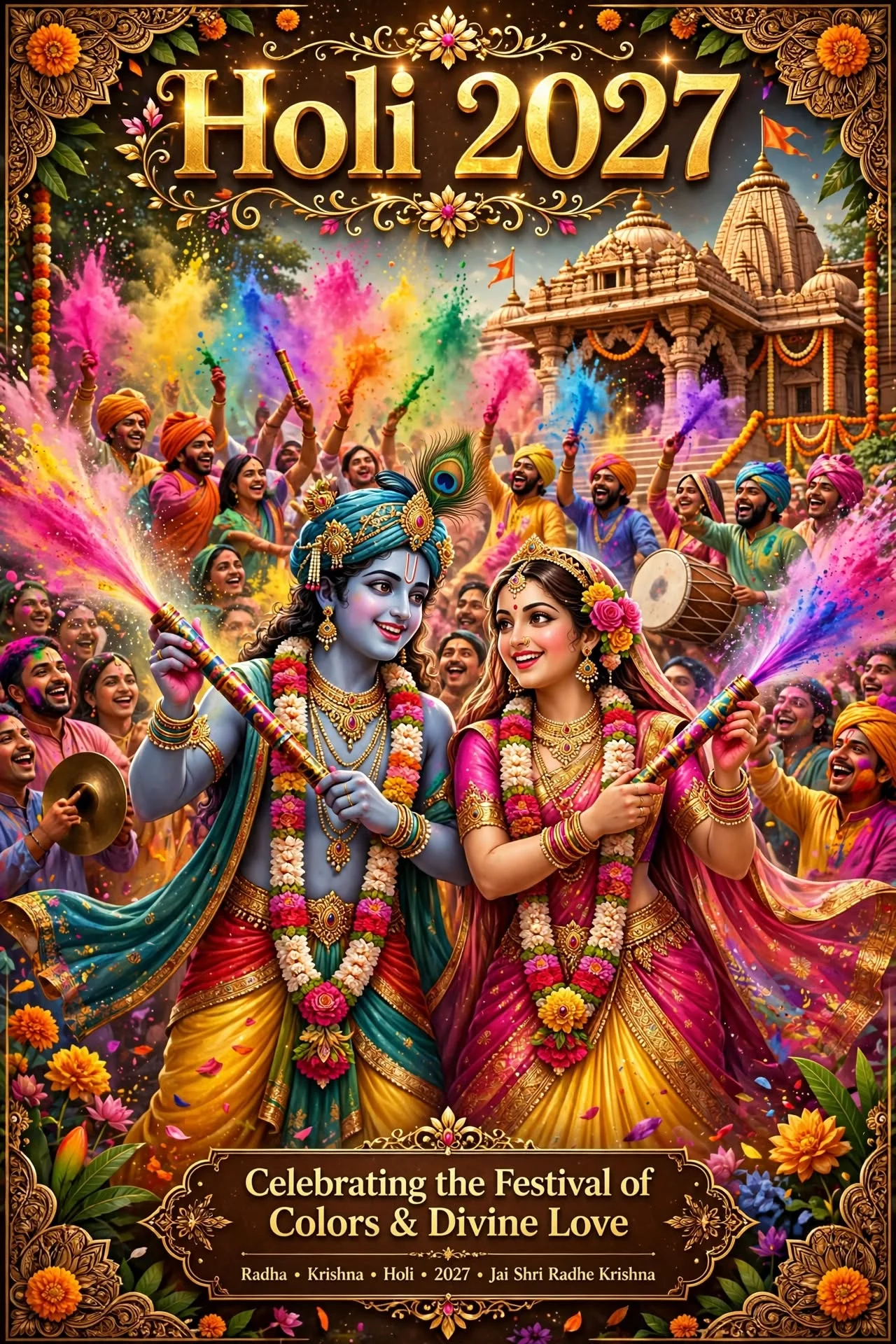
Holi
Holi, celebrated with incomparable exuberance, color, and spiritual fraternity, is one of the most ancient, glorious, and universally beloved festivals in Sanatana Dharma. Celebrated on the first day (Pratipada tithi) of the Krishna Paksha in the holy month of Chaitra according to the traditional Hindu calendar (occurring immediately after the night of Holika Dahan), this grand festival of colors—affectionately known as Dhulandi, Dhuleti, Rangwali Holi, and Vasantotsava—marks the triumphant arrival of spring (Rituraj Vasant), the rebirth of nature's vibrant beauty, and the profound social and spiritual renewal of human hearts.
View Festival Guide

Monday, Mar 22, 2027
Anvadhan
Anvadhan (अन्वाधान) is an ancient, highly revered Vedic ritual and spiritual observance in Sanatana Dharma performed on the day immediately preceding the New Moon (Amavasya) or Full Moon (Purnima). Rooted in the pristine traditions of the Shrauta and Grihya Sutras, Anvadhan literally translates to 'the solemn placing and replenishment of sacred fuel wood into the consecrated Vedic fires'. In traditional Vedic ritualism, householders (Grihasthas) and priests who maintain the sacred Agnihotra fires perform Anvadhan to prepare the sacrificial altars for the grand Darsha Yajna (New Moon sacrifice) or Paurnamasa Yajna (Full Moon sacrifice) scheduled for the following day.
View Festival Guide