




Phulera Dooj (फुलेरा दूज) is a wonderfully joyous, vibrant, and spiritually sweet Hindu festival celebrated on the second day (Dwitiya tithi) of the Shukla Paksha (waxing moon fortnight) in the holy month of Phalguna according to the traditional Hindu calendar. Dedicated to the supreme divine couple, Bhagavan Sri Krishna and Sri Radha Rani, this radiant festival heralds the arrival of the spring festival of colors (Holi) across the sacred land of Braj (Vrindavan, Mathura, Barsana, Nandgaon, and Govardhan). The word 'Phulera' is derived from 'Phool' (blossoming flowers), and on this day, the divine realm of Braj is enveloped in an enchanting floral ecstasy.
Phulera Dooj 2027: Date, Puja Timings, Rituals & Stories
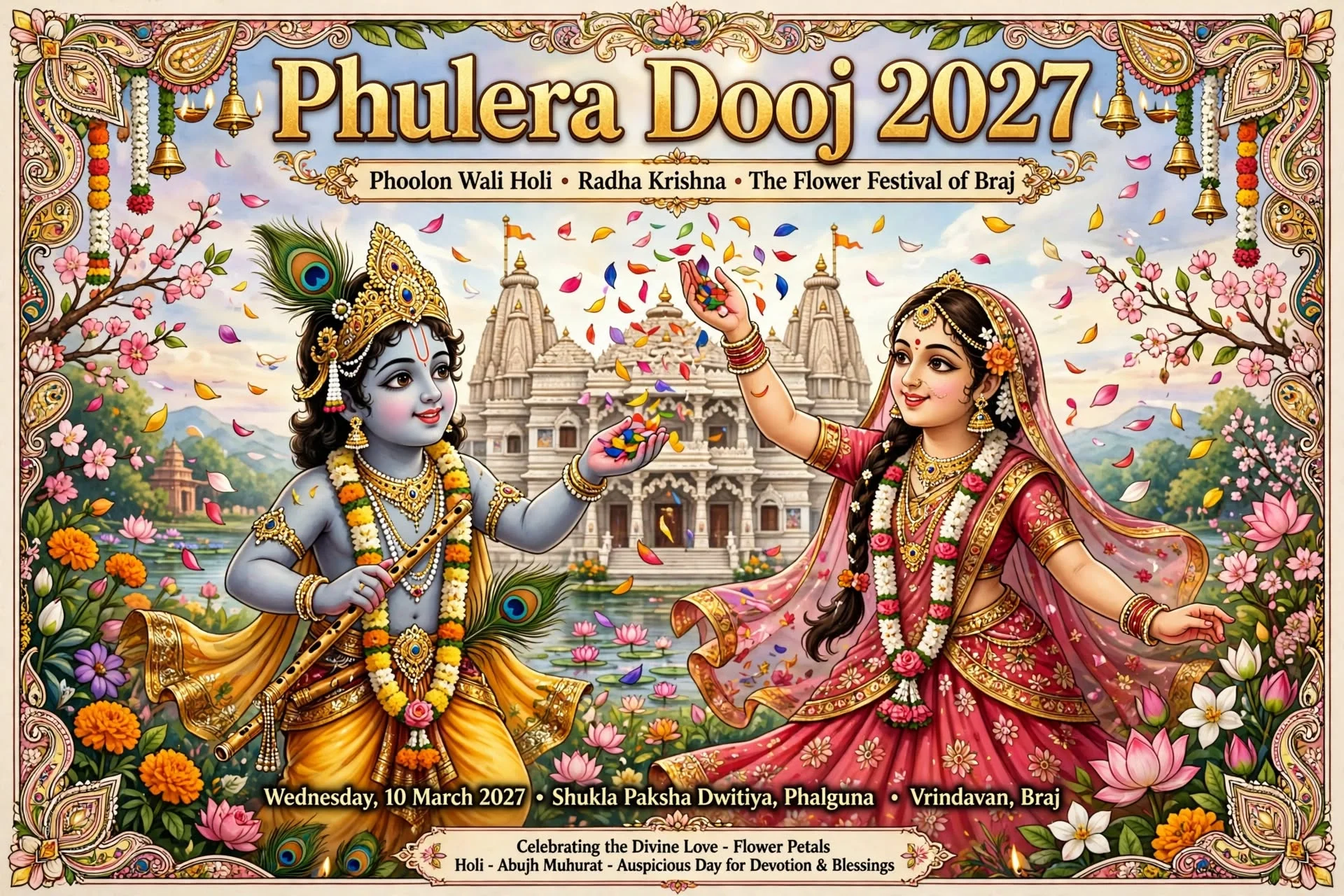
Phulera Dooj Timings & Panchang
Important festival dates and auspicious timings
Usha Arghya (Sunrise)
06:37 am
Sandhya Arghya (Sunset)
06:26 pm
Start Date
Wednesday, 10 Mar 2027
Puja Muhurat
03:41 pm – 03:53 pm
Phulera Dooj
Unlike the raucous celebrations of Dhulandi Holi played with colored powders, Phulera Dooj is universally celebrated through the ethereal ritual of 'Phoolon ki Holi' (playing Holi exclusively with fragrant natural flower petals). In the sanctified temples of Vrindavan—most notably the historic Sri Banke Bihari Mandir, Radha Raman Mandir, and Sri Radha Vallabh Mandir—the deities are adorned in magnificent floral dresses (Phool Bangla), and priests shower mountains of fragrant rose petals, fresh marigolds, jasmine, and sacred orange Palash (Tesu) blossoms over the deities and assembled devotees, re-enacting the sublime pastimes of Goloka Vrindavana.
In Vedic astrology (Jyotisha), Phulera Dooj holds the prestigious status of being an 'Abujha Muhurat' (अबूझ मुहूर्त)—a day so innately pure and auspicious that every single second of the day is free from planetary blemishes, evil eye (Doshas), or astrological afflictions. Consequently, individuals can solemnize marriages, perform engagements, conduct housewarming ceremonies (Griha Pravesh), or initiate new commercial and spiritual ventures on Phulera Dooj without requiring astrological horoscope matching or consulting a pandit for auspicious hours.
Devotees observe Phulera Dooj by cleansing their homes, establishing beautifully decorated altars draped in spring colors, and performing loving devotional worship (Bhakti Seva) of Radha and Krishna. Offerings of special festive delicacies such as fresh poha, crispy gujiya, sweetened makhana kheer, and butter-sugar candy (Makhan-Mishri) are presented, while melodious Braj Holi folk songs (Hori) and Krishna bhajans resonate throughout the day, filling the atmosphere with love, positivity, and spiritual joy.
Why is Phulera Dooj Celebrated?
Phulera Dooj is celebrated to commemorate the divine, unalloyed love of Lord Sri Krishna and Radha Rani and the joyful commencement of the spring Holi festival in the holy groves of Vrindavan.
The festival honors the legend wherein Lord Krishna, noticing Radha Rani and the Gopis sorrowful due to His prolonged absence, returned to Vrindavan and revitalized the wilted flora into radiant bloom, playing a playful game of Holi with fragrant flower petals.
It is revered as an 'Abujha Muhurat'—an intrinsically blemish-free day where all planetary doshas are pacified, making it ideal for solemnizing weddings, inaugurating ventures, and inviting lasting auspiciousness.
Devotees observe this holy day to awaken pure spiritual devotion (Prema Bhakti), overcome relationship bitterness, cultivate conjugal harmony, and receive the combined blessings of Radha-Krishna.
Scriptural Chronicles and Puranic Lore of Phulera Dooj
The Origin of Phoolon Ki Holi in the Garga Samhita
The celestial narrative of Phulera Dooj is recorded in the Garga Samhita (Goloka Khanda and Vrindavana Khanda). According to the text, when Lord Krishna became deeply occupied with pastoral duties and royal responsibilities outside Vrindavan, a prolonged period of separation (Viraha) engulfed the sacred land.
Radha Rani and the cowherd damsels (Gopis) became inconsolable with grief. In sympathy with their sorrow, the natural flora of Vrindavan withered—trees shed their leaves prematurely, the Yamuna flowed mournfully, and blossoming creepers dried up. Sensing the distress of His beloveds, Lord Krishna returned to the bowers of Vrindavan on the second day of the bright fortnight of Phalguna.
As soon as the Lord's lotus feet touched the soil of Braj, nature miraculously revived: vibrant buds burst into fragrant blossoms, gentle spring breezes blew, and peacocks danced in joy. Plucking handfuls of fresh wild flowers, Lord Krishna playfully showered them upon Radha Rani. Radha and the Gopis responded by showering blossoms upon Krishna, marking the birth of 'Phoolon ki Holi' (the festival of floral colors) that has been celebrated ever since.
The Creation of the Divine Phool Bangla (Floral Pavilions)
In the Braj Rasik tradition established by medieval saints like Swami Haridas, Hit Harivansh Mahaprabhu, and Sri Chaitanya Mahaprabhu, Phulera Dooj marks the day when Lord Krishna is ceremonially transitioned from winter garments to light, breezy spring attire.
Priests construct the first 'Phool Bangla' of the season—an intricate architectural palace constructed entirely out of fresh, woven blossoms, vines, and leaves. Within this fragrant palace, the Lord sits comfortably, shielding Him from the encroaching heat of summer and inaugurating the fifty-day spring celebration of Braj.
The Astrological Gift of Abujha Muhurat in Jyotisha
Classical Muhurta treatises and the Narada Samhita declare that on Phalguna Shukla Dwitiya, the cosmic vibrations of the waxing moon and the vernal equinox combine to neutralize all malefic planetary forces. Sages declared this day to be 'Siddha Muhurta' or 'Abujha Muhurat', meaning a day that requires no external calculation or pandit's consultation to determine its auspiciousness.
Esoteric, Psychological, and Devotional Dimensions of Phulera Dooj
Cultivation of Prema Bhakti (Pure Unconditional Love)
The relationship between Radha and Krishna in Gaudiya Vaishnavism and Pushtimarg is the zenith of Prema Bhakti—love that seeks only the happiness of the beloved without a trace of selfish desire.
Phulera Dooj invites the spiritual seeker to offer the blossoming 'flowers of their own virtues' (compassion, humility, truthfulness, and surrender) at the feet of the Lord, transforming dry intellectual theology into living devotional bliss.
The Natural Healing Power of Flower Petals
Unlike chemical dyes that irritate the skin, the ancient practice of playing Holi with fresh flowers like Palash (Tesu), marigold, and damask rose carries profound Ayurvedic and pranic benefits.
Palash flowers pacify excess Pitta and Kapha doshas brought on by seasonal changes, soothe the nervous system, and emit natural phytoncides that purify the human bio-field and respiratory pathways.
Dissolution of Relationship Bitterness and Marital Harmony
Phulera Dooj is astrologically renowned for mending fractured relationships, resolving domestic discord, and sweetening marital partnerships.
Couples who worship Radha-Krishna together and offer flower garlands experience a renewal of mutual tenderness, patience, and joyful companionship.
Inauguration of the Vernal Renaissance (Rituraj Vasant)
Cosmologically, Phulera Dooj marks the peak of Vasant Ritu (the King of Seasons). The earth sheds its winter dormancy and puts on the attire of green shoots and multicolored flowers.
Celebrating this day aligns human consciousness with the rhythmic re-awakening of Mother Nature, instilling optimism, creativity, and enthusiasm for noble undertakings.
Comprehensive Ritual Observance and Guide for Phulera Dooj
Dawn Sanctification and Altar Decoration
Wake early during Brahma Muhurta, take a purifying bath, and don bright traditional clothes (preferably yellow, pink, or light green).
Clean the home mandir and construct a mini floral canopy (Phool Bangla) using fresh marigold garlands, roses, and mango leaves. Install consecrated murtis or portraits of Sri Radha-Krishna in the center.
Shodashopachara Seva and Floral Offering
Light a pure cow-ghee lamp and fragrant sandalwood incense. Bathe small metallic murtis of Laddu Gopal or Radha-Krishna with Panchamrita and rose water, drying them gently.
Apply fragrant yellow sandalwood paste (Gopi Chandan) and red Kumkum. Adorn the deities with new colorful garments and offer fresh flower garlands.
Playing Phoolon Ki Holi with the Divine Couple
Gather baskets filled with fresh, soft petals of rose, marigold, jasmine, and Palash (Tesu). Gently shower handfuls of flower petals over Sri Radha-Krishna while singing traditional Braj Holi songs and chanting 'Radhe Radhe'.
Family members playfully sprinkle flower petals upon one another, receiving the sanctified petals (Nirmalya) as divine blessings of joy, mutual forgiveness, and love.
Naivedya Samarpanam and Community Sharing
Prepare special festive bhog: freshly made sweet Poha, crispy Gujiya, Makhana Kheer, butter-sugar candy (Makhan-Mishri), and seasonal fruits, ensuring each offering contains a fresh Tulsi leaf.
Perform Karpura Aarti and distribute the sanctified prasad to neighbors, relatives, and underprivileged children, spreading festive happiness.
Phulera Dooj Puja Vidhi (Step by Step)
- 1
Brahma Muhurta Jagaran and Morning Snana
Wake before dawn during Brahma Muhurta. Meditate upon Sri Radha-Krishna and take a purificatory bath with clean water infused with holy Gangajal and rose water. Dress in cheerful traditional yellow or pink clothing.
- 2
Pratah Sankalpa (Morning Devotional Vow)
Sit facing East before the altar upon a clean asana. Take clean water, unbroken rice (akshata), flower petals, and a coin in your right palm and recite the formal Sankalpa vow to observe Phulera Dooj for divine love and family bliss.
- 3
Construction of the Floral Mandap (Phool Bangla)
Decorate the home altar into a miniature floral bower (Phool Bangla) using woven garlands of fresh marigolds, fragrant roses, and jasmine vines, invoking the enchanted groves of Vrindavan.
- 4
Deepa Prajvalan and Achamana
Light an oil or pure cow-ghee lamp on the altar and burn sweet sandalwood incense. Perform Achamana by sipping consecrated water thrice with the holy names of Vishnu and wash your hands.
- 5
Phulera Dooj Puja Samagri List
Floral and Decoration Essentials
Fresh natural blossoms required for Phool Bangla decoration and playing Phoolon ki Holi.
- Fresh rose petals (red, pink, yellow) - 500 grams
- Fresh marigold flower petals (orange and yellow) - 500 grams
- Natural orange Palash (Tesu) blossoms or jasmine petals - 250 grams
- Two long garlands of fresh marigolds or roses for deity adornment
- Mango leaves and yellow silk cloth for altar chowki
Abhisheka and Shringar Items
Sacred liquids, garments, and fragrances for deity seva.
- Panchamrita ingredients (cow milk, curd, ghee, honey, sugar) and rose water
- Pure holy Gangajal bottle in a brass or silver lota
- Pure Gopi Chandan paste, Kumkum, and natural rose attar (perfume)
- Bright spring garments (yellow or pink) and peacock feather (Mor Pankh)
- Fresh Tulsi leaves (harvested on the previous day)
Festive Naivedya and Aarti Items
Traditional sweets, dry fruits, and lights for concluding the puja.
- Freshly prepared Poha (flattened rice dish) and crisp Gujiya
Mantras and Prayers for Phulera Dooj
Phulera Dooj Vrat Rules and Fasting Guidelines
Devotional Observance and Conduct
Rules for observing devotional seva on Phulera Dooj:
- Devotees wake early during Brahma Muhurta and maintain an atmosphere of pure joy, gentleness, and devotional celebration.
- Avoid anger, criticism, arguments, and harsh words; foster loving harmony with family and neighbors.
- Strict practitioners observe partial fasting, taking light sattvic fruits and sweets after the afternoon bhog.
- Abstain totally from non-vegetarian items, alcohol, tobacco, onions, and garlic.
Floral Seva Regulations
Injunctions regarding the flowers used for worship and Holi:
- Use only fresh, naturally fragrant flower petals (roses, marigolds, jasmine, Palash); never use stale, withered, or synthetic blossoms.
- Do not use chemical synthetic colors, harsh gulal, or mud on Phulera Dooj; the celebration is purely floral.
- Handle flower petals with clean washed hands and ensure they are free from thorns, dust, and insects.
Abujha Muhurat Guidelines
Conducting auspicious ceremonies on Phulera Dooj:
- Auspicious ceremonies such as weddings, engagements, Griha Pravesh, and business openings can be initiated at any time of the day.
- Ensure the ceremony begins with an initial floral offering and prayers to Lord Ganesha and Sri Radha-Krishna.
Dos and Don'ts of Phulera Dooj
Good Practices (Do's)
- Wake early during Brahma Muhurta and take a purificatory bath with holy Gangajal and rose water.
- Decorate the home altar with fresh flowers, marigold garlands, and a miniature Phool Bangla.
- Perform worship of Sri Radha and Krishna with Panchamrita, Gopi Chandan, and fresh Tulsi leaves.
- Play Phoolon ki Holi using soft, naturally fragrant flower petals with deities and family members.
- Prepare and offer traditional festive bhog: sweet Poha, Gujiya, Makhana Kheer, and Makhan-Mishri.
Phulera Dooj Across Regions
| Region | Local Name |
|---|---|
| Vrindavan and Mathura (Braj Bhoomi) | Banke Bihari Phoolon Ki Holi |
| Barsana and Nandgaon | Radha Rani Phool Bangla Seva |
| Rajasthan and Gujarat (Pushtimargiya Havelis) | Shrinathji Phoolon Ka Khel |
| North India (Uttar Pradesh, Delhi, Haryana) | Abujha Shubh Muhurat & Poha Bhog |
Phulera Dooj FAQs
What is Phulera Dooj?
Phulera Dooj is a joyous Hindu festival celebrated on Phalguna Shukla Dwitiya, dedicated to Sri Radha and Lord Krishna, marking the official beginning of the spring Holi festival through the playing of 'Phoolon ki Holi' (floral Holi).
What does 'Phulera' mean?
'Phulera' is derived from 'Phool' (flower). The festival signifies the blooming of spring blossoms and the showering of flower petals upon Sri Radha and Krishna in the enchanted groves of Vrindavan.
Why is Phulera Dooj called an 'Abujha Muhurat'?
'Abujha Muhurat' means an inherently auspicious day free from all astrological defects. Any auspicious ceremony like marriage, engagement, or housewarming can be performed on this day without consulting horoscopes.
Upcoming Festivals
View All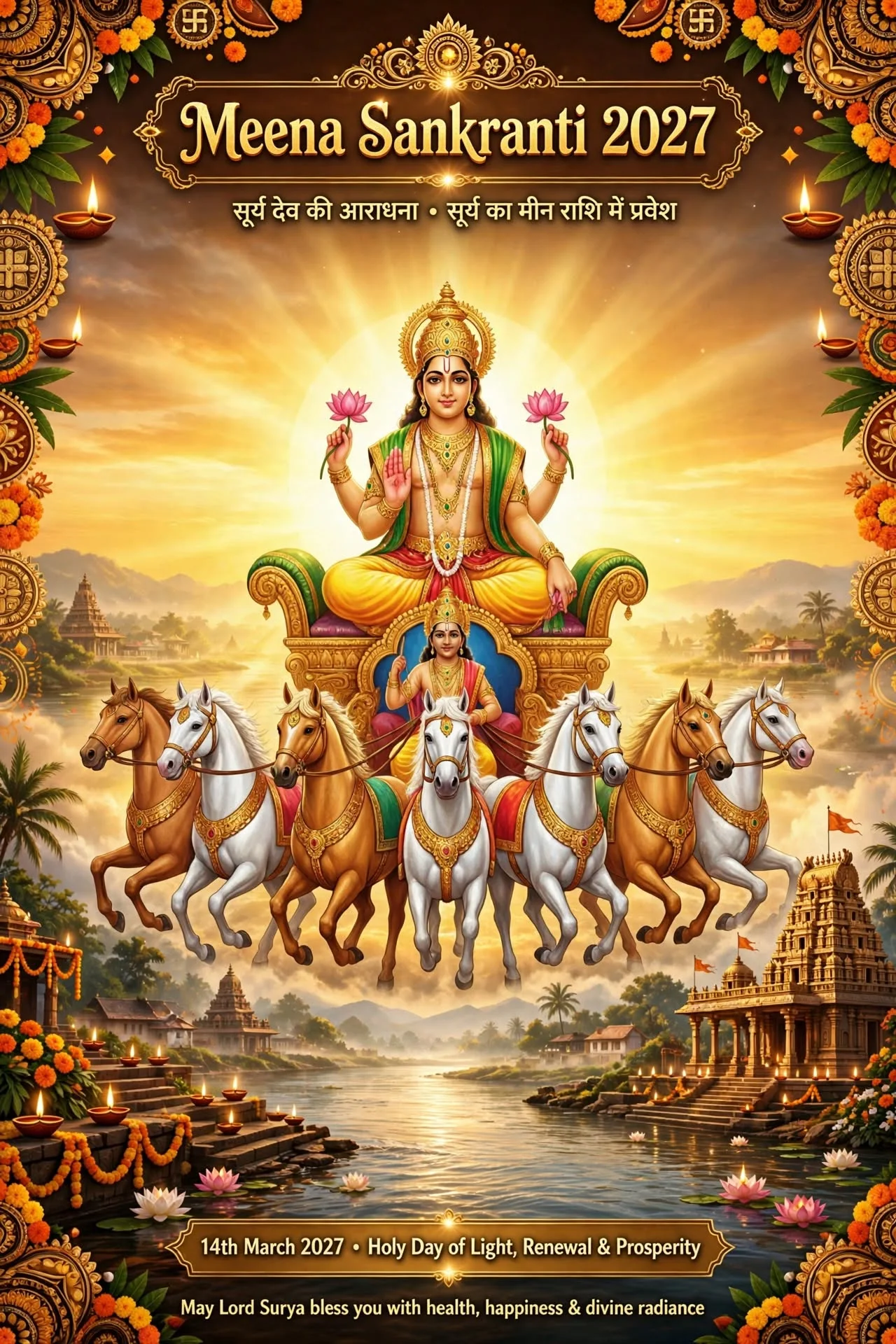
Monday, Mar 15, 2027
Meena Sankranti
Meena Sankranti is a paramount astronomical transit and holy festival in the Hindu solar calendar, marking the entry of the Sun God (Surya Deva) from Kumbha Rashi (Aquarius) into Meena Rashi (Pisces). In Vedic astronomy and Jyotisha, this celestial ingression signifies the commencement of the twelfth and final solar month (Meena Masa) of the sidereal solar year. Occurring in mid-March, Meena Sankranti holds extraordinary significance across Sanatana Dharma as an auspicious juncture of profound spiritual purification, solar adoration, and charitable oblations.
View Festival Guide
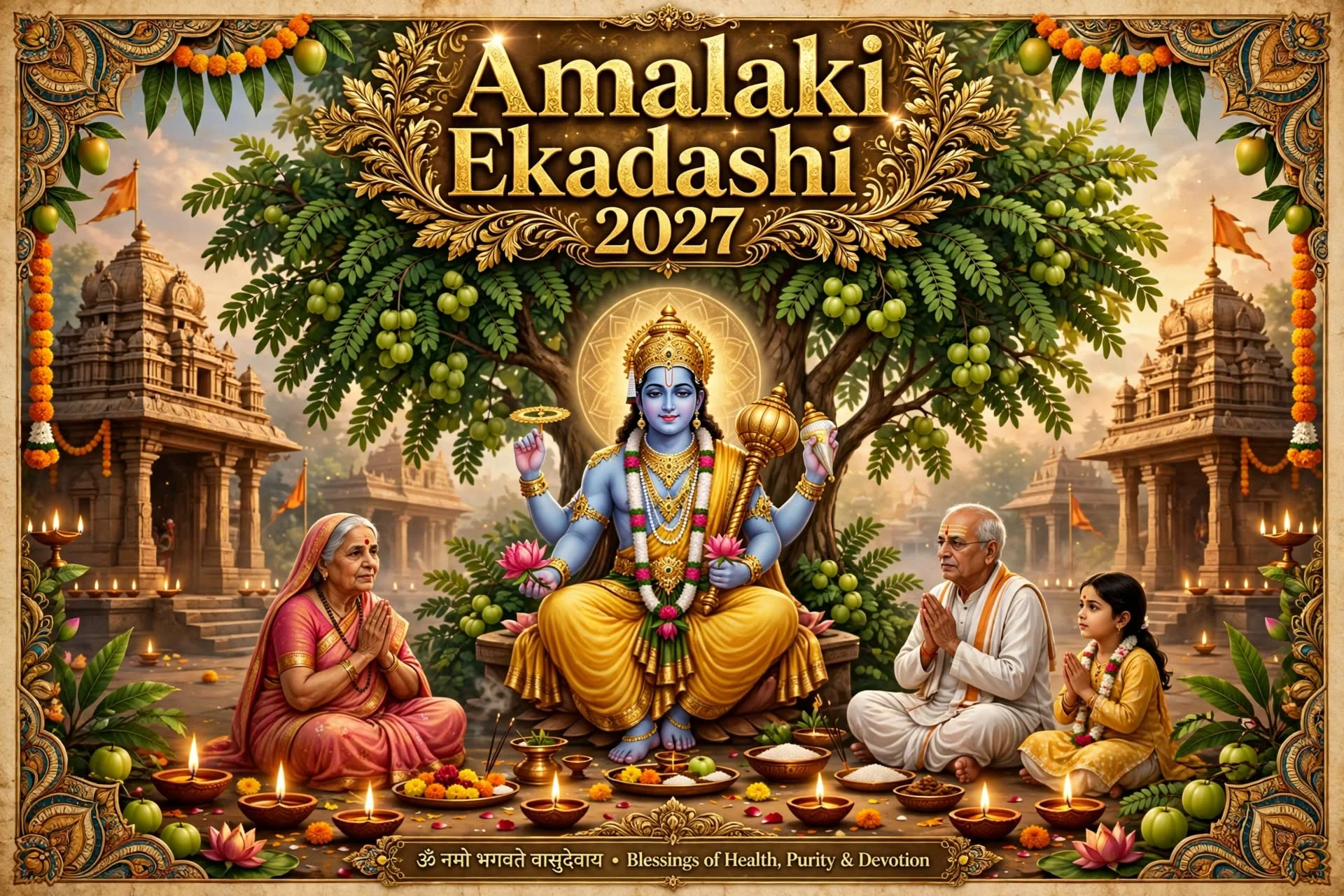
Thursday, Mar 18, 2027
Amalaki Ekadashi
Amalaki Ekadashi, also known as Amla Ekadashi, is a celebrated and spiritually illuminating Hindu fasting observance observed on the eleventh day (Ekadashi tithi) of the Shukla Paksha (waxing moon fortnight) in the auspicious month of Phalguna according to the traditional Hindu calendar. Occurring majestically between the great festivals of Maha Shivaratri and Holi, this sacred Ekadashi is uniquely consecrated to the veneration of the holy Amalaki tree (Indian Gooseberry - Phyllanthus emblica) and Lord Sri Hari Vishnu. In Vedic metaphysics and Ayurveda, the Amalaki tree is revered as the first botanical tree to manifest in the cosmos, imbued with the living divine presence of Lord Vishnu, Goddess Lakshmi, and the entire celestial pantheon.
View Festival Guide
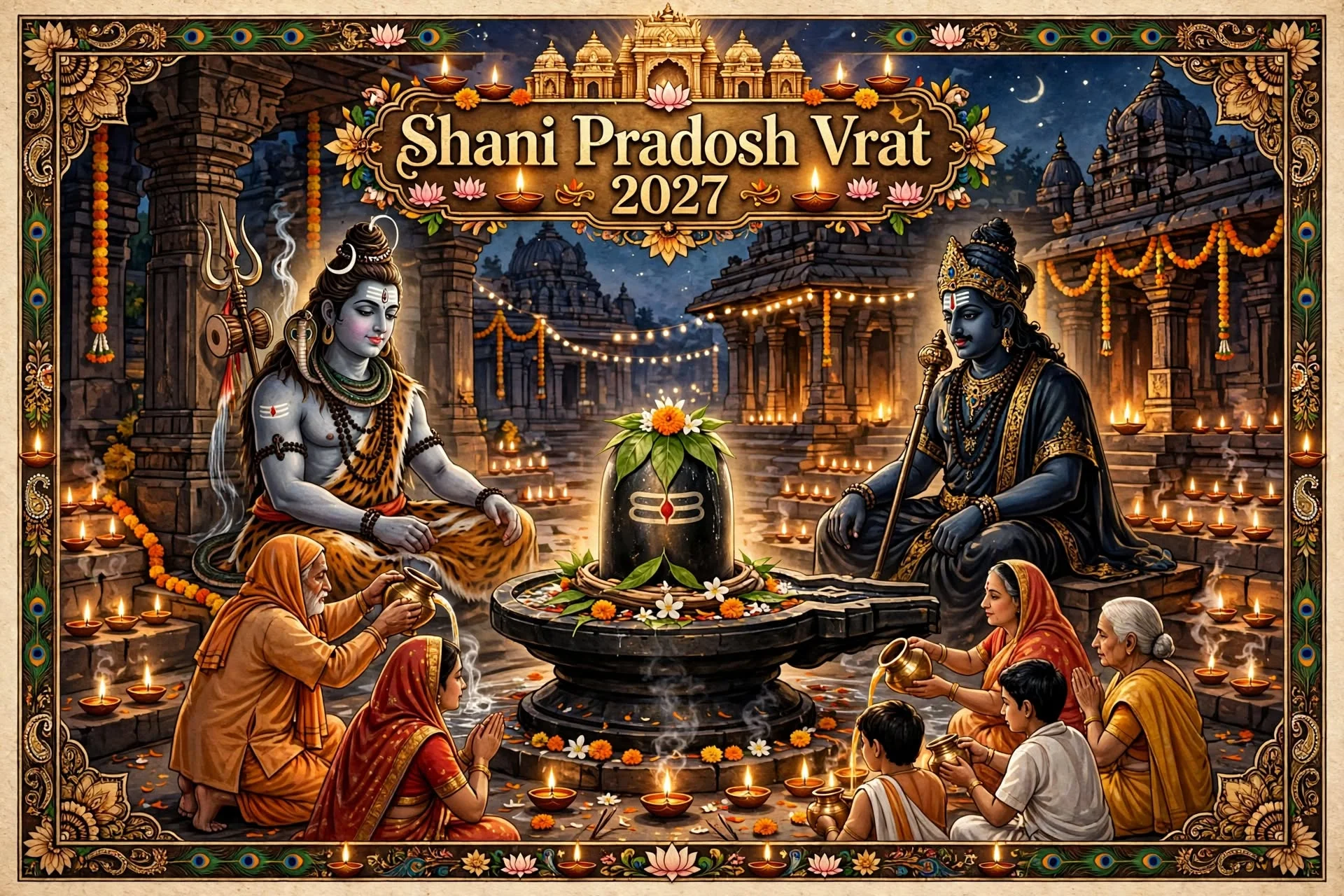
Saturday, Mar 20, 2027
Shani Pradosh Vrat
Shani Pradosh Vrat is an exceptionally potent, revered, and astrologically transformative bi-monthly Hindu fasting observance dedicated to Lord Shiva, Goddess Parvati, and Lord Shani Deva (the planetary deity of Saturn). Occurring on the thirteenth day (Trayodashi tithi) of either the waxing (Shukla) or waning (Krishna) lunar fortnight when it coincides with a Saturday (Shanivara), this sacred vow is lauded across Vedic and Puranic literature as the supreme, infallible spiritual remedy for dissolving chronic karmic impediments, neutralizing severe planetary afflictions, and securing profound peace and prosperity.
View Festival Guide
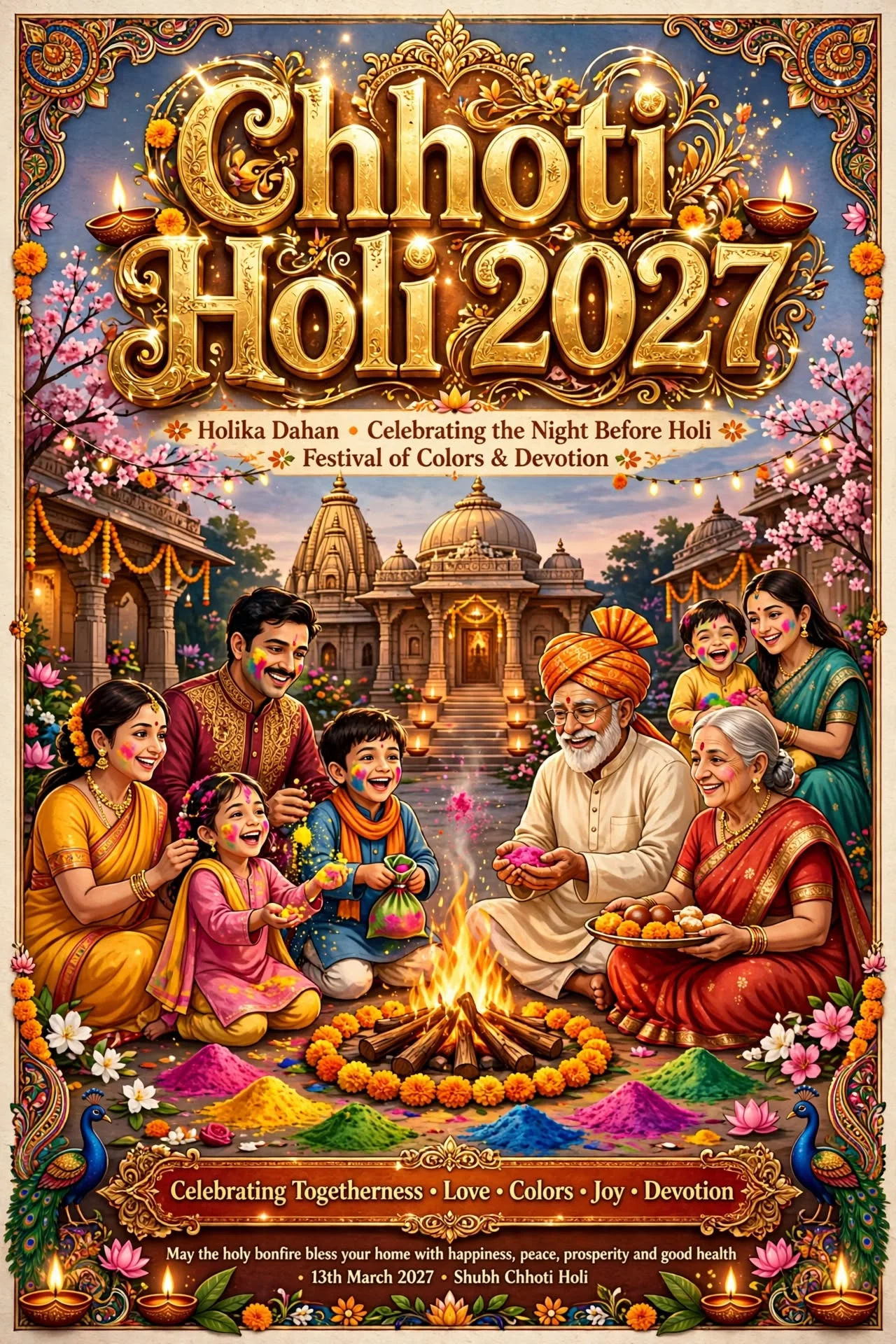
Sunday, Mar 21, 2027
Chhoti Holi
Chhoti Holi, celebrated with boundless excitement and devotion across North, Central, and Western India, is the auspicious festival observed on the fourteenth and fifteenth tithis (Chaturdashi merging into Purnima) of the Shukla Paksha in the month of Phalguna. Serving as the divine prelude to the grand festival of colors (Dhulandi or Badi Holi), Chhoti Holi is universally centered around the sacred ritual of assembling, consecrating, and lighting the community bonfire known as Holika Dahan. It commemorates the eternal victory of pure devotion, righteousness, and truth over demonic arrogance, persecution, and darkness.
View Festival Guide
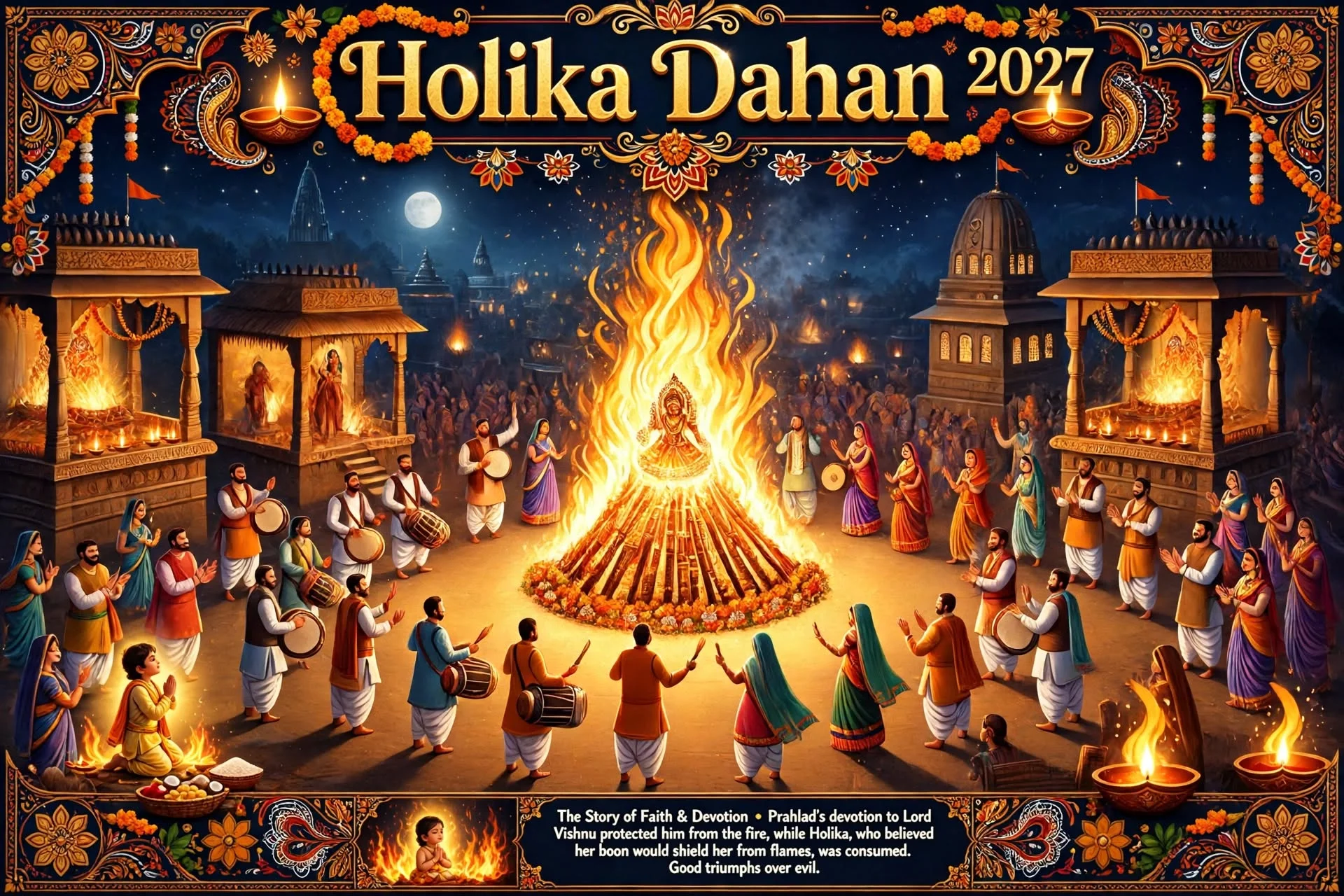
Sunday, Mar 21, 2027
Holika Dahan (Choti Holi)
Holika Dahan, affectionately celebrated as the sacred bonfire night of Holi, is an ancient, monumental, and deeply spiritual Vedic ritual performed on the full moon night (Purnima tithi) of the lunar month of Phalguna according to the Hindu calendar. Celebrated on the night preceding the exuberant festival of colors (Dhulandi or Rangwali Holi), Holika Dahan marks the ceremonial burning of the cosmic pyre, symbolizing the inevitable triumph of divine righteousness (Dharma), supreme devotion (Bhakti), and spiritual truth over demonic tyranny, pride, and persecution.
View Festival Guide
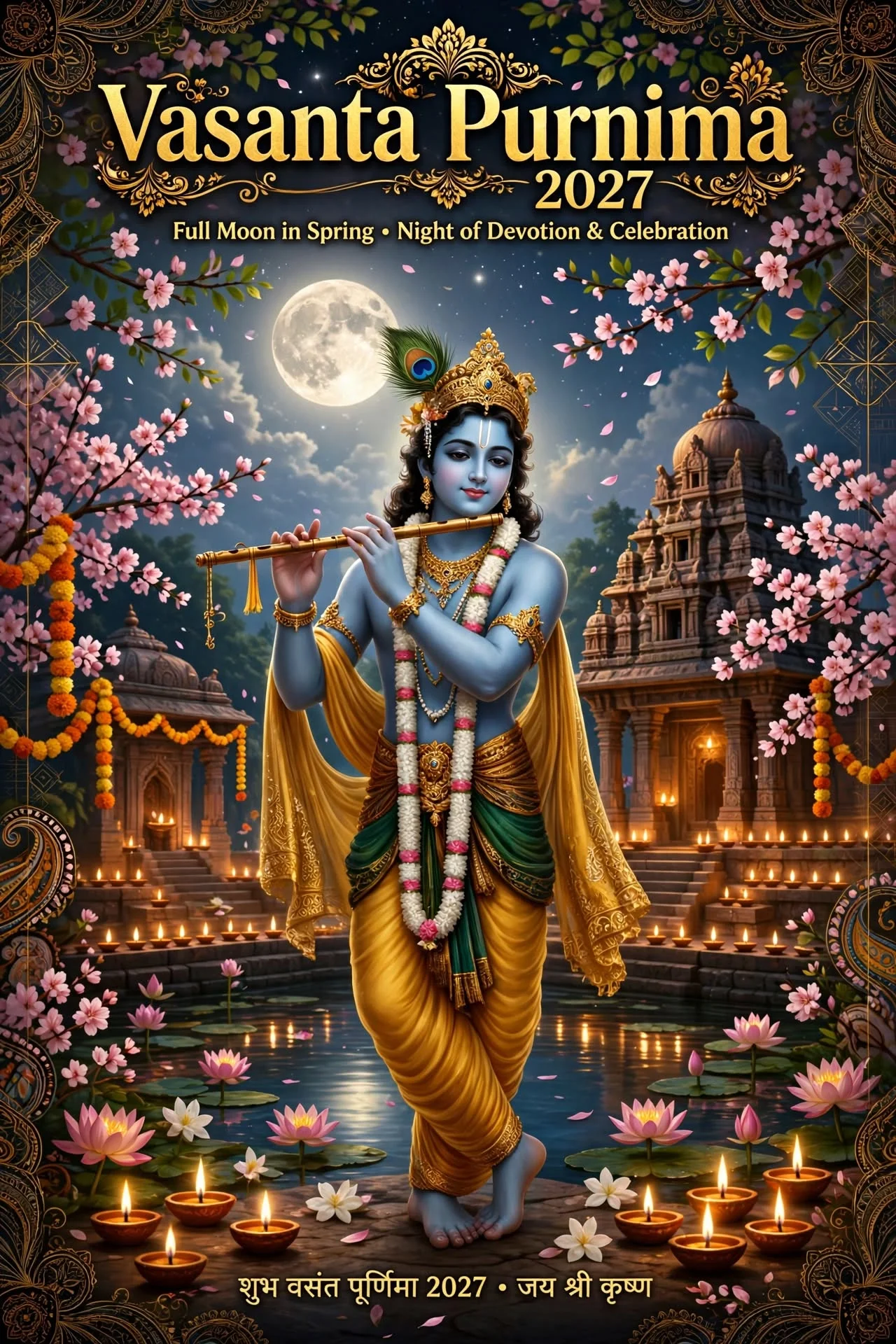
Monday, Mar 22, 2027
Vasanta Purnima
Vasanta Purnima (also known as Vasantotsava Purnima or the Spring Full Moon) is an extraordinarily radiant, culturally celebrated, and spiritually elevating Hindu festival observed on the full moon day (Purnima tithi) of the lunar month of Phalguna according to the traditional Hindu calendar. Coinciding with the peak of the spring season (Rituraj Vasant), this glorious night represents the full flowering of natural beauty, romantic affection, aesthetic grace, and sublime divine devotion (Prema Bhakti) across Sanatana Dharma. Celebrated as the eve of the vibrant festival of colors and the sacred night of Holika Dahan, Vasanta Purnima serves as the crowning jewel of the spring festival cycle.
View Festival Guide

Monday, Mar 22, 2027
Anvadhan
Anvadhan (अन्वाधान) is an ancient, highly revered Vedic ritual and spiritual observance in Sanatana Dharma performed on the day immediately preceding the New Moon (Amavasya) or Full Moon (Purnima). Rooted in the pristine traditions of the Shrauta and Grihya Sutras, Anvadhan literally translates to 'the solemn placing and replenishment of sacred fuel wood into the consecrated Vedic fires'. In traditional Vedic ritualism, householders (Grihasthas) and priests who maintain the sacred Agnihotra fires perform Anvadhan to prepare the sacrificial altars for the grand Darsha Yajna (New Moon sacrifice) or Paurnamasa Yajna (Full Moon sacrifice) scheduled for the following day.
View Festival Guide
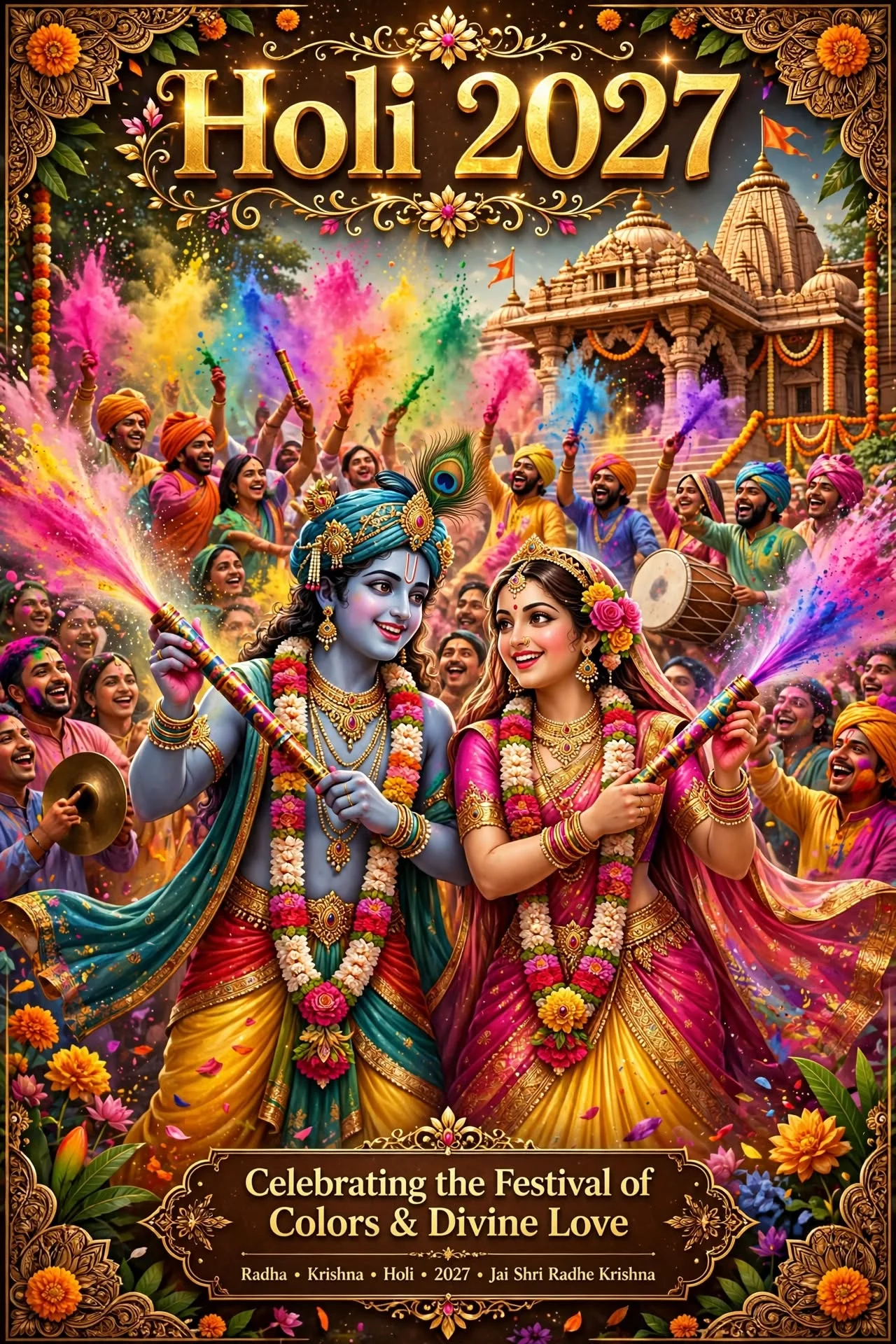
Monday, Mar 22, 2027
Holi
Holi, celebrated with incomparable exuberance, color, and spiritual fraternity, is one of the most ancient, glorious, and universally beloved festivals in Sanatana Dharma. Celebrated on the first day (Pratipada tithi) of the Krishna Paksha in the holy month of Chaitra according to the traditional Hindu calendar (occurring immediately after the night of Holika Dahan), this grand festival of colors—affectionately known as Dhulandi, Dhuleti, Rangwali Holi, and Vasantotsava—marks the triumphant arrival of spring (Rituraj Vasant), the rebirth of nature's vibrant beauty, and the profound social and spiritual renewal of human hearts.
View Festival Guide