




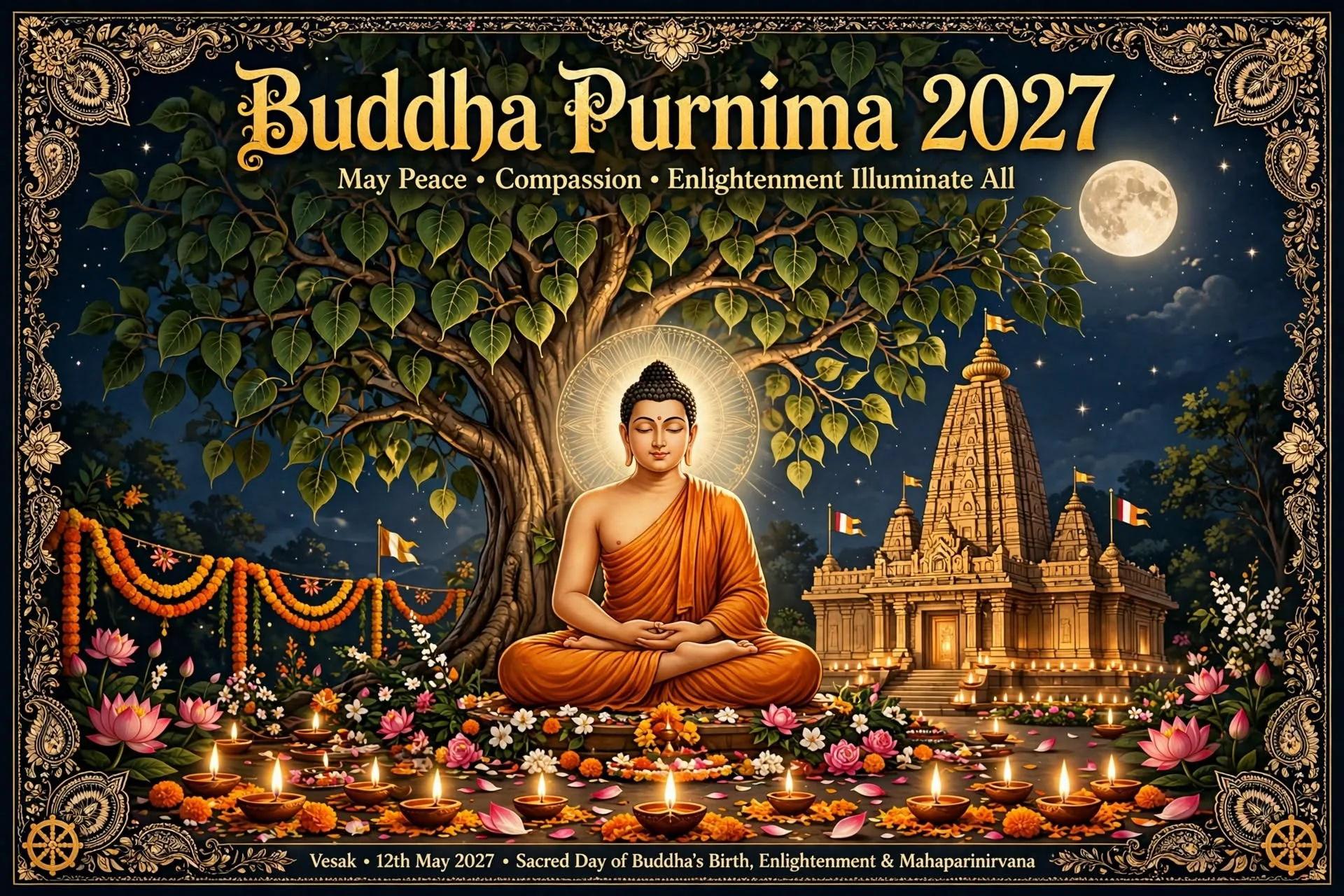
Buddha Purnima, internationally celebrated as Buddha Jayanti or Vesak, is one of the most sublime and universally revered spiritual festivals, falling on the sacred full moon day (Purnima) of the holy month of Vaishakha. This momentous tithi commemorates the thrice-blessed milestone (Thrice-Holy Vesak) in the life of Gautama Buddha: his miraculous birth as Prince Siddhartha in Lumbini, his supreme enlightenment (Bodhi) beneath the Bodhi tree in Bodh Gaya, and his ultimate transition into final liberation (Mahaparinirvana) in Kushinagar.
Buddha Purnima 2027: Date, Puja Timings, Rituals & Stories
Buddha Purnima Timings & Panchang
Important festival dates and auspicious timings
Usha Arghya (Sunrise)
05:28 am
Sandhya Arghya (Sunset)
07:08 pm
Start Date
Thursday, 20 May 2027
Puja Muhurat
04:03 pm – 04:28 pm
Buddha Purnima
In the Hindu tradition, particularly articulated in the Agni Purana, Varaha Purana, and Jayadeva's Dashavatara Stotra, Lord Buddha is venerated as the ninth divine incarnation (Avatar) of Lord Vishnu, manifesting in a critical historical era to stop the animal sacrifices that had crept into religious rituals, preach universal non-violence (Ahimsa Paramo Dharmah), and awaken supreme moral discernment (Karuna and Maitri) across human society.
Celebrated with serene grandeur across India, Sri Lanka, Nepal, Myanmar, Thailand, and across the globe, Buddha Purnima is characterized by meditative silent walks, taking the Five Precepts (Panchasila), watering the sacred Bodhi tree, releasing caged birds, serving lacto-vegetarian meals (Kheer) to monks and seekers, and illuminating homes and monasteries with gentle white lanterns and oil lamps.
Why is Buddha Purnima Celebrated?
Buddha Purnima is celebrated to commemorate the awakening of human consciousness to the four noble truths and the noble eightfold path of liberation. Born as Siddhartha Gautama into royal luxury in the Shakya clan, he renounced worldly sovereignty upon witnessing human suffering, age, disease, and death, dedicating his life to discovering the cessation of misery.
It is also celebrated to reaffirm the foundational spiritual ethics of Ahimsa (non-injury), compassion towards all sentient life, self-mastery through mindfulness, and freedom from dogmatism, greed, and hatred.
- Commemorates the birth, enlightenment (Bodhi), and Mahaparinirvana of Gautama Buddha.
- Honors Buddha as the ninth Vishnu Avatar who championed Ahimsa and compassionate ethics.
- Reaffirms the Middle Path (Majjhima Patipada) avoiding both sensory indulgence and severe mortification.
- Fosters global harmony, peace, meditative mindfulness, and universal brotherhood.
The Thrice-Sacred Milestones of the Enlightened One
Royal Birth in Lumbini and the Great Renunciation
As chronicled in the Lalitavistara Sutra and Buddhist Jatakas, Queen Mayadevi gave birth to Prince Siddhartha beneath the blooming Sal trees of Lumbini grove on Vaishakha Purnima. Sages prophesied that the child would become either a world emperor (Chakravartin) or a supreme enlightened sage (Buddha).
Surrounded by royal opulence, the young prince encountered the Four Sights: an old man, a sick person, a dead body, and a serene wandering mendicant. Realizing the universal impermanence of existence, at the age of twenty-nine he quietly abandoned his palace, crown, and luxuries (the Great Renunciation) to wander as an ascetic seeking the root cause of human suffering.
Enlightenment in Bodh Gaya and Mahaparinirvana
After six years of rigorous study and severe penances, Siddhartha sat beneath the sacred Peepal (Bodhi) tree on the banks of the Niranjana River in Bodh Gaya, resolving not to arise until ultimate truth was attained. On Vaishakha Purnima, he conquered the illusions of Mara and awakened into full Buddhahood, declaring the Middle Path.
For forty-five years, he walked across the dusty roads of India sharing Dhamma. At the age of eighty, between twin Sal trees in Kushinagar, on the very same Vaishakha Purnima, he delivered his final teachings: "All conditioned things are impermanent; strive diligently for your own liberation," before entering Mahaparinirvana.
Source: Lalitavistara Sutra, Buddhacharita of Ashvaghosha & Agni Purana
The Middle Path and the Fire of Universal Compassion
Ahimsa as the Supreme Spiritual Foundation
In Jayadeva's Dashavatara Stotra, the poet salutes Buddha: "Nindasi yajnavidher-ahaha shrutijatam, hridaya-sadaya-darshita-pashughatam"—venerating Him for condemning the distortion of rituals that involved slaughtering animals, out of profound, boundless pity in His heart. Buddha elevated compassion from a selective emotion into a cosmic law.
Mindfulness and the Middle Path
Buddha's greatest contribution was the Middle Path (Majjhima Patipada)—steering clear of both sensory self-indulgence and extreme, debilitating ascetic self-mortification. By focusing on mindfulness of breath, awareness of bodily sensations, and ethical speech, the human mind directly experiences inner freedom from craving (Raga), aversion (Dvesha), and ignorance (Moha).
Observance Protocol, Meditation, and Acts of Kindness
Dawn Mindfulness and White Attire
Seekers dress in pure white attire, symbolizing ethical purity and peace. Gathering at dawn in meditation halls, temples, or quiet home corners, they practice Vipassana (mindfulness) or Anapanasati (breath awareness), followed by chanting refuge in the Three Jewels: the Buddha, the Dhamma (truth), and the Sangha (community).
Annadana, Kheer Offering, and Liberation of Life
In memory of Sujata, the village maiden who offered sweet rice milk (Kheer) to the emaciated Siddhartha before his enlightenment, sweet milk kheer is prepared and served to monks, spiritual seekers, and the poor. Devotees also release caged birds or captive fish into rivers, practicing active compassion.
Buddha Purnima Puja Vidhi (Step by Step)
- 1
Pratah Shuddhi
Take an early morning bath, wear clean white clothing symbolizing ethical purity, and sit in a quiet meditation posture facing east.
- 2
Deepa and Sugandhi Sthapana
Light clean oil or ghee lamps representing the light of wisdom dispelling the darkness of ignorance, and burn fragrant natural incense.
- 3
Buddha Pratima Snana
Gently bathe the statue of Lord Buddha with fragrant water mixed with rose petals and sandalwood, symbolizing the purification of the mind.
- 4
White Lotus and Flower Archana
Offer fresh white lotus blossoms, jasmine, and marigolds while contemplating their impermanence: blooming, fading, and returning to earth.
- 5
Triratna Vandana (Three Refuges)
Chant with deep reverence the Three Refuges: Buddham Sharanam Gacchami, Dhammam Sharanam Gacchami, Sangham Sharanam Gacchami.
Buddha Purnima Puja Samagri List
Altar Setup and Decorative Articles
Sublime articles assembled for Buddhist and Vaishnava altar worship.
- Idol or portrait of Lord Buddha in meditation / Abhaya mudra
- Clean white cloth for altar table
- Fresh white lotus blossoms and jasmine flowers
- Earthen or brass oil lamps and cotton wicks
- Pure rose water and Malayagiri sandalwood paste
- Natural fragrant incense sticks
Kheer and Naivedya Offerings
Sattvic offerings commemorating Sujata's historic offering.
- Sweet rice kheer (Payasam) made with cow milk and sugar
- Fresh seasonal fruits (Melons, Bananas, Apples)
- Cool drinking water in copper or earthen pitcher
- Lotus seeds (Makhana) and dry fruits
- Puffed rice and jaggery
Charity and Life-Affirming Materials
Items assembled for compassionate distribution and service.
- Food grains and cooked vegetarian meals for donation
- White cotton clothes or robes for monks/seekers
Mantras and Prayers for Buddha Purnima
Buddha Purnima Vrat Rules and Fasting Guidelines
Sattvic and Compassionate Conduct
The observance of Buddha Purnima emphasizes living strictly by ethical precepts and non-violence.
- Maintain complete vegetarianism and absolute non-violence in thought, word, and deed
- Observe the Five Precepts (Panchasila): avoid harm, lying, theft, misconduct, and intoxicants
- Avoid noisy celebrations, aggressive speech, or disputes, dedicating the day to silent reflection
Mindful Eating and Dana
Dietary intake is simple, mindful, and shared with others.
- Consume light meals consisting of rice kheer, fruits, and milk before afternoon
- Many practitioners observe intermittent fasting after mid-day to enhance mental clarity
- Share meals freely with monks, spiritual seekers, laborers, and stray animals
Dos and Don'ts of Buddha Purnima
Good Practices (Do's)
- Wear clean white clothing and spend time in quiet meditation and breath awareness.
- Recite the Three Refuges (Triratna) and uphold the Five Precepts with sincerity.
- Offer white flowers, clean water, and sweet milk kheer to Lord Buddha.
- Practice loving-kindness (Metta) toward all beings, wishing peace to the entire world.
- Perform charity of food, clothing, and medicine to the destitute and animals.
Buddha Purnima Across Regions
| Region | Local Name |
|---|---|
| Bodh Gaya, Bihar & Sarnath, Uttar Pradesh | Buddha Purnima Mahotsav / Vesak |
| Himalayan Belt (Ladakh, Sikkim, Himachal Pradesh, Arunachal Pradesh) | Saga Dawa / Buddha Jayanti |
| Maharashtra (Mumbai, Nagpur, Aurangabad) | Buddha Jayanti |
Buddha Purnima FAQs
What three great events in Buddha's life occurred on Vaishakha Purnima?
Buddha's birth in Lumbini, his supreme enlightenment (Bodhi) beneath the Bodhi tree in Bodh Gaya, and his passing into final liberation (Mahaparinirvana) in Kushinagar all occurred on Vaishakha Purnima.
Why is sweet rice milk (Kheer) traditionally distributed on Buddha Purnima?
Before attaining enlightenment, the severely emaciated Siddhartha received a bowl of sweet rice milk from a village maiden named Sujata, which restored his physical strength and enabled his final meditation.
What are the Five Precepts (Panchasila) renewed on this day?
The Five Precepts are voluntary vows to refrain from: 1) harming living beings, 2) taking what is not freely given, 3) sexual misconduct, 4) false speech, and 5) taking intoxicating drinks or drugs.
Upcoming Festivals
View All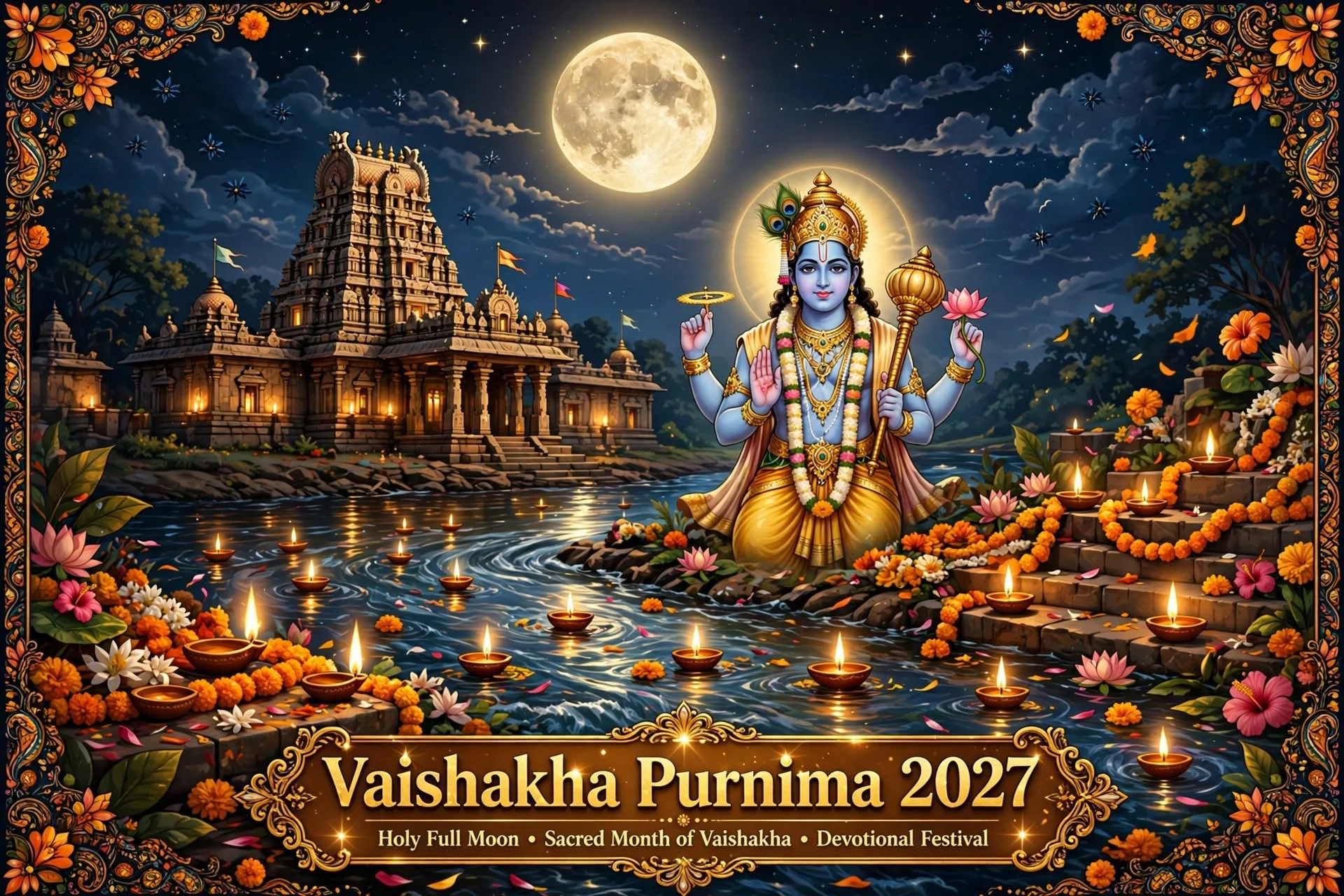
Thursday, May 20, 2027
Vaishakha Purnima
Vaishakha Purnima is the sacred full-moon day occurring on the Purnima Tithi of Shukla Paksha in the Hindu lunar month of Vaishakha. It is one of the spiritually significant Purnima observances in the Hindu calendar and is associated with sacred bathing, charity, worship of Lord Vishnu, remembrance of ancestors, and spiritual discipline. The word Purnima refers to the full-moon phase, symbolizing completeness, illumination, and the culmination of the lunar fortnight. Vaishakha is traditionally regarded as a particularly meritorious month for religious observances, making its concluding full moon an important occasion for devotees.
View Festival Guide

Thursday, May 20, 2027
Anvadhan
Anvadhan (अन्वाधान) is an ancient, highly revered Vedic ritual and spiritual observance in Sanatana Dharma performed on the day immediately preceding the New Moon (Amavasya) or Full Moon (Purnima). Rooted in the pristine traditions of the Shrauta and Grihya Sutras, Anvadhan literally translates to 'the solemn placing and replenishment of sacred fuel wood into the consecrated Vedic fires'. In traditional Vedic ritualism, householders (Grihasthas) and priests who maintain the sacred Agnihotra fires perform Anvadhan to prepare the sacrificial altars for the grand Darsha Yajna (New Moon sacrifice) or Paurnamasa Yajna (Full Moon sacrifice) scheduled for the following day.
View Festival Guide

Friday, May 21, 2027
Ishti
Ishti is a foundational Vedic ritual observance appearing prominently in Hindu Panchangs on the Pratipada tithi (the first lunar day) following either Amavasya (new moon) or Purnima (full moon), marking the prescribed performance day for the fortnightly Vedic Darsha-Purnamasa sacrifices.
View Festival Guide
Friday, May 21, 2027
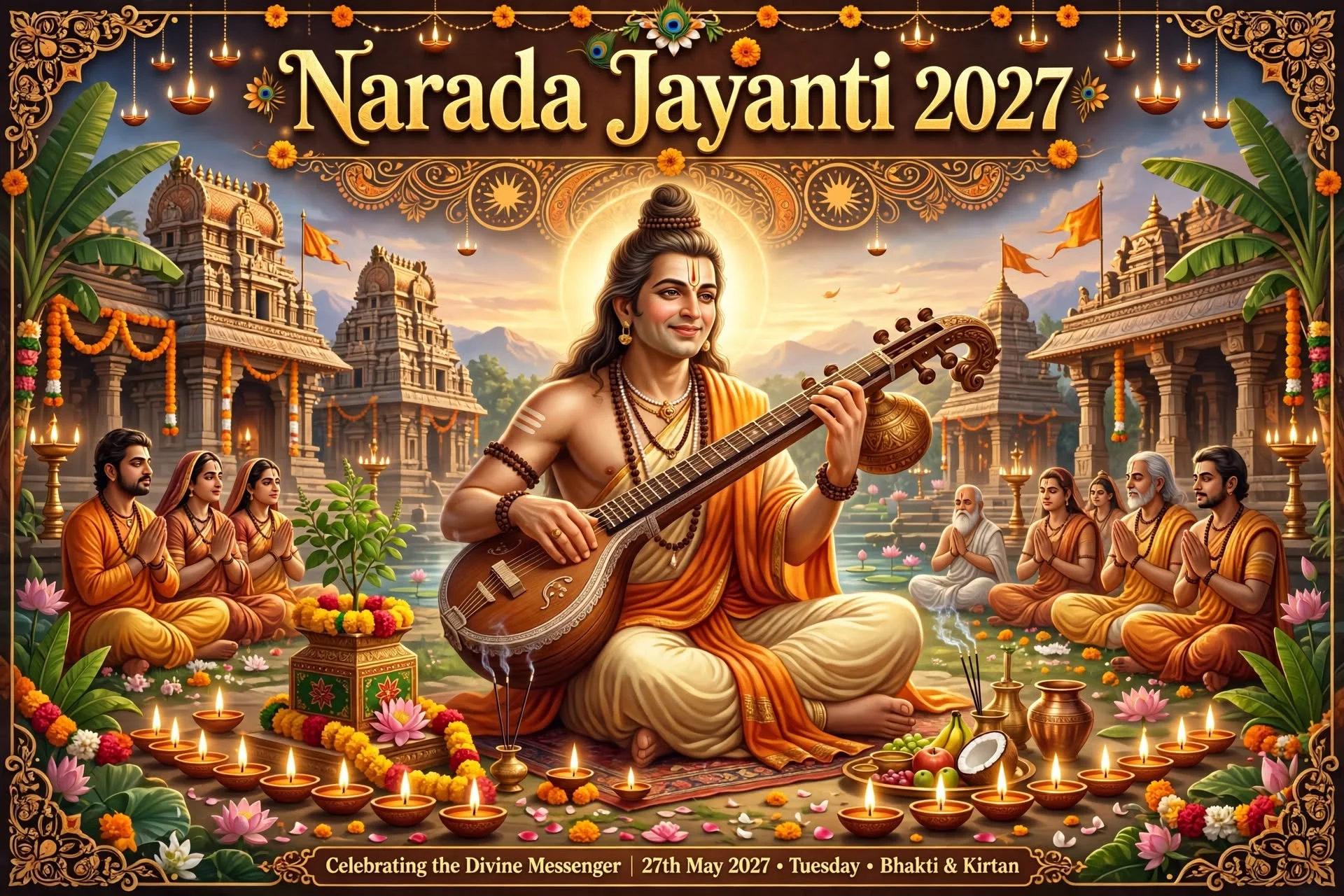
Narada Jayanti
Narada Jayanti marks the appearance anniversary of Devarshi Narada, the supreme celestial sage, divine messenger of the cosmos, master of the Veena, and eternal pioneer of Harinama Sankirtana. Celebrated on the Pratipada tithi (first lunar day) of the Krishna Paksha directly following Vaishakha Purnima (in the month of Jyeshtha in the Purnimanta system, or Vaishakha Krishna Pratipada), this festival commemorates the appearance of the great Manasaputra (mind-born son) of Lord Brahma who traverses the three cosmic worlds unobstructed, singing the praises of Lord Narayana upon his celestial lute, the Mahati Veena.
View Festival Guide
Sunday, May 23, 2027
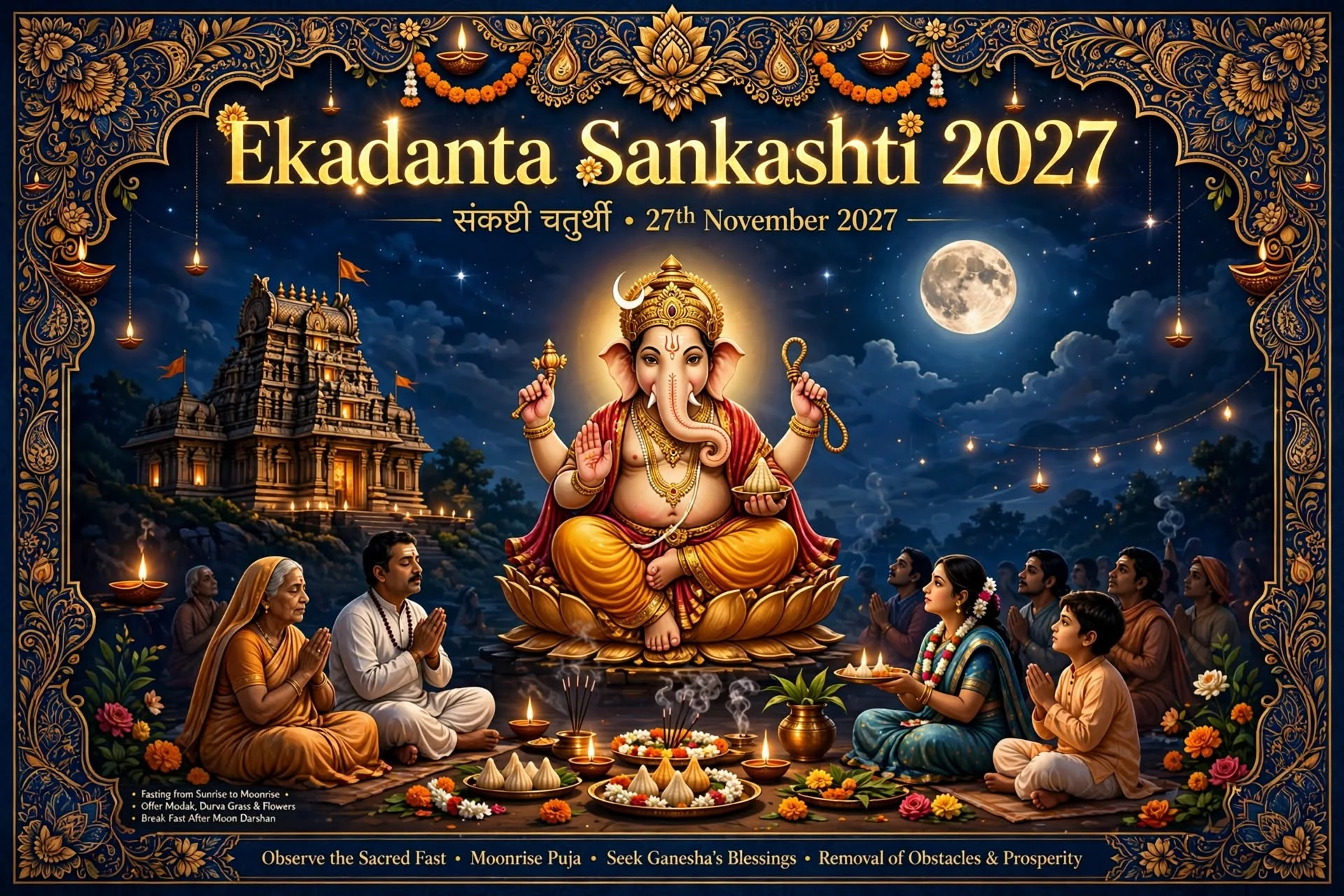
Ekadanta Sankashti
Ekadanta Sankashti Chaturthi, also celebrated as Ekadanta Sankashti Vrat, is a powerful monthly observance dedicated to Lord Ganesha, occurring during the Krishna Paksha (waning fortnight) on the fourth lunar day (Chaturthi tithi) of the Hindu lunar month of Vaishakha (or Jyeshtha in the Purnimanta system). The term "Sankashti" translates to "deliverance from distress or crisis" (Sankat-Nivaran), signifying that this sacred vrata removes formidable obstacles, clears karmic debts, and brings peace and success to the devotee's life.
View Festival Guide
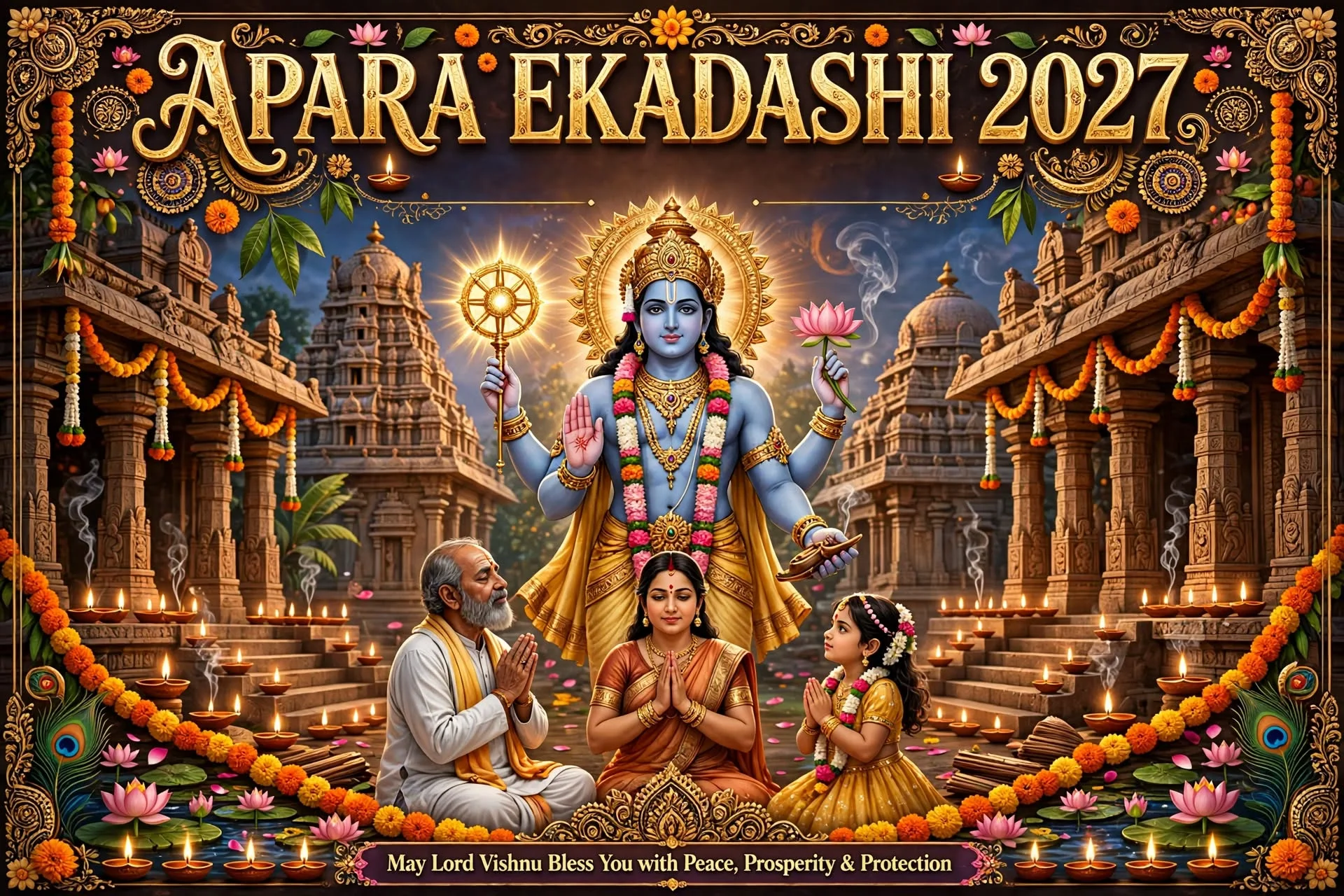
Tuesday, Jun 1, 2027
Apara Ekadashi
Apara Ekadashi, also known as Achala Ekadashi, is a sacred Hindu fasting observance dedicated to Lord Vishnu. It falls on the Ekadashi Tithi, the eleventh lunar day of Krishna Paksha in the month of Jyeshtha according to the Purnimanta calendar. In the Amanta calendar followed in several western and southern Indian regions, the same observance is associated with Vaishakha Krishna Paksha.
View Festival Guide
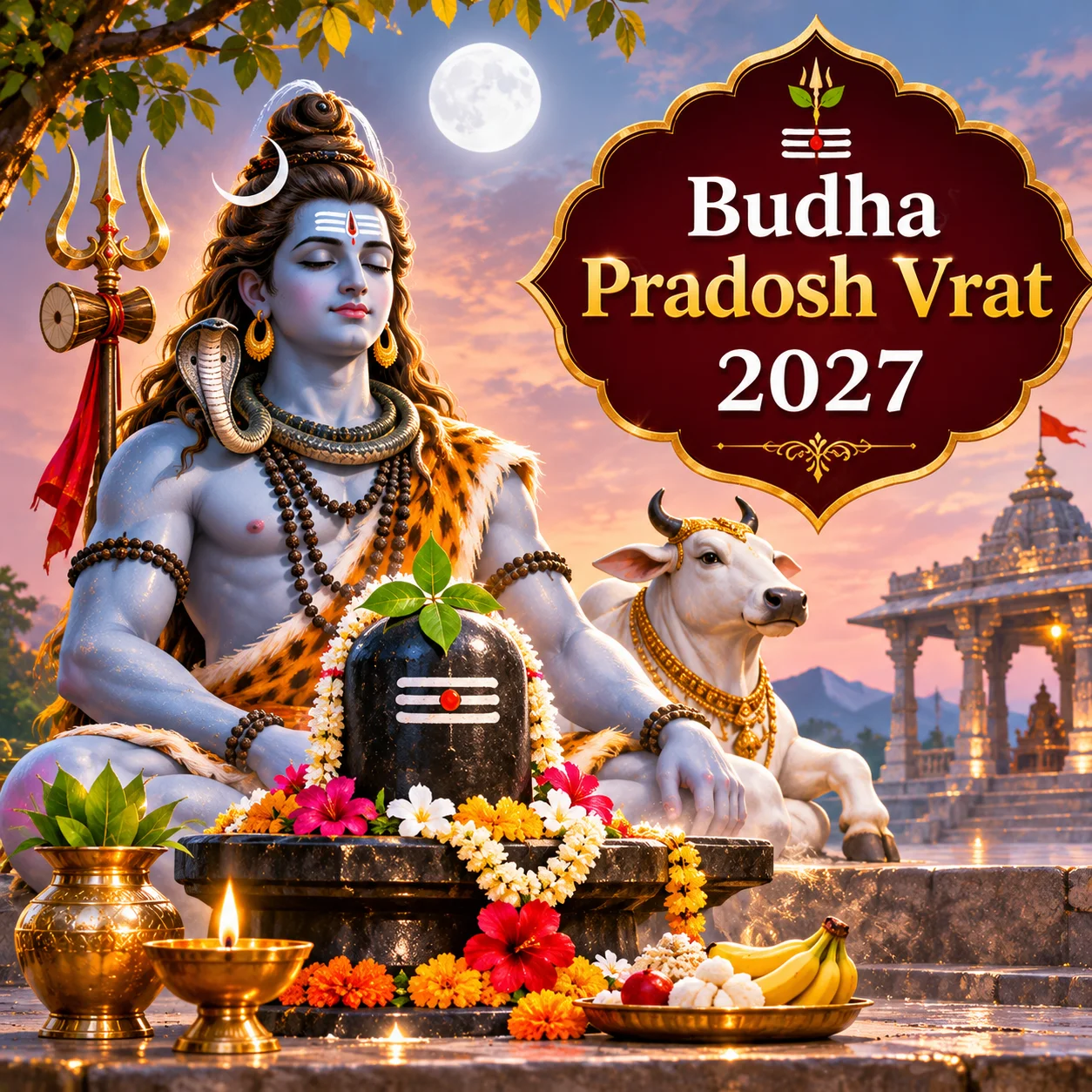
Wednesday, Jun 2, 2027
Budha Pradosh Vrat
Budha Pradosh Vrat, also known as Saumya Vara Pradosham, is a sacred bimonthly Hindu observance occurring when the Trayodashi tithi (thirteenth lunar day) coincides with a Wednesday (Budhavara) during the Pradosha Kaal twilight period.
View Festival Guide
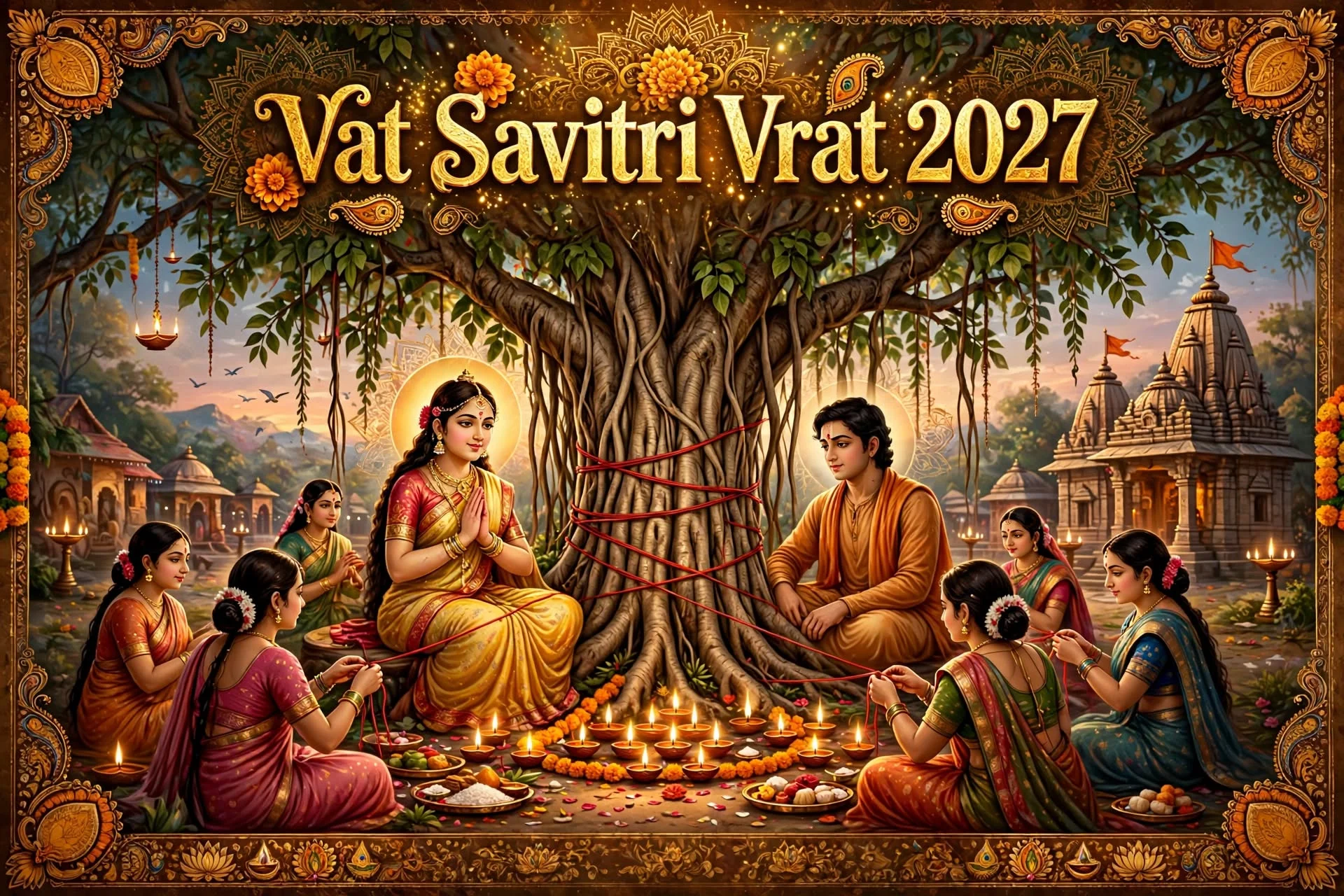
Friday, Jun 4, 2027
Vat Savitri Vrat
Vat Savitri Vrat is an important Hindu observance dedicated to the devotion, courage and determination of Savitri, the legendary wife of Satyavan. The festival is traditionally observed by married women who pray for their husband's long life, good health, prosperity and the well-being of their family.
View Festival Guide