




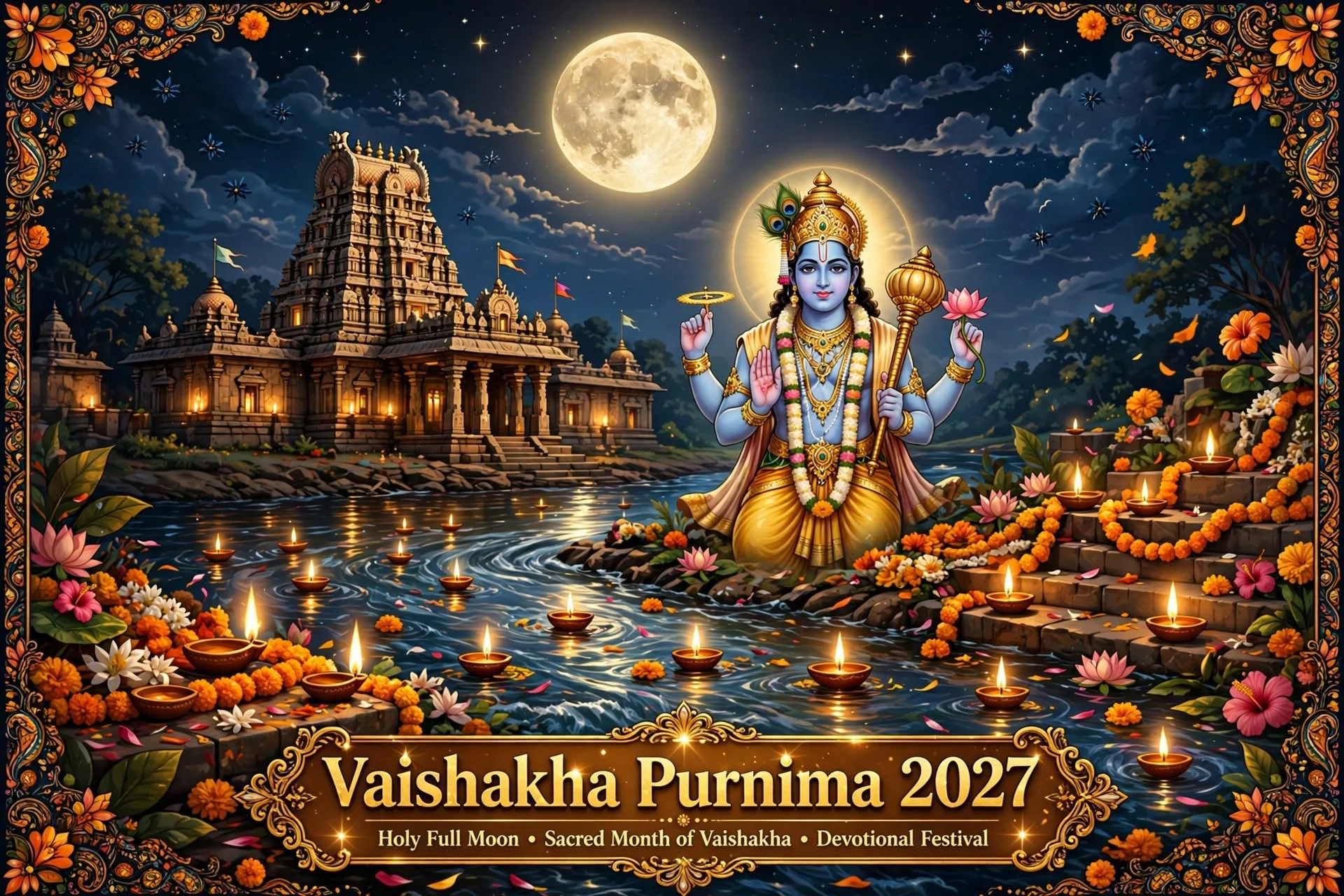
Vaishakha Purnima is the sacred full-moon day occurring on the Purnima Tithi of Shukla Paksha in the Hindu lunar month of Vaishakha. It is one of the spiritually significant Purnima observances in the Hindu calendar and is associated with sacred bathing, charity, worship of Lord Vishnu, remembrance of ancestors, and spiritual discipline. The word Purnima refers to the full-moon phase, symbolizing completeness, illumination, and the culmination of the lunar fortnight. Vaishakha is traditionally regarded as a particularly meritorious month for religious observances, making its concluding full moon an important occasion for devotees.
Vaishakha Purnima 2027: Date, Puja Timings, Rituals & Stories
Vaishakha Purnima Timings & Panchang
Important festival dates and auspicious timings
Usha Arghya (Sunrise)
05:28 am
Sandhya Arghya (Sunset)
07:08 pm
Start Date
Thursday, 20 May 2027
Puja Muhurat
04:03 pm – 04:28 pm
Vaishakha Purnima
The day is widely known as Buddha Purnima or Buddha Jayanti because Buddhist communities commemorate Gautama Buddha on the Vaishakha full moon. In many Buddhist traditions, the day remembers three defining events associated with the Buddha: his birth, enlightenment beneath the Bodhi tree, and Mahaparinirvana. It is also known internationally as Vesak. The precise historical and calendrical observance varies among Buddhist traditions, but the day consistently emphasizes compassion, non-violence, mindfulness, wisdom, and generosity.
In Vaishnava Hindu tradition, Vaishakha Purnima is also associated with Kurma Jayanti, commemorating Lord Vishnu's Kurma Avatar. According to the Puranic account of the Samudra Manthana, Vishnu assumed the form of a gigantic tortoise to support Mount Mandara when the Devas and Asuras churned the cosmic ocean in search of Amrita, the nectar of immortality. The Kurma incarnation represents divine stability, protection, patience, and the sustaining power that supports the cosmic order.
Vaishakha Purnima also marks the culmination of the traditional Vaishakha Snana observance. Devotees who undertake the month-long practice of bathing at dawn, worshipping Lord Vishnu, reciting sacred names, and performing charity regard this full moon as an important concluding day. Those who cannot observe the entire month may follow selected practices during the final days according to their family traditions.
The full moon is also considered suitable for Satyanarayana Puja, Vishnu worship, and charitable activities. Traditional observances described in the Nilamata Purana include sesame-based bathing, offerings, charity, temple lamps, and worship associated with the full moon. These practices reflect the broader spiritual principles of purification, gratitude, generosity, and devotion. Vaishakha Purnima therefore brings together distinct Hindu and Buddhist observances that share the calendar occasion while maintaining their own religious identities.
Why is Vaishakha Purnima Celebrated?
Vaishakha Purnima is celebrated because the full moon marks the culmination of the sacred Vaishakha month, a period traditionally associated with bathing, charity, worship, and spiritual discipline. Hindu religious traditions regard Vaishakha as a meritorious month for acts of dana, japa, snana, and devotion to Lord Vishnu. The Purnima provides an occasion to complete these observances, offer prayers, and dedicate charitable acts to the welfare of others.
The day is especially significant in Buddhist communities as Buddha Purnima or Vesak. Buddhist traditions commemorate Gautama Buddha's life and teachings, with many communities observing his birth, enlightenment, and Mahaparinirvana on the full moon of Vaishakha. Devotees visit monasteries, offer flowers and lamps, listen to teachings, practice meditation, observe ethical precepts, and participate in acts of generosity. These practices express the Buddha's teachings on compassion, wisdom, mindfulness, and freedom from suffering.
In Hindu Vaishnava tradition, the full moon is associated with Kurma Jayanti, the appearance of Lord Vishnu in the form of a tortoise. During the cosmic churning of the ocean, Mount Mandara was used as the churning rod. When the mountain began to sink, Vishnu assumed the Kurma form and supported it from beneath the ocean. This divine intervention enabled the churning to continue and symbolizes the importance of a stable foundation for the restoration of cosmic balance.
Vaishakha Purnima is also an important day for Satyanarayana worship and traditional charitable offerings. Devotees may offer food, water, sesame seeds, clothes, and other useful items. The observance encourages people to recognize the value of generosity, truthfulness, non-violence, and service. Its spiritual importance is therefore expressed through different religious practices rather than through a single compulsory ritual.
- Marks the Purnima Tithi that concludes the Hindu lunar month of Vaishakha.
- Is celebrated as Buddha Purnima or Vesak by Buddhist communities in remembrance of Gautama Buddha and his teachings.
- Commemorates the birth, enlightenment, and Mahaparinirvana of Gautama Buddha in many Buddhist traditions.
Sacred Traditions, the Kurma Avatar, and the Enlightened Life of Buddha
The Significance of the Vaishakha Full Moon
The Hindu lunar calendar assigns special importance to Purnima, the full-moon day that concludes each Shukla Paksha. Vaishakha Purnima is particularly respected because it concludes Vaishakha, a month traditionally associated with sacred bathing, worship of Lord Vishnu, japa, homa, and dana. The religious importance of the month is described in traditional Puranic and Dharma literature, where acts of devotion and charity are encouraged as means of spiritual purification.
The full moon is a natural marker of completion. In religious symbolism, its complete illumination is associated with clarity, fulfilment, and the removal of darkness. Devotees use this occasion to reflect on their conduct, renew their spiritual commitments, and offer prayers for the well-being of their families and society.
Vaishakha Purnima is not defined by one exclusive ritual. Its observances include several traditions that developed within Hindu and Buddhist religious communities. Hindu practices emphasize the completion of Vaishakha Snana, Vishnu worship, Kurma Jayanti, and charity. Buddhist practices emphasize the Buddha's life, Dharma, meditation, and compassionate conduct.
Gautama Buddha and the Tradition of Buddha Purnima
Buddha Purnima commemorates Gautama Buddha, who was born as Siddhartha Gautama in the Shakya community. According to Buddhist tradition, he was born at Lumbini. Raised in a royal environment, Siddhartha encountered the realities of ageing, sickness, death, and the possibility of spiritual liberation. These experiences led him to renounce worldly comforts and search for a way to overcome suffering.
After years of spiritual seeking and disciplined practice, Siddhartha attained enlightenment beneath the Bodhi tree at Bodh Gaya. He became known as the Buddha, meaning the Awakened One. His teachings explain the nature of suffering, its causes, the possibility of its cessation, and the path leading toward liberation. The Four Noble Truths and the Noble Eightfold Path form central elements of Buddhist teaching.
Buddhist traditions associate the Vaishakha full moon with major events in the Buddha's life. Many communities commemorate his birth, enlightenment, and Mahaparinirvana on this occasion. The observance is known as Vesak in many parts of Asia. The precise historical chronology and calendar reckoning differ among Buddhist traditions, so these commemorations should be understood within their respective religious calendars.
The Spiritual Meaning of Full-Moon Illumination, Compassion, and Divine Stability
The Full Moon as a Symbol of Completeness
Purnima represents the culmination of the waxing lunar fortnight. Its fully illuminated appearance has long been used in Indian spiritual traditions as a symbol of completeness, clarity, and inner fulfilment. Vaishakha Purnima invites devotees to examine their actions, strengthen their spiritual commitments, and seek harmony between thought, speech, and conduct.
The full moon also provides an occasion for prayer, meditation, and contemplation. Devotees may spend time reciting sacred texts, remembering their chosen deity, or observing silence. The significance of the day is not limited to ritual performance; it also encourages the cultivation of a peaceful and disciplined mind.
The Path of Buddha: Compassion and Wisdom
Buddha Purnima highlights the teachings of Gautama Buddha and their relevance to human life. The Buddha taught that suffering is part of conditioned existence and that attachment, craving, and ignorance contribute to its continuation. Through ethical conduct, meditation, and wisdom, individuals can develop a deeper understanding of the mind and move toward liberation.
The Noble Eightfold Path provides a practical framework for right understanding, intention, speech, action, livelihood, effort, mindfulness, and concentration. These principles encourage a life guided by awareness and compassion rather than anger, greed, and harmful conduct.
Acts of generosity on Buddha Purnima are expressions of Dana, one of the important virtues in Buddhist practice. Feeding the hungry, supporting monasteries, helping the sick, protecting animals, and sharing resources reflect the understanding that compassion should be expressed through action.
The Kurma Avatar: Stability and Divine Support
The Kurma Avatar represents the sustaining aspect of Lord Vishnu. The tortoise supported Mount Mandara during the Samudra Manthana, providing the stability necessary for the cosmic process to continue. Spiritually, this image represents patience, endurance, and the importance of a firm foundation during periods of difficulty.
Sacred Bathing, Vishnu Worship, Buddha Purnima, and Charitable Observances
Early Morning Vaishakha Snana
Devotees traditionally begin Vaishakha Purnima with an early morning bath. Those living near a sacred river, lake, or pilgrimage site may perform Snana there. Others may bathe at home after remembering the sacred rivers through prayer. The bath is performed with the intention of purification and completion of the Vaishakha observance.
After bathing, devotees wear clean clothes and offer prayers to Lord Vishnu or their household deity. Those who have observed Vaishakha Snana throughout the month may conclude their vrata with a final sankalpa, worship, and charity.
Vishnu and Satyanarayana Worship
Many Hindu households worship Lord Vishnu on Vaishakha Purnima. Devotees may offer tulasi leaves, flowers, incense, a lamp, water, and vegetarian naivedya. Recitation of the Vishnu Sahasranama, Vishnu mantras, or other devotional texts is commonly included according to family tradition.
Satyanarayana Puja is also performed by many households on Purnima days. The worship generally includes a sankalpa, invocation of Lord Satyanarayana, offerings, listening to or reading the Satyanarayana Katha, aarti, and distribution of prasada. The procedure may vary by region and family tradition.
Kurma Jayanti Observance
Devotees who observe Kurma Jayanti worship Lord Vishnu in his tortoise incarnation. They may place an image of Lord Kurma or Lord Vishnu at the altar, offer flowers and tulasi where appropriate, light a lamp, and recite Vishnu prayers. The story of the Samudra Manthana may be read or narrated as part of the worship.
The observance emphasizes stability, patience, and the divine support that sustains creation. Devotees may also visit Vishnu temples and participate in special prayers where Kurma Jayanti is observed.
Buddha Purnima and Buddhist Practices
Vaishakha Purnima Puja Vidhi (Step by Step)
- 1
Check the Purnima Tithi
Consult the local Panchang to confirm the beginning and ending of Vaishakha Purnima Tithi. Follow the local observance convention for the vrat and puja rather than assuming that the full moon always falls on the same civil date.
- 2
Wake Early and Prepare for Snana
Rise early and prepare for the traditional Vaishakha bath. If possible, bathe in a sacred river or pilgrimage water body. Otherwise, bathe at home after remembering the sacred rivers through prayer.
- 3
Wear Clean Clothes
After bathing, wear clean clothes and prepare a clean place for worship. Arrange the deity image, flowers, water, incense, lamp, and other offerings.
- 4
Take the Sankalpa
Sit peacefully before the altar and take a sankalpa to observe Vaishakha Purnima with devotion, self-discipline, charity, and prayers for the welfare of all living beings.
- 5
Offer Arghya to the Sun
Offer clean water to Lord Surya in the morning using a suitable vessel. Pray for health, strength, clarity, and the successful completion of the Vaishakha observance.
Vaishakha Purnima Puja Samagri List
Vishnu and Satyanarayana Worship Materials
These materials may be arranged for household worship of Lord Vishnu, Madhusudana, or Satyanarayana on Vaishakha Purnima.
- Image or idol of Lord Vishnu or Satyanarayana
- Clean puja platform and cloth
- Fresh tulasi leaves
- Fresh flowers
- Akshata (unbroken rice grains)
- Roli or kumkum
- Sandalwood paste
- Incense sticks
- Cotton wicks
- Ghee or oil for the lamp
- Clean water
- Panchamrita ingredients where prescribed
Kurma Jayanti Worship Materials
Devotees observing the Kurma Avatar may use these materials for a simple worship of Lord Vishnu in his tortoise incarnation.
- Image or representation of Lord Kurma
- Fresh flowers
- Tulasi leaves where appropriate
- Sandalwood paste
- Incense and lamp
Mantras and Prayers for Vaishakha Purnima
Vaishakha Purnima Vrat Rules and Fasting Guidelines
Purity, Devotion, and Self-Discipline
Vaishakha Purnima observance emphasizes purity, truthfulness, devotion, generosity, and compassion. Devotees may follow the practices appropriate to their religious tradition and family customs.
- Begin the day with a clean bath and a peaceful state of mind.
- Offer prayers to Lord Vishnu or the chosen household deity.
- Maintain truthful speech and avoid unnecessary arguments.
- Practice kindness and non-violence toward all living beings.
- Spend time in prayer, meditation, or recitation of sacred texts.
- Perform charity without expecting recognition or reward.
- Complete the Vaishakha Snana observance according to the established family practice.
Fasting and Dietary Discipline
Some devotees observe a Purnima fast, while others consume simple vegetarian food and focus on worship and charity. There is no single fasting method that applies to every Hindu or Buddhist community. The observance should be followed according to health, capacity, and tradition.
- Choose a suitable fasting practice according to personal health and family custom.
- Consume simple vegetarian food if observing dietary restraint.
- Drink sufficient water, especially during the hot season.
- Avoid intoxication and excessive consumption.
- Do not undertake strict fasting when it may harm health.
Dos and Don'ts of Vaishakha Purnima
Good Practices (Do's)
- Check the local Panchang for the beginning and ending of Vaishakha Purnima Tithi.
- Begin the day with a clean bath and sincere prayer.
- Complete the Vaishakha Snana observance according to family tradition.
- Worship Lord Vishnu, Madhusudana, or Satyanarayana where followed.
- Remember the Kurma Avatar and the Samudra Manthana story.
- Offer food, drinking water, sesame seeds, and useful items to people in need.
Vaishakha Purnima Across Regions
| Region | Local Name |
|---|---|
| Bodh Gaya, Bihar | Buddha Purnima |
| Sarnath, Uttar Pradesh | Buddha Jayanti |
| Kushinagar, Uttar Pradesh | Buddha Purnima |
| Ladakh and Himalayan Buddhist Communities | Buddha Purnima / Vesak |
| Maharashtra | Buddha Purnima |
| Tamil Nadu | Vaikasi Purnima |
| Kerala | Vaishakha Purnima |
| North India | Vaishakha Purnima / Buddha Purnima |
| Pan-India Buddhist Communities | Buddha Purnima / Buddha Jayanti |
Vaishakha Purnima FAQs
What is Vaishakha Purnima?
Vaishakha Purnima is the full-moon day of Shukla Paksha in the Hindu lunar month of Vaishakha. It is observed through sacred bathing, charity, Vishnu worship, and other regional religious practices. It is also widely known as Buddha Purnima or Vesak in Buddhist communities.
Why is Vaishakha Purnima important?
The day marks the conclusion of the Vaishakha month and is associated with the completion of Vaishakha Snana, charity, Vishnu worship, and Kurma Jayanti. Buddhist communities also commemorate Gautama Buddha and his teachings on this full moon.
Is Vaishakha Purnima the same as Buddha Purnima?
Buddha Purnima is the widely used name for the Buddhist observance held on the Vaishakha full moon. Vaishakha Purnima is the broader lunar-calendar occasion, which also has Hindu observances such as Vishnu worship, Vaishakha Snana completion, and Kurma Jayanti.
Upcoming Festivals
View All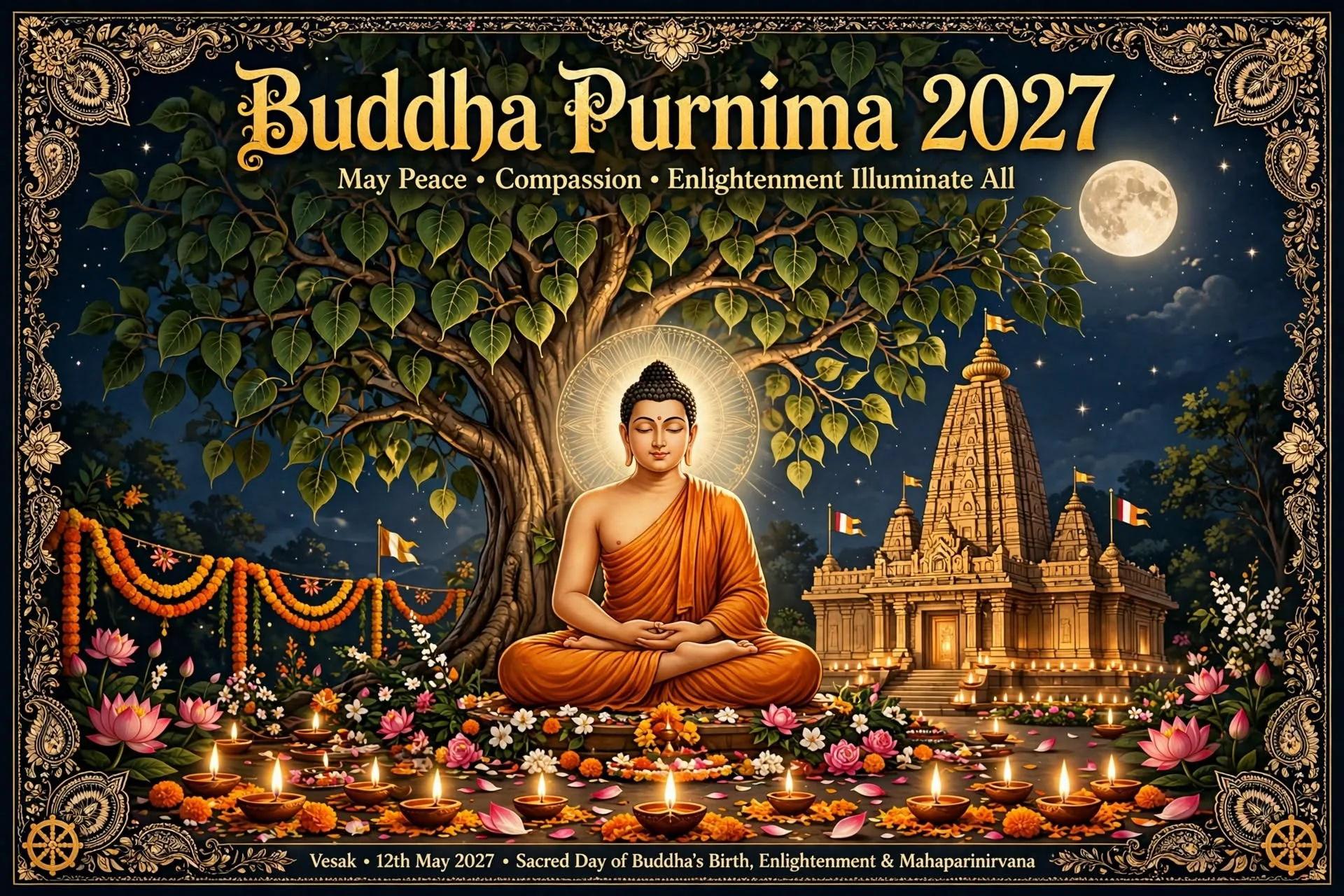
Thursday, May 20, 2027
Buddha Purnima
Buddha Purnima, internationally celebrated as Buddha Jayanti or Vesak, is one of the most sublime and universally revered spiritual festivals, falling on the sacred full moon day (Purnima) of the holy month of Vaishakha. This momentous tithi commemorates the thrice-blessed milestone (Thrice-Holy Vesak) in the life of Gautama Buddha: his miraculous birth as Prince Siddhartha in Lumbini, his supreme enlightenment (Bodhi) beneath the Bodhi tree in Bodh Gaya, and his ultimate transition into final liberation (Mahaparinirvana) in Kushinagar.
View Festival Guide

Thursday, May 20, 2027
Anvadhan
Anvadhan (अन्वाधान) is an ancient, highly revered Vedic ritual and spiritual observance in Sanatana Dharma performed on the day immediately preceding the New Moon (Amavasya) or Full Moon (Purnima). Rooted in the pristine traditions of the Shrauta and Grihya Sutras, Anvadhan literally translates to 'the solemn placing and replenishment of sacred fuel wood into the consecrated Vedic fires'. In traditional Vedic ritualism, householders (Grihasthas) and priests who maintain the sacred Agnihotra fires perform Anvadhan to prepare the sacrificial altars for the grand Darsha Yajna (New Moon sacrifice) or Paurnamasa Yajna (Full Moon sacrifice) scheduled for the following day.
View Festival Guide

Friday, May 21, 2027
Ishti
Ishti is a foundational Vedic ritual observance appearing prominently in Hindu Panchangs on the Pratipada tithi (the first lunar day) following either Amavasya (new moon) or Purnima (full moon), marking the prescribed performance day for the fortnightly Vedic Darsha-Purnamasa sacrifices.
View Festival Guide
Friday, May 21, 2027
Narada Jayanti
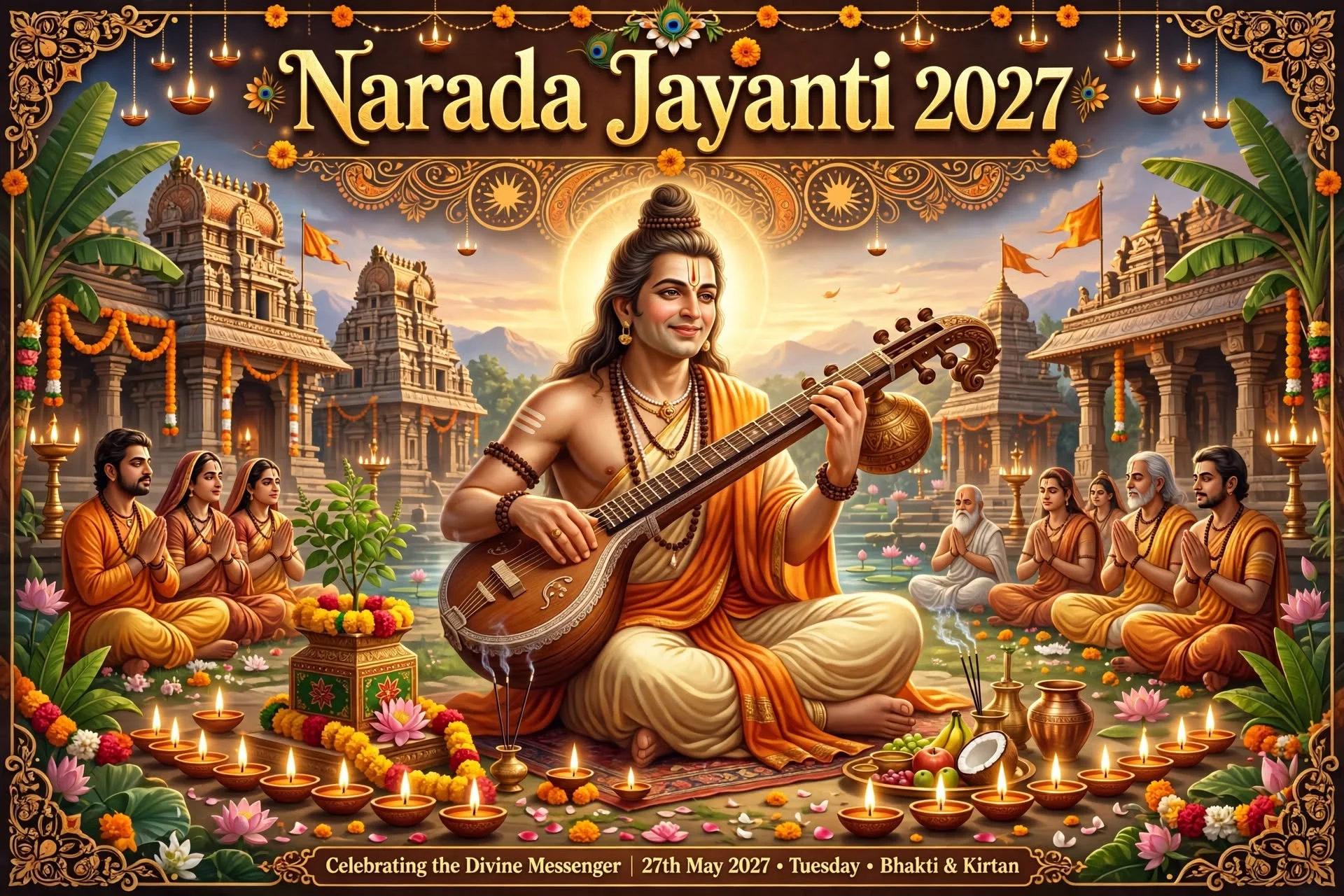
Narada Jayanti marks the appearance anniversary of Devarshi Narada, the supreme celestial sage, divine messenger of the cosmos, master of the Veena, and eternal pioneer of Harinama Sankirtana. Celebrated on the Pratipada tithi (first lunar day) of the Krishna Paksha directly following Vaishakha Purnima (in the month of Jyeshtha in the Purnimanta system, or Vaishakha Krishna Pratipada), this festival commemorates the appearance of the great Manasaputra (mind-born son) of Lord Brahma who traverses the three cosmic worlds unobstructed, singing the praises of Lord Narayana upon his celestial lute, the Mahati Veena.
View Festival Guide
Sunday, May 23, 2027
Ekadanta Sankashti
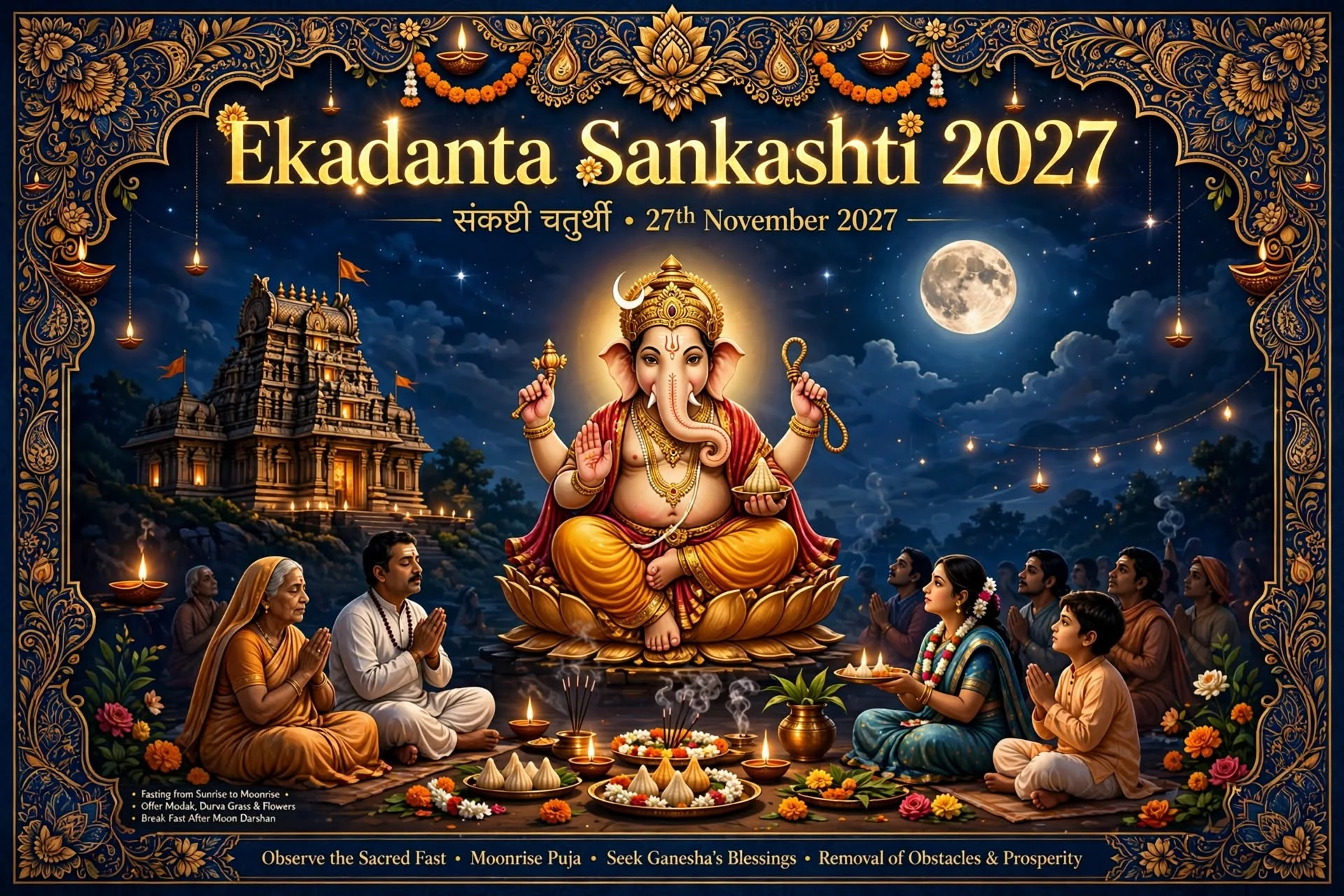
Ekadanta Sankashti Chaturthi, also celebrated as Ekadanta Sankashti Vrat, is a powerful monthly observance dedicated to Lord Ganesha, occurring during the Krishna Paksha (waning fortnight) on the fourth lunar day (Chaturthi tithi) of the Hindu lunar month of Vaishakha (or Jyeshtha in the Purnimanta system). The term "Sankashti" translates to "deliverance from distress or crisis" (Sankat-Nivaran), signifying that this sacred vrata removes formidable obstacles, clears karmic debts, and brings peace and success to the devotee's life.
View Festival Guide
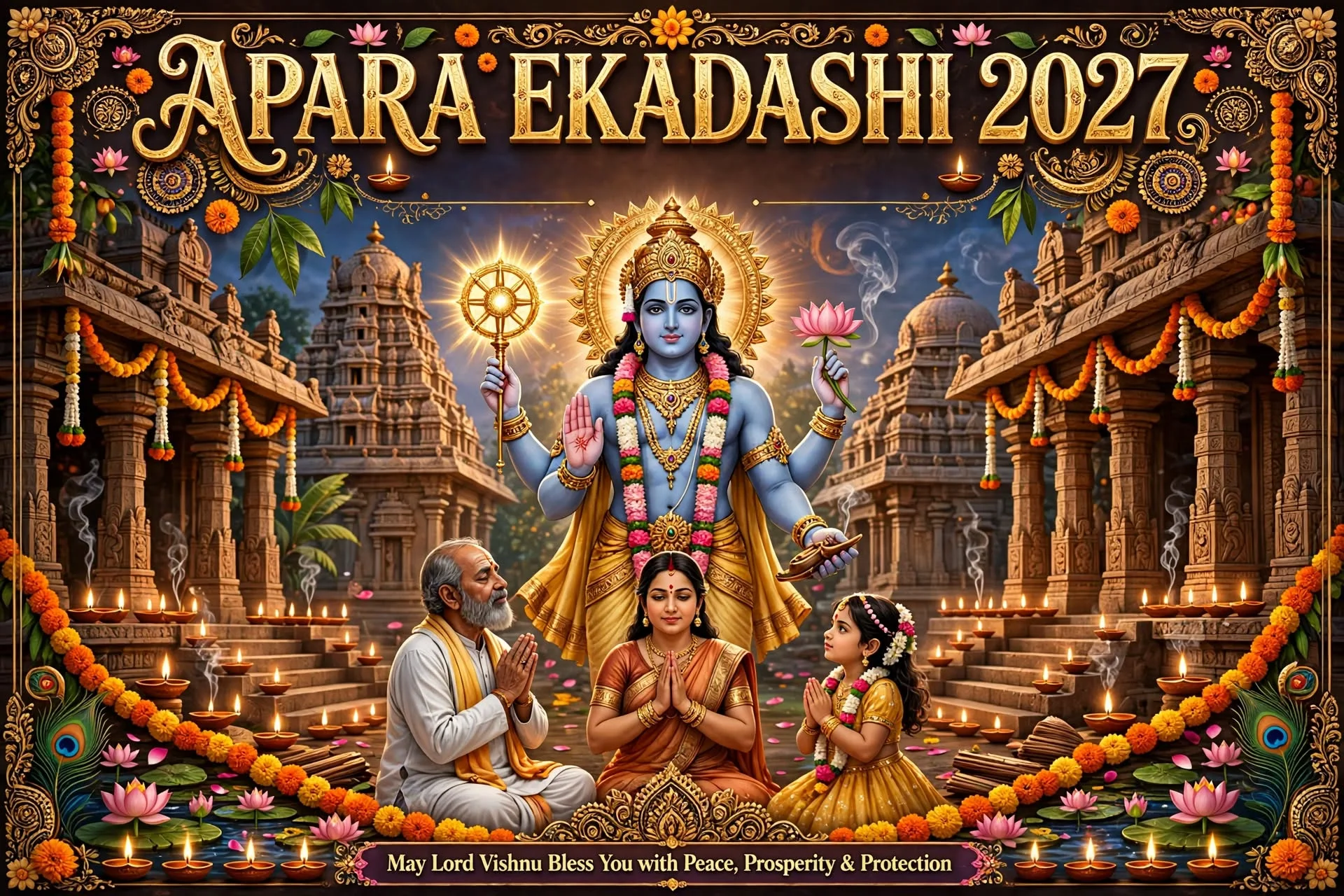
Tuesday, Jun 1, 2027
Apara Ekadashi
Apara Ekadashi, also known as Achala Ekadashi, is a sacred Hindu fasting observance dedicated to Lord Vishnu. It falls on the Ekadashi Tithi, the eleventh lunar day of Krishna Paksha in the month of Jyeshtha according to the Purnimanta calendar. In the Amanta calendar followed in several western and southern Indian regions, the same observance is associated with Vaishakha Krishna Paksha.
View Festival Guide
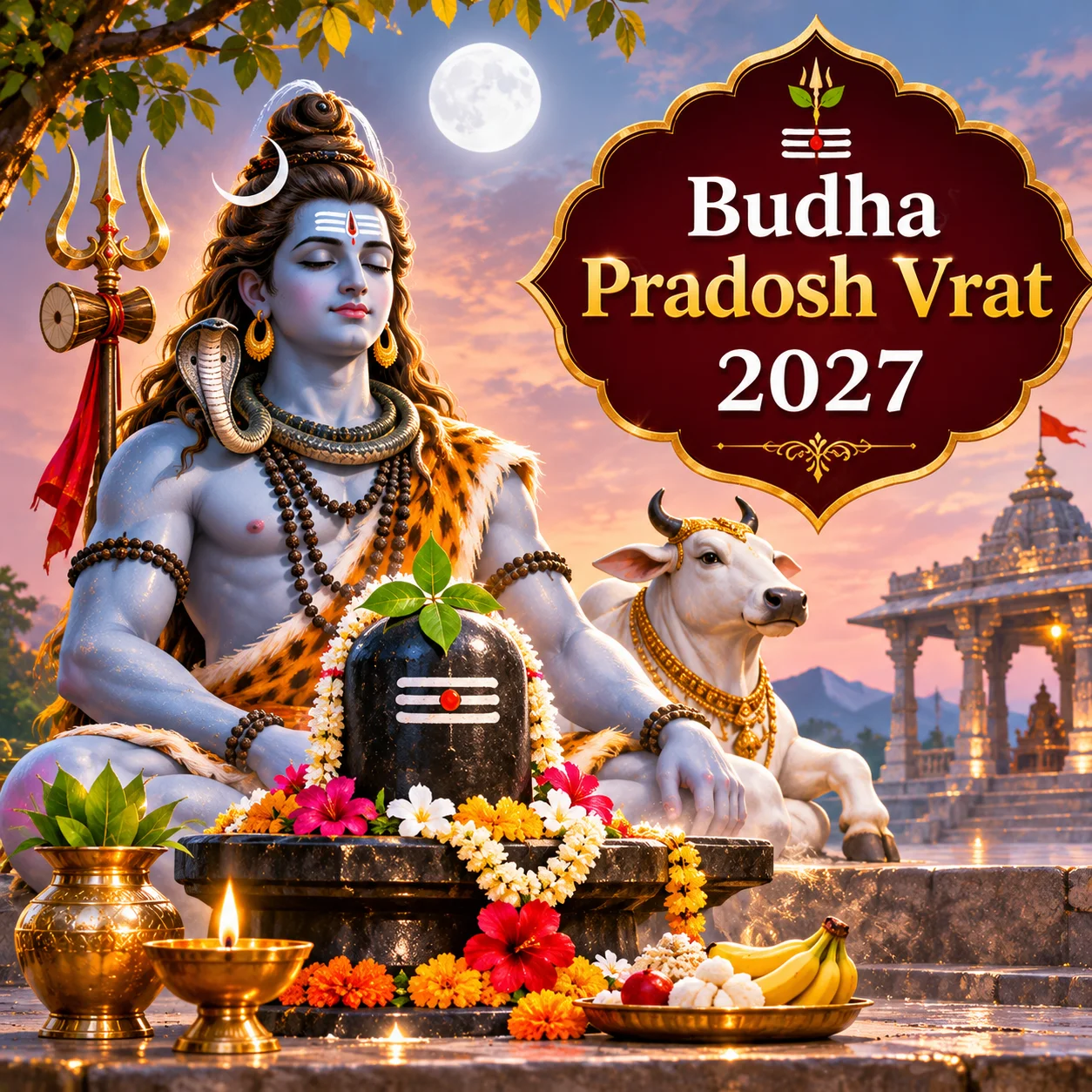
Wednesday, Jun 2, 2027
Budha Pradosh Vrat
Budha Pradosh Vrat, also known as Saumya Vara Pradosham, is a sacred bimonthly Hindu observance occurring when the Trayodashi tithi (thirteenth lunar day) coincides with a Wednesday (Budhavara) during the Pradosha Kaal twilight period.
View Festival Guide
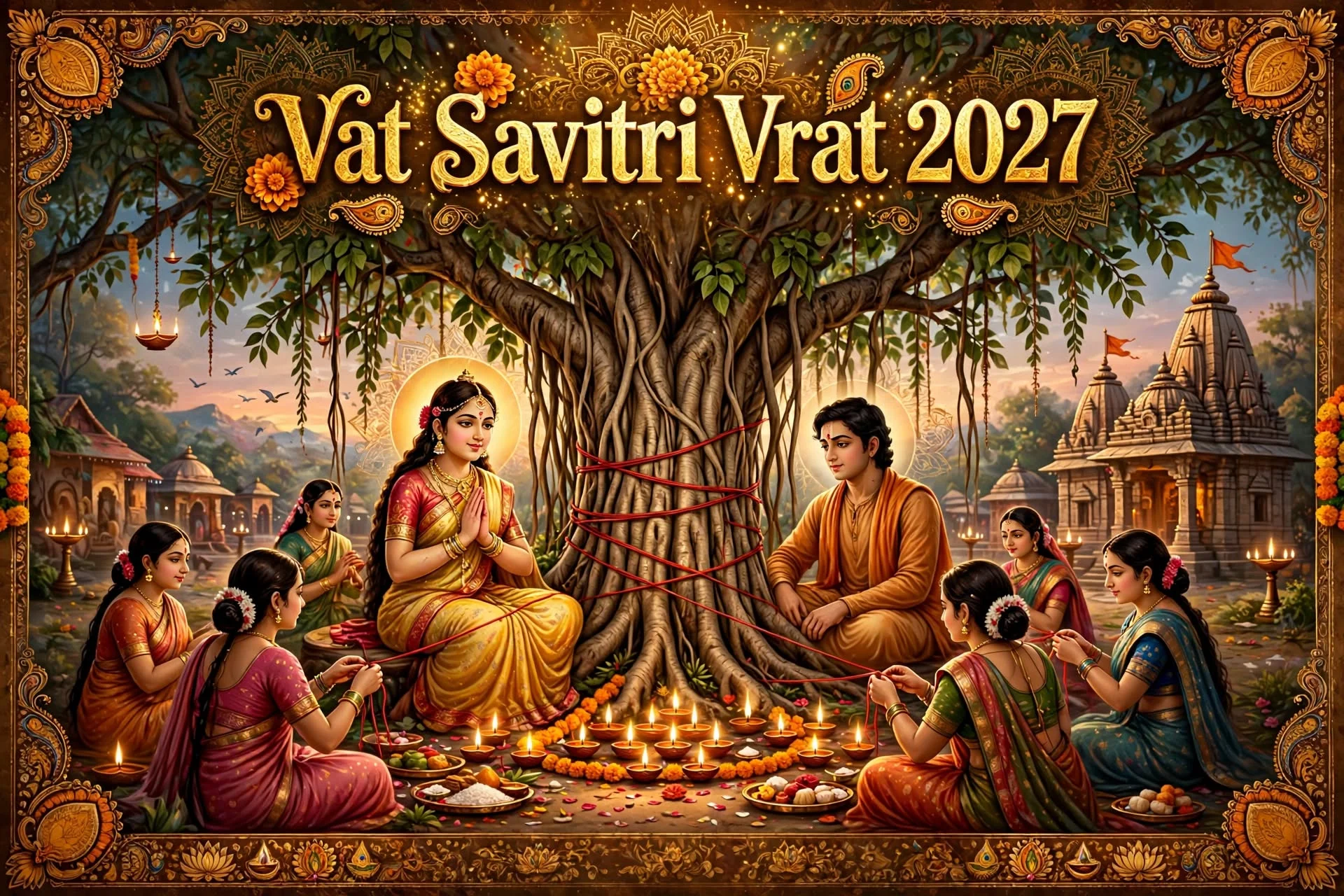
Friday, Jun 4, 2027
Vat Savitri Vrat
Vat Savitri Vrat is an important Hindu observance dedicated to the devotion, courage and determination of Savitri, the legendary wife of Satyavan. The festival is traditionally observed by married women who pray for their husband's long life, good health, prosperity and the well-being of their family.
View Festival Guide