




Budha Pradosh Vrat, also known as Saumya Vara Pradosham, is a sacred bimonthly Hindu observance occurring when the Trayodashi tithi (thirteenth lunar day) coincides with a Wednesday (Budhavara) during the Pradosha Kaal twilight period.
Budha Pradosh Vrat 2027: Date, Puja Timings, Rituals & Stories
Budha Pradosh Vrat Timings & Panchang
Important festival dates and auspicious timings
Usha Arghya (Sunrise)
07:15 am
Sandhya Arghya (Sunset)
05:37 pm
Start Date
Monday, 4 Jan 2027
Puja Muhurat
04:08 pm – 06:16 pm
Budha Pradosh Vrat
Observed twice in every lunar month—once during Shukla Paksha (waxing moon) and once during Krishna Paksha (waning moon)—Pradosha Vrat is dedicated to the worship of Lord Shiva, Goddess Parvati, Lord Ganesha, and the sacred bull Nandi.
The confluence of Trayodashi with Wednesday holds distinct astrological and spiritual significance because Wednesday is governed by the planetary deity Budha (Mercury), who presides over intellect (buddhi), clear communication (vaak), analytical wisdom, commerce, and learning.
Devotees observe a day-long fast and perform intensive twilight worship during the auspicious Pradosha Kaal—a period spanning roughly two ghatis (about 96 minutes) across and immediately following sunset—seeking spiritual liberation, relief from karmic distress, marital harmony, and the removal of intellectual and business impediments.
Why is Budha Pradosh Vrat Celebrated?
Budha Pradosh Vrat is celebrated to venerate the compassionate nature of Lord Shiva, who consumed the virulent Halahala poison during the Samudra Manthan (churning of the cosmic ocean) to preserve cosmic order, an event traditionally commemorated during the twilight of Trayodashi.
The observance uniquely unites the worship of Mahadeva with the propitiation of Budha Graha (Mercury), creating a potent spiritual alignment for eradicating mental lethargy, speech impairments, commercial failures, and domestic conflicts.
- To express profound gratitude to Lord Shiva for safeguarding creation from the all-consuming Halahala poison.
- To seek mental clarity, intellectual enhancement, and wisdom governed by the planetary deity Budha (Mercury).
- To obtain relief from Budha Dosha (afflictions of Mercury in one's Vedic horoscope) and attain success in education, trade, and legal disputes.
- To foster domestic harmony, mutual understanding, and cordial relations between spouses and extended family members.
- To cleanse accumulated negative karma and cultivate spiritual devotion (Bhakti) through voluntary austerity and evening meditation.
The Puranic Origins and Sacred Lore of Budha Pradosh
The Cosmic Dance Following Samudra Manthan
The foundational theology of Pradosha Vrat originates in the Puranic accounts of the churning of the milk ocean (Samudra Manthan) by the Devas and Asuras, as recounted in the Shiva Purana and Skanda Purana.
When the lethal Kalakuta (Halahala) poison arose and threatened to engulf all realms, Lord Shiva consumed it out of absolute benevolence. Goddess Parvati gently pressed His throat to contain the toxin, which turned His neck deep blue, giving Him the epithet Neelakantha.
Overjoyed by the universe's deliverance, the gods and celestial beings assembled on Mount Kailash on the thirteenth lunar day (Trayodashi) during twilight. Lord Shiva performed His blissful cosmic dance (Ananda Tandava) between the horns of His sacred mount, Nandi, while Saraswati played the veena, Indra played the flute, Brahma kept the rhythm, and Lakshmi sang praises. Worshipping Lord Shiva during this twilight hour is thus considered universally potent.
The Legend of the Merchant Youth and the Imposter
The specific narrative attributed to Budha Pradosha Vrat in traditional Vrata Kathas (derived from oral and liturgical recensions associated with the Skanda Purana) concerns a wealthy, newly married merchant youth.
The young man visited his in-laws' home to escort his bride back to his ancestral village. However, the father-in-law advised him against departing on a Wednesday, citing traditional astrological conventions that consider Wednesday departure inauspicious for a daughter's journey. Blinded by pride and impatience, the young man dismissed the warning and insisted on leaving immediately with his bride in a bullock cart.
While traveling through a dense forest, the bride felt parched with thirst. The youth took a water vessel and went to fetch water from a nearby spring. When he returned, he was stunned to find another man identical to himself in countenance, attire, and voice, sitting beside his wife in the cart. A heated confrontation erupted, with both men claiming to be the real husband. The confusion drew travelers and the local royal guards, who were unable to tell the two apart, while the terrified bride stood weeping in utter bewilderment.
Philosophical and Esoteric Dimensions of Budha Pradosh
The Twilight Hour as the Threshold of Consciousness
In Hindu metaphysics, sandhya (twilight) represents a critical liminal junction—neither full day nor full night—where the sensory distractions of the external world subside and the subtle internal pathways of consciousness become receptive. Pradosha Kaal is regarded as the ideal window for withdrawing the senses (Pratyahara) and fixing the mind on the unmanifest absolute represented by Shiva.
Puranic theology asserts that all celestial deities and cosmic forces converge at the court of Mount Kailash during Pradosha to honor Lord Shiva and Goddess Bhavani. Worship offered during this specific interval is believed to carry the combined merit of venerating the entire celestial assembly.
Synthesizing Intellect (Budha) with Transcendence (Shiva)
The planet Mercury (Budha) governs the rational intellect, analytical discrimination (Buddhi), and vocal expression (Vaak). However, intellect untethered from spiritual wisdom often degenerates into arrogance, calculation, and restless anxiety.
By subordinating the intellect to Lord Shiva—who represents pure transcendent consciousness beyond the duality of mind—the devotee transforms mere worldly cleverness into illuminating wisdom (Viveka). Budha Pradosh thus serves as a contemplative discipline to quiet the chatter of the restless mind and instill truthfulness, tact, and clarity in speech.
Purification of Karmic Samskaras
- Dissolution of sins committed through falsehood, gossip, harsh speech, and commercial deceit.
- Cultivation of humility and surrender, mitigating the negative astrological influences of afflicted Mercury.
- Attainment of peace and mental stability, overcoming nervousness, cognitive fatigue, and emotional discord.
- Awakening of devotional surrender (Saranagati) to the divine will, replacing self-centered ego with spiritual serenity.
Practical Preparations and Observance Protocol
Preliminary Preparations
Preparation begins on the morning of Trayodashi. Devotees wake before sunrise during Brahma Muhurta, cleanse their homes, and take a ritual bath (Snana). Clean, unstitched or freshly washed clothes—often white, green, or light-colored to honor both Shiva and Mercury—are worn.
A formal Sankalpa (solemn vow) is recited in the morning before a Shiva Linga or home altar, dedicating the day's fasting and prayers to Lord Shiva and Devi Parvati for the pacification of obstacles and the fulfillment of dharmic aspirations.
Observing the Fast During Daylight
Throughout the day, the practitioner maintains an attitude of quietude, avoiding harsh speech, anger, idle gossip, and unethical transactions. Devotees may observe a strict waterless fast (Nirjala), a water-only fast (Sajala), or a light fruit-and-milk fast (Phalahar), according to physical capacity and health conditions.
Chanting of the Panchakshari Mantra ('Om Namah Shivaya') or the Maha Mrityunjaya Mantra is sustained mentally throughout routine activities.
Twilight Worship and Community Gatherings
Approximately 45 minutes prior to sunset, devotees take a second purificatory bath and gather at a local Shiva temple or prepare the domestic altar. The main worship is conducted during the Pradosha Kaal window.
In temples, grand public Abhishekam is performed over the principal Shiva Linga and Nandi Deva with milk, curd, honey, sugarcane juice, and holy water, accompanied by the sonorous chanting of Sri Rudram and Chamakam. After the puja, devotees listen to the Budha Pradosha Vrata Katha, perform Aarti, and accept sacred Prasad.
Budha Pradosh Vrat Puja Vidhi (Step by Step)
- 1
Pratah Snana and Sankalpa (Morning Ablution and Sacred Vow)
Wake during Brahma Muhurta, bathe using clean water infused with Gangajal, wear clean clothes, and sit facing East or North. Take water, unbroken rice (Akshata), and a flower in your right palm, invoke the day's tithi, nakshatra, and your gotra, and make a solemn vow (Sankalpa) to observe Budha Pradosha Vrat for the grace of Lord Shiva and Goddess Parvati.
- 2
Evening Shuddhikaran and Altar Preparation
About 45 minutes before sunset, take a fresh purificatory bath. Clean the worship space and place a wooden chauki (platform) draped with a clean white or yellow cloth. Place the Shiva Linga or the murti of the Shiva Parivar inside a brass or copper plate (Arghya patra). Sprinkle Gangajal on yourself, the altar, and the puja vessels for sanctification.
- 3
Dhyana and Avahana (Meditation and Invocation)
Light a pure desi cow ghee lamp on the right side and an incense burner (Dhoop) on the left. Fold hands in namaskara mudra and meditate on Lord Shiva in His five-faced (Panchanana) or serene Kailash-dwelling form, accompanied by Goddess Bhavani, Ganesha, Kartikeya, and Nandi. Offer flowers and invite Their divine presence onto the altar.
- 4
Panchamrit and Jal Abhishekam (Sacred Bathing)
Gently bathe the Shiva Linga sequentially with Gangajal, raw cow milk, fresh curd, pure honey, cow ghee, and powdered sugar (or sugarcane juice). Conclude with a generous stream of pure water infused with fragrant rosewater and sandalwood paste while reciting the Panchakshara Mantra ('Om Namah Shivaya') or Sri Rudra Prashna.
Budha Pradosh Vrat Puja Samagri List
Altar and Abhisheka Essentials
A consecrated Shiva Linga (made of stone, parad, spathika, or brass) or an image depicting the Shiva Parivar, arranged within a broad brass, copper, or silver vessel (Arghya Patra) to collect the runoff of abhishekam fluids.
- Pure holy water (Gangajal or clean freshwater)
- Unboiled, fresh cow's milk (Kaccha Dudh)
- Fresh, unflavored curd (Dahi)
- Pure bee honey (Madhu)
- Clarified cow's butter (Desi Ghee)
- Powdered sugar, rock candy (Mishri), or fresh sugarcane juice
- Fragrant edible rosewater (Gulab Jal)
Sacred Adornments and Botanical Offerings
Special herbs and flowers deeply dear to Lord Shiva and favorable for mitigating Mercury afflictions must be gathered fresh and unblemished before twilight.
- Bilva Patra (Bael leaves) – at least 11, 21, or 108 intact trifoliate leaves without insect cuts
- Dhatura fruit and its bell-shaped flowers
- Shami leaves (Prosopis cineraria)
- Fresh white flowers (such as Kaner, Jasmine, or white lotus)
- Blue Aparajita (Clitoria ternatea) flowers
- Fresh Durva grass blades (offered to Lord Ganesha)
- A small bowl of whole green gram (Sabut Moong dal) representing planet Mercury
Mantras and Prayers for Budha Pradosh Vrat
Budha Pradosh Vrat Vrat Rules and Fasting Guidelines
Modes and Guidelines of Fasting
The fast of Budha Pradosh is undertaken with sincerity according to individual health and endurance. Practitioners may adopt one of three customary modes:
- Nirjala Vrata: A waterless fast maintained from sunrise until the conclusion of the evening Pradosha puja (only recommended for seasoned practitioners in robust health).
- Sajala Vrata: Consuming only water, fresh coconut water, or herbal infusions throughout the day.
- Phalahara Vrata: A light diet consisting of fresh fruits, raw cow milk, and nuts taken once during midday, remaining free of grains, beans, and table salt.
Dietary Restrictions and Sattvic Conduct
- Strictly avoid all non-vegetarian items, alcohol, tobacco, onion, garlic, mushrooms, and fermented or stale food on the day of the vrata.
- Do not consume food prepared with common sea salt; if an evening meal is taken after the puja, use rock salt (sendha namak) sparingly.
- Avoid grains such as wheat, rice, barley, and lentils during the period of the fast.
- Maintain Brahmacharya (celibacy) and refrain from lying, anger, deceit, gambling, and commercial malpractices on this sacred day.
Fasting Conclusion and Parana Procedure
The completion of the fast depends on family tradition. In many Shaivite lineages, devotees conclude the fast immediately after the Pradosha Kaal evening puja and Aarti by partaking of the sanctified fruit Prasad and a simple sattvic meal (such as kuttu or singhara flour preparations). In other traditions, complete Parana is performed on the following morning (Chaturdashi) after taking a bath, performing morning prayers, and offering food or charity to the needy.
Dos and Don'ts of Budha Pradosh Vrat
Good Practices (Do's)
- Wake early during Brahma Muhurta, take a purificatory bath, and make a sincere mental Sankalpa.
- Conduct the principal Shiva worship strictly during the Pradosha Kaal twilight window (around sunset).
- Bathe the Shiva Linga with Panchamrit and pure water while chanting the Panchakshari Mantra ('Om Namah Shivaya').
- Offer unblemished three-leaf Bilva Patra with the smooth surface facing the Shiva Linga.
- Offer intact Durva grass to Lord Ganesha and worship Nandi Deva before presenting offerings to Shiva.
Budha Pradosh Vrat Across Regions
| Region | Local Name |
|---|---|
| Tamil Nadu and Kerala | Saumya Vara Pradosham |
| North India (Uttar Pradesh, Bihar, Rajasthan, Madhya Pradesh) | Budha Pradosh Vrat |
| Karnataka and Andhra Pradesh / Telangana | Budhavara Pradosha Vratam |
| Maharashtra and Gujarat | Budhwar Pradosh |
Budha Pradosh Vrat FAQs
What is Budha Pradosh Vrat?
Budha Pradosh Vrat is the observance of Pradosha Vrat when the Trayodashi tithi (thirteenth lunar day) falls on a Wednesday (Budhavara). It combines the worship of Lord Shiva and Goddess Parvati with the propitiation of Mercury (Budha Graha).
What is the most auspicious time to perform puja on Budha Pradosh?
The most sacred time is during Pradosha Kaal, which spans approximately 45 minutes to 72 minutes before and after sunset. Worshiping Lord Shiva during this evening twilight window is considered essential to harvest the full spiritual fruits of the fast.
Who can observe the Budha Pradosh fast?
Any devotee regardless of gender, age, or varna can observe Budha Pradosh Vrat with devotion. It is especially recommended for students, teachers, traders, and individuals experiencing domestic disagreements or afflicted Mercury in astrology.
Upcoming Festivals
View All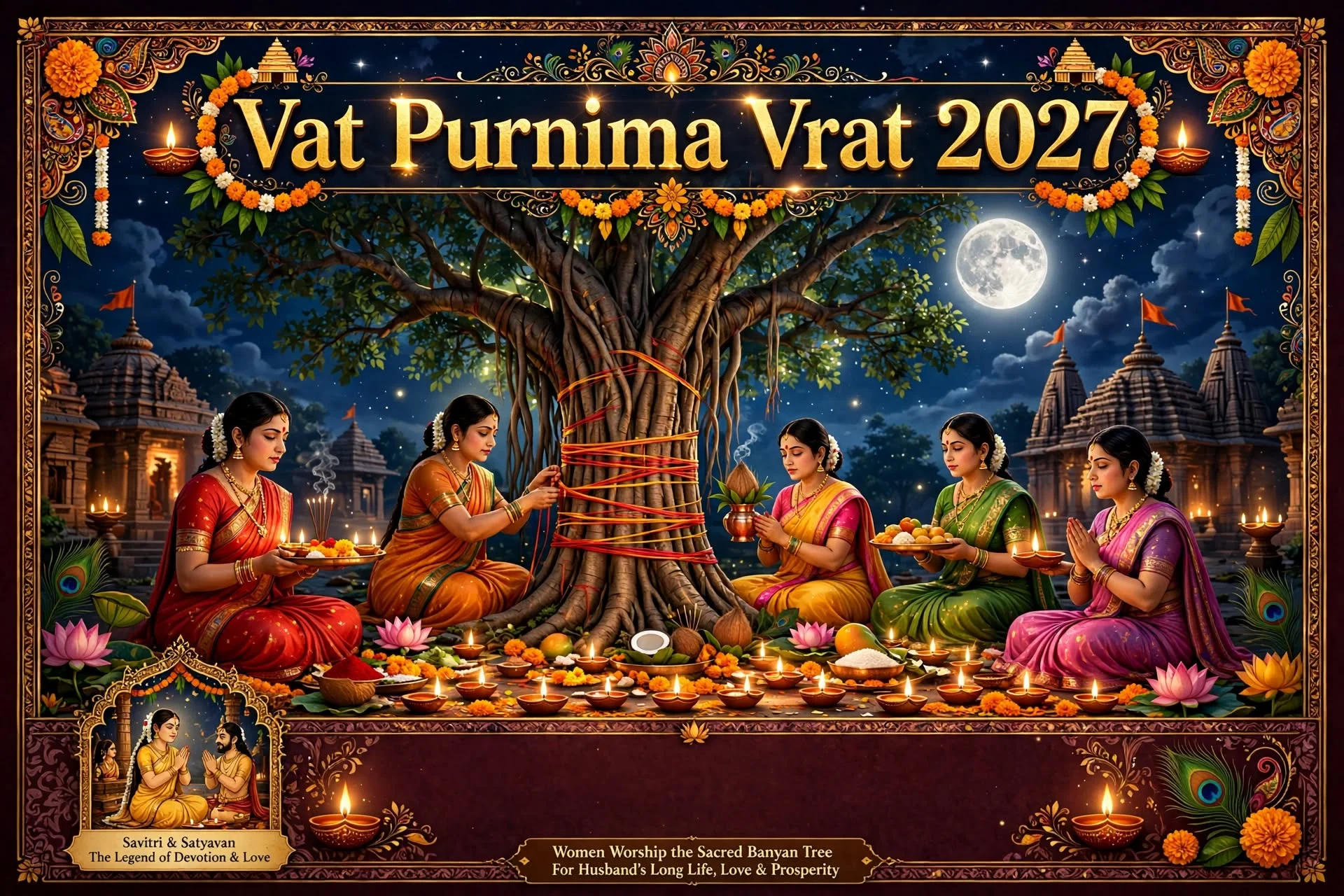
Friday, Jun 18, 2027
Vat Purnima Vrat
Vat Purnima Vrat, also known as Vat Savitri Purnima or Vata Pournima, is a traditional Hindu observance celebrated on Jyeshtha Shukla Purnima, the full-moon day of the Jyeshtha month. It is especially popular in Maharashtra, Gujarat, Goa and the Konkan region. The festival is associated with the devotion of Goddess Savitri towards her husband Satyavan and her encounter with Yama, the god of death.
View Festival Guide

Friday, Jun 18, 2027
Anvadhan
Anvadhan (अन्वाधान) is an ancient, highly revered Vedic ritual and spiritual observance in Sanatana Dharma performed on the day immediately preceding the New Moon (Amavasya) or Full Moon (Purnima). Rooted in the pristine traditions of the Shrauta and Grihya Sutras, Anvadhan literally translates to 'the solemn placing and replenishment of sacred fuel wood into the consecrated Vedic fires'. In traditional Vedic ritualism, householders (Grihasthas) and priests who maintain the sacred Agnihotra fires perform Anvadhan to prepare the sacrificial altars for the grand Darsha Yajna (New Moon sacrifice) or Paurnamasa Yajna (Full Moon sacrifice) scheduled for the following day.
View Festival Guide
Friday, Jun 18, 2027
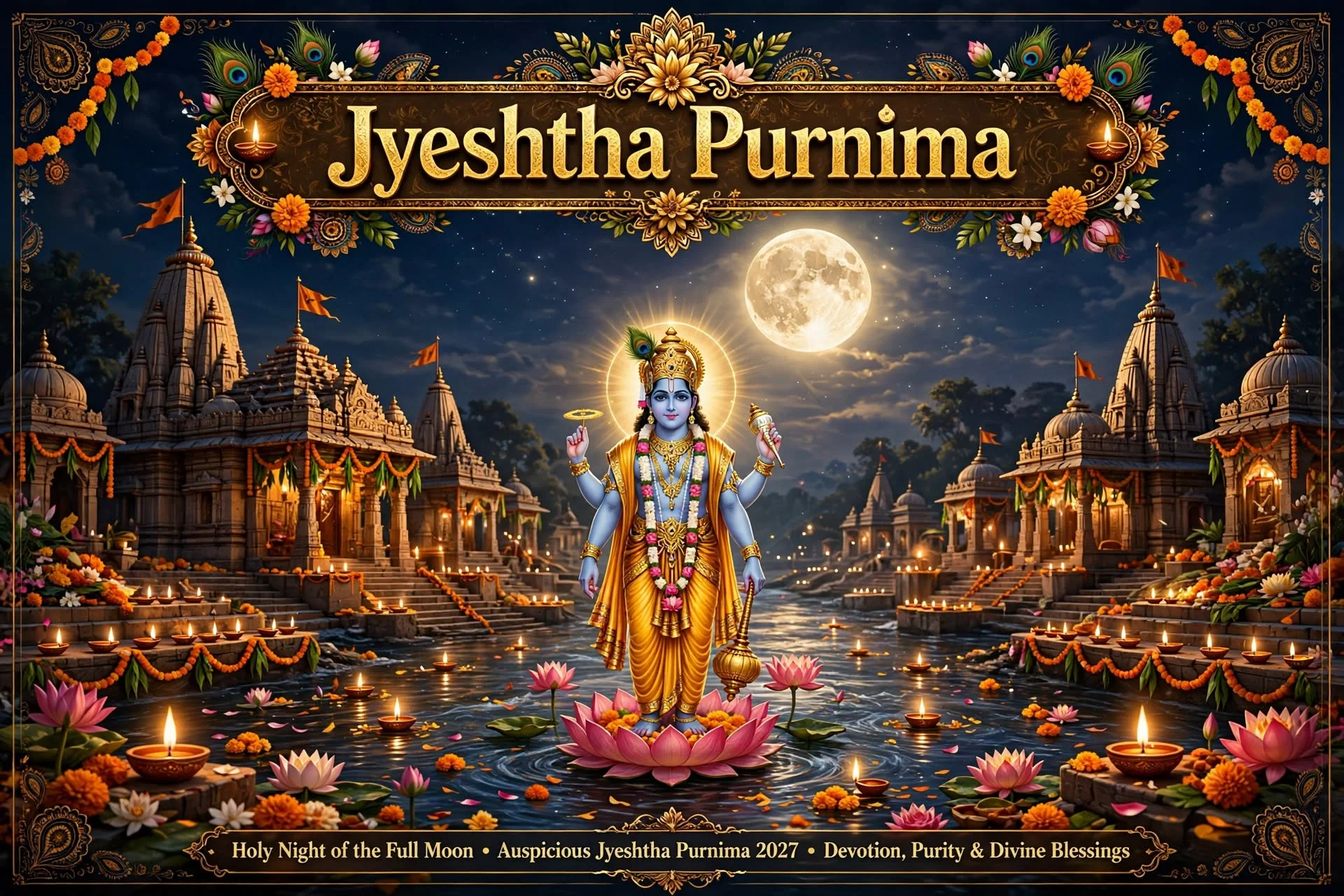
Jyeshtha Purnima
Jyeshtha Purnima is the sacred full-moon day that marks the conclusion of Shukla Paksha in the Hindu month of Jyeshtha. It generally falls during May or June in the Gregorian calendar and is considered an important occasion for worship, fasting, holy bathing, charity and spiritual reflection. The word Purnima refers to the full-moon tithi, while Jyeshtha identifies the lunar month in which it occurs.
View Festival Guide

Saturday, Jun 19, 2027
Ishti
Ishti is a foundational Vedic ritual observance appearing prominently in Hindu Panchangs on the Pratipada tithi (the first lunar day) following either Amavasya (new moon) or Purnima (full moon), marking the prescribed performance day for the fortnightly Vedic Darsha-Purnamasa sacrifices.
View Festival Guide
Tuesday, Jun 22, 2027
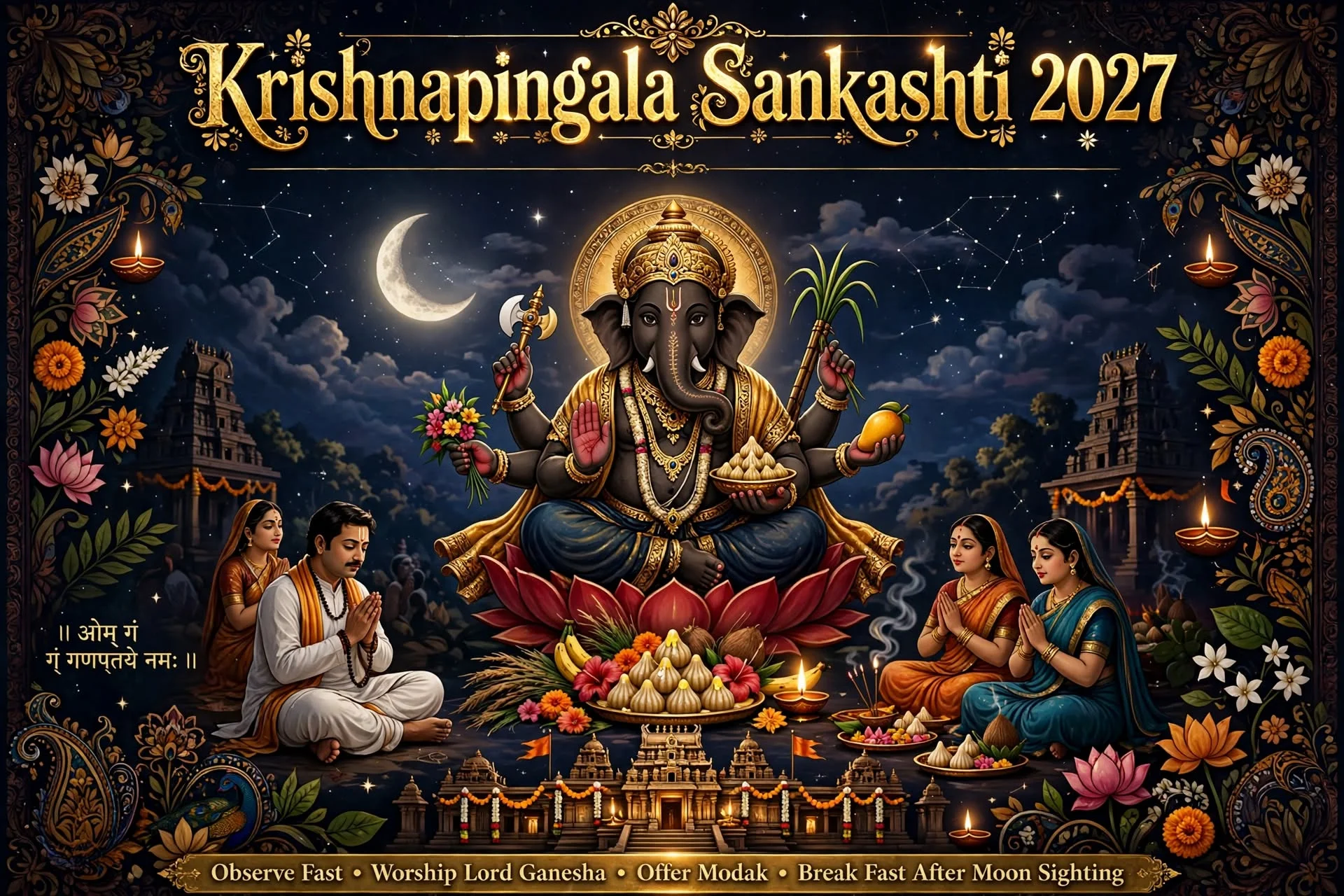
Krishnapingala Sankashti Chaturthi
Krishnapingala Sankashti Chaturthi is a sacred Hindu vrata dedicated to Lord Ganesha, observed on Krishna Paksha Chaturthi of the Jyeshtha month according to the Amanta Hindu calendar. In the Purnimanta calendar, the same lunar observance falls in Ashadha Krishna Paksha. It is one of the monthly Sankashti Chaturthi observances and is associated with the worship of Lord Ganesha in his Krishnapingala form.
View Festival Guide
Wednesday, Jun 30, 2027
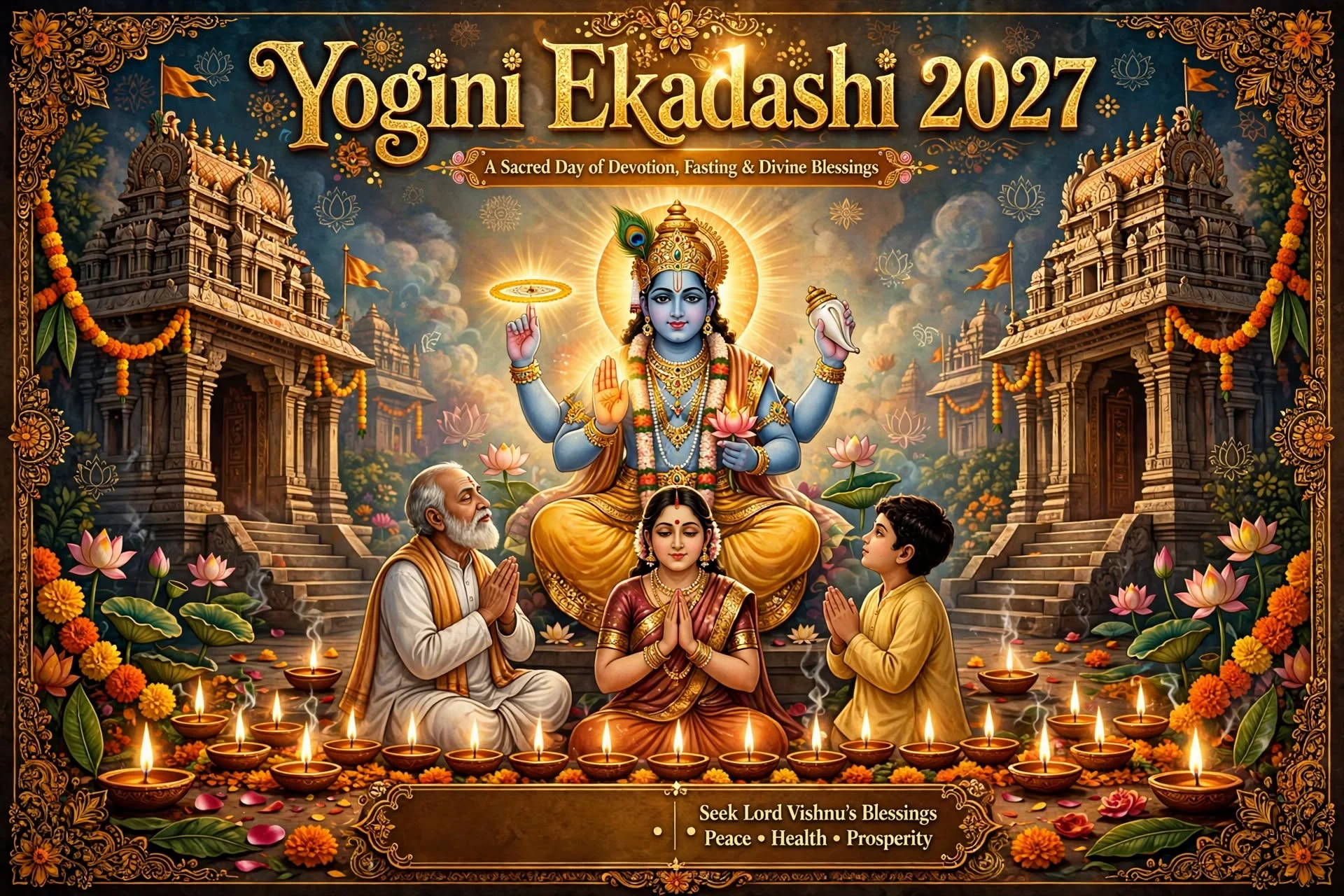
Yogini Ekadashi
Yogini Ekadashi is an important Hindu fasting observance dedicated to Lord Vishnu. It falls on the Ekadashi tithi, the eleventh lunar day of the Krishna Paksha of Ashadha month according to the Purnimanta calendar. In the Amanta calendar, the same observance is known as Jyeshtha Krishna Ekadashi. It occurs between Nirjala Ekadashi and Devshayani Ekadashi in the annual cycle of Ekadashi observances.
View Festival Guide
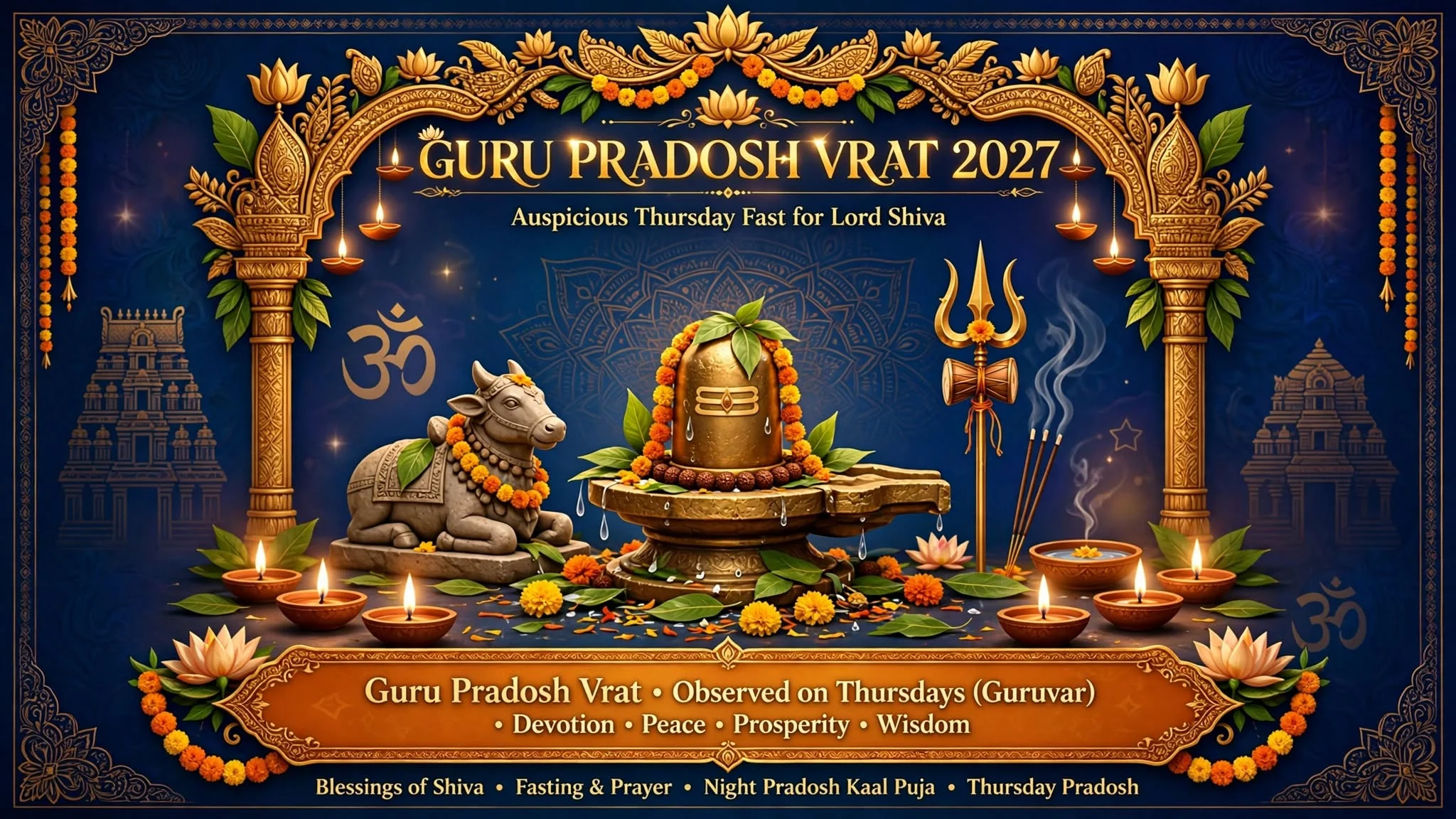
Thursday, Jul 1, 2027
Guru Pradosh Vrat
Guru Pradosh Vrat, also known as Guruvara Pradosham or Brihaspati Pradosham, is a sacred bimonthly Hindu fasting observance occurring when the Trayodashi tithi (thirteenth lunar day) coincides with a Thursday (Guruvara) during the twilight Pradosha Kaal period.
View Festival Guide

Saturday, Jul 3, 2027
Darsha Amavasya
Darsha Amavasya is a significant new moon observance in the Hindu calendar designating the specific night when the Moon is completely invisible to the human eye, having fully merged into the conjunction of the Sun.
View Festival Guide