




Ugadi, derived from the Sanskrit terms 'Yuga' (era) and 'Aadi' (beginning), marks the glorious commencement of the New Year for the people of Andhra Pradesh, Telangana, and Karnataka. Celebrated on the first day of the waxing moon (Shukla Paksha Pratipada) in the sacred month of Chaitra, it heralds the advent of the new astronomical cycle, the arrival of the rejuvenating spring season (Vasanta Ritu), and the eternal rhythm of cosmic creation inaugurated by Lord Brahma.
Ugadi 2027: Date, Puja Timings, Rituals & Stories

Ugadi Timings & Panchang
Important festival dates and auspicious timings
Usha Arghya (Sunrise)
06:05 am
Sandhya Arghya (Sunset)
06:42 pm
Start Date
Wednesday, 7 Apr 2027
Puja Muhurat
05:21 am – 04:28 am
Ugadi
Rooted deeply in classical Vedic literature, Ugadi is commemorated as the sacred day on which Lord Brahma began the creation of the cosmos, establishing the orbits of celestial bodies, the succession of day and night, and the cycle of seasons. Astronomically, it coincides with the vernal equinox when the sun shifts its path, infusing the earth with warmth, flourishing green foliage, and fragrant blossoming mango trees.
A central spiritual emblem of Ugadi is the preparation and consumption of 'Ugadi Pachadi' (known as Bevu Bella in Karnataka), a unique ceremonial dish blending six distinct tastes. Families gather at dawn after purifying oil baths, adorn doorways with fresh green mango leaves and vibrant rangoli patterns, and assemble in temples for Panchanga Sravanam, listening to astrological predictions for the incoming year to cultivate wisdom, patience, and communal harmony.
Why is Ugadi Celebrated?
Ugadi is celebrated to welcome the Hindu lunar New Year, honor Lord Brahma's inception of cosmic time, and embrace the bountiful arrival of spring. It serves as an annual spiritual renewal, guiding individuals to review the past, set noble resolutions, and cultivate emotional resilience to navigate the inevitable vicissitudes of human existence with equanimity.
- Commencement of the New Era: Marks the first dawn of the new Samvatsara in the Shalivahana Shaka and Vikram Samvat calendars.
- Embracing Life's Dualities: Partaking in the six-taste Ugadi Pachadi teaches acceptance of joy, sorrow, anger, fear, surprise, and disgust.
- Panchanga Sravanam: Listening to learned astrological forecasts aligns personal plans with macrocosmic planetary influences.
- Nature's Regeneration: Celebrates the harvest of winter crops and the blossoming of neem flowers, mangoes, and tender leaves in Vasanta.
Cosmic Genesis & The Legend of Shalivahana
Cosmic Creation by Lord Brahma
The sacred Brahma Purana affirms that at the precise moment of sunrise on Chaitra Shukla Pratipada, Lord Brahma commenced the manifestation of the material cosmos. He created the seven celestial spheres, instituted the planetary motions, and breathed life into all moving and unmoving beings.
Recognizing this sacred day as the birth of cosmic time, ancient Vedic seers designated it as the start of the lunar calendar, decreeing that humans must inaugurate the year with worship, purification, gratitude, and joyous social harmony.
King Shalivahana's Triumphant Era
According to historical traditions preserved in southern chronicles, King Shalivahana of the Satavahana dynasty vanquished ferocious invading forces at Paithan using armies crafted from earthen figures brought to life through divine will. To commemorate this monumental triumph of righteousness, the Shalivahana Shaka era was established in 78 CE.
The people celebrated their deliverance and sovereign rebirth on Chaitra Pratipada, cementing Ugadi as an enduring festival of valor, cultural pride, and divine protection across the Deccan plateau.
Source: Brahma Purana & Bhavishya Purana
Philosophical Essence of the Six Tastes (Shadruchulu)
The Metaphor of Ugadi Pachadi
The iconic culinary offering of Ugadi is the 'Ugadi Pachadi', an exquisite blend containing six fundamental flavors (Shadruchulu): sweet (jaggery), sour (tamarind), bitter (neem blossoms), pungent (black pepper/green chili), salty (salt), and astringent (raw mango). Each taste mirrors an essential human emotional experience: joy, disgust, sadness, anger, fear, and surprise.
Consuming this dish as the very first morsel of the New Year instills profound philosophical equanimity. It reminds the devotee that earthly life is an inseparable mosaic of pleasant and unpleasant occurrences, and true spiritual maturity lies in receiving both with grace, tranquility, and gratitude.
Panchanga Sravanam and Time Consciousness
In Vedic thought, Time (Kala) is a manifest form of the Supreme Lord. By gathering to listen to the Panchanga Sravanam, devotees meditate on the five limbs of time: Tithi (lunar phase), Vara (solar day), Nakshatra (lunar mansion), Yoga (soli-lunar relationship), and Karana (half tithi).
Understanding the planetary sovereign and minister of the year fosters mental equilibrium, preparing families to meet agricultural, economic, and health shifts with foresight and moral strength.
Traditional Celebrations & Festive Rituals of Ugadi
Abhyanga Snana, Thoranalu, and Muggulu
Preparations begin days in advance with deep cleansing and whitewashing of households. On the festive morning, family members rise during Brahma Muhurta, apply fragrant sesame oil to the head and body, and bathe with water infused with neem leaves and sacred Gangajal.
The entrance is decorated with fresh green mango leaves (Mamidikomma Thoranalu) and vibrant floral patterns or rice-flour rangolis (Muggulu) to attract Goddess Lakshmi. Worshippers dress in splendid new traditional garments (Pattu clothes).
Temple Visits, Pachadi Distribution, and Literary Assemblies
After conducting family worship to Lord Vishnu, Brahma, and the family deity, Ugadi Pachadi is distributed as sacred prasad. Families subsequently visit local temples to seek divine blessings.
In the afternoon, cultural gatherings such as Kavi Sammelanam (poetry recitations) and classical Carnatic music concerts are held, celebrating Telugu and Kannada literature and reinforcing community bonds.
Ugadi Puja Vidhi (Step by Step)
- 1
Abhyanga Snana & Pratah Smarana
Awaken during Brahma Muhurta, apply sesame oil infused with herbs to the head and body, and take a purifying bath with warm water containing neem leaves.
- 2
Thoranam & Muggulu Alankaram
String fresh green mango leaves and marigold blossoms across the main doorway and draw auspicious Muggulu motifs using sacred rice powder.
- 3
Nutan Vastra Dharana
Don newly purchased traditional clothes (Dhoti/Kurta for men and silk saree for women) to embody renewal and festive purity.
- 4
Altar & Kalash Sthapana
Cleanse the home shrine, spread a clean yellow or red silk cloth, install a consecrated copper Kalash filled with holy water, mango leaves, and a coconut.
- 5
Samvatsara Sankalpa
Hold water, Akshata, and betel leaves in the right palm, face east, and recite the traditional Sankalpa naming the new Samvatsara, season, and gotra.
Ugadi Puja Samagri List
Sanctum Decoration & Entrance Adornments
Auspicious botanicals and decorative materials required to welcome the New Year into the household.
- Fresh mango leaves (Mamidikommulu) and bright marigold garlands
- Rice flour (Biyyampindi) and natural mineral powders for Muggulu
- Brass or copper Kalash, whole coconut, and mango leaf bunch
- Red sacred moli thread, turmeric powder (Pasupu), and vermilion (Kumkuma)
Altar Worship & Abhishekam Ingredients
Sacred substances needed for offering Shodashopachara worship to Lord Brahma and Vishnu.
- Pure Gangajal, raw cow milk, curd, honey, ghee, and sugar (Panchamrit)
- Fragrant sandalwood paste (Gandham) and unbroken raw rice (Akshatalu)
- Fresh fragrant blossoms (Jasmine, Marigold, Lotus, Hibiscus)
- Pure cow-ghee brass lamps, cotton wicks, aromatic dhoop, and camphor
Ugadi Pachadi & Festive Feast Materials
Ingredients for the ceremonial six-taste preparation and festive culinary treats.
- Fresh neem flowers (Vepaputa) and organic crushed jaggery (Bellam)
- Tamarind pulp (Chintapandu), fresh raw mango pieces, and mineral salt
Mantras and Prayers for Ugadi
Ugadi Vrat Rules and Fasting Guidelines
Observance Guidelines for Ugadi
Observing Ugadi with purity, mindfulness, and hospitality sets an auspicious energetic foundation for the entire year.
- Early Oil Bath: Take an Abhyanga snana before sunrise to remove accumulated fatigue and purify the sensory organs.
- Mandatory First Taste: Consume the six-flavored Ugadi Pachadi on an empty stomach prior to any other festive meal.
- Panchanga Attendance: Listen attentively to the reading of the incoming year's astrological almanac with family members.
- Noble Social Conduct: Practice benevolence, forgive past grudges, exchange hearty greetings, and refrain from anger or disputes.
Dos and Don'ts of Ugadi
Good Practices (Do's)
- Wake up early, perform Abhyanga oil bath, and wear pristine new clothes.
- Hang fresh green mango leaves at the entrance and draw beautiful rangolis.
- Taste the sacred six-flavor Ugadi Pachadi with reverence and devotion.
- Listen to the Panchanga Sravanam and seek blessings from family elders.
Things to Avoid (Don'ts)
Ugadi Across Regions
| Region | Local Name |
|---|---|
| Andhra Pradesh & Telangana | Ugadi |
| Karnataka | Yugadi |
| Maharashtra border regions | Gudi Padwa / Ugadi confluence |
Ugadi FAQs
What is the meaning and significance of Ugadi?
Ugadi originates from 'Yuga' (era) and 'Aadi' (beginning). It marks the beginning of the Hindu New Year for Telugu and Kannada speaking communities.
What are the six tastes of Ugadi Pachadi and what do they represent?
The six tastes are sweet (joy), sour (unpleasantness/caution), bitter (sorrow), pungent (anger), salty (fear), and astringent (surprise), representing all facets of human life.
Why are mango leaves hung on doorways during Ugadi?
Mango leaves symbolize fertility, abundance, auspiciousness, and naturally purify incoming atmospheric air while welcoming Goddess Lakshmi.
Upcoming Festivals
View All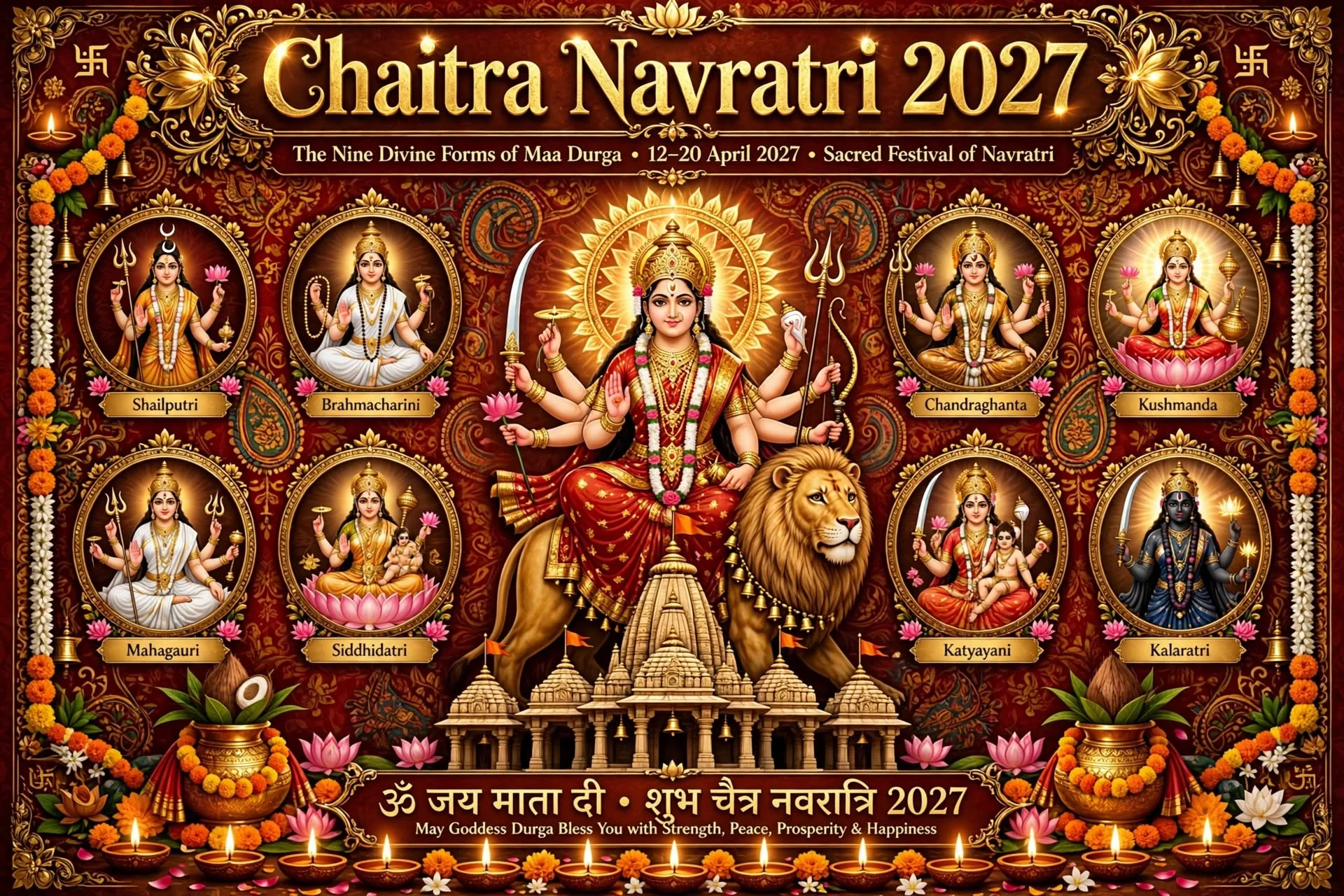
Wednesday, Apr 7, 2027
Chaitra Navratri
Chaitra Navratri, also reverently known as Vasanta Navratri, is a sacred nine-night festival dedicated to the worship of Goddess Durga and her nine supreme manifestations (Navadurga). Commencing on the first day of the bright fortnight (Shukla Paksha Pratipada) in the month of Chaitra, it coincides with the advent of the Hindu New Year and culminates on Rama Navami, the appearance day of Lord Rama. Celebrated during the vibrant transition into spring, it signifies spiritual rejuvenation, maternal cosmic protection, and the triumph of divine righteousness.
View Festival Guide

Wednesday, Apr 7, 2027
Ishti
Ishti is a foundational Vedic ritual observance appearing prominently in Hindu Panchangs on the Pratipada tithi (the first lunar day) following either Amavasya (new moon) or Purnima (full moon), marking the prescribed performance day for the fortnightly Vedic Darsha-Purnamasa sacrifices.
View Festival Guide
Wednesday, Apr 7, 2027
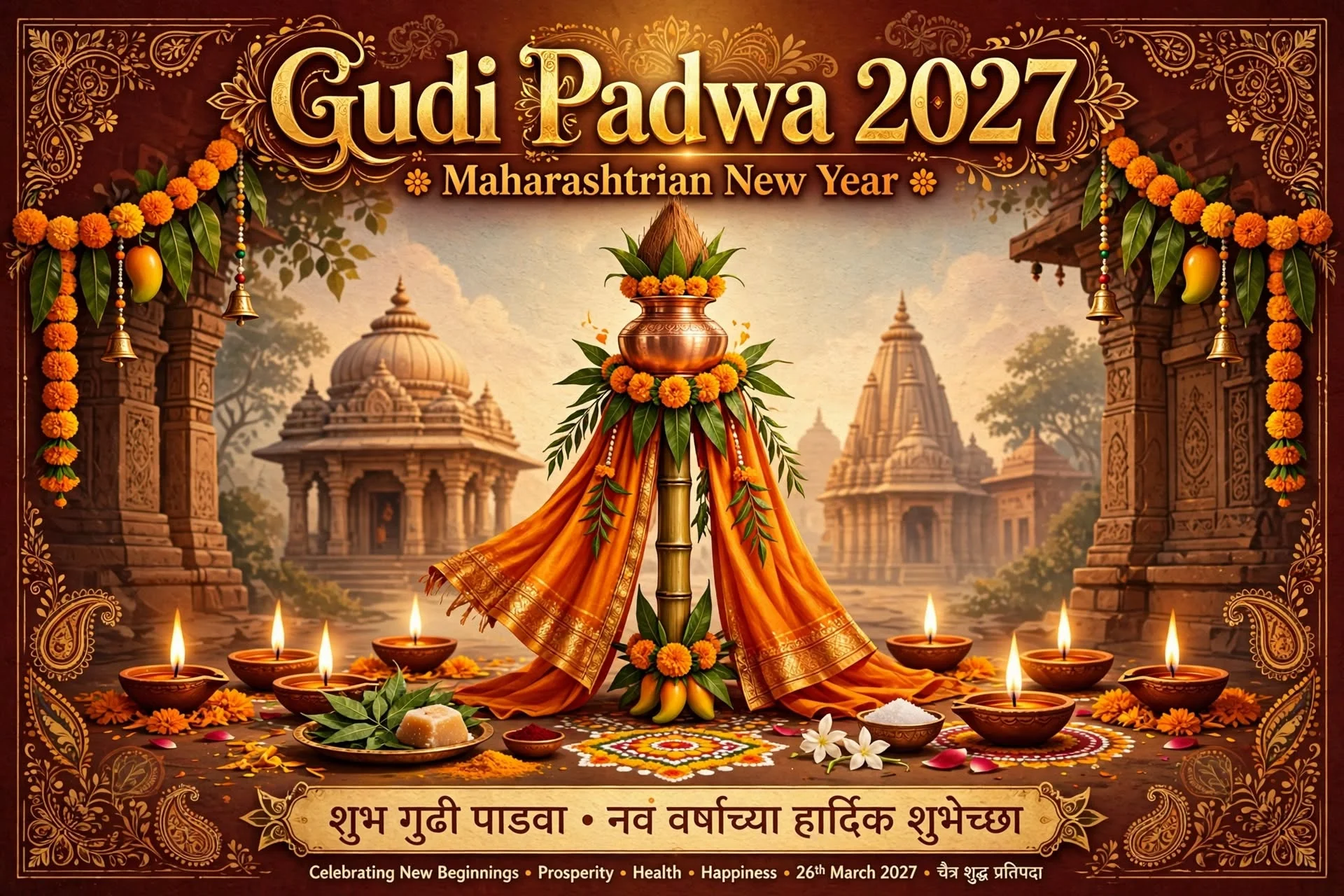
Gudi Padwa
Gudi Padwa marks the grand celebration of the Marathi and Konkani New Year, observed on the first day of the bright fortnight (Shukla Paksha Pratipada) in the sacred month of Chaitra. Celebrated with tremendous cultural pride and spiritual fervor across Maharashtra, Goa, and adjoining regions, this vibrant festival heralds the arrival of spring (Vasanta Ritu) and commemorates the cosmic dawn of creation initiated by Lord Brahma.
View Festival Guide

Wednesday, Apr 7, 2027
Nutan Varsh Prarambha
Nutan Varsh Prarambha marks the glorious beginning of the Hindu New Year on the first day of the waxing moon (Shukla Paksha Pratipada) in the month of Chaitra. Celebrated across India under diverse regional names such as Ugadi, Gudi Padwa, and Cheti Chand, this sacred dawn signifies not merely a calendar shift, but the cosmic anniversary of creation itself. According to Vedic tradition, it was on this radiant morning that Lord Brahma initiated the cosmic cycle of time, creation, and mortal existence.
View Festival Guide

Thursday, Apr 8, 2027
Chandra Darshana
Chandra Darshana is a revered monthly Hindu observance dedicated to sighting, venerating, and offering oblation to the delicate waxing crescent Moon immediately following the new moon (Amavasya), typically occurring during the twilight of Shukla Paksha Pratipada or Dwitiya.
View Festival Guide
Friday, Apr 9, 2027
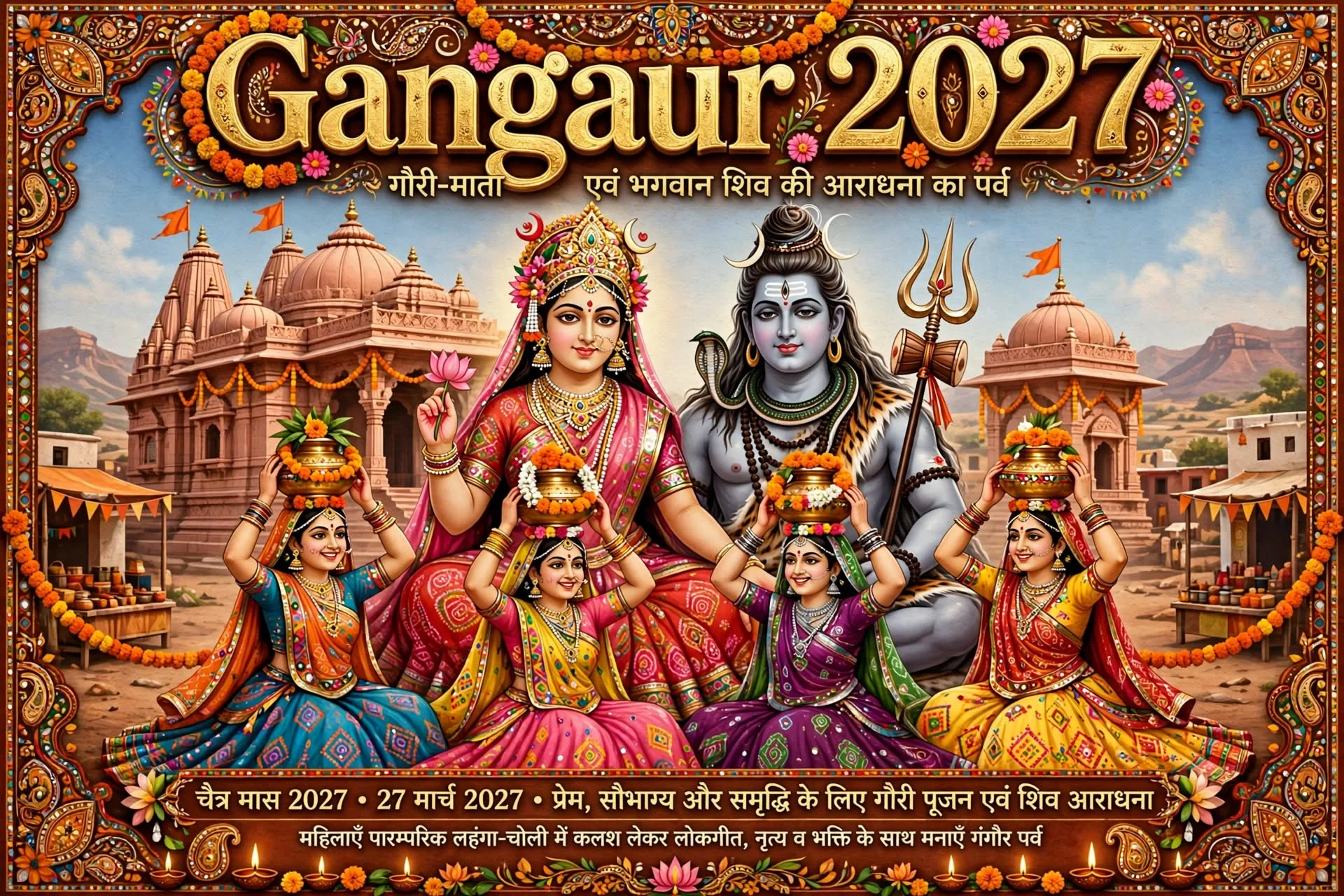
Gangaur (Gauri Tritiya)
Gangaur is one of the most vibrant, emotionally poignant, and culturally majestic festivals of Rajasthan, celebrated also with great enthusiasm in parts of Gujarat, Madhya Pradesh (Malwa), and Haryana. The word 'Gangaur' is a compound of 'Gana' (a title of Lord Shiva) and 'Gaur' (Goddess Gauri or Parvati). Commencing immediately following Holika Dahan on the first day of Chaitra Krishna Paksha, this elaborate celebration spans eighteen days, reaching its glorious zenith on the third day of Chaitra Shukla Paksha (Tritiya).
View Festival Guide
Friday, Apr 9, 2027
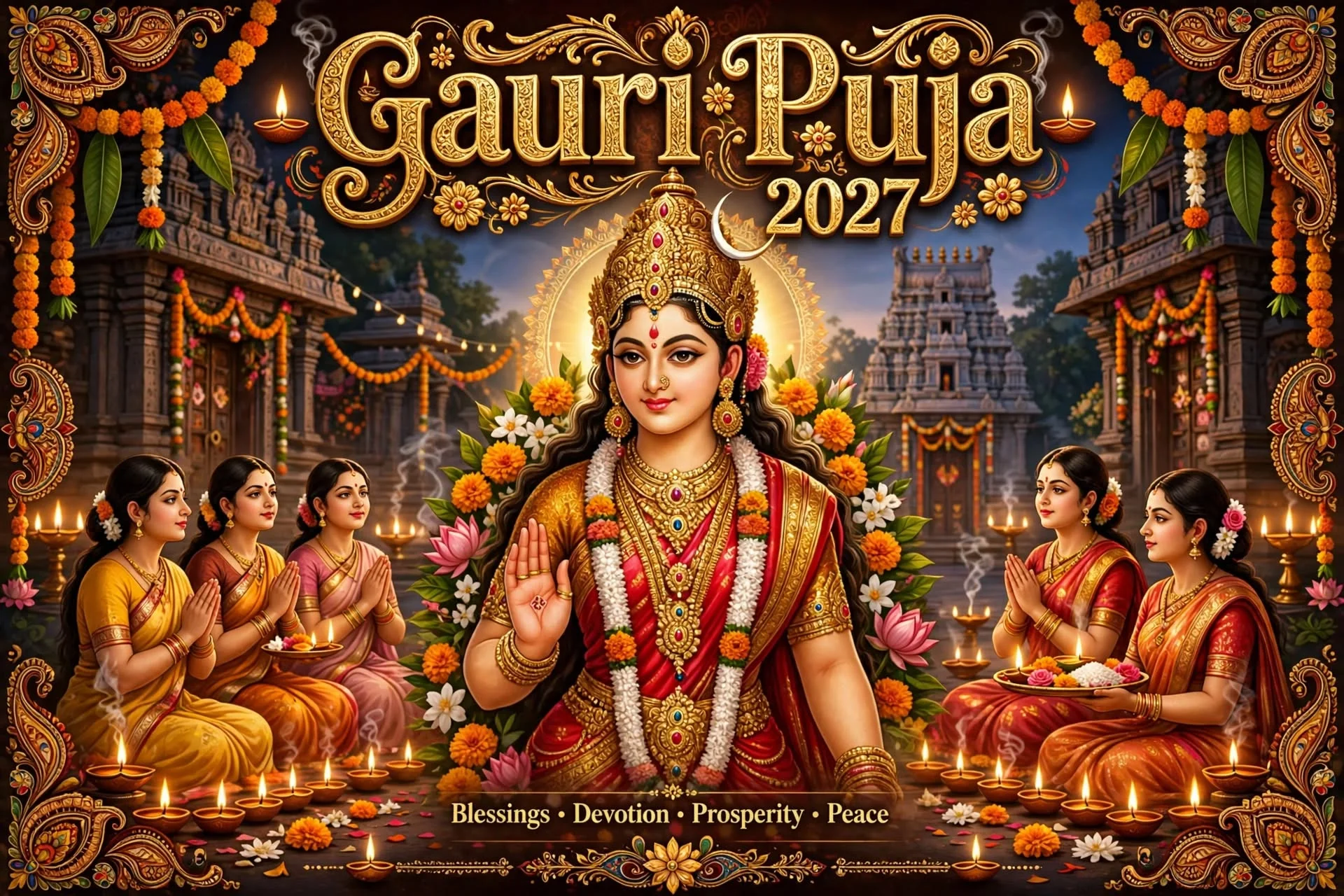
Gauri Puja
Gauri Puja, celebrated with profound devotion on the third day of the waxing moon (Shukla Paksha Tritiya) in the sacred month of Chaitra, is a revered festival dedicated to Goddess Gauri, the compassionate and radiant consort of Lord Shiva. Also celebrated as Sowbhagya Tritiya or Gauri Tritiya during the vibrant spring season of Chaitra Navratri, this sacred day invokes the maternal benevolence of the Divine Mother to bestow marital longevity, domestic harmony, and boundless prosperity.
View Festival Guide

Friday, Apr 9, 2027
Matsya Jayanti
Matsya Jayanti commemorates the auspicious appearance day of Lord Vishnu in his foundational first incarnation—the Matsya Avatar (the divine horned fish). Celebrated on the third lunar day of the bright fortnight (Shukla Paksha Tritiya) in the sacred month of Chaitra, this holy observance honors the cosmic savior who rescued the sacred Vedas, safeguarded the progenitors of humanity, and preserved the seeds of all living organisms during the catastrophic cosmic deluge (Pralaya).
View Festival Guide