




Phalguna Amavasya marks a profound and sacred transition in the Hindu calendar. As the final Amavasya of the lunar year according to the Purnimanta system, it represents the conclusion of the winter season and the cosmic completion of the annual lunar journey. Occurring on the dark new moon night in the month of Phalguna, it provides devotees with a supreme spiritual opportunity to express gratitude to ancestors, perform charitable acts, and cleanse lingering karmic impurities before the dawn of the New Year.
Phalguna Amavasya 2027: Date, Puja Timings, Rituals & Stories

Phalguna Amavasya Timings & Panchang
Important festival dates and auspicious timings
Usha Arghya (Sunrise)
06:40 am
Sandhya Arghya (Sunset)
06:24 pm
Start Date
Sunday, 7 Mar 2027
Puja Muhurat
12:03 pm – 01:46 pm
Phalguna Amavasya
The scriptural sanctity of Phalguna Amavasya is expounded in major sacred texts including the Garuda Purana, Matsya Purana, and Vishnu Purana. On this day, ancestral souls (Pitrus) are believed to draw near to the earthly sphere to accept water, sesame seeds, and prayers offered by their descendants. Performing Shraddha, Tarpan, and Pinda Daan satisfies the ancestors, liberating them from sorrow and bestowing health, longevity, and generational prosperity upon the household.
Pilgrims gather in vast numbers at holy river confluences such as Prayagraj, Haridwar, Varanasi, and Gaya to take ritual baths in the sacred Ganga and Yamuna. Worshippers also honor the sacred Peepal tree (Ashvattha) and perform worship of Lord Shiva and Lord Vishnu, making substantial donations of food, clothing, and warm blankets to the destitute and spiritual ascetics.
Why is Phalguna Amavasya Celebrated?
Phalguna Amavasya is celebrated as the grand annual occasion for ancestral appeasement (Pitru Kripa) and personal purification. As the final dark moon before Chaitra Shukla Pratipada (the Hindu New Year), it acts as a spiritual threshold, encouraging seekers to clear ancestral debts, resolve emotional attachments, and begin the new astronomical cycle with untainted clarity and virtue.
- Ancestral Gratitude & Tarpan: Satisfies the departed souls through the offering of water, black sesame, and sacred Kusha grass.
- Neutralization of Pitru Dosha: Eradicates astrological and lineage afflictions that cause delays in marriage, childbearing, or health.
- Sanctifying River Dips: Bathing in sacred rivers washes away subtle sins and recharges the biological prana with cosmic energy.
- Supreme Charitable Merit: Anna Daan (feeding the hungry) and Vastra Daan on this day generate inexhaustible spiritual merit (Punya).
Puranic Foundations of Amavasya Pitru Rites
The Descent of Ancestral Souls during Amavasya
According to the Garuda Purana, when the moon enters its darkest phase on Amavasya, the gates of Pitru Loka open, and ancestral souls travel toward the mortal plane seeking remembrance and nourishment from their progeny. They await offerings of holy water mixed with black sesame and kusha grass at the threshold of their descendants' homes.
When descendants dutifully perform Tarpan and Shraddha, the ancestors drink the divine essence of the oblations, rejoice, and confer profound blessings of longevity, sharp intellect, wealth, and virtuous progeny. Conversely, neglect of these rites grieves the ancestors and leaves karmic knots in the family lineage.
Cosmic Trinity in the Sacred Peepal Tree
The Matsya Purana describes how Lord Vishnu assumed the form of the holy Peepal tree (Ashvattha) during a cosmic gathering of deities. It is revealed that Lord Brahma resides at the roots of the tree, Lord Vishnu dwells in the trunk, and Lord Shiva abides in the branches and leaves.
Because ancestral spirits are also granted resting shelter beneath the sacred Peepal branches, worshipping this tree on Phalguna Amavasya with water, raw milk, and sesame seeds directly gratifies both the Divine Trinity and the ancestors simultaneously.
Source: Garuda Purana & Matsya Purana
The Esoteric Meaning of the Final Dark Moon
Conjunction of Solar Soul and Lunar Mind
Astronomically and spiritually, Amavasya represents the exact conjunction of the Sun (signifying the soul and Father) and the Moon (signifying the mind and Mother). On Phalguna Amavasya, this conjunction brings the subconscious mind into deep alignment with the eternal soul.
By engaging in introspective meditation, fasting, and charity rather than worldly sensory pursuits, the spiritual seeker quiets the mind's turbulent waves and prepares the consciousness to receive the vibrant creative energies of the approaching spring.
Fulfilling the Sacred Debt to Ancestors (Pitru Rina)
Vedic tradition enumerates three fundamental debts that every human soul carries: Deva Rina (debt to gods), Rishi Rina (debt to sages), and Pitru Rina (debt to ancestors). Performing the sacred rites on Phalguna Amavasya is the foremost method to repay Pitru Rina, assuring familial harmony and unhindered spiritual progress.
Ritual Protocol & Charitable Observances on Phalguna Amavasya
Morning Snana and Midday Tarpan
Devotees rise before dawn to bathe in a sacred river or add Gangajal and black sesame seeds to their bath water at home. Prayers to Lord Surya are offered with water and red flowers.
The core Tarpan and Shraddha rituals are performed strictly during the midday Aparahna kala (between 11:30 AM and 1:30 PM). Water mixed with black sesame seeds and barley is poured through the Pitru Tirtha (between thumb and forefinger) on sacred Kusha grass, invoking departed elders with devotion.
Panchabali, Peepal Puja, and Generous Charity
Before taking meals, five portions of sattvic food are offered to the cow, dog, crow, divine deities, and ants (Panchabali). Devotees then visit a Peepal tree to offer milk-infused water and light mustard oil lamps.
The day concludes with Brahmin Bhojan and distributing food grains, warm clothes, footwear, and financial dakshina to underprivileged persons, followed by lighting lamps facing south to illuminate the path of ancestors.
Phalguna Amavasya Puja Vidhi (Step by Step)
- 1
Brahma Muhurta Snan
Wake before dawn and bathe in a sacred river or add Gangajal and black sesame seeds to your bath water at home with prayers to the sacred rivers.
- 2
Surya Dev Arghya
Offer Arghya to Lord Surya in a copper vessel filled with clean water, red sandalwood, red flowers, and unbroken rice, praying for health and vitality.
- 3
Pitru Tarpan Sankalpa
Facing south, hold Kusha grass, water, and black sesame seeds (Til) in the right hand and state your gotra and family lineage for the ancestral rites.
- 4
Pitru Tarpan Vidhi
Offer water mixed with black sesame and barley (Yava) from the Pitru Tirtha (between thumb and index finger) onto the sacred Kusha grass, invoking the ancestors.
- 5
Pinda Daan & Anna Samarpan
Offer cooked rice balls mixed with ghee, honey, and black sesame seeds, chanting sacred mantras for the peace of departed souls.
Phalguna Amavasya Puja Samagri List
Tarpan & Ancestral Oblation Materials
Sacred ritual items essential for performing authentic Vedic Tarpan and Pinda Daan.
- Sacred Kusha grass ring (Pavitri) and clean Kusha mats
- Black sesame seeds (Kala Til) and barley grains (Jau)
- Pure Gangajal, copper patra, and brass arghya vessels
- Cooked rice, raw milk, honey, and pure cow ghee for Pinda preparation
Peepal & Temple Worship Ingredients
Materials used for propitiating the Divine Trinity and ancestral abodes.
- Raw cow milk, cold water, and white flowers
- White sandalwood paste and fragrant dhoop sticks
- Mustard oil lamps, earthen diyas, and cotton wicks
- Bilva leaves and sacred Janeu (sacred thread) for Lord Shiva
Panchabali & Charitable Donation Items
Food offerings for living beings and charity items to bestow upon Brahmins and seekers.
- Sattvic cooked food (puris, kheer, pumpkin sabzi) for Panchabali
- Wheat flour, rice, lentils, and jaggery for Anna Daan
- Warm clothing, blankets, umbrellas, and footwear for donation
Mantras and Prayers for Phalguna Amavasya
Phalguna Amavasya Vrat Rules and Fasting Guidelines
Amavasya Discipline and Observance Rules
Special discipline should be maintained to preserve spiritual purity and appease ancestral forces on Phalguna Amavasya.
- Auspicious Tarpan Timing: Perform Tarpan and Shraddha rituals strictly during the midday Aparahna kala (around 11:30 AM to 1:30 PM).
- Strict Sattvic Diet: Abstain from non-vegetarian food, onion, garlic, alcohol, and stale items in the entire household.
- Charitable Giving: Giving food (Anna Daan) and water (Jala Daan) to underprivileged beings on this day brings supreme karmic merit.
- Spiritual Composure: Refrain from domestic arguments, harsh speech, and starting new mundane commercial contracts.
Dos and Don'ts of Phalguna Amavasya
Good Practices (Do's)
- Wake early and take a holy dip in a river or bathe with water mixed with Gangajal.
- Perform Tarpan and Pinda Daan with black sesame seeds and Kusha grass.
- Feed cows, crows, dogs, and ants before eating your own meals.
- Donate food, warm clothing, and essentials to the needy.
Things to Avoid (Don'ts)
Phalguna Amavasya Across Regions
| Region | Local Name |
|---|---|
| Northern India | Phalguni Amavasya |
| Eastern India | Phalguna Amavasya |
| Western India | Phagun Amavas |
Phalguna Amavasya FAQs
What is the primary spiritual significance of Phalguna Amavasya?
It is the final new moon of the Hindu lunar year, uniquely suited for performing Tarpan and Shraddha to appease departed ancestors and cleanse spiritual debts.
Why is bathing in holy rivers praised on Phalguna Amavasya?
Taking a holy dip on this day purifies bodily toxins, washes away past sins, and draws divine cosmic energies during the transition to the new year.
What is the best time for conducting Pitru Tarpan on Amavasya?
The midday hours, especially during Kutup and Rohina muhurtas (between 11:30 AM and 1:30 PM), are scripturally considered ideal for ancestral rites.
Upcoming Festivals
View All
Tuesday, Apr 6, 2027
Anvadhan
Anvadhan (अन्वाधान) is an ancient, highly revered Vedic ritual and spiritual observance in Sanatana Dharma performed on the day immediately preceding the New Moon (Amavasya) or Full Moon (Purnima). Rooted in the pristine traditions of the Shrauta and Grihya Sutras, Anvadhan literally translates to 'the solemn placing and replenishment of sacred fuel wood into the consecrated Vedic fires'. In traditional Vedic ritualism, householders (Grihasthas) and priests who maintain the sacred Agnihotra fires perform Anvadhan to prepare the sacrificial altars for the grand Darsha Yajna (New Moon sacrifice) or Paurnamasa Yajna (Full Moon sacrifice) scheduled for the following day.
View Festival Guide

Tuesday, Apr 6, 2027
Darsha Amavasya
Darsha Amavasya is a significant new moon observance in the Hindu calendar designating the specific night when the Moon is completely invisible to the human eye, having fully merged into the conjunction of the Sun.
View Festival Guide

Wednesday, Apr 7, 2027
Ugadi
Ugadi, derived from the Sanskrit terms 'Yuga' (era) and 'Aadi' (beginning), marks the glorious commencement of the New Year for the people of Andhra Pradesh, Telangana, and Karnataka. Celebrated on the first day of the waxing moon (Shukla Paksha Pratipada) in the sacred month of Chaitra, it heralds the advent of the new astronomical cycle, the arrival of the rejuvenating spring season (Vasanta Ritu), and the eternal rhythm of cosmic creation inaugurated by Lord Brahma.
View Festival Guide
Wednesday, Apr 7, 2027
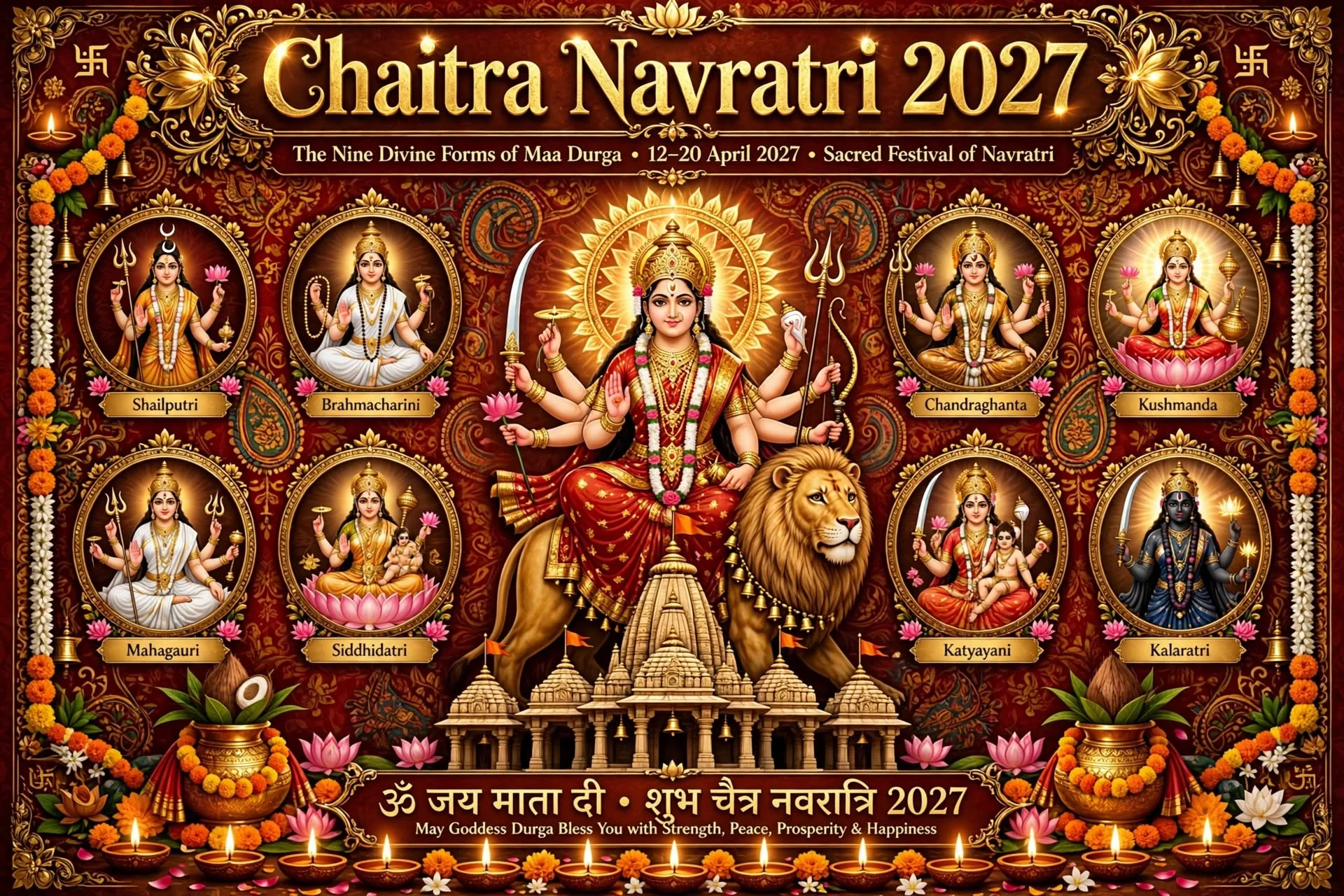
Chaitra Navratri
Chaitra Navratri, also reverently known as Vasanta Navratri, is a sacred nine-night festival dedicated to the worship of Goddess Durga and her nine supreme manifestations (Navadurga). Commencing on the first day of the bright fortnight (Shukla Paksha Pratipada) in the month of Chaitra, it coincides with the advent of the Hindu New Year and culminates on Rama Navami, the appearance day of Lord Rama. Celebrated during the vibrant transition into spring, it signifies spiritual rejuvenation, maternal cosmic protection, and the triumph of divine righteousness.
View Festival Guide

Wednesday, Apr 7, 2027
Ishti
Ishti is a foundational Vedic ritual observance appearing prominently in Hindu Panchangs on the Pratipada tithi (the first lunar day) following either Amavasya (new moon) or Purnima (full moon), marking the prescribed performance day for the fortnightly Vedic Darsha-Purnamasa sacrifices.
View Festival Guide

Wednesday, Apr 7, 2027
Nutan Varsh Prarambha
Nutan Varsh Prarambha marks the glorious beginning of the Hindu New Year on the first day of the waxing moon (Shukla Paksha Pratipada) in the month of Chaitra. Celebrated across India under diverse regional names such as Ugadi, Gudi Padwa, and Cheti Chand, this sacred dawn signifies not merely a calendar shift, but the cosmic anniversary of creation itself. According to Vedic tradition, it was on this radiant morning that Lord Brahma initiated the cosmic cycle of time, creation, and mortal existence.
View Festival Guide
Wednesday, Apr 7, 2027
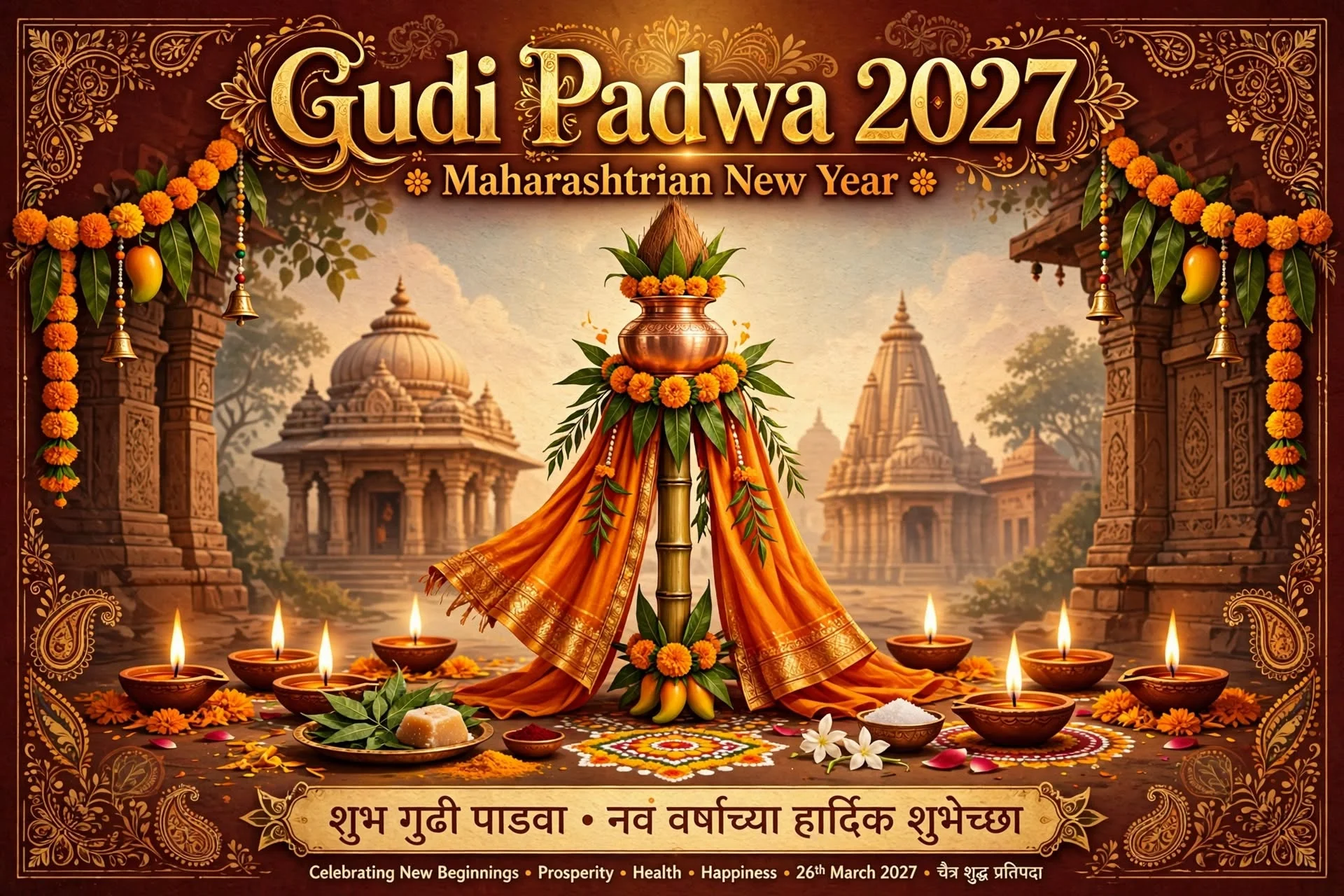
Gudi Padwa
Gudi Padwa marks the grand celebration of the Marathi and Konkani New Year, observed on the first day of the bright fortnight (Shukla Paksha Pratipada) in the sacred month of Chaitra. Celebrated with tremendous cultural pride and spiritual fervor across Maharashtra, Goa, and adjoining regions, this vibrant festival heralds the arrival of spring (Vasanta Ritu) and commemorates the cosmic dawn of creation initiated by Lord Brahma.
View Festival Guide

Thursday, Apr 8, 2027
Chandra Darshana
Chandra Darshana is a revered monthly Hindu observance dedicated to sighting, venerating, and offering oblation to the delicate waxing crescent Moon immediately following the new moon (Amavasya), typically occurring during the twilight of Shukla Paksha Pratipada or Dwitiya.
View Festival Guide